

Zoom the image with the mouse
Burgundy Rubber Plant - 6 in.
SKU:
2173540
UPC:
014949039908
$24.99
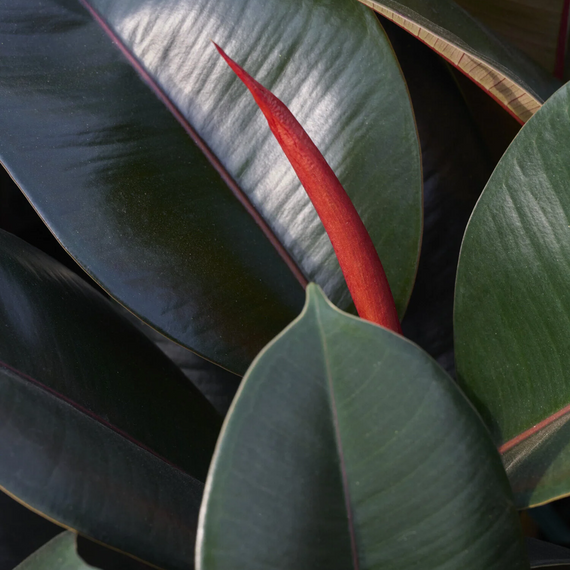
- Dramatic, near-black burgundy foliage with a mirror-like gloss and a bold scarlet midrib creates an instant statement in any room or tropical landscape.
- A resilient and fast-growing indoor tree that tolerates a wide range of household conditions, making it an ideal choice for both beginner and experienced plant enthusiasts.
- Known to help improve indoor air quality, this low-maintenance tropical beauty brings lush, larger-than-life leaves measuring up to 12 inches long to living rooms, offices, and entryways alike.
- Thrives in bright indirect light indoors year-round, or outdoors in frost-free climates (USDA Zones 10-12) as a striking landscape specimen or patio container plant.
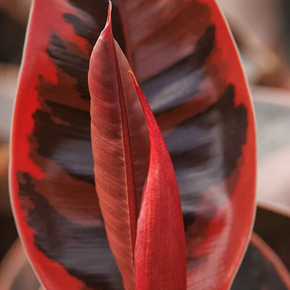
The Burgundy Rubber Plant (Ficus elastica 'Burgundy') is one of the most captivating and sought-after indoor trees available today, prized for its enormous, leathery leaves that emerge in a vivid red sheath before deepening to a rich, glossy burgundy-black with a striking crimson midrib. Native to the tropical forests of South and Southeast Asia, this cultivar of the classic rubber plant has been refined into a showstopper that effortlessly elevates any interior space with its bold, sculptural presence. Indoors, plants typically reach a manageable 4 to 8 feet tall, while specimens grown in frost-free outdoor conditions can soar dramatically higher, making them equally at home as a distinguished patio accent or landscape focal point in Southern Oregon and Northern California's mildest microclimates. Unlike the temperamental fiddle leaf fig, the Burgundy Rubber Plant is remarkably forgiving and adaptable, rewarding its owner with vigorous growth and consistently beautiful foliage when given bright indirect light, well-draining soil, and a careful watering routine. The thick, waxy leaf surface is naturally glossy and needs only an occasional wipe with a damp cloth to maintain its signature lustrous sheen. Whether positioned as a commanding floor plant in a sun-filled corner, a dramatic entryway accent, or the architectural centerpiece of a modern interior, Ficus elastica 'Burgundy' delivers year-round tropical drama with surprisingly little fuss.
Plant Description
Ficus elastica 'Burgundy' is a cultivar of the rubber plant species belonging to the Moraceae (fig) family. It is distinguished from other rubber plant varieties by its exceptionally dark foliage — large, oval, paddle-shaped leaves that are a deep, glossy burgundy-black with a prominent bright red midrib running their full length. Each leaf can reach 8 to 12 inches long and up to 4 inches wide, and new leaves emerge tightly furled in a vivid crimson-pink sheath (stipule) that unfurls to reveal the next dramatic leaf. The overall structure of the plant is upright and tree-like, with a sturdy central stem and evenly spaced leaf nodes. The intensity of the leaf color is directly tied to light levels — in high, bright indirect light, the foliage achieves its darkest, most saturated burgundy tone, while lower light causes leaves to revert toward a muddier green. The plant contains a milky white latex sap throughout all its tissues, which is released when leaves or stems are cut or damaged.
Mature Size
| Growing Situation | Typical Height | Typical Spread |
|---|---|---|
| Indoors (container) | 4 to 8 feet | 2 to 3 feet |
| Outdoors (USDA Zones 10-12, in ground) | Up to 40 feet or more | 10 to 15 feet |
| Outdoor container / patio | 6 to 10 feet | 3 to 4 feet |
Growth rate indoors is considered fast under good conditions, with plants capable of gaining approximately 2 feet per year in ideal light and warmth. Indoor height can be managed through periodic pruning. Outdoors in tropical or near-tropical climates, growth accelerates considerably. Regular pruning just above a leaf node keeps indoor plants at a desired height and encourages a fuller, bushier habit rather than a single tall pole.
Hardiness Zones and Temperature
Ficus elastica 'Burgundy' is rated for outdoor growing in USDA Hardiness Zones 10 through 12, where winter temperatures remain consistently above 30 to 35 degrees F. In Southern Oregon and Northern California, it performs best as a year-round indoor plant or as a seasonal outdoor accent brought inside before nighttime temperatures drop below 55 degrees F. Even in the mildest coastal and inland valley microclimates of Northern California, it is safest to treat this plant as a tender tropical outdoors.
- Ideal daytime temperature: 70 to 85 degrees F
- Ideal nighttime temperature: 60 to 70 degrees F
- Minimum tolerated temperature: 55 degrees F (short-term)
- Cold damage threshold: Below 50 degrees F causes leaf drop; frost is fatal
- Avoid: Cold drafts, air conditioning vents, heating vents, and sudden temperature swings, all of which trigger sudden leaf drop
Sunlight Requirements
Light is the single most critical factor for maintaining the Burgundy Rubber Plant's signature dark foliage. The deep burgundy-black leaf color is produced by anthocyanin pigments — a natural sunscreen the plant generates in response to bright light. Without sufficient light intensity, new leaves emerge a dull, muddy green and the plant loses its dramatic appearance.
- Indoors — Ideal: Bright, indirect light within a few feet of a south- or west-facing window. East-facing windows offering gentle morning sun are also excellent.
- Indoors — Acceptable: Medium indirect light, though leaf color will be less intense and growth slower.
- Indoors — Avoid: Deep shade or north-facing windows with minimal sky exposure; new growth will emerge green and the plant will become leggy.
- Outdoors: Full sun to bright filtered light once properly acclimated. Avoid abrupt transitions from indoor low light to full outdoor sun, which can cause leaf scorch. Acclimate over 2 to 3 weeks.
- Grow lights: A full-spectrum grow light positioned close to the plant can maintain color and growth through low-light winter months.
- Rotate the pot a quarter turn monthly to promote even, balanced growth and prevent the plant from leaning toward its light source.
Watering Guide
Overwatering is the leading cause of decline and death in Burgundy Rubber Plants. The thick, fleshy leaves and woody stem store significant moisture reserves, meaning this plant is far more drought-tolerant than it is flood-tolerant. Use the "soak and dry" method for best results.
- When to water: Allow the top 50 to 75% of the soil to dry out between waterings. Insert a finger or wooden chopstick 2 to 3 inches deep — if you feel any moisture, wait a few more days.
- How to water: Water slowly and thoroughly until water flows freely from the drainage holes. Discard any water that collects in the saucer within 30 minutes — never allow the plant to sit in standing water.
- Frequency — Spring/Summer: Approximately every 7 to 10 days, depending on pot size, light levels, and ambient temperature.
- Frequency — Fall/Winter: Reduce to approximately every 2 to 4 weeks. Always check the soil rather than following a rigid schedule.
- Water quality: Room-temperature filtered or tap water works well. If brown leaf tips appear with hard tap water, switch to filtered or distilled water.
- Avoid: Splashing water directly onto leaves, as this can cause spotting or staining.
Soil and Potting Mix
A well-aerated, fast-draining potting mix is essential to prevent root rot. Avoid heavy, dense potting soils that retain excessive moisture. The ideal mix allows water to drain through freely while still holding a small amount of moisture for root uptake.
- Recommended DIY mix: 1 part quality potting soil + 1 part perlite or pumice + 1 part orchid bark (coarse). Optional additions include a small amount of horticultural charcoal and worm castings for nutrients.
- Pre-bagged alternative: A cactus and succulent blend with extra perlite added works well.
- Pot material: Unglazed terracotta is preferred — the porous walls allow moisture to evaporate through the sides, helping soil dry more evenly. Plastic and glazed ceramic pots retain moisture longer, requiring greater care with watering frequency.
- Drainage: A drainage hole in the bottom of the pot is non-negotiable. Never plant in a pot without drainage.
- Pot sizing: Choose a container no more than 1 to 2 inches wider in diameter than the existing root ball. Oversized pots hold excess wet soil and dramatically increase the risk of root rot.
Fertilizing
The Burgundy Rubber Plant is a vigorous grower during its active season and benefits from regular feeding to support the production of its large, dramatic leaves. Withhold fertilizer entirely during the fall and winter rest period.
- Type: A balanced, water-soluble liquid fertilizer (such as a 10-10-10 or 20-20-20 NPK formula) works well. A fertilizer higher in nitrogen promotes lush, leafy growth.
- Dilution: Always dilute liquid fertilizer to half the recommended label strength to avoid fertilizer burn on the roots.
- Frequency: Once every 2 to 4 weeks from early spring through late summer (approximately April through September).
- Winter: Do not fertilize from October through March. The plant is in a semi-dormant resting state and cannot use excess nutrients, which accumulate as damaging salts in the soil.
- Newly repotted plants: Wait 3 to 6 months before beginning liquid feeding if the fresh potting mix already contains slow-release fertilizer pellets.
- Flush the soil with plain water once or twice a year to clear any accumulated mineral salt buildup.
Pruning and Maintenance
Pruning is straightforward and highly rewarding with the Burgundy Rubber Plant. Without pruning, plants tend to grow as a single tall, vertical stem. Pruning the apical tip interrupts the plant's natural upward dominance and encourages multiple lateral branches to develop, creating a fuller, more tree-like silhouette.
- Best time to prune: Early spring, just as the plant begins its active growth phase.
- For bushier growth: Cut the main stem just above a leaf node. This stimulates dormant buds lower on the stem to break and produce side branches.
- For height control: Simply cut the topmost stem to the desired height, always cutting just above a node.
- Latex sap caution: All cuts release a milky white latex sap. Wear gloves and protect flooring. Dab the cut end with a damp cloth until the sap flow stops — it dries quickly.
- Tool hygiene: Always use clean, sharp pruning shears. Sterilize blades with rubbing alcohol before and after use to prevent disease transmission.
- Leaf cleaning: The large, waxy leaves accumulate dust easily. Wipe both sides of each leaf gently with a slightly damp cloth every few weeks to maintain their natural gloss and improve light absorption. Avoid commercial leaf-shine sprays, which can clog stomata.
- Remove any yellowing, damaged, or dead leaves promptly to keep the plant tidy and redirect energy to healthy growth.
Repotting Instructions
Young Burgundy Rubber Plants grow quickly and may need repotting annually. Mature specimens are comfortable in the same pot for 2 to 3 years. Spring or early summer is the best time to repot, as the plant is in active growth and recovers most readily from the disturbance of a container change.
- Check for repotting need: Look for roots circling the bottom of the pot, roots emerging from drainage holes, soil drying out unusually fast, or the plant becoming noticeably top-heavy.
- Select a new pot that is only 1 to 2 inches wider in diameter than the current one. Ensure it has at least one drainage hole.
- Water the plant lightly one day before repotting to reduce transplant shock.
- Gently tip the plant sideways and ease the root ball free. Loosen any tightly circling roots with your fingers.
- Inspect the roots. Trim away any soft, dark, or mushy roots with clean, sharp scissors, cutting back to firm, pale tissue.
- Add a layer of fresh, well-draining potting mix to the bottom of the new container. Position the plant at the same soil depth as before — do not bury the stem deeper than it was growing.
- Fill in around the roots with fresh potting mix, pressing gently to eliminate air pockets.
- Water thoroughly and return the plant to its original location. Changing both pot and location simultaneously increases stress and can trigger leaf drop.
Humidity and Indoor Environment
As a native of humid tropical rainforests, the Burgundy Rubber Plant naturally prefers elevated humidity. However, its thick, waxy leaf cuticle makes it considerably more adaptable to typical household conditions than many other tropical houseplants. It performs acceptably in average home humidity levels of 40 to 50%, though it truly thrives at 50 to 70%.
- Signs of low humidity: Browning or crisping leaf tips and edges, slightly smaller new leaves, or slower overall growth — particularly in winter when indoor heating dries the air.
- Solutions: Run a room humidifier nearby, group plants together to create a shared humidity microclimate, or place the pot on a tray of pebbles and water (ensuring the pot bottom sits above the waterline).
- Avoid misting: Direct misting of the leaves is not recommended as it is ineffective at raising ambient humidity and may encourage fungal spotting if water pools on leaf surfaces.
- Air circulation: Avoid positioning the plant directly in front of heating vents, air conditioning units, or drafty exterior doors. Both cold blasts and hot, dry forced air cause leaf yellowing and sudden drop.
- Keep the plant in a consistently warm room away from exterior walls in winter to prevent cold stress from radiating cold glass or walls.
Propagation
The Burgundy Rubber Plant can be propagated at home using two primary methods: stem cuttings and air layering. Spring and early summer are the optimal times for both, as the plant's active growth phase gives cuttings the best chance of rooting successfully.
- Stem cuttings (easiest method): Take a 4 to 6-inch tip cutting with at least one leaf and one node using clean, sharp pruners. Allow the cut end to rest for 30 to 60 minutes so the latex sap can dry and seal. Optionally dip the cut end in rooting hormone powder or gel. Place in a jar of room-temperature water (changing weekly) or directly into a pre-moistened, well-draining propagation mix. Keep in bright indirect light and maintain warmth of 70 to 75 degrees F. Roots typically appear in 3 to 6 weeks.
- Air layering (best for thick, woody stems): Select a healthy section of stem 12 inches from the tip. Make a shallow upward slit in the stem and prop it open with a toothpick. Pack the wound with damp sphagnum moss and wrap it tightly in clear plastic film, sealing the top and bottom. Roots will appear through the moss and plastic in 4 to 8 weeks. Once roots are visible and well-developed, cut the stem just below the root ball and pot the new plant in fresh mix.
- Always wear gloves during propagation to protect skin from the irritating milky latex sap.
Pests and Diseases
The Burgundy Rubber Plant is generally robust, but its large leaves collect dust easily, which can hide pest infestations until they become severe. Regular leaf cleaning and routine inspection are the best preventive measures.
- Spider mites: The most frequent pest, especially in dry indoor conditions. Look for fine webbing on leaf undersides and between stems, and for tiny yellow stippling dots on leaf surfaces. Treat by wiping leaves with a damp cloth and applying neem oil or insecticidal soap spray, especially to leaf undersides.
- Mealybugs: Appear as white, cottony clusters in leaf axils, along stems, and around the base of new stipules. Remove with a cotton swab dipped in rubbing alcohol, then follow up with neem oil applications.
- Scale insects: Present as hard, brown, shell-like bumps along stems and leaf midribs. Scrape off physically, then treat with horticultural oil.
- Thrips: Cause silvery streaking or speckling on leaves. Treat with neem oil or insecticidal soap.
- Root rot (Phytophthora / overwatering): The most common non-pest disease issue. Symptoms include yellowing leaves, wilting despite moist soil, brown mushy roots, and a sour soil odor. Prevention is the best cure — ensure well-draining soil, proper pot sizing, and allow soil to dry between waterings. If root rot is found, trim affected roots, treat with a fungicide drench, and repot into fresh dry mix.
- Leaf drop: Often caused by overwatering, cold drafts, sudden environmental change, or relocation. Some lower-leaf drop on a maturing plant is natural. Stabilize watering and environment to resolve.
- Leaf yellowing: May indicate overwatering, underwatering, insufficient light, or nutrient deficiency. Check soil moisture and light levels before adjusting care.
Toxicity and Pet Safety
The Burgundy Rubber Plant contains a milky white latex sap throughout all of its tissues — leaves, stems, and roots. This sap is a known irritant and should be handled with care by all members of the household.
- Pets (cats and dogs): Considered toxic. Ingestion of leaves or sap can cause drooling, vomiting, diarrhea, and gastrointestinal irritation. Keep the plant well out of reach of pets, particularly those known to chew on houseplants.
- Humans: The sap can cause skin irritation, redness, and contact dermatitis in sensitive individuals. It can cause mild stomach upset if ingested. Eye contact should be avoided.
- Best practices: Always wear gloves when pruning, repotting, or propagating. Wash hands thoroughly after handling any cut tissue. Keep plants out of reach of young children and curious pets.
- If a pet or child ingests a significant quantity of leaves or sap, contact a veterinarian or poison control center promptly.
Landscape and Interior Design Uses
Few plants deliver the same visual impact per square foot as the Burgundy Rubber Plant. Its bold leaf size, rich color, and upright architectural form make it a versatile design asset in both interior and outdoor settings.
- Interior floor plant: A mature specimen placed in a statement pot in a sun-drenched corner, beside a large window, or in an entryway creates an immediate focal point in any room design style — from modern and minimalist to maximalist tropical.
- Office and commercial spaces: Thrives in the bright, indirect light of modern office environments and large lobbies, bringing warmth and biophilic energy to commercial interiors.
- Outdoor patio accent (seasonal or permanent in Zones 10-12): A stunning container specimen on a covered patio, courtyard, or deck in the warmer months. Provides a lush, tropical backdrop when grouped with other large-leafed tropical foliage plants.
- Landscape use (Zones 10-12 in-ground): Can serve as a striking specimen tree or screening plant in frost-free gardens, eventually forming a dramatic canopy.
- Complementary design partners: Pairs beautifully with light-colored or white walls that allow the dark foliage to contrast dramatically. Pairs well with warm-toned terracotta, brass, or dark wood pots and furnishings.
Companion Plants
When grouped with other plants in interior arrangements or outdoor tropical container displays, the Burgundy Rubber Plant's deep, dark foliage provides a rich backdrop that makes lighter or brighter companions pop. Consider the following pairings for layered, visually dynamic plant groupings:
- Pothos (Epipremnum aureum): Bright golden-green or variegated trailing vines contrast beautifully with the rubber plant's dark, upright leaves at lower levels.
- Bird of Paradise (Strelitzia reginae or nicolai): Another bold tropical with large paddle leaves; together they create a lush, resort-style grouping in warm climates or bright interiors.
- Peace Lily (Spathiphyllum): Its white blooms and rich dark green leaves complement the rubber plant's form while sharing similar indirect light preferences.
- Snake Plant (Sansevieria / Dracaena trifasciata): Contrasting upright, sword-like form and variegated coloring pair well in a modern minimalist arrangement.
- Philodendron (various species): Heart-leaf or split-leaf philodendrons share similar care requirements and provide contrasting leaf texture.
- Chinese Evergreen (Aglaonema): The silvery, pink, or red variegated forms complement the dark burgundy tones and require similarly indirect light conditions.
- Dramatic, near-black burgundy foliage with a mirror-like gloss and a bold scarlet midrib creates an instant statement in any room or tropical landscape.
- A resilient and fast-growing indoor tree that tolerates a wide range of household conditions, making it an ideal choice for both beginner and experienced plant enthusiasts.
- Known to help improve indoor air quality, this low-maintenance tropical beauty brings lush, larger-than-life leaves measuring up to 12 inches long to living rooms, offices, and entryways alike.
- Thrives in bright indirect light indoors year-round, or outdoors in frost-free climates (USDA Zones 10-12) as a striking landscape specimen or patio container plant.
The Burgundy Rubber Plant (Ficus elastica 'Burgundy') is one of the most captivating and sought-after indoor trees available today, prized for its enormous, leathery leaves that emerge in a vivid red sheath before deepening to a rich, glossy burgundy-black with a striking crimson midrib. Native to the tropical forests of South and Southeast Asia, this cultivar of the classic rubber plant has been refined into a showstopper that effortlessly elevates any interior space with its bold, sculptural presence. Indoors, plants typically reach a manageable 4 to 8 feet tall, while specimens grown in frost-free outdoor conditions can soar dramatically higher, making them equally at home as a distinguished patio accent or landscape focal point in Southern Oregon and Northern California's mildest microclimates. Unlike the temperamental fiddle leaf fig, the Burgundy Rubber Plant is remarkably forgiving and adaptable, rewarding its owner with vigorous growth and consistently beautiful foliage when given bright indirect light, well-draining soil, and a careful watering routine. The thick, waxy leaf surface is naturally glossy and needs only an occasional wipe with a damp cloth to maintain its signature lustrous sheen. Whether positioned as a commanding floor plant in a sun-filled corner, a dramatic entryway accent, or the architectural centerpiece of a modern interior, Ficus elastica 'Burgundy' delivers year-round tropical drama with surprisingly little fuss.
Plant Description
Ficus elastica 'Burgundy' is a cultivar of the rubber plant species belonging to the Moraceae (fig) family. It is distinguished from other rubber plant varieties by its exceptionally dark foliage — large, oval, paddle-shaped leaves that are a deep, glossy burgundy-black with a prominent bright red midrib running their full length. Each leaf can reach 8 to 12 inches long and up to 4 inches wide, and new leaves emerge tightly furled in a vivid crimson-pink sheath (stipule) that unfurls to reveal the next dramatic leaf. The overall structure of the plant is upright and tree-like, with a sturdy central stem and evenly spaced leaf nodes. The intensity of the leaf color is directly tied to light levels — in high, bright indirect light, the foliage achieves its darkest, most saturated burgundy tone, while lower light causes leaves to revert toward a muddier green. The plant contains a milky white latex sap throughout all its tissues, which is released when leaves or stems are cut or damaged.
Mature Size
| Growing Situation | Typical Height | Typical Spread |
|---|---|---|
| Indoors (container) | 4 to 8 feet | 2 to 3 feet |
| Outdoors (USDA Zones 10-12, in ground) | Up to 40 feet or more | 10 to 15 feet |
| Outdoor container / patio | 6 to 10 feet | 3 to 4 feet |
Growth rate indoors is considered fast under good conditions, with plants capable of gaining approximately 2 feet per year in ideal light and warmth. Indoor height can be managed through periodic pruning. Outdoors in tropical or near-tropical climates, growth accelerates considerably. Regular pruning just above a leaf node keeps indoor plants at a desired height and encourages a fuller, bushier habit rather than a single tall pole.
Hardiness Zones and Temperature
Ficus elastica 'Burgundy' is rated for outdoor growing in USDA Hardiness Zones 10 through 12, where winter temperatures remain consistently above 30 to 35 degrees F. In Southern Oregon and Northern California, it performs best as a year-round indoor plant or as a seasonal outdoor accent brought inside before nighttime temperatures drop below 55 degrees F. Even in the mildest coastal and inland valley microclimates of Northern California, it is safest to treat this plant as a tender tropical outdoors.
- Ideal daytime temperature: 70 to 85 degrees F
- Ideal nighttime temperature: 60 to 70 degrees F
- Minimum tolerated temperature: 55 degrees F (short-term)
- Cold damage threshold: Below 50 degrees F causes leaf drop; frost is fatal
- Avoid: Cold drafts, air conditioning vents, heating vents, and sudden temperature swings, all of which trigger sudden leaf drop
Sunlight Requirements
Light is the single most critical factor for maintaining the Burgundy Rubber Plant's signature dark foliage. The deep burgundy-black leaf color is produced by anthocyanin pigments — a natural sunscreen the plant generates in response to bright light. Without sufficient light intensity, new leaves emerge a dull, muddy green and the plant loses its dramatic appearance.
- Indoors — Ideal: Bright, indirect light within a few feet of a south- or west-facing window. East-facing windows offering gentle morning sun are also excellent.
- Indoors — Acceptable: Medium indirect light, though leaf color will be less intense and growth slower.
- Indoors — Avoid: Deep shade or north-facing windows with minimal sky exposure; new growth will emerge green and the plant will become leggy.
- Outdoors: Full sun to bright filtered light once properly acclimated. Avoid abrupt transitions from indoor low light to full outdoor sun, which can cause leaf scorch. Acclimate over 2 to 3 weeks.
- Grow lights: A full-spectrum grow light positioned close to the plant can maintain color and growth through low-light winter months.
- Rotate the pot a quarter turn monthly to promote even, balanced growth and prevent the plant from leaning toward its light source.
Watering Guide
Overwatering is the leading cause of decline and death in Burgundy Rubber Plants. The thick, fleshy leaves and woody stem store significant moisture reserves, meaning this plant is far more drought-tolerant than it is flood-tolerant. Use the "soak and dry" method for best results.
- When to water: Allow the top 50 to 75% of the soil to dry out between waterings. Insert a finger or wooden chopstick 2 to 3 inches deep — if you feel any moisture, wait a few more days.
- How to water: Water slowly and thoroughly until water flows freely from the drainage holes. Discard any water that collects in the saucer within 30 minutes — never allow the plant to sit in standing water.
- Frequency — Spring/Summer: Approximately every 7 to 10 days, depending on pot size, light levels, and ambient temperature.
- Frequency — Fall/Winter: Reduce to approximately every 2 to 4 weeks. Always check the soil rather than following a rigid schedule.
- Water quality: Room-temperature filtered or tap water works well. If brown leaf tips appear with hard tap water, switch to filtered or distilled water.
- Avoid: Splashing water directly onto leaves, as this can cause spotting or staining.
Soil and Potting Mix
A well-aerated, fast-draining potting mix is essential to prevent root rot. Avoid heavy, dense potting soils that retain excessive moisture. The ideal mix allows water to drain through freely while still holding a small amount of moisture for root uptake.
- Recommended DIY mix: 1 part quality potting soil + 1 part perlite or pumice + 1 part orchid bark (coarse). Optional additions include a small amount of horticultural charcoal and worm castings for nutrients.
- Pre-bagged alternative: A cactus and succulent blend with extra perlite added works well.
- Pot material: Unglazed terracotta is preferred — the porous walls allow moisture to evaporate through the sides, helping soil dry more evenly. Plastic and glazed ceramic pots retain moisture longer, requiring greater care with watering frequency.
- Drainage: A drainage hole in the bottom of the pot is non-negotiable. Never plant in a pot without drainage.
- Pot sizing: Choose a container no more than 1 to 2 inches wider in diameter than the existing root ball. Oversized pots hold excess wet soil and dramatically increase the risk of root rot.
Fertilizing
The Burgundy Rubber Plant is a vigorous grower during its active season and benefits from regular feeding to support the production of its large, dramatic leaves. Withhold fertilizer entirely during the fall and winter rest period.
- Type: A balanced, water-soluble liquid fertilizer (such as a 10-10-10 or 20-20-20 NPK formula) works well. A fertilizer higher in nitrogen promotes lush, leafy growth.
- Dilution: Always dilute liquid fertilizer to half the recommended label strength to avoid fertilizer burn on the roots.
- Frequency: Once every 2 to 4 weeks from early spring through late summer (approximately April through September).
- Winter: Do not fertilize from October through March. The plant is in a semi-dormant resting state and cannot use excess nutrients, which accumulate as damaging salts in the soil.
- Newly repotted plants: Wait 3 to 6 months before beginning liquid feeding if the fresh potting mix already contains slow-release fertilizer pellets.
- Flush the soil with plain water once or twice a year to clear any accumulated mineral salt buildup.
Pruning and Maintenance
Pruning is straightforward and highly rewarding with the Burgundy Rubber Plant. Without pruning, plants tend to grow as a single tall, vertical stem. Pruning the apical tip interrupts the plant's natural upward dominance and encourages multiple lateral branches to develop, creating a fuller, more tree-like silhouette.
- Best time to prune: Early spring, just as the plant begins its active growth phase.
- For bushier growth: Cut the main stem just above a leaf node. This stimulates dormant buds lower on the stem to break and produce side branches.
- For height control: Simply cut the topmost stem to the desired height, always cutting just above a node.
- Latex sap caution: All cuts release a milky white latex sap. Wear gloves and protect flooring. Dab the cut end with a damp cloth until the sap flow stops — it dries quickly.
- Tool hygiene: Always use clean, sharp pruning shears. Sterilize blades with rubbing alcohol before and after use to prevent disease transmission.
- Leaf cleaning: The large, waxy leaves accumulate dust easily. Wipe both sides of each leaf gently with a slightly damp cloth every few weeks to maintain their natural gloss and improve light absorption. Avoid commercial leaf-shine sprays, which can clog stomata.
- Remove any yellowing, damaged, or dead leaves promptly to keep the plant tidy and redirect energy to healthy growth.
Repotting Instructions
Young Burgundy Rubber Plants grow quickly and may need repotting annually. Mature specimens are comfortable in the same pot for 2 to 3 years. Spring or early summer is the best time to repot, as the plant is in active growth and recovers most readily from the disturbance of a container change.
- Check for repotting need: Look for roots circling the bottom of the pot, roots emerging from drainage holes, soil drying out unusually fast, or the plant becoming noticeably top-heavy.
- Select a new pot that is only 1 to 2 inches wider in diameter than the current one. Ensure it has at least one drainage hole.
- Water the plant lightly one day before repotting to reduce transplant shock.
- Gently tip the plant sideways and ease the root ball free. Loosen any tightly circling roots with your fingers.
- Inspect the roots. Trim away any soft, dark, or mushy roots with clean, sharp scissors, cutting back to firm, pale tissue.
- Add a layer of fresh, well-draining potting mix to the bottom of the new container. Position the plant at the same soil depth as before — do not bury the stem deeper than it was growing.
- Fill in around the roots with fresh potting mix, pressing gently to eliminate air pockets.
- Water thoroughly and return the plant to its original location. Changing both pot and location simultaneously increases stress and can trigger leaf drop.
Humidity and Indoor Environment
As a native of humid tropical rainforests, the Burgundy Rubber Plant naturally prefers elevated humidity. However, its thick, waxy leaf cuticle makes it considerably more adaptable to typical household conditions than many other tropical houseplants. It performs acceptably in average home humidity levels of 40 to 50%, though it truly thrives at 50 to 70%.
- Signs of low humidity: Browning or crisping leaf tips and edges, slightly smaller new leaves, or slower overall growth — particularly in winter when indoor heating dries the air.
- Solutions: Run a room humidifier nearby, group plants together to create a shared humidity microclimate, or place the pot on a tray of pebbles and water (ensuring the pot bottom sits above the waterline).
- Avoid misting: Direct misting of the leaves is not recommended as it is ineffective at raising ambient humidity and may encourage fungal spotting if water pools on leaf surfaces.
- Air circulation: Avoid positioning the plant directly in front of heating vents, air conditioning units, or drafty exterior doors. Both cold blasts and hot, dry forced air cause leaf yellowing and sudden drop.
- Keep the plant in a consistently warm room away from exterior walls in winter to prevent cold stress from radiating cold glass or walls.
Propagation
The Burgundy Rubber Plant can be propagated at home using two primary methods: stem cuttings and air layering. Spring and early summer are the optimal times for both, as the plant's active growth phase gives cuttings the best chance of rooting successfully.
- Stem cuttings (easiest method): Take a 4 to 6-inch tip cutting with at least one leaf and one node using clean, sharp pruners. Allow the cut end to rest for 30 to 60 minutes so the latex sap can dry and seal. Optionally dip the cut end in rooting hormone powder or gel. Place in a jar of room-temperature water (changing weekly) or directly into a pre-moistened, well-draining propagation mix. Keep in bright indirect light and maintain warmth of 70 to 75 degrees F. Roots typically appear in 3 to 6 weeks.
- Air layering (best for thick, woody stems): Select a healthy section of stem 12 inches from the tip. Make a shallow upward slit in the stem and prop it open with a toothpick. Pack the wound with damp sphagnum moss and wrap it tightly in clear plastic film, sealing the top and bottom. Roots will appear through the moss and plastic in 4 to 8 weeks. Once roots are visible and well-developed, cut the stem just below the root ball and pot the new plant in fresh mix.
- Always wear gloves during propagation to protect skin from the irritating milky latex sap.
Pests and Diseases
The Burgundy Rubber Plant is generally robust, but its large leaves collect dust easily, which can hide pest infestations until they become severe. Regular leaf cleaning and routine inspection are the best preventive measures.
- Spider mites: The most frequent pest, especially in dry indoor conditions. Look for fine webbing on leaf undersides and between stems, and for tiny yellow stippling dots on leaf surfaces. Treat by wiping leaves with a damp cloth and applying neem oil or insecticidal soap spray, especially to leaf undersides.
- Mealybugs: Appear as white, cottony clusters in leaf axils, along stems, and around the base of new stipules. Remove with a cotton swab dipped in rubbing alcohol, then follow up with neem oil applications.
- Scale insects: Present as hard, brown, shell-like bumps along stems and leaf midribs. Scrape off physically, then treat with horticultural oil.
- Thrips: Cause silvery streaking or speckling on leaves. Treat with neem oil or insecticidal soap.
- Root rot (Phytophthora / overwatering): The most common non-pest disease issue. Symptoms include yellowing leaves, wilting despite moist soil, brown mushy roots, and a sour soil odor. Prevention is the best cure — ensure well-draining soil, proper pot sizing, and allow soil to dry between waterings. If root rot is found, trim affected roots, treat with a fungicide drench, and repot into fresh dry mix.
- Leaf drop: Often caused by overwatering, cold drafts, sudden environmental change, or relocation. Some lower-leaf drop on a maturing plant is natural. Stabilize watering and environment to resolve.
- Leaf yellowing: May indicate overwatering, underwatering, insufficient light, or nutrient deficiency. Check soil moisture and light levels before adjusting care.
Toxicity and Pet Safety
The Burgundy Rubber Plant contains a milky white latex sap throughout all of its tissues — leaves, stems, and roots. This sap is a known irritant and should be handled with care by all members of the household.
- Pets (cats and dogs): Considered toxic. Ingestion of leaves or sap can cause drooling, vomiting, diarrhea, and gastrointestinal irritation. Keep the plant well out of reach of pets, particularly those known to chew on houseplants.
- Humans: The sap can cause skin irritation, redness, and contact dermatitis in sensitive individuals. It can cause mild stomach upset if ingested. Eye contact should be avoided.
- Best practices: Always wear gloves when pruning, repotting, or propagating. Wash hands thoroughly after handling any cut tissue. Keep plants out of reach of young children and curious pets.
- If a pet or child ingests a significant quantity of leaves or sap, contact a veterinarian or poison control center promptly.
Landscape and Interior Design Uses
Few plants deliver the same visual impact per square foot as the Burgundy Rubber Plant. Its bold leaf size, rich color, and upright architectural form make it a versatile design asset in both interior and outdoor settings.
- Interior floor plant: A mature specimen placed in a statement pot in a sun-drenched corner, beside a large window, or in an entryway creates an immediate focal point in any room design style — from modern and minimalist to maximalist tropical.
- Office and commercial spaces: Thrives in the bright, indirect light of modern office environments and large lobbies, bringing warmth and biophilic energy to commercial interiors.
- Outdoor patio accent (seasonal or permanent in Zones 10-12): A stunning container specimen on a covered patio, courtyard, or deck in the warmer months. Provides a lush, tropical backdrop when grouped with other large-leafed tropical foliage plants.
- Landscape use (Zones 10-12 in-ground): Can serve as a striking specimen tree or screening plant in frost-free gardens, eventually forming a dramatic canopy.
- Complementary design partners: Pairs beautifully with light-colored or white walls that allow the dark foliage to contrast dramatically. Pairs well with warm-toned terracotta, brass, or dark wood pots and furnishings.
Companion Plants
When grouped with other plants in interior arrangements or outdoor tropical container displays, the Burgundy Rubber Plant's deep, dark foliage provides a rich backdrop that makes lighter or brighter companions pop. Consider the following pairings for layered, visually dynamic plant groupings:
- Pothos (Epipremnum aureum): Bright golden-green or variegated trailing vines contrast beautifully with the rubber plant's dark, upright leaves at lower levels.
- Bird of Paradise (Strelitzia reginae or nicolai): Another bold tropical with large paddle leaves; together they create a lush, resort-style grouping in warm climates or bright interiors.
- Peace Lily (Spathiphyllum): Its white blooms and rich dark green leaves complement the rubber plant's form while sharing similar indirect light preferences.
- Snake Plant (Sansevieria / Dracaena trifasciata): Contrasting upright, sword-like form and variegated coloring pair well in a modern minimalist arrangement.
- Philodendron (various species): Heart-leaf or split-leaf philodendrons share similar care requirements and provide contrasting leaf texture.
- Chinese Evergreen (Aglaonema): The silvery, pink, or red variegated forms complement the dark burgundy tones and require similarly indirect light conditions.
Related Products