
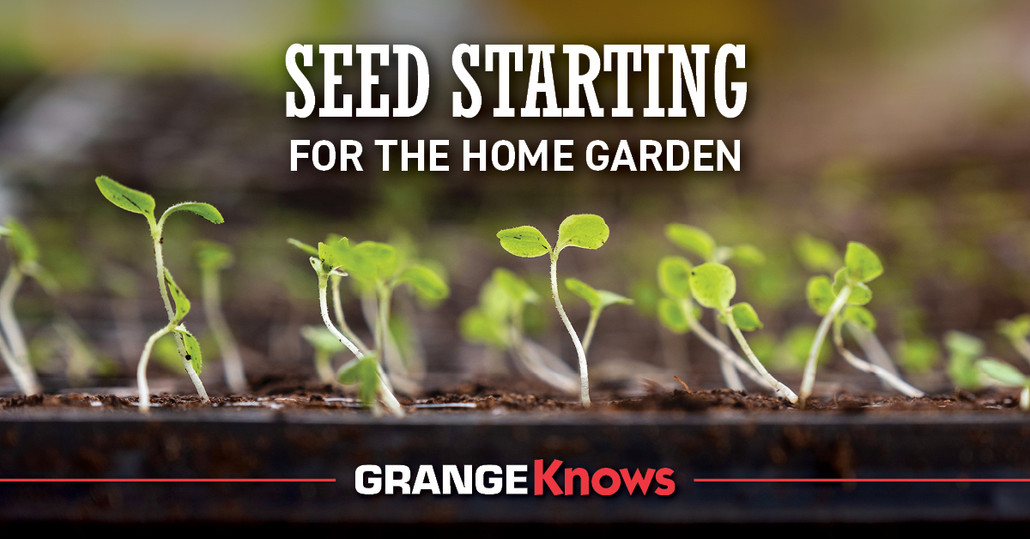
Seed Starting for the Home Garden
Posted by Grange Co-op on 23rd Feb 2026
There’s something magical about watching a tiny seed become a thriving plant. Whether you are dreaming of juicy strawberries, towering corn, or plump squash, starting seeds indoors gives you a head start and lets you grow the exact varieties you love. With more people looking to grow their own food, a little structure—and a few smart tools—and seed starting can fit into busy weeks and hit transplant time right on schedule.
Creating Your Seed Starting Calendar
The foundation of organized seed starting is a detailed calendar. Start by identifying your last expected frost date—this is your anchor point for all timing decisions. Create a master planting schedule by listing every variety you want to grow, noting how many weeks before the last frost each should be started indoors. Tomatoes and peppers typically need 6-8 weeks; brassicas like broccoli need 4-6 weeks, and quick growers like cucumbers need only 3-4 weeks. Strawberries are often started from crowns rather than seed; however, it’s not challenging; strawberries just require an extra step! If you are adding them to your seed starting calendar, you need to allow an extra 2-4 weeks, as the seeds need to be put on a damp paper towel, sealed in a plastic bag and placed in the fridge for 2-4 weeks before you begin your seed starting process.
Consider creating weekly “seed starting appointments” with yourself. Block out time each week during seed starting season to sow new batches, check on germinating seeds, water seedlings, and monitor growth. Treating these tasks as scheduled appointments makes them much less likely to fall through the cracks during busy weeks.
TECH TIP: Technology is used everywhere, and the garden is no exception; you can choose to use an AI app or a garden planner app to autogenerate your schedule. generate your schedule.
For AI, try a prompt like: “Create a seedstarting and transplanting calendar for Zone XX. I’m planting…,” then paste your list of seeds. Ask for calendarformat output and export to your phone’s calender so weekly “seedstarting appointments” are already blocked. Do a quick sanity check against your frost date and packet directions—AI is great, but not perfect and can be off by a week or two. starting and transplanting calendar for Zone XX. I’m planting…,” then paste your list format output and export to your phone starting appointments” are already blocked.
If you are going the garden planning app route, there are dozens of apps to choose from. Each has their pros and cons and are worth doing a little research to find out which app is best for you. Some apps will help you plan based on your family size, let you know how many plants you can fit per square foot, companion planting (and what should not be planted together) and will give you a weekly task list from seed starting through harvesting.
Organizing Your Seed Inventory
Before ordering or purchasing seeds; take inventory. Sort seeds by year, test older packets if you’re unsure, and track what you have in a simple spreadsheet or app. Group packets by sowing week in labeled envelopes or small boxes so you can grab exactly what you need without digging through the whole stash. While you’re at it, sketch your garden (Raised Bed 1, 2, etc.) and note where each crop will go. A little companion plant plant research now saves space and headaches later. Again, this is where a gardening app will come in handy, helping you quickly and digitally map out your space.
Essential Supplies for Seed Starting
You do not need fancy equipment to start seeds successfully, but having the right supplies makes the process much easier. At minimum, you will need containers with drainage holes, seed starting mix, seeds, and a reliable light source.
For containers, you can purchase seed starting trays or get creative with recycled yogurt cups, egg cartons, or newspaper pots. Just ensure they are at least 2-3 inches deep and have drainage holes. Never use garden soil for seed starting; it is too heavy and may harbor diseases. Instead, use a “seed starting mix,” which is lightweight, well-draining, sterile and specifically formulated for germination.
Trying the Seed Snail Method?
This viral, space saving technique uses bubble wrap (or flexible foam) rolled with moistened seed starting mix into upright “snails.” Secure with painter’s tape or rubber bands and set the rolls in a tray. Cardboard works, but use sturdy bands so the roll stays tight until transplant time. It’s especially handy for starting many varieties in a small footprint and makes thinning and potting up easy.
The Seed Starting Process
Traditional
Fill containers with premoistened seed starting mix, leaving 1/4 inch at the top. The mix should be damp (a squeeze yields a drop or two), not dripping. Plant seeds at the depth recommended on the packet—generally, this is about two to three times the seed’s diameter. Tiny seeds like petunias can simply be pressed onto the surface, while larger seeds like beans need to be buried deeper. moistened seed starting mix, leaving 1/4 inch at the top. The mix should be damp (a squeeze yields a drop or two), not dripping.
Seed Snail Method
Cut wrap or foam into 12–18 inch lengths and 4–6 inches high. Pre moisten seed starting mix and spread a 1/2 inch layer, leaving a small margin at the top and a few inches bare at the end for expansion. Roll tightly (like sushi), stand upright, secure, and sow seeds at the correct depth. Mist to settle.
For both methods, cover with plastic wrap or a humidity dome to retain moisture until germination. Keep warm and check daily. Once green shoots appear, remove covers and move seedlings under lights.
Caring for Your Seedlings
Seedlings are delicate in their first weeks of life, requiring consistent attention. Water from the bottom when possible, allowing the mix to wick up moisture through drainage holes. This prevents disturbing tiny seedlings and reduces the risk of damping-off disease. The soil should stay evenly moist but never waterlogged.
When seedlings develop their first set of true leaves (the second set you see), begin feeding weekly with a diluted liquid fertilizer at 1/4–1/2 strength; seed starting mixes are starting mixes are nutrient, so regular feeding builds strong growth free.
If cells are crowded, thin by snipping extras at the soil line so you don’t disturb neighbors. For seed snail rolls, unroll gently, separate, and reroll. snail rolls, unroll gently, separate, and re roll.
Hardening Off: The Critical Final Step
The transition from the protected indoor environment to the harsh outdoors can shock tender seedlings. Hardening off is the process of gradually acclimating plants to outdoor conditions over the 7-10 days prior to transplanting. Start by placing seedlings outside in a sheltered, shaded spot for just an hour or two, bringing them in before evening. Gradually increase their time outdoors and exposure to sun and wind over the course of a week.
By the end of the hardening-off period, your seedlings should be able to stay out overnight (weather permitting) and handle several hours of direct sun.
Common Mistakes to Avoid
• Overwatering, which invites fungal disease.
• Too little light, which causes leggy growth—keep lights close and adjust as plants grow.
• Starting too early, leading to overgrown seedlings before the weather is ready.
• Skipping hardening off—don’t undo weeks of work on transplant day.
• Forgetting labels; those tomato varieties all look identical as babies!
The Rewards
Seed starting does take attention, but the payoff is huge: you’ll save money, unlock exciting varieties, and get the satisfaction of nurturing plants from the very beginning. Even if you start small with tomatoes or zinnias, you’ll learn a ton and scale up next season. Before long, you’ll have flats of healthy seedlings each spring, ready to head into the garden right on time. Happy growing!