
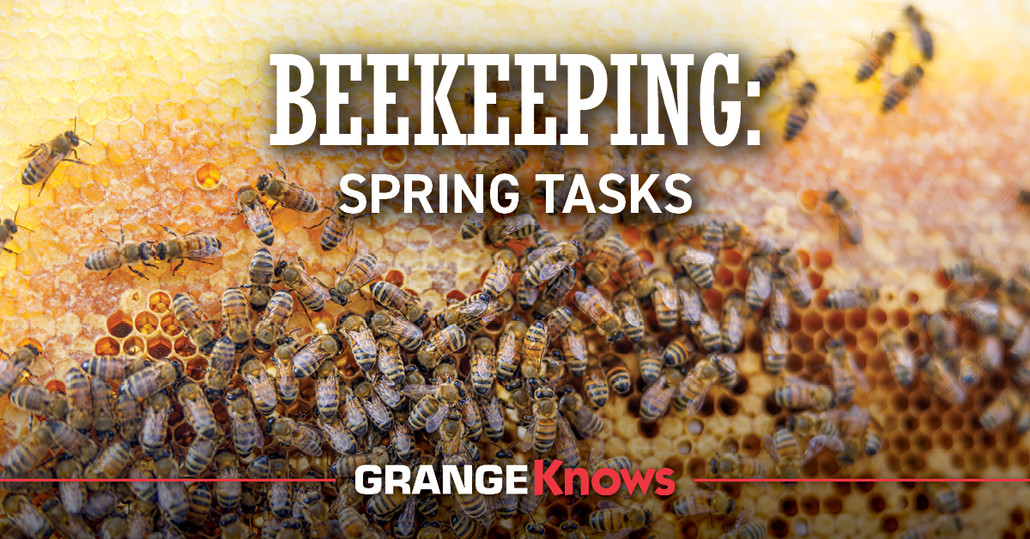
Beekeeping Spring Tasks
Posted by Grange Co-op on 6th Apr 2026
Spring is in the air. Flowers are beginning to bloom, the days are getting longer and somewhere in the field, your hive is stirring back to life. After a long winter, the arrival of spring is one of the most exciting times for a bee-keeper, and one of the busiest. Whether you’re a first-year hobbyist or a seasoned apiarist, a little preparation now sets the tone for a healthy, productive season ahead.
Get your Equipment Ready Before the Bees Are
There is nothing worse than opening a hive on a warm spring day only to realize your smoker is clogged, your hive tool is missing, or your veil has a suspicious hole in it. Before heading out to the apiary, a quick once-over of your gear will save you a lot of time, and maybe some frustration.
Start by checking protective clothing for tears or holes, including the mesh on your hood. And if your gloves are anything like mine, where one tends to wander off, now is a great moment to locate that missing glove or replace your set. Test your smoker and give it a good cleaning if needed.
Hive Inspection
Once daytime temperatures are consistently above 55̊ or above, it’s time to do your first real hive inspection of the season. This is the moment of truth—how did your colony do through the winter?
Start by checking your hive boxes and lids for signs of rot, warping, or mold. Scrape off any excess propolis (the resinous mixture created by bees to seal and protect hives) and wax with your hive tool, and replace any frames that are damaged, or have a dark comb that has seen better days.
Next, look for signs of a healthy, active queen. You are hoping to spot a solid pattern of capped brood, the dome-covered comb that tells you eggs are being laid, and the colony is growing. If you see spotty or scattered brood, it could indicate a struggling queen, and you need to decide whether to requeen.
Check the overall population. A good spring colony should be covering several frames with bees. If the cluster seems small, don’t panic just yet; populations build fast once brood-rearing kicks into gear, but keep a close eye on things. On the flip side, if you notice your frames seem full, it’s likely time to expand. Following the 80/50 rule will help you keep your bees happy and prevent swarming. As you check your frames, are 80% of the frames being worked, and are the frames covered at least 50% by bees? If so, it’s time to expand.
Next, look at the stores. Did they make it through the winter with enough honey and pollen? Also, look for anything unusual: foul smells, discolored larvae, or unusual bee behavior can all be early warning signs of disease or pests.
Feed Your Bees (if they need it)
Spring can be tricky when it comes to food. The bees are ramping up brood production, which can use up their resources quickly, but natural forage might not be in full swing just yet. If your inspection reveals that stores are running low, supplemental feeding can make a real difference.
A 1:1 sugar syrup mimics nectar and encourages bees to draw out new comb and ramp up brood-rearing. Feed it in a hive top feeder or entrance feeder until natural forage becomes plentiful, then let your bees do their thing. Pollen is just as important as sugar. Bees need protein to raise healthy brood, and early spring often doesn’t offer enough natural pollen resources. Pollen patties placed directly on top of the frames are an easy way to bridge that gap and give your colony a nutritional boost when they need it the most. A well-fed hive is a happy hive.
Enjoy your season!
Beekeeping is a little bit of work, with a lot of rewards. There’s something genuinely magical about watching a hive come back to life after winter, the hum gets louder, the traffic at the entrance picks up and before long, you’ve got a buzzing, blooming apiary on your hands. Happy beekeeping.
You can get all of your beekeeping supplies at Grange Co-op, start shopping here: https://www.grangecoop.com/lawn-and-garden/beekeeping/