

Zoom the image with the mouse
Santa Rita Tubac Prickly Pear - 3 Gallon
SKU:
2173470
UPC:
014949072554
$71.99
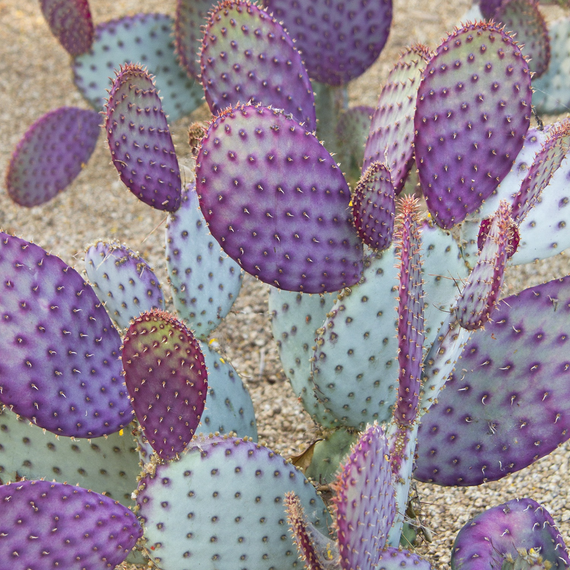
- Stunning year-round color display — pads shift from soft blue-gray in summer to rich violet-purple in winter, with color intensifying further during drought or cold stress
- Spectacular spring show of large, golden-yellow multi-petaled flowers blooming along the outer edges of the purple pads, followed by ornamental deep-purple edible fruits
- Exceptionally drought-tolerant and low-maintenance once established — an ideal choice for xeriscaping, rock gardens, and water-wise landscapes
- Deer and rabbit resistant with a naturally bold, upright form that provides striking architectural interest as a specimen plant or landscape accent
Opuntia santa-rita 'Tubac', commonly known as Santa-Rita Tubac Prickly Pear or Purple Prickly Pear, is one of the most visually captivating cacti available for Western landscapes. Native to the low-elevation desert regions of southern Arizona, New Mexico, Texas, and northern Mexico, this upright, shrubby succulent is prized for its extraordinary color-changing pads that transition from cool blue-gray during warm months to an intense violet-purple in response to winter cold, drought, or intensified sunlight — a living mood ring for your garden. In spring, breathtaking large yellow blooms emerge along the outer edges of the rounded, spine-covered pads, creating a vivid contrast that commands attention. The flowers give way to deep-purple, fleshy fruits that are both ornamentally beautiful and edible, beloved by birds and wildlife. The 'Tubac' selection is recognized for its especially large flowers and outstanding pad coloration, making it a standout among its species. Hardy, heat-tolerant, and virtually maintenance-free once established, this architectural cactus thrives in well-drained soils across USDA Zones 7-11 and is perfectly suited to xeriscape gardens, Mediterranean-style borders, gravel gardens, and low-water container plantings throughout Southern Oregon and Northern California.
Plant Description
Santa-Rita Tubac Prickly Pear (Opuntia santa-rita 'Tubac') is an upright, shrubby, segmented cactus belonging to the family Cactaceae. Its most celebrated feature is its large, rounded to oval, fleshy pads, which are covered in clusters of small glochids (hair-like barbed spines) and a handful of longer, stiff spines along the upper pad margins. The pads display a remarkable color shift — soft blue-gray during warm, active growing months and a rich, glowing violet-purple during cold winters or periods of drought and heat stress. This color change is driven by betalain pigments, which protect the plant from extreme environmental conditions. In spring, the outer edges of the pads are decorated with large, multi-petaled, bright yellow flowers that create a stunning contrast against the purple pads. The blooms are followed by ornamental deep-purple to reddish-purple fleshy fruits. The 'Tubac' cultivar is specifically selected for its exceptionally vibrant pad coloration and large flower size, making it among the showiest of all prickly pear cacti.
Mature Size
| Attribute | Measurement |
|---|---|
| Mature Height | 3 to 4 feet (some sources note up to 6 feet in optimal conditions) |
| Mature Spread | 5 to 6 feet wide |
| Growth Rate | Moderate |
| Growth Habit | Upright, shrubby, spreading succulent |
| Recommended Spacing | At least 6 feet from other plants, structures, and walkways |
Allow ample space when planting — this cactus will spread significantly over time. Keep it well away from sidewalks, driveways, play areas, and high-traffic zones to avoid contact with spines and glochids. Plants grown in containers will remain more compact than those planted in the ground.
Hardiness and Climate
Santa-Rita Tubac Prickly Pear is rated for USDA Hardiness Zones 7 through 11, tolerating minimum temperatures down to approximately 10-15 degrees F. It is well adapted to the heat zones of the arid and semi-arid American West and thrives in the hot, dry summers and mild winters typical of Southern Oregon and Northern California. It is highly tolerant of reflected heat, urban conditions, and temperature extremes. While frost-hardy for its zone range, young plants benefit from some protection during unusually hard freezes. The purple pad coloration actually deepens and intensifies the more the plant experiences cold winter temperatures, making colder winters a visual asset for this plant.
Sunlight Requirements
This prickly pear performs best in full sun, requiring a minimum of 6 hours of direct sunlight per day. Full sun not only promotes the healthiest growth and the most prolific blooming, but it also intensifies the signature purple pad coloration. It will tolerate light partial shade, particularly in regions with extreme afternoon heat, though flowering will be reduced and pad color may be less vibrant. When planting, orient the cactus in the same direction it faced in its nursery container whenever possible — cacti can experience sunburn if suddenly rotated to a new sun orientation. If pads begin to stretch, lean, or turn pale green, the plant is likely not receiving adequate light.
Soil and pH Preferences
Excellent drainage is the single most critical soil requirement for Santa-Rita Tubac Prickly Pear. It naturally grows in poor, rocky, or sandy desert soils and strongly prefers conditions that dry out quickly between waterings. Heavy clay soils that retain moisture will lead to root rot and plant decline. Ideal soil types include:
- Sandy loam or coarse sand with excellent drainage
- Rocky, gravelly native desert soils
- Commercially prepared cactus and succulent potting mix (for container plantings)
This plant tolerates a wide pH range from mildly acidic to alkaline (approximately 6.0 to 8.0). It is well suited to the naturally alkaline soils common throughout Southern Oregon and Northern California. When planting in heavy or clay-rich soils, amend generously with coarse sand or fine gravel to improve drainage, or consider planting on a raised mound or berm to further ensure water moves away from the root zone.
Watering Guide
One of the most drought-tolerant plants available for Western gardens, Santa-Rita Tubac Prickly Pear requires very little supplemental irrigation once established. Follow these guidelines to keep your plant healthy:
- At planting: Do not water immediately after transplanting. Wait 1 to 2 weeks before giving the plant its first irrigation. This encourages the roots to seek out moisture and reduces the risk of rot at the cut or disturbed root zone.
- First growing season (spring and summer): Water once or twice per month during the active growing season. Allow the soil to dry out completely between waterings. Skip irrigation after any rainfall of 0.5 inches or more.
- First growing season (fall and winter): Reduce watering to once per month or less. The plant goes semi-dormant and requires very little moisture.
- Established plants: Once fully established (typically after 1 to 2 seasons), this cactus can survive on natural rainfall alone in most Western climates. Supplemental irrigation is only needed during prolonged, severe drought.
Overwatering is the most common cause of decline and death in this species. Always err on the side of underwatering. Never allow the plant to sit in standing water or soggy soil.
Fertilizing
Santa-Rita Tubac Prickly Pear is a light feeder that thrives in lean, nutrient-poor soils and requires minimal fertilization. Over-fertilizing, particularly with nitrogen-heavy products, can cause rapid, weak growth and diminish the plant's natural form and coloration.
- In-ground plants: Generally require no fertilizer. Plants growing in native soil typically receive all the nutrients they need from their natural environment.
- Container-grown plants: Apply a light application of a balanced, low-dose fertilizer (such as a 5-10-5 formulation, higher in phosphorus than nitrogen) once in early spring to support healthy growth and flowering. Do not fertilize in fall or winter.
Avoid fertilizers with high nitrogen content, as this can produce overly lush, soft growth that is more susceptible to damage and less visually characteristic of the plant.
Pruning and Maintenance
Santa-Rita Tubac Prickly Pear is an exceptionally low-maintenance plant that rarely requires pruning under normal circumstances. When pruning is necessary, always wear thick leather gloves and use long-handled tongs or a folded newspaper to handle pads — glochids are nearly invisible and extremely difficult to remove from skin.
- Prune only to remove dead, damaged, or diseased pads, or to limit the size of the plant.
- Always cut at pad joints (the natural connection point between two pads) rather than through the middle of a pad.
- Remove lower pads if pack rat activity is a concern in your area, as the animals tend to shelter beneath them.
- Collect and dispose of fallen fruits promptly if wildlife such as javelinas, coyotes, or rodents are an issue in your area.
- No leaf cleanup is needed — this plant produces no leaf litter — though shed fruits during summer may require tidying.
With proper siting and adequate space, this cactus can go years without needing any pruning at all.
Planting Instructions
Follow these steps for successful establishment of your Santa-Rita Tubac Prickly Pear:
- Choose a planting site with full sun, excellent drainage, and ample space for the plant to reach its mature spread of 5 to 6 feet without being crowded by structures, walkways, or other plants.
- Dig a hole the same depth as the root ball and approximately twice as wide. Backfill with native soil — avoid adding rich organic amendments, which can retain excessive moisture and promote rot.
- If your native soil is heavy or slow-draining, amend with coarse sand or fine gravel. Consider planting on a slight mound or berm to further improve drainage.
- Before removing from the container, note the direction the cactus faces. If possible, orient the plant the same way in its new location to reduce the risk of sunburn on previously shaded pad surfaces.
- Carefully place the root ball in the hole and firm the soil around it to eliminate air pockets.
- Do not water for 1 to 2 weeks after planting. Then begin the recommended establishment watering schedule.
- Mulching is not necessary and can be counterproductive by retaining moisture around the base. Decorative gravel or decomposed granite is a preferred ground cover around the base of this plant.
The best time to plant is spring or early summer, when warm soil temperatures support root development. Avoid planting in late fall or winter when cool, wet conditions slow establishment and increase disease risk.
Seasonal Interest
Santa-Rita Tubac Prickly Pear provides remarkable visual interest throughout all four seasons, making it a true year-round performer in the landscape:
- Spring: Large, golden-yellow, multi-petaled flowers emerge along the outer edges of the pads, creating a breathtaking contrast against the deep-purple pad color. Flowers attract bees, butterflies, and hummingbirds.
- Summer: Pads transition to their soft blue-gray coloration. Deep-purple to reddish-purple fleshy fruits ripen and attract birds and other wildlife. Fallen fruits may need periodic cleanup.
- Fall: Pads begin their transition back toward purple tones as temperatures cool. The architectural form of the plant becomes increasingly prominent.
- Winter: Pads display their most intense violet-purple coloration, providing striking color in the dormant garden when most other plants have faded. The bold silhouette remains a strong structural presence.
Landscape Uses
The bold form and extraordinary color of Santa-Rita Tubac Prickly Pear make it a versatile and valuable landscape plant for a wide range of garden styles and settings:
- Xeriscape and water-wise gardens: An ideal anchor plant for low-water landscapes, reducing irrigation demands dramatically once established.
- Rock gardens and gravel gardens: At home among boulders, decomposed granite, and other dry, well-drained settings.
- Desert and Southwest-style gardens: A natural fit alongside agaves, yuccas, ornamental grasses, and other desert perennials.
- Mediterranean-style borders: Works beautifully with drought-tolerant Mediterranean plants such as lavender, rosemary, and salvia.
- Specimen or accent planting: Stunning as a standalone focal point where its architectural form and vivid color can be fully appreciated.
- Barrier or security planting: Dense spines make this an effective, low-maintenance deterrent when planted along boundaries or property edges. Keep well away from high-traffic areas.
- Slope stabilization: Deep roots and adaptability to rocky soils make it useful for erosion control on dry slopes.
Wildlife Value
Santa-Rita Tubac Prickly Pear is a valuable plant for wildlife, particularly in dry Western landscapes:
- Pollinators: The large yellow spring flowers attract native bees, honeybees, butterflies, and hummingbirds, providing an important early-season nectar source.
- Birds: The deep-purple fruits are highly attractive to a variety of bird species, which feed on the sweet, juicy flesh and help disperse seeds.
- General wildlife: Desert tortoises, coyotes, jackrabbits, and other native wildlife may also feed on the pads and fruits.
- Deer and rabbit resistant: The dense, sharp spines and glochids deter deer and rabbits, making this a dependable choice in areas where browsing pressure is a concern.
Note: While wildlife value is high, be aware that the plant can also attract unwanted visitors such as pack rats if lower pads provide shelter. Removing the lowest pads can reduce this tendency.
Companion Plants
Santa-Rita Tubac Prickly Pear pairs beautifully with other drought-tolerant, sun-loving plants that share its water and soil preferences. Consider these companion planting combinations:
- Agave species (e.g., Agave americana, Agave parryi) — bold rosette forms that echo the architectural character of the prickly pear
- Yucca species — vertical, spiky forms that provide dramatic contrast in height and texture
- Aloe species (e.g., Aloe maculata, Aloe vera) — complementary succulent textures and seasonal blooms in contrasting colors
- Penstemon species — colorful tubular flowers that attract hummingbirds alongside the prickly pear blooms
- Lavender (Lavandula species) — soft purple-blue flower spikes that harmonize with the purple pads
- Russian Sage (Perovskia atriplicifolia) — airy, silver-blue foliage that contrasts beautifully with the bold pad form
- Ornamental grasses (e.g., Muhlenbergia capillaris, Nassella tenuissima) — fine-textured movement and contrast against the bold, flat pads
- Delosperma (Ice Plant) — low-growing, drought-tolerant ground cover that provides colorful foreground interest
- Sedum or Stonecrop varieties — complementary succulent texture at a lower scale
Pests and Diseases
Santa-Rita Tubac Prickly Pear is generally hardy and disease-resistant, but there are a few issues to watch for:
- Cochineal scale (Dactylopius spp.): This is the most significant and common pest of this species. Infestations appear as small, round tufts of white, cottony wax on the pads. Beneath the cottony covering, the insects feed by sucking sap from the plant. If left untreated, heavy infestations can weaken and eventually kill the plant. Treatment options include blasting affected areas with a strong stream of water from a hose, removing heavily infested pads entirely, or applying insecticidal soap or horticultural oil. Regular monitoring is essential — do not plant this cactus if you are unwilling to check for and manage cochineal scale on a routine basis.
- Mealybugs: Similar in appearance to cochineal scale, mealybugs can occasionally infest pads. Treat with insecticidal soap or horticultural oil.
- Root rot: Caused almost exclusively by overwatering or poorly drained soils. Affected plants display soft, discolored, or mushy pads at the base. Prevention through proper drainage and restrained watering is far more effective than treatment.
- Sunburn: Pads can develop bleached, pale, or papery patches if a previously shaded plant is suddenly exposed to intense direct sun, or during extreme heat events. Orient new transplants in the same sun-facing direction as they were growing in their nursery container to minimize this risk.
This plant is generally free of serious fungal diseases when grown in well-drained conditions with adequate air circulation.
Container Growing
Santa-Rita Tubac Prickly Pear is well suited to container culture and makes a dramatic accent on sunny patios, courtyards, and entryways. When growing in a container, keep the following in mind:
- Choose a container with generous drainage holes and use a fast-draining cactus and succulent potting mix. Never use standard potting soil, which retains too much moisture.
- Terra cotta pots are ideal, as they are porous and allow excess moisture to evaporate through the walls.
- Place the container in the sunniest available location — at least 6 hours of direct sun per day.
- Water more frequently than in-ground plants, but always allow the soil to dry out completely between waterings. Check soil moisture before each watering by pressing a finger about an inch into the mix — water only if it feels completely dry.
- Container-grown plants will stay more compact than those in the ground and may need repotting every 2 to 3 years as the root system expands.
- Apply a light, low-dose cactus fertilizer (such as 5-10-5) once in early spring. No fertilizer is needed in fall or winter.
- In areas at the edge of its hardiness range, containers can be moved under cover or into an unheated garage during unusually severe freezes.
Edibility and Ethnobotanical Notes
Like many members of the Opuntia genus, the Santa-Rita Tubac Prickly Pear produces parts that have long been used as food by Indigenous peoples of the American Southwest and Mexico. Both the pads and the fruits are considered edible and nutritious:
- Pads (Nopales): Young, tender pads are harvested, de-spined, and de-glochided using tongs and a knife or vegetable peeler before cooking. They can be sliced and grilled, boiled, or sauteed. Nopales have a mildly tangy flavor with a crisp, slightly mucilaginous texture, similar to okra, and are commonly used in salads, tacos, and stews. They are rich in fiber, antioxidants, and vitamins.
- Fruits (Tunas): The deep-purple fruits ripen in summer and can be harvested with tongs. After peeling away the spiny outer skin, the sweet, juicy flesh can be eaten fresh or used to make juices, syrups, jellies, jams, smoothies, and beverages. The flavor is often compared to a blend of watermelon and pear.
Always use heavy protective gloves and tongs when handling any part of this plant. The glochids — tiny, nearly invisible barbed spines — are extremely irritating to skin and are far more difficult to remove than the larger spines. According to the ASPCA, this plant is generally considered non-toxic to humans and pets, though the physical spines and glochids pose a mechanical injury hazard.
- Stunning year-round color display — pads shift from soft blue-gray in summer to rich violet-purple in winter, with color intensifying further during drought or cold stress
- Spectacular spring show of large, golden-yellow multi-petaled flowers blooming along the outer edges of the purple pads, followed by ornamental deep-purple edible fruits
- Exceptionally drought-tolerant and low-maintenance once established — an ideal choice for xeriscaping, rock gardens, and water-wise landscapes
- Deer and rabbit resistant with a naturally bold, upright form that provides striking architectural interest as a specimen plant or landscape accent
Opuntia santa-rita 'Tubac', commonly known as Santa-Rita Tubac Prickly Pear or Purple Prickly Pear, is one of the most visually captivating cacti available for Western landscapes. Native to the low-elevation desert regions of southern Arizona, New Mexico, Texas, and northern Mexico, this upright, shrubby succulent is prized for its extraordinary color-changing pads that transition from cool blue-gray during warm months to an intense violet-purple in response to winter cold, drought, or intensified sunlight — a living mood ring for your garden. In spring, breathtaking large yellow blooms emerge along the outer edges of the rounded, spine-covered pads, creating a vivid contrast that commands attention. The flowers give way to deep-purple, fleshy fruits that are both ornamentally beautiful and edible, beloved by birds and wildlife. The 'Tubac' selection is recognized for its especially large flowers and outstanding pad coloration, making it a standout among its species. Hardy, heat-tolerant, and virtually maintenance-free once established, this architectural cactus thrives in well-drained soils across USDA Zones 7-11 and is perfectly suited to xeriscape gardens, Mediterranean-style borders, gravel gardens, and low-water container plantings throughout Southern Oregon and Northern California.
Plant Description
Santa-Rita Tubac Prickly Pear (Opuntia santa-rita 'Tubac') is an upright, shrubby, segmented cactus belonging to the family Cactaceae. Its most celebrated feature is its large, rounded to oval, fleshy pads, which are covered in clusters of small glochids (hair-like barbed spines) and a handful of longer, stiff spines along the upper pad margins. The pads display a remarkable color shift — soft blue-gray during warm, active growing months and a rich, glowing violet-purple during cold winters or periods of drought and heat stress. This color change is driven by betalain pigments, which protect the plant from extreme environmental conditions. In spring, the outer edges of the pads are decorated with large, multi-petaled, bright yellow flowers that create a stunning contrast against the purple pads. The blooms are followed by ornamental deep-purple to reddish-purple fleshy fruits. The 'Tubac' cultivar is specifically selected for its exceptionally vibrant pad coloration and large flower size, making it among the showiest of all prickly pear cacti.
Mature Size
| Attribute | Measurement |
|---|---|
| Mature Height | 3 to 4 feet (some sources note up to 6 feet in optimal conditions) |
| Mature Spread | 5 to 6 feet wide |
| Growth Rate | Moderate |
| Growth Habit | Upright, shrubby, spreading succulent |
| Recommended Spacing | At least 6 feet from other plants, structures, and walkways |
Allow ample space when planting — this cactus will spread significantly over time. Keep it well away from sidewalks, driveways, play areas, and high-traffic zones to avoid contact with spines and glochids. Plants grown in containers will remain more compact than those planted in the ground.
Hardiness and Climate
Santa-Rita Tubac Prickly Pear is rated for USDA Hardiness Zones 7 through 11, tolerating minimum temperatures down to approximately 10-15 degrees F. It is well adapted to the heat zones of the arid and semi-arid American West and thrives in the hot, dry summers and mild winters typical of Southern Oregon and Northern California. It is highly tolerant of reflected heat, urban conditions, and temperature extremes. While frost-hardy for its zone range, young plants benefit from some protection during unusually hard freezes. The purple pad coloration actually deepens and intensifies the more the plant experiences cold winter temperatures, making colder winters a visual asset for this plant.
Sunlight Requirements
This prickly pear performs best in full sun, requiring a minimum of 6 hours of direct sunlight per day. Full sun not only promotes the healthiest growth and the most prolific blooming, but it also intensifies the signature purple pad coloration. It will tolerate light partial shade, particularly in regions with extreme afternoon heat, though flowering will be reduced and pad color may be less vibrant. When planting, orient the cactus in the same direction it faced in its nursery container whenever possible — cacti can experience sunburn if suddenly rotated to a new sun orientation. If pads begin to stretch, lean, or turn pale green, the plant is likely not receiving adequate light.
Soil and pH Preferences
Excellent drainage is the single most critical soil requirement for Santa-Rita Tubac Prickly Pear. It naturally grows in poor, rocky, or sandy desert soils and strongly prefers conditions that dry out quickly between waterings. Heavy clay soils that retain moisture will lead to root rot and plant decline. Ideal soil types include:
- Sandy loam or coarse sand with excellent drainage
- Rocky, gravelly native desert soils
- Commercially prepared cactus and succulent potting mix (for container plantings)
This plant tolerates a wide pH range from mildly acidic to alkaline (approximately 6.0 to 8.0). It is well suited to the naturally alkaline soils common throughout Southern Oregon and Northern California. When planting in heavy or clay-rich soils, amend generously with coarse sand or fine gravel to improve drainage, or consider planting on a raised mound or berm to further ensure water moves away from the root zone.
Watering Guide
One of the most drought-tolerant plants available for Western gardens, Santa-Rita Tubac Prickly Pear requires very little supplemental irrigation once established. Follow these guidelines to keep your plant healthy:
- At planting: Do not water immediately after transplanting. Wait 1 to 2 weeks before giving the plant its first irrigation. This encourages the roots to seek out moisture and reduces the risk of rot at the cut or disturbed root zone.
- First growing season (spring and summer): Water once or twice per month during the active growing season. Allow the soil to dry out completely between waterings. Skip irrigation after any rainfall of 0.5 inches or more.
- First growing season (fall and winter): Reduce watering to once per month or less. The plant goes semi-dormant and requires very little moisture.
- Established plants: Once fully established (typically after 1 to 2 seasons), this cactus can survive on natural rainfall alone in most Western climates. Supplemental irrigation is only needed during prolonged, severe drought.
Overwatering is the most common cause of decline and death in this species. Always err on the side of underwatering. Never allow the plant to sit in standing water or soggy soil.
Fertilizing
Santa-Rita Tubac Prickly Pear is a light feeder that thrives in lean, nutrient-poor soils and requires minimal fertilization. Over-fertilizing, particularly with nitrogen-heavy products, can cause rapid, weak growth and diminish the plant's natural form and coloration.
- In-ground plants: Generally require no fertilizer. Plants growing in native soil typically receive all the nutrients they need from their natural environment.
- Container-grown plants: Apply a light application of a balanced, low-dose fertilizer (such as a 5-10-5 formulation, higher in phosphorus than nitrogen) once in early spring to support healthy growth and flowering. Do not fertilize in fall or winter.
Avoid fertilizers with high nitrogen content, as this can produce overly lush, soft growth that is more susceptible to damage and less visually characteristic of the plant.
Pruning and Maintenance
Santa-Rita Tubac Prickly Pear is an exceptionally low-maintenance plant that rarely requires pruning under normal circumstances. When pruning is necessary, always wear thick leather gloves and use long-handled tongs or a folded newspaper to handle pads — glochids are nearly invisible and extremely difficult to remove from skin.
- Prune only to remove dead, damaged, or diseased pads, or to limit the size of the plant.
- Always cut at pad joints (the natural connection point between two pads) rather than through the middle of a pad.
- Remove lower pads if pack rat activity is a concern in your area, as the animals tend to shelter beneath them.
- Collect and dispose of fallen fruits promptly if wildlife such as javelinas, coyotes, or rodents are an issue in your area.
- No leaf cleanup is needed — this plant produces no leaf litter — though shed fruits during summer may require tidying.
With proper siting and adequate space, this cactus can go years without needing any pruning at all.
Planting Instructions
Follow these steps for successful establishment of your Santa-Rita Tubac Prickly Pear:
- Choose a planting site with full sun, excellent drainage, and ample space for the plant to reach its mature spread of 5 to 6 feet without being crowded by structures, walkways, or other plants.
- Dig a hole the same depth as the root ball and approximately twice as wide. Backfill with native soil — avoid adding rich organic amendments, which can retain excessive moisture and promote rot.
- If your native soil is heavy or slow-draining, amend with coarse sand or fine gravel. Consider planting on a slight mound or berm to further improve drainage.
- Before removing from the container, note the direction the cactus faces. If possible, orient the plant the same way in its new location to reduce the risk of sunburn on previously shaded pad surfaces.
- Carefully place the root ball in the hole and firm the soil around it to eliminate air pockets.
- Do not water for 1 to 2 weeks after planting. Then begin the recommended establishment watering schedule.
- Mulching is not necessary and can be counterproductive by retaining moisture around the base. Decorative gravel or decomposed granite is a preferred ground cover around the base of this plant.
The best time to plant is spring or early summer, when warm soil temperatures support root development. Avoid planting in late fall or winter when cool, wet conditions slow establishment and increase disease risk.
Seasonal Interest
Santa-Rita Tubac Prickly Pear provides remarkable visual interest throughout all four seasons, making it a true year-round performer in the landscape:
- Spring: Large, golden-yellow, multi-petaled flowers emerge along the outer edges of the pads, creating a breathtaking contrast against the deep-purple pad color. Flowers attract bees, butterflies, and hummingbirds.
- Summer: Pads transition to their soft blue-gray coloration. Deep-purple to reddish-purple fleshy fruits ripen and attract birds and other wildlife. Fallen fruits may need periodic cleanup.
- Fall: Pads begin their transition back toward purple tones as temperatures cool. The architectural form of the plant becomes increasingly prominent.
- Winter: Pads display their most intense violet-purple coloration, providing striking color in the dormant garden when most other plants have faded. The bold silhouette remains a strong structural presence.
Landscape Uses
The bold form and extraordinary color of Santa-Rita Tubac Prickly Pear make it a versatile and valuable landscape plant for a wide range of garden styles and settings:
- Xeriscape and water-wise gardens: An ideal anchor plant for low-water landscapes, reducing irrigation demands dramatically once established.
- Rock gardens and gravel gardens: At home among boulders, decomposed granite, and other dry, well-drained settings.
- Desert and Southwest-style gardens: A natural fit alongside agaves, yuccas, ornamental grasses, and other desert perennials.
- Mediterranean-style borders: Works beautifully with drought-tolerant Mediterranean plants such as lavender, rosemary, and salvia.
- Specimen or accent planting: Stunning as a standalone focal point where its architectural form and vivid color can be fully appreciated.
- Barrier or security planting: Dense spines make this an effective, low-maintenance deterrent when planted along boundaries or property edges. Keep well away from high-traffic areas.
- Slope stabilization: Deep roots and adaptability to rocky soils make it useful for erosion control on dry slopes.
Wildlife Value
Santa-Rita Tubac Prickly Pear is a valuable plant for wildlife, particularly in dry Western landscapes:
- Pollinators: The large yellow spring flowers attract native bees, honeybees, butterflies, and hummingbirds, providing an important early-season nectar source.
- Birds: The deep-purple fruits are highly attractive to a variety of bird species, which feed on the sweet, juicy flesh and help disperse seeds.
- General wildlife: Desert tortoises, coyotes, jackrabbits, and other native wildlife may also feed on the pads and fruits.
- Deer and rabbit resistant: The dense, sharp spines and glochids deter deer and rabbits, making this a dependable choice in areas where browsing pressure is a concern.
Note: While wildlife value is high, be aware that the plant can also attract unwanted visitors such as pack rats if lower pads provide shelter. Removing the lowest pads can reduce this tendency.
Companion Plants
Santa-Rita Tubac Prickly Pear pairs beautifully with other drought-tolerant, sun-loving plants that share its water and soil preferences. Consider these companion planting combinations:
- Agave species (e.g., Agave americana, Agave parryi) — bold rosette forms that echo the architectural character of the prickly pear
- Yucca species — vertical, spiky forms that provide dramatic contrast in height and texture
- Aloe species (e.g., Aloe maculata, Aloe vera) — complementary succulent textures and seasonal blooms in contrasting colors
- Penstemon species — colorful tubular flowers that attract hummingbirds alongside the prickly pear blooms
- Lavender (Lavandula species) — soft purple-blue flower spikes that harmonize with the purple pads
- Russian Sage (Perovskia atriplicifolia) — airy, silver-blue foliage that contrasts beautifully with the bold pad form
- Ornamental grasses (e.g., Muhlenbergia capillaris, Nassella tenuissima) — fine-textured movement and contrast against the bold, flat pads
- Delosperma (Ice Plant) — low-growing, drought-tolerant ground cover that provides colorful foreground interest
- Sedum or Stonecrop varieties — complementary succulent texture at a lower scale
Pests and Diseases
Santa-Rita Tubac Prickly Pear is generally hardy and disease-resistant, but there are a few issues to watch for:
- Cochineal scale (Dactylopius spp.): This is the most significant and common pest of this species. Infestations appear as small, round tufts of white, cottony wax on the pads. Beneath the cottony covering, the insects feed by sucking sap from the plant. If left untreated, heavy infestations can weaken and eventually kill the plant. Treatment options include blasting affected areas with a strong stream of water from a hose, removing heavily infested pads entirely, or applying insecticidal soap or horticultural oil. Regular monitoring is essential — do not plant this cactus if you are unwilling to check for and manage cochineal scale on a routine basis.
- Mealybugs: Similar in appearance to cochineal scale, mealybugs can occasionally infest pads. Treat with insecticidal soap or horticultural oil.
- Root rot: Caused almost exclusively by overwatering or poorly drained soils. Affected plants display soft, discolored, or mushy pads at the base. Prevention through proper drainage and restrained watering is far more effective than treatment.
- Sunburn: Pads can develop bleached, pale, or papery patches if a previously shaded plant is suddenly exposed to intense direct sun, or during extreme heat events. Orient new transplants in the same sun-facing direction as they were growing in their nursery container to minimize this risk.
This plant is generally free of serious fungal diseases when grown in well-drained conditions with adequate air circulation.
Container Growing
Santa-Rita Tubac Prickly Pear is well suited to container culture and makes a dramatic accent on sunny patios, courtyards, and entryways. When growing in a container, keep the following in mind:
- Choose a container with generous drainage holes and use a fast-draining cactus and succulent potting mix. Never use standard potting soil, which retains too much moisture.
- Terra cotta pots are ideal, as they are porous and allow excess moisture to evaporate through the walls.
- Place the container in the sunniest available location — at least 6 hours of direct sun per day.
- Water more frequently than in-ground plants, but always allow the soil to dry out completely between waterings. Check soil moisture before each watering by pressing a finger about an inch into the mix — water only if it feels completely dry.
- Container-grown plants will stay more compact than those in the ground and may need repotting every 2 to 3 years as the root system expands.
- Apply a light, low-dose cactus fertilizer (such as 5-10-5) once in early spring. No fertilizer is needed in fall or winter.
- In areas at the edge of its hardiness range, containers can be moved under cover or into an unheated garage during unusually severe freezes.
Edibility and Ethnobotanical Notes
Like many members of the Opuntia genus, the Santa-Rita Tubac Prickly Pear produces parts that have long been used as food by Indigenous peoples of the American Southwest and Mexico. Both the pads and the fruits are considered edible and nutritious:
- Pads (Nopales): Young, tender pads are harvested, de-spined, and de-glochided using tongs and a knife or vegetable peeler before cooking. They can be sliced and grilled, boiled, or sauteed. Nopales have a mildly tangy flavor with a crisp, slightly mucilaginous texture, similar to okra, and are commonly used in salads, tacos, and stews. They are rich in fiber, antioxidants, and vitamins.
- Fruits (Tunas): The deep-purple fruits ripen in summer and can be harvested with tongs. After peeling away the spiny outer skin, the sweet, juicy flesh can be eaten fresh or used to make juices, syrups, jellies, jams, smoothies, and beverages. The flavor is often compared to a blend of watermelon and pear.
Always use heavy protective gloves and tongs when handling any part of this plant. The glochids — tiny, nearly invisible barbed spines — are extremely irritating to skin and are far more difficult to remove than the larger spines. According to the ASPCA, this plant is generally considered non-toxic to humans and pets, though the physical spines and glochids pose a mechanical injury hazard.
Related Products