

Zoom the image with the mouse
Baby Rita Prickly Pear - 2 Gallon
SKU:
1930020
UPC:
014949328385
$49.99
- Stunning dwarf hybrid prickly pear with blue-gray pads that shift to rich, glowing purple in cool temperatures, drought, or intense sun — providing year-round color interest.
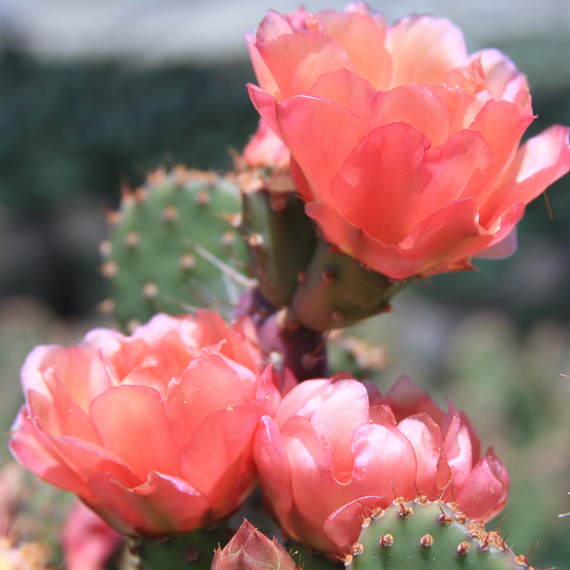
- Brilliant carmine-pink to magenta flowers bloom abundantly in spring and continue to rebloom modestly through summer, creating a striking contrast against the colorful pads.
- Exceptionally cold-hardy and drought-tolerant once established, thriving from coastal gardens to inland deserts and high-altitude landscapes with minimal care.
- Deer and rabbit resistant, low-maintenance, and ideal for rock gardens, xeriscape designs, Mediterranean-style borders, and container planting.
Opuntia 'Baby Rita' (Baby Rita Prickly Pear) is a captivating dwarf hybrid cactus — a cross between the Santa Rita prickly pear (Opuntia santa-rita) and the beavertail cactus (Opuntia basilaris) — that delivers spectacular, ever-changing color in a compact, garden-friendly package. Its round to oval, fleshy pads emerge in soft blue-gray tones and transform into vibrant shades of pink-purple and deep magenta in response to cooler temperatures, heat stress, or drought, making this evergreen cactus a living color display throughout all four seasons. In spring and into early summer, the pads become loaded with brilliant carmine to deep pink blossoms with multi-toned apricot and copper hues that sit along the pad edges and attract hummingbirds and pollinators to the garden. Slowly mounding to 8 to 24 inches tall and spreading up to 24 inches wide, 'Baby Rita' is one of the most ornamental cold-hardy cacti available, tolerating temperatures as low as -10 degrees F (USDA Zone 6) while also thriving in the intense heat of inland deserts. Its adaptability across a wide range of climates — from the California coast to high-altitude mountain gardens — combined with its extremely low water needs, deer and rabbit resistance, and pollution tolerance, makes it a top choice for water-wise landscaping, rock gardens, succulent borders, Mediterranean-style beds, and patio containers throughout Southern Oregon and Northern California.
Plant Description
Baby Rita Prickly Pear is a dwarf, evergreen hybrid cactus prized for its exceptional color-changing pads and showy spring flowers. The round to oval, fleshy pads measure approximately 3 to 4 inches long and are arranged in a low, clumping mound. Pads emerge in soft blue-gray or sage-green tones and develop rich pinkish-purple to deep magenta hues when exposed to cold temperatures, summer heat, or moisture stress. This color shift is a natural, healthy response and one of the plant's most celebrated ornamental features. The pads are covered with clusters of fine spines and glochids (tiny, hair-like barbs), which are characteristic of the Opuntia genus. 'Baby Rita' is considered one of the most beautiful cold-hardy prickly pears available, combining the compact habit of O. basilaris with the stunning pad coloration of O. santa-rita in a garden-sized form.
Mature Size
| Attribute | Measurement |
|---|---|
| Height | 8 inches to 2 feet (20 to 60 cm) |
| Spread | 1 to 2 feet (30 to 60 cm), occasionally up to 4 feet wide with age |
| Growth Rate | Slow to moderate; reaches mature size in 1 to 3 growing seasons |
| Growth Habit | Low, clumping, spreading mound |
| Pad Size | Approximately 3 to 4 inches long |
Hardiness and Climate
'Baby Rita' is an exceptionally tough and adaptable cactus. It is cold-hardy down to approximately -10 degrees F, placing it solidly in USDA Hardiness Zones 6 through 11. This makes it one of the hardiest ornamental prickly pears available for gardens beyond the typical desert Southwest. It thrives equally well in coastal gardens, inland valleys, high-desert landscapes, and even mountain gardens at elevation. In terms of heat, it handles extreme summer temperatures with ease and actually responds to heat stress by deepening its purple pad coloration. It is rated for AHS Heat Zones 9 through 12 and is well-suited to Sunset Climate Zones 8 through 24.
Sunlight Requirements
'Baby Rita' performs best in full sun, receiving at least 6 hours of direct sunlight per day. Full sun exposure encourages the most vivid pad coloration — the deeper the sun exposure, the more saturated the purple and magenta tones become. It can tolerate partial sun or light shade, particularly in hot inland locations where some afternoon shade may reduce heat stress, but pad color will be less intense and the plant may become more open in habit. For maximum flowering and the most spectacular color display, plant in the sunniest spot available.
Soil and pH Preferences
Like all prickly pear cacti, 'Baby Rita' demands excellent drainage above all else. It thrives in sandy, loamy, gritty, or rocky soils and performs beautifully in lean or low-fertility soils that would challenge most other plants. It tolerates a wide pH range, including acidic, neutral, and alkaline soils. Avoid planting in heavy clay or any location where water pools after rain, as consistently wet conditions — especially in winter — will lead to root rot. When planting in native soils with poor drainage, amend generously with coarse sand, pumice, or fine gravel to create the sharply draining environment this plant needs to thrive.
Watering Guide
'Baby Rita' is highly drought-tolerant once established and requires very little supplemental irrigation. Follow these watering guidelines for best results:
- At planting: Water thoroughly to settle the soil and help roots establish.
- First growing season: Water every 2 to 3 weeks during summer heat to encourage root establishment, allowing the soil to dry out completely between waterings.
- Established plants: Once established, water only occasionally — once or twice a month in summer, or rely on natural rainfall in most years.
- Winter: Reduce watering significantly or withhold entirely during cool, wet months. Excess winter moisture is the leading cause of plant decline and root rot in Opuntia.
- Key rule: Always allow the soil to dry out completely between watering sessions. When in doubt, do not water.
Fertilizing
'Baby Rita' is a lean feeder and thrives in low-nutrient soils. Fertilizing is entirely optional and should be done sparingly to avoid overly lush, weak growth that reduces ornamental coloration and cold hardiness. If desired, apply a diluted, low-nitrogen cactus and succulent fertilizer once per year in early spring as the growing season begins. Avoid high-nitrogen fertilizers, which encourage excessive soft growth at the expense of the plant's characteristic color and compact form. Do not fertilize in late summer or fall, as this can stimulate new growth that may be damaged by early frosts.
Pruning and Maintenance
'Baby Rita' is an exceptionally low-maintenance plant that requires little to no routine pruning. Follow these simple guidelines to keep it looking its best:
- Remove damaged, shriveled, or discolored pads at any time using long-handled tongs and thick gloves to protect yourself from spines and glochids.
- If the plant spreads beyond its allotted space, individual pads can be removed cleanly at the joint with tongs and a sharp, clean knife.
- Allow cut or broken pads to callous for several days before the cut surface contacts soil, whether removed or left on the plant.
- No deadheading is necessary after flowering.
- Avoid working with bare hands — glochids are extremely fine and difficult to remove from skin.
Planting Instructions
- Choose a site with full sun and excellent drainage. Avoid low-lying areas where water collects.
- If soil drainage is questionable, raise the planting area by creating a mound or berm 6 to 12 inches high, or amend the existing soil with 50% coarse sand, pumice, or pea gravel.
- Dig a hole roughly twice the width of the root ball and no deeper than the root ball itself.
- Wear thick leather gloves and use long-handled tongs to handle the plant safely.
- Set the plant at the same depth it was growing previously — avoid burying the base of the pads.
- Backfill with the amended soil, firming gently around the roots.
- Top-dress the planting area with a layer of gravel or decorative rock mulch to help keep the base of the plant dry and discourage rot.
- Water in thoroughly, then allow to dry completely before the next watering.
- Best planted in spring or early summer. Space plants approximately 24 inches apart.
Seasonal Interest
| Season | Ornamental Feature |
|---|---|
| Spring | Abundant carmine-pink to magenta blooms along pad edges; fresh blue-gray new pad growth |
| Early Summer | Continued sporadic rebloom; pads begin intensifying to pink-purple tones with summer heat |
| Summer | Pads deepen to glowing pinkish-purple under heat and drought stress |
| Fall | Pad color continues to intensify as temperatures drop; rich purple tones develop |
| Winter | Pads reach peak deep purple and magenta coloration; evergreen structure provides year-round garden interest |
Landscape Uses
'Baby Rita' is an extremely versatile ornamental cactus suited to a wide range of garden styles and applications:
- Rock gardens: A natural fit among boulders, gravel mulch, and drought-adapted perennials.
- Xeriscape and water-wise gardens: One of the most ornamental choices for low-water landscape design.
- Mediterranean and desert-style borders: Pairs beautifully with agave, yucca, ornamental grasses, and drought-tolerant perennials.
- Slope and erosion control: Low-spreading habit and minimal water needs make it useful on dry slopes and banks.
- Containers and patio pots: Compact size is well-suited to large decorative containers with well-draining cactus mix.
- Accent planting: Use as a bold focal point in succulent and cactus display gardens.
- Security barrier: Spiny pads can serve as a low-growing deterrent planting along borders.
Container Growing
'Baby Rita' adapts well to container culture and makes a striking patio or courtyard specimen. Use a container with ample drainage holes — at least one large hole — to prevent water from pooling around the roots. Fill with a commercial cactus and succulent potting mix, or blend standard potting soil 50/50 with coarse perlite or pumice for added drainage. Terra cotta pots are an excellent choice, as their porous walls help the soil dry more quickly between waterings. Position the container in full sun for the best color development. Container-grown plants dry out faster than those in the ground and will need watering slightly more frequently during peak summer heat, but still allow the soil to dry out completely between each watering. In cold-winter climates, containers can be moved to a dry, frost-free location during extended freezes below -10 degrees F.
Companion Plants
Pair 'Baby Rita' with other drought-tolerant, sun-loving plants that share its well-drained soil requirements and complement its bold form and color. Excellent companion plants include:
- Agave (Agave spp.) — Structural accent with bold rosette form; shares water-wise needs.
- Yucca (Yucca spp.) — Vertical spiky texture contrasts beautifully with rounded pads.
- Sedum / Stonecrop (Sedum spp.) — Low-growing succulents that fill gaps and complement the color palette.
- Aloe (Aloe spp.) — Colorful, drought-tolerant succulents with contrasting leaf texture.
- Paddle Plant (Kalanchoe luciae) — Red-tipped pads echo 'Baby Rita's purple tones beautifully.
- Lantana (Lantana camara) — Colorful flowering perennial that thrives in similar hot, dry conditions.
- Marigold (Tagetes spp.) — Bright seasonal color that pairs well in rock garden settings.
- Ornamental grasses — Fine-textured contrast to the bold, sculptural pads.
Wildlife Value
'Baby Rita' provides meaningful ecological value in the garden despite its spiny exterior:
- Hummingbirds: The bright carmine-pink flowers are highly attractive to hummingbirds seeking nectar in spring and early summer.
- Bees and pollinators: Open-faced flowers are readily visited by native bees and other pollinators.
- Birds: The dense, spiny pads provide protected nesting and shelter sites for small birds.
- Deer and rabbit resistant: The combination of spines and glochids makes this plant highly unappealing to browsing deer and rabbits, making it a reliable choice in wildlife-heavy landscapes.
Pests and Diseases
'Baby Rita' is generally very pest and disease resistant, especially when grown in well-draining soil with appropriate watering practices. However, gardeners should be aware of the following potential issues:
- Root rot: The most common problem, caused by overwatering or poorly draining soil. Ensure sharp drainage and avoid summer overwatering or winter wet soil conditions.
- Cochineal scale: A pink or white cottony insect pest that feeds on cactus pads. Remove with a strong stream of water or treat with neem oil or insecticidal soap. This pest is most common in hot, dry conditions.
- Cactus longhorn beetles: Larvae can bore into pads. Remove and dispose of affected pads promptly.
- Fungal rot (Erwinia/Fusarium): Can occur in humid or waterlogged conditions. Remove affected tissue with a clean, sharp tool and allow cuts to callous in dry conditions.
- Verticillium wilt resistant: 'Baby Rita' has demonstrated resistance to verticillium wilt, a valuable trait in regions where this soilborne pathogen is present.
Propagation
'Baby Rita' is most easily propagated by pad cuttings, which root readily under the right conditions:
- Use long-handled tongs and thick leather gloves to detach a healthy, mature pad at its joint.
- Set the detached pad in a dry, shaded location for 5 to 7 days to allow the cut end to form a callous. This critical step helps prevent rot when the pad is planted.
- Once calloused, place the pad upright with the cut end just barely touching (or slightly inserted into) dry, well-draining cactus mix or sandy soil.
- Do not water immediately. Wait 1 to 2 weeks before the first light watering to encourage root development.
- Rooting typically occurs within 4 to 8 weeks under warm conditions.
- Note: As a named cultivar, 'Baby Rita' may be subject to propagation restrictions. Pad propagation is generally acceptable for personal, non-commercial use.
- Stunning dwarf hybrid prickly pear with blue-gray pads that shift to rich, glowing purple in cool temperatures, drought, or intense sun — providing year-round color interest.
- Brilliant carmine-pink to magenta flowers bloom abundantly in spring and continue to rebloom modestly through summer, creating a striking contrast against the colorful pads.
- Exceptionally cold-hardy and drought-tolerant once established, thriving from coastal gardens to inland deserts and high-altitude landscapes with minimal care.
- Deer and rabbit resistant, low-maintenance, and ideal for rock gardens, xeriscape designs, Mediterranean-style borders, and container planting.
Opuntia 'Baby Rita' (Baby Rita Prickly Pear) is a captivating dwarf hybrid cactus — a cross between the Santa Rita prickly pear (Opuntia santa-rita) and the beavertail cactus (Opuntia basilaris) — that delivers spectacular, ever-changing color in a compact, garden-friendly package. Its round to oval, fleshy pads emerge in soft blue-gray tones and transform into vibrant shades of pink-purple and deep magenta in response to cooler temperatures, heat stress, or drought, making this evergreen cactus a living color display throughout all four seasons. In spring and into early summer, the pads become loaded with brilliant carmine to deep pink blossoms with multi-toned apricot and copper hues that sit along the pad edges and attract hummingbirds and pollinators to the garden. Slowly mounding to 8 to 24 inches tall and spreading up to 24 inches wide, 'Baby Rita' is one of the most ornamental cold-hardy cacti available, tolerating temperatures as low as -10 degrees F (USDA Zone 6) while also thriving in the intense heat of inland deserts. Its adaptability across a wide range of climates — from the California coast to high-altitude mountain gardens — combined with its extremely low water needs, deer and rabbit resistance, and pollution tolerance, makes it a top choice for water-wise landscaping, rock gardens, succulent borders, Mediterranean-style beds, and patio containers throughout Southern Oregon and Northern California.
Plant Description
Baby Rita Prickly Pear is a dwarf, evergreen hybrid cactus prized for its exceptional color-changing pads and showy spring flowers. The round to oval, fleshy pads measure approximately 3 to 4 inches long and are arranged in a low, clumping mound. Pads emerge in soft blue-gray or sage-green tones and develop rich pinkish-purple to deep magenta hues when exposed to cold temperatures, summer heat, or moisture stress. This color shift is a natural, healthy response and one of the plant's most celebrated ornamental features. The pads are covered with clusters of fine spines and glochids (tiny, hair-like barbs), which are characteristic of the Opuntia genus. 'Baby Rita' is considered one of the most beautiful cold-hardy prickly pears available, combining the compact habit of O. basilaris with the stunning pad coloration of O. santa-rita in a garden-sized form.
Mature Size
| Attribute | Measurement |
|---|---|
| Height | 8 inches to 2 feet (20 to 60 cm) |
| Spread | 1 to 2 feet (30 to 60 cm), occasionally up to 4 feet wide with age |
| Growth Rate | Slow to moderate; reaches mature size in 1 to 3 growing seasons |
| Growth Habit | Low, clumping, spreading mound |
| Pad Size | Approximately 3 to 4 inches long |
Hardiness and Climate
'Baby Rita' is an exceptionally tough and adaptable cactus. It is cold-hardy down to approximately -10 degrees F, placing it solidly in USDA Hardiness Zones 6 through 11. This makes it one of the hardiest ornamental prickly pears available for gardens beyond the typical desert Southwest. It thrives equally well in coastal gardens, inland valleys, high-desert landscapes, and even mountain gardens at elevation. In terms of heat, it handles extreme summer temperatures with ease and actually responds to heat stress by deepening its purple pad coloration. It is rated for AHS Heat Zones 9 through 12 and is well-suited to Sunset Climate Zones 8 through 24.
Sunlight Requirements
'Baby Rita' performs best in full sun, receiving at least 6 hours of direct sunlight per day. Full sun exposure encourages the most vivid pad coloration — the deeper the sun exposure, the more saturated the purple and magenta tones become. It can tolerate partial sun or light shade, particularly in hot inland locations where some afternoon shade may reduce heat stress, but pad color will be less intense and the plant may become more open in habit. For maximum flowering and the most spectacular color display, plant in the sunniest spot available.
Soil and pH Preferences
Like all prickly pear cacti, 'Baby Rita' demands excellent drainage above all else. It thrives in sandy, loamy, gritty, or rocky soils and performs beautifully in lean or low-fertility soils that would challenge most other plants. It tolerates a wide pH range, including acidic, neutral, and alkaline soils. Avoid planting in heavy clay or any location where water pools after rain, as consistently wet conditions — especially in winter — will lead to root rot. When planting in native soils with poor drainage, amend generously with coarse sand, pumice, or fine gravel to create the sharply draining environment this plant needs to thrive.
Watering Guide
'Baby Rita' is highly drought-tolerant once established and requires very little supplemental irrigation. Follow these watering guidelines for best results:
- At planting: Water thoroughly to settle the soil and help roots establish.
- First growing season: Water every 2 to 3 weeks during summer heat to encourage root establishment, allowing the soil to dry out completely between waterings.
- Established plants: Once established, water only occasionally — once or twice a month in summer, or rely on natural rainfall in most years.
- Winter: Reduce watering significantly or withhold entirely during cool, wet months. Excess winter moisture is the leading cause of plant decline and root rot in Opuntia.
- Key rule: Always allow the soil to dry out completely between watering sessions. When in doubt, do not water.
Fertilizing
'Baby Rita' is a lean feeder and thrives in low-nutrient soils. Fertilizing is entirely optional and should be done sparingly to avoid overly lush, weak growth that reduces ornamental coloration and cold hardiness. If desired, apply a diluted, low-nitrogen cactus and succulent fertilizer once per year in early spring as the growing season begins. Avoid high-nitrogen fertilizers, which encourage excessive soft growth at the expense of the plant's characteristic color and compact form. Do not fertilize in late summer or fall, as this can stimulate new growth that may be damaged by early frosts.
Pruning and Maintenance
'Baby Rita' is an exceptionally low-maintenance plant that requires little to no routine pruning. Follow these simple guidelines to keep it looking its best:
- Remove damaged, shriveled, or discolored pads at any time using long-handled tongs and thick gloves to protect yourself from spines and glochids.
- If the plant spreads beyond its allotted space, individual pads can be removed cleanly at the joint with tongs and a sharp, clean knife.
- Allow cut or broken pads to callous for several days before the cut surface contacts soil, whether removed or left on the plant.
- No deadheading is necessary after flowering.
- Avoid working with bare hands — glochids are extremely fine and difficult to remove from skin.
Planting Instructions
- Choose a site with full sun and excellent drainage. Avoid low-lying areas where water collects.
- If soil drainage is questionable, raise the planting area by creating a mound or berm 6 to 12 inches high, or amend the existing soil with 50% coarse sand, pumice, or pea gravel.
- Dig a hole roughly twice the width of the root ball and no deeper than the root ball itself.
- Wear thick leather gloves and use long-handled tongs to handle the plant safely.
- Set the plant at the same depth it was growing previously — avoid burying the base of the pads.
- Backfill with the amended soil, firming gently around the roots.
- Top-dress the planting area with a layer of gravel or decorative rock mulch to help keep the base of the plant dry and discourage rot.
- Water in thoroughly, then allow to dry completely before the next watering.
- Best planted in spring or early summer. Space plants approximately 24 inches apart.
Seasonal Interest
| Season | Ornamental Feature |
|---|---|
| Spring | Abundant carmine-pink to magenta blooms along pad edges; fresh blue-gray new pad growth |
| Early Summer | Continued sporadic rebloom; pads begin intensifying to pink-purple tones with summer heat |
| Summer | Pads deepen to glowing pinkish-purple under heat and drought stress |
| Fall | Pad color continues to intensify as temperatures drop; rich purple tones develop |
| Winter | Pads reach peak deep purple and magenta coloration; evergreen structure provides year-round garden interest |
Landscape Uses
'Baby Rita' is an extremely versatile ornamental cactus suited to a wide range of garden styles and applications:
- Rock gardens: A natural fit among boulders, gravel mulch, and drought-adapted perennials.
- Xeriscape and water-wise gardens: One of the most ornamental choices for low-water landscape design.
- Mediterranean and desert-style borders: Pairs beautifully with agave, yucca, ornamental grasses, and drought-tolerant perennials.
- Slope and erosion control: Low-spreading habit and minimal water needs make it useful on dry slopes and banks.
- Containers and patio pots: Compact size is well-suited to large decorative containers with well-draining cactus mix.
- Accent planting: Use as a bold focal point in succulent and cactus display gardens.
- Security barrier: Spiny pads can serve as a low-growing deterrent planting along borders.
Container Growing
'Baby Rita' adapts well to container culture and makes a striking patio or courtyard specimen. Use a container with ample drainage holes — at least one large hole — to prevent water from pooling around the roots. Fill with a commercial cactus and succulent potting mix, or blend standard potting soil 50/50 with coarse perlite or pumice for added drainage. Terra cotta pots are an excellent choice, as their porous walls help the soil dry more quickly between waterings. Position the container in full sun for the best color development. Container-grown plants dry out faster than those in the ground and will need watering slightly more frequently during peak summer heat, but still allow the soil to dry out completely between each watering. In cold-winter climates, containers can be moved to a dry, frost-free location during extended freezes below -10 degrees F.
Companion Plants
Pair 'Baby Rita' with other drought-tolerant, sun-loving plants that share its well-drained soil requirements and complement its bold form and color. Excellent companion plants include:
- Agave (Agave spp.) — Structural accent with bold rosette form; shares water-wise needs.
- Yucca (Yucca spp.) — Vertical spiky texture contrasts beautifully with rounded pads.
- Sedum / Stonecrop (Sedum spp.) — Low-growing succulents that fill gaps and complement the color palette.
- Aloe (Aloe spp.) — Colorful, drought-tolerant succulents with contrasting leaf texture.
- Paddle Plant (Kalanchoe luciae) — Red-tipped pads echo 'Baby Rita's purple tones beautifully.
- Lantana (Lantana camara) — Colorful flowering perennial that thrives in similar hot, dry conditions.
- Marigold (Tagetes spp.) — Bright seasonal color that pairs well in rock garden settings.
- Ornamental grasses — Fine-textured contrast to the bold, sculptural pads.
Wildlife Value
'Baby Rita' provides meaningful ecological value in the garden despite its spiny exterior:
- Hummingbirds: The bright carmine-pink flowers are highly attractive to hummingbirds seeking nectar in spring and early summer.
- Bees and pollinators: Open-faced flowers are readily visited by native bees and other pollinators.
- Birds: The dense, spiny pads provide protected nesting and shelter sites for small birds.
- Deer and rabbit resistant: The combination of spines and glochids makes this plant highly unappealing to browsing deer and rabbits, making it a reliable choice in wildlife-heavy landscapes.
Pests and Diseases
'Baby Rita' is generally very pest and disease resistant, especially when grown in well-draining soil with appropriate watering practices. However, gardeners should be aware of the following potential issues:
- Root rot: The most common problem, caused by overwatering or poorly draining soil. Ensure sharp drainage and avoid summer overwatering or winter wet soil conditions.
- Cochineal scale: A pink or white cottony insect pest that feeds on cactus pads. Remove with a strong stream of water or treat with neem oil or insecticidal soap. This pest is most common in hot, dry conditions.
- Cactus longhorn beetles: Larvae can bore into pads. Remove and dispose of affected pads promptly.
- Fungal rot (Erwinia/Fusarium): Can occur in humid or waterlogged conditions. Remove affected tissue with a clean, sharp tool and allow cuts to callous in dry conditions.
- Verticillium wilt resistant: 'Baby Rita' has demonstrated resistance to verticillium wilt, a valuable trait in regions where this soilborne pathogen is present.
Propagation
'Baby Rita' is most easily propagated by pad cuttings, which root readily under the right conditions:
- Use long-handled tongs and thick leather gloves to detach a healthy, mature pad at its joint.
- Set the detached pad in a dry, shaded location for 5 to 7 days to allow the cut end to form a callous. This critical step helps prevent rot when the pad is planted.
- Once calloused, place the pad upright with the cut end just barely touching (or slightly inserted into) dry, well-draining cactus mix or sandy soil.
- Do not water immediately. Wait 1 to 2 weeks before the first light watering to encourage root development.
- Rooting typically occurs within 4 to 8 weeks under warm conditions.
- Note: As a named cultivar, 'Baby Rita' may be subject to propagation restrictions. Pad propagation is generally acceptable for personal, non-commercial use.
Related Products