
Zoom the image with the mouse
Sallyfun Deep Ocean Salvia - 1 Gallon
SKU:
2071650
UPC:
014949434116
$12.99
- Stunning violet-blue flower spikes rise above fragrant, aromatic green foliage from late spring through the first frost, delivering months of saturated color in the garden or on the patio.
- Exceptionally heat and drought tolerant once established, making it a low-maintenance powerhouse for sunny Southern Oregon and Northern California gardens, borders, and containers.
- A magnet for pollinators - hummingbirds, butterflies, and bees flock to the nectar-rich blooms all season long, while deer and rabbits tend to leave it alone.
- Versatile and long-blooming, Sallyfun Deep Ocean excels as a striking "thriller" in mixed container arrangements, a cut flower for fresh bouquets, or a bold accent repeated through sunny garden borders.
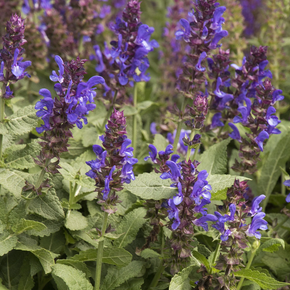
Sallyfun Deep Ocean Salvia (Salvia farinacea 'Sallyfun Deep Ocean') is a showstopping, compact mealycup sage that delivers an extraordinary season of color with its abundant, upright spikes of deep violet-blue blooms rising elegantly above lush, fragrant green foliage. A member of the Lamiaceae (mint) family and native to the south-central United States and northeast Mexico, this cultivar brings together everything gardeners love about the Sallyfun series - a tidy, clumping upright habit, bicolored flower spikes with gorgeous blue-dark violet petals accented by white, and a bloom season that stretches from late spring all the way to fall frost. Fully heat tolerant and impressively drought resistant once established, Sallyfun Deep Ocean is equally at home brightening a sunny mixed border, anchoring a pollinator garden, filling a porch or patio container as the "thriller" centerpiece, or supplying fresh-cut and dried stems for indoor arrangements. Its aromatic foliage naturally deters deer and rabbits, and its nectar-rich flowers create a constant flutter of bees, butterflies, and hummingbirds from season start to finish. Reliably perennial in warmer USDA zones, it performs magnificently as a long-blooming annual in cooler climates, making Sallyfun Deep Ocean one of the most rewarding and versatile salvias available for West Coast gardeners seeking effortless summer color.
Plant Description
Sallyfun Deep Ocean Salvia is a compact, upright herbaceous sage belonging to the species Salvia farinacea, commonly known as mealycup sage or mealy blue sage. The plant produces tall, slender flower spikes densely packed with tubular, two-lipped blooms in a striking deep violet-blue, with calyces and upper bracts dusted in fine white hairs - the characteristic "mealy" look that gives the species its common name. Each inflorescence spike measures 10-15 cm (4-6 inches) in length and 3-5 cm across, creating a bold vertical element in the landscape. The lance-shaped to ovate leaves are opposite, slightly glossy, subtly serrated along the margins, and pleasantly aromatic when brushed, measuring roughly 2-3 inches in length. Square, erect stems branch freely, giving the plant a full, well-rounded clump. The flower color is classified as a deep blue-violet with white secondary accents, creating a rich, jewel-toned effect that photographs beautifully and stands out boldly in sunny garden settings.
Mature Size
| Attribute | Measurement |
|---|---|
| Garden Height | 18-24 inches (some sources note up to 30 inches in ideal conditions) |
| Garden Spread | 18-24 inches |
| Recommended Spacing | 18 inches apart for good airflow and a full, lush appearance |
| Growth Habit | Upright and clumping; erect square stems with tidy mounding foliage |
| Growth Rate | Medium |
Hardiness Zones and Climate
Sallyfun Deep Ocean Salvia is reliably perennial in USDA Hardiness Zones 8-10, where it returns each season from its root system. In Zones 6b-7, it performs best when treated as a warm-season annual, delivering outstanding color from late spring until the first killing frost. It is native to the hot, sun-drenched prairies and woodland edges of south-central Texas and northeast Mexico, which makes it exceptionally well-adapted to the heat and dry summers common throughout Southern Oregon and Northern California. It thrives in high-heat conditions and handles both coastal and inland microclimates well. In regions at the warmer end of Zone 8, light mulching over the crown in late fall can help protect the root system through occasional cold snaps, encouraging a perennial return in spring.
Sunlight Requirements
Sallyfun Deep Ocean performs best and blooms most prolifically in full sun, defined as 6 or more hours of direct sunlight per day. Full sun produces the strongest, most upright stems, the most compact clumping habit, and the densest flower spikes. In very hot inland climates, it can tolerate light afternoon shade without major loss of flowering, but shade beyond a few hours per day will cause the plant to stretch, producing leggy growth and reduced bloom density. If the plant appears elongated or is not blooming vigorously, insufficient sunlight is the most common cause - relocating to a brighter spot will quickly restore its characteristic upright, floriferous habit.
Soil and pH Preferences
This salvia prefers well-drained soil and is notably tolerant of a wide range of soil types, including sandy loam, silty clay loam, and even dry clay soils once established. Good drainage is the single most important soil requirement - standing water or consistently soggy conditions will lead to weak growth, root issues, and rapid decline. Amending heavy clay soils with compost or coarse grit before planting will significantly improve performance. Sallyfun Deep Ocean is best suited to a slightly acidic to neutral soil pH in the range of 5.5-7.0. In its native habitat it is found in limestone-derived soils, so it demonstrates a degree of tolerance for slightly alkaline conditions as well. Enriching the planting area with a 2-3 inch layer of compost worked into the top 8-10 inches of soil before planting will encourage strong early establishment.
Watering Guide
During the establishment period - typically the first 4-6 weeks after planting - water consistently and deeply to encourage the root system to anchor well. Once established, Sallyfun Deep Ocean is impressively drought tolerant and requires far less supplemental irrigation than most flowering annuals. Water deeply at the base of the plant when the top 1-2 inches of soil have dried out, rather than watering lightly and frequently. Avoid overhead watering, which can encourage fungal issues on the foliage; instead, direct water at the root zone. In containers, check soil moisture more frequently during hot summer weather, as pots dry out considerably faster than ground plantings. During extended heat waves or drought periods, a deep weekly watering with a soaker hose is ideal. Overwatering or waterlogged soil will cause the plant to become leggy and can lead to root rot - always allow the soil to partially dry between waterings once the plant is established.
Fertilizing
Sallyfun Deep Ocean is not a heavy feeder and performs admirably in average garden soils with minimal supplemental nutrition. A light application of a balanced, slow-release granular fertilizer (such as a 10-10-10 or 5-10-5 formulation) worked into the soil at the time of planting provides a strong nutritional foundation for the season. In-ground plants in reasonably fertile soil may require little to no additional feeding beyond this. For container-grown plants or those in sandy, nutrient-poor soils, supplementing with a diluted liquid balanced fertilizer every 4-6 weeks during the active growing season will support continued vigorous blooming. Avoid over-fertilizing, particularly with high-nitrogen formulations, as excess nitrogen promotes lush leafy growth at the direct expense of flower spike production. If the plant is producing abundant foliage but few blooms, reduce fertilizing immediately.
Pruning and Maintenance
Sallyfun Deep Ocean is a low-maintenance plant that rewards minimal attention with a remarkably long bloom season. Deadheading - the removal of spent flower spikes by cutting them back to the next set of healthy leaves or lateral bud - is the single most effective practice for extending and encouraging continuous bloom. Think of deadheading as pressing a "rebloom button": the plant responds quickly by pushing new flower spikes. If the plant begins to look a bit tired or leggy mid-season, cutting it back by about one-third of its overall height will stimulate a fresh flush of compact growth and a renewed round of flowering within a few weeks. In zones where it is grown as a perennial, cut plants back to within a few inches of the crown in late fall or early spring before new growth emerges. Always use clean, sharp pruning shears to prevent the spread of disease. No complex pruning regimen is required - consistent deadheading and the occasional light trim are all this salvia needs to look its best from planting to frost.
Planting Instructions
- Select a planting site that receives full sun (6+ hours of direct sunlight daily) with good air circulation.
- Prepare the soil by loosening it to a depth of 8-10 inches and incorporating 2-3 inches of compost to improve drainage and fertility.
- Dig a planting hole slightly wider than the root ball and at the same depth as the container.
- Gently remove the plant from its container, lightly loosen any circling roots, and place it in the hole so the crown sits at or just slightly above the surrounding soil level.
- Backfill with the amended soil, firm gently around the base to eliminate air pockets, and water thoroughly.
- Space plants approximately 18 inches apart to allow for good airflow and a full, lush appearance at maturity.
- Apply 2 inches of organic mulch around the planting area (keeping mulch a few inches away from the stem) to conserve moisture and suppress weeds.
- Water regularly for the first 4-6 weeks until the plant is established. Avoid transplanting during extreme heat waves or frost; mild days in spring after the last frost date are ideal.
Seasonal Interest
Sallyfun Deep Ocean offers an exceptionally long season of visual interest that few flowering plants can match. Blooming commences in late spring (as early as May in mild-winter climates) and continues with remarkable consistency all the way through summer and into fall, often not stopping until the first killing frost. The violet-blue flower spikes provide months of jewel-toned color in the garden, while the aromatic green foliage remains tidy and attractive even between bloom flushes. As spent blooms are removed, the plant rebounds quickly with fresh spikes, maintaining a continuous display throughout the hottest months of summer when many other plants struggle. In autumn, the spikes and dried seed heads also have ornamental value and are attractive to seed-eating birds such as goldfinches. Grown where it is perennial, the plant produces fresh foliage mounds in early spring before the first flower spikes emerge, providing ground-level green structure before the bloom season begins.
Landscape Uses
- Mixed Borders: Use as a mid-border accent plant, repeating clumps every few feet to create vertical rhythm and cohesive color throughout the planting.
- Container Gardening: An outstanding "thriller" element in mixed patio and porch containers; pair the upright spikes with cascading "spiller" plants such as sweet potato vine or trailing verbena for a classic combination.
- Pollinator Gardens: A cornerstone plant for any garden designed to attract and support bees, butterflies, and hummingbirds throughout the warm months.
- Cottage and Wildflower Gardens: Adds long-blooming structure and naturalistic charm without looking stiff or formal.
- Mass Plantings: Planted in drifts of 3-5 or more, Sallyfun Deep Ocean creates a bold, modern color statement that is cohesive and visually impactful from a distance.
- Cutting Garden: The strong, upright spikes are excellent as fresh-cut stems for bouquets and also dry well for everlasting arrangements.
- Rock Gardens and Drought-Tolerant Beds: Once established, its drought tolerance makes it a natural fit for xeriscape-inspired and water-wise planting schemes.
Companion Plants
Sallyfun Deep Ocean pairs beautifully with a wide range of sun-loving annuals, perennials, and ornamental grasses. Its violet-blue spikes contrast dramatically with warm-toned companions such as lantana, blanket flower (Gaillardia), rudbeckia, marigolds, and orange or yellow zinnias. For a cool-toned, refined palette, combine it with white shasta daisies, lavender, catmint (Nepeta), and silver-foliaged plants like dusty miller or artemisia. Ornamental grasses such as blue fescue or Mexican feather grass complement its upright habit while adding soft texture. In pollinator garden schemes, pairing it with echinacea, agastache, verbena, and pentas creates a season-long nectar corridor. In containers, it works superbly as the upright "thriller" when surrounded by trailing plants such as calibrachoa, trailing petunias, sweet potato vine, or bacopa as the "spiller" elements. Its deer and rabbit resistance also makes it a reliable anchor plant in beds where browsing pressure is a concern.
Wildlife Value
Few flowering plants deliver as much ecological value per square foot as Sallyfun Deep Ocean Salvia. The tubular, nectar-rich blooms are perfectly shaped to attract and feed hummingbirds, which visit repeatedly throughout the day. Bees of all types - including honeybees, native bumble bees, and solitary species - are drawn in abundance to the long spikes from the moment flowering begins. Butterflies, including swallowtails, skippers, and monarchs passing through on migration, use the plant as a reliable nectar source. Because the bloom season spans from late spring to frost, the plant provides food for pollinators during a critical portion of the year when other nectar sources may be less available. As flowers fade and seed heads form in autumn, small seed-eating birds such as goldfinches are attracted to the dried nutlets. The aromatic foliage is naturally unappealing to deer and rabbits, making this salvia a wildlife-friendly choice that gives back to beneficial species while resisting browsing damage.
Container Growing
Sallyfun Deep Ocean is an outstanding container plant and one of the best salvias available for porch, patio, and deck displays. Its upright, clumping habit and tall flower spikes make it a natural "thriller" in the classic thriller-spiller-filler container design - plant it centrally or toward the back of the pot and surround it with mounding "filler" plants and trailing "spiller" varieties for a professionally styled arrangement. Choose a container with drainage holes and fill it with a high-quality, well-draining potting mix. Container-grown plants dry out faster than in-ground plantings, especially during hot summer days, so check soil moisture regularly - watering when the top inch of potting mix feels dry is a reliable guide. Feed container plants with a balanced liquid fertilizer every 4-6 weeks through the growing season to support continuous bloom. Deadhead spent spikes faithfully to keep the display looking fresh. Containers can easily be moved indoors to a bright, sunny window before the first fall frost in zones where the plant is not fully hardy, allowing it to be overwintered as a houseplant and returned outdoors the following spring.
Pests and Diseases
Sallyfun Deep Ocean is notably resistant to most common garden pests and diseases, contributing to its reputation as a low-maintenance plant. The aromatic foliage deters deer and rabbits effectively. Occasional pest visitors can include aphids clustering on tender new growth - these are easily managed with a firm spray of water or a diluted neem oil application. Spider mites may appear in hot, dry, dusty conditions; improving air circulation and avoiding water stress reduces the risk. On the disease side, powdery mildew can develop when plants are crowded, grown in insufficient light, or subjected to overhead watering with poor nighttime airflow - maintaining proper plant spacing and watering at the base of the plant minimizes this risk significantly. Root rot is possible in poorly drained or consistently wet soils; always ensure good drainage. In humid conditions, keep an eye out for southern blight, though this is uncommon in well-maintained beds. Overall, a healthy plant growing in full sun with well-drained soil will experience very few pest or disease issues throughout its growing season.
Cut Flower and Drying Guide
Sallyfun Deep Ocean is an excellent cut flower, prized for the strong, upright structure its violet-blue spikes bring to fresh bouquets and floral arrangements. For fresh cut use, harvest stems in the morning when the lower one-third to one-half of the flowers on the spike have opened but the upper portion is still in bud - this stage provides the longest vase life and the most beautiful, elongated display. Cut stems at a sharp angle with clean shears and place immediately into water. Condition stems in a cool location for a few hours before arranging. Change the vase water every two days and recut the stems to maximize longevity. For dried arrangements, harvest stems when the majority of the flowers are open but before seed set begins. Hang bundles upside down in a dry, well-ventilated, dark location for 2-3 weeks. The dried spikes retain their shape beautifully and make striking additions to wreaths, everlasting bouquets, and other dried floral crafts. Regular harvesting of stems for cutting also serves as functional deadheading, encouraging the plant to produce even more flower spikes throughout the season.
- Stunning violet-blue flower spikes rise above fragrant, aromatic green foliage from late spring through the first frost, delivering months of saturated color in the garden or on the patio.
- Exceptionally heat and drought tolerant once established, making it a low-maintenance powerhouse for sunny Southern Oregon and Northern California gardens, borders, and containers.
- A magnet for pollinators - hummingbirds, butterflies, and bees flock to the nectar-rich blooms all season long, while deer and rabbits tend to leave it alone.
- Versatile and long-blooming, Sallyfun Deep Ocean excels as a striking "thriller" in mixed container arrangements, a cut flower for fresh bouquets, or a bold accent repeated through sunny garden borders.
Sallyfun Deep Ocean Salvia (Salvia farinacea 'Sallyfun Deep Ocean') is a showstopping, compact mealycup sage that delivers an extraordinary season of color with its abundant, upright spikes of deep violet-blue blooms rising elegantly above lush, fragrant green foliage. A member of the Lamiaceae (mint) family and native to the south-central United States and northeast Mexico, this cultivar brings together everything gardeners love about the Sallyfun series - a tidy, clumping upright habit, bicolored flower spikes with gorgeous blue-dark violet petals accented by white, and a bloom season that stretches from late spring all the way to fall frost. Fully heat tolerant and impressively drought resistant once established, Sallyfun Deep Ocean is equally at home brightening a sunny mixed border, anchoring a pollinator garden, filling a porch or patio container as the "thriller" centerpiece, or supplying fresh-cut and dried stems for indoor arrangements. Its aromatic foliage naturally deters deer and rabbits, and its nectar-rich flowers create a constant flutter of bees, butterflies, and hummingbirds from season start to finish. Reliably perennial in warmer USDA zones, it performs magnificently as a long-blooming annual in cooler climates, making Sallyfun Deep Ocean one of the most rewarding and versatile salvias available for West Coast gardeners seeking effortless summer color.
Plant Description
Sallyfun Deep Ocean Salvia is a compact, upright herbaceous sage belonging to the species Salvia farinacea, commonly known as mealycup sage or mealy blue sage. The plant produces tall, slender flower spikes densely packed with tubular, two-lipped blooms in a striking deep violet-blue, with calyces and upper bracts dusted in fine white hairs - the characteristic "mealy" look that gives the species its common name. Each inflorescence spike measures 10-15 cm (4-6 inches) in length and 3-5 cm across, creating a bold vertical element in the landscape. The lance-shaped to ovate leaves are opposite, slightly glossy, subtly serrated along the margins, and pleasantly aromatic when brushed, measuring roughly 2-3 inches in length. Square, erect stems branch freely, giving the plant a full, well-rounded clump. The flower color is classified as a deep blue-violet with white secondary accents, creating a rich, jewel-toned effect that photographs beautifully and stands out boldly in sunny garden settings.
Mature Size
| Attribute | Measurement |
|---|---|
| Garden Height | 18-24 inches (some sources note up to 30 inches in ideal conditions) |
| Garden Spread | 18-24 inches |
| Recommended Spacing | 18 inches apart for good airflow and a full, lush appearance |
| Growth Habit | Upright and clumping; erect square stems with tidy mounding foliage |
| Growth Rate | Medium |
Hardiness Zones and Climate
Sallyfun Deep Ocean Salvia is reliably perennial in USDA Hardiness Zones 8-10, where it returns each season from its root system. In Zones 6b-7, it performs best when treated as a warm-season annual, delivering outstanding color from late spring until the first killing frost. It is native to the hot, sun-drenched prairies and woodland edges of south-central Texas and northeast Mexico, which makes it exceptionally well-adapted to the heat and dry summers common throughout Southern Oregon and Northern California. It thrives in high-heat conditions and handles both coastal and inland microclimates well. In regions at the warmer end of Zone 8, light mulching over the crown in late fall can help protect the root system through occasional cold snaps, encouraging a perennial return in spring.
Sunlight Requirements
Sallyfun Deep Ocean performs best and blooms most prolifically in full sun, defined as 6 or more hours of direct sunlight per day. Full sun produces the strongest, most upright stems, the most compact clumping habit, and the densest flower spikes. In very hot inland climates, it can tolerate light afternoon shade without major loss of flowering, but shade beyond a few hours per day will cause the plant to stretch, producing leggy growth and reduced bloom density. If the plant appears elongated or is not blooming vigorously, insufficient sunlight is the most common cause - relocating to a brighter spot will quickly restore its characteristic upright, floriferous habit.
Soil and pH Preferences
This salvia prefers well-drained soil and is notably tolerant of a wide range of soil types, including sandy loam, silty clay loam, and even dry clay soils once established. Good drainage is the single most important soil requirement - standing water or consistently soggy conditions will lead to weak growth, root issues, and rapid decline. Amending heavy clay soils with compost or coarse grit before planting will significantly improve performance. Sallyfun Deep Ocean is best suited to a slightly acidic to neutral soil pH in the range of 5.5-7.0. In its native habitat it is found in limestone-derived soils, so it demonstrates a degree of tolerance for slightly alkaline conditions as well. Enriching the planting area with a 2-3 inch layer of compost worked into the top 8-10 inches of soil before planting will encourage strong early establishment.
Watering Guide
During the establishment period - typically the first 4-6 weeks after planting - water consistently and deeply to encourage the root system to anchor well. Once established, Sallyfun Deep Ocean is impressively drought tolerant and requires far less supplemental irrigation than most flowering annuals. Water deeply at the base of the plant when the top 1-2 inches of soil have dried out, rather than watering lightly and frequently. Avoid overhead watering, which can encourage fungal issues on the foliage; instead, direct water at the root zone. In containers, check soil moisture more frequently during hot summer weather, as pots dry out considerably faster than ground plantings. During extended heat waves or drought periods, a deep weekly watering with a soaker hose is ideal. Overwatering or waterlogged soil will cause the plant to become leggy and can lead to root rot - always allow the soil to partially dry between waterings once the plant is established.
Fertilizing
Sallyfun Deep Ocean is not a heavy feeder and performs admirably in average garden soils with minimal supplemental nutrition. A light application of a balanced, slow-release granular fertilizer (such as a 10-10-10 or 5-10-5 formulation) worked into the soil at the time of planting provides a strong nutritional foundation for the season. In-ground plants in reasonably fertile soil may require little to no additional feeding beyond this. For container-grown plants or those in sandy, nutrient-poor soils, supplementing with a diluted liquid balanced fertilizer every 4-6 weeks during the active growing season will support continued vigorous blooming. Avoid over-fertilizing, particularly with high-nitrogen formulations, as excess nitrogen promotes lush leafy growth at the direct expense of flower spike production. If the plant is producing abundant foliage but few blooms, reduce fertilizing immediately.
Pruning and Maintenance
Sallyfun Deep Ocean is a low-maintenance plant that rewards minimal attention with a remarkably long bloom season. Deadheading - the removal of spent flower spikes by cutting them back to the next set of healthy leaves or lateral bud - is the single most effective practice for extending and encouraging continuous bloom. Think of deadheading as pressing a "rebloom button": the plant responds quickly by pushing new flower spikes. If the plant begins to look a bit tired or leggy mid-season, cutting it back by about one-third of its overall height will stimulate a fresh flush of compact growth and a renewed round of flowering within a few weeks. In zones where it is grown as a perennial, cut plants back to within a few inches of the crown in late fall or early spring before new growth emerges. Always use clean, sharp pruning shears to prevent the spread of disease. No complex pruning regimen is required - consistent deadheading and the occasional light trim are all this salvia needs to look its best from planting to frost.
Planting Instructions
- Select a planting site that receives full sun (6+ hours of direct sunlight daily) with good air circulation.
- Prepare the soil by loosening it to a depth of 8-10 inches and incorporating 2-3 inches of compost to improve drainage and fertility.
- Dig a planting hole slightly wider than the root ball and at the same depth as the container.
- Gently remove the plant from its container, lightly loosen any circling roots, and place it in the hole so the crown sits at or just slightly above the surrounding soil level.
- Backfill with the amended soil, firm gently around the base to eliminate air pockets, and water thoroughly.
- Space plants approximately 18 inches apart to allow for good airflow and a full, lush appearance at maturity.
- Apply 2 inches of organic mulch around the planting area (keeping mulch a few inches away from the stem) to conserve moisture and suppress weeds.
- Water regularly for the first 4-6 weeks until the plant is established. Avoid transplanting during extreme heat waves or frost; mild days in spring after the last frost date are ideal.
Seasonal Interest
Sallyfun Deep Ocean offers an exceptionally long season of visual interest that few flowering plants can match. Blooming commences in late spring (as early as May in mild-winter climates) and continues with remarkable consistency all the way through summer and into fall, often not stopping until the first killing frost. The violet-blue flower spikes provide months of jewel-toned color in the garden, while the aromatic green foliage remains tidy and attractive even between bloom flushes. As spent blooms are removed, the plant rebounds quickly with fresh spikes, maintaining a continuous display throughout the hottest months of summer when many other plants struggle. In autumn, the spikes and dried seed heads also have ornamental value and are attractive to seed-eating birds such as goldfinches. Grown where it is perennial, the plant produces fresh foliage mounds in early spring before the first flower spikes emerge, providing ground-level green structure before the bloom season begins.
Landscape Uses
- Mixed Borders: Use as a mid-border accent plant, repeating clumps every few feet to create vertical rhythm and cohesive color throughout the planting.
- Container Gardening: An outstanding "thriller" element in mixed patio and porch containers; pair the upright spikes with cascading "spiller" plants such as sweet potato vine or trailing verbena for a classic combination.
- Pollinator Gardens: A cornerstone plant for any garden designed to attract and support bees, butterflies, and hummingbirds throughout the warm months.
- Cottage and Wildflower Gardens: Adds long-blooming structure and naturalistic charm without looking stiff or formal.
- Mass Plantings: Planted in drifts of 3-5 or more, Sallyfun Deep Ocean creates a bold, modern color statement that is cohesive and visually impactful from a distance.
- Cutting Garden: The strong, upright spikes are excellent as fresh-cut stems for bouquets and also dry well for everlasting arrangements.
- Rock Gardens and Drought-Tolerant Beds: Once established, its drought tolerance makes it a natural fit for xeriscape-inspired and water-wise planting schemes.
Companion Plants
Sallyfun Deep Ocean pairs beautifully with a wide range of sun-loving annuals, perennials, and ornamental grasses. Its violet-blue spikes contrast dramatically with warm-toned companions such as lantana, blanket flower (Gaillardia), rudbeckia, marigolds, and orange or yellow zinnias. For a cool-toned, refined palette, combine it with white shasta daisies, lavender, catmint (Nepeta), and silver-foliaged plants like dusty miller or artemisia. Ornamental grasses such as blue fescue or Mexican feather grass complement its upright habit while adding soft texture. In pollinator garden schemes, pairing it with echinacea, agastache, verbena, and pentas creates a season-long nectar corridor. In containers, it works superbly as the upright "thriller" when surrounded by trailing plants such as calibrachoa, trailing petunias, sweet potato vine, or bacopa as the "spiller" elements. Its deer and rabbit resistance also makes it a reliable anchor plant in beds where browsing pressure is a concern.
Wildlife Value
Few flowering plants deliver as much ecological value per square foot as Sallyfun Deep Ocean Salvia. The tubular, nectar-rich blooms are perfectly shaped to attract and feed hummingbirds, which visit repeatedly throughout the day. Bees of all types - including honeybees, native bumble bees, and solitary species - are drawn in abundance to the long spikes from the moment flowering begins. Butterflies, including swallowtails, skippers, and monarchs passing through on migration, use the plant as a reliable nectar source. Because the bloom season spans from late spring to frost, the plant provides food for pollinators during a critical portion of the year when other nectar sources may be less available. As flowers fade and seed heads form in autumn, small seed-eating birds such as goldfinches are attracted to the dried nutlets. The aromatic foliage is naturally unappealing to deer and rabbits, making this salvia a wildlife-friendly choice that gives back to beneficial species while resisting browsing damage.
Container Growing
Sallyfun Deep Ocean is an outstanding container plant and one of the best salvias available for porch, patio, and deck displays. Its upright, clumping habit and tall flower spikes make it a natural "thriller" in the classic thriller-spiller-filler container design - plant it centrally or toward the back of the pot and surround it with mounding "filler" plants and trailing "spiller" varieties for a professionally styled arrangement. Choose a container with drainage holes and fill it with a high-quality, well-draining potting mix. Container-grown plants dry out faster than in-ground plantings, especially during hot summer days, so check soil moisture regularly - watering when the top inch of potting mix feels dry is a reliable guide. Feed container plants with a balanced liquid fertilizer every 4-6 weeks through the growing season to support continuous bloom. Deadhead spent spikes faithfully to keep the display looking fresh. Containers can easily be moved indoors to a bright, sunny window before the first fall frost in zones where the plant is not fully hardy, allowing it to be overwintered as a houseplant and returned outdoors the following spring.
Pests and Diseases
Sallyfun Deep Ocean is notably resistant to most common garden pests and diseases, contributing to its reputation as a low-maintenance plant. The aromatic foliage deters deer and rabbits effectively. Occasional pest visitors can include aphids clustering on tender new growth - these are easily managed with a firm spray of water or a diluted neem oil application. Spider mites may appear in hot, dry, dusty conditions; improving air circulation and avoiding water stress reduces the risk. On the disease side, powdery mildew can develop when plants are crowded, grown in insufficient light, or subjected to overhead watering with poor nighttime airflow - maintaining proper plant spacing and watering at the base of the plant minimizes this risk significantly. Root rot is possible in poorly drained or consistently wet soils; always ensure good drainage. In humid conditions, keep an eye out for southern blight, though this is uncommon in well-maintained beds. Overall, a healthy plant growing in full sun with well-drained soil will experience very few pest or disease issues throughout its growing season.
Cut Flower and Drying Guide
Sallyfun Deep Ocean is an excellent cut flower, prized for the strong, upright structure its violet-blue spikes bring to fresh bouquets and floral arrangements. For fresh cut use, harvest stems in the morning when the lower one-third to one-half of the flowers on the spike have opened but the upper portion is still in bud - this stage provides the longest vase life and the most beautiful, elongated display. Cut stems at a sharp angle with clean shears and place immediately into water. Condition stems in a cool location for a few hours before arranging. Change the vase water every two days and recut the stems to maximize longevity. For dried arrangements, harvest stems when the majority of the flowers are open but before seed set begins. Hang bundles upside down in a dry, well-ventilated, dark location for 2-3 weeks. The dried spikes retain their shape beautifully and make striking additions to wreaths, everlasting bouquets, and other dried floral crafts. Regular harvesting of stems for cutting also serves as functional deadheading, encouraging the plant to produce even more flower spikes throughout the season.