Zoom the image with the mouse
Rufa Clumping Bamboo - 2 Gallon
SKU:
1221480
UPC:
014949191972
$62.99
- Truly non-invasive clumping habit with pachymorph rhizomes that stay put, making it a safe and worry-free choice for home gardens of any size
- Exceptionally cold hardy to -15°F (USDA Zones 5-9), thriving where other bamboos fail, with lush evergreen foliage that holds its color through frost and snow
- Stunning rusty-orange to pinkish-red culm sheaths on every new cane provide striking warm-toned color contrast against the deep green, lance-shaped leaves throughout the growing season
- Remarkably versatile and low maintenance — ideal for privacy screens, hedges, containers, and accent plantings with no barrier installation required
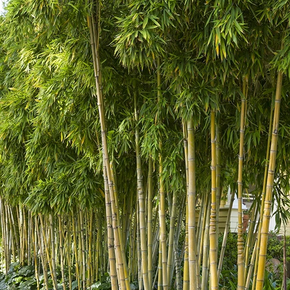
Fargesia rufa, commonly known as Rufa Clumping Bamboo or Dragon's Head Bamboo, is one of the most beautiful, well-behaved, and cold-tolerant clumping bamboos available to American gardeners today. Native to the forested mountain slopes of Sichuan, China, this elegant Poaceae family member forms dense, gracefully arching clumps that reach 8 to 10 feet tall and 4 to 6 feet wide at maturity, making it perfectly proportioned for a wide range of residential and commercial landscape settings. Unlike running bamboos that spread aggressively through underground rhizomes and can invade neighboring properties, Fargesia rufa stays exactly where you plant it, expanding slowly and predictably outward in a tidy, fountain-shaped mound that never requires containment barriers or root pruning. The plant's most captivating seasonal feature is the annual emergence of new culms, each wrapped in warm rusty-orange to reddish-pink sheaths that glow against the rich, deep-green lance-shaped foliage — a display that earned the plant its cultivar name rufa, meaning reddish in Latin. The narrow, semi-glossy leaves are notably resistant to curling, even in direct sun or cold weather, maintaining a lush, full appearance year-round. Fargesia rufa is exceptionally hardy, tolerating temperatures as low as -15°F, and has proven successful across a remarkable range of climates from the Pacific Northwest to the upper Midwest and Mid-Atlantic regions. It thrives in partial shade and filtered light but can handle more sun in cool, temperate climates like those of Southern Oregon and Northern California, provided some afternoon shade is available in hotter inland locations. Safe for children, dogs, and cats, and resistant to deer browsing, this stunning bamboo is as practical as it is beautiful — delivering year-round privacy, windbreak value, and four-season ornamental interest with minimal care.
Plant Description
Fargesia rufa is a densely growing, evergreen clumping bamboo native to the mountain forests of Sichuan Province in southwest China, where it thrives at high elevations alongside giant pandas, serving as one of their primary food sources. It belongs to the grass family Poaceae and is classified as a pachymorph (clumping) bamboo, meaning its rhizomes grow in tight, non-spreading clusters rather than sending out invasive runners. The plant produces slender culms typically 3/8 to 1/2 inch in diameter that arch gracefully outward and upward, creating an elegant fountain-like silhouette. New culms emerge each year in late spring through early summer wrapped in distinctively showy rusty-orange to warm pinkish-red sheaths — the signature trait that distinguishes this species and inspired its Latin name. As sheaths fade and fall away, the underlying culms reveal a smooth, light green to yellowish-green surface. Foliage consists of narrow, lance-shaped leaves roughly 2 to 4 inches long with fine marginal serrations; the leaves are notably resistant to curling in both heat and cold, maintaining a full, lush appearance throughout the year. Unlike many ornamental bamboos, Fargesia rufa does not produce flowers of ornamental interest during its normal vegetative lifespan, keeping its visual appeal focused entirely on its stunning foliage and culms.
Mature Size
| Characteristic | Typical Range |
|---|---|
| Mature Height | 8 to 10 feet (avg. 6 to 7 feet in many garden settings) |
| Mature Width / Spread | 4 to 6 feet |
| Culm Diameter | Approximately 1/2 inch |
| Growth Rate | Moderate to vigorous; adds many new culms each season |
| Root System | Clumping (pachymorph); expands slowly outward, non-invasive |
Fargesia rufa is considered a shorter Fargesia relative to some of its cousins, making it well-suited to residential yards, courtyard gardens, and planting strips. In cooler Pacific Northwest and Northern California climates, plants can push the upper end of the height range. In hotter or drier inland climates, plants typically remain shorter and more compact. The clump expands slowly year over year, adding girth predictably without any of the lateral aggression associated with running bamboo species.
Hardiness and Climate
Fargesia rufa is one of the most cold-hardy clumping bamboos commercially available, tolerating temperatures as low as -15°F, placing it firmly in USDA Hardiness Zones 5 through 9. This outstanding cold tolerance makes it a reliable choice for gardeners across a wide swath of the country, from northern New England and the upper Midwest all the way through the Pacific Coast and into mild inland valleys. It has performed well in documented plantings in states as diverse as Michigan, New York, Idaho, Tennessee, and South Carolina.
- USDA Hardiness Zones: 5 through 9
- Minimum Temperature: -15°F (-26°C)
- Heat Tolerance: Performs best in temperate and cool-summer climates; not recommended for the deep South, Gulf Coast, or areas with prolonged high heat combined with high humidity
- Best Climate Match: Pacific Northwest, Northern California, Pacific Coast regions, Upper Midwest, Mid-Atlantic, and New England
- Wind Sensitivity: Prefers a somewhat sheltered location, as strong desiccating winds can cause leaf tip browning, especially in winter
Sunlight Requirements
Fargesia rufa is naturally a shade-adapted plant from forested mountain slopes and performs best in partial shade to filtered light. However, its sun tolerance is notably higher than many other Fargesia species, and in cool or moderate climates like those of Southern Oregon and Northern California's coastal and foothill regions, it can tolerate considerable direct sun, including morning full sun, without significant stress.
- Ideal Exposure: Partial shade to dappled light; morning sun with afternoon shade is the classic sweet spot
- Cool Climates (Pacific Northwest, NorCal Coast): Tolerates full sun to partial shade without issue
- Hot Inland Climates: Provide afternoon shade to prevent leaf scorch, yellowing, and stunted growth
- Deep Shade: Tolerates low-light conditions but may grow more slowly and produce fewer new culms annually
- What to Avoid: Hot, direct afternoon sun in climates with sustained summer temperatures above 90°F without overhead shade or ample soil moisture
One of Fargesia rufa's notable advantages over many bamboos is that its leaves do not curl or roll in response to sun exposure or cold temperatures, maintaining a full, lush appearance regardless of light levels.
Soil and pH Preferences
Fargesia rufa is adaptable to a range of soil types but performs best in fertile, moisture-retentive, well-drained soils rich in organic matter. It grows naturally in humus-rich mountain forest soils, so mimicking those conditions in the garden will yield the most vigorous results.
- Preferred Soil Type: Loamy, organically rich, well-drained soil; adapts to sandy loam and clay-amended soils
- Drainage: Good drainage is essential — waterlogged or consistently saturated soils promote root rot and rhizome disease
- Soil pH: Slightly acidic to neutral; ideally 5.5 to 6.5, though it tolerates mildly alkaline soils with organic amendment
- Calcareous/Alkaline Soils: Amend with compost, worm castings, or sulfur to soften pH and improve nutrient availability
- Soil Amendment at Planting: Work generous amounts of compost or well-rotted manure into the planting hole and surrounding backfill to boost fertility, drainage, and moisture retention simultaneously
- Mulch: A 2 to 4 inch layer of organic mulch (shredded bark, wood chips, or bamboo leaf litter) over the root zone significantly improves soil conditions over time
Watering Guide
Consistent moisture is key to keeping Fargesia rufa healthy and vigorous. While established plants develop moderate drought tolerance, they prefer evenly moist soil and will show stress through leaf curling or tip browning if allowed to dry out significantly, particularly in warm weather or windy conditions.
- Newly Planted: Water deeply immediately after planting and maintain consistently moist (not soggy) soil throughout the first full growing season to support root establishment; water deeply once or twice per week depending on heat and rainfall
- Established Plants: Water deeply once or twice per week during warm, dry periods; reduce frequency in cooler weather and during winter dormancy
- Container Plants: Require more frequent monitoring and watering than in-ground plants, as pots dry out faster; check soil moisture every 2 to 3 days in summer
- Watering Method: Water at the base of the plant rather than overhead to reduce the risk of fungal disease on foliage
- Drought Stress Signs: Curling or rolling leaves, dry and papery leaf tips, or premature leaf drop are signals to increase watering frequency immediately
- What to Avoid: Standing water around the root zone; allow the soil surface to begin drying slightly between waterings once the plant is established
Fertilizing
Fargesia rufa benefits from regular fertilization to fuel its vigorous annual flush of new culms and maintain deep, rich foliage color. Because bamboos are fast-growing grasses, they are heavy feeders of nitrogen in particular. Avoid over-fertilizing, which can cause excessive, weak growth.
- Fertilizer Type: Balanced, slow-release granular fertilizer (such as 10-10-10 or 14-14-14) or a high-nitrogen lawn-type fertilizer works well for in-ground plants
- Spring Application: Apply a balanced or nitrogen-rich slow-release fertilizer in early spring as new shoots begin to emerge; this fuels the main flush of new culm growth
- Summer/Early Fall Application: A second light application of balanced fertilizer in early summer or early fall helps sustain foliage density and strengthen the plant heading into winter
- Container Plants: Supplement with diluted liquid fertilizer (such as a 20-20-20 liquid feed) every 3 to 4 weeks during the active growing season; worm castings or compost top-dressing is also beneficial
- Organic Options: Compost, worm castings, and aged manure applied as a top dressing or worked into surrounding soil are excellent organic alternatives
- What to Avoid: Do not fertilize after late summer in cold-winter climates, as this can stimulate tender new growth that is vulnerable to early frost damage
Pruning and Maintenance
Fargesia rufa is a low-maintenance plant that requires only minimal pruning to remain healthy and attractive. Its naturally elegant arching habit needs little intervention, and over-pruning can reduce the plant's vigor and visual appeal. That said, an annual light pruning routine keeps the clump tidy, encourages vigorous new growth, and showcases the stunning fresh rusty-sheathhed culms each season.
- Best Time to Prune: Late winter to early spring, just before new shoot emergence — this is the ideal window for structural cleanup and shaping
- Dead Culm Removal: Cut out any dead, damaged, or hollow canes at the base using sharp, clean loppers or pruning shears; this improves airflow and overall plant health
- Thinning: Selectively remove a portion of the oldest, least vigorous culms every 2 to 3 years to open up the clump, improve light penetration, and encourage the emergence of fresh new canes with vivid sheaths
- Shaping and Size Control: For hedge or screen use, culm tips can be trimmed to encourage denser, bushier side branching and maintain a uniform hedge height
- Avoid Extensive Summer Pruning: Pruning during the active growing season can stress the plant and reduce the number of new culms produced that year
- Tool Hygiene: Always use clean, sharp cutting tools to ensure smooth cuts that heal quickly and reduce the risk of disease entry
- General Tidiness: Rake up or remove fallen sheaths and leaves from around the base in spring to keep the planting area tidy; these can be composted or used as mulch
Planting Instructions
- Choose the Right Site: Select a location with partial shade to morning sun and afternoon shade, especially in warmer inland areas. Ensure good drainage and protection from harsh desiccating winds.
- Timing: The best time to plant is late winter through early spring, allowing the plant a full growing season to establish before summer heat or winter cold arrives. Container-grown plants can be installed almost any time the ground is workable, provided adequate water is available.
- Prepare the Soil: Dig a planting hole at least twice the width and equal to the depth of the root ball. Amend the native soil with generous amounts of compost or well-rotted organic matter. If soil drainage is poor, raise the planting area or incorporate coarse grit to improve drainage.
- Pre-Soak the Root Ball: Soak the root ball in a bucket of water for 15 to 30 minutes before planting to ensure thorough hydration going into the ground.
- Plant at the Correct Depth: Place the plant so the top of the root ball sits at or just slightly above the surrounding soil grade. Planting too deep can lead to root suffocation and poor establishment.
- Backfill and Firm: Backfill with the amended soil mixture, gently tamping down in layers to eliminate large air pockets around the roots.
- Water Thoroughly: Water deeply immediately after planting to settle the soil and fully hydrate the root zone.
- Mulch: Apply a 2 to 4 inch layer of organic mulch in a wide ring around the base, keeping mulch pulled a few inches away from the base of the culms to prevent moisture-related rot.
- Spacing for Screens and Hedges: For a dense privacy screen, space plants 3 to 4 feet apart on center. For specimen or accent use, allow 5 to 6 feet of clearance in all directions for the mature clump to expand naturally.
Seasonal Interest
Fargesia rufa is a true four-season plant that delivers consistent ornamental value throughout the year, making it one of the most reliable year-round performers in the landscape.
- Spring: New culms emerge with spectacular rusty-orange to warm pinkish-red sheaths, creating vivid color contrast against the existing deep green foliage; this is the most dramatic seasonal display the plant offers
- Summer: The clump fills in fully, with fresh leafy growth creating a dense, lush, fountain-shaped mound; bright green new foliage contrasts with the more mature deep green older leaves; sheaths gradually fade and drop to reveal pale green culms
- Fall: Foliage remains reliably evergreen and fully intact; the plant does not drop its leaves seasonally, providing steady color and texture as surrounding deciduous plants begin to change
- Winter: Remains fully clothed in evergreen foliage even through hard frosts and snow; the arching culms draped with snow or frost create a particularly elegant winter garden silhouette; leaves may bend under snow load but recover fully as temperatures rise
Landscape Uses
Fargesia rufa is one of the most versatile clumping bamboos available for American gardens, suited to a wide variety of landscape applications thanks to its manageable size, non-invasive growth, and year-round appeal.
- Privacy Screens and Hedges: One of the premier uses; plant in rows 3 to 4 feet apart for a dense, evergreen visual barrier 8 to 10 feet tall that provides year-round privacy without spreading beyond its allotted space
- Windbreaks: Dense culm and foliage mass provides effective wind buffering for patios, outdoor living areas, vegetable gardens, and vulnerable plantings
- Specimen or Accent Plant: A single clump makes a bold, elegant focal point in mixed borders, courtyard gardens, or Asian-inspired landscape designs
- Container and Patio Growing: Ideal for large pots and planters on decks, patios, and terraces; its non-invasive roots make container culture practical and long-term manageable
- Noise Barrier: The dense foliage canopy helps dampen ambient noise from traffic and neighboring properties
- Slope Stabilization: The clumping root system helps bind and stabilize sloped terrain while providing ornamental value
- Shade Garden Plantings: Thrives at the edge of woodland gardens or under the dappled canopy of deciduous trees
- Japanese and Asian Garden Design: A natural choice for zen-inspired, Japanese, or contemporary minimalist garden styles
- Transition Planting: Excellent for bridging the gap between formal structured plantings and more naturalistic areas of the garden
Container Growing
Fargesia rufa is one of the most container-friendly bamboos available, making it a practical and beautiful choice for patios, rooftop gardens, decks, and balconies where in-ground planting is not possible. Its clumping, non-invasive root system means it will not crack or distort containers the way running bamboos can.
- Minimum Container Size: Choose a container with at least a 15 to 20 gallon capacity (approximately 18 to 24 inches in diameter and depth) for good root development; larger is always better
- Container Material: Heavy ceramic, glazed pottery, thick fiberglass, or large wooden planters are preferred; darker containers may overheat root zones in full sun, so light-colored containers or shaded placement is best in warm climates
- Potting Mix: Use a high-quality potting mix enriched with compost; add a layer of expanded clay (hydroton) or gravel at the bottom to ensure excellent drainage
- Drainage: Drainage holes are essential — never allow the container to sit in a saucer of standing water
- Watering: Container plants dry out significantly faster than in-ground plants; check soil moisture every 1 to 3 days in summer and water thoroughly when the top inch of soil begins to feel dry
- Fertilizing: Supplement with liquid fertilizer every 3 to 4 weeks during the growing season, as nutrients are depleted faster from containers than from open ground
- Repotting: Divide or repot every 3 to 5 years, or when roots begin to crowd the container noticeably; early spring is the best time to divide and repot
- Winter Protection: In Zone 5 and 6 climates, container plants may need to be moved to an unheated garage or sheltered structure during the coldest winter months, as container root zones are more exposed to freezing temperatures than in-ground roots
Companion Plants
Fargesia rufa pairs beautifully with a wide range of shade-tolerant and woodland-edge plants, as well as bold textural perennials that complement its fine-textured foliage and vertical culm structure. Consider the following companion combinations for Southern Oregon and Northern California gardens:
- Japanese Forest Grass (Hakonechloa macra): Cascading golden or variegated grass foliage that echoes Fargesia's graceful arching habit at a lower scale
- Hostas (Hosta spp.): Bold, broad leaves provide strong textural contrast to the bamboo's fine, narrow foliage in shaded settings
- Heavenly Bamboo (Nandina domestica): Complements with a similar upright habit and seasonal red foliage color that picks up on the warm tones of Fargesia's new culm sheaths
- Japanese Maples (Acer palmatum): The delicate, lobed leaves and fiery fall color of Japanese maples pair elegantly with Fargesia's evergreen texture
- Hellebores (Helleborus spp.): Winter-blooming shade lovers that thrive at the feet of the bamboo clump and fill the understory beautifully
- Ferns (Dryopteris, Polystichum spp.): Shade-loving texture plants that create a lush, woodland understory beneath and around the bamboo
- Ornamental Grasses (Miscanthus, Calamagrostis spp.): Taller companion grasses mirror the bamboo's vertical culm lines in sunnier mixed border settings
- Rhododendrons and Azaleas: Broadleaf evergreens that share similar soil pH preferences and create layered, year-round structure alongside the bamboo
Pests and Diseases
Fargesia rufa is widely regarded as one of the most pest- and disease-resistant ornamental plants available. Under normal garden conditions with appropriate siting and care, it rarely suffers significant pest or disease problems. It is also notably resistant to deer browsing, making it a low-risk choice in deer-pressure areas common to Southern Oregon and Northern California foothills.
- Aphids: Occasional aphid colonies may appear on new growth in spring; treat promptly with a strong water spray, insecticidal soap, or neem oil to prevent population buildup
- Spider Mites: Can occur in hot, dry, dusty conditions; increase ambient humidity and rinse foliage with water; apply horticultural oil if infestations are significant
- Bamboo Mites: Small mites that occasionally affect Fargesia in dry environments; regularly misting foliage and maintaining soil moisture reduces susceptibility
- Root Rot (Phytophthora spp.): The most common disease concern; caused strictly by poorly drained or waterlogged soils; prevent by ensuring excellent drainage at planting and avoiding overwatering
- Fungal Leaf Spots: Rare; typically associated with overhead irrigation or prolonged wet foliage; water at the base of the plant and maintain good air circulation
- Leaf Tip Browning / Scorch: Not a pest or disease — a cultural issue caused by low humidity, hot dry winds, excessive sun exposure, or drought stress; correct by addressing the underlying environmental cause
- Deer: Largely deer-resistant; occasional browsing may occur in areas of extreme deer pressure but Fargesia rufa is not a preferred target
- General Note: A well-sited, properly watered plant with adequate air circulation will rarely if ever require any pesticide or fungicide treatments
Wildlife Value
Fargesia rufa offers meaningful value to garden wildlife while posing no toxicity risk to pets or children, making it one of the most family- and wildlife-friendly screening plants available.
- Birds: The dense, evergreen foliage clump provides excellent nesting habitat and year-round protective cover for songbirds, wrens, towhees, and other garden birds that seek shelter in dense vegetation
- Beneficial Insects: The sheltered microhabitat at the base of the clump provides overwintering sites for beneficial insects, ground beetles, and other garden helpers
- Giant Pandas: In its native Sichuan mountain range, Fargesia rufa is one of the primary food sources for wild giant pandas — a remarkable natural legacy for such an ornamental garden plant
- Deer Resistance: Largely avoided by deer, making it a reliable low-pressure choice in high deer-traffic landscapes
- Non-Toxic: Confirmed safe and non-toxic to dogs, cats, and humans; a responsible choice for household gardens with pets and children
- Windbreak Value: Dense culm mass provides wind shelter that benefits adjacent bird feeders, pollinator gardens, and tender plantings
- Truly non-invasive clumping habit with pachymorph rhizomes that stay put, making it a safe and worry-free choice for home gardens of any size
- Exceptionally cold hardy to -15°F (USDA Zones 5-9), thriving where other bamboos fail, with lush evergreen foliage that holds its color through frost and snow
- Stunning rusty-orange to pinkish-red culm sheaths on every new cane provide striking warm-toned color contrast against the deep green, lance-shaped leaves throughout the growing season
- Remarkably versatile and low maintenance — ideal for privacy screens, hedges, containers, and accent plantings with no barrier installation required
Fargesia rufa, commonly known as Rufa Clumping Bamboo or Dragon's Head Bamboo, is one of the most beautiful, well-behaved, and cold-tolerant clumping bamboos available to American gardeners today. Native to the forested mountain slopes of Sichuan, China, this elegant Poaceae family member forms dense, gracefully arching clumps that reach 8 to 10 feet tall and 4 to 6 feet wide at maturity, making it perfectly proportioned for a wide range of residential and commercial landscape settings. Unlike running bamboos that spread aggressively through underground rhizomes and can invade neighboring properties, Fargesia rufa stays exactly where you plant it, expanding slowly and predictably outward in a tidy, fountain-shaped mound that never requires containment barriers or root pruning. The plant's most captivating seasonal feature is the annual emergence of new culms, each wrapped in warm rusty-orange to reddish-pink sheaths that glow against the rich, deep-green lance-shaped foliage — a display that earned the plant its cultivar name rufa, meaning reddish in Latin. The narrow, semi-glossy leaves are notably resistant to curling, even in direct sun or cold weather, maintaining a lush, full appearance year-round. Fargesia rufa is exceptionally hardy, tolerating temperatures as low as -15°F, and has proven successful across a remarkable range of climates from the Pacific Northwest to the upper Midwest and Mid-Atlantic regions. It thrives in partial shade and filtered light but can handle more sun in cool, temperate climates like those of Southern Oregon and Northern California, provided some afternoon shade is available in hotter inland locations. Safe for children, dogs, and cats, and resistant to deer browsing, this stunning bamboo is as practical as it is beautiful — delivering year-round privacy, windbreak value, and four-season ornamental interest with minimal care.
Plant Description
Fargesia rufa is a densely growing, evergreen clumping bamboo native to the mountain forests of Sichuan Province in southwest China, where it thrives at high elevations alongside giant pandas, serving as one of their primary food sources. It belongs to the grass family Poaceae and is classified as a pachymorph (clumping) bamboo, meaning its rhizomes grow in tight, non-spreading clusters rather than sending out invasive runners. The plant produces slender culms typically 3/8 to 1/2 inch in diameter that arch gracefully outward and upward, creating an elegant fountain-like silhouette. New culms emerge each year in late spring through early summer wrapped in distinctively showy rusty-orange to warm pinkish-red sheaths — the signature trait that distinguishes this species and inspired its Latin name. As sheaths fade and fall away, the underlying culms reveal a smooth, light green to yellowish-green surface. Foliage consists of narrow, lance-shaped leaves roughly 2 to 4 inches long with fine marginal serrations; the leaves are notably resistant to curling in both heat and cold, maintaining a full, lush appearance throughout the year. Unlike many ornamental bamboos, Fargesia rufa does not produce flowers of ornamental interest during its normal vegetative lifespan, keeping its visual appeal focused entirely on its stunning foliage and culms.
Mature Size
| Characteristic | Typical Range |
|---|---|
| Mature Height | 8 to 10 feet (avg. 6 to 7 feet in many garden settings) |
| Mature Width / Spread | 4 to 6 feet |
| Culm Diameter | Approximately 1/2 inch |
| Growth Rate | Moderate to vigorous; adds many new culms each season |
| Root System | Clumping (pachymorph); expands slowly outward, non-invasive |
Fargesia rufa is considered a shorter Fargesia relative to some of its cousins, making it well-suited to residential yards, courtyard gardens, and planting strips. In cooler Pacific Northwest and Northern California climates, plants can push the upper end of the height range. In hotter or drier inland climates, plants typically remain shorter and more compact. The clump expands slowly year over year, adding girth predictably without any of the lateral aggression associated with running bamboo species.
Hardiness and Climate
Fargesia rufa is one of the most cold-hardy clumping bamboos commercially available, tolerating temperatures as low as -15°F, placing it firmly in USDA Hardiness Zones 5 through 9. This outstanding cold tolerance makes it a reliable choice for gardeners across a wide swath of the country, from northern New England and the upper Midwest all the way through the Pacific Coast and into mild inland valleys. It has performed well in documented plantings in states as diverse as Michigan, New York, Idaho, Tennessee, and South Carolina.
- USDA Hardiness Zones: 5 through 9
- Minimum Temperature: -15°F (-26°C)
- Heat Tolerance: Performs best in temperate and cool-summer climates; not recommended for the deep South, Gulf Coast, or areas with prolonged high heat combined with high humidity
- Best Climate Match: Pacific Northwest, Northern California, Pacific Coast regions, Upper Midwest, Mid-Atlantic, and New England
- Wind Sensitivity: Prefers a somewhat sheltered location, as strong desiccating winds can cause leaf tip browning, especially in winter
Sunlight Requirements
Fargesia rufa is naturally a shade-adapted plant from forested mountain slopes and performs best in partial shade to filtered light. However, its sun tolerance is notably higher than many other Fargesia species, and in cool or moderate climates like those of Southern Oregon and Northern California's coastal and foothill regions, it can tolerate considerable direct sun, including morning full sun, without significant stress.
- Ideal Exposure: Partial shade to dappled light; morning sun with afternoon shade is the classic sweet spot
- Cool Climates (Pacific Northwest, NorCal Coast): Tolerates full sun to partial shade without issue
- Hot Inland Climates: Provide afternoon shade to prevent leaf scorch, yellowing, and stunted growth
- Deep Shade: Tolerates low-light conditions but may grow more slowly and produce fewer new culms annually
- What to Avoid: Hot, direct afternoon sun in climates with sustained summer temperatures above 90°F without overhead shade or ample soil moisture
One of Fargesia rufa's notable advantages over many bamboos is that its leaves do not curl or roll in response to sun exposure or cold temperatures, maintaining a full, lush appearance regardless of light levels.
Soil and pH Preferences
Fargesia rufa is adaptable to a range of soil types but performs best in fertile, moisture-retentive, well-drained soils rich in organic matter. It grows naturally in humus-rich mountain forest soils, so mimicking those conditions in the garden will yield the most vigorous results.
- Preferred Soil Type: Loamy, organically rich, well-drained soil; adapts to sandy loam and clay-amended soils
- Drainage: Good drainage is essential — waterlogged or consistently saturated soils promote root rot and rhizome disease
- Soil pH: Slightly acidic to neutral; ideally 5.5 to 6.5, though it tolerates mildly alkaline soils with organic amendment
- Calcareous/Alkaline Soils: Amend with compost, worm castings, or sulfur to soften pH and improve nutrient availability
- Soil Amendment at Planting: Work generous amounts of compost or well-rotted manure into the planting hole and surrounding backfill to boost fertility, drainage, and moisture retention simultaneously
- Mulch: A 2 to 4 inch layer of organic mulch (shredded bark, wood chips, or bamboo leaf litter) over the root zone significantly improves soil conditions over time
Watering Guide
Consistent moisture is key to keeping Fargesia rufa healthy and vigorous. While established plants develop moderate drought tolerance, they prefer evenly moist soil and will show stress through leaf curling or tip browning if allowed to dry out significantly, particularly in warm weather or windy conditions.
- Newly Planted: Water deeply immediately after planting and maintain consistently moist (not soggy) soil throughout the first full growing season to support root establishment; water deeply once or twice per week depending on heat and rainfall
- Established Plants: Water deeply once or twice per week during warm, dry periods; reduce frequency in cooler weather and during winter dormancy
- Container Plants: Require more frequent monitoring and watering than in-ground plants, as pots dry out faster; check soil moisture every 2 to 3 days in summer
- Watering Method: Water at the base of the plant rather than overhead to reduce the risk of fungal disease on foliage
- Drought Stress Signs: Curling or rolling leaves, dry and papery leaf tips, or premature leaf drop are signals to increase watering frequency immediately
- What to Avoid: Standing water around the root zone; allow the soil surface to begin drying slightly between waterings once the plant is established
Fertilizing
Fargesia rufa benefits from regular fertilization to fuel its vigorous annual flush of new culms and maintain deep, rich foliage color. Because bamboos are fast-growing grasses, they are heavy feeders of nitrogen in particular. Avoid over-fertilizing, which can cause excessive, weak growth.
- Fertilizer Type: Balanced, slow-release granular fertilizer (such as 10-10-10 or 14-14-14) or a high-nitrogen lawn-type fertilizer works well for in-ground plants
- Spring Application: Apply a balanced or nitrogen-rich slow-release fertilizer in early spring as new shoots begin to emerge; this fuels the main flush of new culm growth
- Summer/Early Fall Application: A second light application of balanced fertilizer in early summer or early fall helps sustain foliage density and strengthen the plant heading into winter
- Container Plants: Supplement with diluted liquid fertilizer (such as a 20-20-20 liquid feed) every 3 to 4 weeks during the active growing season; worm castings or compost top-dressing is also beneficial
- Organic Options: Compost, worm castings, and aged manure applied as a top dressing or worked into surrounding soil are excellent organic alternatives
- What to Avoid: Do not fertilize after late summer in cold-winter climates, as this can stimulate tender new growth that is vulnerable to early frost damage
Pruning and Maintenance
Fargesia rufa is a low-maintenance plant that requires only minimal pruning to remain healthy and attractive. Its naturally elegant arching habit needs little intervention, and over-pruning can reduce the plant's vigor and visual appeal. That said, an annual light pruning routine keeps the clump tidy, encourages vigorous new growth, and showcases the stunning fresh rusty-sheathhed culms each season.
- Best Time to Prune: Late winter to early spring, just before new shoot emergence — this is the ideal window for structural cleanup and shaping
- Dead Culm Removal: Cut out any dead, damaged, or hollow canes at the base using sharp, clean loppers or pruning shears; this improves airflow and overall plant health
- Thinning: Selectively remove a portion of the oldest, least vigorous culms every 2 to 3 years to open up the clump, improve light penetration, and encourage the emergence of fresh new canes with vivid sheaths
- Shaping and Size Control: For hedge or screen use, culm tips can be trimmed to encourage denser, bushier side branching and maintain a uniform hedge height
- Avoid Extensive Summer Pruning: Pruning during the active growing season can stress the plant and reduce the number of new culms produced that year
- Tool Hygiene: Always use clean, sharp cutting tools to ensure smooth cuts that heal quickly and reduce the risk of disease entry
- General Tidiness: Rake up or remove fallen sheaths and leaves from around the base in spring to keep the planting area tidy; these can be composted or used as mulch
Planting Instructions
- Choose the Right Site: Select a location with partial shade to morning sun and afternoon shade, especially in warmer inland areas. Ensure good drainage and protection from harsh desiccating winds.
- Timing: The best time to plant is late winter through early spring, allowing the plant a full growing season to establish before summer heat or winter cold arrives. Container-grown plants can be installed almost any time the ground is workable, provided adequate water is available.
- Prepare the Soil: Dig a planting hole at least twice the width and equal to the depth of the root ball. Amend the native soil with generous amounts of compost or well-rotted organic matter. If soil drainage is poor, raise the planting area or incorporate coarse grit to improve drainage.
- Pre-Soak the Root Ball: Soak the root ball in a bucket of water for 15 to 30 minutes before planting to ensure thorough hydration going into the ground.
- Plant at the Correct Depth: Place the plant so the top of the root ball sits at or just slightly above the surrounding soil grade. Planting too deep can lead to root suffocation and poor establishment.
- Backfill and Firm: Backfill with the amended soil mixture, gently tamping down in layers to eliminate large air pockets around the roots.
- Water Thoroughly: Water deeply immediately after planting to settle the soil and fully hydrate the root zone.
- Mulch: Apply a 2 to 4 inch layer of organic mulch in a wide ring around the base, keeping mulch pulled a few inches away from the base of the culms to prevent moisture-related rot.
- Spacing for Screens and Hedges: For a dense privacy screen, space plants 3 to 4 feet apart on center. For specimen or accent use, allow 5 to 6 feet of clearance in all directions for the mature clump to expand naturally.
Seasonal Interest
Fargesia rufa is a true four-season plant that delivers consistent ornamental value throughout the year, making it one of the most reliable year-round performers in the landscape.
- Spring: New culms emerge with spectacular rusty-orange to warm pinkish-red sheaths, creating vivid color contrast against the existing deep green foliage; this is the most dramatic seasonal display the plant offers
- Summer: The clump fills in fully, with fresh leafy growth creating a dense, lush, fountain-shaped mound; bright green new foliage contrasts with the more mature deep green older leaves; sheaths gradually fade and drop to reveal pale green culms
- Fall: Foliage remains reliably evergreen and fully intact; the plant does not drop its leaves seasonally, providing steady color and texture as surrounding deciduous plants begin to change
- Winter: Remains fully clothed in evergreen foliage even through hard frosts and snow; the arching culms draped with snow or frost create a particularly elegant winter garden silhouette; leaves may bend under snow load but recover fully as temperatures rise
Landscape Uses
Fargesia rufa is one of the most versatile clumping bamboos available for American gardens, suited to a wide variety of landscape applications thanks to its manageable size, non-invasive growth, and year-round appeal.
- Privacy Screens and Hedges: One of the premier uses; plant in rows 3 to 4 feet apart for a dense, evergreen visual barrier 8 to 10 feet tall that provides year-round privacy without spreading beyond its allotted space
- Windbreaks: Dense culm and foliage mass provides effective wind buffering for patios, outdoor living areas, vegetable gardens, and vulnerable plantings
- Specimen or Accent Plant: A single clump makes a bold, elegant focal point in mixed borders, courtyard gardens, or Asian-inspired landscape designs
- Container and Patio Growing: Ideal for large pots and planters on decks, patios, and terraces; its non-invasive roots make container culture practical and long-term manageable
- Noise Barrier: The dense foliage canopy helps dampen ambient noise from traffic and neighboring properties
- Slope Stabilization: The clumping root system helps bind and stabilize sloped terrain while providing ornamental value
- Shade Garden Plantings: Thrives at the edge of woodland gardens or under the dappled canopy of deciduous trees
- Japanese and Asian Garden Design: A natural choice for zen-inspired, Japanese, or contemporary minimalist garden styles
- Transition Planting: Excellent for bridging the gap between formal structured plantings and more naturalistic areas of the garden
Container Growing
Fargesia rufa is one of the most container-friendly bamboos available, making it a practical and beautiful choice for patios, rooftop gardens, decks, and balconies where in-ground planting is not possible. Its clumping, non-invasive root system means it will not crack or distort containers the way running bamboos can.
- Minimum Container Size: Choose a container with at least a 15 to 20 gallon capacity (approximately 18 to 24 inches in diameter and depth) for good root development; larger is always better
- Container Material: Heavy ceramic, glazed pottery, thick fiberglass, or large wooden planters are preferred; darker containers may overheat root zones in full sun, so light-colored containers or shaded placement is best in warm climates
- Potting Mix: Use a high-quality potting mix enriched with compost; add a layer of expanded clay (hydroton) or gravel at the bottom to ensure excellent drainage
- Drainage: Drainage holes are essential — never allow the container to sit in a saucer of standing water
- Watering: Container plants dry out significantly faster than in-ground plants; check soil moisture every 1 to 3 days in summer and water thoroughly when the top inch of soil begins to feel dry
- Fertilizing: Supplement with liquid fertilizer every 3 to 4 weeks during the growing season, as nutrients are depleted faster from containers than from open ground
- Repotting: Divide or repot every 3 to 5 years, or when roots begin to crowd the container noticeably; early spring is the best time to divide and repot
- Winter Protection: In Zone 5 and 6 climates, container plants may need to be moved to an unheated garage or sheltered structure during the coldest winter months, as container root zones are more exposed to freezing temperatures than in-ground roots
Companion Plants
Fargesia rufa pairs beautifully with a wide range of shade-tolerant and woodland-edge plants, as well as bold textural perennials that complement its fine-textured foliage and vertical culm structure. Consider the following companion combinations for Southern Oregon and Northern California gardens:
- Japanese Forest Grass (Hakonechloa macra): Cascading golden or variegated grass foliage that echoes Fargesia's graceful arching habit at a lower scale
- Hostas (Hosta spp.): Bold, broad leaves provide strong textural contrast to the bamboo's fine, narrow foliage in shaded settings
- Heavenly Bamboo (Nandina domestica): Complements with a similar upright habit and seasonal red foliage color that picks up on the warm tones of Fargesia's new culm sheaths
- Japanese Maples (Acer palmatum): The delicate, lobed leaves and fiery fall color of Japanese maples pair elegantly with Fargesia's evergreen texture
- Hellebores (Helleborus spp.): Winter-blooming shade lovers that thrive at the feet of the bamboo clump and fill the understory beautifully
- Ferns (Dryopteris, Polystichum spp.): Shade-loving texture plants that create a lush, woodland understory beneath and around the bamboo
- Ornamental Grasses (Miscanthus, Calamagrostis spp.): Taller companion grasses mirror the bamboo's vertical culm lines in sunnier mixed border settings
- Rhododendrons and Azaleas: Broadleaf evergreens that share similar soil pH preferences and create layered, year-round structure alongside the bamboo
Pests and Diseases
Fargesia rufa is widely regarded as one of the most pest- and disease-resistant ornamental plants available. Under normal garden conditions with appropriate siting and care, it rarely suffers significant pest or disease problems. It is also notably resistant to deer browsing, making it a low-risk choice in deer-pressure areas common to Southern Oregon and Northern California foothills.
- Aphids: Occasional aphid colonies may appear on new growth in spring; treat promptly with a strong water spray, insecticidal soap, or neem oil to prevent population buildup
- Spider Mites: Can occur in hot, dry, dusty conditions; increase ambient humidity and rinse foliage with water; apply horticultural oil if infestations are significant
- Bamboo Mites: Small mites that occasionally affect Fargesia in dry environments; regularly misting foliage and maintaining soil moisture reduces susceptibility
- Root Rot (Phytophthora spp.): The most common disease concern; caused strictly by poorly drained or waterlogged soils; prevent by ensuring excellent drainage at planting and avoiding overwatering
- Fungal Leaf Spots: Rare; typically associated with overhead irrigation or prolonged wet foliage; water at the base of the plant and maintain good air circulation
- Leaf Tip Browning / Scorch: Not a pest or disease — a cultural issue caused by low humidity, hot dry winds, excessive sun exposure, or drought stress; correct by addressing the underlying environmental cause
- Deer: Largely deer-resistant; occasional browsing may occur in areas of extreme deer pressure but Fargesia rufa is not a preferred target
- General Note: A well-sited, properly watered plant with adequate air circulation will rarely if ever require any pesticide or fungicide treatments
Wildlife Value
Fargesia rufa offers meaningful value to garden wildlife while posing no toxicity risk to pets or children, making it one of the most family- and wildlife-friendly screening plants available.
- Birds: The dense, evergreen foliage clump provides excellent nesting habitat and year-round protective cover for songbirds, wrens, towhees, and other garden birds that seek shelter in dense vegetation
- Beneficial Insects: The sheltered microhabitat at the base of the clump provides overwintering sites for beneficial insects, ground beetles, and other garden helpers
- Giant Pandas: In its native Sichuan mountain range, Fargesia rufa is one of the primary food sources for wild giant pandas — a remarkable natural legacy for such an ornamental garden plant
- Deer Resistance: Largely avoided by deer, making it a reliable low-pressure choice in high deer-traffic landscapes
- Non-Toxic: Confirmed safe and non-toxic to dogs, cats, and humans; a responsible choice for household gardens with pets and children
- Windbreak Value: Dense culm mass provides wind shelter that benefits adjacent bird feeders, pollinator gardens, and tender plantings