

Zoom the image with the mouse
Tuscan Flame Heavenly Bamboo - 2 Gallon
SKU:
2071680
UPC:
014949449486
$37.99
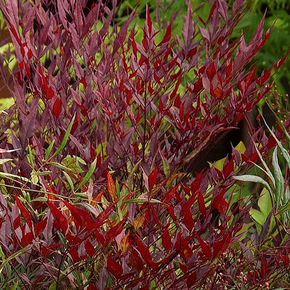
- Vivid scarlet-red foliage emerges bright and bold and holds its fiery color all year long, giving this compact evergreen shrub unmatched 12-month color in the landscape.
- Finely divided, bipinnate leaves create a soft, lacy, bamboo-like texture that provides elegant contrast against bolder-leaved shrubs and perennials in mixed borders.
- Naturally tidy, mounded habit rarely requires pruning and stays neatly between 3-4 feet tall by 2-3 feet wide, making it ideal for foundation plantings, low hedges, and containers.
- Tough and adaptable, thriving in full sun to part shade with good drought tolerance once established, and virtually free of serious pest and disease problems.
Tuscan Flame Heavenly Bamboo (Nandina domestica 'Tuscan Flame' PP #21,940) is a standout broadleaf evergreen shrub prized for its spectacular, year-round scarlet-red foliage that lights up the landscape in every season. Discovered as a naturally occurring branch sport and introduced after years of careful observation and selection, this patented cultivar delivers something few garden shrubs can match: brilliant coral-to-red foliage on new growth that remains strikingly colorful even as the underlying mature leaves settle into complementary yellow-green tones, creating a layered, luminous effect. The finely divided, compound leaves are more intricately cut than those of the species, lending the plant a graceful, feathery texture reminiscent of true bamboo without any of bamboo's invasive spreading tendencies. Reaching a compact 3 to 4 feet tall and 2 to 3 feet wide, 'Tuscan Flame' grows with a naturally rounded, bushy habit that requires minimal to no routine pruning to stay looking sharp. In late spring, short panicles of soft off-white flowers appear tucked discreetly within the foliage, sometimes giving way to small, glossy red berries in fall that add yet another layer of seasonal interest. Hardy in USDA Zones 6 through 9 and evergreen in warmer climates including Southern Oregon and Northern California, this low-maintenance nandina thrives in full sun to part shade, adapts to a wide range of well-drained soils, and develops impressive drought tolerance once established. Whether used as a bold foundation anchor, a colorful low hedge, a mass planting, a rock garden accent, or a dramatic container specimen, Tuscan Flame Heavenly Bamboo delivers effortless, fiery color that earns its place in virtually any garden style.
Plant Description
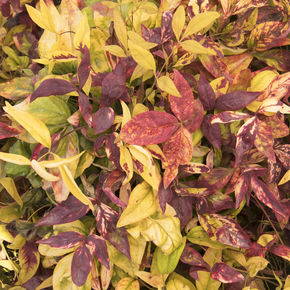
Tuscan Flame Heavenly Bamboo is a broadleaf evergreen shrub belonging to the Berberidaceae (barberry) family. It was discovered in 2000 by Robert Tancredi as a spontaneous vegetative branch sport on a Nandina domestica plant growing at a commercial nursery in Salem, Oregon. What sets this cultivar apart is its uniquely finely divided, bipinnate compound foliage that creates a distinctly lacy, feathery silhouette. The topmost new leaves emerge and remain a vivid scarlet to coral-red throughout the entire year, while the older, underlying foliage transitions to a warm yellow-green, creating a striking two-tone effect from a single plant. The erect, cane-like woody stems echo the appearance of true bamboo, though this plant is entirely unrelated to grasses. Although small off-white flowers appear on short panicles in late spring on second- or third-year growth, they are largely tucked within the foliage and are relatively inconspicuous. Small, glossy, ovoid red berries may follow and are similarly nestled within the foliage. The plant grows with a naturally compact, rounded, and bushy habit that requires little to no corrective pruning to maintain its attractive form.
Mature Size
| Attribute | Measurement |
|---|---|
| Mature Height | 3 to 4 feet |
| Mature Spread | 2 to 3 feet |
| Growth Rate | Moderate |
| Plant Habit | Compact, rounded, and bushy |
| Spacing (mass planting) | 24 inches center to center for a fast fill |
Hardiness Zones
Tuscan Flame Heavenly Bamboo is hardy in USDA Hardiness Zones 6 through 9. In the warmer end of this range — including most of Southern Oregon and Northern California — the plant performs as a true broadleaf evergreen, retaining its vibrant foliage year-round without dieback. In Zone 6 and the cooler margins of Zone 7, stems may experience some dieback when temperatures drop below 10°F, and the plant may behave as semi-evergreen to deciduous during harsh winters. In these transitional areas, siting the plant in a sheltered location protected from harsh winter winds and applying a 3 to 4 inch layer of organic mulch around the root zone before winter will help protect the crown and encourage vigorous regrowth in spring. Overall, this cultivar is well-suited to the mild, Mediterranean-influenced climates typical of the Southern Oregon and Northern California growing region.
Sunlight Requirements
Tuscan Flame Heavenly Bamboo performs best in full sun to part shade, ideally receiving a minimum of 4 to 6 hours of direct sunlight per day. Full sun exposure generally produces the most intense and vivid scarlet-red foliage coloration. In warmer inland climates, a site that receives morning sun with some afternoon shade is ideal, as this protects the finely textured foliage from heat scorch during the hottest part of the day while still encouraging strong color development. The plant also demonstrates a notable tolerance for heavier shade than many ornamental shrubs, though deep shade may result in slightly reduced color vibrancy and a more open, less dense growth habit. Avoid planting in locations with full, unrelieved afternoon summer shade if maximum foliage color is the primary goal.
Soil and pH Preferences
Tuscan Flame Heavenly Bamboo is adaptable to a wide range of soil types but performs best in fertile, rich, humus-amended, moist, and well-drained soil. Good drainage is essential, as standing water or consistently waterlogged conditions can cause root problems over time. The preferred soil pH range is 5.0 to 7.4 (moderately acidic to near-neutral). In soils with a pH above this range — particularly alkaline or highly calcareous soils — foliage may develop chlorosis (interveinal yellowing) due to iron deficiency. If chlorosis is observed, applying an iron chelate product to the soil or as a foliar spray can correct the deficiency. Amending planting beds with compost or aged organic matter before planting improves soil structure, fertility, and moisture retention and gives this shrub the best possible start.
Watering Guide
Consistent, moderate moisture is ideal for Tuscan Flame Heavenly Bamboo, particularly during the first one to two growing seasons as the plant establishes a deep, vigorous root system. Water thoroughly and evenly, allowing the top inch or two of soil to dry slightly between waterings to avoid waterlogged conditions. Once established, this cultivar develops meaningful drought tolerance and can withstand periodic dry spells without significant decline, making it well-suited to the summer-dry conditions common in Southern Oregon and Northern California. However, for best foliage color and overall vigor, supplemental irrigation during extended summer dry periods is recommended. Applying a 3 to 4 inch layer of arborist wood chip mulch over the root zone helps conserve soil moisture, moderate soil temperature, and reduce watering frequency. Always pull mulch back a few inches from direct contact with the base of the stems to prevent rot and disease.
Fertilizing
Tuscan Flame Heavenly Bamboo is not a heavy feeder, but it benefits from annual fertilization to maintain healthy, vigorous growth and the best possible foliage color. Apply a balanced, slow-release granular shrub fertilizer in early spring just as new growth begins to emerge. A fertilizer formulated for acid-loving plants (such as an azalea-camellia formula) is appropriate given this shrub's preference for slightly acidic soil conditions and can help prevent iron-related chlorosis in borderline soils. Working 1 to 2 inches of compost or well-aged organic matter into the soil around the drip line each spring further supports soil health and provides slow-release nutrients throughout the growing season. Avoid applying fertilizer late in summer or fall, as this can stimulate tender new growth that is susceptible to cold damage heading into winter.
Pruning and Maintenance
One of the most celebrated qualities of Tuscan Flame Heavenly Bamboo is its naturally neat, self-maintaining habit that requires very little routine pruning. Unlike many shrubs that quickly become leggy or overgrown, this cultivar stays compact and tidy on its own. When pruning is desired or necessary, the best time is late winter to early spring, just before new growth emerges. Rather than shearing the plant into a formal shape — which would destroy its graceful, natural form and expose bare, unattractive interior stems — use a selective thinning approach:
- Remove the oldest, tallest, or most crowded canes at or near ground level to encourage fresh basal growth and maintain an open, airy structure.
- Cut back any stems that have experienced cold damage in winter to healthy wood in early spring.
- Never remove more than one-third of the plant's total canes in a single pruning session.
- Snip individual stem tips if desired to use the vivid red foliage as a colorful filler in cut floral arrangements.
- If you wish to reduce or eliminate berry production — for example, to minimize potential bird interactions — prune out the flowering panicles after bloom before berries set.
Planting Instructions
- Choose a planting site in full sun to part shade with well-drained soil. Avoid low-lying areas that collect standing water.
- The ideal planting times are fall (September through November) or early spring (February through April) when temperatures are moderate and rainfall is more consistent, reducing transplant stress.
- Dig a planting hole that is two to three times as wide as the root ball but no deeper than the root ball itself. The top of the root ball should sit level with or very slightly above the surrounding soil grade.
- Amend the backfill with compost or aged organic matter at a ratio of about one part amendment to two parts native soil to improve fertility and drainage.
- Remove the plant from its container, gently loosen any circling roots, and place it in the center of the hole.
- Backfill with the amended soil, firming it gently to eliminate air pockets. Do not mound soil against the stem base.
- Water thoroughly immediately after planting to settle the soil and eliminate air pockets around the roots.
- Apply a 3 to 4 inch layer of mulch in a wide ring around the plant, keeping mulch several inches away from the stem base.
- Water regularly throughout the first growing season to support root establishment.
Seasonal Interest
Tuscan Flame Heavenly Bamboo earns its place in the garden as a true four-season plant. Its most constant and celebrated feature — vivid scarlet-to-coral-red new foliage — is present and striking all year long, making it one of the most reliably colorful evergreen shrubs available for the home landscape. Here is what to expect across the seasons:
- Spring: Bright flushes of the most intensely scarlet new growth emerge as temperatures warm. Short, soft panicles of off-white flowers appear tucked within the foliage, attracting early pollinators including bees and butterflies.
- Summer: The plant maintains its vivid color display. The layered contrast between the fiery red topmost foliage and the warm yellow-green of the more mature underlying leaves is at its most lush and full.
- Fall: Foliage often intensifies to deeper russet, burgundy, and flame tones. Small, glossy red berries may develop, partially tucked within the canopy, adding another layer of seasonal interest.
- Winter: In Southern Oregon and Northern California, the plant remains largely evergreen, providing bold color and structure when most other plants are dormant. The red foliage is especially striking against a backdrop of bare deciduous plants or winter skies.
Landscape Uses
The compact size, vivid year-round color, and low maintenance requirements of Tuscan Flame Heavenly Bamboo make it one of the most versatile shrubs available for a wide range of landscape applications:
- Foundation Planting: Its neat, self-maintaining size makes it an ideal anchor plant along home foundations where it provides year-round color without outgrowing its space.
- Low Hedges and Borders: Plant in a single or double row spaced 24 inches apart for a colorful, informal low hedge that defines pathways, garden beds, or property lines.
- Mass Plantings: Grouped plantings create a bold, cohesive carpet of red that is especially dramatic on slopes, hillsides, or large open areas.
- Mixed Shrub Borders: The fine, lacy texture and vivid color provide beautiful contrast against bold-leaved companions such as hostas, rhododendrons, or ornamental grasses.
- Asian-Inspired Gardens: The bamboo-like canes and finely divided foliage are a natural fit for Japanese-style or Zen garden designs.
- Xeric and Rock Gardens: Once established, the plant's drought tolerance makes it an excellent choice for water-wise or Mediterranean-style plantings.
- Container Specimen: Its compact form and year-round color make it a stunning "thriller" in large patio containers, planters, and entry urns.
- Poolside and Patio Accents: Provides lush, colorful, low-maintenance structure in entertainment areas without the mess of heavy leaf drop.
Companion Plants
Tuscan Flame Heavenly Bamboo pairs beautifully with plants that offer contrasting texture, form, or color. Consider the following companions that share similar cultural requirements and create compelling garden combinations:
- Japanese Forest Grass (Hakonechloa macra): The golden-green, arching blades of this ornamental grass create a stunning textural and color contrast against the fiery red nandina foliage.
- Blue Oat Grass (Helictotrichon sempervirens): Cool, silvery-blue blades are a striking complement to the warm scarlet tones of 'Tuscan Flame.'
- Rosemary (Salvia rosmarinus): Shares the same sun and drought-tolerant requirements and provides fine, gray-green textural contrast alongside the vivid nandina.
- Lavender (Lavandula spp.): Purple flower spikes and silvery foliage look vibrant alongside the red nandina and share the same preference for full sun and well-drained soil.
- Hostas (Hosta spp.): Bold, broad hosta leaves in shades of blue-green or gold provide a dramatic textural counterpoint in shadier spots.
- Autumn Fern (Dryopteris erythrosora): Coppery-orange new fronds echo the red tones of the nandina while adding a lush, woodland texture.
- Ornamental Sage (Salvia spp.): Prairie-style salvias in purple or blue provide long-season bloom color that harmonizes beautifully with the red nandina foliage.
- Low-growing Sedums: In sunny, drier settings, spreading sedums offer contrasting succulent texture and complement the nandina's fiery hues with their own burgundy, gold, and green tones.
Pests and Diseases
Tuscan Flame Heavenly Bamboo is generally a very robust, low-maintenance shrub with no serious, widespread insect or disease problems. However, gardeners should be aware of the following occasional issues:
- Cottony Cushion Scale: Small, waxy, white-coated insects that feed on plant sap, potentially causing foliage yellowing or dieback in severe infestations. Control with horticultural oil applied during the dormant season, or rely on natural predators such as the vedalia beetle where present. Avoid broad-spectrum pesticide applications that may harm beneficial insects.
- Powdery Mildew (Erysiphe berberidis): Appears as powdery white patches on leaf surfaces, often accompanied by leaf curl or a more pronounced reddish cast. Prevent by providing adequate spacing for air circulation and planting in full sun where possible. Remove affected foliage and treat with appropriate fungicides if needed.
- Cucumber Mosaic Virus: Causes wine-red discoloration in new spring leaves, leaf narrowing, and reduced flower and fruit production. There is no cure; infected plants should be removed and replaced. Always use sterile pruning tools to prevent spread.
- Chlorosis: Yellowing of foliage due to iron deficiency is the most common cultural issue and is typically linked to overly alkaline or waterlogged soils. Correct by adjusting soil pH or applying iron chelate.
- Root Rot: Can occur in poorly drained or consistently wet soils. Ensure good drainage at the planting site to prevent this issue entirely.
Container Growing
Tuscan Flame Heavenly Bamboo is an excellent candidate for container culture, where its vivid year-round foliage color and naturally compact habit make it a showstopping "thriller" element in large patio planters, entry urns, and outdoor container arrangements. For best results in containers:
- Select a large, sturdy container with ample drainage holes — a minimum of 15 to 18 inches in diameter and depth is recommended for long-term growing.
- Use a high-quality, well-draining potting mix amended with perlite or coarse grit to ensure excellent drainage and prevent root saturation.
- Water more frequently than in-ground plants, as container soil dries out faster. Check soil moisture regularly during hot summer weather and water when the top inch of soil is dry.
- Fertilize container-grown plants every 4 to 6 weeks during the active growing season with a balanced liquid fertilizer, or use a slow-release granular fertilizer applied at the beginning of the season.
- In the coldest parts of Zone 6 and 7, move containers to a sheltered location (such as an unheated garage or covered porch) during hard freezes, as container roots are more exposed and vulnerable to freeze damage than in-ground roots.
- Repot every 2 to 3 years or when roots begin to circle and crowd the container, moving up one container size to maintain vigor.
Wildlife Value and Toxicity
Gardeners should be aware of both the wildlife interactions and the toxicity considerations associated with Tuscan Flame Heavenly Bamboo before planting.
- Pollinators: The white spring flower panicles attract bees, butterflies, and other beneficial pollinators, providing a modest but welcome early-season nectar source.
- Birds and Berry Toxicity: The red berries of Nandina domestica contain cyanogenic compounds. Research has linked the consumption of large quantities of these berries to toxicity in certain bird species, particularly cedar waxwings, which are known to consume large numbers of berries at a time. Gardeners who wish to minimize this risk may prune out flower and fruit-bearing stems before berries fully develop, or choose to remove developing berry clusters in fall. Note that berries on 'Tuscan Flame' are largely hidden within the foliage and not as abundantly produced or as conspicuous as on larger-growing nandina varieties.
- Deer Resistance: Nandina domestica is reported to have good deer resistance, making it a practical choice in areas with moderate to high deer pressure.
- Human and Pet Toxicity: All parts of Nandina domestica, including the berries, contain compounds that are mildly toxic to humans and animals if ingested in quantity. Keep this in mind when planting in areas frequented by small children or pets, and avoid composting or leaving large quantities of berries where they are easily accessible.
- Vivid scarlet-red foliage emerges bright and bold and holds its fiery color all year long, giving this compact evergreen shrub unmatched 12-month color in the landscape.
- Finely divided, bipinnate leaves create a soft, lacy, bamboo-like texture that provides elegant contrast against bolder-leaved shrubs and perennials in mixed borders.
- Naturally tidy, mounded habit rarely requires pruning and stays neatly between 3-4 feet tall by 2-3 feet wide, making it ideal for foundation plantings, low hedges, and containers.
- Tough and adaptable, thriving in full sun to part shade with good drought tolerance once established, and virtually free of serious pest and disease problems.
Tuscan Flame Heavenly Bamboo (Nandina domestica 'Tuscan Flame' PP #21,940) is a standout broadleaf evergreen shrub prized for its spectacular, year-round scarlet-red foliage that lights up the landscape in every season. Discovered as a naturally occurring branch sport and introduced after years of careful observation and selection, this patented cultivar delivers something few garden shrubs can match: brilliant coral-to-red foliage on new growth that remains strikingly colorful even as the underlying mature leaves settle into complementary yellow-green tones, creating a layered, luminous effect. The finely divided, compound leaves are more intricately cut than those of the species, lending the plant a graceful, feathery texture reminiscent of true bamboo without any of bamboo's invasive spreading tendencies. Reaching a compact 3 to 4 feet tall and 2 to 3 feet wide, 'Tuscan Flame' grows with a naturally rounded, bushy habit that requires minimal to no routine pruning to stay looking sharp. In late spring, short panicles of soft off-white flowers appear tucked discreetly within the foliage, sometimes giving way to small, glossy red berries in fall that add yet another layer of seasonal interest. Hardy in USDA Zones 6 through 9 and evergreen in warmer climates including Southern Oregon and Northern California, this low-maintenance nandina thrives in full sun to part shade, adapts to a wide range of well-drained soils, and develops impressive drought tolerance once established. Whether used as a bold foundation anchor, a colorful low hedge, a mass planting, a rock garden accent, or a dramatic container specimen, Tuscan Flame Heavenly Bamboo delivers effortless, fiery color that earns its place in virtually any garden style.
Plant Description
Tuscan Flame Heavenly Bamboo is a broadleaf evergreen shrub belonging to the Berberidaceae (barberry) family. It was discovered in 2000 by Robert Tancredi as a spontaneous vegetative branch sport on a Nandina domestica plant growing at a commercial nursery in Salem, Oregon. What sets this cultivar apart is its uniquely finely divided, bipinnate compound foliage that creates a distinctly lacy, feathery silhouette. The topmost new leaves emerge and remain a vivid scarlet to coral-red throughout the entire year, while the older, underlying foliage transitions to a warm yellow-green, creating a striking two-tone effect from a single plant. The erect, cane-like woody stems echo the appearance of true bamboo, though this plant is entirely unrelated to grasses. Although small off-white flowers appear on short panicles in late spring on second- or third-year growth, they are largely tucked within the foliage and are relatively inconspicuous. Small, glossy, ovoid red berries may follow and are similarly nestled within the foliage. The plant grows with a naturally compact, rounded, and bushy habit that requires little to no corrective pruning to maintain its attractive form.
Mature Size
| Attribute | Measurement |
|---|---|
| Mature Height | 3 to 4 feet |
| Mature Spread | 2 to 3 feet |
| Growth Rate | Moderate |
| Plant Habit | Compact, rounded, and bushy |
| Spacing (mass planting) | 24 inches center to center for a fast fill |
Hardiness Zones
Tuscan Flame Heavenly Bamboo is hardy in USDA Hardiness Zones 6 through 9. In the warmer end of this range — including most of Southern Oregon and Northern California — the plant performs as a true broadleaf evergreen, retaining its vibrant foliage year-round without dieback. In Zone 6 and the cooler margins of Zone 7, stems may experience some dieback when temperatures drop below 10°F, and the plant may behave as semi-evergreen to deciduous during harsh winters. In these transitional areas, siting the plant in a sheltered location protected from harsh winter winds and applying a 3 to 4 inch layer of organic mulch around the root zone before winter will help protect the crown and encourage vigorous regrowth in spring. Overall, this cultivar is well-suited to the mild, Mediterranean-influenced climates typical of the Southern Oregon and Northern California growing region.
Sunlight Requirements
Tuscan Flame Heavenly Bamboo performs best in full sun to part shade, ideally receiving a minimum of 4 to 6 hours of direct sunlight per day. Full sun exposure generally produces the most intense and vivid scarlet-red foliage coloration. In warmer inland climates, a site that receives morning sun with some afternoon shade is ideal, as this protects the finely textured foliage from heat scorch during the hottest part of the day while still encouraging strong color development. The plant also demonstrates a notable tolerance for heavier shade than many ornamental shrubs, though deep shade may result in slightly reduced color vibrancy and a more open, less dense growth habit. Avoid planting in locations with full, unrelieved afternoon summer shade if maximum foliage color is the primary goal.
Soil and pH Preferences
Tuscan Flame Heavenly Bamboo is adaptable to a wide range of soil types but performs best in fertile, rich, humus-amended, moist, and well-drained soil. Good drainage is essential, as standing water or consistently waterlogged conditions can cause root problems over time. The preferred soil pH range is 5.0 to 7.4 (moderately acidic to near-neutral). In soils with a pH above this range — particularly alkaline or highly calcareous soils — foliage may develop chlorosis (interveinal yellowing) due to iron deficiency. If chlorosis is observed, applying an iron chelate product to the soil or as a foliar spray can correct the deficiency. Amending planting beds with compost or aged organic matter before planting improves soil structure, fertility, and moisture retention and gives this shrub the best possible start.
Watering Guide
Consistent, moderate moisture is ideal for Tuscan Flame Heavenly Bamboo, particularly during the first one to two growing seasons as the plant establishes a deep, vigorous root system. Water thoroughly and evenly, allowing the top inch or two of soil to dry slightly between waterings to avoid waterlogged conditions. Once established, this cultivar develops meaningful drought tolerance and can withstand periodic dry spells without significant decline, making it well-suited to the summer-dry conditions common in Southern Oregon and Northern California. However, for best foliage color and overall vigor, supplemental irrigation during extended summer dry periods is recommended. Applying a 3 to 4 inch layer of arborist wood chip mulch over the root zone helps conserve soil moisture, moderate soil temperature, and reduce watering frequency. Always pull mulch back a few inches from direct contact with the base of the stems to prevent rot and disease.
Fertilizing
Tuscan Flame Heavenly Bamboo is not a heavy feeder, but it benefits from annual fertilization to maintain healthy, vigorous growth and the best possible foliage color. Apply a balanced, slow-release granular shrub fertilizer in early spring just as new growth begins to emerge. A fertilizer formulated for acid-loving plants (such as an azalea-camellia formula) is appropriate given this shrub's preference for slightly acidic soil conditions and can help prevent iron-related chlorosis in borderline soils. Working 1 to 2 inches of compost or well-aged organic matter into the soil around the drip line each spring further supports soil health and provides slow-release nutrients throughout the growing season. Avoid applying fertilizer late in summer or fall, as this can stimulate tender new growth that is susceptible to cold damage heading into winter.
Pruning and Maintenance
One of the most celebrated qualities of Tuscan Flame Heavenly Bamboo is its naturally neat, self-maintaining habit that requires very little routine pruning. Unlike many shrubs that quickly become leggy or overgrown, this cultivar stays compact and tidy on its own. When pruning is desired or necessary, the best time is late winter to early spring, just before new growth emerges. Rather than shearing the plant into a formal shape — which would destroy its graceful, natural form and expose bare, unattractive interior stems — use a selective thinning approach:
- Remove the oldest, tallest, or most crowded canes at or near ground level to encourage fresh basal growth and maintain an open, airy structure.
- Cut back any stems that have experienced cold damage in winter to healthy wood in early spring.
- Never remove more than one-third of the plant's total canes in a single pruning session.
- Snip individual stem tips if desired to use the vivid red foliage as a colorful filler in cut floral arrangements.
- If you wish to reduce or eliminate berry production — for example, to minimize potential bird interactions — prune out the flowering panicles after bloom before berries set.
Planting Instructions
- Choose a planting site in full sun to part shade with well-drained soil. Avoid low-lying areas that collect standing water.
- The ideal planting times are fall (September through November) or early spring (February through April) when temperatures are moderate and rainfall is more consistent, reducing transplant stress.
- Dig a planting hole that is two to three times as wide as the root ball but no deeper than the root ball itself. The top of the root ball should sit level with or very slightly above the surrounding soil grade.
- Amend the backfill with compost or aged organic matter at a ratio of about one part amendment to two parts native soil to improve fertility and drainage.
- Remove the plant from its container, gently loosen any circling roots, and place it in the center of the hole.
- Backfill with the amended soil, firming it gently to eliminate air pockets. Do not mound soil against the stem base.
- Water thoroughly immediately after planting to settle the soil and eliminate air pockets around the roots.
- Apply a 3 to 4 inch layer of mulch in a wide ring around the plant, keeping mulch several inches away from the stem base.
- Water regularly throughout the first growing season to support root establishment.
Seasonal Interest
Tuscan Flame Heavenly Bamboo earns its place in the garden as a true four-season plant. Its most constant and celebrated feature — vivid scarlet-to-coral-red new foliage — is present and striking all year long, making it one of the most reliably colorful evergreen shrubs available for the home landscape. Here is what to expect across the seasons:
- Spring: Bright flushes of the most intensely scarlet new growth emerge as temperatures warm. Short, soft panicles of off-white flowers appear tucked within the foliage, attracting early pollinators including bees and butterflies.
- Summer: The plant maintains its vivid color display. The layered contrast between the fiery red topmost foliage and the warm yellow-green of the more mature underlying leaves is at its most lush and full.
- Fall: Foliage often intensifies to deeper russet, burgundy, and flame tones. Small, glossy red berries may develop, partially tucked within the canopy, adding another layer of seasonal interest.
- Winter: In Southern Oregon and Northern California, the plant remains largely evergreen, providing bold color and structure when most other plants are dormant. The red foliage is especially striking against a backdrop of bare deciduous plants or winter skies.
Landscape Uses
The compact size, vivid year-round color, and low maintenance requirements of Tuscan Flame Heavenly Bamboo make it one of the most versatile shrubs available for a wide range of landscape applications:
- Foundation Planting: Its neat, self-maintaining size makes it an ideal anchor plant along home foundations where it provides year-round color without outgrowing its space.
- Low Hedges and Borders: Plant in a single or double row spaced 24 inches apart for a colorful, informal low hedge that defines pathways, garden beds, or property lines.
- Mass Plantings: Grouped plantings create a bold, cohesive carpet of red that is especially dramatic on slopes, hillsides, or large open areas.
- Mixed Shrub Borders: The fine, lacy texture and vivid color provide beautiful contrast against bold-leaved companions such as hostas, rhododendrons, or ornamental grasses.
- Asian-Inspired Gardens: The bamboo-like canes and finely divided foliage are a natural fit for Japanese-style or Zen garden designs.
- Xeric and Rock Gardens: Once established, the plant's drought tolerance makes it an excellent choice for water-wise or Mediterranean-style plantings.
- Container Specimen: Its compact form and year-round color make it a stunning "thriller" in large patio containers, planters, and entry urns.
- Poolside and Patio Accents: Provides lush, colorful, low-maintenance structure in entertainment areas without the mess of heavy leaf drop.
Companion Plants
Tuscan Flame Heavenly Bamboo pairs beautifully with plants that offer contrasting texture, form, or color. Consider the following companions that share similar cultural requirements and create compelling garden combinations:
- Japanese Forest Grass (Hakonechloa macra): The golden-green, arching blades of this ornamental grass create a stunning textural and color contrast against the fiery red nandina foliage.
- Blue Oat Grass (Helictotrichon sempervirens): Cool, silvery-blue blades are a striking complement to the warm scarlet tones of 'Tuscan Flame.'
- Rosemary (Salvia rosmarinus): Shares the same sun and drought-tolerant requirements and provides fine, gray-green textural contrast alongside the vivid nandina.
- Lavender (Lavandula spp.): Purple flower spikes and silvery foliage look vibrant alongside the red nandina and share the same preference for full sun and well-drained soil.
- Hostas (Hosta spp.): Bold, broad hosta leaves in shades of blue-green or gold provide a dramatic textural counterpoint in shadier spots.
- Autumn Fern (Dryopteris erythrosora): Coppery-orange new fronds echo the red tones of the nandina while adding a lush, woodland texture.
- Ornamental Sage (Salvia spp.): Prairie-style salvias in purple or blue provide long-season bloom color that harmonizes beautifully with the red nandina foliage.
- Low-growing Sedums: In sunny, drier settings, spreading sedums offer contrasting succulent texture and complement the nandina's fiery hues with their own burgundy, gold, and green tones.
Pests and Diseases
Tuscan Flame Heavenly Bamboo is generally a very robust, low-maintenance shrub with no serious, widespread insect or disease problems. However, gardeners should be aware of the following occasional issues:
- Cottony Cushion Scale: Small, waxy, white-coated insects that feed on plant sap, potentially causing foliage yellowing or dieback in severe infestations. Control with horticultural oil applied during the dormant season, or rely on natural predators such as the vedalia beetle where present. Avoid broad-spectrum pesticide applications that may harm beneficial insects.
- Powdery Mildew (Erysiphe berberidis): Appears as powdery white patches on leaf surfaces, often accompanied by leaf curl or a more pronounced reddish cast. Prevent by providing adequate spacing for air circulation and planting in full sun where possible. Remove affected foliage and treat with appropriate fungicides if needed.
- Cucumber Mosaic Virus: Causes wine-red discoloration in new spring leaves, leaf narrowing, and reduced flower and fruit production. There is no cure; infected plants should be removed and replaced. Always use sterile pruning tools to prevent spread.
- Chlorosis: Yellowing of foliage due to iron deficiency is the most common cultural issue and is typically linked to overly alkaline or waterlogged soils. Correct by adjusting soil pH or applying iron chelate.
- Root Rot: Can occur in poorly drained or consistently wet soils. Ensure good drainage at the planting site to prevent this issue entirely.
Container Growing
Tuscan Flame Heavenly Bamboo is an excellent candidate for container culture, where its vivid year-round foliage color and naturally compact habit make it a showstopping "thriller" element in large patio planters, entry urns, and outdoor container arrangements. For best results in containers:
- Select a large, sturdy container with ample drainage holes — a minimum of 15 to 18 inches in diameter and depth is recommended for long-term growing.
- Use a high-quality, well-draining potting mix amended with perlite or coarse grit to ensure excellent drainage and prevent root saturation.
- Water more frequently than in-ground plants, as container soil dries out faster. Check soil moisture regularly during hot summer weather and water when the top inch of soil is dry.
- Fertilize container-grown plants every 4 to 6 weeks during the active growing season with a balanced liquid fertilizer, or use a slow-release granular fertilizer applied at the beginning of the season.
- In the coldest parts of Zone 6 and 7, move containers to a sheltered location (such as an unheated garage or covered porch) during hard freezes, as container roots are more exposed and vulnerable to freeze damage than in-ground roots.
- Repot every 2 to 3 years or when roots begin to circle and crowd the container, moving up one container size to maintain vigor.
Wildlife Value and Toxicity
Gardeners should be aware of both the wildlife interactions and the toxicity considerations associated with Tuscan Flame Heavenly Bamboo before planting.
- Pollinators: The white spring flower panicles attract bees, butterflies, and other beneficial pollinators, providing a modest but welcome early-season nectar source.
- Birds and Berry Toxicity: The red berries of Nandina domestica contain cyanogenic compounds. Research has linked the consumption of large quantities of these berries to toxicity in certain bird species, particularly cedar waxwings, which are known to consume large numbers of berries at a time. Gardeners who wish to minimize this risk may prune out flower and fruit-bearing stems before berries fully develop, or choose to remove developing berry clusters in fall. Note that berries on 'Tuscan Flame' are largely hidden within the foliage and not as abundantly produced or as conspicuous as on larger-growing nandina varieties.
- Deer Resistance: Nandina domestica is reported to have good deer resistance, making it a practical choice in areas with moderate to high deer pressure.
- Human and Pet Toxicity: All parts of Nandina domestica, including the berries, contain compounds that are mildly toxic to humans and animals if ingested in quantity. Keep this in mind when planting in areas frequented by small children or pets, and avoid composting or leaving large quantities of berries where they are easily accessible.
Related Products