

Zoom the image with the mouse
Redhaven Peach - 5 Gallon
SKU:
2071725
UPC:
014949043967
$109.99
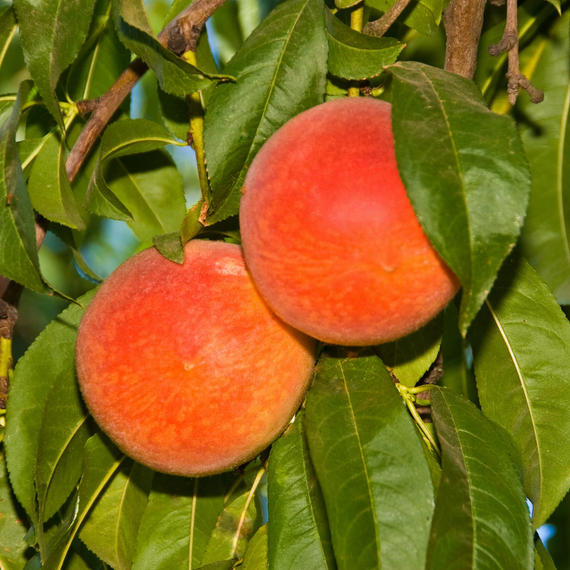
- Classic freestone peach with firm, sweet, nearly fuzzless golden-yellow flesh and a vibrant deep-red blush — ideal for fresh eating, canning, freezing, and baking
- Self-pollinating and a notoriously heavy bearer, producing 50-100+ pounds of medium-to-large peaches per mature tree each summer
- Above-average resistance to bacterial spot and a proven, easy-to-grow temperament make this an outstanding choice for beginner and seasoned home orchardists alike
- Dazzling pink spring blossoms attract bees and pollinators before giving way to a reliable mid-summer harvest — typically ripening in late July to early August
The Redhaven Peach (Prunus persica 'Redhaven') is one of the most celebrated and widely planted peach cultivars in North America, earning its blue-ribbon reputation over more than 80 years as the gold standard for home orchards and small-scale production alike. Developed in the 1940s at South Haven, Michigan, this vigorous deciduous tree was bred to deliver outstanding fruit quality in climates previously considered marginal for peaches, combining cold hardiness with a flavor profile that sets the benchmark for the entire species. Growing in a naturally rounded, spreading habit and reaching 12 to 15 feet tall and wide at maturity, Redhaven lights up the spring landscape with a profusion of showy, fragrant pink blossoms that attract bees and butterflies before the foliage even fully emerges. Come mid-summer, those blooms give way to medium-to-large freestone peaches with a deep crimson blush over a warm golden-yellow background, the skin nearly fuzzless and the firm, creamy yellow flesh bursting with the classic sweet-tangy peach flavor that home-grown fruit is famous for. As a true freestone variety, the pit separates cleanly and effortlessly from the flesh, making the fruit extraordinarily versatile — equally at home eaten warm off the tree, sliced into a fresh peach cobbler, put up in jars for winter, or frozen in bags for year-round smoothies and sauces. Hardy in USDA Zones 5 through 8 and requiring approximately 800 to 900 chill hours to set fruit reliably, Redhaven thrives in the cool winters and warm summers of regions like Southern Oregon and Northern California's mountain foothills, rewarding attentive growers with its exceptional above-average resistance to bacterial spot and consistent, heavy yields season after season.
Plant Description
Redhaven is a classic deciduous peach tree in the Rosaceae family, classified botanically as Prunus persica 'Redhaven'. Introduced in the 1940s from South Haven, Michigan, it was selectively bred to combine cold-climate adaptability with superior fruit quality, and it has remained the benchmark freestone peach variety for over eight decades. The tree forms a vigorous, rounded, spreading canopy clothed in slender, lance-shaped dark green leaves measuring 3 to 6 inches in length. In spring, before leaves fully emerge, branches are blanketed with showy, fragrant pink to reddish-pink blossoms approximately one inch across that are highly attractive to bees and butterflies. The fruit is medium-to-large in size — typically 2.5 to 3 inches in diameter — featuring a vibrant deep-red blush covering 50 to 80 percent of the surface over a warm golden-yellow background. The skin is nearly fuzzless compared to traditional peach varieties. The flesh is firm, richly yellow, sweet with a pleasant hint of tartness, and freestone, meaning the pit separates cleanly and completely from the flesh at peak ripeness. Foliage turns a warm yellow in autumn before the tree drops its leaves for winter dormancy.
Mature Size
| Attribute | Standard Tree |
|---|---|
| Mature Height | 12 to 15 feet |
| Mature Spread | 12 to 15 feet |
| Growth Rate | Fast — typically 12 to 18 inches or more per year under good conditions |
| Growth Habit | Rounded, spreading, open canopy with slightly upright scaffold branches |
| Recommended Spacing | 15 to 20 feet between trees |
| Years to First Fruit | 2 to 4 years from planting |
| Productive Lifespan | 15 to 20+ years with proper care |
Hardiness Zones and Chill Hour Requirements
Redhaven Peach is reliably hardy in USDA Hardiness Zones 5 through 8, tolerating winter temperatures as low as -20 degrees F in Zone 5. It performs exceptionally well in the climates found across Southern Oregon and the mountain foothills and valleys of Northern California, where cool winters provide adequate dormancy and warm summers ripen fruit to peak sweetness.
A critical factor for success is meeting the tree's chill hour requirement. Chill hours are defined as the cumulative number of hours during winter dormancy when temperatures remain between 32 degrees F and 45 degrees F. Redhaven requires approximately 800 to 900 chill hours annually to break dormancy correctly, develop a full bloom set, and produce a reliable fruit crop. Trees that do not receive sufficient chill hours may exhibit erratic or delayed bud break, sparse bloom, and poor fruit set. Most locations in Zones 5 through 8 — including the Rogue Valley, Umpqua Valley, and the northern Sierra Nevada foothills — accumulate adequate chill hours between November and February. Gardeners in warm coastal areas or low-elevation Zone 9 microclimates should verify their local chill hour averages before planting, as those regions may fall short of the 800-hour threshold.
Sunlight Requirements
Redhaven Peach demands full sun for best results. Plant in a location that receives a minimum of 6 to 8 hours of direct, unobstructed sunlight daily, with 8 or more hours being ideal. Adequate sunlight is essential for several reasons:
- Maximizes photosynthesis, driving vigorous growth and heavy fruit set
- Promotes the development of sugars in the fruit, resulting in sweeter, more flavorful peaches
- Helps foliage dry quickly after rain or irrigation, significantly reducing the risk of fungal diseases such as peach leaf curl and brown rot
- Encourages strong, productive new wood that bears the following season's fruit crop
Avoid planting in locations shaded by buildings, fences, or large trees for any significant portion of the day. A south- or southwest-facing exposure is ideal in the Pacific Northwest and Northern California, where it also takes advantage of reflected warmth to ripen fruit fully. Avoid low-lying frost pockets where cold air settles on spring nights, as late frosts can damage the early blossoms.
Soil and pH Preferences
Redhaven Peach performs best in well-drained, fertile loam or sandy loam soils. Good drainage is the single most important soil characteristic — peach trees are highly sensitive to standing water and waterlogged conditions, which rapidly promote root rot and significantly shorten the tree's life. Before planting, test drainage by digging a 12-inch hole, filling it with water, and confirming it drains completely within 12 hours. If drainage is poor, amend the planting site with compost and coarse sand, or build a raised planting mound.
- Preferred soil pH: 6.0 to 7.0 (slightly acidic to neutral)
- Soil type: Well-drained loam or sandy loam; heavy clay requires amendment before planting
- Organic matter: Incorporate aged compost into backfill to improve structure, drainage, and fertility
- Avoid: Heavy clay, hardpan layers, seasonally flooded areas, and sites within the root zone of black walnut trees (which produce the toxic compound juglone)
If a soil test reveals pH outside the preferred range, adjust accordingly: apply garden sulfur to lower pH in alkaline soils, or agricultural lime to raise pH in acidic soils. Retest after amendments and before planting for best results.
Watering Guide
Consistent, deep watering is essential for healthy growth and high-quality fruit production, particularly during the first two to three years of establishment and during the critical fruit-swelling period of summer.
- Newly planted trees (Year 1-2): Water deeply once or twice per week, delivering moisture to a depth of 12 to 18 inches. Allow the top 2 inches of soil to begin drying between waterings to avoid waterlogging.
- Established trees (Year 3+): Provide the equivalent of 1 to 2 inches of water per week during the growing season, increasing during hot, dry spells and the critical 4 to 6 weeks of fruit development and swelling.
- Method: Drip irrigation or soaker hoses at the drip line are ideal, keeping foliage dry and minimizing fungal disease risk. Avoid frequent, shallow watering — deep, infrequent irrigation encourages a deep, drought-resilient root system.
- Pre-harvest: Slightly reduce irrigation 1 to 2 weeks before harvest to concentrate sugars in the fruit and intensify flavor.
- Fall: Taper watering gradually as temperatures cool and the tree prepares for dormancy. One deep watering before the ground freezes is beneficial in colder zones.
Watch for signs of stress: wilting or drooping leaves indicate underwatering, while persistent yellowing of leaves may signal overwatering or poor drainage.
Fertilizing
Redhaven Peach is a moderately heavy feeder and benefits from regular, well-timed fertilization. Avoid excessive nitrogen, which promotes lush vegetative growth at the expense of fruit and can reduce cold hardiness going into winter.
- Year 1: Once new growth is actively emerging (4 to 6 weeks after planting), apply approximately 1 pound of a balanced fertilizer (such as 10-10-10) spread in a ring beginning 6 inches from the trunk and extending to the drip line. Water in thoroughly after application.
- Years 2 and beyond: Apply a balanced fertilizer in early spring just before bud break, using roughly 1 to 1.5 pounds per year of tree age, up to a maximum of 10 pounds for a fully mature tree. Split applications — half in early spring and half in early summer after fruit set — can improve uptake and avoid nutrient surge.
- Organic options: Aged compost, composted poultry manure, bone meal, and fish meal are excellent organic amendments that feed slowly and improve soil biology over time.
- Micronutrients: If leaves show interveinal yellowing (a sign of iron or manganese deficiency, common in alkaline soils), apply a chelated micronutrient supplement or adjust soil pH.
- Stop fertilizing by mid-summer (no later than early July in most climates) to avoid pushing tender new growth that is vulnerable to fall frost damage.
Pruning and Maintenance
Annual pruning is one of the most important practices for a productive, long-lived Redhaven Peach tree. Unlike apples and pears, peaches bear their fruit exclusively on one-year-old wood, so maintaining a steady supply of vigorous new growth each season is critical to consistent yields.
Training Form: The preferred shape for peach trees is an open vase or open center, with 3 to 5 main scaffold branches radiating outward at 45-degree angles and no central leader. This maximizes sunlight penetration into the canopy, improves airflow to reduce disease, and makes the tree easier to harvest.
When to Prune: Prune during late winter dormancy, typically February through early March in Southern Oregon and Northern California, after the coldest weather has passed but before buds begin to swell. This timing minimizes the risk of winter injury to fresh cuts and allows the tree to direct energy into new growth immediately after pruning.
Annual Pruning Steps:
- Remove all dead, damaged, or diseased wood first.
- Cut out any branches that cross, rub, or grow back toward the center of the tree.
- Shorten the previous season's growth by 30 to 50 percent to stimulate new fruiting shoots.
- Thin crowded interior branches to open up the canopy to light and air.
- Always cut to an outward-facing bud using clean, sharp tools.
Fruit Thinning: About 4 to 6 weeks after bloom, when developing fruitlets are the size of a marble, thin the crop so that individual peaches are spaced 6 to 8 inches apart along each branch. Thinning improves fruit size and sugar content, prevents branch breakage under heavy crop loads, and helps avoid the cycle of biennial bearing (heavy crop one year, little or none the next).
Planting Instructions
- Choose the right time: In Southern Oregon and Northern California, plant in early spring as soon as the soil can be worked and the threat of hard frost has passed, typically late February through April. Container-grown trees can also be planted in early fall.
- Select the site: Full sun (6 to 8+ hours daily), well-drained soil with a pH of 6.0 to 7.0, and good air circulation. Avoid low-lying frost pockets and areas prone to standing water.
- Prepare the hole: Dig a hole at least twice as wide as the root ball and approximately equal in depth — typically 18 to 24 inches. Loosen the surrounding soil to help roots expand outward.
- Amend if needed: Mix aged compost into the backfill soil to improve structure and fertility, but do not add fresh manure or high-nitrogen amendments directly to the planting hole.
- Position the tree: Place the tree so the bud union (the swollen graft point near the base of the trunk) sits 2 to 4 inches above the finished soil level. Spread container-grown roots if circling. Set the root ball on a firm base — do not allow it to sink over time.
- Backfill and firm: Fill the hole with native or amended soil, gently firming in layers to eliminate air pockets. Do not compress heavily.
- Create a watering basin: Form a shallow ring of soil around the perimeter of the planting hole to direct irrigation water to the root zone.
- Water deeply: Immediately after planting, water slowly and thoroughly to saturate the root zone and settle the soil.
- Mulch: Apply 3 to 4 inches of organic mulch (wood chips, shredded bark, or straw) in a wide ring around the base, keeping mulch pulled 4 to 6 inches away from the trunk to prevent rot and rodent damage.
- Stake if necessary: In windy locations, loosely stake the young tree for the first year to prevent rocking and root disturbance.
Harvest and Fruit Use
Redhaven Peach is a mid-season variety that typically ripens in late July to early August, making it one of the earlier high-quality freestone peaches to come in during the summer harvest window. Ripening can vary slightly based on elevation, local microclimate, and seasonal temperatures.
Signs of ripeness:
- Skin transitions to a deep, rich red blush covering most of the fruit, with the background color shifting from greenish-yellow to a warm golden-yellow
- The flesh at the stem end yields gently to light finger pressure but is not mushy
- A ripe peach separates from the branch with a gentle, easy twist — no tugging required
- A rich, sweet fragrance is detectable at close range
Harvest tips: Pick in the cool of the morning, handle fruit gently with both hands to avoid bruising, and sort immediately. Tree-ripened Redhaven peaches are best consumed within 3 to 5 days at room temperature or within 1 to 2 weeks when refrigerated.
Culinary uses: The firm, freestone flesh makes Redhaven extraordinarily versatile in the kitchen:
- Fresh eating out of hand — the definitive summer experience
- Sliced over yogurt, cereal, or vanilla ice cream
- Peach pies, cobblers, tarts, and galettes
- Grilled peach halves with honey or balsamic glaze
- Home canning in light syrup — the firm flesh holds its shape through processing
- Frozen slices for winter smoothies, sauces, and baked goods
- Jams, preserves, and peach butter
- Fresh peach salsa paired with grilled meats or fish
A mature standard tree in good health can yield 50 to 100 or more pounds of fruit per season, providing an abundance for fresh use and preservation.
Pollination
Redhaven Peach is fully self-fertile, meaning a single tree is capable of setting a satisfying fruit crop without any other peach variety nearby. This makes it an excellent choice for smaller home gardens and yards where space allows for only one tree.
However, planting a second compatible peach variety within 50 to 100 feet can noticeably increase fruit set, fruit size, and overall yield through cross-pollination. Bees and other native pollinators are the primary agents of pollination and typically work well within this range. Good companion pollinator varieties with overlapping bloom times include:
- Elberta Peach
- Hale Haven Peach
- Contender Peach
- Reliance Peach
- Cresthaven Peach
To maximize the effectiveness of pollinators, avoid applying broad-spectrum insecticides during the bloom period, and consider planting early-flowering companion plants nearby to attract and support native bee populations throughout the spring season.
Pests and Diseases
One of Redhaven's most valued characteristics is its above-average resistance to bacterial spot (Xanthomonas arboricola pv. pruni), the most prevalent foliar and fruit disease of peaches in North America. This genetic resilience often reduces or eliminates the need for preventive copper sprays where susceptible varieties would require multiple applications each season. That said, proactive monitoring and good cultural practices are always worthwhile.
Common diseases to watch for:
- Peach Leaf Curl (Taphrina deformans): Causes puckered, reddish-purple distorted leaves in spring that eventually gray over and drop, weakening the tree. Prevent with a single application of copper-based fungicide in late fall after leaf drop or in late winter just before buds swell. Improving canopy airflow through proper pruning greatly reduces pressure.
- Brown Rot (Monilinia fructicola): Rapidly spreads through developing and ripe fruit, causing soft brown spots with grayish spore masses. Prevent by removing all mummified fruit and fallen debris, thinning fruit adequately, and applying sulfur or approved fungicides during bloom and in the 2 to 3 weeks before harvest during wet conditions.
- Bacterial Spot: Redhaven shows strong resistance; maintain good pruning and airflow as a precaution in humid conditions.
Common pests to monitor:
- Peach Tree Borer (Synanthedon exitiosa): The most serious pest — larvae tunnel into the trunk base, causing gumming, bark damage, and eventual tree decline. Keep the trunk base clear of mulch and debris; use pheromone traps in summer to monitor adult moth activity. Apply pheromone mating disruption or targeted insecticides if populations are detected.
- Oriental Fruit Moth: Larvae tunnel into shoot tips (causing wilted "flagging") and later into developing fruit. Monitor with pheromone traps; treat with spinosad at petal fall and again at subsequent generations as needed.
- Plum Curculio: Small weevil that leaves crescent-shaped scars on young fruit and causes early drop. Control with kaolin clay (Surround) applied after petal fall, or pyrethrin-based sprays in severe cases.
- Aphids: Cause leaf curl and honeydew deposits. Manage with strong water sprays, insecticidal soap, neem oil, or by encouraging natural predators such as ladybugs and lacewings.
A consistent program of clean orchard sanitation — removing fallen fruit, pruning out diseased wood, and clearing debris at season's end — dramatically reduces pest and disease pressure year over year.
Companion Plants
Strategic companion planting around your Redhaven Peach tree can enhance pollinator activity, improve soil health, deter common pests, and create a more productive and resilient home orchard ecosystem. Choose companions that do not compete aggressively for water or nutrients at the root zone, and avoid planting directly under the canopy where they may interfere with fruit harvest or air circulation.
- Lavender: Attracts bees and other pollinators during bloom, repels aphids and certain moth species, and thrives in the same well-drained, sunny conditions preferred by peach trees.
- Comfrey: Deep-rooted dynamic accumulator that mines subsoil nutrients and returns them to the surface as mulch; its flowers attract pollinators over a long season.
- Garlic and Chives: Planted at the drip line, alliums are believed to deter borers, aphids, and other pests through volatile sulfur compounds.
- Basil: May help repel aphids and mites when grown nearby; also a practical culinary companion to the peach harvest.
- Nasturtiums: Act as a trap crop for aphids, drawing them away from the tree; attract beneficial predatory insects and are fully edible.
- Borage: Attracts bees prolifically, enriches soil with trace minerals, and is said to repel tomato hornworms and Japanese beetles.
- Clover (as a ground cover): White or crimson clover planted beneath the drip line fixes atmospheric nitrogen, attracts pollinators, and creates a living mulch that suppresses weeds without harming tree roots.
- Other peach varieties (Elberta, Contender, Hale Haven): Planted within 50 to 100 feet to increase cross-pollination and boost overall yields.
Plants to avoid: Black walnut trees release juglone, a compound toxic to peaches. Do not plant Redhaven within the root zone of any black walnut. Avoid competitive, deep-rooted perennial grasses directly at the base of the tree during establishment years.
Wildlife Value
Redhaven Peach offers meaningful ecological value across several seasons, making it a worthwhile addition to any wildlife-friendly home landscape:
- Pollinators: The abundant, showy pink spring blossoms are an important early nectar and pollen source for honey bees, native bumble bees, mason bees, and butterflies — particularly valuable in late winter to early spring when few other food sources are available.
- Birds: Fallen or overripe fruit attracts a variety of fruit-eating bird species in summer, including robins, cedar waxwings, and orioles. Birds also forage for insects and larvae in and around the bark and canopy, providing natural pest control.
- Beneficial insects: The blossoms and companion plants around peach trees support predatory and parasitic insects — lacewings, parasitic wasps, hoverflies, and ladybugs — that prey on common pest species such as aphids, mites, and caterpillars.
- Small mammals: Fallen fruit may attract squirrels and other small wildlife; place hardware cloth collars around the lower trunk to protect against bark gnawing by rodents, particularly in winter.
Note: The seeds (pits) and leaves of all Prunus species, including peach, contain cyanogenic compounds and should not be intentionally fed to pets or livestock. The ripe fruit flesh is entirely safe for human consumption.
Seasonal Interest
| Season | What to Expect |
|---|---|
| Late Winter / Early Spring | Bare branches break dormancy; apply dormant oil spray before bud swell. Prune and shape the tree while dormant. |
| Spring (March - April) | Showy, fragrant pink blossoms cover the branches, attracting bees and pollinators. One of the most ornamentally striking fruiting trees in bloom. |
| Late Spring (May - June) | Leaves emerge and develop fully. Fruitlets set and develop rapidly. Thin fruit to 6 to 8 inches apart when fruitlets reach marble size. |
| Summer (July - August) | Peaches swell, color up, and ripen in late July to early August. Peak harvest season — fruit is heavy, fragrant, and at its flavor best when tree-ripened. |
| Late Summer / Fall | Harvest complete; foliage turns golden yellow before dropping. Clean up fallen fruit and leaves. Taper irrigation and fertilization. |
| Winter | Tree is fully dormant. Apply dormant copper spray after leaf drop to protect against peach leaf curl. Wrap young trunks to prevent sunscald. |
- Classic freestone peach with firm, sweet, nearly fuzzless golden-yellow flesh and a vibrant deep-red blush — ideal for fresh eating, canning, freezing, and baking
- Self-pollinating and a notoriously heavy bearer, producing 50-100+ pounds of medium-to-large peaches per mature tree each summer
- Above-average resistance to bacterial spot and a proven, easy-to-grow temperament make this an outstanding choice for beginner and seasoned home orchardists alike
- Dazzling pink spring blossoms attract bees and pollinators before giving way to a reliable mid-summer harvest — typically ripening in late July to early August
The Redhaven Peach (Prunus persica 'Redhaven') is one of the most celebrated and widely planted peach cultivars in North America, earning its blue-ribbon reputation over more than 80 years as the gold standard for home orchards and small-scale production alike. Developed in the 1940s at South Haven, Michigan, this vigorous deciduous tree was bred to deliver outstanding fruit quality in climates previously considered marginal for peaches, combining cold hardiness with a flavor profile that sets the benchmark for the entire species. Growing in a naturally rounded, spreading habit and reaching 12 to 15 feet tall and wide at maturity, Redhaven lights up the spring landscape with a profusion of showy, fragrant pink blossoms that attract bees and butterflies before the foliage even fully emerges. Come mid-summer, those blooms give way to medium-to-large freestone peaches with a deep crimson blush over a warm golden-yellow background, the skin nearly fuzzless and the firm, creamy yellow flesh bursting with the classic sweet-tangy peach flavor that home-grown fruit is famous for. As a true freestone variety, the pit separates cleanly and effortlessly from the flesh, making the fruit extraordinarily versatile — equally at home eaten warm off the tree, sliced into a fresh peach cobbler, put up in jars for winter, or frozen in bags for year-round smoothies and sauces. Hardy in USDA Zones 5 through 8 and requiring approximately 800 to 900 chill hours to set fruit reliably, Redhaven thrives in the cool winters and warm summers of regions like Southern Oregon and Northern California's mountain foothills, rewarding attentive growers with its exceptional above-average resistance to bacterial spot and consistent, heavy yields season after season.
Plant Description
Redhaven is a classic deciduous peach tree in the Rosaceae family, classified botanically as Prunus persica 'Redhaven'. Introduced in the 1940s from South Haven, Michigan, it was selectively bred to combine cold-climate adaptability with superior fruit quality, and it has remained the benchmark freestone peach variety for over eight decades. The tree forms a vigorous, rounded, spreading canopy clothed in slender, lance-shaped dark green leaves measuring 3 to 6 inches in length. In spring, before leaves fully emerge, branches are blanketed with showy, fragrant pink to reddish-pink blossoms approximately one inch across that are highly attractive to bees and butterflies. The fruit is medium-to-large in size — typically 2.5 to 3 inches in diameter — featuring a vibrant deep-red blush covering 50 to 80 percent of the surface over a warm golden-yellow background. The skin is nearly fuzzless compared to traditional peach varieties. The flesh is firm, richly yellow, sweet with a pleasant hint of tartness, and freestone, meaning the pit separates cleanly and completely from the flesh at peak ripeness. Foliage turns a warm yellow in autumn before the tree drops its leaves for winter dormancy.
Mature Size
| Attribute | Standard Tree |
|---|---|
| Mature Height | 12 to 15 feet |
| Mature Spread | 12 to 15 feet |
| Growth Rate | Fast — typically 12 to 18 inches or more per year under good conditions |
| Growth Habit | Rounded, spreading, open canopy with slightly upright scaffold branches |
| Recommended Spacing | 15 to 20 feet between trees |
| Years to First Fruit | 2 to 4 years from planting |
| Productive Lifespan | 15 to 20+ years with proper care |
Hardiness Zones and Chill Hour Requirements
Redhaven Peach is reliably hardy in USDA Hardiness Zones 5 through 8, tolerating winter temperatures as low as -20 degrees F in Zone 5. It performs exceptionally well in the climates found across Southern Oregon and the mountain foothills and valleys of Northern California, where cool winters provide adequate dormancy and warm summers ripen fruit to peak sweetness.
A critical factor for success is meeting the tree's chill hour requirement. Chill hours are defined as the cumulative number of hours during winter dormancy when temperatures remain between 32 degrees F and 45 degrees F. Redhaven requires approximately 800 to 900 chill hours annually to break dormancy correctly, develop a full bloom set, and produce a reliable fruit crop. Trees that do not receive sufficient chill hours may exhibit erratic or delayed bud break, sparse bloom, and poor fruit set. Most locations in Zones 5 through 8 — including the Rogue Valley, Umpqua Valley, and the northern Sierra Nevada foothills — accumulate adequate chill hours between November and February. Gardeners in warm coastal areas or low-elevation Zone 9 microclimates should verify their local chill hour averages before planting, as those regions may fall short of the 800-hour threshold.
Sunlight Requirements
Redhaven Peach demands full sun for best results. Plant in a location that receives a minimum of 6 to 8 hours of direct, unobstructed sunlight daily, with 8 or more hours being ideal. Adequate sunlight is essential for several reasons:
- Maximizes photosynthesis, driving vigorous growth and heavy fruit set
- Promotes the development of sugars in the fruit, resulting in sweeter, more flavorful peaches
- Helps foliage dry quickly after rain or irrigation, significantly reducing the risk of fungal diseases such as peach leaf curl and brown rot
- Encourages strong, productive new wood that bears the following season's fruit crop
Avoid planting in locations shaded by buildings, fences, or large trees for any significant portion of the day. A south- or southwest-facing exposure is ideal in the Pacific Northwest and Northern California, where it also takes advantage of reflected warmth to ripen fruit fully. Avoid low-lying frost pockets where cold air settles on spring nights, as late frosts can damage the early blossoms.
Soil and pH Preferences
Redhaven Peach performs best in well-drained, fertile loam or sandy loam soils. Good drainage is the single most important soil characteristic — peach trees are highly sensitive to standing water and waterlogged conditions, which rapidly promote root rot and significantly shorten the tree's life. Before planting, test drainage by digging a 12-inch hole, filling it with water, and confirming it drains completely within 12 hours. If drainage is poor, amend the planting site with compost and coarse sand, or build a raised planting mound.
- Preferred soil pH: 6.0 to 7.0 (slightly acidic to neutral)
- Soil type: Well-drained loam or sandy loam; heavy clay requires amendment before planting
- Organic matter: Incorporate aged compost into backfill to improve structure, drainage, and fertility
- Avoid: Heavy clay, hardpan layers, seasonally flooded areas, and sites within the root zone of black walnut trees (which produce the toxic compound juglone)
If a soil test reveals pH outside the preferred range, adjust accordingly: apply garden sulfur to lower pH in alkaline soils, or agricultural lime to raise pH in acidic soils. Retest after amendments and before planting for best results.
Watering Guide
Consistent, deep watering is essential for healthy growth and high-quality fruit production, particularly during the first two to three years of establishment and during the critical fruit-swelling period of summer.
- Newly planted trees (Year 1-2): Water deeply once or twice per week, delivering moisture to a depth of 12 to 18 inches. Allow the top 2 inches of soil to begin drying between waterings to avoid waterlogging.
- Established trees (Year 3+): Provide the equivalent of 1 to 2 inches of water per week during the growing season, increasing during hot, dry spells and the critical 4 to 6 weeks of fruit development and swelling.
- Method: Drip irrigation or soaker hoses at the drip line are ideal, keeping foliage dry and minimizing fungal disease risk. Avoid frequent, shallow watering — deep, infrequent irrigation encourages a deep, drought-resilient root system.
- Pre-harvest: Slightly reduce irrigation 1 to 2 weeks before harvest to concentrate sugars in the fruit and intensify flavor.
- Fall: Taper watering gradually as temperatures cool and the tree prepares for dormancy. One deep watering before the ground freezes is beneficial in colder zones.
Watch for signs of stress: wilting or drooping leaves indicate underwatering, while persistent yellowing of leaves may signal overwatering or poor drainage.
Fertilizing
Redhaven Peach is a moderately heavy feeder and benefits from regular, well-timed fertilization. Avoid excessive nitrogen, which promotes lush vegetative growth at the expense of fruit and can reduce cold hardiness going into winter.
- Year 1: Once new growth is actively emerging (4 to 6 weeks after planting), apply approximately 1 pound of a balanced fertilizer (such as 10-10-10) spread in a ring beginning 6 inches from the trunk and extending to the drip line. Water in thoroughly after application.
- Years 2 and beyond: Apply a balanced fertilizer in early spring just before bud break, using roughly 1 to 1.5 pounds per year of tree age, up to a maximum of 10 pounds for a fully mature tree. Split applications — half in early spring and half in early summer after fruit set — can improve uptake and avoid nutrient surge.
- Organic options: Aged compost, composted poultry manure, bone meal, and fish meal are excellent organic amendments that feed slowly and improve soil biology over time.
- Micronutrients: If leaves show interveinal yellowing (a sign of iron or manganese deficiency, common in alkaline soils), apply a chelated micronutrient supplement or adjust soil pH.
- Stop fertilizing by mid-summer (no later than early July in most climates) to avoid pushing tender new growth that is vulnerable to fall frost damage.
Pruning and Maintenance
Annual pruning is one of the most important practices for a productive, long-lived Redhaven Peach tree. Unlike apples and pears, peaches bear their fruit exclusively on one-year-old wood, so maintaining a steady supply of vigorous new growth each season is critical to consistent yields.
Training Form: The preferred shape for peach trees is an open vase or open center, with 3 to 5 main scaffold branches radiating outward at 45-degree angles and no central leader. This maximizes sunlight penetration into the canopy, improves airflow to reduce disease, and makes the tree easier to harvest.
When to Prune: Prune during late winter dormancy, typically February through early March in Southern Oregon and Northern California, after the coldest weather has passed but before buds begin to swell. This timing minimizes the risk of winter injury to fresh cuts and allows the tree to direct energy into new growth immediately after pruning.
Annual Pruning Steps:
- Remove all dead, damaged, or diseased wood first.
- Cut out any branches that cross, rub, or grow back toward the center of the tree.
- Shorten the previous season's growth by 30 to 50 percent to stimulate new fruiting shoots.
- Thin crowded interior branches to open up the canopy to light and air.
- Always cut to an outward-facing bud using clean, sharp tools.
Fruit Thinning: About 4 to 6 weeks after bloom, when developing fruitlets are the size of a marble, thin the crop so that individual peaches are spaced 6 to 8 inches apart along each branch. Thinning improves fruit size and sugar content, prevents branch breakage under heavy crop loads, and helps avoid the cycle of biennial bearing (heavy crop one year, little or none the next).
Planting Instructions
- Choose the right time: In Southern Oregon and Northern California, plant in early spring as soon as the soil can be worked and the threat of hard frost has passed, typically late February through April. Container-grown trees can also be planted in early fall.
- Select the site: Full sun (6 to 8+ hours daily), well-drained soil with a pH of 6.0 to 7.0, and good air circulation. Avoid low-lying frost pockets and areas prone to standing water.
- Prepare the hole: Dig a hole at least twice as wide as the root ball and approximately equal in depth — typically 18 to 24 inches. Loosen the surrounding soil to help roots expand outward.
- Amend if needed: Mix aged compost into the backfill soil to improve structure and fertility, but do not add fresh manure or high-nitrogen amendments directly to the planting hole.
- Position the tree: Place the tree so the bud union (the swollen graft point near the base of the trunk) sits 2 to 4 inches above the finished soil level. Spread container-grown roots if circling. Set the root ball on a firm base — do not allow it to sink over time.
- Backfill and firm: Fill the hole with native or amended soil, gently firming in layers to eliminate air pockets. Do not compress heavily.
- Create a watering basin: Form a shallow ring of soil around the perimeter of the planting hole to direct irrigation water to the root zone.
- Water deeply: Immediately after planting, water slowly and thoroughly to saturate the root zone and settle the soil.
- Mulch: Apply 3 to 4 inches of organic mulch (wood chips, shredded bark, or straw) in a wide ring around the base, keeping mulch pulled 4 to 6 inches away from the trunk to prevent rot and rodent damage.
- Stake if necessary: In windy locations, loosely stake the young tree for the first year to prevent rocking and root disturbance.
Harvest and Fruit Use
Redhaven Peach is a mid-season variety that typically ripens in late July to early August, making it one of the earlier high-quality freestone peaches to come in during the summer harvest window. Ripening can vary slightly based on elevation, local microclimate, and seasonal temperatures.
Signs of ripeness:
- Skin transitions to a deep, rich red blush covering most of the fruit, with the background color shifting from greenish-yellow to a warm golden-yellow
- The flesh at the stem end yields gently to light finger pressure but is not mushy
- A ripe peach separates from the branch with a gentle, easy twist — no tugging required
- A rich, sweet fragrance is detectable at close range
Harvest tips: Pick in the cool of the morning, handle fruit gently with both hands to avoid bruising, and sort immediately. Tree-ripened Redhaven peaches are best consumed within 3 to 5 days at room temperature or within 1 to 2 weeks when refrigerated.
Culinary uses: The firm, freestone flesh makes Redhaven extraordinarily versatile in the kitchen:
- Fresh eating out of hand — the definitive summer experience
- Sliced over yogurt, cereal, or vanilla ice cream
- Peach pies, cobblers, tarts, and galettes
- Grilled peach halves with honey or balsamic glaze
- Home canning in light syrup — the firm flesh holds its shape through processing
- Frozen slices for winter smoothies, sauces, and baked goods
- Jams, preserves, and peach butter
- Fresh peach salsa paired with grilled meats or fish
A mature standard tree in good health can yield 50 to 100 or more pounds of fruit per season, providing an abundance for fresh use and preservation.
Pollination
Redhaven Peach is fully self-fertile, meaning a single tree is capable of setting a satisfying fruit crop without any other peach variety nearby. This makes it an excellent choice for smaller home gardens and yards where space allows for only one tree.
However, planting a second compatible peach variety within 50 to 100 feet can noticeably increase fruit set, fruit size, and overall yield through cross-pollination. Bees and other native pollinators are the primary agents of pollination and typically work well within this range. Good companion pollinator varieties with overlapping bloom times include:
- Elberta Peach
- Hale Haven Peach
- Contender Peach
- Reliance Peach
- Cresthaven Peach
To maximize the effectiveness of pollinators, avoid applying broad-spectrum insecticides during the bloom period, and consider planting early-flowering companion plants nearby to attract and support native bee populations throughout the spring season.
Pests and Diseases
One of Redhaven's most valued characteristics is its above-average resistance to bacterial spot (Xanthomonas arboricola pv. pruni), the most prevalent foliar and fruit disease of peaches in North America. This genetic resilience often reduces or eliminates the need for preventive copper sprays where susceptible varieties would require multiple applications each season. That said, proactive monitoring and good cultural practices are always worthwhile.
Common diseases to watch for:
- Peach Leaf Curl (Taphrina deformans): Causes puckered, reddish-purple distorted leaves in spring that eventually gray over and drop, weakening the tree. Prevent with a single application of copper-based fungicide in late fall after leaf drop or in late winter just before buds swell. Improving canopy airflow through proper pruning greatly reduces pressure.
- Brown Rot (Monilinia fructicola): Rapidly spreads through developing and ripe fruit, causing soft brown spots with grayish spore masses. Prevent by removing all mummified fruit and fallen debris, thinning fruit adequately, and applying sulfur or approved fungicides during bloom and in the 2 to 3 weeks before harvest during wet conditions.
- Bacterial Spot: Redhaven shows strong resistance; maintain good pruning and airflow as a precaution in humid conditions.
Common pests to monitor:
- Peach Tree Borer (Synanthedon exitiosa): The most serious pest — larvae tunnel into the trunk base, causing gumming, bark damage, and eventual tree decline. Keep the trunk base clear of mulch and debris; use pheromone traps in summer to monitor adult moth activity. Apply pheromone mating disruption or targeted insecticides if populations are detected.
- Oriental Fruit Moth: Larvae tunnel into shoot tips (causing wilted "flagging") and later into developing fruit. Monitor with pheromone traps; treat with spinosad at petal fall and again at subsequent generations as needed.
- Plum Curculio: Small weevil that leaves crescent-shaped scars on young fruit and causes early drop. Control with kaolin clay (Surround) applied after petal fall, or pyrethrin-based sprays in severe cases.
- Aphids: Cause leaf curl and honeydew deposits. Manage with strong water sprays, insecticidal soap, neem oil, or by encouraging natural predators such as ladybugs and lacewings.
A consistent program of clean orchard sanitation — removing fallen fruit, pruning out diseased wood, and clearing debris at season's end — dramatically reduces pest and disease pressure year over year.
Companion Plants
Strategic companion planting around your Redhaven Peach tree can enhance pollinator activity, improve soil health, deter common pests, and create a more productive and resilient home orchard ecosystem. Choose companions that do not compete aggressively for water or nutrients at the root zone, and avoid planting directly under the canopy where they may interfere with fruit harvest or air circulation.
- Lavender: Attracts bees and other pollinators during bloom, repels aphids and certain moth species, and thrives in the same well-drained, sunny conditions preferred by peach trees.
- Comfrey: Deep-rooted dynamic accumulator that mines subsoil nutrients and returns them to the surface as mulch; its flowers attract pollinators over a long season.
- Garlic and Chives: Planted at the drip line, alliums are believed to deter borers, aphids, and other pests through volatile sulfur compounds.
- Basil: May help repel aphids and mites when grown nearby; also a practical culinary companion to the peach harvest.
- Nasturtiums: Act as a trap crop for aphids, drawing them away from the tree; attract beneficial predatory insects and are fully edible.
- Borage: Attracts bees prolifically, enriches soil with trace minerals, and is said to repel tomato hornworms and Japanese beetles.
- Clover (as a ground cover): White or crimson clover planted beneath the drip line fixes atmospheric nitrogen, attracts pollinators, and creates a living mulch that suppresses weeds without harming tree roots.
- Other peach varieties (Elberta, Contender, Hale Haven): Planted within 50 to 100 feet to increase cross-pollination and boost overall yields.
Plants to avoid: Black walnut trees release juglone, a compound toxic to peaches. Do not plant Redhaven within the root zone of any black walnut. Avoid competitive, deep-rooted perennial grasses directly at the base of the tree during establishment years.
Wildlife Value
Redhaven Peach offers meaningful ecological value across several seasons, making it a worthwhile addition to any wildlife-friendly home landscape:
- Pollinators: The abundant, showy pink spring blossoms are an important early nectar and pollen source for honey bees, native bumble bees, mason bees, and butterflies — particularly valuable in late winter to early spring when few other food sources are available.
- Birds: Fallen or overripe fruit attracts a variety of fruit-eating bird species in summer, including robins, cedar waxwings, and orioles. Birds also forage for insects and larvae in and around the bark and canopy, providing natural pest control.
- Beneficial insects: The blossoms and companion plants around peach trees support predatory and parasitic insects — lacewings, parasitic wasps, hoverflies, and ladybugs — that prey on common pest species such as aphids, mites, and caterpillars.
- Small mammals: Fallen fruit may attract squirrels and other small wildlife; place hardware cloth collars around the lower trunk to protect against bark gnawing by rodents, particularly in winter.
Note: The seeds (pits) and leaves of all Prunus species, including peach, contain cyanogenic compounds and should not be intentionally fed to pets or livestock. The ripe fruit flesh is entirely safe for human consumption.
Seasonal Interest
| Season | What to Expect |
|---|---|
| Late Winter / Early Spring | Bare branches break dormancy; apply dormant oil spray before bud swell. Prune and shape the tree while dormant. |
| Spring (March - April) | Showy, fragrant pink blossoms cover the branches, attracting bees and pollinators. One of the most ornamentally striking fruiting trees in bloom. |
| Late Spring (May - June) | Leaves emerge and develop fully. Fruitlets set and develop rapidly. Thin fruit to 6 to 8 inches apart when fruitlets reach marble size. |
| Summer (July - August) | Peaches swell, color up, and ripen in late July to early August. Peak harvest season — fruit is heavy, fragrant, and at its flavor best when tree-ripened. |
| Late Summer / Fall | Harvest complete; foliage turns golden yellow before dropping. Clean up fallen fruit and leaves. Taper irrigation and fertilization. |
| Winter | Tree is fully dormant. Apply dormant copper spray after leaf drop to protect against peach leaf curl. Wrap young trunks to prevent sunscald. |
Related Products