

Zoom the image with the mouse
Petite Embers Crape Myrtle - 5 Gallon
SKU:
2055845
UPC:
014949554060
$54.99
- Dwarf, shrubby crape myrtle that stays compact—perfect for smaller yards and patios.
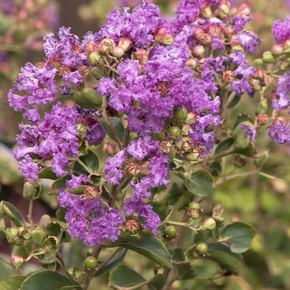
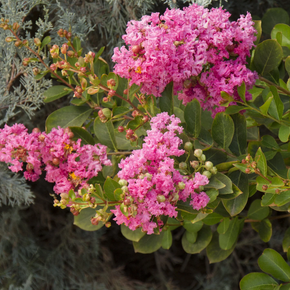
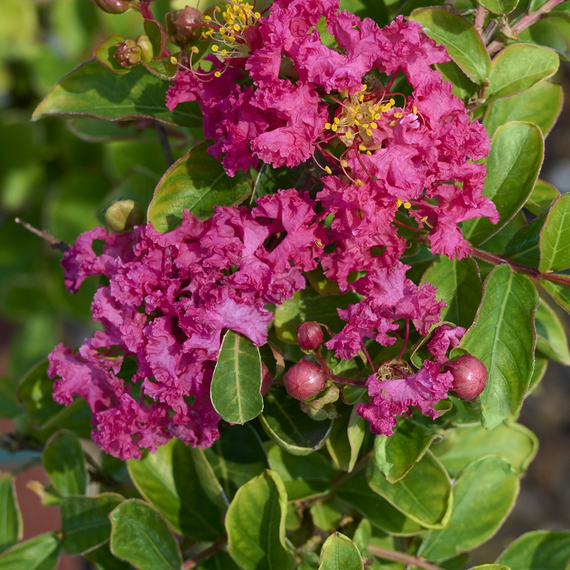
- Covered in bubblegum-pink, crepe-like flower clusters through the heat of summer.
- Multi-season appeal with attractive bark and cheerful yellow fall color.
- Easy-care and versatile for borders, containers, and low hedges in sunny spots.
Petite Embers Crape Myrtle (Lagerstroemia indica ‘Moners’) is a dwarf crape myrtle that delivers big summer color without taking over your landscape. This compact, upright, shrubby variety quickly reaches about 5 feet tall and 4 feet wide, making it an ideal choice for foundation plantings, front-yard borders, and patio containers. In summer, it produces a profusion of bubblegum-pink, crepe-textured flower clusters that draw pollinators, while its attractive bark and yellow fall foliage extend the show beyond bloom season. Plant Petite Embers in full sun and well-drained soil for the best flowering and performance in Zones 7–9.
At-a-Glance
- Botanical name: Lagerstroemia indica ‘Moners’
- Common name: Petite Embers Crape Myrtle
- Plant type: Deciduous flowering shrub
- Best feature: Heavy summer bloom on a compact plant
Size & Growth Habit
- Mature size: About 5 ft. tall and 4 ft. wide
- Growth habit: Upright, compact, shrubby form
- Growth rate: Fast
Petite Embers is sized for modern landscapes—small enough for tight beds, yet bold enough to stand alone as a colorful accent.
Blooms
- Bloom time: Summer
- Flower look: Crepe-like clusters in a bubblegum-pink tone
- Flower impact: Prolific, showy display at branch tips
When summer heat arrives, Petite Embers steps in with a vibrant burst of color that brightens beds, borders, and containers.
Foliage, Bark & Fall Color
- Foliage: Deciduous green leaves during the growing season
- Fall color: Yellow
- Bark: Attractive bark adds interest even when the plant is dormant
Light Requirements
Full sun is best for the most flowers and the strongest, sturdier growth. Choose a bright, open spot for peak performance.
Watering
- When to water: Water deeply when the soil is dry
- Establishing plants: Water regularly during the first growing season to build a strong root system
- After establishment: Reduce frequency; this variety is considered waterwise once established
Soil & Planting Tips
Petite Embers thrives in average, well-drained soil. Avoid consistently soggy areas, and use mulch to help retain moisture and keep roots comfortable.
- Dig a hole 2–3x wider than the root ball and plant at the same depth as in the pot.
- Backfill, water thoroughly, and add 2–3 inches of mulch (keep mulch off the trunk).
- Give it room to fill out to its mature width for the healthiest shape and airflow.
Feeding & Ongoing Care
- Feeding: Feed before new growth begins in spring
- General care: Easy care; prune lightly as needed to maintain a tidy outline
- Urban tolerance: Handles urban conditions well, including pollution
Pruning & Training Options
Petite Embers naturally stays compact, but you can tailor its look:
- For a fuller shrub look: Keep multiple stems and lightly shape as needed.
- For a more “small tree” structure: In late winter to early spring, thin young plants to 3–7 main trunks or canopy branches.
- Maintenance tip: Remove suckers that emerge from the base on older plants.
Landscape Uses
- Great for: Borders, foundation beds, and small-space accents
- Also ideal for: Containers, low hedges, and compact privacy screening
- Design tip: Plant in groups for a stronger color “wow,” or in a row for a blooming hedge effect
Place near patios or outdoor living areas to enjoy its seasonal color—and its attractive bark in the off-season.
Hardiness
- USDA Zones: 7–9
- Cold-season behavior: Deciduous (drops leaves in winter)
Pollinators & Pet-Friendly Notes
- Pollinators: Attracts pollinators
- Pets: Listed as non-toxic to cats and dogs
A beautiful choice for sunny gardens where you want both vibrant bloom color and a more pollinator-friendly landscape.
- Dwarf, shrubby crape myrtle that stays compact—perfect for smaller yards and patios.
- Covered in bubblegum-pink, crepe-like flower clusters through the heat of summer.
- Multi-season appeal with attractive bark and cheerful yellow fall color.
- Easy-care and versatile for borders, containers, and low hedges in sunny spots.
Petite Embers Crape Myrtle (Lagerstroemia indica ‘Moners’) is a dwarf crape myrtle that delivers big summer color without taking over your landscape. This compact, upright, shrubby variety quickly reaches about 5 feet tall and 4 feet wide, making it an ideal choice for foundation plantings, front-yard borders, and patio containers. In summer, it produces a profusion of bubblegum-pink, crepe-textured flower clusters that draw pollinators, while its attractive bark and yellow fall foliage extend the show beyond bloom season. Plant Petite Embers in full sun and well-drained soil for the best flowering and performance in Zones 7–9.
At-a-Glance
- Botanical name: Lagerstroemia indica ‘Moners’
- Common name: Petite Embers Crape Myrtle
- Plant type: Deciduous flowering shrub
- Best feature: Heavy summer bloom on a compact plant
Size & Growth Habit
- Mature size: About 5 ft. tall and 4 ft. wide
- Growth habit: Upright, compact, shrubby form
- Growth rate: Fast
Petite Embers is sized for modern landscapes—small enough for tight beds, yet bold enough to stand alone as a colorful accent.
Blooms
- Bloom time: Summer
- Flower look: Crepe-like clusters in a bubblegum-pink tone
- Flower impact: Prolific, showy display at branch tips
When summer heat arrives, Petite Embers steps in with a vibrant burst of color that brightens beds, borders, and containers.
Foliage, Bark & Fall Color
- Foliage: Deciduous green leaves during the growing season
- Fall color: Yellow
- Bark: Attractive bark adds interest even when the plant is dormant
Light Requirements
Full sun is best for the most flowers and the strongest, sturdier growth. Choose a bright, open spot for peak performance.
Watering
- When to water: Water deeply when the soil is dry
- Establishing plants: Water regularly during the first growing season to build a strong root system
- After establishment: Reduce frequency; this variety is considered waterwise once established
Soil & Planting Tips
Petite Embers thrives in average, well-drained soil. Avoid consistently soggy areas, and use mulch to help retain moisture and keep roots comfortable.
- Dig a hole 2–3x wider than the root ball and plant at the same depth as in the pot.
- Backfill, water thoroughly, and add 2–3 inches of mulch (keep mulch off the trunk).
- Give it room to fill out to its mature width for the healthiest shape and airflow.
Feeding & Ongoing Care
- Feeding: Feed before new growth begins in spring
- General care: Easy care; prune lightly as needed to maintain a tidy outline
- Urban tolerance: Handles urban conditions well, including pollution
Pruning & Training Options
Petite Embers naturally stays compact, but you can tailor its look:
- For a fuller shrub look: Keep multiple stems and lightly shape as needed.
- For a more “small tree” structure: In late winter to early spring, thin young plants to 3–7 main trunks or canopy branches.
- Maintenance tip: Remove suckers that emerge from the base on older plants.
Landscape Uses
- Great for: Borders, foundation beds, and small-space accents
- Also ideal for: Containers, low hedges, and compact privacy screening
- Design tip: Plant in groups for a stronger color “wow,” or in a row for a blooming hedge effect
Place near patios or outdoor living areas to enjoy its seasonal color—and its attractive bark in the off-season.
Hardiness
- USDA Zones: 7–9
- Cold-season behavior: Deciduous (drops leaves in winter)
Pollinators & Pet-Friendly Notes
- Pollinators: Attracts pollinators
- Pets: Listed as non-toxic to cats and dogs
A beautiful choice for sunny gardens where you want both vibrant bloom color and a more pollinator-friendly landscape.
Related Products