

Zoom the image with the mouse
Luxuriant Fringed Bleeding Heart - 2 Gallon
SKU:
2099650
UPC:
014949316122
$32.99
- Exceptionally long blooming season — cherry-red to cerise-pink heart-shaped flowers dangle above lush, fern-like blue-green foliage from late spring through early fall, far outlasting most other bleeding heart varieties.
- More sun and heat tolerant than typical bleeding hearts — thrives in part shade but handles sunnier spots with consistent moisture, making it one of the most versatile and adaptable fringed bleeding hearts available.
- Royal Horticultural Society Award of Garden Merit winner — a proven, low-maintenance herbaceous perennial that is reliably deer and rabbit resistant, cold hardy in USDA Zones 3–9, and virtually trouble-free in the garden.
- Stunning in borders, woodland gardens, cottage gardens, and containers — compact mounded habit and season-long attractive foliage make it a hardworking landscape plant even when not in bloom.
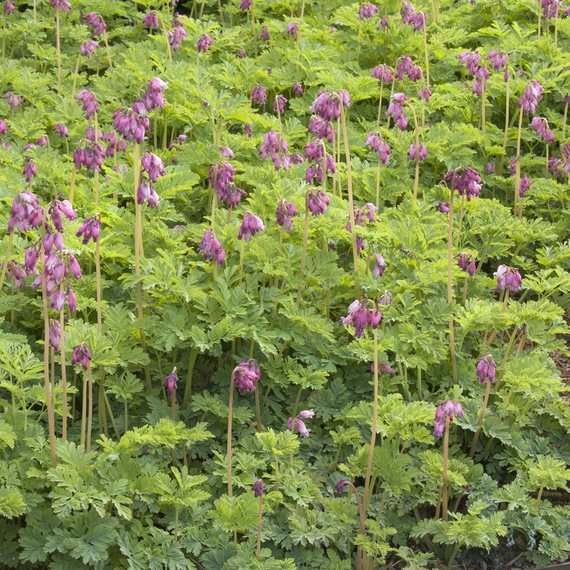
Dicentra 'Luxuriant' Fringed Bleeding Heart is an award-winning compact herbaceous perennial celebrated for its exceptionally long flowering season and outstanding garden performance. Arching stems carry clusters of nodding, heart-shaped flowers in rich cherry-red to cerise-pink above a tidy, rounded mound of finely divided, blue-green fern-like foliage. Unlike common bleeding heart, which fades away by midsummer, 'Luxuriant' keeps its handsome foliage attractive throughout the entire growing season and continues producing its signature blooms from late spring well into early fall, making it one of the longest-blooming perennials available for shaded and partially shaded gardens. A hybrid likely descended from both the eastern North American native Dicentra eximia and the western native Dicentra formosa, 'Luxuriant' inherits superior vigor, adaptability, and heat tolerance from both parents. It thrives in humus-rich, consistently moist, well-drained soils and performs beautifully in woodland gardens, shaded borders, cottage garden beds, slope plantings, and patio containers. Its deep-cut foliage and graceful flower display attract hummingbirds, butterflies, and bees while naturally resisting deer and rabbits. Hardy to USDA Zone 3 and recognized with the prestigious Royal Horticultural Society Award of Garden Merit, Dicentra 'Luxuriant' is a must-have low-maintenance perennial that brings lasting color and refined texture to the shade garden season after season.
Plant Description
Dicentra 'Luxuriant' is a compact, mound-forming herbaceous perennial belonging to the family Papaveraceae. It produces deeply dissected, fern-like foliage in a soft blue-green to grayish-green color that emerges in spring and remains attractive through the entire growing season — a notable advantage over the old-fashioned Asian bleeding heart, which goes dormant by midsummer. From the foliage mound rise long, arching, leafless stems tipped with dangling clusters of pendant, heart-shaped flowers in rich cherry-red to cerise-pink. Each individual bloom features the classic "bleeding heart" silhouette: two outer petals fused into a heart shape with protruding inner petals at the base that appear to form a drop of blood. 'Luxuriant' is widely believed to be a hybrid cross between Dicentra eximia (eastern U.S. native) and Dicentra formosa (western U.S. native), resulting in a plant with exceptional vigor, a tidier habit, and superior heat and sun tolerance compared to either parent species alone. It has received the prestigious Award of Garden Merit from the Royal Horticultural Society in recognition of its outstanding garden performance.
Mature Size
| Attribute | Measurement |
|---|---|
| Mature Height | 12–15 inches (approximately 1 to 1.5 feet) |
| Mature Spread | 12–18 inches (approximately 1 to 1.5 feet) |
| Recommended Spacing | 18–20 inches on center |
| Growth Habit | Compact, mounded, clump-forming |
| Growth Rate | Moderate |
Hardiness and Climate Zones
Dicentra 'Luxuriant' is exceptionally cold hardy and adaptable across a wide range of climates in North America. It thrives in the following zones:
- USDA Hardiness Zones: 3 through 9
- AHS Heat Zones: 1 through 9
- Sunset Climate Zones: 1–9, 14–24, A1–A3
In warmer climates (Zones 7–9), 'Luxuriant' may pause blooming during the hottest weeks of midsummer but typically rebounds with a fresh flush of flowers when temperatures moderate in late summer or early fall. In cooler climates, flowering may continue with little interruption from late spring through autumn. Unlike Dicentra spectabilis, 'Luxuriant' maintains its attractive foliage through the season and does not go fully dormant in summer, making it a more reliable, season-long performer in warmer regions.
Sunlight Requirements
Dicentra 'Luxuriant' performs best in part shade, making it an ideal choice for areas that receive dappled light or morning sun with afternoon shade. It is notably more sun and heat tolerant than most bleeding heart varieties and can handle fuller sun exposures when given consistent moisture. Here is a general guide:
- Ideal: Part shade — dappled light or 3 to 6 hours of direct sun, ideally morning sun with afternoon shade
- Acceptable: Full shade — will bloom but may produce fewer flowers and more open growth
- Possible with care: Full sun — can be grown in full sun in cooler climates if soil is kept consistently and evenly moist; foliage may show stress in full sun in hot summers
In Southern Oregon and Northern California gardens, locating 'Luxuriant' under the canopy of deciduous trees or on the north or east side of structures will provide the ideal conditions for the longest, most vigorous bloom season.
Soil and pH Preferences
For the best growth and longest bloom season, provide Dicentra 'Luxuriant' with soil that mimics its woodland origins:
- Soil type: Rich, fertile, humus-rich loam is ideal; tolerates clay or chalky soils when drainage is adequate
- Drainage: Moist but well-drained — the plant cannot tolerate waterlogged or boggy conditions, especially in winter, which can lead to root rot
- Moisture retention: Soil should retain consistent moisture during the growing season; never allow it to dry out completely during summer
- Soil pH: Neutral to slightly alkaline (pH 6.5–7.5) is preferred; slightly acidic soils are also tolerated
- Organic matter: Incorporate generous amounts of compost or well-aged leaf mold at planting time and as a top dressing annually to improve moisture retention and fertility
Avoid planting in areas with heavy clay that stays wet over winter, or in dry, sandy soils without amendment and supplemental irrigation.
Watering Guide
Consistent moisture is the single most important cultural requirement for keeping Dicentra 'Luxuriant' healthy and blooming throughout the season. Follow these guidelines:
- Newly planted: Water thoroughly at planting and keep soil evenly moist for the first growing season until the plant is well established.
- Established plants: Provide average, medium moisture. Water deeply when the top inch of soil begins to feel dry, especially during dry summer spells.
- Summer: Do not allow soil to dry out during summer heat — drought stress causes foliage to decline and bloom production to stop prematurely.
- Winter: Reduce watering as the plant goes dormant, and ensure excellent drainage to prevent crown or root rot in wet winter soils.
- Mulching: Apply a 2–3 inch layer of shredded bark, leaves, or compost around the base of the plant to retain soil moisture, moderate soil temperature, and suppress weeds. Keep mulch pulled slightly away from the crown.
Fertilizing
Dicentra 'Luxuriant' is a moderate feeder that benefits from annual soil enrichment to support its long flowering season. Its nutrient requirements are best met through organic amendments rather than heavy synthetic fertilization:
- Spring feeding: Apply a balanced, slow-release granular fertilizer (such as a 10-10-10 or similar) in early spring as new growth emerges, following label directions for perennials.
- Organic alternative: Top-dress around the plant with 1–2 inches of compost or well-rotted leaf mold each spring. This slowly feeds the plant throughout the season while also improving soil structure and moisture retention.
- Avoid over-fertilizing: Excess nitrogen can promote lush foliage at the expense of flowers. Use a balanced or bloom-promoting formula if foliar growth outpaces flowering.
- Fall: No additional feeding is needed in fall; allow the plant to naturally prepare for winter dormancy.
Pruning and Maintenance
'Luxuriant' is a low-maintenance perennial that requires minimal pruning to perform at its best. Follow these simple steps throughout the year:
- Deadheading: Promptly remove spent flower stems by cutting them back to the base of the foliage mound. This encourages the plant to redirect energy into producing new flowering stems and extends the bloom season significantly.
- Foliage cleanup: Unlike Dicentra spectabilis, 'Luxuriant' typically retains attractive foliage throughout the growing season. Cut back any yellowing or damaged leaves as needed for a tidy appearance.
- Late fall/winter cutback: After frost kills the foliage, cut the entire plant back to the ground. The root crown will remain alive underground through winter.
- Division: Divide established clumps every 3 to 5 years in early spring just as new growth emerges, or in fall after foliage has died back. Division keeps plants vigorous and prevents overcrowding. Each division should retain a healthy section of the fleshy root system.
- General maintenance level: Low — this is a plant that thrives with minimal intervention once properly sited.
Planting Instructions
- Choose the right site: Select a location with part shade and rich, moist, well-drained soil. Morning sun with afternoon shade is ideal for most climates in Southern Oregon and Northern California.
- Timing: Plant in early spring or early fall for best establishment. Avoid planting during the hottest summer months.
- Prepare the soil: Dig the planting area to a depth of 12–15 inches and incorporate a generous amount of compost or leaf mold. If soil drainage is poor, raise the bed or add grit to improve drainage.
- Dig the hole: Make the planting hole twice as wide as the root ball and just as deep so the crown sits at the same level it was growing in its nursery container.
- Plant: Remove the plant from its container, gently loosen any circling roots, and set it in the hole. Backfill with the amended soil, firming gently around the roots.
- Water in: Water thoroughly after planting to settle the soil and eliminate air pockets.
- Mulch: Apply a 2–3 inch mulch layer around the plant, keeping mulch a few inches away from the crown to prevent rot.
- Spacing: Space plants 18–20 inches apart for mass plantings or border use.
Seasonal Interest
One of 'Luxuriant's greatest strengths is its extended season of garden interest — far beyond what most other bleeding hearts offer:
- Spring (mid to late): Fresh blue-green fern-like foliage emerges early, quickly filling out into a lush mound. Blooming begins in late spring with arching stems of cherry-red to cerise-pink heart-shaped flowers.
- Early to midsummer: Flowering continues prolifically, making 'Luxuriant' a standout while many other shade perennials are still in foliage-only mode. Attractive foliage remains fresh and green.
- Late summer: In hotter climates, bloom may slow during peak heat but the foliage remains attractive as a fine-textured groundcover. Deadheading spent stems during this period encourages a rebloom flush when temperatures moderate.
- Fall: Cooler temperatures bring a renewed flush of blooms, often lasting until the first hard frost. The blue-green foliage adds soft texture to the fall garden.
- Winter: Plant goes dormant after frost; cut foliage back to the ground. The root system persists safely underground through cold winters.
Landscape Uses
Dicentra 'Luxuriant' is a versatile perennial that suits a wide range of landscape applications:
- Woodland and shade gardens: A natural fit under deciduous trees or at the edge of shrub borders where dappled light and moist, humus-rich soil abound.
- Perennial borders: Use as a front-to-middle border plant where its mounded habit and long bloom season fill gaps between larger perennials.
- Edging: The compact, uniform mound makes 'Luxuriant' an excellent edging plant along pathways, garden beds, and shaded walkways.
- Groundcover: Mass plantings create a beautiful, weed-suppressing groundcover carpet under trees and shrubs.
- Banks and slopes: Tolerates sloped terrain well where drainage is naturally improved.
- Containers and patio pots: Grows beautifully in large containers placed in shaded or partly shaded patios and entryways.
- Cottage and informal gardens: The romantic, old-fashioned flower form blends seamlessly into cottage-style plantings.
- Coastal gardens: Tolerates the conditions typical of coastal Pacific Northwest and Northern California garden settings.
Companion Plants
Dicentra 'Luxuriant' pairs beautifully with many shade-loving perennials, shrubs, and groundcovers. Consider the following combinations for a layered, season-long display:
- Hostas: Bold hosta foliage provides a dramatic contrast to 'Luxuriant's finely cut leaves, and the two share the same moisture and shade preferences.
- Astilbe: Feathery astilbe plumes complement the pendant flowers of 'Luxuriant' and extend the bloom season into summer.
- Ferns: Woodland ferns echo the finely textured foliage and create a lush, naturalistic understory planting.
- Heuchera (Coral Bells): Colorful coral bells foliage provides year-round interest and fills any gaps when 'Luxuriant' slows during peak heat.
- Brunnera 'Jack Frost': The silver-frosted leaves of Brunnera create a stunning foliage contrast while thriving in identical conditions.
- Epimedium: Tough, shade-tolerant epimedium makes an ideal groundcover companion at the feet of 'Luxuriant'.
- Spring bulbs (daffodils, tulips, alliums): Plant bulbs among 'Luxuriant' for early-season color; the bleeding heart's emerging foliage will mask declining bulb foliage as the season progresses.
- Rhododendrons and azaleas: Evergreen or semi-evergreen flowering shrubs make excellent structural backdrops that share similar moisture, shade, and soil preferences.
- Forget-me-nots (Myosotis): Soft blue forget-me-not flowers create a charming spring color combination with the cerise-pink blooms of 'Luxuriant'.
Pests and Diseases
Dicentra 'Luxuriant' is generally a trouble-free perennial with no serious pest or disease problems. Being aware of the following potential issues will help keep your plant at its healthiest:
- Slugs and snails: The most common pest concern, particularly on young spring growth. Handpick at night or use iron phosphate-based slug bait around the base of plants. Avoid excess moisture around the crown.
- Aphids: Occasional aphid infestations may occur on new growth. Knock off with a strong stream of water or apply insecticidal soap if populations are heavy.
- Powdery mildew: Can occur in hot, humid conditions with poor air circulation. Ensure adequate plant spacing and avoid overhead watering in the evening.
- Downy mildew and rust: Rare but possible in conditions of excessive moisture and poor drainage. Good soil drainage is the best preventive measure.
- Verticillium or fusarium wilt: Uncommon fungal wilts may appear in poorly drained or overly wet soils. There is no cure once infected; remove and dispose of affected plants and improve drainage before replanting.
- Root rot: Results from waterlogged soils, especially in winter. Always ensure the planting site has excellent drainage.
- Deer and rabbits: Resistant to browsing due to the plant's natural alkaloid content — an excellent choice for gardens in areas with high deer or rabbit pressure.
Container Growing
Dicentra 'Luxuriant' is well suited to container culture and makes a striking patio or entryway plant when grown in a sufficiently large pot in a shaded or partly shaded location. Follow these guidelines for success:
- Container size: Choose a large container — at least 12–16 inches in diameter and depth — to accommodate the root system and allow for adequate moisture retention.
- Drainage: Ensure the container has ample drainage holes. Never allow the pot to sit in standing water.
- Potting mix: Use a rich, well-draining potting mix amended with compost or leaf mold to mimic the plant's preferred woodland soil conditions.
- Watering: Containers dry out more quickly than in-ground plantings. Check soil moisture regularly and water thoroughly whenever the top inch feels dry. Consistent moisture is critical.
- Fertilizing: Feed container-grown plants with a balanced, slow-release granular fertilizer in spring, or supplement monthly with a diluted liquid fertilizer through the blooming season.
- Light: Position in a spot with morning sun and afternoon shade, or in bright, filtered light. Avoid hot, west-facing exposures.
- Winter care: In Zones 3–6, move containers to a sheltered, unheated garage or outbuilding to protect the pot from freeze-thaw cycles that could damage the container or roots. In Zones 7–9, containers can generally remain outdoors in a protected spot.
- Companion container plants: Pair with hostas, impatiens, ferns, heuchera, or spring bulbs for a full, layered container display.
Wildlife Value
Despite its toxicity to mammals, Dicentra 'Luxuriant' provides meaningful ecological value in the garden by attracting a variety of beneficial wildlife:
- Hummingbirds: The tubular, pendant flowers are a favorite nectar source for hummingbirds, which hover beneath the arching stems to feed. In Southern Oregon and Northern California, this makes 'Luxuriant' especially valuable for supporting migrating and resident rufous and Anna's hummingbirds.
- Butterflies: Various butterfly species visit the flowers for nectar throughout the long bloom season.
- Bumblebees and native bees: The heart-shaped flowers are designed to attract bumblebees, which are among the few insects strong enough to access the nectar inside. A variety of native bee species also visit the blooms.
- Deer resistance: All parts of the plant contain isoquinoline alkaloids that are distasteful and mildly toxic to deer, rabbits, cattle, and other mammals, making 'Luxuriant' a reliable choice for gardens in areas with significant wildlife browsing pressure.
Toxicity and Safe Handling
All parts of Dicentra 'Luxuriant' contain isoquinoline alkaloids and are considered toxic if ingested by humans or animals. Please observe the following precautions:
- Humans: Ingestion of any part of the plant may cause stomach upset, nausea, and other symptoms. Keep away from young children who may be attracted to the colorful flowers.
- Skin sensitivity: The foliage may aggravate skin allergies or cause contact dermatitis in sensitive individuals. Wear gloves and protective clothing when handling, pruning, or dividing the plant.
- Pets and livestock: Toxic to dogs, cats, cattle, and sheep. The alkaloids can cause trembling, convulsions, and other adverse reactions. Ensure pets do not graze on or chew the plant.
- After handling: Wash hands thoroughly with soap and water after any contact with the plant, especially before touching your face or eyes.
- Exceptionally long blooming season — cherry-red to cerise-pink heart-shaped flowers dangle above lush, fern-like blue-green foliage from late spring through early fall, far outlasting most other bleeding heart varieties.
- More sun and heat tolerant than typical bleeding hearts — thrives in part shade but handles sunnier spots with consistent moisture, making it one of the most versatile and adaptable fringed bleeding hearts available.
- Royal Horticultural Society Award of Garden Merit winner — a proven, low-maintenance herbaceous perennial that is reliably deer and rabbit resistant, cold hardy in USDA Zones 3–9, and virtually trouble-free in the garden.
- Stunning in borders, woodland gardens, cottage gardens, and containers — compact mounded habit and season-long attractive foliage make it a hardworking landscape plant even when not in bloom.
Dicentra 'Luxuriant' Fringed Bleeding Heart is an award-winning compact herbaceous perennial celebrated for its exceptionally long flowering season and outstanding garden performance. Arching stems carry clusters of nodding, heart-shaped flowers in rich cherry-red to cerise-pink above a tidy, rounded mound of finely divided, blue-green fern-like foliage. Unlike common bleeding heart, which fades away by midsummer, 'Luxuriant' keeps its handsome foliage attractive throughout the entire growing season and continues producing its signature blooms from late spring well into early fall, making it one of the longest-blooming perennials available for shaded and partially shaded gardens. A hybrid likely descended from both the eastern North American native Dicentra eximia and the western native Dicentra formosa, 'Luxuriant' inherits superior vigor, adaptability, and heat tolerance from both parents. It thrives in humus-rich, consistently moist, well-drained soils and performs beautifully in woodland gardens, shaded borders, cottage garden beds, slope plantings, and patio containers. Its deep-cut foliage and graceful flower display attract hummingbirds, butterflies, and bees while naturally resisting deer and rabbits. Hardy to USDA Zone 3 and recognized with the prestigious Royal Horticultural Society Award of Garden Merit, Dicentra 'Luxuriant' is a must-have low-maintenance perennial that brings lasting color and refined texture to the shade garden season after season.
Plant Description
Dicentra 'Luxuriant' is a compact, mound-forming herbaceous perennial belonging to the family Papaveraceae. It produces deeply dissected, fern-like foliage in a soft blue-green to grayish-green color that emerges in spring and remains attractive through the entire growing season — a notable advantage over the old-fashioned Asian bleeding heart, which goes dormant by midsummer. From the foliage mound rise long, arching, leafless stems tipped with dangling clusters of pendant, heart-shaped flowers in rich cherry-red to cerise-pink. Each individual bloom features the classic "bleeding heart" silhouette: two outer petals fused into a heart shape with protruding inner petals at the base that appear to form a drop of blood. 'Luxuriant' is widely believed to be a hybrid cross between Dicentra eximia (eastern U.S. native) and Dicentra formosa (western U.S. native), resulting in a plant with exceptional vigor, a tidier habit, and superior heat and sun tolerance compared to either parent species alone. It has received the prestigious Award of Garden Merit from the Royal Horticultural Society in recognition of its outstanding garden performance.
Mature Size
| Attribute | Measurement |
|---|---|
| Mature Height | 12–15 inches (approximately 1 to 1.5 feet) |
| Mature Spread | 12–18 inches (approximately 1 to 1.5 feet) |
| Recommended Spacing | 18–20 inches on center |
| Growth Habit | Compact, mounded, clump-forming |
| Growth Rate | Moderate |
Hardiness and Climate Zones
Dicentra 'Luxuriant' is exceptionally cold hardy and adaptable across a wide range of climates in North America. It thrives in the following zones:
- USDA Hardiness Zones: 3 through 9
- AHS Heat Zones: 1 through 9
- Sunset Climate Zones: 1–9, 14–24, A1–A3
In warmer climates (Zones 7–9), 'Luxuriant' may pause blooming during the hottest weeks of midsummer but typically rebounds with a fresh flush of flowers when temperatures moderate in late summer or early fall. In cooler climates, flowering may continue with little interruption from late spring through autumn. Unlike Dicentra spectabilis, 'Luxuriant' maintains its attractive foliage through the season and does not go fully dormant in summer, making it a more reliable, season-long performer in warmer regions.
Sunlight Requirements
Dicentra 'Luxuriant' performs best in part shade, making it an ideal choice for areas that receive dappled light or morning sun with afternoon shade. It is notably more sun and heat tolerant than most bleeding heart varieties and can handle fuller sun exposures when given consistent moisture. Here is a general guide:
- Ideal: Part shade — dappled light or 3 to 6 hours of direct sun, ideally morning sun with afternoon shade
- Acceptable: Full shade — will bloom but may produce fewer flowers and more open growth
- Possible with care: Full sun — can be grown in full sun in cooler climates if soil is kept consistently and evenly moist; foliage may show stress in full sun in hot summers
In Southern Oregon and Northern California gardens, locating 'Luxuriant' under the canopy of deciduous trees or on the north or east side of structures will provide the ideal conditions for the longest, most vigorous bloom season.
Soil and pH Preferences
For the best growth and longest bloom season, provide Dicentra 'Luxuriant' with soil that mimics its woodland origins:
- Soil type: Rich, fertile, humus-rich loam is ideal; tolerates clay or chalky soils when drainage is adequate
- Drainage: Moist but well-drained — the plant cannot tolerate waterlogged or boggy conditions, especially in winter, which can lead to root rot
- Moisture retention: Soil should retain consistent moisture during the growing season; never allow it to dry out completely during summer
- Soil pH: Neutral to slightly alkaline (pH 6.5–7.5) is preferred; slightly acidic soils are also tolerated
- Organic matter: Incorporate generous amounts of compost or well-aged leaf mold at planting time and as a top dressing annually to improve moisture retention and fertility
Avoid planting in areas with heavy clay that stays wet over winter, or in dry, sandy soils without amendment and supplemental irrigation.
Watering Guide
Consistent moisture is the single most important cultural requirement for keeping Dicentra 'Luxuriant' healthy and blooming throughout the season. Follow these guidelines:
- Newly planted: Water thoroughly at planting and keep soil evenly moist for the first growing season until the plant is well established.
- Established plants: Provide average, medium moisture. Water deeply when the top inch of soil begins to feel dry, especially during dry summer spells.
- Summer: Do not allow soil to dry out during summer heat — drought stress causes foliage to decline and bloom production to stop prematurely.
- Winter: Reduce watering as the plant goes dormant, and ensure excellent drainage to prevent crown or root rot in wet winter soils.
- Mulching: Apply a 2–3 inch layer of shredded bark, leaves, or compost around the base of the plant to retain soil moisture, moderate soil temperature, and suppress weeds. Keep mulch pulled slightly away from the crown.
Fertilizing
Dicentra 'Luxuriant' is a moderate feeder that benefits from annual soil enrichment to support its long flowering season. Its nutrient requirements are best met through organic amendments rather than heavy synthetic fertilization:
- Spring feeding: Apply a balanced, slow-release granular fertilizer (such as a 10-10-10 or similar) in early spring as new growth emerges, following label directions for perennials.
- Organic alternative: Top-dress around the plant with 1–2 inches of compost or well-rotted leaf mold each spring. This slowly feeds the plant throughout the season while also improving soil structure and moisture retention.
- Avoid over-fertilizing: Excess nitrogen can promote lush foliage at the expense of flowers. Use a balanced or bloom-promoting formula if foliar growth outpaces flowering.
- Fall: No additional feeding is needed in fall; allow the plant to naturally prepare for winter dormancy.
Pruning and Maintenance
'Luxuriant' is a low-maintenance perennial that requires minimal pruning to perform at its best. Follow these simple steps throughout the year:
- Deadheading: Promptly remove spent flower stems by cutting them back to the base of the foliage mound. This encourages the plant to redirect energy into producing new flowering stems and extends the bloom season significantly.
- Foliage cleanup: Unlike Dicentra spectabilis, 'Luxuriant' typically retains attractive foliage throughout the growing season. Cut back any yellowing or damaged leaves as needed for a tidy appearance.
- Late fall/winter cutback: After frost kills the foliage, cut the entire plant back to the ground. The root crown will remain alive underground through winter.
- Division: Divide established clumps every 3 to 5 years in early spring just as new growth emerges, or in fall after foliage has died back. Division keeps plants vigorous and prevents overcrowding. Each division should retain a healthy section of the fleshy root system.
- General maintenance level: Low — this is a plant that thrives with minimal intervention once properly sited.
Planting Instructions
- Choose the right site: Select a location with part shade and rich, moist, well-drained soil. Morning sun with afternoon shade is ideal for most climates in Southern Oregon and Northern California.
- Timing: Plant in early spring or early fall for best establishment. Avoid planting during the hottest summer months.
- Prepare the soil: Dig the planting area to a depth of 12–15 inches and incorporate a generous amount of compost or leaf mold. If soil drainage is poor, raise the bed or add grit to improve drainage.
- Dig the hole: Make the planting hole twice as wide as the root ball and just as deep so the crown sits at the same level it was growing in its nursery container.
- Plant: Remove the plant from its container, gently loosen any circling roots, and set it in the hole. Backfill with the amended soil, firming gently around the roots.
- Water in: Water thoroughly after planting to settle the soil and eliminate air pockets.
- Mulch: Apply a 2–3 inch mulch layer around the plant, keeping mulch a few inches away from the crown to prevent rot.
- Spacing: Space plants 18–20 inches apart for mass plantings or border use.
Seasonal Interest
One of 'Luxuriant's greatest strengths is its extended season of garden interest — far beyond what most other bleeding hearts offer:
- Spring (mid to late): Fresh blue-green fern-like foliage emerges early, quickly filling out into a lush mound. Blooming begins in late spring with arching stems of cherry-red to cerise-pink heart-shaped flowers.
- Early to midsummer: Flowering continues prolifically, making 'Luxuriant' a standout while many other shade perennials are still in foliage-only mode. Attractive foliage remains fresh and green.
- Late summer: In hotter climates, bloom may slow during peak heat but the foliage remains attractive as a fine-textured groundcover. Deadheading spent stems during this period encourages a rebloom flush when temperatures moderate.
- Fall: Cooler temperatures bring a renewed flush of blooms, often lasting until the first hard frost. The blue-green foliage adds soft texture to the fall garden.
- Winter: Plant goes dormant after frost; cut foliage back to the ground. The root system persists safely underground through cold winters.
Landscape Uses
Dicentra 'Luxuriant' is a versatile perennial that suits a wide range of landscape applications:
- Woodland and shade gardens: A natural fit under deciduous trees or at the edge of shrub borders where dappled light and moist, humus-rich soil abound.
- Perennial borders: Use as a front-to-middle border plant where its mounded habit and long bloom season fill gaps between larger perennials.
- Edging: The compact, uniform mound makes 'Luxuriant' an excellent edging plant along pathways, garden beds, and shaded walkways.
- Groundcover: Mass plantings create a beautiful, weed-suppressing groundcover carpet under trees and shrubs.
- Banks and slopes: Tolerates sloped terrain well where drainage is naturally improved.
- Containers and patio pots: Grows beautifully in large containers placed in shaded or partly shaded patios and entryways.
- Cottage and informal gardens: The romantic, old-fashioned flower form blends seamlessly into cottage-style plantings.
- Coastal gardens: Tolerates the conditions typical of coastal Pacific Northwest and Northern California garden settings.
Companion Plants
Dicentra 'Luxuriant' pairs beautifully with many shade-loving perennials, shrubs, and groundcovers. Consider the following combinations for a layered, season-long display:
- Hostas: Bold hosta foliage provides a dramatic contrast to 'Luxuriant's finely cut leaves, and the two share the same moisture and shade preferences.
- Astilbe: Feathery astilbe plumes complement the pendant flowers of 'Luxuriant' and extend the bloom season into summer.
- Ferns: Woodland ferns echo the finely textured foliage and create a lush, naturalistic understory planting.
- Heuchera (Coral Bells): Colorful coral bells foliage provides year-round interest and fills any gaps when 'Luxuriant' slows during peak heat.
- Brunnera 'Jack Frost': The silver-frosted leaves of Brunnera create a stunning foliage contrast while thriving in identical conditions.
- Epimedium: Tough, shade-tolerant epimedium makes an ideal groundcover companion at the feet of 'Luxuriant'.
- Spring bulbs (daffodils, tulips, alliums): Plant bulbs among 'Luxuriant' for early-season color; the bleeding heart's emerging foliage will mask declining bulb foliage as the season progresses.
- Rhododendrons and azaleas: Evergreen or semi-evergreen flowering shrubs make excellent structural backdrops that share similar moisture, shade, and soil preferences.
- Forget-me-nots (Myosotis): Soft blue forget-me-not flowers create a charming spring color combination with the cerise-pink blooms of 'Luxuriant'.
Pests and Diseases
Dicentra 'Luxuriant' is generally a trouble-free perennial with no serious pest or disease problems. Being aware of the following potential issues will help keep your plant at its healthiest:
- Slugs and snails: The most common pest concern, particularly on young spring growth. Handpick at night or use iron phosphate-based slug bait around the base of plants. Avoid excess moisture around the crown.
- Aphids: Occasional aphid infestations may occur on new growth. Knock off with a strong stream of water or apply insecticidal soap if populations are heavy.
- Powdery mildew: Can occur in hot, humid conditions with poor air circulation. Ensure adequate plant spacing and avoid overhead watering in the evening.
- Downy mildew and rust: Rare but possible in conditions of excessive moisture and poor drainage. Good soil drainage is the best preventive measure.
- Verticillium or fusarium wilt: Uncommon fungal wilts may appear in poorly drained or overly wet soils. There is no cure once infected; remove and dispose of affected plants and improve drainage before replanting.
- Root rot: Results from waterlogged soils, especially in winter. Always ensure the planting site has excellent drainage.
- Deer and rabbits: Resistant to browsing due to the plant's natural alkaloid content — an excellent choice for gardens in areas with high deer or rabbit pressure.
Container Growing
Dicentra 'Luxuriant' is well suited to container culture and makes a striking patio or entryway plant when grown in a sufficiently large pot in a shaded or partly shaded location. Follow these guidelines for success:
- Container size: Choose a large container — at least 12–16 inches in diameter and depth — to accommodate the root system and allow for adequate moisture retention.
- Drainage: Ensure the container has ample drainage holes. Never allow the pot to sit in standing water.
- Potting mix: Use a rich, well-draining potting mix amended with compost or leaf mold to mimic the plant's preferred woodland soil conditions.
- Watering: Containers dry out more quickly than in-ground plantings. Check soil moisture regularly and water thoroughly whenever the top inch feels dry. Consistent moisture is critical.
- Fertilizing: Feed container-grown plants with a balanced, slow-release granular fertilizer in spring, or supplement monthly with a diluted liquid fertilizer through the blooming season.
- Light: Position in a spot with morning sun and afternoon shade, or in bright, filtered light. Avoid hot, west-facing exposures.
- Winter care: In Zones 3–6, move containers to a sheltered, unheated garage or outbuilding to protect the pot from freeze-thaw cycles that could damage the container or roots. In Zones 7–9, containers can generally remain outdoors in a protected spot.
- Companion container plants: Pair with hostas, impatiens, ferns, heuchera, or spring bulbs for a full, layered container display.
Wildlife Value
Despite its toxicity to mammals, Dicentra 'Luxuriant' provides meaningful ecological value in the garden by attracting a variety of beneficial wildlife:
- Hummingbirds: The tubular, pendant flowers are a favorite nectar source for hummingbirds, which hover beneath the arching stems to feed. In Southern Oregon and Northern California, this makes 'Luxuriant' especially valuable for supporting migrating and resident rufous and Anna's hummingbirds.
- Butterflies: Various butterfly species visit the flowers for nectar throughout the long bloom season.
- Bumblebees and native bees: The heart-shaped flowers are designed to attract bumblebees, which are among the few insects strong enough to access the nectar inside. A variety of native bee species also visit the blooms.
- Deer resistance: All parts of the plant contain isoquinoline alkaloids that are distasteful and mildly toxic to deer, rabbits, cattle, and other mammals, making 'Luxuriant' a reliable choice for gardens in areas with significant wildlife browsing pressure.
Toxicity and Safe Handling
All parts of Dicentra 'Luxuriant' contain isoquinoline alkaloids and are considered toxic if ingested by humans or animals. Please observe the following precautions:
- Humans: Ingestion of any part of the plant may cause stomach upset, nausea, and other symptoms. Keep away from young children who may be attracted to the colorful flowers.
- Skin sensitivity: The foliage may aggravate skin allergies or cause contact dermatitis in sensitive individuals. Wear gloves and protective clothing when handling, pruning, or dividing the plant.
- Pets and livestock: Toxic to dogs, cats, cattle, and sheep. The alkaloids can cause trembling, convulsions, and other adverse reactions. Ensure pets do not graze on or chew the plant.
- After handling: Wash hands thoroughly with soap and water after any contact with the plant, especially before touching your face or eyes.
Related Products