Zoom the image with the mouse
Tropicanna Canna - 2 Gallon
SKU:
1880565
UPC:
014949224823
$33.99
- Electrifying variegated foliage features deep burgundy leaves boldly striped with pink, red, orange, yellow, and green — stunning from the moment it emerges in spring straight through to fall frost.
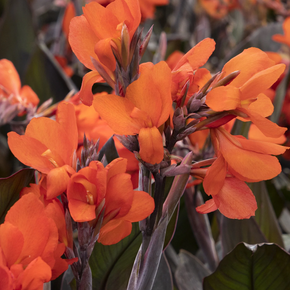
- Large, fiery tangerine-orange blooms rise on tall, stiff stalks from midsummer into fall, attracting hummingbirds, butterflies, and bees to the garden.
- A Royal Horticultural Society Award of Garden Merit recipient, this bold tropical perennial delivers dramatic vertical structure in garden beds, borders, poolside plantings, and oversized containers alike.
- Remarkably versatile and easy to grow — thrives in full sun with moderate water, tolerates deer and rabbit browsing, and can be overwintered as a container plant or by lifting and storing the rhizomes in colder climates.
Canna Tropicanna (Canna 'Phasion') is one of the most visually arresting tropical perennials available to home gardeners, delivering a non-stop riot of color from its first flush of growth in spring through the last days of fall. Emerging leaves open in rich, deep burgundy before maturing into enormous paddle-shaped blades dramatically striped with strawberry pink, fiery orange, sunshine yellow, and bright green — a living mosaic that commands attention even when the plant isn't in flower. From midsummer onward, tall, upright stalks rise above the foliage to 5–6 feet or more in bloom, each crowned with clusters of bold, iris-like orange flowers that draw hummingbirds, butterflies, and bees in abundance. A chance seedling from the open pollination of Canna 'Wyoming' and holder of US Plant Patent PP10569, Tropicanna is a proven performer that has earned widespread recognition including the prestigious RHS Award of Garden Merit. Whether massed along a fence line for a tropical hedge effect, planted as a dramatic focal point at the back of a sunny border, or used as a showstopping "thriller" in large patio containers, this heat-loving, rhizomatous perennial brings unmatched subtropical drama to any sunny garden space in USDA Zones 7–10.
Plant Description
Tropicanna Canna (Canna 'Phasion') is a rhizomatous tropical herbaceous perennial in the family Cannaceae, discovered as a chance seedling from the open pollination of Canna 'Wyoming.' It is one of the most boldly colorful foliage plants available, producing enormous lance-shaped, paddle-like leaves that emerge in deep burgundy and mature with vivid vertical stripes of strawberry pink, red, orange, yellow, and green. The foliage is especially spectacular when backlit by the sun, which causes the striped leaves to appear luminous and jewel-like. Beginning in midsummer and continuing until frost, stiffly erect flower stalks rise well above the foliage, each bearing clusters of large, brilliant tangerine-orange blooms that resemble a stylized iris. The overall habit is strongly upright and clumping, making it a natural architectural anchor in mixed plantings. Tropicanna holds the US Plant Patent PP10569 and is a recipient of the Royal Horticultural Society's Award of Garden Merit.
Mature Size
| Attribute | Measurement |
|---|---|
| Height (foliage clump) | 4 feet |
| Height (in bloom) | 5 to 6 feet |
| Spread | 2 to 3 feet |
| Growth Habit | Upright, clumping |
| Growth Rate | Fast — can reach full height in a single growing season |
Hardiness Zones and Temperature
Tropicanna Canna is reliably hardy in USDA Zones 7–10. Rhizomes can remain in the ground year-round in these zones, provided they are planted in well-drained soil and given a protective layer of mulch in colder parts of Zone 7. In Zone 6 and colder, rhizomes must be lifted in fall after frost blackens the foliage and stored indoors over the winter in a cool, frost-free location that stays above 40°F. The plant is very sensitive to frost, and new growth should not be set out until nighttime temperatures remain consistently above 50°F and all frost danger has passed. Full, rich foliage color develops best when daytime temperatures are 59°F or warmer.
Sunlight Requirements
Tropicanna Canna performs best in full sun, requiring a minimum of 6 to 8 hours of direct sunlight per day. Full sun exposure is essential for the most vibrant foliage coloration — insufficient light will cause the striking stripes to become dull or muted and can result in weak, floppy stems and reduced flowering. While the plant can tolerate a brief period of afternoon shade in the hottest inland climates, overall performance declines significantly in shaded conditions. When growing in containers, position the pot where it will receive maximum sun exposure throughout the day.
Soil and pH Preferences
Tropicanna Canna thrives in organically rich, moist, well-drained soil. It is adaptable to a range of soil textures including loam, clay, chalk, and sand, provided drainage is adequate — poorly drained or waterlogged soils can cause rhizome rot. The ideal soil pH is slightly acidic to neutral, in the range of 6.0 to 6.5, though the plant tolerates mildly acidic or alkaline conditions. Before planting, amend the soil by loosening it to a depth of at least 12 inches and incorporating 2 to 4 inches of compost or other organic matter to improve both fertility and moisture retention. In sandy soils, more frequent watering and heavier organic amendment will be needed to maintain adequate moisture levels.
Watering Guide
Cannas are moisture-loving plants that need consistently moist soil throughout the growing season. Water deeply once per week as a baseline, increasing to every other day during the hottest stretches of summer. Provide approximately 1 inch of water per week, adjusting based on soil type — sandy soils dry out faster and require more frequent watering, while clay soils retain moisture longer. Apply a thin layer of mulch around the base of the plant to help conserve soil moisture and regulate soil temperature. Avoid overwatering or allowing water to pool around the rhizomes, as this can lead to rot and creates favorable conditions for bacterial blight and fungal leaf spot. Reduce watering as the plants approach dormancy in fall.
Fertilizing
Tropicanna Canna is a vigorous feeder that benefits from supplemental fertilization, especially when grown in average garden soil. In fertile, organically rich soils, additional fertilizer may not be necessary. For best results in most garden situations, apply a balanced granular fertilizer such as a 10-10-10 formula at planting time, then feed twice more during the growing season — once in early spring as new growth emerges and again in midsummer. Organic options such as fish emulsion work well and are slightly higher in nitrogen, which encourages lush, tall foliage growth. For container-grown plants, apply a high-potassium liquid feed every 2 to 3 weeks throughout the growing season to sustain continuous blooming. Always water thoroughly after applying granular fertilizer and take care to keep fertilizer off the foliage to avoid burning. Stop all fertilizing approximately 6 weeks before the first expected frost to allow the plant to harden off for winter dormancy.
Planting Instructions
- Choose a planting location in full sun with well-drained, organically rich soil.
- Wait until all frost danger has passed and soil temperature has reached at least 60°F before planting — typically around the same time tomatoes are transplanted in your area.
- Loosen the soil to a depth of 12 inches and work in 2 to 4 inches of compost.
- Dig a planting hole 4 to 6 inches deep.
- Position the rhizome with the growth eyes (buds or nodes) facing upward and cover with soil so it sits 1 to 2 inches below the surface. Tamp the soil firmly.
- Space rhizomes 18 to 24 inches apart to allow for their mature spread.
- Water thoroughly after planting. Cannas are slow to sprout — withhold additional water for up to three weeks until signs of growth appear, then water at least once per week.
- Apply a layer of mulch around the base to retain moisture and suppress weeds.
- For container planting, use a pot at least 18 inches in diameter with drainage holes and fill with a rich, well-draining potting mix.
Pruning and Maintenance
Tropicanna Canna requires moderate, regular maintenance to look its best throughout the season. Deadhead spent blooms every few days by snipping faded flowers where they connect to the stem — this keeps the plant tidy and encourages continued blooming. Do not remove the entire flower spike if other buds remain; cut back only the portion that has finished blooming. Once an entire flower spike has completed blooming, cut that stem back to the level of the foliage. If leaves develop brown, crispy edges from heat or minor environmental stress, they can be trimmed with scissors for a neater appearance. At the end of the season, after frost kills the foliage, cut the entire plant back to 4 to 6 inches from the ground. Always use sharp, clean, sanitized pruning shears to minimize the risk of transmitting disease pathogens between plants.
Overwintering and Rhizome Storage
In USDA Zones 7–10, Tropicanna Canna rhizomes can remain in the ground through winter. After frost blackens the foliage, cut plants back to 4 to 6 inches and apply a thick layer of straw or shredded leaf mulch for insulation. In Zone 6 and colder, or anywhere reliable freeze protection is uncertain, rhizomes should be lifted and stored indoors:
- After the first frost kills back the foliage, cut the plant down to several inches above the ground.
- Dig out the rhizome clump by inserting a shovel approximately 12 inches away from the base to avoid cutting into the rhizome.
- Gently loosen the soil and lift the clump. Shake off excess soil and remove remaining foliage.
- Divide large clumps into sections of 3 to 5 rhizomes, each with at least one visible growth eye.
- Cure the rhizomes for several days in a dry, airy location, turning them daily to expose all sides to air.
- Wrap each rhizome in newspaper or place in a paper bag or cardboard box surrounded by dry peat moss or vermiculite. Rhizomes must not touch each other to prevent rot spread.
- Store in a cool, dry, frost-free location where temperatures remain between 40°F and 50°F — such as a garage, basement, or insulated shed.
- Check rhizomes a few times during winter and lightly mist with water if they appear to be shriveling. Trim away and discard any rotted sections immediately.
- Replant outdoors in spring once nighttime temperatures are consistently above 50°F.
Container Growing
Tropicanna Canna is an outstanding container specimen and is ideally suited as the dramatic "thriller" centerpiece in large patio or deck arrangements. Use a container that is at least 18 inches in diameter per rhizome — a larger pot is always better, as it supports root development and reduces the risk of the tall plant tipping over in wind. Fill with a rich, well-draining potting mix amended with compost. Container-grown plants dry out faster than in-ground plants, so monitor soil moisture closely and water more frequently, especially during hot weather. Feed with a high-potassium liquid fertilizer every 2 to 3 weeks throughout the growing season. In winter, container-grown plants can be stored whole in their pots in a cool, dry, frost-free garage or basement without watering until spring temperatures warm. This eliminates the need to dig and replant rhizomes each year.
Seasonal Interest
Tropicanna Canna delivers striking ornamental interest across multiple seasons. In spring, the emerging burgundy foliage is bold and dramatic on its own as the new leaves unfurl and the plant rapidly gains height. By early summer, the leaves have developed their full variegated pattern of burgundy, pink, red, orange, yellow, and green stripes, providing spectacular foliage interest that peaks mid-season. From midsummer through the first hard frost — typically July through September or October depending on your location — vivid tangerine-orange flowers rise above the foliage on tall stalks, adding another layer of color. The foliage is particularly breathtaking when backlit by afternoon or morning sun, which illuminates the striped leaves like stained glass. Even as temperatures cool in early fall, the plant continues to flower prolifically until frost finally ends the season.
Landscape Uses
The bold vertical form and intensely colorful foliage of Tropicanna Canna make it one of the most versatile accent plants for warm-season landscapes. Recommended uses include:
- Mass plantings along fences, walls, foundations, or garden hedges for a dramatic tropical screen effect
- Anchor plant or bold focal point at the back of mixed sunny borders
- Poolside plantings and water feature surrounds for a lush, resort-like atmosphere
- Large patio or deck containers as the centerpiece "thriller" plant
- Screening plant for utility areas or unattractive structures during the growing season
- Tropical-themed garden beds paired with other bold, exotic-looking plants
- Cut foliage for large tropical floral arrangements
Companion Plants
Tropicanna Canna's bold tropical presence pairs beautifully with plants that share its love of heat, sun, and moisture while either complementing or providing contrast to its fiery color palette. Excellent companion plants include:
- Crocosmia (Montbretia) — arching orange and red flower spikes echo Tropicanna's warm tones and share similar growing conditions
- Elephant Ears (Colocasia or Alocasia) — huge bold leaves create a lush, layered tropical composition
- Kniphofia (Red Hot Poker) — spiky orange and red flower torches reinforce the tropical color theme
- Echinacea (Coneflower) — purple and orange varieties provide beautiful complementary contrast in mixed borders
- Helenium (Sneezeweed) — warm yellow and orange daisy-like blooms harmonize with Tropicanna's flowers
- Lantana — long-blooming, heat-loving annuals in orange, yellow, and red tones fill in at the base beautifully
- Ornamental grasses — fine-textured grasses such as purple fountain grass soften Tropicanna's bold form and contrast its broad leaves
- Zinnia and Salvia — colorful warm-season annuals that fill the mid-level of border plantings beneath Tropicanna's tall canopy
Wildlife Value
Tropicanna Canna is a valuable plant for pollinator and wildlife gardens. The large, brilliantly colored orange flowers are particularly attractive to hummingbirds, which are drawn to their tubular shape and vivid color. Butterflies and bees also visit the blooms regularly throughout the summer and fall flowering season, making Tropicanna an excellent addition to pollinator-friendly garden designs. The plant is notably deer and rabbit resistant, making it a low-concern choice for gardens where browsing pressure from these animals is a concern. After flowering, the plant produces small ornamental orange fruit that can provide minor wildlife interest in the garden.
Pests and Diseases
Tropicanna Canna is generally a robust, problem-resistant plant, but gardeners should be aware of the following potential issues:
- Canna Leaf Roller: The most common pest concern in warm regions. Moth larvae spin silk threads that prevent leaves from unfurling, then chew holes in the rolled foliage. Treat by manually breaking the silk thread, unrolling the leaf, and crushing the larva inside, or by applying neem oil spray preventatively in spring and again in fall.
- Japanese Beetles: Can chew irregular holes in the foliage. Hand-pick adults in the morning or treat with neem oil.
- Slugs and Snails: May damage foliage, especially in moist conditions. Hand-pick or use iron phosphate slug bait around the base of plants.
- Spider Mites: Can appear during hot, dry periods. Treat with neem oil spray applied in spring and fall per manufacturer directions.
- Bacterial Blight and Leaf Spot: Fungal and bacterial leaf diseases are most likely to occur when plants are overcrowded, overwatered, or grown in poorly drained conditions. Maintain good air circulation, avoid overhead watering, and remove affected foliage promptly.
- Rhizome Rot: Caused by poorly drained or consistently waterlogged soil. Plant in well-drained locations and never allow water to pool around the base.
- Aster Yellows: A phytoplasma disease spread by leafhoppers. Affected plants show distorted, yellowing growth. Remove and destroy infected plants immediately; there is no cure.
- Electrifying variegated foliage features deep burgundy leaves boldly striped with pink, red, orange, yellow, and green — stunning from the moment it emerges in spring straight through to fall frost.
- Large, fiery tangerine-orange blooms rise on tall, stiff stalks from midsummer into fall, attracting hummingbirds, butterflies, and bees to the garden.
- A Royal Horticultural Society Award of Garden Merit recipient, this bold tropical perennial delivers dramatic vertical structure in garden beds, borders, poolside plantings, and oversized containers alike.
- Remarkably versatile and easy to grow — thrives in full sun with moderate water, tolerates deer and rabbit browsing, and can be overwintered as a container plant or by lifting and storing the rhizomes in colder climates.
Canna Tropicanna (Canna 'Phasion') is one of the most visually arresting tropical perennials available to home gardeners, delivering a non-stop riot of color from its first flush of growth in spring through the last days of fall. Emerging leaves open in rich, deep burgundy before maturing into enormous paddle-shaped blades dramatically striped with strawberry pink, fiery orange, sunshine yellow, and bright green — a living mosaic that commands attention even when the plant isn't in flower. From midsummer onward, tall, upright stalks rise above the foliage to 5–6 feet or more in bloom, each crowned with clusters of bold, iris-like orange flowers that draw hummingbirds, butterflies, and bees in abundance. A chance seedling from the open pollination of Canna 'Wyoming' and holder of US Plant Patent PP10569, Tropicanna is a proven performer that has earned widespread recognition including the prestigious RHS Award of Garden Merit. Whether massed along a fence line for a tropical hedge effect, planted as a dramatic focal point at the back of a sunny border, or used as a showstopping "thriller" in large patio containers, this heat-loving, rhizomatous perennial brings unmatched subtropical drama to any sunny garden space in USDA Zones 7–10.
Plant Description
Tropicanna Canna (Canna 'Phasion') is a rhizomatous tropical herbaceous perennial in the family Cannaceae, discovered as a chance seedling from the open pollination of Canna 'Wyoming.' It is one of the most boldly colorful foliage plants available, producing enormous lance-shaped, paddle-like leaves that emerge in deep burgundy and mature with vivid vertical stripes of strawberry pink, red, orange, yellow, and green. The foliage is especially spectacular when backlit by the sun, which causes the striped leaves to appear luminous and jewel-like. Beginning in midsummer and continuing until frost, stiffly erect flower stalks rise well above the foliage, each bearing clusters of large, brilliant tangerine-orange blooms that resemble a stylized iris. The overall habit is strongly upright and clumping, making it a natural architectural anchor in mixed plantings. Tropicanna holds the US Plant Patent PP10569 and is a recipient of the Royal Horticultural Society's Award of Garden Merit.
Mature Size
| Attribute | Measurement |
|---|---|
| Height (foliage clump) | 4 feet |
| Height (in bloom) | 5 to 6 feet |
| Spread | 2 to 3 feet |
| Growth Habit | Upright, clumping |
| Growth Rate | Fast — can reach full height in a single growing season |
Hardiness Zones and Temperature
Tropicanna Canna is reliably hardy in USDA Zones 7–10. Rhizomes can remain in the ground year-round in these zones, provided they are planted in well-drained soil and given a protective layer of mulch in colder parts of Zone 7. In Zone 6 and colder, rhizomes must be lifted in fall after frost blackens the foliage and stored indoors over the winter in a cool, frost-free location that stays above 40°F. The plant is very sensitive to frost, and new growth should not be set out until nighttime temperatures remain consistently above 50°F and all frost danger has passed. Full, rich foliage color develops best when daytime temperatures are 59°F or warmer.
Sunlight Requirements
Tropicanna Canna performs best in full sun, requiring a minimum of 6 to 8 hours of direct sunlight per day. Full sun exposure is essential for the most vibrant foliage coloration — insufficient light will cause the striking stripes to become dull or muted and can result in weak, floppy stems and reduced flowering. While the plant can tolerate a brief period of afternoon shade in the hottest inland climates, overall performance declines significantly in shaded conditions. When growing in containers, position the pot where it will receive maximum sun exposure throughout the day.
Soil and pH Preferences
Tropicanna Canna thrives in organically rich, moist, well-drained soil. It is adaptable to a range of soil textures including loam, clay, chalk, and sand, provided drainage is adequate — poorly drained or waterlogged soils can cause rhizome rot. The ideal soil pH is slightly acidic to neutral, in the range of 6.0 to 6.5, though the plant tolerates mildly acidic or alkaline conditions. Before planting, amend the soil by loosening it to a depth of at least 12 inches and incorporating 2 to 4 inches of compost or other organic matter to improve both fertility and moisture retention. In sandy soils, more frequent watering and heavier organic amendment will be needed to maintain adequate moisture levels.
Watering Guide
Cannas are moisture-loving plants that need consistently moist soil throughout the growing season. Water deeply once per week as a baseline, increasing to every other day during the hottest stretches of summer. Provide approximately 1 inch of water per week, adjusting based on soil type — sandy soils dry out faster and require more frequent watering, while clay soils retain moisture longer. Apply a thin layer of mulch around the base of the plant to help conserve soil moisture and regulate soil temperature. Avoid overwatering or allowing water to pool around the rhizomes, as this can lead to rot and creates favorable conditions for bacterial blight and fungal leaf spot. Reduce watering as the plants approach dormancy in fall.
Fertilizing
Tropicanna Canna is a vigorous feeder that benefits from supplemental fertilization, especially when grown in average garden soil. In fertile, organically rich soils, additional fertilizer may not be necessary. For best results in most garden situations, apply a balanced granular fertilizer such as a 10-10-10 formula at planting time, then feed twice more during the growing season — once in early spring as new growth emerges and again in midsummer. Organic options such as fish emulsion work well and are slightly higher in nitrogen, which encourages lush, tall foliage growth. For container-grown plants, apply a high-potassium liquid feed every 2 to 3 weeks throughout the growing season to sustain continuous blooming. Always water thoroughly after applying granular fertilizer and take care to keep fertilizer off the foliage to avoid burning. Stop all fertilizing approximately 6 weeks before the first expected frost to allow the plant to harden off for winter dormancy.
Planting Instructions
- Choose a planting location in full sun with well-drained, organically rich soil.
- Wait until all frost danger has passed and soil temperature has reached at least 60°F before planting — typically around the same time tomatoes are transplanted in your area.
- Loosen the soil to a depth of 12 inches and work in 2 to 4 inches of compost.
- Dig a planting hole 4 to 6 inches deep.
- Position the rhizome with the growth eyes (buds or nodes) facing upward and cover with soil so it sits 1 to 2 inches below the surface. Tamp the soil firmly.
- Space rhizomes 18 to 24 inches apart to allow for their mature spread.
- Water thoroughly after planting. Cannas are slow to sprout — withhold additional water for up to three weeks until signs of growth appear, then water at least once per week.
- Apply a layer of mulch around the base to retain moisture and suppress weeds.
- For container planting, use a pot at least 18 inches in diameter with drainage holes and fill with a rich, well-draining potting mix.
Pruning and Maintenance
Tropicanna Canna requires moderate, regular maintenance to look its best throughout the season. Deadhead spent blooms every few days by snipping faded flowers where they connect to the stem — this keeps the plant tidy and encourages continued blooming. Do not remove the entire flower spike if other buds remain; cut back only the portion that has finished blooming. Once an entire flower spike has completed blooming, cut that stem back to the level of the foliage. If leaves develop brown, crispy edges from heat or minor environmental stress, they can be trimmed with scissors for a neater appearance. At the end of the season, after frost kills the foliage, cut the entire plant back to 4 to 6 inches from the ground. Always use sharp, clean, sanitized pruning shears to minimize the risk of transmitting disease pathogens between plants.
Overwintering and Rhizome Storage
In USDA Zones 7–10, Tropicanna Canna rhizomes can remain in the ground through winter. After frost blackens the foliage, cut plants back to 4 to 6 inches and apply a thick layer of straw or shredded leaf mulch for insulation. In Zone 6 and colder, or anywhere reliable freeze protection is uncertain, rhizomes should be lifted and stored indoors:
- After the first frost kills back the foliage, cut the plant down to several inches above the ground.
- Dig out the rhizome clump by inserting a shovel approximately 12 inches away from the base to avoid cutting into the rhizome.
- Gently loosen the soil and lift the clump. Shake off excess soil and remove remaining foliage.
- Divide large clumps into sections of 3 to 5 rhizomes, each with at least one visible growth eye.
- Cure the rhizomes for several days in a dry, airy location, turning them daily to expose all sides to air.
- Wrap each rhizome in newspaper or place in a paper bag or cardboard box surrounded by dry peat moss or vermiculite. Rhizomes must not touch each other to prevent rot spread.
- Store in a cool, dry, frost-free location where temperatures remain between 40°F and 50°F — such as a garage, basement, or insulated shed.
- Check rhizomes a few times during winter and lightly mist with water if they appear to be shriveling. Trim away and discard any rotted sections immediately.
- Replant outdoors in spring once nighttime temperatures are consistently above 50°F.
Container Growing
Tropicanna Canna is an outstanding container specimen and is ideally suited as the dramatic "thriller" centerpiece in large patio or deck arrangements. Use a container that is at least 18 inches in diameter per rhizome — a larger pot is always better, as it supports root development and reduces the risk of the tall plant tipping over in wind. Fill with a rich, well-draining potting mix amended with compost. Container-grown plants dry out faster than in-ground plants, so monitor soil moisture closely and water more frequently, especially during hot weather. Feed with a high-potassium liquid fertilizer every 2 to 3 weeks throughout the growing season. In winter, container-grown plants can be stored whole in their pots in a cool, dry, frost-free garage or basement without watering until spring temperatures warm. This eliminates the need to dig and replant rhizomes each year.
Seasonal Interest
Tropicanna Canna delivers striking ornamental interest across multiple seasons. In spring, the emerging burgundy foliage is bold and dramatic on its own as the new leaves unfurl and the plant rapidly gains height. By early summer, the leaves have developed their full variegated pattern of burgundy, pink, red, orange, yellow, and green stripes, providing spectacular foliage interest that peaks mid-season. From midsummer through the first hard frost — typically July through September or October depending on your location — vivid tangerine-orange flowers rise above the foliage on tall stalks, adding another layer of color. The foliage is particularly breathtaking when backlit by afternoon or morning sun, which illuminates the striped leaves like stained glass. Even as temperatures cool in early fall, the plant continues to flower prolifically until frost finally ends the season.
Landscape Uses
The bold vertical form and intensely colorful foliage of Tropicanna Canna make it one of the most versatile accent plants for warm-season landscapes. Recommended uses include:
- Mass plantings along fences, walls, foundations, or garden hedges for a dramatic tropical screen effect
- Anchor plant or bold focal point at the back of mixed sunny borders
- Poolside plantings and water feature surrounds for a lush, resort-like atmosphere
- Large patio or deck containers as the centerpiece "thriller" plant
- Screening plant for utility areas or unattractive structures during the growing season
- Tropical-themed garden beds paired with other bold, exotic-looking plants
- Cut foliage for large tropical floral arrangements
Companion Plants
Tropicanna Canna's bold tropical presence pairs beautifully with plants that share its love of heat, sun, and moisture while either complementing or providing contrast to its fiery color palette. Excellent companion plants include:
- Crocosmia (Montbretia) — arching orange and red flower spikes echo Tropicanna's warm tones and share similar growing conditions
- Elephant Ears (Colocasia or Alocasia) — huge bold leaves create a lush, layered tropical composition
- Kniphofia (Red Hot Poker) — spiky orange and red flower torches reinforce the tropical color theme
- Echinacea (Coneflower) — purple and orange varieties provide beautiful complementary contrast in mixed borders
- Helenium (Sneezeweed) — warm yellow and orange daisy-like blooms harmonize with Tropicanna's flowers
- Lantana — long-blooming, heat-loving annuals in orange, yellow, and red tones fill in at the base beautifully
- Ornamental grasses — fine-textured grasses such as purple fountain grass soften Tropicanna's bold form and contrast its broad leaves
- Zinnia and Salvia — colorful warm-season annuals that fill the mid-level of border plantings beneath Tropicanna's tall canopy
Wildlife Value
Tropicanna Canna is a valuable plant for pollinator and wildlife gardens. The large, brilliantly colored orange flowers are particularly attractive to hummingbirds, which are drawn to their tubular shape and vivid color. Butterflies and bees also visit the blooms regularly throughout the summer and fall flowering season, making Tropicanna an excellent addition to pollinator-friendly garden designs. The plant is notably deer and rabbit resistant, making it a low-concern choice for gardens where browsing pressure from these animals is a concern. After flowering, the plant produces small ornamental orange fruit that can provide minor wildlife interest in the garden.
Pests and Diseases
Tropicanna Canna is generally a robust, problem-resistant plant, but gardeners should be aware of the following potential issues:
- Canna Leaf Roller: The most common pest concern in warm regions. Moth larvae spin silk threads that prevent leaves from unfurling, then chew holes in the rolled foliage. Treat by manually breaking the silk thread, unrolling the leaf, and crushing the larva inside, or by applying neem oil spray preventatively in spring and again in fall.
- Japanese Beetles: Can chew irregular holes in the foliage. Hand-pick adults in the morning or treat with neem oil.
- Slugs and Snails: May damage foliage, especially in moist conditions. Hand-pick or use iron phosphate slug bait around the base of plants.
- Spider Mites: Can appear during hot, dry periods. Treat with neem oil spray applied in spring and fall per manufacturer directions.
- Bacterial Blight and Leaf Spot: Fungal and bacterial leaf diseases are most likely to occur when plants are overcrowded, overwatered, or grown in poorly drained conditions. Maintain good air circulation, avoid overhead watering, and remove affected foliage promptly.
- Rhizome Rot: Caused by poorly drained or consistently waterlogged soil. Plant in well-drained locations and never allow water to pool around the base.
- Aster Yellows: A phytoplasma disease spread by leafhoppers. Affected plants show distorted, yellowing growth. Remove and destroy infected plants immediately; there is no cure.
Related Products