
Zoom the image with the mouse
Jewel Southern Highbush Blueberry
SKU:
2232940
UPC:
014949491713
$24.99
- Exceptionally large, firm, sweet-tart berries — among the biggest of any Southern Highbush variety — ripen in an early-to-mid season window for a generous and reliable harvest
- Low chill-hour requirement of only 200 hours makes this a top performer in mild-winter climates across USDA Zones 6-9, including coastal and warm inland gardens of Southern Oregon and Northern California
- Partially evergreen with glossy green foliage, delicate white spring blossoms, and attractive reddish fall and winter color, offering four-season ornamental value in the landscape
- Highly productive and partially self-fertile shrub that rewards cross-pollination with another Southern Highbush variety for maximum yield — expect up to 15-20 lbs of fruit from a mature plant
The Jewel Southern Highbush Blueberry (Vaccinium corymbosum 'Jewel') is a standout fruiting shrub celebrated for producing some of the largest, firmest berries in the Southern Highbush category, delivering a delightfully sweet-tart flavor that is exceptional fresh off the bush, baked into pies and muffins, blended into smoothies, or preserved as jam. Developed in Florida from crosses between Northern Highbush blueberry and native southern species, 'Jewel' was specifically bred to thrive in warm, mild-winter regions where northern varieties often fall short, requiring a mere 200 chill hours to fruit reliably. It matures into a tidy, upright shrub reaching 4-6 feet tall and wide, graced with glossy foliage that stays partially evergreen through mild winters, clusters of delicate white to pale-pink bell-shaped flowers in early spring, and vivid reddish hues as temperatures cool in autumn and winter. Thriving in full sun and acidic, well-drained soil with a pH of 4.5-5.5, 'Jewel' is as well-suited to a dedicated berry patch as it is to a mixed edible landscape border or a large patio container. Its combination of extraordinary fruit size, impressive yields, low maintenance requirements, and year-round ornamental appeal makes the Jewel Blueberry an essential addition for home gardeners and serious growers alike across Southern Oregon and Northern California.
Plant Description
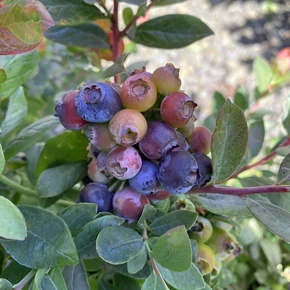
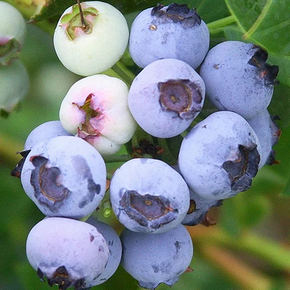
Jewel is a Southern Highbush blueberry cultivar (Vaccinium corymbosum 'Jewel') originating from breeding programs in Florida, designed to produce outstanding fruit in warm, low-chill climates. It forms an upright, rounded, bushy shrub with a moderately vigorous growth rate. The foliage is glossy and rich green through the growing season, and the plant is partially evergreen, holding many of its leaves through mild winters before a brief period of semi-dormancy. In early spring, the branches are draped in clusters of classic blueberry blooms — delicate, urn-shaped, white to pale-pink flowers that are highly attractive to bees and other pollinators. The berries that follow are notably large, firm, and covered in the characteristic powdery-blue bloom of a ripe blueberry. As temperatures drop in autumn and winter, the foliage takes on attractive reddish and burgundy tones, adding seasonal color to the garden long after harvest is complete.
Mature Size
| Attribute | Detail |
|---|---|
| Mature Height | 4 to 6 feet |
| Mature Spread | 3 to 5 feet |
| Growth Rate | Moderate |
| Plant Form | Upright, rounded shrub |
| Spacing (hedge) | 5 to 6 feet apart |
| Spacing (individual) | 8 to 10 feet apart |
Hardiness Zones and Chill Hours
Jewel Southern Highbush Blueberry is reliably hardy in USDA Zones 6-9, making it an excellent match for the mild winters and warm summers typical of Southern Oregon and Northern California. It tolerates temperatures down to approximately -10 degrees F. What truly sets 'Jewel' apart from northern highbush varieties is its exceptionally low chill-hour requirement of just 200 hours below 45 degrees F. This means gardeners in coastal valleys, lower elevations, and other areas with brief, mild winters will still receive a full, productive bloom set and fruit crop each year — a feat many northern varieties cannot achieve in these climates. For best results when cross-pollinating, pair 'Jewel' with another Southern Highbush variety that shares a similar chill-hour requirement, such as 'Emerald', 'Star', or 'Sweet Crisp'.
Sunlight Requirements
Jewel Blueberry performs best in full sun, requiring a minimum of 6 to 8 hours of direct sunlight per day. Adequate sun exposure is directly linked to fruit production, berry size, and sweetness — plants receiving less light will produce fewer, smaller berries and may be more susceptible to fungal issues due to reduced air circulation and slower drying of foliage. In hot inland locations during the peak of summer, some light afternoon shade can be beneficial to reduce heat stress, but morning sun and good overall light exposure should always be prioritized. Avoid planting under or near large trees that create heavy shade or root competition.
Soil and pH Preferences
Like all blueberries, 'Jewel' has a non-negotiable preference for acidic soil, and meeting this requirement is the single most important step toward a successful planting. The ideal soil pH range is 4.5 to 5.5. Outside of this range — particularly in alkaline or neutral soils — the roots cannot properly absorb key nutrients such as iron and manganese, resulting in yellowing leaves (chlorosis), poor growth, and reduced fruiting. Before planting, conduct a soil test to determine existing pH. To lower pH, incorporate wettable sulfur, sulfur-based amendments, peat moss, or composted pine bark into the planting site several months in advance. The soil should also be well-drained and rich in organic matter; blueberries naturally grow in soils with 3 percent or more organic matter. Avoid heavy clay soils with poor drainage, as standing water around the roots promotes root rot. A raised bed or mounded planting site is a practical solution for gardens with heavier soils.
Watering Guide
Blueberries have a shallow, fibrous root system that makes consistent, even moisture critical — particularly during flowering, fruit set, and berry ripening. Water deeply once or twice per week, adjusting frequency based on temperature, wind, and rainfall. The goal is to keep the soil consistently moist but never waterlogged or saturated. Drip irrigation is highly recommended as it delivers water directly to the root zone, keeps foliage dry to reduce fungal disease risk, and promotes efficient water use. A 2 to 3 inch layer of organic mulch over the root zone will greatly assist in retaining soil moisture and moderating soil temperature. During prolonged hot or windy spells in summer, monitor soil moisture more closely and increase watering as needed. Reduce watering during the dormant season, though the roots should never be allowed to dry out completely.
Mulching
Mulching is one of the most beneficial practices for growing healthy, productive blueberries. Apply a 2 to 4 inch layer of organic, acid-forming mulch around the base of the plant, keeping it pulled back a couple of inches from the main stem to allow good air circulation and prevent crown rot. The best mulch materials for blueberries include pine bark chips, pine straw (pine needles), shredded oak leaves, or composted softwood sawdust — all of which break down gradually to help maintain soil acidity, add organic matter, suppress weeds, retain moisture, and moderate soil temperature. Replenish mulch annually as it decomposes. Avoid using mushroom compost or mulches derived from hardwoods with a neutral to alkaline pH, as these can raise the soil pH over time, which is detrimental to blueberry health.
Fertilizing
Blueberries are sensitive to excess fertilizer and should never be over-fed. Use only fertilizers formulated for acid-loving plants — look for products labeled for azaleas, camellias, or blueberries specifically, such as balanced formulas in the range of 10-5-4 or 11-7-7. Avoid any fertilizer containing nitrates or chlorides, as these can injure or kill blueberry plants. Ammonium sulfate is a commonly used nitrogen source for blueberries as it also helps maintain soil acidity.
- Year 1: Wait until newly planted leaves have reached full size before applying any fertilizer. Apply a small amount of acid fertilizer in a circle 12 inches from the plant. Repeat every 6 weeks through mid-summer, then stop.
- Year 2: Double the first-year rates and expand the application circle to 18 inches. Begin as new growth emerges in spring.
- Established plants: Apply a complete acid fertilizer in early spring as growth begins, and follow with light supplemental feedings after harvest to support next season's bud development. Stop all fertilizing by late July to avoid promoting tender new growth that is vulnerable to cold damage.
Pruning and Maintenance
Routine pruning is not necessary during the first 2 to 3 years after planting; during this establishment period, focus on removing any dead, damaged, or diseased wood only. For the first two years, it is also strongly recommended to remove flower buds as they appear in spring — while this means forgoing early fruit, it directs the plant's energy into developing a strong root system and framework that will support far greater yields in subsequent years.
For established plants, prune during the dormant season in late winter before new growth begins:
- Remove any dead, crossing, or weak twiggy branches to improve airflow and light penetration into the center of the bush.
- Prune out approximately one quarter of the oldest, least productive canes each year to encourage vigorous new cane growth — three to four-year-old canes are most productive, and older canes decline in yield.
- After fruit harvest, plants can be lightly topped to manage height and encourage bushy, compact growth.
- Make all cuts flush with the next largest branch or at the base — never leave stubs.
Fruit Description and Harvest
| Attribute | Detail |
|---|---|
| Berry Size | Large to very large — among the biggest of any Southern Highbush variety |
| Flavor Profile | Sweet-tart, bright, and aromatic |
| Texture | Firm, holds up well for fresh eating, shipping, and storage |
| Skin Color at Maturity | Deep blue-black with a waxy powdery bloom |
| Ripening Season | Early-to-mid season (approximately April through June depending on climate) |
| Typical Yield (mature plant) | 15 to 20 lbs per plant |
| Years to First Significant Harvest | 2 to 4 years after planting |
| Best Uses | Fresh eating, baking, preserves, smoothies, freezing |
Planting Instructions
Follow these steps for the best establishment results with your Jewel Blueberry:
- Test your soil before planting and amend to achieve a pH of 4.5 to 5.5. Incorporate sulfur amendments, peat moss, or composted pine bark several months in advance if needed.
- Choose a location that receives at least 6 to 8 hours of direct sun daily with good air circulation.
- Dig the planting hole at least twice the width of the root ball and equal in depth, so the top of the root ball sits at or slightly above the surrounding soil level.
- Amend the backfill with a 50/50 mix of native soil and organic matter such as peat moss or composted pine bark to improve drainage, aeration, and acidity.
- Gently tease apart any circling or compacted roots before placing the plant in the hole to encourage outward root expansion.
- Backfill, firm gently to eliminate air pockets, and water thoroughly at planting.
- Apply mulch in a 2 to 4 inch layer around the root zone, keeping it a couple of inches away from the main stem.
- Remove any flower buds that appear in the first and second spring after planting to allow the plant to focus energy on root and canopy establishment.
- Plant a second Southern Highbush variety nearby to maximize cross-pollination, berry size, and overall yield.
Pollination
'Jewel' is partially self-fertile, meaning it can set some fruit on its own; however, cross-pollination with at least one other Southern Highbush blueberry variety blooming at the same time will dramatically increase berry size, fruit set, and overall yield. Bees are the primary pollinators, and having a variety of pollinator-attracting companion plants nearby helps ensure consistent bee activity around your blueberries at bloom time. Recommended cross-pollinating companions include other Southern Highbush varieties such as 'Emerald', 'Star', 'Sweet Crisp', or 'Sapphire' — choose varieties with a similar chill-hour requirement for bloom-time overlap.
Pests and Diseases
Jewel Blueberry is considered a relatively low-maintenance plant with few serious pest or disease issues when properly sited and cared for. The most common challenges include:
- Birds: The most significant threat to a ripe berry crop. Cover plants with lightweight bird netting as berries begin to color and ripen. Reflective mylar tape can also help deter birds.
- Aphids, spider mites, and leafrollers: Occasional visitors, especially in dry or stressed plants. Treat with insecticidal soap or neem oil spray as needed. Healthy, well-watered plants are far less susceptible.
- Root rot (Phytophthora spp.): Caused by poorly drained or consistently waterlogged soil. Prevent by ensuring excellent drainage and never overwatering. Raised beds are especially helpful in clay-heavy soils.
- Powdery mildew and botrytis: Fungal issues that can develop in humid, low-airflow conditions. Prune for good canopy airflow and avoid overhead irrigation to reduce risk.
- Mummy berry: A fungal disease that causes berries to shrivel and drop. Remove and dispose of any affected fruit immediately; do not compost.
Container Growing
'Jewel' Blueberry adapts well to container culture, making it an excellent option for patios, decks, and gardens with challenging native soils or alkaline conditions. For a mature plant, select a weather-proof container at least 24 inches deep and 24 to 30 inches wide with excellent drainage holes. Use a 50/50 blend of high-quality potting mix and peat moss as the growing medium, wetting it thoroughly before planting. Place containers in a full-sun location, though some protection from intense late-afternoon sun during peak summer may help reduce heat stress. Container-grown blueberries dry out more quickly than in-ground plants, so monitor soil moisture closely and water frequently to keep the medium consistently moist but never saturated. Elevating pots on bricks or pot feet ensures good drainage and prevents waterlogging. Fertilize with an acid-formulated fertilizer in early spring only, as nutrients leach more rapidly from containers. In winter, move containers to a sheltered spot to protect roots from freezing winds.
Landscape Uses
Beyond its outstanding fruit production, 'Jewel' Southern Highbush Blueberry is a genuinely attractive landscape shrub that earns its place in ornamental and edible garden designs alike. Suggested uses include:
- Edible hedgerow or privacy screen: Plant multiple shrubs 5 to 6 feet apart for a productive, attractive seasonal hedge.
- Mixed edible border: Combine with other acid-loving fruiting shrubs and ornamentals for a beautiful, functional border garden.
- Focal specimen planting: A single well-grown 'Jewel' makes a handsome standalone specimen, especially in a raised bed or large decorative container.
- Food forest or orchard understory: Works well planted beneath the canopy edge of a deciduous fruit tree where it receives adequate light.
- Pollinator garden anchor: The spring flowers provide valuable early-season nectar for bees and other beneficial insects.
Companion Plants
Because 'Jewel' blueberries require consistently acidic soil, they pair best with other acid-loving plants that share similar soil, light, and moisture preferences. Good companions include:
- Other Southern Highbush Blueberries (e.g., 'Emerald', 'Star', 'Sweet Crisp') — essential for cross-pollination and increased yields
- Azaleas and Rhododendrons — share the same acidic soil preference and bloom beautifully alongside spring blueberry flowers
- Camellias — another acid-loving shrub that provides winter and early spring floral interest
- Ferns — thrive in the same moist, acidic conditions and provide attractive ground-level texture
- Lavender, Echinacea, and Salvia — planted nearby to attract pollinators and bees to the garden during bloom time
- Strawberries — a low-growing, acid-tolerant groundcover that can be interplanted at the base of blueberry shrubs
Wildlife Value
Jewel Blueberry offers meaningful value to local wildlife and beneficial insects throughout its seasonal cycle. The early-spring bell-shaped flowers are a rich source of nectar for honeybees, native bees, bumblebees, and other pollinators emerging after winter — making it a valuable food source early in the season when few other plants are blooming. The ripe berries are eagerly sought by birds such as robins, thrushes, cedar waxwings, and bluebirds. While bird netting is recommended when protecting the crop for harvest, leaving a few unpicked clusters at season's end makes a generous gift for local wildlife. The dense, twiggy branching structure also provides shelter and nesting habitat for small birds in the garden.
- Exceptionally large, firm, sweet-tart berries — among the biggest of any Southern Highbush variety — ripen in an early-to-mid season window for a generous and reliable harvest
- Low chill-hour requirement of only 200 hours makes this a top performer in mild-winter climates across USDA Zones 6-9, including coastal and warm inland gardens of Southern Oregon and Northern California
- Partially evergreen with glossy green foliage, delicate white spring blossoms, and attractive reddish fall and winter color, offering four-season ornamental value in the landscape
- Highly productive and partially self-fertile shrub that rewards cross-pollination with another Southern Highbush variety for maximum yield — expect up to 15-20 lbs of fruit from a mature plant
The Jewel Southern Highbush Blueberry (Vaccinium corymbosum 'Jewel') is a standout fruiting shrub celebrated for producing some of the largest, firmest berries in the Southern Highbush category, delivering a delightfully sweet-tart flavor that is exceptional fresh off the bush, baked into pies and muffins, blended into smoothies, or preserved as jam. Developed in Florida from crosses between Northern Highbush blueberry and native southern species, 'Jewel' was specifically bred to thrive in warm, mild-winter regions where northern varieties often fall short, requiring a mere 200 chill hours to fruit reliably. It matures into a tidy, upright shrub reaching 4-6 feet tall and wide, graced with glossy foliage that stays partially evergreen through mild winters, clusters of delicate white to pale-pink bell-shaped flowers in early spring, and vivid reddish hues as temperatures cool in autumn and winter. Thriving in full sun and acidic, well-drained soil with a pH of 4.5-5.5, 'Jewel' is as well-suited to a dedicated berry patch as it is to a mixed edible landscape border or a large patio container. Its combination of extraordinary fruit size, impressive yields, low maintenance requirements, and year-round ornamental appeal makes the Jewel Blueberry an essential addition for home gardeners and serious growers alike across Southern Oregon and Northern California.
Plant Description
Jewel is a Southern Highbush blueberry cultivar (Vaccinium corymbosum 'Jewel') originating from breeding programs in Florida, designed to produce outstanding fruit in warm, low-chill climates. It forms an upright, rounded, bushy shrub with a moderately vigorous growth rate. The foliage is glossy and rich green through the growing season, and the plant is partially evergreen, holding many of its leaves through mild winters before a brief period of semi-dormancy. In early spring, the branches are draped in clusters of classic blueberry blooms — delicate, urn-shaped, white to pale-pink flowers that are highly attractive to bees and other pollinators. The berries that follow are notably large, firm, and covered in the characteristic powdery-blue bloom of a ripe blueberry. As temperatures drop in autumn and winter, the foliage takes on attractive reddish and burgundy tones, adding seasonal color to the garden long after harvest is complete.
Mature Size
| Attribute | Detail |
|---|---|
| Mature Height | 4 to 6 feet |
| Mature Spread | 3 to 5 feet |
| Growth Rate | Moderate |
| Plant Form | Upright, rounded shrub |
| Spacing (hedge) | 5 to 6 feet apart |
| Spacing (individual) | 8 to 10 feet apart |
Hardiness Zones and Chill Hours
Jewel Southern Highbush Blueberry is reliably hardy in USDA Zones 6-9, making it an excellent match for the mild winters and warm summers typical of Southern Oregon and Northern California. It tolerates temperatures down to approximately -10 degrees F. What truly sets 'Jewel' apart from northern highbush varieties is its exceptionally low chill-hour requirement of just 200 hours below 45 degrees F. This means gardeners in coastal valleys, lower elevations, and other areas with brief, mild winters will still receive a full, productive bloom set and fruit crop each year — a feat many northern varieties cannot achieve in these climates. For best results when cross-pollinating, pair 'Jewel' with another Southern Highbush variety that shares a similar chill-hour requirement, such as 'Emerald', 'Star', or 'Sweet Crisp'.
Sunlight Requirements
Jewel Blueberry performs best in full sun, requiring a minimum of 6 to 8 hours of direct sunlight per day. Adequate sun exposure is directly linked to fruit production, berry size, and sweetness — plants receiving less light will produce fewer, smaller berries and may be more susceptible to fungal issues due to reduced air circulation and slower drying of foliage. In hot inland locations during the peak of summer, some light afternoon shade can be beneficial to reduce heat stress, but morning sun and good overall light exposure should always be prioritized. Avoid planting under or near large trees that create heavy shade or root competition.
Soil and pH Preferences
Like all blueberries, 'Jewel' has a non-negotiable preference for acidic soil, and meeting this requirement is the single most important step toward a successful planting. The ideal soil pH range is 4.5 to 5.5. Outside of this range — particularly in alkaline or neutral soils — the roots cannot properly absorb key nutrients such as iron and manganese, resulting in yellowing leaves (chlorosis), poor growth, and reduced fruiting. Before planting, conduct a soil test to determine existing pH. To lower pH, incorporate wettable sulfur, sulfur-based amendments, peat moss, or composted pine bark into the planting site several months in advance. The soil should also be well-drained and rich in organic matter; blueberries naturally grow in soils with 3 percent or more organic matter. Avoid heavy clay soils with poor drainage, as standing water around the roots promotes root rot. A raised bed or mounded planting site is a practical solution for gardens with heavier soils.
Watering Guide
Blueberries have a shallow, fibrous root system that makes consistent, even moisture critical — particularly during flowering, fruit set, and berry ripening. Water deeply once or twice per week, adjusting frequency based on temperature, wind, and rainfall. The goal is to keep the soil consistently moist but never waterlogged or saturated. Drip irrigation is highly recommended as it delivers water directly to the root zone, keeps foliage dry to reduce fungal disease risk, and promotes efficient water use. A 2 to 3 inch layer of organic mulch over the root zone will greatly assist in retaining soil moisture and moderating soil temperature. During prolonged hot or windy spells in summer, monitor soil moisture more closely and increase watering as needed. Reduce watering during the dormant season, though the roots should never be allowed to dry out completely.
Mulching
Mulching is one of the most beneficial practices for growing healthy, productive blueberries. Apply a 2 to 4 inch layer of organic, acid-forming mulch around the base of the plant, keeping it pulled back a couple of inches from the main stem to allow good air circulation and prevent crown rot. The best mulch materials for blueberries include pine bark chips, pine straw (pine needles), shredded oak leaves, or composted softwood sawdust — all of which break down gradually to help maintain soil acidity, add organic matter, suppress weeds, retain moisture, and moderate soil temperature. Replenish mulch annually as it decomposes. Avoid using mushroom compost or mulches derived from hardwoods with a neutral to alkaline pH, as these can raise the soil pH over time, which is detrimental to blueberry health.
Fertilizing
Blueberries are sensitive to excess fertilizer and should never be over-fed. Use only fertilizers formulated for acid-loving plants — look for products labeled for azaleas, camellias, or blueberries specifically, such as balanced formulas in the range of 10-5-4 or 11-7-7. Avoid any fertilizer containing nitrates or chlorides, as these can injure or kill blueberry plants. Ammonium sulfate is a commonly used nitrogen source for blueberries as it also helps maintain soil acidity.
- Year 1: Wait until newly planted leaves have reached full size before applying any fertilizer. Apply a small amount of acid fertilizer in a circle 12 inches from the plant. Repeat every 6 weeks through mid-summer, then stop.
- Year 2: Double the first-year rates and expand the application circle to 18 inches. Begin as new growth emerges in spring.
- Established plants: Apply a complete acid fertilizer in early spring as growth begins, and follow with light supplemental feedings after harvest to support next season's bud development. Stop all fertilizing by late July to avoid promoting tender new growth that is vulnerable to cold damage.
Pruning and Maintenance
Routine pruning is not necessary during the first 2 to 3 years after planting; during this establishment period, focus on removing any dead, damaged, or diseased wood only. For the first two years, it is also strongly recommended to remove flower buds as they appear in spring — while this means forgoing early fruit, it directs the plant's energy into developing a strong root system and framework that will support far greater yields in subsequent years.
For established plants, prune during the dormant season in late winter before new growth begins:
- Remove any dead, crossing, or weak twiggy branches to improve airflow and light penetration into the center of the bush.
- Prune out approximately one quarter of the oldest, least productive canes each year to encourage vigorous new cane growth — three to four-year-old canes are most productive, and older canes decline in yield.
- After fruit harvest, plants can be lightly topped to manage height and encourage bushy, compact growth.
- Make all cuts flush with the next largest branch or at the base — never leave stubs.
Fruit Description and Harvest
| Attribute | Detail |
|---|---|
| Berry Size | Large to very large — among the biggest of any Southern Highbush variety |
| Flavor Profile | Sweet-tart, bright, and aromatic |
| Texture | Firm, holds up well for fresh eating, shipping, and storage |
| Skin Color at Maturity | Deep blue-black with a waxy powdery bloom |
| Ripening Season | Early-to-mid season (approximately April through June depending on climate) |
| Typical Yield (mature plant) | 15 to 20 lbs per plant |
| Years to First Significant Harvest | 2 to 4 years after planting |
| Best Uses | Fresh eating, baking, preserves, smoothies, freezing |
Planting Instructions
Follow these steps for the best establishment results with your Jewel Blueberry:
- Test your soil before planting and amend to achieve a pH of 4.5 to 5.5. Incorporate sulfur amendments, peat moss, or composted pine bark several months in advance if needed.
- Choose a location that receives at least 6 to 8 hours of direct sun daily with good air circulation.
- Dig the planting hole at least twice the width of the root ball and equal in depth, so the top of the root ball sits at or slightly above the surrounding soil level.
- Amend the backfill with a 50/50 mix of native soil and organic matter such as peat moss or composted pine bark to improve drainage, aeration, and acidity.
- Gently tease apart any circling or compacted roots before placing the plant in the hole to encourage outward root expansion.
- Backfill, firm gently to eliminate air pockets, and water thoroughly at planting.
- Apply mulch in a 2 to 4 inch layer around the root zone, keeping it a couple of inches away from the main stem.
- Remove any flower buds that appear in the first and second spring after planting to allow the plant to focus energy on root and canopy establishment.
- Plant a second Southern Highbush variety nearby to maximize cross-pollination, berry size, and overall yield.
Pollination
'Jewel' is partially self-fertile, meaning it can set some fruit on its own; however, cross-pollination with at least one other Southern Highbush blueberry variety blooming at the same time will dramatically increase berry size, fruit set, and overall yield. Bees are the primary pollinators, and having a variety of pollinator-attracting companion plants nearby helps ensure consistent bee activity around your blueberries at bloom time. Recommended cross-pollinating companions include other Southern Highbush varieties such as 'Emerald', 'Star', 'Sweet Crisp', or 'Sapphire' — choose varieties with a similar chill-hour requirement for bloom-time overlap.
Pests and Diseases
Jewel Blueberry is considered a relatively low-maintenance plant with few serious pest or disease issues when properly sited and cared for. The most common challenges include:
- Birds: The most significant threat to a ripe berry crop. Cover plants with lightweight bird netting as berries begin to color and ripen. Reflective mylar tape can also help deter birds.
- Aphids, spider mites, and leafrollers: Occasional visitors, especially in dry or stressed plants. Treat with insecticidal soap or neem oil spray as needed. Healthy, well-watered plants are far less susceptible.
- Root rot (Phytophthora spp.): Caused by poorly drained or consistently waterlogged soil. Prevent by ensuring excellent drainage and never overwatering. Raised beds are especially helpful in clay-heavy soils.
- Powdery mildew and botrytis: Fungal issues that can develop in humid, low-airflow conditions. Prune for good canopy airflow and avoid overhead irrigation to reduce risk.
- Mummy berry: A fungal disease that causes berries to shrivel and drop. Remove and dispose of any affected fruit immediately; do not compost.
Container Growing
'Jewel' Blueberry adapts well to container culture, making it an excellent option for patios, decks, and gardens with challenging native soils or alkaline conditions. For a mature plant, select a weather-proof container at least 24 inches deep and 24 to 30 inches wide with excellent drainage holes. Use a 50/50 blend of high-quality potting mix and peat moss as the growing medium, wetting it thoroughly before planting. Place containers in a full-sun location, though some protection from intense late-afternoon sun during peak summer may help reduce heat stress. Container-grown blueberries dry out more quickly than in-ground plants, so monitor soil moisture closely and water frequently to keep the medium consistently moist but never saturated. Elevating pots on bricks or pot feet ensures good drainage and prevents waterlogging. Fertilize with an acid-formulated fertilizer in early spring only, as nutrients leach more rapidly from containers. In winter, move containers to a sheltered spot to protect roots from freezing winds.
Landscape Uses
Beyond its outstanding fruit production, 'Jewel' Southern Highbush Blueberry is a genuinely attractive landscape shrub that earns its place in ornamental and edible garden designs alike. Suggested uses include:
- Edible hedgerow or privacy screen: Plant multiple shrubs 5 to 6 feet apart for a productive, attractive seasonal hedge.
- Mixed edible border: Combine with other acid-loving fruiting shrubs and ornamentals for a beautiful, functional border garden.
- Focal specimen planting: A single well-grown 'Jewel' makes a handsome standalone specimen, especially in a raised bed or large decorative container.
- Food forest or orchard understory: Works well planted beneath the canopy edge of a deciduous fruit tree where it receives adequate light.
- Pollinator garden anchor: The spring flowers provide valuable early-season nectar for bees and other beneficial insects.
Companion Plants
Because 'Jewel' blueberries require consistently acidic soil, they pair best with other acid-loving plants that share similar soil, light, and moisture preferences. Good companions include:
- Other Southern Highbush Blueberries (e.g., 'Emerald', 'Star', 'Sweet Crisp') — essential for cross-pollination and increased yields
- Azaleas and Rhododendrons — share the same acidic soil preference and bloom beautifully alongside spring blueberry flowers
- Camellias — another acid-loving shrub that provides winter and early spring floral interest
- Ferns — thrive in the same moist, acidic conditions and provide attractive ground-level texture
- Lavender, Echinacea, and Salvia — planted nearby to attract pollinators and bees to the garden during bloom time
- Strawberries — a low-growing, acid-tolerant groundcover that can be interplanted at the base of blueberry shrubs
Wildlife Value
Jewel Blueberry offers meaningful value to local wildlife and beneficial insects throughout its seasonal cycle. The early-spring bell-shaped flowers are a rich source of nectar for honeybees, native bees, bumblebees, and other pollinators emerging after winter — making it a valuable food source early in the season when few other plants are blooming. The ripe berries are eagerly sought by birds such as robins, thrushes, cedar waxwings, and bluebirds. While bird netting is recommended when protecting the crop for harvest, leaving a few unpicked clusters at season's end makes a generous gift for local wildlife. The dense, twiggy branching structure also provides shelter and nesting habitat for small birds in the garden.