
Zoom the image with the mouse
Jacquemontii Birch - 20 Gallon
SKU:
1124840
UPC:
757316231207
$199.99
- Whitest bark of all birch species — the luminous, chalky-white trunk practically glows against darker foliage backdrops, providing year-round visual drama in any landscape.
- Brilliant golden-yellow fall color crowns a season of interest that spans spring catkins, lush dark-green summer foliage, and striking winter bark display.
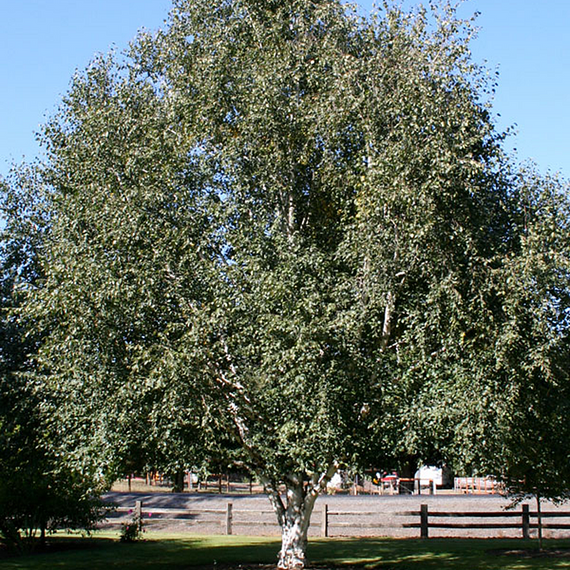
- Upright oval form reaches 40 feet tall and 30 feet wide, making it an outstanding specimen, street tree, or graceful screen in residential and commercial landscapes.
- Native to the western Himalayas and hardy in USDA Zones 4-7, this fast-growing deciduous tree performs best in cool climates with consistently moist, well-drained soil.
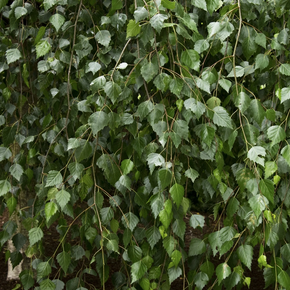
The Jacquemontii Birch (Betula jacquemontii, also known as Whitebarked Himalayan Birch or Indian Paper Birch) is widely celebrated as the most brilliantly white-barked tree in the entire birch genus, earning a permanent place among the most striking ornamental trees available to home gardeners and landscape professionals alike. Native to the western Himalayas from Kashmir to central Nepal, this upright, oval to pyramidal deciduous tree typically matures to 40 feet tall and 30 feet wide, delivering multi-season appeal throughout the year. In early spring, elegant yellowish-brown male catkins drape from the branches before the foliage emerges, lending a delicate, airy texture to the awakening garden. As the season progresses, thick, dark green, glossy ovate leaves with doubly serrate margins create a lush canopy that casts light, dappled shade below. Come autumn, the foliage transforms to a rich golden yellow before dropping to expose the tree's most celebrated feature — its exquisitely peeling, paper-thin, pure white bark that nearly seems to emit its own light, especially when positioned against a backdrop of dark-foliaged evergreens or a shadowed wall. The bark exfoliates in horizontal papery strips, revealing fresh white layers beneath and adding textural elegance to the winter garden. A rapid grower when young, the Jacquemontii Birch thrives in full sun to part shade in moist, acidic, well-drained loamy or sandy soils, and exhibits partial resistance to birch leaf miner — a notable advantage over many other birch species. With its combination of electrifying white bark, bold fall color, graceful form, and adaptability to a range of cool-climate landscapes, the Jacquemontii Birch stands as a premier choice for specimen plantings, naturalized woodland edges, and urban streetscapes across USDA Hardiness Zones 4 through 7.
Plant Description
The Jacquemontii Birch is a deciduous ornamental tree prized above all for its strikingly white bark — considered the whitest of any birch species in the world. Botanically classified as Betula jacquemontii (also listed as Betula utilis var. jacquemontii), it is native to the western Himalayas, ranging from Kashmir through Kumaon and into central Nepal. The species name honors Victor Jacquemont, a French naturalist who collected specimens in the Kumaon region of the Himalaya in the early 19th century. The tree grows in an upright oval to pyramidal habit with a strong central leader, producing naturally attractive structure with minimal formative pruning. Its bark peels in thin, papery horizontal strips, continuously revealing fresh, gleaming white underneath. Leaves are ovate, dark green, thick, and glossy with 7 to 9 pairs of lateral veins and doubly serrate margins, measuring 1 to 3 inches in length. The tree is monoecious, bearing separate male and female flowers on the same tree in the form of catkins each spring.
Mature Size
| Characteristic | Detail |
|---|---|
| Mature Height | 30 to 50 feet (commonly 40 feet in cultivation) |
| Mature Spread | 20 to 35 feet (commonly 30 feet in cultivation) |
| Growth Rate | Rapid when young; considered a pioneer species |
| Habit/Form | Upright oval to pyramidal |
| Texture | Medium |
Hardiness Zones
The Jacquemontii Birch is hardy in USDA Plant Hardiness Zones 4a through 7a. It thrives in cool to cold climates and performs best where summer temperatures rarely exceed 75 degrees F and winter root zones benefit from consistent snowpack or mulch insulation. It is not recommended for planting south of Zone 7, as heat and humidity cause significant stress, leaving the tree vulnerable to secondary pest and disease issues. In Southern Oregon and Northern California, it is best suited to higher elevation sites or areas with cooler summer temperatures and consistent moisture.
Sunlight Requirements
Jacquemontii Birch grows best in full sun, defined as 6 or more hours of direct sunlight per day. It can also tolerate partial shade (2 to 6 hours of direct sun), where it will still perform well but may exhibit slightly less vibrant foliage color. Full sun exposure produces the most vigorous growth and the richest fall color. In warmer climates near the southern edge of its hardiness range, providing some afternoon shade can help reduce heat stress on the root zone and foliage. Regardless of sun exposure, keeping the root zone cool and consistently moist is a high priority for this species.
Soil and pH Preferences
This tree performs best in moist, acidic, well-drained soils. It is adaptable to a range of soil textures, including sandy loams, clay loams, and shallow rocky soils, as long as drainage is adequate. Soil that stays waterlogged will cause stress and root issues. Key soil preferences include:
- Soil pH: Acidic, ideally below 6.0
- Texture: Sandy loam, clay loam, or rocky well-drained soils preferred
- Drainage: Good drainage is essential; avoid low-lying areas with standing water
- Organic matter: Incorporating compost at planting improves moisture retention and nutrient availability
- Avoid compacted soils, as this tree has a shallow, fibrous root system that requires room to spread and breathe
Watering Guide
Consistent moisture is one of the most critical factors for the health and longevity of the Jacquemontii Birch. While the tree does not tolerate waterlogged conditions, it equally dislikes drought. Follow these watering guidelines for best results:
- Newly planted trees should be watered deeply two to three times per week for the first growing season to establish a strong root system.
- Once established, water deeply and regularly, especially during dry spells and hot weather.
- Soaker hoses or drip irrigation placed at the drip line are ideal for delivering consistent moisture directly to the root zone.
- Apply a 3- to 4-inch layer of organic bark mulch over the root zone to conserve soil moisture, moderate soil temperatures, and reduce water stress.
- Never allow the root zone to dry out completely — moisture stress is the primary factor that opens the door to bronze birch borer infestations.
Fertilizing
Jacquemontii Birch benefits from light, annual fertilization to support its rapid growth rate and maintain vigorous, stress-resistant foliage. Follow these guidelines:
- Apply a balanced, slow-release granular fertilizer formulated for trees and shrubs in early spring, just before new growth begins.
- For acidic soil-loving plants, consider a fertilizer blend designed for acid-preferring species, or supplement with an acidifying fertilizer if soil pH is trending above 6.0.
- Avoid excessive nitrogen fertilization, which can stimulate lush but weak growth more attractive to aphids and other sap-feeding insects.
- A soil test every few years will help identify any nutrient deficiencies or pH imbalances before they cause visible stress to the tree.
- Do not fertilize in late summer or fall, as this encourages tender new growth that may be damaged by early frosts.
Pruning and Maintenance
The Jacquemontii Birch requires minimal pruning under normal circumstances, as its naturally upright oval form is attractive without heavy intervention. When pruning is necessary, timing is critical:
- Prune only during the dormant season — late fall through early winter, after the leaves have dropped but before the sap begins to run in late winter or early spring.
- Do not prune in late winter or spring, as birches "bleed" (exude sap) heavily when cut during active sap flow. While not fatal, excessive bleeding can weaken the tree over time.
- Remove any dead, damaged, or crossing branches as needed to maintain good structure and air circulation.
- Avoid heavy or severe pruning; this tree responds best to light, selective cuts.
- Maintain a 3- to 4-inch layer of organic mulch over the root zone year-round, keeping mulch pulled back a few inches from the base of the trunk to prevent rot.
- Because this species has shallow roots, avoid deep cultivation around the base of the tree, which can sever feeder roots.
Planting Instructions
- Select a site with full sun to part shade and well-drained, acidic soil. Avoid low spots prone to standing water.
- Dig a planting hole two to three times as wide as the root ball but no deeper than the root ball itself. The top of the root ball should sit at or slightly above the surrounding soil grade.
- Amend backfill soil with compost if the native soil is poor or heavily compacted, mixing no more than 25% compost by volume to avoid creating a "bathtub" effect.
- Place the tree in the hole, ensuring the root flare (where trunk meets roots) is visible at or just above grade. Do not bury the root flare.
- Backfill the hole, firming the soil gently to remove air pockets. Water in thoroughly as you backfill.
- Create a shallow watering ring or berm around the drip line to direct irrigation water to the root zone.
- Apply a 3- to 4-inch layer of organic mulch such as shredded bark or wood chips over the entire planting area, keeping mulch 2 to 3 inches away from the trunk.
- Water deeply immediately after planting and maintain a regular watering schedule throughout the first growing season.
- Avoid fertilizing at planting time; wait until the following spring to begin a feeding program once the tree has settled in.
Seasonal Interest
| Season | Feature |
|---|---|
| Spring | Yellowish-brown male catkins (3 to 5 inches long) and small green female catkins emerge before or alongside the unfurling fresh green foliage, adding delicate texture and early-season interest. |
| Summer | Lush, dark green, thick, glossy leaves create a refined canopy. The brilliant white bark provides strong contrast and visual interest throughout the warm season. |
| Fall | Foliage transitions to bright golden yellow, providing bold warm-season color before leaf drop. Drooping, cone-like seed catkins containing small winged seeds mature and disperse in early autumn. |
| Winter | The exfoliating, paper-thin, pure white bark reaches its most dramatic peak after leaf drop, glowing against dark evergreens, a winter sky, or a snowy backdrop. Outstanding structural and ornamental interest persists through the coldest months. |
Landscape Uses
The Jacquemontii Birch is one of the most versatile ornamental trees for cool-climate landscapes. Its combination of year-round bark interest, brilliant fall color, and graceful upright form makes it a design focal point in nearly any setting. Ideal landscape applications include:
- Specimen planting in lawns or garden beds where the white bark can be fully showcased
- Multi-trunk or clump plantings for a bold naturalistic effect
- Woodland garden edges and naturalized areas
- Street tree plantings in cooler climates with adequate soil moisture
- Mixed border backdrops, especially contrasted against dark-foliaged evergreens such as yews, dark hollies, or spruce
- Near water features, ponds, or rain gardens where consistent soil moisture is available
- Shade garden canopy — its light, dappled shade is gentle enough for underplanting with shade-tolerant perennials
- Winter garden design where the luminous white bark creates strong year-round structural interest
Companion Plants
The pure white bark and golden fall foliage of Jacquemontii Birch pair beautifully with a range of companion plants. Consider these combinations for maximum visual impact:
- Dark-foliaged evergreens such as yews (Taxus spp.), Norway spruce (Picea abies), or dark hollies (Ilex spp.) intensify the contrast with the white bark
- Red-twig dogwood (Cornus sericea) echoes the winter stem interest with complementary red color
- Japanese forest grass (Hakonechloa macra) and other ornamental grasses create a soft, textural underplanting
- Rhododendrons and azaleas share the tree's preference for acidic, moist soils and add spring floral interest beneath the canopy
- Hostas and ferns thrive in the light dappled shade beneath the birch canopy and complement its fine texture
- Hellebores provide late-winter and early spring blooms that complement the dramatic white bark before the birch leafs out
- Witch hazel (Hamamelis spp.) adds complementary winter and early spring interest alongside the white stems
Pests and Diseases
While the Jacquemontii Birch is notably more resistant to some pests than other birch species — exhibiting partial resistance to birch leaf miner — it is still susceptible to several common insect and disease issues, particularly when stressed by heat, drought, or poor siting. The most significant threats include:
- Bronze Birch Borer (Agrilus anxius): The most serious threat to birch trees. This wood-boring beetle targets stressed or weakened trees, tunneling beneath the bark and girdling branches. Prevention through proper siting, consistent moisture, and mulching is the best defense. Severely infested trees may not recover.
- Birch Leaf Miner: Larvae of various sawfly species create blotchy or serpentine mines in the leaves. Jacquemontii Birch has partial resistance to this pest, making it a better choice than many other birch species in areas where leaf miner is prevalent.
- Aphids: Green apple aphid and spirea aphid may colonize new growth. In most cases, natural predators and a strong jet of water manage populations adequately.
- Japanese Beetle: Adults may feed on foliage in summer, causing skeletonization. Hand-picking and insecticidal treatments can reduce damage.
- Birch Skeletonizer: Caterpillars feed on leaf tissue between veins; damage is rarely severe on otherwise healthy trees.
- Leaf Spot: Fungal leaf spots may occur in wet conditions. Good air circulation and avoiding overhead watering help minimize incidence.
The most effective pest and disease prevention strategy for this tree is proper siting — planting in a cool location with consistently moist soil and full sun, and maintaining a deep mulch layer over the root zone year-round.
Wildlife Value
The Jacquemontii Birch provides meaningful ecological value in the landscape, supporting a variety of wildlife species:
- Serves as a larval host plant for the Eastern Tiger Swallowtail butterfly (Papilio glaucus), one of North America's most beloved butterfly species
- Attracts a range of pollinating insects during spring catkin bloom, including native bees and other beneficial insects
- Small winged seeds produced in autumn catkins provide a food source for finches, siskins, redpolls, and other seed-eating songbirds
- Dense branch structure provides nesting habitat and protective cover for a variety of birds
- The inner bark of Betula utilis species has a long ethnobotanical history of being used to make paper in the Himalayas, reflecting the tree's cultural and ecological significance in its native range
- Whitest bark of all birch species — the luminous, chalky-white trunk practically glows against darker foliage backdrops, providing year-round visual drama in any landscape.
- Brilliant golden-yellow fall color crowns a season of interest that spans spring catkins, lush dark-green summer foliage, and striking winter bark display.
- Upright oval form reaches 40 feet tall and 30 feet wide, making it an outstanding specimen, street tree, or graceful screen in residential and commercial landscapes.
- Native to the western Himalayas and hardy in USDA Zones 4-7, this fast-growing deciduous tree performs best in cool climates with consistently moist, well-drained soil.
The Jacquemontii Birch (Betula jacquemontii, also known as Whitebarked Himalayan Birch or Indian Paper Birch) is widely celebrated as the most brilliantly white-barked tree in the entire birch genus, earning a permanent place among the most striking ornamental trees available to home gardeners and landscape professionals alike. Native to the western Himalayas from Kashmir to central Nepal, this upright, oval to pyramidal deciduous tree typically matures to 40 feet tall and 30 feet wide, delivering multi-season appeal throughout the year. In early spring, elegant yellowish-brown male catkins drape from the branches before the foliage emerges, lending a delicate, airy texture to the awakening garden. As the season progresses, thick, dark green, glossy ovate leaves with doubly serrate margins create a lush canopy that casts light, dappled shade below. Come autumn, the foliage transforms to a rich golden yellow before dropping to expose the tree's most celebrated feature — its exquisitely peeling, paper-thin, pure white bark that nearly seems to emit its own light, especially when positioned against a backdrop of dark-foliaged evergreens or a shadowed wall. The bark exfoliates in horizontal papery strips, revealing fresh white layers beneath and adding textural elegance to the winter garden. A rapid grower when young, the Jacquemontii Birch thrives in full sun to part shade in moist, acidic, well-drained loamy or sandy soils, and exhibits partial resistance to birch leaf miner — a notable advantage over many other birch species. With its combination of electrifying white bark, bold fall color, graceful form, and adaptability to a range of cool-climate landscapes, the Jacquemontii Birch stands as a premier choice for specimen plantings, naturalized woodland edges, and urban streetscapes across USDA Hardiness Zones 4 through 7.
Plant Description
The Jacquemontii Birch is a deciduous ornamental tree prized above all for its strikingly white bark — considered the whitest of any birch species in the world. Botanically classified as Betula jacquemontii (also listed as Betula utilis var. jacquemontii), it is native to the western Himalayas, ranging from Kashmir through Kumaon and into central Nepal. The species name honors Victor Jacquemont, a French naturalist who collected specimens in the Kumaon region of the Himalaya in the early 19th century. The tree grows in an upright oval to pyramidal habit with a strong central leader, producing naturally attractive structure with minimal formative pruning. Its bark peels in thin, papery horizontal strips, continuously revealing fresh, gleaming white underneath. Leaves are ovate, dark green, thick, and glossy with 7 to 9 pairs of lateral veins and doubly serrate margins, measuring 1 to 3 inches in length. The tree is monoecious, bearing separate male and female flowers on the same tree in the form of catkins each spring.
Mature Size
| Characteristic | Detail |
|---|---|
| Mature Height | 30 to 50 feet (commonly 40 feet in cultivation) |
| Mature Spread | 20 to 35 feet (commonly 30 feet in cultivation) |
| Growth Rate | Rapid when young; considered a pioneer species |
| Habit/Form | Upright oval to pyramidal |
| Texture | Medium |
Hardiness Zones
The Jacquemontii Birch is hardy in USDA Plant Hardiness Zones 4a through 7a. It thrives in cool to cold climates and performs best where summer temperatures rarely exceed 75 degrees F and winter root zones benefit from consistent snowpack or mulch insulation. It is not recommended for planting south of Zone 7, as heat and humidity cause significant stress, leaving the tree vulnerable to secondary pest and disease issues. In Southern Oregon and Northern California, it is best suited to higher elevation sites or areas with cooler summer temperatures and consistent moisture.
Sunlight Requirements
Jacquemontii Birch grows best in full sun, defined as 6 or more hours of direct sunlight per day. It can also tolerate partial shade (2 to 6 hours of direct sun), where it will still perform well but may exhibit slightly less vibrant foliage color. Full sun exposure produces the most vigorous growth and the richest fall color. In warmer climates near the southern edge of its hardiness range, providing some afternoon shade can help reduce heat stress on the root zone and foliage. Regardless of sun exposure, keeping the root zone cool and consistently moist is a high priority for this species.
Soil and pH Preferences
This tree performs best in moist, acidic, well-drained soils. It is adaptable to a range of soil textures, including sandy loams, clay loams, and shallow rocky soils, as long as drainage is adequate. Soil that stays waterlogged will cause stress and root issues. Key soil preferences include:
- Soil pH: Acidic, ideally below 6.0
- Texture: Sandy loam, clay loam, or rocky well-drained soils preferred
- Drainage: Good drainage is essential; avoid low-lying areas with standing water
- Organic matter: Incorporating compost at planting improves moisture retention and nutrient availability
- Avoid compacted soils, as this tree has a shallow, fibrous root system that requires room to spread and breathe
Watering Guide
Consistent moisture is one of the most critical factors for the health and longevity of the Jacquemontii Birch. While the tree does not tolerate waterlogged conditions, it equally dislikes drought. Follow these watering guidelines for best results:
- Newly planted trees should be watered deeply two to three times per week for the first growing season to establish a strong root system.
- Once established, water deeply and regularly, especially during dry spells and hot weather.
- Soaker hoses or drip irrigation placed at the drip line are ideal for delivering consistent moisture directly to the root zone.
- Apply a 3- to 4-inch layer of organic bark mulch over the root zone to conserve soil moisture, moderate soil temperatures, and reduce water stress.
- Never allow the root zone to dry out completely — moisture stress is the primary factor that opens the door to bronze birch borer infestations.
Fertilizing
Jacquemontii Birch benefits from light, annual fertilization to support its rapid growth rate and maintain vigorous, stress-resistant foliage. Follow these guidelines:
- Apply a balanced, slow-release granular fertilizer formulated for trees and shrubs in early spring, just before new growth begins.
- For acidic soil-loving plants, consider a fertilizer blend designed for acid-preferring species, or supplement with an acidifying fertilizer if soil pH is trending above 6.0.
- Avoid excessive nitrogen fertilization, which can stimulate lush but weak growth more attractive to aphids and other sap-feeding insects.
- A soil test every few years will help identify any nutrient deficiencies or pH imbalances before they cause visible stress to the tree.
- Do not fertilize in late summer or fall, as this encourages tender new growth that may be damaged by early frosts.
Pruning and Maintenance
The Jacquemontii Birch requires minimal pruning under normal circumstances, as its naturally upright oval form is attractive without heavy intervention. When pruning is necessary, timing is critical:
- Prune only during the dormant season — late fall through early winter, after the leaves have dropped but before the sap begins to run in late winter or early spring.
- Do not prune in late winter or spring, as birches "bleed" (exude sap) heavily when cut during active sap flow. While not fatal, excessive bleeding can weaken the tree over time.
- Remove any dead, damaged, or crossing branches as needed to maintain good structure and air circulation.
- Avoid heavy or severe pruning; this tree responds best to light, selective cuts.
- Maintain a 3- to 4-inch layer of organic mulch over the root zone year-round, keeping mulch pulled back a few inches from the base of the trunk to prevent rot.
- Because this species has shallow roots, avoid deep cultivation around the base of the tree, which can sever feeder roots.
Planting Instructions
- Select a site with full sun to part shade and well-drained, acidic soil. Avoid low spots prone to standing water.
- Dig a planting hole two to three times as wide as the root ball but no deeper than the root ball itself. The top of the root ball should sit at or slightly above the surrounding soil grade.
- Amend backfill soil with compost if the native soil is poor or heavily compacted, mixing no more than 25% compost by volume to avoid creating a "bathtub" effect.
- Place the tree in the hole, ensuring the root flare (where trunk meets roots) is visible at or just above grade. Do not bury the root flare.
- Backfill the hole, firming the soil gently to remove air pockets. Water in thoroughly as you backfill.
- Create a shallow watering ring or berm around the drip line to direct irrigation water to the root zone.
- Apply a 3- to 4-inch layer of organic mulch such as shredded bark or wood chips over the entire planting area, keeping mulch 2 to 3 inches away from the trunk.
- Water deeply immediately after planting and maintain a regular watering schedule throughout the first growing season.
- Avoid fertilizing at planting time; wait until the following spring to begin a feeding program once the tree has settled in.
Seasonal Interest
| Season | Feature |
|---|---|
| Spring | Yellowish-brown male catkins (3 to 5 inches long) and small green female catkins emerge before or alongside the unfurling fresh green foliage, adding delicate texture and early-season interest. |
| Summer | Lush, dark green, thick, glossy leaves create a refined canopy. The brilliant white bark provides strong contrast and visual interest throughout the warm season. |
| Fall | Foliage transitions to bright golden yellow, providing bold warm-season color before leaf drop. Drooping, cone-like seed catkins containing small winged seeds mature and disperse in early autumn. |
| Winter | The exfoliating, paper-thin, pure white bark reaches its most dramatic peak after leaf drop, glowing against dark evergreens, a winter sky, or a snowy backdrop. Outstanding structural and ornamental interest persists through the coldest months. |
Landscape Uses
The Jacquemontii Birch is one of the most versatile ornamental trees for cool-climate landscapes. Its combination of year-round bark interest, brilliant fall color, and graceful upright form makes it a design focal point in nearly any setting. Ideal landscape applications include:
- Specimen planting in lawns or garden beds where the white bark can be fully showcased
- Multi-trunk or clump plantings for a bold naturalistic effect
- Woodland garden edges and naturalized areas
- Street tree plantings in cooler climates with adequate soil moisture
- Mixed border backdrops, especially contrasted against dark-foliaged evergreens such as yews, dark hollies, or spruce
- Near water features, ponds, or rain gardens where consistent soil moisture is available
- Shade garden canopy — its light, dappled shade is gentle enough for underplanting with shade-tolerant perennials
- Winter garden design where the luminous white bark creates strong year-round structural interest
Companion Plants
The pure white bark and golden fall foliage of Jacquemontii Birch pair beautifully with a range of companion plants. Consider these combinations for maximum visual impact:
- Dark-foliaged evergreens such as yews (Taxus spp.), Norway spruce (Picea abies), or dark hollies (Ilex spp.) intensify the contrast with the white bark
- Red-twig dogwood (Cornus sericea) echoes the winter stem interest with complementary red color
- Japanese forest grass (Hakonechloa macra) and other ornamental grasses create a soft, textural underplanting
- Rhododendrons and azaleas share the tree's preference for acidic, moist soils and add spring floral interest beneath the canopy
- Hostas and ferns thrive in the light dappled shade beneath the birch canopy and complement its fine texture
- Hellebores provide late-winter and early spring blooms that complement the dramatic white bark before the birch leafs out
- Witch hazel (Hamamelis spp.) adds complementary winter and early spring interest alongside the white stems
Pests and Diseases
While the Jacquemontii Birch is notably more resistant to some pests than other birch species — exhibiting partial resistance to birch leaf miner — it is still susceptible to several common insect and disease issues, particularly when stressed by heat, drought, or poor siting. The most significant threats include:
- Bronze Birch Borer (Agrilus anxius): The most serious threat to birch trees. This wood-boring beetle targets stressed or weakened trees, tunneling beneath the bark and girdling branches. Prevention through proper siting, consistent moisture, and mulching is the best defense. Severely infested trees may not recover.
- Birch Leaf Miner: Larvae of various sawfly species create blotchy or serpentine mines in the leaves. Jacquemontii Birch has partial resistance to this pest, making it a better choice than many other birch species in areas where leaf miner is prevalent.
- Aphids: Green apple aphid and spirea aphid may colonize new growth. In most cases, natural predators and a strong jet of water manage populations adequately.
- Japanese Beetle: Adults may feed on foliage in summer, causing skeletonization. Hand-picking and insecticidal treatments can reduce damage.
- Birch Skeletonizer: Caterpillars feed on leaf tissue between veins; damage is rarely severe on otherwise healthy trees.
- Leaf Spot: Fungal leaf spots may occur in wet conditions. Good air circulation and avoiding overhead watering help minimize incidence.
The most effective pest and disease prevention strategy for this tree is proper siting — planting in a cool location with consistently moist soil and full sun, and maintaining a deep mulch layer over the root zone year-round.
Wildlife Value
The Jacquemontii Birch provides meaningful ecological value in the landscape, supporting a variety of wildlife species:
- Serves as a larval host plant for the Eastern Tiger Swallowtail butterfly (Papilio glaucus), one of North America's most beloved butterfly species
- Attracts a range of pollinating insects during spring catkin bloom, including native bees and other beneficial insects
- Small winged seeds produced in autumn catkins provide a food source for finches, siskins, redpolls, and other seed-eating songbirds
- Dense branch structure provides nesting habitat and protective cover for a variety of birds
- The inner bark of Betula utilis species has a long ethnobotanical history of being used to make paper in the Himalayas, reflecting the tree's cultural and ecological significance in its native range
Related Products