
Zoom the image with the mouse
Jacquemontii Birch - 25 Gallon
SKU:
1870465
UPC:
757316231252
$249.99
- Prized for having the whitest bark of any birch species, the luminous chalky-white trunk creates a year-round focal point that practically glows against darker foliage and winter landscapes.
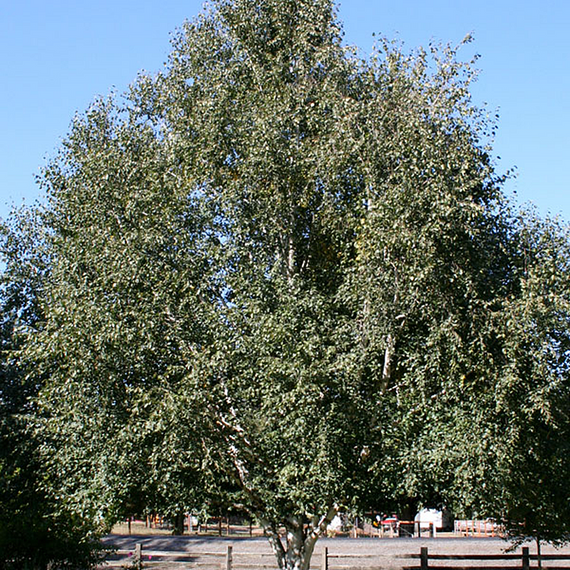
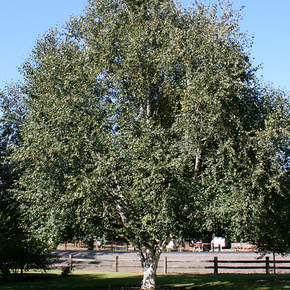
- Upright oval to pyramidal form grows 30-50 feet tall with thick, dark glossy green foliage that turns a brilliant golden yellow each fall for outstanding multi-season interest.
- Fast-growing deciduous tree that is hardy in USDA Zones 4-7 and shows partial resistance to leaf miner, making it a lower-maintenance choice among birch varieties.
- Highly versatile as a stunning single specimen, in multi-stem clump groupings, or planted in rows where the striking white bark can be showcased to full dramatic effect.
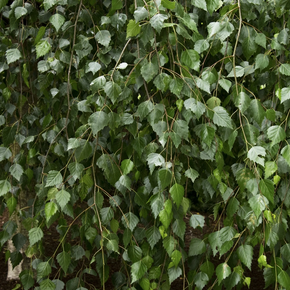
The Jacquemontii Birch (Betula jacquemontii), also known as the Whitebarked Himalayan Birch or Indian Paper Birch, is widely regarded as the most striking white-barked tree available to home gardeners and landscape professionals alike. Native to the western Himalayas from Kashmir to central Nepal, this elegant deciduous tree earns its place as a garden centerpiece thanks to its extraordinarily pure white, peeling bark — the whitest found on any birch species — which stands out even on young trees and delivers breathtaking visual impact in every season. Its upright oval to pyramidal silhouette reaches 30-50 feet in height with a 20-35 foot spread, forming a graceful canopy of thick, dark glossy green ovate leaves with finely serrated margins. In spring, ornamental yellowish-brown male catkins up to 5 inches long and smaller upright green female catkins add delicate textural interest. Come fall, the foliage transforms into a warm, luminous golden yellow before dropping to reveal the brilliant white trunk and fine branch structure through winter. Thriving in USDA Hardiness Zones 4-7, the Jacquemontii Birch performs best in full sun to partial shade in moist, well-drained, acidic to neutral soils, and its moderate to fast growth rate, relatively low pruning requirements, and four-season ornamental value make it one of the most rewarding landscape trees available for Pacific Northwest and Northern California gardens.
Plant Description
The Jacquemontii Birch is a deciduous broadleaf tree native to the high elevations of the western Himalayas, spanning Kashmir to central Nepal. It is best known for producing the whitest bark of any birch species — a characteristic that is evident even on young trees. The bark is smooth, pure white, and peels in papery layers to reveal creamy to peachy-toned inner layers beneath. The upright, pyramidal to oval crown is open and airy, carrying thick, dark glossy green ovate leaves with doubly serrated margins and 7-9 vein pairs per leaf. In spring, the tree produces ornamental catkins: drooping yellowish-brown male catkins 3-5 inches long and smaller upright green female catkins. These are followed in early autumn by drooping cone-like fruits that release numerous tiny winged seeds. In fall, the foliage shifts to a rich golden yellow before leaf drop, which then exposes the dramatic white trunk and fine branching structure that carries the tree's visual appeal through the winter months.
Mature Size
| Characteristic | Measurement |
|---|---|
| Mature Height | 30 - 50 feet |
| Mature Spread | 20 - 35 feet |
| Growth Rate | Moderate to fast |
| Form | Upright oval to pyramidal |
| Trunk | Single or multi-stem, white peeling bark |
Hardiness Zones
The Jacquemontii Birch is cold-hardy in USDA Hardiness Zones 4 through 7, making it well-suited for much of the Pacific Northwest, Northern California, and cooler inland regions of Southern Oregon. It thrives in climates where summers are relatively mild and cool, as it does not tolerate prolonged heat and humidity well. It is not recommended for planting in USDA Zone 8 or warmer without exceptional site selection and consistent moisture management. In its ideal range, the tree benefits from cool root zones, ideally in areas where winter snowpack or consistent soil moisture can be maintained.
Sunlight Requirements
Jacquemontii Birch performs best in full sun, defined as 6 or more hours of direct sunlight per day. Full sun exposure produces the best foliage color, encourages healthy growth, and allows the white bark to be showcased to its greatest effect. The tree will also tolerate partial shade (2-6 hours of direct sunlight), making it a suitable candidate for lightly shaded garden areas or as an understory specimen near taller trees. However, heavy shade should be avoided, as it can lead to weak growth and increased susceptibility to pests and diseases. When siting this tree, consider positioning it in front of a backdrop of dark evergreen foliage or darker-barked trees to maximize the visual contrast of the white trunk.
Soil and pH Preferences
This birch adapts to a range of soil types including sandy, loamy, and clay-based soils, but consistently performs best in moist, rich, well-drained loams. Soil must retain adequate moisture without becoming waterlogged, as standing water can damage the root system. Sandy or rocky loam soils are ideal. In terms of pH, Jacquemontii Birch prefers acidic to neutral conditions, typically between 5.0 and 7.0. It does not perform well in highly alkaline or chalky soils; alkaline conditions can trigger iron deficiency, which presents as yellowing of the leaves (chlorosis). If chlorosis is observed, introducing iron supplements into the soil can help correct the deficiency. Amending the planting area with compost or acidic organic matter prior to planting is recommended to optimize soil conditions.
Watering Guide
Consistent moisture is critical to the health and longevity of the Jacquemontii Birch. This tree does not tolerate drought, especially during its first several years of establishment. Water deeply and regularly to keep the soil moist several inches below the surface, but avoid creating waterlogged conditions. During heat waves or extended dry periods, increase watering frequency. A thick layer of organic mulch — 3 to 4 inches deep around the base of the tree, kept a few inches away from the trunk — is strongly recommended to help retain soil moisture and keep the root zone cool. Soaker hoses are an effective and efficient watering method for maintaining consistent root zone moisture. Once established, the tree has moderate water needs but should never be allowed to dry out completely during summer months.
Fertilizing
Fertilize the Jacquemontii Birch once or twice per year for best results. A slow-release fertilizer specifically formulated for birch trees or acid-loving trees is recommended, as it provides the targeted nutrition this species responds to most favorably. Apply fertilizer in early spring before new growth emerges, and optionally again in early summer. Avoid fertilizing in late summer or fall, as this can stimulate tender new growth that may be damaged by early frosts. If leaves display yellowing between the veins — a sign of iron deficiency (chlorosis) — supplement with chelated iron or iron-based soil amendments in addition to regular fertilizing. Composted organic matter worked into the soil at planting time also provides a gentle, long-lasting nutrient base for young trees.
Pruning and Maintenance
The Jacquemontii Birch requires very little pruning and in most cases can be left to develop its natural form without intervention. If pruning is necessary — for example, to remove a damaged branch or to manage the canopy — it is critical to time it correctly. Prune only during the dormant season in late fall or winter, after leaf drop but before sap flow begins in late winter or spring. Never prune during the growing season or when the tree is actively pushing new growth, as open wounds attract the bronze birch borer, one of the most damaging pests of birch trees. Avoid pruning in spring when sap is running, as the tree will bleed heavily from cut wounds. Mulching the root zone annually and keeping the area free from lawn mower and string trimmer damage will greatly reduce the risk of pest and disease entry.
Planting Instructions
- Select a planting site in full sun to partial shade with moist, well-drained, slightly acidic soil. Avoid areas with standing water or highly alkaline conditions.
- Dig a planting hole two to three times wider than the root ball and equal in depth. Loosen the soil on the sides of the hole to encourage outward root expansion.
- Amend the backfill with compost or quality organic matter to improve soil fertility and moisture retention. Break up any compacted soil at the bottom of the hole.
- Remove the tree from its container and gently loosen circling or bound roots before placing it in the hole. Set the tree so that the top of the root ball sits level with or just slightly above the surrounding soil grade.
- Backfill the hole, firming the soil gently around the root ball to eliminate air pockets. Form a shallow water-collecting berm around the outer edge of the planting area.
- Install a stake if needed for support, connecting it to the trunk loosely with a wide staking belt in a figure-8 pattern to prevent trunk abrasion.
- Water thoroughly and deeply immediately after planting.
- Apply a 3-4 inch layer of organic mulch over the root zone, keeping the mulch a few inches away from the base of the trunk to prevent rot.
- Monitor watering closely during the first two to three years until the tree is well established, ensuring the soil stays consistently moist.
Seasonal Interest
The Jacquemontii Birch delivers exceptional ornamental value across all four seasons, making it one of the most rewarding specimen trees for the landscape:
- Spring: Emerging fresh green foliage and drooping ornamental catkins bring early-season life back to the tree. Yellowish-brown male catkins up to 5 inches long and smaller green female catkins add delicate textural interest.
- Summer: The full canopy of thick, dark glossy green leaves provides dappled shade beneath the tree while the bright white trunk remains a striking focal point.
- Fall: Foliage transitions to a warm and luminous golden yellow, creating a vibrant seasonal display before leaf drop.
- Winter: After leaf drop, the pure white peeling bark and fine branch structure become the star of the winter landscape, remaining visually dramatic against snow, dark backgrounds, or gray winter skies.
Landscape Uses
The Jacquemontii Birch is one of the most versatile and visually impactful trees available for residential and commercial landscape design. Common landscape applications include:
- Specimen planting: Plant as a single-trunk focal point in a lawn, courtyard, or garden bed where the white bark can command full attention.
- Multi-stem or clump groupings: Group two or three trees together for a dramatic naturalistic clump effect with amplified visual impact.
- Allée or row planting: Plant in a formal or informal line along a driveway, path, or property boundary for a structured, striking effect.
- Shade garden backdrop: The light canopy casts dappled shade, making it ideal for shade garden underplanting with hostas, ferns, or astilbes.
- Winter garden: The glowing white trunk is especially effective in winter gardens where color and interest are at a premium.
- Naturalistic woodland edge: Works beautifully at the edge of a woodland garden or mixed border, particularly when contrasted with dark evergreen plantings.
Companion Plants
To maximize the visual impact of the Jacquemontii Birch's signature white bark, pair it with plants that create strong color and textural contrast:
- Red-twig and yellow-twig Dogwood (Cornus alba, C. sericea, C. sanguinea): The vivid red and yellow stems echo the birch's ornamental bark theme and create a spectacular winter display.
- Dark-foliaged evergreens: Backdrop plantings of dark green or blue-green conifers such as arborvitae, spruce, or pine dramatically highlight the white trunk.
- Hostas: Bold, broad hosta leaves make a beautiful low-growing contrast under the birch's dappled canopy.
- Japanese Forest Grass (Hakonechloa macra): Its flowing golden or variegated foliage echoes the birch's fall color palette and looks stunning at its base.
- Ferns: Shade-tolerant ferns such as lady fern or wood fern provide soft, naturalistic texture beneath the canopy.
- Ornamental grasses: Tall feather reed grass or Karl Foerster grass adds vertical movement and contrasting texture nearby.
- Astilbe: Colorful plumes of astilbe thrive in the moist, partially shaded conditions found beneath this birch.
Pests and Diseases
While the Jacquemontii Birch is considered relatively vigorous, it can be susceptible to several pests and diseases, particularly when stressed by heat, drought, or poor cultural conditions:
- Bronze Birch Borer (Agrilus anxius): The most serious pest threat to birches. Larvae tunnel under the bark, cutting off water and nutrient flow and potentially killing the tree. Healthy, well-watered trees are far more resistant. Avoid pruning during active borer flight season in spring and summer. Jacquemontii has some noted partial resistance compared to other birch species.
- Birch Leaf Miner: Causes irregular brown blotches on leaves. Jacquemontii shows partial resistance to leaf miner, making it a better choice than many other birches. Systemic insecticide treatments can control outbreaks.
- Aphids: Green apple or spirea aphids may colonize new growth. Monitor regularly and treat with insecticidal soap or neem oil if infestations occur.
- Japanese Beetle: Adults may feed on foliage. Hand-pick or treat with appropriate insecticide during peak feeding periods.
- Birch Skeletonizer: Larvae skeletonize leaves. Treat with insecticides labeled for this pest if damage is significant.
- Powdery Mildew and Rust: Fungal diseases that may appear in humid conditions. Improve air circulation and avoid overhead watering to reduce incidence.
- Leaf Spot: Various fungal leaf spot diseases can occur. Remove and dispose of affected leaves; avoid wetting foliage when irrigating.
- Iron Chlorosis: Yellowing of foliage caused by iron deficiency, most common in alkaline soils. Treat with chelated iron soil amendments and ensure planting soil is appropriately acidic.
Wildlife Value
The Jacquemontii Birch provides meaningful ecological value to local wildlife throughout the seasons. The tree is a documented larval host plant for the Eastern Tiger Swallowtail butterfly (Papilio glaucus), supporting pollinator life cycles. The drooping catkins and small winged seeds produced in autumn are a valuable food source for seed-eating songbirds. The open canopy structure and branch arrangement also provide nesting habitat and perching sites for birds. The foliage supports a range of native insect species, contributing to the broader food web that sustains local bird populations. Planting Jacquemontii Birch in groupings or near other native or wildlife-friendly trees and shrubs amplifies its habitat value for pollinators, butterflies, and songbirds.
Ethnobotanical Notes
Betula utilis — the species from which Jacquemontii is derived — has a rich history of human use throughout the Himalayan region, which is reflected in its species name "utilis," meaning "useful" in Latin. Historically, the inner bark was used for writing and for making paper, leading to one of its common names, Indian Paper Birch. The bark has also been used as roofing material, for making umbrellas, and as shingles. The sap and leaves of birch species have a long tradition of use in folk medicine and herbal remedies across multiple cultures. Today, the tree is grown almost exclusively for its outstanding ornamental qualities in gardens and landscapes worldwide.
- Prized for having the whitest bark of any birch species, the luminous chalky-white trunk creates a year-round focal point that practically glows against darker foliage and winter landscapes.
- Upright oval to pyramidal form grows 30-50 feet tall with thick, dark glossy green foliage that turns a brilliant golden yellow each fall for outstanding multi-season interest.
- Fast-growing deciduous tree that is hardy in USDA Zones 4-7 and shows partial resistance to leaf miner, making it a lower-maintenance choice among birch varieties.
- Highly versatile as a stunning single specimen, in multi-stem clump groupings, or planted in rows where the striking white bark can be showcased to full dramatic effect.
The Jacquemontii Birch (Betula jacquemontii), also known as the Whitebarked Himalayan Birch or Indian Paper Birch, is widely regarded as the most striking white-barked tree available to home gardeners and landscape professionals alike. Native to the western Himalayas from Kashmir to central Nepal, this elegant deciduous tree earns its place as a garden centerpiece thanks to its extraordinarily pure white, peeling bark — the whitest found on any birch species — which stands out even on young trees and delivers breathtaking visual impact in every season. Its upright oval to pyramidal silhouette reaches 30-50 feet in height with a 20-35 foot spread, forming a graceful canopy of thick, dark glossy green ovate leaves with finely serrated margins. In spring, ornamental yellowish-brown male catkins up to 5 inches long and smaller upright green female catkins add delicate textural interest. Come fall, the foliage transforms into a warm, luminous golden yellow before dropping to reveal the brilliant white trunk and fine branch structure through winter. Thriving in USDA Hardiness Zones 4-7, the Jacquemontii Birch performs best in full sun to partial shade in moist, well-drained, acidic to neutral soils, and its moderate to fast growth rate, relatively low pruning requirements, and four-season ornamental value make it one of the most rewarding landscape trees available for Pacific Northwest and Northern California gardens.
Plant Description
The Jacquemontii Birch is a deciduous broadleaf tree native to the high elevations of the western Himalayas, spanning Kashmir to central Nepal. It is best known for producing the whitest bark of any birch species — a characteristic that is evident even on young trees. The bark is smooth, pure white, and peels in papery layers to reveal creamy to peachy-toned inner layers beneath. The upright, pyramidal to oval crown is open and airy, carrying thick, dark glossy green ovate leaves with doubly serrated margins and 7-9 vein pairs per leaf. In spring, the tree produces ornamental catkins: drooping yellowish-brown male catkins 3-5 inches long and smaller upright green female catkins. These are followed in early autumn by drooping cone-like fruits that release numerous tiny winged seeds. In fall, the foliage shifts to a rich golden yellow before leaf drop, which then exposes the dramatic white trunk and fine branching structure that carries the tree's visual appeal through the winter months.
Mature Size
| Characteristic | Measurement |
|---|---|
| Mature Height | 30 - 50 feet |
| Mature Spread | 20 - 35 feet |
| Growth Rate | Moderate to fast |
| Form | Upright oval to pyramidal |
| Trunk | Single or multi-stem, white peeling bark |
Hardiness Zones
The Jacquemontii Birch is cold-hardy in USDA Hardiness Zones 4 through 7, making it well-suited for much of the Pacific Northwest, Northern California, and cooler inland regions of Southern Oregon. It thrives in climates where summers are relatively mild and cool, as it does not tolerate prolonged heat and humidity well. It is not recommended for planting in USDA Zone 8 or warmer without exceptional site selection and consistent moisture management. In its ideal range, the tree benefits from cool root zones, ideally in areas where winter snowpack or consistent soil moisture can be maintained.
Sunlight Requirements
Jacquemontii Birch performs best in full sun, defined as 6 or more hours of direct sunlight per day. Full sun exposure produces the best foliage color, encourages healthy growth, and allows the white bark to be showcased to its greatest effect. The tree will also tolerate partial shade (2-6 hours of direct sunlight), making it a suitable candidate for lightly shaded garden areas or as an understory specimen near taller trees. However, heavy shade should be avoided, as it can lead to weak growth and increased susceptibility to pests and diseases. When siting this tree, consider positioning it in front of a backdrop of dark evergreen foliage or darker-barked trees to maximize the visual contrast of the white trunk.
Soil and pH Preferences
This birch adapts to a range of soil types including sandy, loamy, and clay-based soils, but consistently performs best in moist, rich, well-drained loams. Soil must retain adequate moisture without becoming waterlogged, as standing water can damage the root system. Sandy or rocky loam soils are ideal. In terms of pH, Jacquemontii Birch prefers acidic to neutral conditions, typically between 5.0 and 7.0. It does not perform well in highly alkaline or chalky soils; alkaline conditions can trigger iron deficiency, which presents as yellowing of the leaves (chlorosis). If chlorosis is observed, introducing iron supplements into the soil can help correct the deficiency. Amending the planting area with compost or acidic organic matter prior to planting is recommended to optimize soil conditions.
Watering Guide
Consistent moisture is critical to the health and longevity of the Jacquemontii Birch. This tree does not tolerate drought, especially during its first several years of establishment. Water deeply and regularly to keep the soil moist several inches below the surface, but avoid creating waterlogged conditions. During heat waves or extended dry periods, increase watering frequency. A thick layer of organic mulch — 3 to 4 inches deep around the base of the tree, kept a few inches away from the trunk — is strongly recommended to help retain soil moisture and keep the root zone cool. Soaker hoses are an effective and efficient watering method for maintaining consistent root zone moisture. Once established, the tree has moderate water needs but should never be allowed to dry out completely during summer months.
Fertilizing
Fertilize the Jacquemontii Birch once or twice per year for best results. A slow-release fertilizer specifically formulated for birch trees or acid-loving trees is recommended, as it provides the targeted nutrition this species responds to most favorably. Apply fertilizer in early spring before new growth emerges, and optionally again in early summer. Avoid fertilizing in late summer or fall, as this can stimulate tender new growth that may be damaged by early frosts. If leaves display yellowing between the veins — a sign of iron deficiency (chlorosis) — supplement with chelated iron or iron-based soil amendments in addition to regular fertilizing. Composted organic matter worked into the soil at planting time also provides a gentle, long-lasting nutrient base for young trees.
Pruning and Maintenance
The Jacquemontii Birch requires very little pruning and in most cases can be left to develop its natural form without intervention. If pruning is necessary — for example, to remove a damaged branch or to manage the canopy — it is critical to time it correctly. Prune only during the dormant season in late fall or winter, after leaf drop but before sap flow begins in late winter or spring. Never prune during the growing season or when the tree is actively pushing new growth, as open wounds attract the bronze birch borer, one of the most damaging pests of birch trees. Avoid pruning in spring when sap is running, as the tree will bleed heavily from cut wounds. Mulching the root zone annually and keeping the area free from lawn mower and string trimmer damage will greatly reduce the risk of pest and disease entry.
Planting Instructions
- Select a planting site in full sun to partial shade with moist, well-drained, slightly acidic soil. Avoid areas with standing water or highly alkaline conditions.
- Dig a planting hole two to three times wider than the root ball and equal in depth. Loosen the soil on the sides of the hole to encourage outward root expansion.
- Amend the backfill with compost or quality organic matter to improve soil fertility and moisture retention. Break up any compacted soil at the bottom of the hole.
- Remove the tree from its container and gently loosen circling or bound roots before placing it in the hole. Set the tree so that the top of the root ball sits level with or just slightly above the surrounding soil grade.
- Backfill the hole, firming the soil gently around the root ball to eliminate air pockets. Form a shallow water-collecting berm around the outer edge of the planting area.
- Install a stake if needed for support, connecting it to the trunk loosely with a wide staking belt in a figure-8 pattern to prevent trunk abrasion.
- Water thoroughly and deeply immediately after planting.
- Apply a 3-4 inch layer of organic mulch over the root zone, keeping the mulch a few inches away from the base of the trunk to prevent rot.
- Monitor watering closely during the first two to three years until the tree is well established, ensuring the soil stays consistently moist.
Seasonal Interest
The Jacquemontii Birch delivers exceptional ornamental value across all four seasons, making it one of the most rewarding specimen trees for the landscape:
- Spring: Emerging fresh green foliage and drooping ornamental catkins bring early-season life back to the tree. Yellowish-brown male catkins up to 5 inches long and smaller green female catkins add delicate textural interest.
- Summer: The full canopy of thick, dark glossy green leaves provides dappled shade beneath the tree while the bright white trunk remains a striking focal point.
- Fall: Foliage transitions to a warm and luminous golden yellow, creating a vibrant seasonal display before leaf drop.
- Winter: After leaf drop, the pure white peeling bark and fine branch structure become the star of the winter landscape, remaining visually dramatic against snow, dark backgrounds, or gray winter skies.
Landscape Uses
The Jacquemontii Birch is one of the most versatile and visually impactful trees available for residential and commercial landscape design. Common landscape applications include:
- Specimen planting: Plant as a single-trunk focal point in a lawn, courtyard, or garden bed where the white bark can command full attention.
- Multi-stem or clump groupings: Group two or three trees together for a dramatic naturalistic clump effect with amplified visual impact.
- Allée or row planting: Plant in a formal or informal line along a driveway, path, or property boundary for a structured, striking effect.
- Shade garden backdrop: The light canopy casts dappled shade, making it ideal for shade garden underplanting with hostas, ferns, or astilbes.
- Winter garden: The glowing white trunk is especially effective in winter gardens where color and interest are at a premium.
- Naturalistic woodland edge: Works beautifully at the edge of a woodland garden or mixed border, particularly when contrasted with dark evergreen plantings.
Companion Plants
To maximize the visual impact of the Jacquemontii Birch's signature white bark, pair it with plants that create strong color and textural contrast:
- Red-twig and yellow-twig Dogwood (Cornus alba, C. sericea, C. sanguinea): The vivid red and yellow stems echo the birch's ornamental bark theme and create a spectacular winter display.
- Dark-foliaged evergreens: Backdrop plantings of dark green or blue-green conifers such as arborvitae, spruce, or pine dramatically highlight the white trunk.
- Hostas: Bold, broad hosta leaves make a beautiful low-growing contrast under the birch's dappled canopy.
- Japanese Forest Grass (Hakonechloa macra): Its flowing golden or variegated foliage echoes the birch's fall color palette and looks stunning at its base.
- Ferns: Shade-tolerant ferns such as lady fern or wood fern provide soft, naturalistic texture beneath the canopy.
- Ornamental grasses: Tall feather reed grass or Karl Foerster grass adds vertical movement and contrasting texture nearby.
- Astilbe: Colorful plumes of astilbe thrive in the moist, partially shaded conditions found beneath this birch.
Pests and Diseases
While the Jacquemontii Birch is considered relatively vigorous, it can be susceptible to several pests and diseases, particularly when stressed by heat, drought, or poor cultural conditions:
- Bronze Birch Borer (Agrilus anxius): The most serious pest threat to birches. Larvae tunnel under the bark, cutting off water and nutrient flow and potentially killing the tree. Healthy, well-watered trees are far more resistant. Avoid pruning during active borer flight season in spring and summer. Jacquemontii has some noted partial resistance compared to other birch species.
- Birch Leaf Miner: Causes irregular brown blotches on leaves. Jacquemontii shows partial resistance to leaf miner, making it a better choice than many other birches. Systemic insecticide treatments can control outbreaks.
- Aphids: Green apple or spirea aphids may colonize new growth. Monitor regularly and treat with insecticidal soap or neem oil if infestations occur.
- Japanese Beetle: Adults may feed on foliage. Hand-pick or treat with appropriate insecticide during peak feeding periods.
- Birch Skeletonizer: Larvae skeletonize leaves. Treat with insecticides labeled for this pest if damage is significant.
- Powdery Mildew and Rust: Fungal diseases that may appear in humid conditions. Improve air circulation and avoid overhead watering to reduce incidence.
- Leaf Spot: Various fungal leaf spot diseases can occur. Remove and dispose of affected leaves; avoid wetting foliage when irrigating.
- Iron Chlorosis: Yellowing of foliage caused by iron deficiency, most common in alkaline soils. Treat with chelated iron soil amendments and ensure planting soil is appropriately acidic.
Wildlife Value
The Jacquemontii Birch provides meaningful ecological value to local wildlife throughout the seasons. The tree is a documented larval host plant for the Eastern Tiger Swallowtail butterfly (Papilio glaucus), supporting pollinator life cycles. The drooping catkins and small winged seeds produced in autumn are a valuable food source for seed-eating songbirds. The open canopy structure and branch arrangement also provide nesting habitat and perching sites for birds. The foliage supports a range of native insect species, contributing to the broader food web that sustains local bird populations. Planting Jacquemontii Birch in groupings or near other native or wildlife-friendly trees and shrubs amplifies its habitat value for pollinators, butterflies, and songbirds.
Ethnobotanical Notes
Betula utilis — the species from which Jacquemontii is derived — has a rich history of human use throughout the Himalayan region, which is reflected in its species name "utilis," meaning "useful" in Latin. Historically, the inner bark was used for writing and for making paper, leading to one of its common names, Indian Paper Birch. The bark has also been used as roofing material, for making umbrellas, and as shingles. The sap and leaves of birch species have a long tradition of use in folk medicine and herbal remedies across multiple cultures. Today, the tree is grown almost exclusively for its outstanding ornamental qualities in gardens and landscapes worldwide.
Related Products