

Zoom the image with the mouse
Ice Dance Japanese Sedge - 1 Gallon
SKU:
1880790
UPC:
014949234082
$16.99
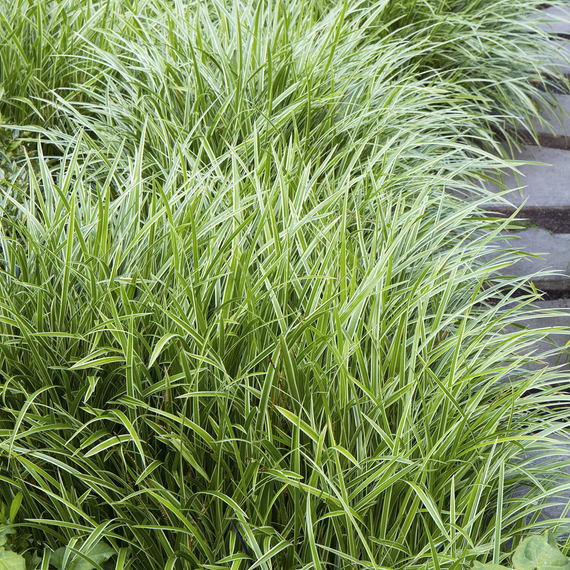
- Stunning variegated foliage featuring glossy, dark green leaves edged in clean, bright white — adding luminous contrast to shady spots year-round
- Exceptionally low-maintenance and deer resistant, thriving in part shade to full shade with average to consistently moist, well-drained soil
- A slow to moderate spreader that works beautifully as a ground cover, border edging, accent plant, or container specimen in woodland and shade gardens
- Hardy in USDA Zones 5-9 and recognized with the International Hardy Plant Union Outstanding Plant Award and Missouri Botanical Garden Plant of Merit distinction
Ice Dance Japanese Sedge (Carex morrowii 'Ice Dance') is a graceful, semi-evergreen ornamental sedge native to the lower alpine regions of central and southern Japan, prized by gardeners for its striking variegated foliage and remarkably easy-going nature. It forms a dense, tufted, arching mound of stiff yet elegant narrow leaves measuring up to 1/2 inch wide and 12 inches long, each one showcasing a rich dark green center flanked by bold, crisp white margins that shimmer in dappled light and brighten even the shadiest garden corners. Maturing to approximately 9-16 inches tall and 18-24 inches wide, Ice Dance spreads slowly and steadily via rhizomes, making it an ideal low-growing ground cover for filling in under trees, carpeting shaded borders, or anchoring mixed container plantings. In mid to late spring it produces slender stems bearing small, inconspicuous brownish flower spikes that add a subtle textural detail without detracting from its year-round foliar show. Evergreen in USDA Zones 8-9 and reliably semi-evergreen in Zones 5-7, this adaptable sedge tolerates a wide range of soil types — from clay to loam to sandy — and once established develops meaningful drought tolerance in shadier positions. Its deer resistance, virtually pest-free constitution, and outstanding four-season visual interest make Ice Dance Japanese Sedge one of the most versatile and rewarding ornamental grasses available for Pacific Northwest, Northern California, and Pacific Coast gardens.
Plant Description
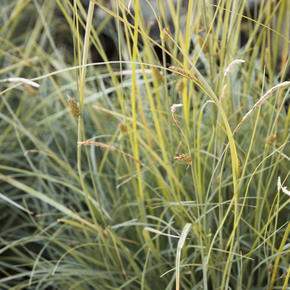
Ice Dance Japanese Sedge is a herbaceous perennial sedge in the family Cyperaceae, botanically known as Carex morrowii 'Ice Dance'. It produces a dense, mounding clump of narrow, arching, leathery leaves that are flat, thick, and glossy. Each leaf measures approximately 1/4 to 1/2 inch wide and up to 12 inches long, displaying a deep, rich green center sharply contrasted by wide, bright white margins. The overall growth habit is tidy, clumping, and densely tufted, with leaves that spill outward in an elegant fountain-like form. The iridescent foliage shimmers in even the slightest breeze, providing a sense of movement and life to static shade garden compositions. In mid to late spring, slender stems rise to produce small, inconspicuous brownish-green flower spikes — typically 4 to 6 per stem — that are botanically interesting but play a secondary role to the plant's outstanding foliage. Ice Dance is considered semi-evergreen to evergreen depending on climate, maintaining attractive foliage through winter in most of its hardiness range and remaining fully evergreen in warmer zones.
Mature Size
| Attribute | Measurement |
|---|---|
| Mature Height | 9 to 16 inches |
| Mature Spread | 18 to 24 inches |
| Flower Scape Height | Approximately 12 inches |
| Leaf Width | 1/4 to 1/2 inch |
| Leaf Length | Up to 12 inches |
| Growth Rate | Slow to moderate spreader |
| Spacing (for ground cover) | Approximately 18 inches on center |
Hardiness and Climate
Ice Dance Japanese Sedge is hardy in USDA Zones 5 through 9, making it an excellent choice for a broad range of climates across the United States, including the mild maritime and Mediterranean climates of Southern Oregon and Northern California. It also performs well across Sunset Climate Zones 3, 3A, 3B, 4, 5, 6, 7, 8, 9, 14, 15, 16, 17, 18, 19, 20, 21, 22, 23, and 24. In the warmest zones (8-9), the plant remains fully evergreen and provides consistent winter interest. In cooler zones (5-7), it is semi-evergreen and may show some winter-tattered foliage, particularly in exposed locations. In northern portions of its range, siting the plant out of harsh winter winds and applying a light layer of organic mulch over the root zone in autumn provides added protection. The foliage color tends to be richest and most vibrant in shaded positions rather than in full sun.
Sunlight Requirements
Ice Dance Japanese Sedge is highly adaptable when it comes to light exposure, tolerating everything from full shade to nearly full sun. However, its best performance and most vivid foliage color is achieved in part shade to full shade — ideally receiving 2 to 6 hours of indirect or dappled sunlight per day. Deep shade (less than 2 hours of direct sun) is well tolerated, making it one of the more versatile options for truly dark garden spots. In positions with more than 4 to 6 hours of direct sun, the white leaf margins may bleach and the overall foliage can lose its lush, deep green appearance. If grown in a sunnier location, consistently moist soil is essential to prevent leaf scorch and maintain plant health. Dappled light filtering through a tree canopy represents the ideal condition, closely mirroring the plant's native lower alpine woodland habitat in Japan.
Soil and pH Preferences
One of the most accommodating aspects of Ice Dance Japanese Sedge is its adaptability to a wide variety of soil types. It performs well in clay, loam, sandy, and even chalky soils, making it a practical choice for many garden situations. For optimal growth and foliage quality, a moist, fertile, organically rich, well-drained soil is ideal. The plant also demonstrates a meaningful tolerance for wet soils, making it suitable for rain gardens, low-lying spots, and areas near water features. Preferred soil pH ranges from slightly acidic to neutral, approximately 5.8 to 6.5 for best results, though it can tolerate a somewhat broader pH range. Amending heavy clay soils with compost prior to planting will improve drainage and root establishment. Incorporating organic matter into sandy soils will help retain the consistent moisture this sedge appreciates.
Watering Guide
Ice Dance Japanese Sedge prefers consistently moist soil and does not tolerate prolonged dry-down periods as well as some other sedge relatives. During the first growing season after planting, regular, deep watering is important to help the root system establish firmly. Check the top inch or two of soil between waterings — when it begins to feel dry, it is time to water thoroughly. Once well established, plants in shadier positions develop a degree of drought tolerance and can handle occasional dry spells, though they should never be allowed to dry out completely for extended periods. Plants grown in more sun exposure require more consistent irrigation to compensate for increased moisture loss. In areas with regular rainfall, established plants in shady spots may require very little supplemental watering. Avoid waterlogged conditions or poor drainage, which can lead to crown or root rot. Mulching around the root zone helps retain soil moisture and moderate soil temperature.
Fertilizing
Ice Dance Japanese Sedge is a moderate feeder that benefits from a light annual fertilization program to maintain vigorous growth and glossy, richly colored foliage. A slow-release, balanced fertilizer applied in early spring as new growth emerges is an effective and low-effort approach. For more targeted feeding, a spring application using a fertilizer with a 3-1-2 ratio (such as 15-5-10) encourages lush foliage growth, while a follow-up application in early fall using a 2-1-2 ratio (such as 10-5-10) supports root development heading into the cooler months. Alternatively, an all-purpose liquid fertilizer applied monthly during the active growing season (spring through summer) will sustain healthy growth. Avoid over-fertilizing, as excessive nitrogen can promote lush but weak growth. In organically rich soils with regular compost additions, supplemental fertilizing may be minimal. Always water the plant thoroughly before and after applying fertilizer to prevent root burn.
Pruning and Maintenance
Ice Dance Japanese Sedge is a low-maintenance plant that requires very little routine pruning. In regions where it remains evergreen, simply remove any tattered, discolored, or winter-damaged leaves in late winter or very early spring before new growth begins — this freshens the plant's appearance and allows the emerging foliage to shine. If the plant appears significantly ragged or worn after a hard winter, it can be cut back to near ground level; the new foliage will fill back in quickly and vigorously. In colder zones where the plant is not fully evergreen, cutting the foliage to the ground in late winter and removing the old leaves is the standard practice. Light trimming or shaping can be performed as needed during the growing season to tidy the plant's edges. Dividing clumps every 3 to 5 years in early spring reinvigorates older plants that may begin to thin in the center, and division is also the primary method of propagation.
Planting Instructions
Early spring is the ideal time to plant Ice Dance Japanese Sedge in the garden, though planting in late summer to early fall is also successful in mild climates. Select a site with part shade to full shade and soil that retains consistent moisture. Follow these steps for best results:
- Dig a planting hole approximately twice as wide as the root ball and equal in depth.
- Amend the native soil with compost or other organic matter to improve fertility and moisture retention, especially in sandy or heavy clay soils.
- Set the plant so the crown is level with or just slightly above the surrounding soil line — avoid burying the crown, which can lead to rot.
- Backfill with the amended soil, firming it gently around the roots to eliminate air pockets.
- Water deeply and thoroughly immediately after planting.
- Apply a 2 to 3 inch layer of organic mulch around the plant, keeping it a few inches away from the base of the stems, to conserve moisture and suppress weeds.
- Continue to water regularly throughout the first growing season to encourage strong root establishment.
Space plants approximately 18 inches apart when planting in mass as a ground cover.
Seasonal Interest
Ice Dance Japanese Sedge provides outstanding ornamental interest across all four seasons, making it a true workhorse in the shade garden. Its bold green-and-white variegated foliage is the primary feature, delivering crisp color contrast from the first days of spring through winter. In mid to late spring, slender flower stems bear small brownish to cream-colored flower spikes that add a subtle textural accent. Through the heat of summer, the glossy, arching leaves remain fresh and vibrant, brightening spots that many other plants find challenging. In autumn, the evergreen foliage holds its color as surrounding deciduous plants fade, providing structural continuity. In winter — particularly in Zones 8-9 — the plant remains fully evergreen and becomes one of the most valuable elements of the winter garden, maintaining its showy white-edged foliage when little else offers visual interest. Even in colder zones where it goes semi-dormant, some foliage color typically persists well into winter.
Landscape Uses
Ice Dance Japanese Sedge is an exceptionally versatile landscape plant suited to a wide range of garden styles and applications. Its moderate spreading habit, low profile, and year-round foliage make it particularly effective in the following uses:
- Ground Cover: Planted in mass beneath trees or along shaded slopes, it knits together into a low, weed-suppressing carpet of variegated foliage.
- Border Edging: Its tidy, arching form and contrasting leaf color make it an elegant edging plant along pathways, bed borders, and garden walls.
- Woodland Gardens: Perfectly at home among ferns, hostas, and shade-loving shrubs, mimicking its natural woodland habitat.
- Rain Gardens: Its tolerance for wet soils makes it a functional and attractive choice in low-lying, seasonally wet areas.
- Rock Gardens: The fine texture and graceful habit provide an appealing contrast against stone.
- Water Garden Margins: Excellent for planting along the edges of ponds or streams where soil stays consistently moist.
- Container Planting: Adds wonderful texture, movement, and contrast to mixed patio containers and window boxes.
- Small Spaces and City Gardens: Its compact size and low maintenance suit courtyard and urban garden settings beautifully.
Companion Plants
Ice Dance Japanese Sedge pairs beautifully with a wide range of shade-loving perennials, shrubs, and bulbs, creating layered, textured compositions. Its white-edged foliage provides an excellent foil for both bold-leaved plants and delicate flowers. Recommended companions include:
- Hostas — bold, contrasting foliage in a wide range of blues, greens, and golds for a classic shade garden pairing
- Heuchera (Coral Bells) — richly colored foliage in purples, caramels, and bronzes that play beautifully against the bright white margins
- Astilbe — feathery plumes in pink, red, and white add vertical interest and color above the sedge's low mound
- Helleborus (Lenten Rose / Christmas Rose) — elegant late-winter and early-spring blooms complement the sedge's evergreen foliage
- Athyrium (Japanese Painted Fern) — silvery fronds echo the white variegation for a cohesive, luminous shade planting
- Brunnera 'Jack Frost' — silver-overlaid heart-shaped leaves create a striking combination in moist shade
- Heucherella — the fine-cut, variegated foliage bridges the gap between Heuchera and Tiarella for a layered textural effect
- Spring-flowering bulbs (Allium, Scilla, Muscari) — the sedge's consistent foliage provides an attractive backdrop as bulbs emerge and fade
- Cornus alba 'Sibirica' (Tatarian Dogwood) — brilliant red winter stems rising above the white-edged foliage creates a striking winter scene
Pests and Diseases
Ice Dance Japanese Sedge is remarkably trouble-free and is not seriously affected by most common garden pests or diseases, making it one of the most reliable low-maintenance ornamental grasses available. Under normal garden conditions, both insect pests and fungal diseases are rarely a significant concern. The following minor issues can occasionally arise:
- Aphids: Small clusters may appear occasionally on foliage but are generally harmless and easily managed with a strong spray of water or insecticidal soap if populations become problematic.
- Slugs: In very moist, shaded environments, slugs may feed on foliage. Use slug bait or remove by hand to manage populations.
- Crown and Root Rot: The most likely disease issue, typically caused by waterlogged or poorly drained soils rather than a pathogen. Ensure good soil drainage and avoid overwatering to prevent this condition.
- Rust: Occasionally observed but rarely damaging; improve air circulation and avoid overhead watering if rust is detected.
- Rhizoctonia: A soil-borne fungal issue that can occur in overly wet conditions; maintaining well-drained soil is the best preventive measure.
In general, plants grown in appropriate conditions with well-drained soil and adequate air circulation will remain essentially pest and disease free throughout their lives.
Container Growing
Ice Dance Japanese Sedge is an outstanding container plant, adding graceful texture, year-round color, and elegant movement to patio pots, planters, and window boxes. Its arching, white-edged foliage provides a beautiful spiller or thriller element in mixed container arrangements. When growing in containers, keep the following guidelines in mind:
- Choose a container with adequate drainage holes — root rot from sitting water is the primary risk in pots.
- Use a high-quality, fertile, well-draining potting mix; incorporating compost improves moisture retention without waterlogging.
- Containers dry out more quickly than garden beds, so monitor soil moisture carefully and water more frequently than you would for in-ground plants — Ice Dance does not like to dry out completely.
- Feed container-grown plants with a balanced slow-release fertilizer in spring, and supplement with a diluted liquid fertilizer monthly through the growing season.
- In regions with harsh winters, move containers to a sheltered location or unheated garage to protect roots from freeze-thaw cycles that can damage or kill plants in pots.
- Repot every 2 to 3 years or when the plant becomes root-bound, refreshing the potting mix and dividing if desired.
- Pair with shade-tolerant companions such as Heuchera, Impatiens, Ferns, or Begonias for stunning seasonal container displays.
Wildlife Value
While Ice Dance Japanese Sedge is not a primary wildlife food source, it contributes meaningfully to the garden ecosystem in several ways. The spring flower spikes attract small pollinators and beneficial insects, supporting local biodiversity in the shade garden. The dense, low-growing clumps provide valuable ground-level cover and shelter for small mammals, ground-feeding songbirds, and beneficial insects such as beetles and spiders that prey on garden pests. As a member of the sedge family, its seeds and foliage can serve as a food source for certain butterfly and moth larvae, particularly Satyr species. The plant's dense mounding habit also provides nesting material and protective cover for small garden wildlife. Importantly, Ice Dance Japanese Sedge is listed as deer resistant, meaning it is reliably avoided by deer — a significant practical advantage in garden areas subject to deer browsing pressure. It is not known to be toxic to humans or pets, though caution is always advisable.
Propagation
Ice Dance Japanese Sedge is most easily and reliably propagated by division, which also serves the dual purpose of reinvigorating mature clumps that may begin to thin or die out in the center after several years. Division is best performed in early spring just as new growth is beginning to emerge. To divide:
- Dig the entire clump carefully, keeping as much of the root system intact as possible.
- Using a sharp spade, garden knife, or your hands, separate the clump into 2 to 4 sections, each with a healthy portion of roots and foliage.
- Replant divisions immediately at the same depth as the original plant, spacing them approximately 18 inches apart.
- Water thoroughly after replanting and keep consistently moist until new growth confirms establishment.
Seed propagation is also possible. Collect seeds in autumn after the flower spikes ripen and sow in fresh potting mix in a warm location with dappled light. Germination can take several months, and seedlings should be allowed to develop a strong root system before transplanting. Note that seeds from cultivars may not produce plants identical to the parent. Division remains the preferred method for maintaining the named cultivar's characteristics.
Awards and Recognition
Ice Dance Japanese Sedge has earned recognition from respected horticultural organizations, affirming its outstanding garden performance and ornamental value:
- International Hardy Plant Union Outstanding Plant Award — received in 2002, recognizing its exceptional qualities as a hardy ornamental plant
- Missouri Botanical Garden Plant of Merit — designated by one of the world's premier botanical institutions for its reliable, outstanding performance in the landscape
These honors reflect decades of proven performance across a wide range of climates and garden settings, and speak to the plant's enduring popularity among gardeners, landscape designers, and horticulturists alike.
- Stunning variegated foliage featuring glossy, dark green leaves edged in clean, bright white — adding luminous contrast to shady spots year-round
- Exceptionally low-maintenance and deer resistant, thriving in part shade to full shade with average to consistently moist, well-drained soil
- A slow to moderate spreader that works beautifully as a ground cover, border edging, accent plant, or container specimen in woodland and shade gardens
- Hardy in USDA Zones 5-9 and recognized with the International Hardy Plant Union Outstanding Plant Award and Missouri Botanical Garden Plant of Merit distinction
Ice Dance Japanese Sedge (Carex morrowii 'Ice Dance') is a graceful, semi-evergreen ornamental sedge native to the lower alpine regions of central and southern Japan, prized by gardeners for its striking variegated foliage and remarkably easy-going nature. It forms a dense, tufted, arching mound of stiff yet elegant narrow leaves measuring up to 1/2 inch wide and 12 inches long, each one showcasing a rich dark green center flanked by bold, crisp white margins that shimmer in dappled light and brighten even the shadiest garden corners. Maturing to approximately 9-16 inches tall and 18-24 inches wide, Ice Dance spreads slowly and steadily via rhizomes, making it an ideal low-growing ground cover for filling in under trees, carpeting shaded borders, or anchoring mixed container plantings. In mid to late spring it produces slender stems bearing small, inconspicuous brownish flower spikes that add a subtle textural detail without detracting from its year-round foliar show. Evergreen in USDA Zones 8-9 and reliably semi-evergreen in Zones 5-7, this adaptable sedge tolerates a wide range of soil types — from clay to loam to sandy — and once established develops meaningful drought tolerance in shadier positions. Its deer resistance, virtually pest-free constitution, and outstanding four-season visual interest make Ice Dance Japanese Sedge one of the most versatile and rewarding ornamental grasses available for Pacific Northwest, Northern California, and Pacific Coast gardens.
Plant Description
Ice Dance Japanese Sedge is a herbaceous perennial sedge in the family Cyperaceae, botanically known as Carex morrowii 'Ice Dance'. It produces a dense, mounding clump of narrow, arching, leathery leaves that are flat, thick, and glossy. Each leaf measures approximately 1/4 to 1/2 inch wide and up to 12 inches long, displaying a deep, rich green center sharply contrasted by wide, bright white margins. The overall growth habit is tidy, clumping, and densely tufted, with leaves that spill outward in an elegant fountain-like form. The iridescent foliage shimmers in even the slightest breeze, providing a sense of movement and life to static shade garden compositions. In mid to late spring, slender stems rise to produce small, inconspicuous brownish-green flower spikes — typically 4 to 6 per stem — that are botanically interesting but play a secondary role to the plant's outstanding foliage. Ice Dance is considered semi-evergreen to evergreen depending on climate, maintaining attractive foliage through winter in most of its hardiness range and remaining fully evergreen in warmer zones.
Mature Size
| Attribute | Measurement |
|---|---|
| Mature Height | 9 to 16 inches |
| Mature Spread | 18 to 24 inches |
| Flower Scape Height | Approximately 12 inches |
| Leaf Width | 1/4 to 1/2 inch |
| Leaf Length | Up to 12 inches |
| Growth Rate | Slow to moderate spreader |
| Spacing (for ground cover) | Approximately 18 inches on center |
Hardiness and Climate
Ice Dance Japanese Sedge is hardy in USDA Zones 5 through 9, making it an excellent choice for a broad range of climates across the United States, including the mild maritime and Mediterranean climates of Southern Oregon and Northern California. It also performs well across Sunset Climate Zones 3, 3A, 3B, 4, 5, 6, 7, 8, 9, 14, 15, 16, 17, 18, 19, 20, 21, 22, 23, and 24. In the warmest zones (8-9), the plant remains fully evergreen and provides consistent winter interest. In cooler zones (5-7), it is semi-evergreen and may show some winter-tattered foliage, particularly in exposed locations. In northern portions of its range, siting the plant out of harsh winter winds and applying a light layer of organic mulch over the root zone in autumn provides added protection. The foliage color tends to be richest and most vibrant in shaded positions rather than in full sun.
Sunlight Requirements
Ice Dance Japanese Sedge is highly adaptable when it comes to light exposure, tolerating everything from full shade to nearly full sun. However, its best performance and most vivid foliage color is achieved in part shade to full shade — ideally receiving 2 to 6 hours of indirect or dappled sunlight per day. Deep shade (less than 2 hours of direct sun) is well tolerated, making it one of the more versatile options for truly dark garden spots. In positions with more than 4 to 6 hours of direct sun, the white leaf margins may bleach and the overall foliage can lose its lush, deep green appearance. If grown in a sunnier location, consistently moist soil is essential to prevent leaf scorch and maintain plant health. Dappled light filtering through a tree canopy represents the ideal condition, closely mirroring the plant's native lower alpine woodland habitat in Japan.
Soil and pH Preferences
One of the most accommodating aspects of Ice Dance Japanese Sedge is its adaptability to a wide variety of soil types. It performs well in clay, loam, sandy, and even chalky soils, making it a practical choice for many garden situations. For optimal growth and foliage quality, a moist, fertile, organically rich, well-drained soil is ideal. The plant also demonstrates a meaningful tolerance for wet soils, making it suitable for rain gardens, low-lying spots, and areas near water features. Preferred soil pH ranges from slightly acidic to neutral, approximately 5.8 to 6.5 for best results, though it can tolerate a somewhat broader pH range. Amending heavy clay soils with compost prior to planting will improve drainage and root establishment. Incorporating organic matter into sandy soils will help retain the consistent moisture this sedge appreciates.
Watering Guide
Ice Dance Japanese Sedge prefers consistently moist soil and does not tolerate prolonged dry-down periods as well as some other sedge relatives. During the first growing season after planting, regular, deep watering is important to help the root system establish firmly. Check the top inch or two of soil between waterings — when it begins to feel dry, it is time to water thoroughly. Once well established, plants in shadier positions develop a degree of drought tolerance and can handle occasional dry spells, though they should never be allowed to dry out completely for extended periods. Plants grown in more sun exposure require more consistent irrigation to compensate for increased moisture loss. In areas with regular rainfall, established plants in shady spots may require very little supplemental watering. Avoid waterlogged conditions or poor drainage, which can lead to crown or root rot. Mulching around the root zone helps retain soil moisture and moderate soil temperature.
Fertilizing
Ice Dance Japanese Sedge is a moderate feeder that benefits from a light annual fertilization program to maintain vigorous growth and glossy, richly colored foliage. A slow-release, balanced fertilizer applied in early spring as new growth emerges is an effective and low-effort approach. For more targeted feeding, a spring application using a fertilizer with a 3-1-2 ratio (such as 15-5-10) encourages lush foliage growth, while a follow-up application in early fall using a 2-1-2 ratio (such as 10-5-10) supports root development heading into the cooler months. Alternatively, an all-purpose liquid fertilizer applied monthly during the active growing season (spring through summer) will sustain healthy growth. Avoid over-fertilizing, as excessive nitrogen can promote lush but weak growth. In organically rich soils with regular compost additions, supplemental fertilizing may be minimal. Always water the plant thoroughly before and after applying fertilizer to prevent root burn.
Pruning and Maintenance
Ice Dance Japanese Sedge is a low-maintenance plant that requires very little routine pruning. In regions where it remains evergreen, simply remove any tattered, discolored, or winter-damaged leaves in late winter or very early spring before new growth begins — this freshens the plant's appearance and allows the emerging foliage to shine. If the plant appears significantly ragged or worn after a hard winter, it can be cut back to near ground level; the new foliage will fill back in quickly and vigorously. In colder zones where the plant is not fully evergreen, cutting the foliage to the ground in late winter and removing the old leaves is the standard practice. Light trimming or shaping can be performed as needed during the growing season to tidy the plant's edges. Dividing clumps every 3 to 5 years in early spring reinvigorates older plants that may begin to thin in the center, and division is also the primary method of propagation.
Planting Instructions
Early spring is the ideal time to plant Ice Dance Japanese Sedge in the garden, though planting in late summer to early fall is also successful in mild climates. Select a site with part shade to full shade and soil that retains consistent moisture. Follow these steps for best results:
- Dig a planting hole approximately twice as wide as the root ball and equal in depth.
- Amend the native soil with compost or other organic matter to improve fertility and moisture retention, especially in sandy or heavy clay soils.
- Set the plant so the crown is level with or just slightly above the surrounding soil line — avoid burying the crown, which can lead to rot.
- Backfill with the amended soil, firming it gently around the roots to eliminate air pockets.
- Water deeply and thoroughly immediately after planting.
- Apply a 2 to 3 inch layer of organic mulch around the plant, keeping it a few inches away from the base of the stems, to conserve moisture and suppress weeds.
- Continue to water regularly throughout the first growing season to encourage strong root establishment.
Space plants approximately 18 inches apart when planting in mass as a ground cover.
Seasonal Interest
Ice Dance Japanese Sedge provides outstanding ornamental interest across all four seasons, making it a true workhorse in the shade garden. Its bold green-and-white variegated foliage is the primary feature, delivering crisp color contrast from the first days of spring through winter. In mid to late spring, slender flower stems bear small brownish to cream-colored flower spikes that add a subtle textural accent. Through the heat of summer, the glossy, arching leaves remain fresh and vibrant, brightening spots that many other plants find challenging. In autumn, the evergreen foliage holds its color as surrounding deciduous plants fade, providing structural continuity. In winter — particularly in Zones 8-9 — the plant remains fully evergreen and becomes one of the most valuable elements of the winter garden, maintaining its showy white-edged foliage when little else offers visual interest. Even in colder zones where it goes semi-dormant, some foliage color typically persists well into winter.
Landscape Uses
Ice Dance Japanese Sedge is an exceptionally versatile landscape plant suited to a wide range of garden styles and applications. Its moderate spreading habit, low profile, and year-round foliage make it particularly effective in the following uses:
- Ground Cover: Planted in mass beneath trees or along shaded slopes, it knits together into a low, weed-suppressing carpet of variegated foliage.
- Border Edging: Its tidy, arching form and contrasting leaf color make it an elegant edging plant along pathways, bed borders, and garden walls.
- Woodland Gardens: Perfectly at home among ferns, hostas, and shade-loving shrubs, mimicking its natural woodland habitat.
- Rain Gardens: Its tolerance for wet soils makes it a functional and attractive choice in low-lying, seasonally wet areas.
- Rock Gardens: The fine texture and graceful habit provide an appealing contrast against stone.
- Water Garden Margins: Excellent for planting along the edges of ponds or streams where soil stays consistently moist.
- Container Planting: Adds wonderful texture, movement, and contrast to mixed patio containers and window boxes.
- Small Spaces and City Gardens: Its compact size and low maintenance suit courtyard and urban garden settings beautifully.
Companion Plants
Ice Dance Japanese Sedge pairs beautifully with a wide range of shade-loving perennials, shrubs, and bulbs, creating layered, textured compositions. Its white-edged foliage provides an excellent foil for both bold-leaved plants and delicate flowers. Recommended companions include:
- Hostas — bold, contrasting foliage in a wide range of blues, greens, and golds for a classic shade garden pairing
- Heuchera (Coral Bells) — richly colored foliage in purples, caramels, and bronzes that play beautifully against the bright white margins
- Astilbe — feathery plumes in pink, red, and white add vertical interest and color above the sedge's low mound
- Helleborus (Lenten Rose / Christmas Rose) — elegant late-winter and early-spring blooms complement the sedge's evergreen foliage
- Athyrium (Japanese Painted Fern) — silvery fronds echo the white variegation for a cohesive, luminous shade planting
- Brunnera 'Jack Frost' — silver-overlaid heart-shaped leaves create a striking combination in moist shade
- Heucherella — the fine-cut, variegated foliage bridges the gap between Heuchera and Tiarella for a layered textural effect
- Spring-flowering bulbs (Allium, Scilla, Muscari) — the sedge's consistent foliage provides an attractive backdrop as bulbs emerge and fade
- Cornus alba 'Sibirica' (Tatarian Dogwood) — brilliant red winter stems rising above the white-edged foliage creates a striking winter scene
Pests and Diseases
Ice Dance Japanese Sedge is remarkably trouble-free and is not seriously affected by most common garden pests or diseases, making it one of the most reliable low-maintenance ornamental grasses available. Under normal garden conditions, both insect pests and fungal diseases are rarely a significant concern. The following minor issues can occasionally arise:
- Aphids: Small clusters may appear occasionally on foliage but are generally harmless and easily managed with a strong spray of water or insecticidal soap if populations become problematic.
- Slugs: In very moist, shaded environments, slugs may feed on foliage. Use slug bait or remove by hand to manage populations.
- Crown and Root Rot: The most likely disease issue, typically caused by waterlogged or poorly drained soils rather than a pathogen. Ensure good soil drainage and avoid overwatering to prevent this condition.
- Rust: Occasionally observed but rarely damaging; improve air circulation and avoid overhead watering if rust is detected.
- Rhizoctonia: A soil-borne fungal issue that can occur in overly wet conditions; maintaining well-drained soil is the best preventive measure.
In general, plants grown in appropriate conditions with well-drained soil and adequate air circulation will remain essentially pest and disease free throughout their lives.
Container Growing
Ice Dance Japanese Sedge is an outstanding container plant, adding graceful texture, year-round color, and elegant movement to patio pots, planters, and window boxes. Its arching, white-edged foliage provides a beautiful spiller or thriller element in mixed container arrangements. When growing in containers, keep the following guidelines in mind:
- Choose a container with adequate drainage holes — root rot from sitting water is the primary risk in pots.
- Use a high-quality, fertile, well-draining potting mix; incorporating compost improves moisture retention without waterlogging.
- Containers dry out more quickly than garden beds, so monitor soil moisture carefully and water more frequently than you would for in-ground plants — Ice Dance does not like to dry out completely.
- Feed container-grown plants with a balanced slow-release fertilizer in spring, and supplement with a diluted liquid fertilizer monthly through the growing season.
- In regions with harsh winters, move containers to a sheltered location or unheated garage to protect roots from freeze-thaw cycles that can damage or kill plants in pots.
- Repot every 2 to 3 years or when the plant becomes root-bound, refreshing the potting mix and dividing if desired.
- Pair with shade-tolerant companions such as Heuchera, Impatiens, Ferns, or Begonias for stunning seasonal container displays.
Wildlife Value
While Ice Dance Japanese Sedge is not a primary wildlife food source, it contributes meaningfully to the garden ecosystem in several ways. The spring flower spikes attract small pollinators and beneficial insects, supporting local biodiversity in the shade garden. The dense, low-growing clumps provide valuable ground-level cover and shelter for small mammals, ground-feeding songbirds, and beneficial insects such as beetles and spiders that prey on garden pests. As a member of the sedge family, its seeds and foliage can serve as a food source for certain butterfly and moth larvae, particularly Satyr species. The plant's dense mounding habit also provides nesting material and protective cover for small garden wildlife. Importantly, Ice Dance Japanese Sedge is listed as deer resistant, meaning it is reliably avoided by deer — a significant practical advantage in garden areas subject to deer browsing pressure. It is not known to be toxic to humans or pets, though caution is always advisable.
Propagation
Ice Dance Japanese Sedge is most easily and reliably propagated by division, which also serves the dual purpose of reinvigorating mature clumps that may begin to thin or die out in the center after several years. Division is best performed in early spring just as new growth is beginning to emerge. To divide:
- Dig the entire clump carefully, keeping as much of the root system intact as possible.
- Using a sharp spade, garden knife, or your hands, separate the clump into 2 to 4 sections, each with a healthy portion of roots and foliage.
- Replant divisions immediately at the same depth as the original plant, spacing them approximately 18 inches apart.
- Water thoroughly after replanting and keep consistently moist until new growth confirms establishment.
Seed propagation is also possible. Collect seeds in autumn after the flower spikes ripen and sow in fresh potting mix in a warm location with dappled light. Germination can take several months, and seedlings should be allowed to develop a strong root system before transplanting. Note that seeds from cultivars may not produce plants identical to the parent. Division remains the preferred method for maintaining the named cultivar's characteristics.
Awards and Recognition
Ice Dance Japanese Sedge has earned recognition from respected horticultural organizations, affirming its outstanding garden performance and ornamental value:
- International Hardy Plant Union Outstanding Plant Award — received in 2002, recognizing its exceptional qualities as a hardy ornamental plant
- Missouri Botanical Garden Plant of Merit — designated by one of the world's premier botanical institutions for its reliable, outstanding performance in the landscape
These honors reflect decades of proven performance across a wide range of climates and garden settings, and speak to the plant's enduring popularity among gardeners, landscape designers, and horticulturists alike.


