

Zoom the image with the mouse
Himalayan Sweet Box - 1 Gallon
SKU:
110945
UPC:
014949705018
$17.99
- Intensely fragrant white flowers perfume the winter garden from January through March, delivering sweet, honey-like scent when little else is in bloom
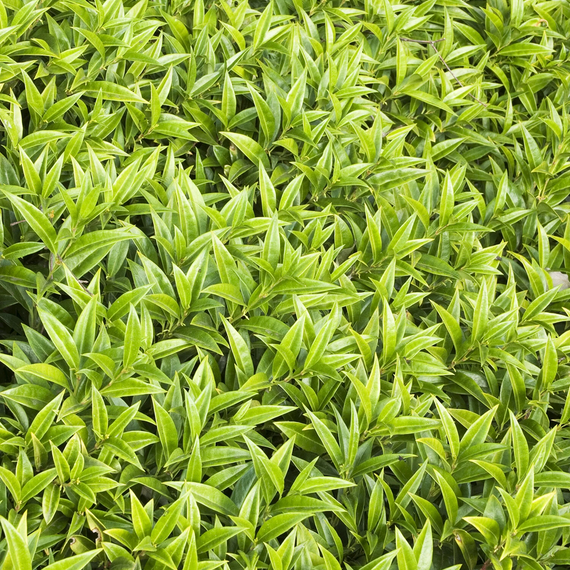
- Exceptionally low-growing, ground-hugging evergreen that slowly spreads by stolons to form a dense, polished carpet of lustrous dark green foliage year-round
- Thrives in part shade to full shade including dry shade beneath trees, and is notably tolerant of urban conditions, deer, and heavy competition from tree roots
- Virtually pest- and disease-free with minimal maintenance needs, making it one of the most reliable and carefree shade shrubs available
Sarcococca hookeriana var. humilis, commonly known as Himalayan Sweet Box, is a slow-growing, broadleaf evergreen groundcover shrub that brings rare and irresistible winter fragrance to shaded corners of the landscape. Native to the forested foothills of the western Himalayas and western China, this dwarf variety stays a tidy 18 to 24 inches tall while gradually spreading by underground stolons to form a neat, weed-suppressing mat of slender, lustrous dark green foliage up to 3 feet wide or more over time. In the depths of winter, tiny clusters of apetalous white flowers emerge tucked among the leaves, releasing a powerfully sweet, vanilla-honeyed fragrance that carries beautifully on cool air — a sensory highlight that makes it an ideal choice planted near entryways, patios, pathways, and windows. Female flowers give way to small, glossy blue-black drupes that persist into late spring, adding ornamental interest long after the blooms have faded. The leathery, lanceolate leaves maintain their rich, polished appearance throughout the year, providing clean structure and evergreen beauty in shade gardens, woodland borders, and foundation plantings where many other shrubs struggle. Hardy to USDA Zone 5, tolerant of dry shade once established, and essentially unbothered by pests, diseases, or deer, Himalayan Sweet Box is an effortlessly elegant and practical choice for Pacific Northwest and Northern California gardeners seeking year-round character in challenging low-light situations.
Plant Description
Himalayan Sweet Box (Sarcococca hookeriana var. humilis) is a dwarf, broadleaf evergreen shrub in the Buxaceae (boxwood) family. It produces slender, arching stems densely clothed in simple, alternate, lanceolate leaves that measure approximately 2 to 3.5 inches long and up to 3/4 inch wide. The leaf surfaces are lustrous and leathery, maintaining a deep, polished dark green color through all four seasons. In winter, tiny tubular flowers lacking petals emerge in the leaf axils along the stems. Though only about 1/2 inch long, the white blossoms with their pale pink anthers on the male flowers emit an extraordinarily rich, sweet fragrance reminiscent of vanilla and jasmine that carries well on cold air. Female flowers develop into small, round, shiny blue-black drupes roughly 1/4 to 1/3 inch in diameter that ripen and persist through late spring. The genus name Sarcococca derives from the Greek words sarkos (flesh) and kokkos (berry), referencing these fleshy fruits. The variety name humilis means "low-growing" in Latin, perfectly describing this compact, ground-hugging selection. It is sometimes listed under the synonym Sarcococca humilis.
Mature Size
| Characteristic | Measurement |
|---|---|
| Mature Height | 18 to 24 inches (45 to 60 cm) |
| Mature Spread | 2 to 3+ feet, spreading slowly by stolons over time |
| Growth Rate | Slow |
| Growth Habit | Dense, mounding, stoloniferous groundcover |
| Plant Type | Broadleaf evergreen shrub / groundcover |
This is notably more compact than the straight species Sarcococca hookeriana, which can reach 4 to 5 feet tall. The humilis variety's low, ground-hugging habit makes it an excellent choice for spaces beneath tree canopies, along the front of shaded borders, and in areas where a tidy, weed-suppressing carpet of evergreen is desired. Its slow, controlled spread means it stays manageable without aggressive maintenance.
Hardiness Zones and Climate
Himalayan Sweet Box is hardy to USDA Zones 5 through 8, tolerating minimum winter temperatures down to approximately -10 to -20 degrees F. This makes the humilis variety one of the hardier selections within the Sarcococca genus. It is well-suited to the mild, cool winters and moist conditions typical of Southern Oregon and Northern California landscapes. While it appreciates shelter from drying winter winds, it handles hard frost reliably when grown in an appropriate shaded, sheltered site. In hotter inland areas of Zones 7 and 8, afternoon shade and consistent moisture are especially important to maintain foliage quality and vigor. It is not suited to hot, arid climates or locations with intense reflected heat.
Sunlight Requirements
Himalayan Sweet Box performs best in part shade to full shade and is one of the most reliably shade-tolerant evergreen shrubs available. It naturally grows beneath forest canopies and excels in conditions that challenge most other ornamental shrubs, including deep shade with heavy tree root competition. Ideally, plants receive no more than 2 to 4 hours of dappled or indirect light per day. Morning sun with afternoon shade is generally acceptable. Avoid placing plants in locations with direct afternoon sun or intense reflected heat, as this can cause the glossy leaves to lose their luster, become yellowish, and may lead to leaf scorch. Even in very heavy shade with minimal direct light, plants will bloom and maintain attractive foliage.
Soil and pH Preferences
- Preferred soil type: Organically rich, moist, well-drained soil that mimics the humus-rich woodland floor of its native Himalayan habitat
- Soil pH: Performs best in slightly acidic to neutral soil (pH 5.5 to 7.0); tolerates mildly alkaline conditions
- Soil texture: Adaptable to loam, clay amended with organic matter, chalk, and sandy soils improved with compost
- Drainage: Good drainage is essential — standing water and consistently waterlogged soil can lead to root rot
- Organic matter: Incorporate compost, aged bark, or leaf mold into planting holes in native soils low in organic content
- Dry shade tolerance: Once established, plants are impressively tolerant of dry conditions beneath trees where root competition is heavy — a distinguishing feature of this variety
Watering Guide
At planting and during establishment (first 1 to 2 seasons): Water deeply and consistently after planting to encourage a strong root system. Keep the soil evenly moist but not soggy throughout the first growing season. During dry spells in spring and summer, check moisture levels beneath any mulch and water deeply every 7 to 10 days as needed.
Established plants: Once the root system is well developed, Himalayan Sweet Box shows good drought tolerance, particularly in shaded locations. Supplemental watering during prolonged dry summers is still beneficial for maintaining foliage quality and flower production. Aim for deep, infrequent watering rather than frequent shallow irrigation. Plants in containers require more frequent attention as pots dry out faster than in-ground plantings and should be checked regularly, especially during warm weather.
Mulching for moisture retention: Applying a 2 to 3 inch layer of organic mulch (shredded bark, aged wood chips, or leaf mold) around the root zone — kept a few inches away from the stems — significantly reduces watering needs, moderates soil temperature, and improves soil structure over time.
Fertilizing
Himalayan Sweet Box is a light feeder and does not require heavy fertilizing. In rich, organically amended soil it often thrives with no supplemental feeding beyond an annual top-dressing of compost. A simple, effective fertilizing approach:
- Spring compost top-dressing: Apply a 1 to 2 inch layer of well-rotted compost or leaf mold around the plant each spring as new growth begins. This slowly releases nutrients, improves soil structure, and mimics the natural leaf litter of a woodland floor
- Balanced granular fertilizer: If growth appears weak or foliage is pale, apply a slow-release, balanced granular fertilizer (such as a 10-10-10 or similar formulation) in early spring, following label directions
- Acid-loving plant food: In soils trending alkaline, a fertilizer formulated for acid-loving plants can help maintain leaf color and overall vigor
- Avoid over-fertilizing: Excess nitrogen promotes soft, lush growth at the expense of flowering and can make plants more susceptible to pests; less is more with this shrub
- Container plants: Fertilize container-grown plants with a diluted liquid fertilizer in spring and again in midsummer, as nutrients leach out of containers more quickly
Pruning and Maintenance
One of the great virtues of Himalayan Sweet Box is its minimal maintenance requirement. Its naturally neat, compact habit means it rarely needs significant pruning. General guidance:
- Routine pruning: Not required for healthy plants in appropriate spaces. The natural form is tidy and uniform without intervention
- Light shaping: If desired, prune lightly in spring after flowering is complete to maintain a specific shape or height. Pruning before flowering risks removing that season's scented blooms
- Deadwood removal: In early spring, remove any winter-damaged or dead stems at their base to keep plants looking clean and to encourage fresh growth
- Stolon management: If the spreading, colony-forming growth extends beyond its intended area, simply sever and remove the unwanted suckers at soil level in early spring. Divisions can be potted up or transplanted elsewhere
- No hard pruning needed: Unlike many shrubs, sweet box does not benefit from heavy renewal pruning and recovers slowly from severe cutting back
- Cleanup: Remove accumulated leaf litter from inside the clump periodically to maintain airflow and a tidy appearance
Planting Instructions
- Choose the right site: Select a part shade to full shade location with protection from drying winds and direct afternoon sun. Under deciduous or evergreen trees, along north or east-facing foundations, and in woodland garden areas are all excellent candidates
- Timing: Plant in spring or fall for best establishment results. Spring planting allows roots to establish before summer heat; fall planting allows roots to develop through mild winter months
- Prepare the soil: Dig a hole as deep as the root ball and 2 to 3 times as wide. Amend native soil generously with compost or aged bark to improve both moisture retention and drainage
- Planting depth: Set the plant so the top of the root ball sits level with or very slightly above the surrounding soil grade. Planting too deep can cause crown rot
- Backfill and firm: Backfill with the amended soil mixture, gently firming around the roots to eliminate air pockets. Do not compact the soil heavily
- Water thoroughly: Water deeply immediately after planting to settle the soil and hydrate the root zone
- Mulch: Apply a 2 to 3 inch layer of organic mulch over the root zone, keeping mulch a few inches away from the stems to prevent rot
- Spacing: For groundcover use, space plants approximately 24 to 36 inches apart. For massed plantings intending quicker coverage, 18 to 24 inch spacing can be used
Seasonal Interest
| Season | What to Expect |
|---|---|
| Winter (January - March) | Peak season: tiny white flowers with pink anthers emerge along stems, releasing an intensely sweet vanilla-honeyed fragrance; one of the most powerfully scented winter-blooming shrubs |
| Spring (March - May) | Fragrant blooms give way to small, globose, shiny blue-black berries that persist and add ornamental interest; fresh new foliage growth emerges |
| Summer (June - August) | Lush, deep green evergreen foliage provides dense, cooling groundcover; berries may persist into early summer |
| Fall (September - November) | Evergreen foliage remains attractive and holds its rich color; structural presence in the landscape while deciduous plants lose their leaves |
The winter bloom period is truly the star of the show. Planting near walkways, front doors, patios, or windows allows the remarkable fragrance to be enjoyed whenever you pass — a sensory experience that surprises and delights visitors who may not expect such a powerful, pleasant scent from such an unassuming plant in the coldest months of the year.
Landscape Uses
- Shade groundcover: Among the finest evergreen groundcovers for shaded areas, particularly beneath tree canopies where competition and dry conditions defeat most other plants
- Winter fragrance planting: Plant near entryways, front doors, mailboxes, pathways, patios, and low windows to maximize the impact of winter blooms
- Foundation planting: Exceptional at north and east-facing foundations where year-round evergreen structure is needed without aggressive growth
- Woodland garden: Blends naturally with other shade-loving plants in informal woodland settings or alongside naturalized areas
- Low hedge or edging: The dense, uniform habit and slow growth make it suitable for informal low hedges or border edging in shaded settings
- Mass planting: Dramatic when planted en masse beneath trees or large shrubs, creating a cohesive, weed-suppressing carpet of glossy evergreen foliage
- Slope stabilization: Spreading stolons help anchor and stabilize shaded slopes and banks over time
- Container planting: Effective in large containers for shaded patios, courtyards, and entryways; cut flowering stems brought indoors will fragrance a room beautifully
Companion Plants
Himalayan Sweet Box pairs beautifully with other shade-tolerant and woodland plants that share its preference for moist, organically rich, part to full shade conditions. Consider these companions for cohesive, season-spanning combinations:
- Hellebores (Helleborus spp.): Overlapping bloom seasons in late winter/early spring create a stunning combination of fragrance and color in shade beds
- Ferns (Dryopteris, Polystichum, Athyrium spp.): Contrasting textures — the bold fronds of ferns against sweet box's fine, glossy leaves — are a classic woodland pairing
- Epimedium spp.: Equally tough and drought-tolerant under trees; heart-shaped foliage and delicate spring flowers complement sweet box beautifully
- Japanese Forest Grass (Hakonechloa macra): Arching golden or green foliage provides a soft contrast to the structured dark evergreen of sweet box
- Hostas: Bold, textured hosta leaves play off sweet box's fine-textured foliage; both share a love of shade and moisture
- Camellias: Large winter or spring-blooming camellias create a layered backdrop above the low-growing sweet box, with both offering exceptional winter interest
- Pieris japonica: A fellow shade-tolerant broadleaf evergreen with spring flower interest; the two complement each other in woodland foundation beds
- Trillium and native woodland wildflowers: For a naturalistic Pacific Northwest woodland garden, pair with native trilliums, bleeding hearts, and woodland violets
Pests and Diseases
Himalayan Sweet Box is remarkably resistant to pests and diseases and is generally considered one of the most trouble-free evergreen shrubs available. No serious insect or disease problems are commonly associated with this plant. In rare cases, the following minor issues may appear, typically related to environmental stress rather than endemic susceptibility:
- Scale insects: Occasionally appear on stems of stressed or overcrowded plants; treat with horticultural oil in late winter or early spring before new growth begins
- Aphids: Rarely problematic; a strong stream of water or insecticidal soap application resolves minor infestations quickly
- Root rot (Phytophthora): The most common cause of plant decline; always results from excessively wet, poorly drained soil. Ensure good drainage at planting time and avoid overwatering
- Leaf spot: Minor fungal leaf spotting can occur in humid, poorly ventilated conditions; typically cosmetic. Remove affected foliage and improve air circulation by thinning overcrowded plantings
- Leaf scorch: Not a pest or disease but a cultural issue caused by exposure to direct afternoon sun, hot reflected heat, or desiccating winds. Relocate to a more sheltered, shadier position
- Yellowing foliage: Usually indicates too much sun, nutrient-poor soil, or excessively alkaline conditions; amend soil and evaluate site suitability
Wildlife Value
While Himalayan Sweet Box is primarily valued as an ornamental and functional landscape plant, it does offer meaningful benefits to local wildlife, particularly during the lean winter months when natural food sources are scarce:
- Pollinators: The winter-blooming flowers are a rare and valuable early nectar and pollen source for overwintering bees, honeybees on warm winter days, and other early-emerging beneficial insects when few other plants are in bloom
- Birds: The small, shiny blue-black drupes that persist from spring into early summer may attract fruit-eating songbirds such as thrushes and robins seeking food in the shade garden
- Shelter: The dense, low evergreen mounding habit provides year-round ground-level cover and shelter for small birds, beneficial insects, and other garden wildlife
- Deer resistance: Tough, leathery foliage is not preferred by deer or rabbits, making sweet box a reliable choice in landscapes with significant browsing pressure — a practical benefit for gardens throughout Southern Oregon and Northern California where deer pressure is common
Container Growing
Himalayan Sweet Box adapts well to container cultivation and makes an elegant, low-maintenance addition to shaded patios, entryways, and courtyards. Key tips for successful container growing:
- Container size: Choose a pot at least 12 to 16 inches in diameter with ample depth to accommodate the root system and allow for some growth. Larger containers retain moisture better and require less frequent watering
- Potting mix: Use a high-quality, well-draining potting mix with added perlite or bark for drainage. Incorporate slow-release fertilizer at planting time
- Placement: Site containers in part shade to full shade, out of direct afternoon sun and drying winds; a sheltered north- or east-facing porch or under a covered patio is ideal
- Watering: Containers dry out more quickly than in-ground plantings. Check moisture regularly and water when the top inch of soil feels dry; ensure containers have drainage holes to prevent waterlogging
- Fertilizing: Feed container plants with a diluted balanced liquid fertilizer in spring and midsummer to replenish nutrients that leach out with irrigation
- Winter fragrance: Position containers near doors, seating areas, or windows in winter to fully enjoy the intensely scented blooms; cut stems brought indoors will also fragrance a room beautifully
- Repotting: Repot every 2 to 3 years in spring as needed, stepping up one container size, or refresh the top few inches of potting mix annually
- Intensely fragrant white flowers perfume the winter garden from January through March, delivering sweet, honey-like scent when little else is in bloom
- Exceptionally low-growing, ground-hugging evergreen that slowly spreads by stolons to form a dense, polished carpet of lustrous dark green foliage year-round
- Thrives in part shade to full shade including dry shade beneath trees, and is notably tolerant of urban conditions, deer, and heavy competition from tree roots
- Virtually pest- and disease-free with minimal maintenance needs, making it one of the most reliable and carefree shade shrubs available
Sarcococca hookeriana var. humilis, commonly known as Himalayan Sweet Box, is a slow-growing, broadleaf evergreen groundcover shrub that brings rare and irresistible winter fragrance to shaded corners of the landscape. Native to the forested foothills of the western Himalayas and western China, this dwarf variety stays a tidy 18 to 24 inches tall while gradually spreading by underground stolons to form a neat, weed-suppressing mat of slender, lustrous dark green foliage up to 3 feet wide or more over time. In the depths of winter, tiny clusters of apetalous white flowers emerge tucked among the leaves, releasing a powerfully sweet, vanilla-honeyed fragrance that carries beautifully on cool air — a sensory highlight that makes it an ideal choice planted near entryways, patios, pathways, and windows. Female flowers give way to small, glossy blue-black drupes that persist into late spring, adding ornamental interest long after the blooms have faded. The leathery, lanceolate leaves maintain their rich, polished appearance throughout the year, providing clean structure and evergreen beauty in shade gardens, woodland borders, and foundation plantings where many other shrubs struggle. Hardy to USDA Zone 5, tolerant of dry shade once established, and essentially unbothered by pests, diseases, or deer, Himalayan Sweet Box is an effortlessly elegant and practical choice for Pacific Northwest and Northern California gardeners seeking year-round character in challenging low-light situations.
Plant Description
Himalayan Sweet Box (Sarcococca hookeriana var. humilis) is a dwarf, broadleaf evergreen shrub in the Buxaceae (boxwood) family. It produces slender, arching stems densely clothed in simple, alternate, lanceolate leaves that measure approximately 2 to 3.5 inches long and up to 3/4 inch wide. The leaf surfaces are lustrous and leathery, maintaining a deep, polished dark green color through all four seasons. In winter, tiny tubular flowers lacking petals emerge in the leaf axils along the stems. Though only about 1/2 inch long, the white blossoms with their pale pink anthers on the male flowers emit an extraordinarily rich, sweet fragrance reminiscent of vanilla and jasmine that carries well on cold air. Female flowers develop into small, round, shiny blue-black drupes roughly 1/4 to 1/3 inch in diameter that ripen and persist through late spring. The genus name Sarcococca derives from the Greek words sarkos (flesh) and kokkos (berry), referencing these fleshy fruits. The variety name humilis means "low-growing" in Latin, perfectly describing this compact, ground-hugging selection. It is sometimes listed under the synonym Sarcococca humilis.
Mature Size
| Characteristic | Measurement |
|---|---|
| Mature Height | 18 to 24 inches (45 to 60 cm) |
| Mature Spread | 2 to 3+ feet, spreading slowly by stolons over time |
| Growth Rate | Slow |
| Growth Habit | Dense, mounding, stoloniferous groundcover |
| Plant Type | Broadleaf evergreen shrub / groundcover |
This is notably more compact than the straight species Sarcococca hookeriana, which can reach 4 to 5 feet tall. The humilis variety's low, ground-hugging habit makes it an excellent choice for spaces beneath tree canopies, along the front of shaded borders, and in areas where a tidy, weed-suppressing carpet of evergreen is desired. Its slow, controlled spread means it stays manageable without aggressive maintenance.
Hardiness Zones and Climate
Himalayan Sweet Box is hardy to USDA Zones 5 through 8, tolerating minimum winter temperatures down to approximately -10 to -20 degrees F. This makes the humilis variety one of the hardier selections within the Sarcococca genus. It is well-suited to the mild, cool winters and moist conditions typical of Southern Oregon and Northern California landscapes. While it appreciates shelter from drying winter winds, it handles hard frost reliably when grown in an appropriate shaded, sheltered site. In hotter inland areas of Zones 7 and 8, afternoon shade and consistent moisture are especially important to maintain foliage quality and vigor. It is not suited to hot, arid climates or locations with intense reflected heat.
Sunlight Requirements
Himalayan Sweet Box performs best in part shade to full shade and is one of the most reliably shade-tolerant evergreen shrubs available. It naturally grows beneath forest canopies and excels in conditions that challenge most other ornamental shrubs, including deep shade with heavy tree root competition. Ideally, plants receive no more than 2 to 4 hours of dappled or indirect light per day. Morning sun with afternoon shade is generally acceptable. Avoid placing plants in locations with direct afternoon sun or intense reflected heat, as this can cause the glossy leaves to lose their luster, become yellowish, and may lead to leaf scorch. Even in very heavy shade with minimal direct light, plants will bloom and maintain attractive foliage.
Soil and pH Preferences
- Preferred soil type: Organically rich, moist, well-drained soil that mimics the humus-rich woodland floor of its native Himalayan habitat
- Soil pH: Performs best in slightly acidic to neutral soil (pH 5.5 to 7.0); tolerates mildly alkaline conditions
- Soil texture: Adaptable to loam, clay amended with organic matter, chalk, and sandy soils improved with compost
- Drainage: Good drainage is essential — standing water and consistently waterlogged soil can lead to root rot
- Organic matter: Incorporate compost, aged bark, or leaf mold into planting holes in native soils low in organic content
- Dry shade tolerance: Once established, plants are impressively tolerant of dry conditions beneath trees where root competition is heavy — a distinguishing feature of this variety
Watering Guide
At planting and during establishment (first 1 to 2 seasons): Water deeply and consistently after planting to encourage a strong root system. Keep the soil evenly moist but not soggy throughout the first growing season. During dry spells in spring and summer, check moisture levels beneath any mulch and water deeply every 7 to 10 days as needed.
Established plants: Once the root system is well developed, Himalayan Sweet Box shows good drought tolerance, particularly in shaded locations. Supplemental watering during prolonged dry summers is still beneficial for maintaining foliage quality and flower production. Aim for deep, infrequent watering rather than frequent shallow irrigation. Plants in containers require more frequent attention as pots dry out faster than in-ground plantings and should be checked regularly, especially during warm weather.
Mulching for moisture retention: Applying a 2 to 3 inch layer of organic mulch (shredded bark, aged wood chips, or leaf mold) around the root zone — kept a few inches away from the stems — significantly reduces watering needs, moderates soil temperature, and improves soil structure over time.
Fertilizing
Himalayan Sweet Box is a light feeder and does not require heavy fertilizing. In rich, organically amended soil it often thrives with no supplemental feeding beyond an annual top-dressing of compost. A simple, effective fertilizing approach:
- Spring compost top-dressing: Apply a 1 to 2 inch layer of well-rotted compost or leaf mold around the plant each spring as new growth begins. This slowly releases nutrients, improves soil structure, and mimics the natural leaf litter of a woodland floor
- Balanced granular fertilizer: If growth appears weak or foliage is pale, apply a slow-release, balanced granular fertilizer (such as a 10-10-10 or similar formulation) in early spring, following label directions
- Acid-loving plant food: In soils trending alkaline, a fertilizer formulated for acid-loving plants can help maintain leaf color and overall vigor
- Avoid over-fertilizing: Excess nitrogen promotes soft, lush growth at the expense of flowering and can make plants more susceptible to pests; less is more with this shrub
- Container plants: Fertilize container-grown plants with a diluted liquid fertilizer in spring and again in midsummer, as nutrients leach out of containers more quickly
Pruning and Maintenance
One of the great virtues of Himalayan Sweet Box is its minimal maintenance requirement. Its naturally neat, compact habit means it rarely needs significant pruning. General guidance:
- Routine pruning: Not required for healthy plants in appropriate spaces. The natural form is tidy and uniform without intervention
- Light shaping: If desired, prune lightly in spring after flowering is complete to maintain a specific shape or height. Pruning before flowering risks removing that season's scented blooms
- Deadwood removal: In early spring, remove any winter-damaged or dead stems at their base to keep plants looking clean and to encourage fresh growth
- Stolon management: If the spreading, colony-forming growth extends beyond its intended area, simply sever and remove the unwanted suckers at soil level in early spring. Divisions can be potted up or transplanted elsewhere
- No hard pruning needed: Unlike many shrubs, sweet box does not benefit from heavy renewal pruning and recovers slowly from severe cutting back
- Cleanup: Remove accumulated leaf litter from inside the clump periodically to maintain airflow and a tidy appearance
Planting Instructions
- Choose the right site: Select a part shade to full shade location with protection from drying winds and direct afternoon sun. Under deciduous or evergreen trees, along north or east-facing foundations, and in woodland garden areas are all excellent candidates
- Timing: Plant in spring or fall for best establishment results. Spring planting allows roots to establish before summer heat; fall planting allows roots to develop through mild winter months
- Prepare the soil: Dig a hole as deep as the root ball and 2 to 3 times as wide. Amend native soil generously with compost or aged bark to improve both moisture retention and drainage
- Planting depth: Set the plant so the top of the root ball sits level with or very slightly above the surrounding soil grade. Planting too deep can cause crown rot
- Backfill and firm: Backfill with the amended soil mixture, gently firming around the roots to eliminate air pockets. Do not compact the soil heavily
- Water thoroughly: Water deeply immediately after planting to settle the soil and hydrate the root zone
- Mulch: Apply a 2 to 3 inch layer of organic mulch over the root zone, keeping mulch a few inches away from the stems to prevent rot
- Spacing: For groundcover use, space plants approximately 24 to 36 inches apart. For massed plantings intending quicker coverage, 18 to 24 inch spacing can be used
Seasonal Interest
| Season | What to Expect |
|---|---|
| Winter (January - March) | Peak season: tiny white flowers with pink anthers emerge along stems, releasing an intensely sweet vanilla-honeyed fragrance; one of the most powerfully scented winter-blooming shrubs |
| Spring (March - May) | Fragrant blooms give way to small, globose, shiny blue-black berries that persist and add ornamental interest; fresh new foliage growth emerges |
| Summer (June - August) | Lush, deep green evergreen foliage provides dense, cooling groundcover; berries may persist into early summer |
| Fall (September - November) | Evergreen foliage remains attractive and holds its rich color; structural presence in the landscape while deciduous plants lose their leaves |
The winter bloom period is truly the star of the show. Planting near walkways, front doors, patios, or windows allows the remarkable fragrance to be enjoyed whenever you pass — a sensory experience that surprises and delights visitors who may not expect such a powerful, pleasant scent from such an unassuming plant in the coldest months of the year.
Landscape Uses
- Shade groundcover: Among the finest evergreen groundcovers for shaded areas, particularly beneath tree canopies where competition and dry conditions defeat most other plants
- Winter fragrance planting: Plant near entryways, front doors, mailboxes, pathways, patios, and low windows to maximize the impact of winter blooms
- Foundation planting: Exceptional at north and east-facing foundations where year-round evergreen structure is needed without aggressive growth
- Woodland garden: Blends naturally with other shade-loving plants in informal woodland settings or alongside naturalized areas
- Low hedge or edging: The dense, uniform habit and slow growth make it suitable for informal low hedges or border edging in shaded settings
- Mass planting: Dramatic when planted en masse beneath trees or large shrubs, creating a cohesive, weed-suppressing carpet of glossy evergreen foliage
- Slope stabilization: Spreading stolons help anchor and stabilize shaded slopes and banks over time
- Container planting: Effective in large containers for shaded patios, courtyards, and entryways; cut flowering stems brought indoors will fragrance a room beautifully
Companion Plants
Himalayan Sweet Box pairs beautifully with other shade-tolerant and woodland plants that share its preference for moist, organically rich, part to full shade conditions. Consider these companions for cohesive, season-spanning combinations:
- Hellebores (Helleborus spp.): Overlapping bloom seasons in late winter/early spring create a stunning combination of fragrance and color in shade beds
- Ferns (Dryopteris, Polystichum, Athyrium spp.): Contrasting textures — the bold fronds of ferns against sweet box's fine, glossy leaves — are a classic woodland pairing
- Epimedium spp.: Equally tough and drought-tolerant under trees; heart-shaped foliage and delicate spring flowers complement sweet box beautifully
- Japanese Forest Grass (Hakonechloa macra): Arching golden or green foliage provides a soft contrast to the structured dark evergreen of sweet box
- Hostas: Bold, textured hosta leaves play off sweet box's fine-textured foliage; both share a love of shade and moisture
- Camellias: Large winter or spring-blooming camellias create a layered backdrop above the low-growing sweet box, with both offering exceptional winter interest
- Pieris japonica: A fellow shade-tolerant broadleaf evergreen with spring flower interest; the two complement each other in woodland foundation beds
- Trillium and native woodland wildflowers: For a naturalistic Pacific Northwest woodland garden, pair with native trilliums, bleeding hearts, and woodland violets
Pests and Diseases
Himalayan Sweet Box is remarkably resistant to pests and diseases and is generally considered one of the most trouble-free evergreen shrubs available. No serious insect or disease problems are commonly associated with this plant. In rare cases, the following minor issues may appear, typically related to environmental stress rather than endemic susceptibility:
- Scale insects: Occasionally appear on stems of stressed or overcrowded plants; treat with horticultural oil in late winter or early spring before new growth begins
- Aphids: Rarely problematic; a strong stream of water or insecticidal soap application resolves minor infestations quickly
- Root rot (Phytophthora): The most common cause of plant decline; always results from excessively wet, poorly drained soil. Ensure good drainage at planting time and avoid overwatering
- Leaf spot: Minor fungal leaf spotting can occur in humid, poorly ventilated conditions; typically cosmetic. Remove affected foliage and improve air circulation by thinning overcrowded plantings
- Leaf scorch: Not a pest or disease but a cultural issue caused by exposure to direct afternoon sun, hot reflected heat, or desiccating winds. Relocate to a more sheltered, shadier position
- Yellowing foliage: Usually indicates too much sun, nutrient-poor soil, or excessively alkaline conditions; amend soil and evaluate site suitability
Wildlife Value
While Himalayan Sweet Box is primarily valued as an ornamental and functional landscape plant, it does offer meaningful benefits to local wildlife, particularly during the lean winter months when natural food sources are scarce:
- Pollinators: The winter-blooming flowers are a rare and valuable early nectar and pollen source for overwintering bees, honeybees on warm winter days, and other early-emerging beneficial insects when few other plants are in bloom
- Birds: The small, shiny blue-black drupes that persist from spring into early summer may attract fruit-eating songbirds such as thrushes and robins seeking food in the shade garden
- Shelter: The dense, low evergreen mounding habit provides year-round ground-level cover and shelter for small birds, beneficial insects, and other garden wildlife
- Deer resistance: Tough, leathery foliage is not preferred by deer or rabbits, making sweet box a reliable choice in landscapes with significant browsing pressure — a practical benefit for gardens throughout Southern Oregon and Northern California where deer pressure is common
Container Growing
Himalayan Sweet Box adapts well to container cultivation and makes an elegant, low-maintenance addition to shaded patios, entryways, and courtyards. Key tips for successful container growing:
- Container size: Choose a pot at least 12 to 16 inches in diameter with ample depth to accommodate the root system and allow for some growth. Larger containers retain moisture better and require less frequent watering
- Potting mix: Use a high-quality, well-draining potting mix with added perlite or bark for drainage. Incorporate slow-release fertilizer at planting time
- Placement: Site containers in part shade to full shade, out of direct afternoon sun and drying winds; a sheltered north- or east-facing porch or under a covered patio is ideal
- Watering: Containers dry out more quickly than in-ground plantings. Check moisture regularly and water when the top inch of soil feels dry; ensure containers have drainage holes to prevent waterlogging
- Fertilizing: Feed container plants with a diluted balanced liquid fertilizer in spring and midsummer to replenish nutrients that leach out with irrigation
- Winter fragrance: Position containers near doors, seating areas, or windows in winter to fully enjoy the intensely scented blooms; cut stems brought indoors will also fragrance a room beautifully
- Repotting: Repot every 2 to 3 years in spring as needed, stepping up one container size, or refresh the top few inches of potting mix annually