

Zoom the image with the mouse
Giant Bird of Paradise - 1 Gallon
SKU:
2012825
UPC:
014949717011
$19.99
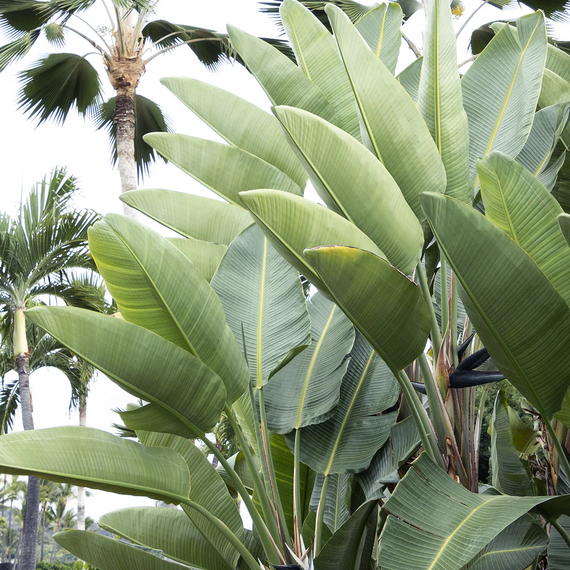
- Dramatic, banana-like leaves spanning up to 3 feet wide deliver bold tropical architecture to landscapes, patios, and large indoor spaces alike.
- Produces stunning white and deep blue bird-shaped flowers on tall stalks, blooming most reliably in late winter through spring in warm climates.
- A fast-growing evergreen that can reach an impressive 20-30 feet tall outdoors, creating a lush, show-stopping focal point or natural privacy screen.
- Exceptionally versatile — thrives in the ground in frost-free landscapes or in containers that can be moved to protected locations during cold spells.
Strelitzia nicolai, the Giant Bird of Paradise, is one of the most magnificent tropical plants available for warm-climate gardens and dramatic interior spaces. Native to the coastal forests of South Africa, this bold evergreen perennial forms a multi-stemmed clump of enormous, glossy, paddle-shaped leaves that closely resemble those of a banana plant, each reaching up to 3 feet wide and carried atop tall, arching gray-green trunks that can tower to 20-30 feet in the ground outdoors or a manageable 6-10 feet when grown indoors. The spectacular flowers — large, crane-like blooms composed of brilliant white petals framing a rich dark blue tongue — emerge from deep purple boat-shaped spathes on upright stalks, providing striking seasonal color most often in late winter and spring. Hardy in USDA Zones 9-11, Strelitzia nicolai thrives in the mild climates of Southern Oregon and Northern California, performing beautifully as a bold specimen, dense screen, or dramatic accent beside pools, entries, and tropical-themed garden beds. It adapts well to containers for use on patios or as an oversized interior statement plant, tolerates coastal conditions and brief periods of drought once established, and rewards attentive care with vigorous, long-lasting growth that makes it one of the most sought-after architectural plants in modern horticulture.
Plant Description
Strelitzia nicolai is a large, clumping, evergreen perennial in the family Strelitziaceae — closely related to the more commonly seen orange Bird of Paradise but on an entirely grander scale. Its enormous, leathery leaves are held on long, stiff petioles and arranged in a fan-like pattern from multiple woody, palm-like trunks that develop as the plant matures. The leaf blades are bright to deep green on top with a silvery-gray underside, and their sheer size and texture give the plant an unmistakably tropical and architectural character. Over time, the lower portions of the trunks shed older leaves, leaving behind distinctive ring-like scars that further add to the plant's ornamental appeal. The flowers are true showstoppers: large bird-like blooms with white outer petals and a brilliant dark blue arrow-shaped tongue emerge from dark purple boat-shaped spathes (bracts) mounted on sturdy, upright stalks. Multiple blooms open in succession from a single spathe, extending the flowering display. The plant is commonly called the Giant White Bird of Paradise or Wild Banana, and its overall presence is that of a living sculpture — bold, tropical, and unmistakable.
Mature Size
| Growing Condition | Expected Height | Expected Spread |
|---|---|---|
| Outdoor / In-Ground (warm climate) | 20-30 feet | 10-20 feet (as a clump) |
| Indoor / Container | 6-10 feet | 4-8 feet |
Growth rate is vigorous in warm, frost-free climates with adequate water and nutrition. In cooler climates or when container-grown, growth slows considerably and the plant remains much more compact. Individual leaf blades can measure 2-3 feet wide and 3-5 feet long on mature outdoor specimens. Spacing plants 10-15 feet apart in the landscape allows each clump room to develop without crowding.
Hardiness Zones and Climate
Strelitzia nicolai is rated for USDA Hardiness Zones 9-11. It performs best in frost-free or nearly frost-free climates. In Zone 9 — which includes much of Northern California's warmer valleys and Southern Oregon's most protected microclimates — established plants can typically recover from brief exposure to light frost, but prolonged temperatures below 28-30°F will cause significant leaf damage and potential dieback of stems. Young plants and newly transplanted specimens are more cold-sensitive than established ones. In borderline areas, planting in a warm, south-facing, wind-protected location against a wall or structure can provide the extra thermal buffer needed to prevent frost damage. Where winter temperatures regularly dip below Zone 9 thresholds, growing in containers that can be moved indoors or to a sheltered garage is the most reliable strategy. This plant is an excellent performer in coastal climates, tolerating salt air and moderate wind better than many tropical species.
Sunlight Requirements
Giant Bird of Paradise grows best in full sun to partial shade, ideally receiving 6-8 hours of direct sunlight per day. Outdoors, a site with full morning sun and some relief from the hottest afternoon rays is ideal, particularly in hot inland valleys where intense summer heat can scorch the large leaf blades. In coastal climates with mild, filtered light, full sun exposure all day is well tolerated. When grown indoors, place the plant near the largest, brightest window available — a south- or west-facing exposure is preferred. Indoor plants that do not receive adequate light will produce fewer leaves, grow more slowly, and are unlikely to flower. Rotating the plant a quarter turn every few weeks ensures even foliage development on all sides. Avoid abrupt transitions from low light to full sun, as this can cause temporary leaf yellowing or scorching; acclimate plants gradually when moving them from indoors to an outdoor position.
Soil and pH Preferences
- Soil type: Fertile, loamy, well-draining soil is ideal. Tolerates sandy and moderately clayey soils as long as drainage is adequate.
- Drainage: Good drainage is essential. Strelitzia nicolai will not tolerate waterlogged or consistently soggy soil, which leads to root rot.
- Soil pH: Prefers a slightly acidic to neutral pH in the range of 6.0-7.5.
- Amendments: Enrich native soil at planting time with compost or well-aged organic matter to improve both fertility and soil structure. For container planting, use a high-quality, well-draining potting mix amended with perlite (about 20-25% by volume) to enhance drainage and aeration.
- What to avoid: Avoid planting in low-lying areas that collect water, in compacted caliche soils without amendment, or in heavy clay without raised beds or significant amendment.
Watering Guide
Proper watering is one of the most important aspects of Giant Bird of Paradise care. During the active growing season (spring through summer), water deeply and thoroughly, then allow the top 1-2 inches of soil to dry out before watering again. A general guideline for established outdoor plants is a deep watering once or twice a week during warm weather, adjusting for rainfall and heat. Newly planted specimens need more frequent watering — every 2-3 days — until the root system is established, typically over the first growing season. In fall and winter, significantly reduce watering frequency as the plant enters a slower growth phase. Overwatering is the most common cause of problems with this plant; always ensure containers have adequate drainage holes and that the soil is never left saturated. When possible, use rainwater, filtered water, or water that has been allowed to sit overnight, as Strelitzia nicolai can be sensitive to the fluoride in municipal tap water, which sometimes causes brown leaf tip burn.
Fertilizing
Strelitzia nicolai is a heavy feeder that responds well to regular fertilization during its active growth period. Use a balanced, slow-release granular fertilizer (such as a 10-10-10 or 12-12-12 formula) in early spring at the beginning of the growing season, following package label directions. Supplement with a balanced liquid fertilizer every 2-4 weeks from spring through late summer to support the plant's vigorous growth and encourage flowering. In the fall and winter months, discontinue or greatly reduce fertilization as the plant's nutrient demands decrease significantly. Avoid over-fertilizing, which can cause salt accumulation in the soil, burning roots and producing brown leaf edges. Always water the plant thoroughly before and after applying fertilizer to help distribute nutrients evenly and prevent root burn. Container-grown plants will require more frequent fertilization than in-ground plants, as nutrients leach out more quickly with regular watering.
Pruning and Maintenance
Giant Bird of Paradise requires minimal pruning to maintain its natural form and health. Focus maintenance efforts on the following:
- Leaf removal: Remove dead, yellowed, frost-damaged, or severely torn leaves by cutting them cleanly at the base of the petiole, as close to the trunk as possible without damaging surrounding tissue. Use sharp, clean pruning shears or loppers for larger stems.
- Spent flower stalks: Cut away spent flower stalks at their base after blooms have faded to keep the plant tidy and redirect energy into foliage and new growth.
- Thinning: Over time, mature clumps produce many offsets (pups) around the base. Periodically removing outer offsets improves air circulation through the center of the clump and keeps the plant's size in check. Removed offsets can be potted up for propagation.
- Tool sanitation: Always sterilize pruning tools between cuts with rubbing alcohol or a diluted bleach solution to prevent spreading fungal diseases.
- Leaf splitting: The large leaves naturally split along the lateral veins in windy conditions — this is normal and does not harm the plant. Placing the plant in a location sheltered from strong wind minimizes this.
Planting Instructions
- Choose your site: Select a location with full sun to partial shade, good drainage, and enough space to accommodate the plant's eventual 10-20 foot spread at maturity. Allow at least 8-10 feet from structures and other large plants.
- Prepare the soil: Dig a planting hole 2-3 times as wide as the root ball and equal in depth. Mix generous amounts of compost or aged organic matter into the backfill soil to improve fertility and drainage.
- Position the plant: Remove the plant from its container and gently loosen any circling or compacted roots. Set the root ball in the hole so the top of the root ball sits at or very slightly above the surrounding soil grade to avoid crown rot.
- Backfill and firm: Fill in around the root ball with the amended soil, firming gently as you go to eliminate large air pockets. Do not bury the trunk or crown.
- Water in thoroughly: Water deeply immediately after planting to settle the soil and eliminate remaining air pockets around the roots.
- Mulch: Apply a 2-3 inch layer of organic mulch (such as wood chips or shredded bark) around the base of the plant, keeping mulch a few inches away from the trunk to prevent rot and pest harborage.
- Establish: Continue regular, deep watering every 2-3 days for the first 4-8 weeks, then taper to a standard schedule as the plant establishes.
Container Growing
Strelitzia nicolai is an excellent container plant, particularly for gardeners in marginal climates or those wanting a dramatic patio or indoor specimen. When grown in a pot, the plant's size is naturally constrained, typically reaching 6-10 feet tall, making it far more manageable than its in-ground counterpart. Choose a large, heavy container with multiple drainage holes — a 15- to 25-gallon pot is appropriate for younger specimens, with plans to step up to a larger vessel every 1-2 years as the plant grows. Use a rich, well-draining potting mix combined with 20-25% perlite to ensure excellent aeration and drainage. Note that a slightly pot-bound plant is actually more likely to produce flowers, so avoid repotting too frequently once the plant reaches a mature size you are happy with. Water container plants more frequently than in-ground plants, as containers dry out faster, and fertilize more regularly for the same reason. In Southern Oregon and areas of Northern California where winter temperatures drop below 28°F, container specimens should be moved to a sheltered, frost-free location — a covered patio, greenhouse, or indoors near a bright window — during the coldest months.
Flowering and Seasonal Interest
The flowers of Strelitzia nicolai are among the most dramatic in the plant kingdom. Each bloom features crisp white outer petals and a striking dark blue or violet arrow-shaped tongue (the modified stamen structure), all nestled within a deep purple, boat-like spathe (bract). Multiple individual flowers open in succession from a single spathe, extending the bloom period. In warm, frost-free climates, flowering is most reliable in late winter through spring, though established plants in ideal conditions may bloom intermittently throughout the year. Indoor plants and those growing in cooler climates often take several years to reach blooming maturity and may flower sporadically or not at all without adequate direct light. To encourage blooming: provide a minimum of 6 hours of direct sunlight per day, fertilize regularly during the growing season, allow the plant to become slightly root-bound, and avoid over-fertilizing with high-nitrogen products, which favor leafy growth over flower production. Beyond the flowers, the bold, paddle-shaped evergreen foliage delivers year-round visual interest in the landscape.
Landscape Uses
- Specimen or focal point: A single mature clump makes an unmistakable statement as a standalone specimen in a lawn, courtyard, or garden bed.
- Privacy screen or hedge: Dense clumps of tall stems and large leaves create an effective year-round visual screen or windbreak along property lines and fences.
- Poolside planting: The bold, tropical foliage creates a resort-like atmosphere around pools and water features; the plant tolerates reflected heat and some salt spray.
- Entryway accent: A pair flanking a gate, door, or driveway entry creates a dramatic tropical welcome.
- Tropical-themed garden beds: Pairs beautifully with other bold tropical and subtropical plants to create lush, layered plantings.
- Coastal landscapes: Tolerates salt air and moderate coastal winds, making it well-suited to seaside gardens from the California coast northward into Southern Oregon.
- Large patio container: An outstanding container specimen for outdoor living spaces, providing a focal point and tropical ambiance all season long.
- Indoor statement plant: One of the most dramatic large-scale houseplants available, filling atriums, living rooms, and commercial lobbies with tropical grandeur.
Companion Plants
Strelitzia nicolai pairs beautifully with other bold tropical and subtropical plants that share its preference for sun, warmth, and well-drained soil. Consider these companions for a cohesive, layered tropical planting:
- Areca Palm (Dypsis lutescens): Feathery, arching fronds provide a soft textural contrast to the bold, broad leaves of the Giant Bird of Paradise.
- Phormium (New Zealand Flax): Spiky, sword-like foliage in burgundy, bronze, or variegated forms creates striking textural and color contrast at a lower height.
- Agave species: Bold rosette forms and architectural structure echo the tropical drama of Strelitzia while providing drought tolerance in the understory.
- Canna Lily: Large, paddle-shaped leaves and vibrant tropical flowers complement the scale and color palette of the Giant Bird of Paradise beautifully.
- Asparagus Fern (Asparagus setaceus): Fine, airy texture provides a delicate contrast as a ground-layer companion.
- Yellow Elder (Tecoma stans): Bright yellow trumpet flowers pop dramatically against the dark green Strelitzia foliage in warm, sunny borders.
- Blue Chalk Sticks (Senecio mandraliscae): The cool, powdery blue-green tones of this low-growing succulent make an eye-catching contrast at ground level beneath the towering Strelitzia.
- Cordyline australis (Cabbage Tree): Architectural form and strappy foliage in a mid-height range bridge the scale between Strelitzia nicolai and lower plantings.
Pests and Diseases
Strelitzia nicolai is relatively pest- and disease-resistant, but there are a few issues to watch for, especially on indoor or container specimens:
- Spider Mites: Tiny pests that thrive in hot, dry conditions. Look for fine webbing and small yellow or bronze flecks on leaf surfaces. Treat with insecticidal soap or neem oil and increase humidity around the plant.
- Mealybugs: White, cottony clusters appear in leaf axils and along stems. Remove manually with a cotton swab dipped in rubbing alcohol, then follow up with neem oil spray.
- Scale Insects: Brown or tan shell-like bumps on stems and leaf undersides. Scrape off manually and treat with horticultural oil.
- Aphids: Soft-bodied insects that cluster on new growth. A strong jet of water will dislodge most colonies; neem oil or insecticidal soap controls persistent infestations.
- Whiteflies: Tiny white flying insects on the leaf undersides. Yellow sticky traps and neem oil applications are effective controls.
- Root Rot (Phytophthora / Pythium): The most serious disease problem, caused almost exclusively by overwatering or poor drainage. Yellowing leaves, wilting, and a foul odor at the root zone are warning signs. Remove affected roots, treat with a fungicide, and replant in fresh, well-draining mix.
- Leaf Spot Fungi: Occasional brown or black spots with yellow halos may appear in humid conditions with poor air circulation. Improve airflow, avoid wetting foliage, and remove affected leaves promptly.
Inspect plants regularly and address any issues early. Maintaining proper watering practices and good air circulation is the most effective prevention strategy for the majority of common problems.
Toxicity and Pet Safety
There is some conflicting information in horticultural references regarding the toxicity of Strelitzia nicolai. The ASPCA lists Strelitzia species as non-toxic to cats and dogs, while other sources report that ingestion of the seeds or flowers may cause mild gastrointestinal upset (nausea, vomiting, or diarrhea) in both humans and animals. The seeds contain toxic alkaloids and should not be consumed. As a precautionary measure, it is advisable to keep the plant out of reach of small children and pets who may chew on leaves, stems, or seeds. Handling the plant sap may occasionally cause mild skin irritation in sensitive individuals. If accidental ingestion of any plant part occurs, contact your local poison control center or veterinarian promptly for guidance.
Propagation
Strelitzia nicolai can be propagated by two primary methods:
- Division (Recommended): The most reliable and fastest method. In early spring, as new growth begins, carefully remove the plant from its container or dig around the base of an outdoor clump to expose the root system. Identify healthy offset divisions that each have at least 2-3 leaves and a portion of intact roots. Use a sharp, sterilized knife or spade to separate the divisions cleanly from the parent plant. Pot each division into fresh, well-draining potting mix and water in well. Keep divisions in a warm, bright location with indirect light for the first few weeks as they establish, gradually transitioning to their preferred sun exposure. Divisions will re-establish more quickly than seed-grown plants and will typically flower sooner.
- Seed: Seeds can be sown but are a slow and less predictable method. Soak seeds in warm water for 24-48 hours before sowing, and nick the seed coat lightly with a file or knife to encourage germination. Sow seeds about 1 inch deep in a warm, moist, well-draining seed-starting mix. Cover with plastic wrap to retain humidity and place in a warm location (75-85°F). Germination can take anywhere from 1 to 3 months. Seedlings should be transplanted into larger pots once they have developed 2-3 true leaves. Plants grown from seed may take 5 or more years to reach flowering maturity.
- Dramatic, banana-like leaves spanning up to 3 feet wide deliver bold tropical architecture to landscapes, patios, and large indoor spaces alike.
- Produces stunning white and deep blue bird-shaped flowers on tall stalks, blooming most reliably in late winter through spring in warm climates.
- A fast-growing evergreen that can reach an impressive 20-30 feet tall outdoors, creating a lush, show-stopping focal point or natural privacy screen.
- Exceptionally versatile — thrives in the ground in frost-free landscapes or in containers that can be moved to protected locations during cold spells.
Strelitzia nicolai, the Giant Bird of Paradise, is one of the most magnificent tropical plants available for warm-climate gardens and dramatic interior spaces. Native to the coastal forests of South Africa, this bold evergreen perennial forms a multi-stemmed clump of enormous, glossy, paddle-shaped leaves that closely resemble those of a banana plant, each reaching up to 3 feet wide and carried atop tall, arching gray-green trunks that can tower to 20-30 feet in the ground outdoors or a manageable 6-10 feet when grown indoors. The spectacular flowers — large, crane-like blooms composed of brilliant white petals framing a rich dark blue tongue — emerge from deep purple boat-shaped spathes on upright stalks, providing striking seasonal color most often in late winter and spring. Hardy in USDA Zones 9-11, Strelitzia nicolai thrives in the mild climates of Southern Oregon and Northern California, performing beautifully as a bold specimen, dense screen, or dramatic accent beside pools, entries, and tropical-themed garden beds. It adapts well to containers for use on patios or as an oversized interior statement plant, tolerates coastal conditions and brief periods of drought once established, and rewards attentive care with vigorous, long-lasting growth that makes it one of the most sought-after architectural plants in modern horticulture.
Plant Description
Strelitzia nicolai is a large, clumping, evergreen perennial in the family Strelitziaceae — closely related to the more commonly seen orange Bird of Paradise but on an entirely grander scale. Its enormous, leathery leaves are held on long, stiff petioles and arranged in a fan-like pattern from multiple woody, palm-like trunks that develop as the plant matures. The leaf blades are bright to deep green on top with a silvery-gray underside, and their sheer size and texture give the plant an unmistakably tropical and architectural character. Over time, the lower portions of the trunks shed older leaves, leaving behind distinctive ring-like scars that further add to the plant's ornamental appeal. The flowers are true showstoppers: large bird-like blooms with white outer petals and a brilliant dark blue arrow-shaped tongue emerge from dark purple boat-shaped spathes (bracts) mounted on sturdy, upright stalks. Multiple blooms open in succession from a single spathe, extending the flowering display. The plant is commonly called the Giant White Bird of Paradise or Wild Banana, and its overall presence is that of a living sculpture — bold, tropical, and unmistakable.
Mature Size
| Growing Condition | Expected Height | Expected Spread |
|---|---|---|
| Outdoor / In-Ground (warm climate) | 20-30 feet | 10-20 feet (as a clump) |
| Indoor / Container | 6-10 feet | 4-8 feet |
Growth rate is vigorous in warm, frost-free climates with adequate water and nutrition. In cooler climates or when container-grown, growth slows considerably and the plant remains much more compact. Individual leaf blades can measure 2-3 feet wide and 3-5 feet long on mature outdoor specimens. Spacing plants 10-15 feet apart in the landscape allows each clump room to develop without crowding.
Hardiness Zones and Climate
Strelitzia nicolai is rated for USDA Hardiness Zones 9-11. It performs best in frost-free or nearly frost-free climates. In Zone 9 — which includes much of Northern California's warmer valleys and Southern Oregon's most protected microclimates — established plants can typically recover from brief exposure to light frost, but prolonged temperatures below 28-30°F will cause significant leaf damage and potential dieback of stems. Young plants and newly transplanted specimens are more cold-sensitive than established ones. In borderline areas, planting in a warm, south-facing, wind-protected location against a wall or structure can provide the extra thermal buffer needed to prevent frost damage. Where winter temperatures regularly dip below Zone 9 thresholds, growing in containers that can be moved indoors or to a sheltered garage is the most reliable strategy. This plant is an excellent performer in coastal climates, tolerating salt air and moderate wind better than many tropical species.
Sunlight Requirements
Giant Bird of Paradise grows best in full sun to partial shade, ideally receiving 6-8 hours of direct sunlight per day. Outdoors, a site with full morning sun and some relief from the hottest afternoon rays is ideal, particularly in hot inland valleys where intense summer heat can scorch the large leaf blades. In coastal climates with mild, filtered light, full sun exposure all day is well tolerated. When grown indoors, place the plant near the largest, brightest window available — a south- or west-facing exposure is preferred. Indoor plants that do not receive adequate light will produce fewer leaves, grow more slowly, and are unlikely to flower. Rotating the plant a quarter turn every few weeks ensures even foliage development on all sides. Avoid abrupt transitions from low light to full sun, as this can cause temporary leaf yellowing or scorching; acclimate plants gradually when moving them from indoors to an outdoor position.
Soil and pH Preferences
- Soil type: Fertile, loamy, well-draining soil is ideal. Tolerates sandy and moderately clayey soils as long as drainage is adequate.
- Drainage: Good drainage is essential. Strelitzia nicolai will not tolerate waterlogged or consistently soggy soil, which leads to root rot.
- Soil pH: Prefers a slightly acidic to neutral pH in the range of 6.0-7.5.
- Amendments: Enrich native soil at planting time with compost or well-aged organic matter to improve both fertility and soil structure. For container planting, use a high-quality, well-draining potting mix amended with perlite (about 20-25% by volume) to enhance drainage and aeration.
- What to avoid: Avoid planting in low-lying areas that collect water, in compacted caliche soils without amendment, or in heavy clay without raised beds or significant amendment.
Watering Guide
Proper watering is one of the most important aspects of Giant Bird of Paradise care. During the active growing season (spring through summer), water deeply and thoroughly, then allow the top 1-2 inches of soil to dry out before watering again. A general guideline for established outdoor plants is a deep watering once or twice a week during warm weather, adjusting for rainfall and heat. Newly planted specimens need more frequent watering — every 2-3 days — until the root system is established, typically over the first growing season. In fall and winter, significantly reduce watering frequency as the plant enters a slower growth phase. Overwatering is the most common cause of problems with this plant; always ensure containers have adequate drainage holes and that the soil is never left saturated. When possible, use rainwater, filtered water, or water that has been allowed to sit overnight, as Strelitzia nicolai can be sensitive to the fluoride in municipal tap water, which sometimes causes brown leaf tip burn.
Fertilizing
Strelitzia nicolai is a heavy feeder that responds well to regular fertilization during its active growth period. Use a balanced, slow-release granular fertilizer (such as a 10-10-10 or 12-12-12 formula) in early spring at the beginning of the growing season, following package label directions. Supplement with a balanced liquid fertilizer every 2-4 weeks from spring through late summer to support the plant's vigorous growth and encourage flowering. In the fall and winter months, discontinue or greatly reduce fertilization as the plant's nutrient demands decrease significantly. Avoid over-fertilizing, which can cause salt accumulation in the soil, burning roots and producing brown leaf edges. Always water the plant thoroughly before and after applying fertilizer to help distribute nutrients evenly and prevent root burn. Container-grown plants will require more frequent fertilization than in-ground plants, as nutrients leach out more quickly with regular watering.
Pruning and Maintenance
Giant Bird of Paradise requires minimal pruning to maintain its natural form and health. Focus maintenance efforts on the following:
- Leaf removal: Remove dead, yellowed, frost-damaged, or severely torn leaves by cutting them cleanly at the base of the petiole, as close to the trunk as possible without damaging surrounding tissue. Use sharp, clean pruning shears or loppers for larger stems.
- Spent flower stalks: Cut away spent flower stalks at their base after blooms have faded to keep the plant tidy and redirect energy into foliage and new growth.
- Thinning: Over time, mature clumps produce many offsets (pups) around the base. Periodically removing outer offsets improves air circulation through the center of the clump and keeps the plant's size in check. Removed offsets can be potted up for propagation.
- Tool sanitation: Always sterilize pruning tools between cuts with rubbing alcohol or a diluted bleach solution to prevent spreading fungal diseases.
- Leaf splitting: The large leaves naturally split along the lateral veins in windy conditions — this is normal and does not harm the plant. Placing the plant in a location sheltered from strong wind minimizes this.
Planting Instructions
- Choose your site: Select a location with full sun to partial shade, good drainage, and enough space to accommodate the plant's eventual 10-20 foot spread at maturity. Allow at least 8-10 feet from structures and other large plants.
- Prepare the soil: Dig a planting hole 2-3 times as wide as the root ball and equal in depth. Mix generous amounts of compost or aged organic matter into the backfill soil to improve fertility and drainage.
- Position the plant: Remove the plant from its container and gently loosen any circling or compacted roots. Set the root ball in the hole so the top of the root ball sits at or very slightly above the surrounding soil grade to avoid crown rot.
- Backfill and firm: Fill in around the root ball with the amended soil, firming gently as you go to eliminate large air pockets. Do not bury the trunk or crown.
- Water in thoroughly: Water deeply immediately after planting to settle the soil and eliminate remaining air pockets around the roots.
- Mulch: Apply a 2-3 inch layer of organic mulch (such as wood chips or shredded bark) around the base of the plant, keeping mulch a few inches away from the trunk to prevent rot and pest harborage.
- Establish: Continue regular, deep watering every 2-3 days for the first 4-8 weeks, then taper to a standard schedule as the plant establishes.
Container Growing
Strelitzia nicolai is an excellent container plant, particularly for gardeners in marginal climates or those wanting a dramatic patio or indoor specimen. When grown in a pot, the plant's size is naturally constrained, typically reaching 6-10 feet tall, making it far more manageable than its in-ground counterpart. Choose a large, heavy container with multiple drainage holes — a 15- to 25-gallon pot is appropriate for younger specimens, with plans to step up to a larger vessel every 1-2 years as the plant grows. Use a rich, well-draining potting mix combined with 20-25% perlite to ensure excellent aeration and drainage. Note that a slightly pot-bound plant is actually more likely to produce flowers, so avoid repotting too frequently once the plant reaches a mature size you are happy with. Water container plants more frequently than in-ground plants, as containers dry out faster, and fertilize more regularly for the same reason. In Southern Oregon and areas of Northern California where winter temperatures drop below 28°F, container specimens should be moved to a sheltered, frost-free location — a covered patio, greenhouse, or indoors near a bright window — during the coldest months.
Flowering and Seasonal Interest
The flowers of Strelitzia nicolai are among the most dramatic in the plant kingdom. Each bloom features crisp white outer petals and a striking dark blue or violet arrow-shaped tongue (the modified stamen structure), all nestled within a deep purple, boat-like spathe (bract). Multiple individual flowers open in succession from a single spathe, extending the bloom period. In warm, frost-free climates, flowering is most reliable in late winter through spring, though established plants in ideal conditions may bloom intermittently throughout the year. Indoor plants and those growing in cooler climates often take several years to reach blooming maturity and may flower sporadically or not at all without adequate direct light. To encourage blooming: provide a minimum of 6 hours of direct sunlight per day, fertilize regularly during the growing season, allow the plant to become slightly root-bound, and avoid over-fertilizing with high-nitrogen products, which favor leafy growth over flower production. Beyond the flowers, the bold, paddle-shaped evergreen foliage delivers year-round visual interest in the landscape.
Landscape Uses
- Specimen or focal point: A single mature clump makes an unmistakable statement as a standalone specimen in a lawn, courtyard, or garden bed.
- Privacy screen or hedge: Dense clumps of tall stems and large leaves create an effective year-round visual screen or windbreak along property lines and fences.
- Poolside planting: The bold, tropical foliage creates a resort-like atmosphere around pools and water features; the plant tolerates reflected heat and some salt spray.
- Entryway accent: A pair flanking a gate, door, or driveway entry creates a dramatic tropical welcome.
- Tropical-themed garden beds: Pairs beautifully with other bold tropical and subtropical plants to create lush, layered plantings.
- Coastal landscapes: Tolerates salt air and moderate coastal winds, making it well-suited to seaside gardens from the California coast northward into Southern Oregon.
- Large patio container: An outstanding container specimen for outdoor living spaces, providing a focal point and tropical ambiance all season long.
- Indoor statement plant: One of the most dramatic large-scale houseplants available, filling atriums, living rooms, and commercial lobbies with tropical grandeur.
Companion Plants
Strelitzia nicolai pairs beautifully with other bold tropical and subtropical plants that share its preference for sun, warmth, and well-drained soil. Consider these companions for a cohesive, layered tropical planting:
- Areca Palm (Dypsis lutescens): Feathery, arching fronds provide a soft textural contrast to the bold, broad leaves of the Giant Bird of Paradise.
- Phormium (New Zealand Flax): Spiky, sword-like foliage in burgundy, bronze, or variegated forms creates striking textural and color contrast at a lower height.
- Agave species: Bold rosette forms and architectural structure echo the tropical drama of Strelitzia while providing drought tolerance in the understory.
- Canna Lily: Large, paddle-shaped leaves and vibrant tropical flowers complement the scale and color palette of the Giant Bird of Paradise beautifully.
- Asparagus Fern (Asparagus setaceus): Fine, airy texture provides a delicate contrast as a ground-layer companion.
- Yellow Elder (Tecoma stans): Bright yellow trumpet flowers pop dramatically against the dark green Strelitzia foliage in warm, sunny borders.
- Blue Chalk Sticks (Senecio mandraliscae): The cool, powdery blue-green tones of this low-growing succulent make an eye-catching contrast at ground level beneath the towering Strelitzia.
- Cordyline australis (Cabbage Tree): Architectural form and strappy foliage in a mid-height range bridge the scale between Strelitzia nicolai and lower plantings.
Pests and Diseases
Strelitzia nicolai is relatively pest- and disease-resistant, but there are a few issues to watch for, especially on indoor or container specimens:
- Spider Mites: Tiny pests that thrive in hot, dry conditions. Look for fine webbing and small yellow or bronze flecks on leaf surfaces. Treat with insecticidal soap or neem oil and increase humidity around the plant.
- Mealybugs: White, cottony clusters appear in leaf axils and along stems. Remove manually with a cotton swab dipped in rubbing alcohol, then follow up with neem oil spray.
- Scale Insects: Brown or tan shell-like bumps on stems and leaf undersides. Scrape off manually and treat with horticultural oil.
- Aphids: Soft-bodied insects that cluster on new growth. A strong jet of water will dislodge most colonies; neem oil or insecticidal soap controls persistent infestations.
- Whiteflies: Tiny white flying insects on the leaf undersides. Yellow sticky traps and neem oil applications are effective controls.
- Root Rot (Phytophthora / Pythium): The most serious disease problem, caused almost exclusively by overwatering or poor drainage. Yellowing leaves, wilting, and a foul odor at the root zone are warning signs. Remove affected roots, treat with a fungicide, and replant in fresh, well-draining mix.
- Leaf Spot Fungi: Occasional brown or black spots with yellow halos may appear in humid conditions with poor air circulation. Improve airflow, avoid wetting foliage, and remove affected leaves promptly.
Inspect plants regularly and address any issues early. Maintaining proper watering practices and good air circulation is the most effective prevention strategy for the majority of common problems.
Toxicity and Pet Safety
There is some conflicting information in horticultural references regarding the toxicity of Strelitzia nicolai. The ASPCA lists Strelitzia species as non-toxic to cats and dogs, while other sources report that ingestion of the seeds or flowers may cause mild gastrointestinal upset (nausea, vomiting, or diarrhea) in both humans and animals. The seeds contain toxic alkaloids and should not be consumed. As a precautionary measure, it is advisable to keep the plant out of reach of small children and pets who may chew on leaves, stems, or seeds. Handling the plant sap may occasionally cause mild skin irritation in sensitive individuals. If accidental ingestion of any plant part occurs, contact your local poison control center or veterinarian promptly for guidance.
Propagation
Strelitzia nicolai can be propagated by two primary methods:
- Division (Recommended): The most reliable and fastest method. In early spring, as new growth begins, carefully remove the plant from its container or dig around the base of an outdoor clump to expose the root system. Identify healthy offset divisions that each have at least 2-3 leaves and a portion of intact roots. Use a sharp, sterilized knife or spade to separate the divisions cleanly from the parent plant. Pot each division into fresh, well-draining potting mix and water in well. Keep divisions in a warm, bright location with indirect light for the first few weeks as they establish, gradually transitioning to their preferred sun exposure. Divisions will re-establish more quickly than seed-grown plants and will typically flower sooner.
- Seed: Seeds can be sown but are a slow and less predictable method. Soak seeds in warm water for 24-48 hours before sowing, and nick the seed coat lightly with a file or knife to encourage germination. Sow seeds about 1 inch deep in a warm, moist, well-draining seed-starting mix. Cover with plastic wrap to retain humidity and place in a warm location (75-85°F). Germination can take anywhere from 1 to 3 months. Seedlings should be transplanted into larger pots once they have developed 2-3 true leaves. Plants grown from seed may take 5 or more years to reach flowering maturity.