

The Dwarf Alberta Spruce (Picea glauca 'Conica') is one of the most beloved and enduring dwarf conifers in American gardens, prized for its flawlessly symmetrical, tight cone shape, feathery soft texture, and year-round deep green beauty. A natural mutation first discovered in the wild forests of Alberta, Canada in 1904, this slow-growing evergreen shrub matures to a graceful 10 to 13 feet tall and 7 to 10 feet wide over several decades, typically reaching only 3 to 4 feet in height after its first ten years in the ground. Its densely packed, short, bright light-green needles are soft to the touch and emit a pleasant, resinous fragrance when brushed, making it a sensory delight in any landscape. The Dwarf Alberta Spruce thrives in full sun to partial shade in well-drained, moist, loamy, acidic to neutral soil, and its naturally geometric form means it rarely needs corrective pruning. Whether used as a stately focal point in a formal garden, a year-round sentinel beside a front door, a structural anchor in a rock garden or cottage border, or as a refined container specimen on a patio, this iconic dwarf spruce delivers consistent, low-maintenance elegance across every season.
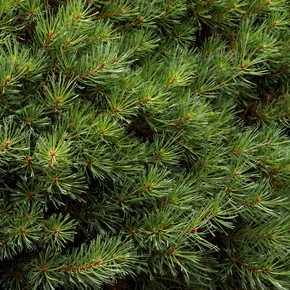
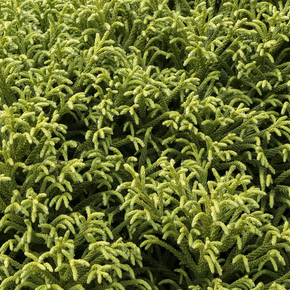
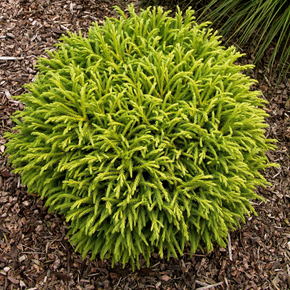
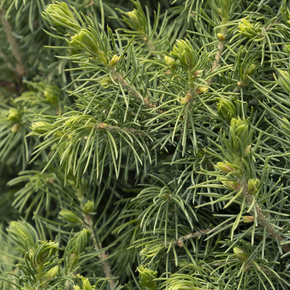
The Dwarf Alberta Spruce is a dense, compact, needled evergreen shrub with a naturally tight, symmetrical conical to pyramidal form. Its short needles - approximately 1/2 inch long - are bright, light green when new, maturing to a slightly blue-green with age. Each needle is soft and flexible, saber-shaped, and arranged radially around the stem, giving the plant a full, plush, almost sculpted appearance from every angle. The stems are slender and light brown. The trunk, though largely hidden by foliage, develops thin brownish-gray scaly bark at maturity. This cultivar rarely produces cones and does not flower. Needles are aromatic when crushed, releasing a fresh, resinous spruce scent. The plant's refined texture and precise geometry make it one of the most architecturally distinctive conifers available to home gardeners.
| Characteristic | Detail |
|---|---|
| Growth Rate | Very slow - approximately 2 to 4 inches per year |
| Height after 10 years | 3 to 4 feet |
| Width after 10 years | Approximately 1.5 feet |
| Ultimate Mature Height | 10 to 13 feet (over several decades) |
| Ultimate Mature Width | 7 to 10 feet |
| Plant Form | Dense, erect, conical to pyramidal |
The Dwarf Alberta Spruce is reliably hardy in USDA Zones 3a through 6b, making it an outstanding choice for gardens across much of the northern and mountainous regions of the United States. It thrives in the cool-climate zones of Southern Oregon and the higher elevations of Northern California, where cold winters and mild summers closely mimic its native habitat in the boreal forests of Canada. In warmer, more southerly climates, heat and high humidity can stress the plant and encourage pest infestations, so it is best reserved for cooler microclimates. When grown at the warmer edge of its range, siting it where it receives afternoon shade and excellent air circulation will help it perform at its best.
Dwarf Alberta Spruce performs best in full sun, defined as 6 or more hours of direct sunlight per day, where it maintains its densest, most compact form and richest needle color. It will also tolerate partial shade (2 to 6 hours of direct sun daily), though growth may be slightly more open in shadier conditions. In climates with hot, dry summers - such as the inland valleys of Northern California - providing some afternoon shade can reduce heat stress and lower the risk of spider mite infestations, which are more common when plants are under drought or heat stress. Avoid deep shade, which leads to thin, open growth and weakens the plant's signature silhouette.
This spruce is adaptable to a range of soil textures, including clay, loam, and sandy soils, but it performs best in a moist, well-drained loam enriched with organic matter. Good drainage is essential - while the plant tolerates occasional wet conditions, standing water around the roots will invite root rot. The ideal soil pH is acidic to neutral, roughly in the 5.0 to 7.0 range. If your native soil is alkaline, amending the planting area with sulfur or incorporating acidic organic materials such as composted pine bark can help bring the pH into the preferred range. Avoid sites with compacted soils, high salt exposure (such as roadside areas with de-icing salt), or heavy air pollution, as this cultivar is sensitive to all three conditions.
Consistent moisture is important, especially during the first one to two growing seasons after planting while the root system is establishing. Water deeply and thoroughly at planting, and continue to water regularly throughout the first season, aiming to keep the root zone evenly moist but never waterlogged. Once established, Dwarf Alberta Spruce has a moderate degree of drought tolerance, but it will look and perform its best with regular irrigation during dry summer months - particularly in the hotter, drier areas of Northern California. Applying a 2- to 3-inch layer of organic mulch around the base of the plant (keeping it a few inches away from the trunk) helps retain soil moisture, moderate soil temperature, and reduce weed competition. Avoid overhead irrigation late in the day, as prolonged leaf wetness can promote fungal issues.
Dwarf Alberta Spruce is a light feeder and does not require heavy fertilization. In most garden soils with reasonable organic content, supplemental feeding is minimal. If you choose to fertilize, apply a slow-release granular fertilizer formulated for conifers or acid-loving plants once in early spring, just as new growth begins. Avoid high-nitrogen fertilizers, which can force overly lush, soft growth that is more susceptible to pest damage and detracts from the plant's naturally tight, dense form. Do not fertilize after midsummer, as late-season growth is less cold-hardy and may be damaged by early frosts. A soil test every few years is the best way to confirm whether supplemental feeding is actually needed.
One of the great advantages of the Dwarf Alberta Spruce is that its naturally conical habit requires little to no corrective pruning to maintain its shape. However, there are two pruning tasks worth attending to:
Beyond these tasks, general maintenance is low. Keep the base of the plant clear of debris and ensure good air circulation around the foliage to reduce the risk of spider mite infestations.
The Dwarf Alberta Spruce's precise, architectural form makes it one of the most versatile structural plants available for the home landscape. Consider these applications:
Dwarf Alberta Spruce is an excellent candidate for container culture, where its slow growth and refined form make it a long-lived patio accent. Choose a large container with ample drainage holes - at least 18 to 24 inches in diameter to start, sizing up as the plant grows. Use a well-draining potting mix formulated for conifers or acid-loving plants. Container-grown specimens dry out more quickly than in-ground plants, so monitor soil moisture regularly and water thoroughly when the top inch or two of soil becomes dry. In hot, sunny climates, move containers to a location that receives afternoon shade during the hottest months. Fertilize lightly with a slow-release, acidifying fertilizer in early spring. In regions with freezing winters, container plants may need extra protection - move pots to a sheltered, unheated garage or against a protected wall to prevent the root ball from freezing solid, as containers offer far less insulation than in-ground soil.
Dwarf Alberta Spruce is a true four-season plant, delivering ornamental value throughout the year. In spring, emerging new growth appears as a bright, fresh lime-green, creating a striking two-toned contrast against the darker, older foliage underneath - one of the most charming seasonal displays of any conifer. Through summer, the foliage settles into a uniform, rich green. In autumn and winter, when much of the garden fades, the spruce retains its lush, deep green color and crisp geometric form, providing essential visual structure and contrast. Its naturally perfect cone shape looks especially striking dusted with snow or frost, making it a natural centerpiece for holiday outdoor displays. Because the plant rarely produces cones, foliage is the primary ornamental feature in every season.
While generally a low-maintenance plant, Dwarf Alberta Spruce has a few notable pest and disease vulnerabilities to watch for:
The plant is notably resistant to deer browsing, making it a reliable choice in landscapes where deer pressure is a concern.
Although Dwarf Alberta Spruce is primarily valued as an ornamental plant, it does offer some wildlife benefits in the garden. The dense, twiggy structure of the plant provides excellent shelter and nesting sites for small songbirds, offering protection from predators and harsh weather. The conifer's foliage also provides winter cover for beneficial insects and small wildlife during cold months. The plant is deer-resistant, meaning browsing pressure from deer is generally not a significant concern. Because cones are rarely produced on this cultivar, it does not serve as a significant food source for seed-eating birds, but its structural value as cover and habitat makes it a worthwhile addition to wildlife-friendly gardens.
The Dwarf Alberta Spruce's formal, fine-textured green cone pairs beautifully with a wide range of garden plants. Consider these companion planting combinations:
The Dwarf Alberta Spruce (Picea glauca 'Conica') is one of the most beloved and enduring dwarf conifers in American gardens, prized for its flawlessly symmetrical, tight cone shape, feathery soft texture, and year-round deep green beauty. A natural mutation first discovered in the wild forests of Alberta, Canada in 1904, this slow-growing evergreen shrub matures to a graceful 10 to 13 feet tall and 7 to 10 feet wide over several decades, typically reaching only 3 to 4 feet in height after its first ten years in the ground. Its densely packed, short, bright light-green needles are soft to the touch and emit a pleasant, resinous fragrance when brushed, making it a sensory delight in any landscape. The Dwarf Alberta Spruce thrives in full sun to partial shade in well-drained, moist, loamy, acidic to neutral soil, and its naturally geometric form means it rarely needs corrective pruning. Whether used as a stately focal point in a formal garden, a year-round sentinel beside a front door, a structural anchor in a rock garden or cottage border, or as a refined container specimen on a patio, this iconic dwarf spruce delivers consistent, low-maintenance elegance across every season.
The Dwarf Alberta Spruce is a dense, compact, needled evergreen shrub with a naturally tight, symmetrical conical to pyramidal form. Its short needles - approximately 1/2 inch long - are bright, light green when new, maturing to a slightly blue-green with age. Each needle is soft and flexible, saber-shaped, and arranged radially around the stem, giving the plant a full, plush, almost sculpted appearance from every angle. The stems are slender and light brown. The trunk, though largely hidden by foliage, develops thin brownish-gray scaly bark at maturity. This cultivar rarely produces cones and does not flower. Needles are aromatic when crushed, releasing a fresh, resinous spruce scent. The plant's refined texture and precise geometry make it one of the most architecturally distinctive conifers available to home gardeners.
| Characteristic | Detail |
|---|---|
| Growth Rate | Very slow - approximately 2 to 4 inches per year |
| Height after 10 years | 3 to 4 feet |
| Width after 10 years | Approximately 1.5 feet |
| Ultimate Mature Height | 10 to 13 feet (over several decades) |
| Ultimate Mature Width | 7 to 10 feet |
| Plant Form | Dense, erect, conical to pyramidal |
The Dwarf Alberta Spruce is reliably hardy in USDA Zones 3a through 6b, making it an outstanding choice for gardens across much of the northern and mountainous regions of the United States. It thrives in the cool-climate zones of Southern Oregon and the higher elevations of Northern California, where cold winters and mild summers closely mimic its native habitat in the boreal forests of Canada. In warmer, more southerly climates, heat and high humidity can stress the plant and encourage pest infestations, so it is best reserved for cooler microclimates. When grown at the warmer edge of its range, siting it where it receives afternoon shade and excellent air circulation will help it perform at its best.
Dwarf Alberta Spruce performs best in full sun, defined as 6 or more hours of direct sunlight per day, where it maintains its densest, most compact form and richest needle color. It will also tolerate partial shade (2 to 6 hours of direct sun daily), though growth may be slightly more open in shadier conditions. In climates with hot, dry summers - such as the inland valleys of Northern California - providing some afternoon shade can reduce heat stress and lower the risk of spider mite infestations, which are more common when plants are under drought or heat stress. Avoid deep shade, which leads to thin, open growth and weakens the plant's signature silhouette.
This spruce is adaptable to a range of soil textures, including clay, loam, and sandy soils, but it performs best in a moist, well-drained loam enriched with organic matter. Good drainage is essential - while the plant tolerates occasional wet conditions, standing water around the roots will invite root rot. The ideal soil pH is acidic to neutral, roughly in the 5.0 to 7.0 range. If your native soil is alkaline, amending the planting area with sulfur or incorporating acidic organic materials such as composted pine bark can help bring the pH into the preferred range. Avoid sites with compacted soils, high salt exposure (such as roadside areas with de-icing salt), or heavy air pollution, as this cultivar is sensitive to all three conditions.
Consistent moisture is important, especially during the first one to two growing seasons after planting while the root system is establishing. Water deeply and thoroughly at planting, and continue to water regularly throughout the first season, aiming to keep the root zone evenly moist but never waterlogged. Once established, Dwarf Alberta Spruce has a moderate degree of drought tolerance, but it will look and perform its best with regular irrigation during dry summer months - particularly in the hotter, drier areas of Northern California. Applying a 2- to 3-inch layer of organic mulch around the base of the plant (keeping it a few inches away from the trunk) helps retain soil moisture, moderate soil temperature, and reduce weed competition. Avoid overhead irrigation late in the day, as prolonged leaf wetness can promote fungal issues.
Dwarf Alberta Spruce is a light feeder and does not require heavy fertilization. In most garden soils with reasonable organic content, supplemental feeding is minimal. If you choose to fertilize, apply a slow-release granular fertilizer formulated for conifers or acid-loving plants once in early spring, just as new growth begins. Avoid high-nitrogen fertilizers, which can force overly lush, soft growth that is more susceptible to pest damage and detracts from the plant's naturally tight, dense form. Do not fertilize after midsummer, as late-season growth is less cold-hardy and may be damaged by early frosts. A soil test every few years is the best way to confirm whether supplemental feeding is actually needed.
One of the great advantages of the Dwarf Alberta Spruce is that its naturally conical habit requires little to no corrective pruning to maintain its shape. However, there are two pruning tasks worth attending to:
Beyond these tasks, general maintenance is low. Keep the base of the plant clear of debris and ensure good air circulation around the foliage to reduce the risk of spider mite infestations.
The Dwarf Alberta Spruce's precise, architectural form makes it one of the most versatile structural plants available for the home landscape. Consider these applications:
Dwarf Alberta Spruce is an excellent candidate for container culture, where its slow growth and refined form make it a long-lived patio accent. Choose a large container with ample drainage holes - at least 18 to 24 inches in diameter to start, sizing up as the plant grows. Use a well-draining potting mix formulated for conifers or acid-loving plants. Container-grown specimens dry out more quickly than in-ground plants, so monitor soil moisture regularly and water thoroughly when the top inch or two of soil becomes dry. In hot, sunny climates, move containers to a location that receives afternoon shade during the hottest months. Fertilize lightly with a slow-release, acidifying fertilizer in early spring. In regions with freezing winters, container plants may need extra protection - move pots to a sheltered, unheated garage or against a protected wall to prevent the root ball from freezing solid, as containers offer far less insulation than in-ground soil.
Dwarf Alberta Spruce is a true four-season plant, delivering ornamental value throughout the year. In spring, emerging new growth appears as a bright, fresh lime-green, creating a striking two-toned contrast against the darker, older foliage underneath - one of the most charming seasonal displays of any conifer. Through summer, the foliage settles into a uniform, rich green. In autumn and winter, when much of the garden fades, the spruce retains its lush, deep green color and crisp geometric form, providing essential visual structure and contrast. Its naturally perfect cone shape looks especially striking dusted with snow or frost, making it a natural centerpiece for holiday outdoor displays. Because the plant rarely produces cones, foliage is the primary ornamental feature in every season.
While generally a low-maintenance plant, Dwarf Alberta Spruce has a few notable pest and disease vulnerabilities to watch for:
The plant is notably resistant to deer browsing, making it a reliable choice in landscapes where deer pressure is a concern.
Although Dwarf Alberta Spruce is primarily valued as an ornamental plant, it does offer some wildlife benefits in the garden. The dense, twiggy structure of the plant provides excellent shelter and nesting sites for small songbirds, offering protection from predators and harsh weather. The conifer's foliage also provides winter cover for beneficial insects and small wildlife during cold months. The plant is deer-resistant, meaning browsing pressure from deer is generally not a significant concern. Because cones are rarely produced on this cultivar, it does not serve as a significant food source for seed-eating birds, but its structural value as cover and habitat makes it a worthwhile addition to wildlife-friendly gardens.
The Dwarf Alberta Spruce's formal, fine-textured green cone pairs beautifully with a wide range of garden plants. Consider these companion planting combinations: