


Zoom the image with the mouse
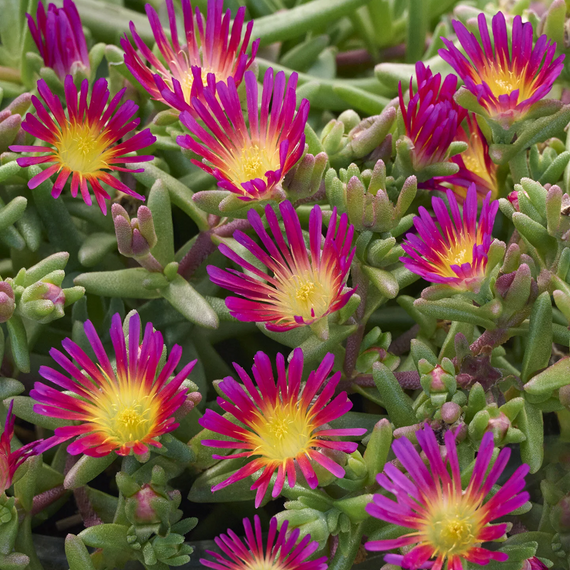
Delmara Fuchsia Ice Plant - 1 Gallon
SKU:
2102360
UPC:
014949482919
$12.99
- Brilliant fuchsia-red, daisy-like flowers with white eyes and golden yellow centers bloom continuously from late spring through summer and well into fall, delivering months of vivid color to the landscape.
- Drought-tolerant, heat-loving succulent groundcover that thrives in full sun with well-drained or sandy soils — an ideal, low-maintenance choice for water-wise and xeriscape gardens.
- Compact, mat-forming habit grows just 4-6 inches tall and spreads 12-18 inches wide, making it a perfect edger, rock garden accent, or cascading "spiller" in mixed container plantings.
- A pollinator magnet that draws honeybees and butterflies, while also being deer resistant and tolerant of salt spray and lean soils — versatile and tough in every way.
Delosperma Delmara Fuchsia (Delosperma cooperi 'Delmara Fuchsia') is a standout hardy ice plant that brings season-long brilliance to Southern Oregon and Northern California gardens with its vivid, daisy-like fuchsia-red blooms accented by white eyes and sunny yellow centers. Part of the Delmara Series bred by Green Fuse Botanicals, this low-growing, succulent-leaved perennial forms a dense, ground-hugging carpet of attractive bluish-green foliage that takes on warm burgundy tones in autumn, extending its ornamental appeal well beyond the bloom season. Flowering begins in late spring and continues through summer and into fall, making it one of the longest-blooming groundcovers available for hot, sunny spots. Native to the high-elevation regions of South Africa, this tough-as-nails perennial is surprisingly cold hardy and excels in rock gardens, border edges, slope stabilization, and mass plantings where poor, dry soils challenge other plants. Its fleshy, water-storing leaves provide excellent drought tolerance once established, and its low profile and spreading growth habit make it equally at home cascading over retaining walls or spilling over the rims of patio containers. Evergreen in mild winter climates like those found throughout much of Southern Oregon and Northern California, Delosperma Delmara Fuchsia is an exceptional, easy-care choice for gardeners seeking maximum color impact with minimal effort.
Plant Description
Delosperma Delmara Fuchsia is a hardy ice plant perennial belonging to the Aizoaceae (fig-marigold) family, native to the mountainous and plateau regions of South Africa. It is a succulent-like, mat-forming groundcover with small, fleshy, narrow, bluish-green leaves covered in fine glistening hairs that give the foliage an almost crystalline appearance — the trait responsible for the common name "ice plant." Flowers are large for the plant's size, typically 1-2 inches across, and display vivid fuchsia-red petals radiating outward from a contrasting white eye and bright yellow center. The blooms are characteristic of the Delmara Series: bold, plentiful, and long-lasting. A fun feature of this plant is that the flowers open fully in bright sunlight and close at night or on cloudy days. In mild climates, the foliage remains evergreen year-round, while in colder regions it may take on attractive burgundy to reddish tones in fall before going semi-dormant. This variety is an interspecific hybrid selected for its tidy, compact form, vibrant flower color, and improved garden performance.
Mature Size
| Attribute | Measurement |
|---|---|
| Foliage Height | 4 inches |
| Height in Bloom | 4-6 inches |
| Spread | 12-18 inches |
| Recommended Spacing | 12 inches apart |
| Growth Rate | Moderate to fast |
| Growth Habit | Low, mat-forming, ground-hugging |
Hardiness Zones
Delosperma Delmara Fuchsia is hardy in USDA Zones 5-10, making it well-suited to a wide range of climates including the mild winters of Southern Oregon and Northern California. It performs best and is most reliably perennial in the drier, less humid western United States. In climates with wet winters and heavy clay soils, hardiness may be reduced by one to two zones. In warm coastal and inland valley gardens of Zones 9-10, it remains evergreen throughout the year. In areas where hard freezes occur, the plant may go semi-dormant but typically rebounds vigorously in spring. Excellent drainage is the single most important factor for cold-hardiness success — well-drained soils allow the plant to survive lower temperatures than it would in persistently wet conditions.
Sunlight Requirements
This plant demands full sun for best performance — a minimum of 6 to 8 hours of direct sunlight per day is ideal. Full sun encourages the most prolific flowering, the most compact growth habit, and the strongest drought tolerance. In full sun, the flowers open wide and display their brightest colors. Light shade may be tolerated in the hottest inland areas during peak summer heat, but reduced sunlight generally results in fewer blooms, looser growth, and increased susceptibility to root rot. For gardens in Southern Oregon and Northern California, a south- or west-facing exposure in an open, unobstructed location is the perfect placement.
Soil and pH Preferences
Delosperma Delmara Fuchsia thrives in lean, dry to average soils with excellent drainage. Sandy, sandy loam, or gravelly soils are ideal, as they allow excess moisture to move quickly away from the root zone. It also performs well in rocky soils and on slopes where water does not pool. Clay soils should be avoided entirely, as standing moisture — particularly in winter — is the most common cause of plant loss. This plant is adaptable to a wide range of soil pH levels and is not particularly demanding in terms of soil fertility; in fact, overly rich soils can promote lush, floppy growth at the expense of flowers. When planting in heavier native soils, amend generously with coarse sand or fine gravel to ensure sharp drainage. A gravel or decomposed granite mulch around the base of the plant helps keep the crown dry and reduces the risk of crown rot.
Watering Guide
- At Planting: Water thoroughly at the time of planting to help settle the soil around the roots and encourage initial establishment.
- First Growing Season: Water regularly once or twice a week during the first growing season to establish a deep, healthy root system. Do not allow the plant to sit in soggy soil.
- Established Plants: Once established, Delmara Fuchsia is highly drought tolerant and requires only occasional deep watering during extended dry spells. In cooler coastal climates, established plants often thrive on rainfall alone.
- Summer Watering: Because Delosperma cooperi originates from summer-rainfall regions of South Africa, weekly deep watering during the hottest months of summer is beneficial and supports continued blooming.
- Winter Watering: Reduce or eliminate irrigation during the winter months. Wet soils combined with cold temperatures are the primary cause of plant mortality. Keep the crowns as dry as possible during dormancy.
- Container Plants: Containers dry out more rapidly than garden beds; check soil moisture regularly and water when the top inch of soil is dry, but never allow containers to remain waterlogged.
Fertilizing
Delosperma Delmara Fuchsia is a light feeder and generally thrives without heavy fertilization. Overfertilizing — especially with nitrogen-rich formulas — can produce excessive, floppy vegetative growth and reduced flowering. In most garden settings, a single application of a balanced, slow-release granular fertilizer (such as a 10-10-10 or similar) worked into the soil at planting time is sufficient for the season. For plants growing in containers, a diluted balanced liquid fertilizer applied once in spring and again in midsummer can help maintain vigor and prolong blooming. Avoid feeding in late summer or fall, as this can encourage tender new growth that is more susceptible to frost damage heading into winter. Plants growing in naturally lean, sandy, or gravelly soils typically perform best with minimal to no supplemental feeding.
Pruning and Maintenance
Delosperma Delmara Fuchsia is a low-maintenance plant that requires minimal pruning. The best time for any cleanup or cutting back is early spring, just before the plant resumes active growth. At that time, remove any winter-damaged, dead, or untidy stems to tidy the plant's appearance and encourage fresh growth from the base. Light shearing after the main flush of spring blooms may help stimulate a stronger repeat bloom cycle through summer and fall. Avoid heavy cutting in late summer or fall. Deadheading individual spent flowers is not necessary for continued reblooming, as this variety blooms on new growth continuously throughout the season. Every few years, plants may benefit from being divided or replaced as the centers can thin out over time. A light top-dressing of coarse gravel or decomposed granite around plants in fall helps insulate the crowns and keep moisture levels appropriate over the winter.
Planting Instructions
- Choose a location that receives full sun (6-8 or more hours per day) with well-drained or sandy soil. Avoid low spots or areas where water pools after rain.
- If planting in heavy or clay soil, amend the planting area generously with coarse sand, fine gravel, or perlite to a depth of at least 8-10 inches to ensure adequate drainage.
- Dig a planting hole twice as wide as the root ball and no deeper than its height. The crown of the plant should sit at or slightly above the surrounding soil level to prevent moisture from collecting around it.
- Remove the plant from its container, gently loosen any circling roots, and set it into the hole.
- Backfill with the amended native soil, firming gently around the roots. Do not bury the crown.
- Water thoroughly to settle the soil. Apply a 1-2 inch layer of coarse gravel or decomposed granite mulch around (but not directly over) the crown to help retain light moisture, deter weeds, and keep the crown dry.
- Space individual plants 12 inches apart for mass plantings; they will fill in within one to two growing seasons.
- In hot inland gardens, fall or early spring planting is recommended to allow establishment before the heat of summer. In cooler coastal areas, spring planting is ideal.
Seasonal Interest
Delosperma Delmara Fuchsia provides outstanding ornamental interest across multiple seasons. The main show begins in late spring when vibrant fuchsia-red flowers first appear, and blooming continues with remarkable persistence through summer and well into fall — one of the longest continuous bloom periods of any perennial groundcover. During summer, the dense carpet of fleshy bluish-green succulent foliage remains attractive and neat between flower flushes. As temperatures cool in autumn, the foliage often transitions to rich burgundy and reddish tones, adding warm fall color to the garden. In mild climates like those of Southern Oregon and Northern California, the plant remains evergreen throughout the winter, maintaining a tidy, low-growing green mat that adds texture and structure to the garden even in the coldest months. The flowers themselves perform an additional seasonal trick: they open wide in full sun and close each evening or on overcast days, creating a dynamic, living display from morning to evening.
Landscape Uses
- Groundcover: Ideal for covering dry, sunny slopes, embankments, and open garden beds where a dense, weed-suppressing mat is desired.
- Rock and Alpine Gardens: A natural fit for rock gardens, scree beds, and gravel gardens where its preference for sharp drainage and lean soils is easily accommodated.
- Border Edging: The low, tidy habit makes it excellent for edging pathways, driveways, and garden borders with a carpet of vivid season-long color.
- Slope Stabilization: The spreading root system helps stabilize dry slopes and hillsides prone to erosion.
- Xeriscape and Waterwise Gardens: A top-performing choice for low-water landscapes, fire-wise plantings, and drought-tolerant garden designs throughout the region.
- Wall Plantings: Looks spectacular cascading over the tops of retaining walls, raised beds, and stone walls.
- Container Plantings: Excellent as a "spiller" element in mixed patio containers, hanging baskets, and window boxes where it will trail gracefully over the edges.
- Mass Plantings: When planted in groups of three or more, creates a bold, colorful mass effect that is eye-catching from a distance.
Companion Plants
Delosperma Delmara Fuchsia pairs beautifully with other sun-loving, drought-tolerant plants that share its preference for well-drained soils and minimal water. Consider combining it with ornamental sedums (Sedum spp.) and hens-and-chicks (Sempervivum spp.) for a tapestry of contrasting succulent textures. Low-growing ornamental grasses such as blue fescue (Festuca glauca) provide a fine-textured, silvery-blue contrast to the vivid fuchsia blooms. Lavender (Lavandula spp.), catmint (Nepeta spp.), and creeping thyme (Thymus spp.) all share the same cultural requirements and complement the ice plant's color with silver, blue, and purple tones. For height contrast in rock or mixed perennial gardens, plant alongside yarrow (Achillea spp.), Russian sage (Perovskia atriplicifolia), or Penstemon species. Other hardy ice plants in contrasting colors — such as yellow or orange Delosperma varieties — can be massed together for a vibrant, multicolored groundcover effect. In container plantings, pair with trailing Portulaca or upright succulents like Agave or Aloe for a bold, waterwise patio display.
Pests and Diseases
Delosperma Delmara Fuchsia is generally a very pest- and disease-resistant plant when grown in the right conditions. The most significant threat to its health is not pests but rather cultural issues, particularly root and crown rot caused by overly wet or poorly drained soils. When pests do occur, the most common include:
- Aphids: Small soft-bodied insects that cluster on new growth and leaf undersides; treat with a strong water spray, insecticidal soap, or neem oil.
- Mealybugs: Appear as white cottony masses at stem joints; remove manually or treat with isopropyl alcohol dabbed onto colonies, followed by insecticidal soap if needed.
- Spider Mites: Thrive in hot, dry conditions; identified by fine webbing and stippled, yellowing foliage; treat with neem oil or horticultural oil during cooler parts of the day.
- Scale Insects: Small shell-like bumps on stems; treat with horticultural oil or systemic insecticide in severe cases.
- Fungus Gnats: Larvae can damage roots when soils stay too moist; prevent by allowing soil to dry between waterings and ensuring excellent drainage.
To prevent disease, always plant in fast-draining soil, avoid overhead watering, and ensure good air circulation between plants. Root rot and crown rot are best prevented by keeping the plant's crown as dry as possible, especially during winter dormancy. This plant has no significant toxicity concerns and is not listed as invasive in Oregon or California.
Container Growing
Delosperma Delmara Fuchsia is an outstanding container plant and one of the most colorful options available for sunny patios, decks, and entryways. Its spreading, trailing habit makes it a natural "spiller" in mixed container combinations, where it gracefully cascades over the pot edges. Choose a container with ample drainage holes and fill with a well-draining mix formulated for succulents or cacti, or blend standard potting soil with coarse sand and perlite in equal parts. Place containers in the sunniest location available — at least 6-8 hours of direct sun daily. Container-grown plants dry out more quickly than in-ground plants and will need more frequent watering during summer heat; check soil moisture every few days and water when the top inch is dry, always allowing excess water to drain freely. In fall and winter, reduce watering significantly and move containers to a protected location if hard freezes are expected, as potted plants are more vulnerable to frost than those grown in the ground. Feed lightly with a diluted balanced liquid fertilizer once in spring and once in midsummer to support vigorous growth and prolific blooming throughout the season.
Wildlife Value
Delosperma Delmara Fuchsia is a valuable plant for garden pollinators. The large, open, daisy-like flowers are particularly attractive to honeybees, native bees, and various butterfly species, which visit frequently throughout the long bloom season from late spring through fall. The bright fuchsia color and open flower form make nectar and pollen highly accessible to a wide range of beneficial insects. This plant is considered an excellent nectar source and contributes meaningfully to supporting pollinator populations in the garden and surrounding landscape. On the other side of the wildlife equation, Delosperma Delmara Fuchsia is notably deer resistant — the fleshy, succulent foliage is generally left alone by deer, making it a reliable choice for gardens in areas with high deer pressure. It is not known to be attractive to rabbits or other common garden pests.
- Brilliant fuchsia-red, daisy-like flowers with white eyes and golden yellow centers bloom continuously from late spring through summer and well into fall, delivering months of vivid color to the landscape.
- Drought-tolerant, heat-loving succulent groundcover that thrives in full sun with well-drained or sandy soils — an ideal, low-maintenance choice for water-wise and xeriscape gardens.
- Compact, mat-forming habit grows just 4-6 inches tall and spreads 12-18 inches wide, making it a perfect edger, rock garden accent, or cascading "spiller" in mixed container plantings.
- A pollinator magnet that draws honeybees and butterflies, while also being deer resistant and tolerant of salt spray and lean soils — versatile and tough in every way.
Delosperma Delmara Fuchsia (Delosperma cooperi 'Delmara Fuchsia') is a standout hardy ice plant that brings season-long brilliance to Southern Oregon and Northern California gardens with its vivid, daisy-like fuchsia-red blooms accented by white eyes and sunny yellow centers. Part of the Delmara Series bred by Green Fuse Botanicals, this low-growing, succulent-leaved perennial forms a dense, ground-hugging carpet of attractive bluish-green foliage that takes on warm burgundy tones in autumn, extending its ornamental appeal well beyond the bloom season. Flowering begins in late spring and continues through summer and into fall, making it one of the longest-blooming groundcovers available for hot, sunny spots. Native to the high-elevation regions of South Africa, this tough-as-nails perennial is surprisingly cold hardy and excels in rock gardens, border edges, slope stabilization, and mass plantings where poor, dry soils challenge other plants. Its fleshy, water-storing leaves provide excellent drought tolerance once established, and its low profile and spreading growth habit make it equally at home cascading over retaining walls or spilling over the rims of patio containers. Evergreen in mild winter climates like those found throughout much of Southern Oregon and Northern California, Delosperma Delmara Fuchsia is an exceptional, easy-care choice for gardeners seeking maximum color impact with minimal effort.
Plant Description
Delosperma Delmara Fuchsia is a hardy ice plant perennial belonging to the Aizoaceae (fig-marigold) family, native to the mountainous and plateau regions of South Africa. It is a succulent-like, mat-forming groundcover with small, fleshy, narrow, bluish-green leaves covered in fine glistening hairs that give the foliage an almost crystalline appearance — the trait responsible for the common name "ice plant." Flowers are large for the plant's size, typically 1-2 inches across, and display vivid fuchsia-red petals radiating outward from a contrasting white eye and bright yellow center. The blooms are characteristic of the Delmara Series: bold, plentiful, and long-lasting. A fun feature of this plant is that the flowers open fully in bright sunlight and close at night or on cloudy days. In mild climates, the foliage remains evergreen year-round, while in colder regions it may take on attractive burgundy to reddish tones in fall before going semi-dormant. This variety is an interspecific hybrid selected for its tidy, compact form, vibrant flower color, and improved garden performance.
Mature Size
| Attribute | Measurement |
|---|---|
| Foliage Height | 4 inches |
| Height in Bloom | 4-6 inches |
| Spread | 12-18 inches |
| Recommended Spacing | 12 inches apart |
| Growth Rate | Moderate to fast |
| Growth Habit | Low, mat-forming, ground-hugging |
Hardiness Zones
Delosperma Delmara Fuchsia is hardy in USDA Zones 5-10, making it well-suited to a wide range of climates including the mild winters of Southern Oregon and Northern California. It performs best and is most reliably perennial in the drier, less humid western United States. In climates with wet winters and heavy clay soils, hardiness may be reduced by one to two zones. In warm coastal and inland valley gardens of Zones 9-10, it remains evergreen throughout the year. In areas where hard freezes occur, the plant may go semi-dormant but typically rebounds vigorously in spring. Excellent drainage is the single most important factor for cold-hardiness success — well-drained soils allow the plant to survive lower temperatures than it would in persistently wet conditions.
Sunlight Requirements
This plant demands full sun for best performance — a minimum of 6 to 8 hours of direct sunlight per day is ideal. Full sun encourages the most prolific flowering, the most compact growth habit, and the strongest drought tolerance. In full sun, the flowers open wide and display their brightest colors. Light shade may be tolerated in the hottest inland areas during peak summer heat, but reduced sunlight generally results in fewer blooms, looser growth, and increased susceptibility to root rot. For gardens in Southern Oregon and Northern California, a south- or west-facing exposure in an open, unobstructed location is the perfect placement.
Soil and pH Preferences
Delosperma Delmara Fuchsia thrives in lean, dry to average soils with excellent drainage. Sandy, sandy loam, or gravelly soils are ideal, as they allow excess moisture to move quickly away from the root zone. It also performs well in rocky soils and on slopes where water does not pool. Clay soils should be avoided entirely, as standing moisture — particularly in winter — is the most common cause of plant loss. This plant is adaptable to a wide range of soil pH levels and is not particularly demanding in terms of soil fertility; in fact, overly rich soils can promote lush, floppy growth at the expense of flowers. When planting in heavier native soils, amend generously with coarse sand or fine gravel to ensure sharp drainage. A gravel or decomposed granite mulch around the base of the plant helps keep the crown dry and reduces the risk of crown rot.
Watering Guide
- At Planting: Water thoroughly at the time of planting to help settle the soil around the roots and encourage initial establishment.
- First Growing Season: Water regularly once or twice a week during the first growing season to establish a deep, healthy root system. Do not allow the plant to sit in soggy soil.
- Established Plants: Once established, Delmara Fuchsia is highly drought tolerant and requires only occasional deep watering during extended dry spells. In cooler coastal climates, established plants often thrive on rainfall alone.
- Summer Watering: Because Delosperma cooperi originates from summer-rainfall regions of South Africa, weekly deep watering during the hottest months of summer is beneficial and supports continued blooming.
- Winter Watering: Reduce or eliminate irrigation during the winter months. Wet soils combined with cold temperatures are the primary cause of plant mortality. Keep the crowns as dry as possible during dormancy.
- Container Plants: Containers dry out more rapidly than garden beds; check soil moisture regularly and water when the top inch of soil is dry, but never allow containers to remain waterlogged.
Fertilizing
Delosperma Delmara Fuchsia is a light feeder and generally thrives without heavy fertilization. Overfertilizing — especially with nitrogen-rich formulas — can produce excessive, floppy vegetative growth and reduced flowering. In most garden settings, a single application of a balanced, slow-release granular fertilizer (such as a 10-10-10 or similar) worked into the soil at planting time is sufficient for the season. For plants growing in containers, a diluted balanced liquid fertilizer applied once in spring and again in midsummer can help maintain vigor and prolong blooming. Avoid feeding in late summer or fall, as this can encourage tender new growth that is more susceptible to frost damage heading into winter. Plants growing in naturally lean, sandy, or gravelly soils typically perform best with minimal to no supplemental feeding.
Pruning and Maintenance
Delosperma Delmara Fuchsia is a low-maintenance plant that requires minimal pruning. The best time for any cleanup or cutting back is early spring, just before the plant resumes active growth. At that time, remove any winter-damaged, dead, or untidy stems to tidy the plant's appearance and encourage fresh growth from the base. Light shearing after the main flush of spring blooms may help stimulate a stronger repeat bloom cycle through summer and fall. Avoid heavy cutting in late summer or fall. Deadheading individual spent flowers is not necessary for continued reblooming, as this variety blooms on new growth continuously throughout the season. Every few years, plants may benefit from being divided or replaced as the centers can thin out over time. A light top-dressing of coarse gravel or decomposed granite around plants in fall helps insulate the crowns and keep moisture levels appropriate over the winter.
Planting Instructions
- Choose a location that receives full sun (6-8 or more hours per day) with well-drained or sandy soil. Avoid low spots or areas where water pools after rain.
- If planting in heavy or clay soil, amend the planting area generously with coarse sand, fine gravel, or perlite to a depth of at least 8-10 inches to ensure adequate drainage.
- Dig a planting hole twice as wide as the root ball and no deeper than its height. The crown of the plant should sit at or slightly above the surrounding soil level to prevent moisture from collecting around it.
- Remove the plant from its container, gently loosen any circling roots, and set it into the hole.
- Backfill with the amended native soil, firming gently around the roots. Do not bury the crown.
- Water thoroughly to settle the soil. Apply a 1-2 inch layer of coarse gravel or decomposed granite mulch around (but not directly over) the crown to help retain light moisture, deter weeds, and keep the crown dry.
- Space individual plants 12 inches apart for mass plantings; they will fill in within one to two growing seasons.
- In hot inland gardens, fall or early spring planting is recommended to allow establishment before the heat of summer. In cooler coastal areas, spring planting is ideal.
Seasonal Interest
Delosperma Delmara Fuchsia provides outstanding ornamental interest across multiple seasons. The main show begins in late spring when vibrant fuchsia-red flowers first appear, and blooming continues with remarkable persistence through summer and well into fall — one of the longest continuous bloom periods of any perennial groundcover. During summer, the dense carpet of fleshy bluish-green succulent foliage remains attractive and neat between flower flushes. As temperatures cool in autumn, the foliage often transitions to rich burgundy and reddish tones, adding warm fall color to the garden. In mild climates like those of Southern Oregon and Northern California, the plant remains evergreen throughout the winter, maintaining a tidy, low-growing green mat that adds texture and structure to the garden even in the coldest months. The flowers themselves perform an additional seasonal trick: they open wide in full sun and close each evening or on overcast days, creating a dynamic, living display from morning to evening.
Landscape Uses
- Groundcover: Ideal for covering dry, sunny slopes, embankments, and open garden beds where a dense, weed-suppressing mat is desired.
- Rock and Alpine Gardens: A natural fit for rock gardens, scree beds, and gravel gardens where its preference for sharp drainage and lean soils is easily accommodated.
- Border Edging: The low, tidy habit makes it excellent for edging pathways, driveways, and garden borders with a carpet of vivid season-long color.
- Slope Stabilization: The spreading root system helps stabilize dry slopes and hillsides prone to erosion.
- Xeriscape and Waterwise Gardens: A top-performing choice for low-water landscapes, fire-wise plantings, and drought-tolerant garden designs throughout the region.
- Wall Plantings: Looks spectacular cascading over the tops of retaining walls, raised beds, and stone walls.
- Container Plantings: Excellent as a "spiller" element in mixed patio containers, hanging baskets, and window boxes where it will trail gracefully over the edges.
- Mass Plantings: When planted in groups of three or more, creates a bold, colorful mass effect that is eye-catching from a distance.
Companion Plants
Delosperma Delmara Fuchsia pairs beautifully with other sun-loving, drought-tolerant plants that share its preference for well-drained soils and minimal water. Consider combining it with ornamental sedums (Sedum spp.) and hens-and-chicks (Sempervivum spp.) for a tapestry of contrasting succulent textures. Low-growing ornamental grasses such as blue fescue (Festuca glauca) provide a fine-textured, silvery-blue contrast to the vivid fuchsia blooms. Lavender (Lavandula spp.), catmint (Nepeta spp.), and creeping thyme (Thymus spp.) all share the same cultural requirements and complement the ice plant's color with silver, blue, and purple tones. For height contrast in rock or mixed perennial gardens, plant alongside yarrow (Achillea spp.), Russian sage (Perovskia atriplicifolia), or Penstemon species. Other hardy ice plants in contrasting colors — such as yellow or orange Delosperma varieties — can be massed together for a vibrant, multicolored groundcover effect. In container plantings, pair with trailing Portulaca or upright succulents like Agave or Aloe for a bold, waterwise patio display.
Pests and Diseases
Delosperma Delmara Fuchsia is generally a very pest- and disease-resistant plant when grown in the right conditions. The most significant threat to its health is not pests but rather cultural issues, particularly root and crown rot caused by overly wet or poorly drained soils. When pests do occur, the most common include:
- Aphids: Small soft-bodied insects that cluster on new growth and leaf undersides; treat with a strong water spray, insecticidal soap, or neem oil.
- Mealybugs: Appear as white cottony masses at stem joints; remove manually or treat with isopropyl alcohol dabbed onto colonies, followed by insecticidal soap if needed.
- Spider Mites: Thrive in hot, dry conditions; identified by fine webbing and stippled, yellowing foliage; treat with neem oil or horticultural oil during cooler parts of the day.
- Scale Insects: Small shell-like bumps on stems; treat with horticultural oil or systemic insecticide in severe cases.
- Fungus Gnats: Larvae can damage roots when soils stay too moist; prevent by allowing soil to dry between waterings and ensuring excellent drainage.
To prevent disease, always plant in fast-draining soil, avoid overhead watering, and ensure good air circulation between plants. Root rot and crown rot are best prevented by keeping the plant's crown as dry as possible, especially during winter dormancy. This plant has no significant toxicity concerns and is not listed as invasive in Oregon or California.
Container Growing
Delosperma Delmara Fuchsia is an outstanding container plant and one of the most colorful options available for sunny patios, decks, and entryways. Its spreading, trailing habit makes it a natural "spiller" in mixed container combinations, where it gracefully cascades over the pot edges. Choose a container with ample drainage holes and fill with a well-draining mix formulated for succulents or cacti, or blend standard potting soil with coarse sand and perlite in equal parts. Place containers in the sunniest location available — at least 6-8 hours of direct sun daily. Container-grown plants dry out more quickly than in-ground plants and will need more frequent watering during summer heat; check soil moisture every few days and water when the top inch is dry, always allowing excess water to drain freely. In fall and winter, reduce watering significantly and move containers to a protected location if hard freezes are expected, as potted plants are more vulnerable to frost than those grown in the ground. Feed lightly with a diluted balanced liquid fertilizer once in spring and once in midsummer to support vigorous growth and prolific blooming throughout the season.
Wildlife Value
Delosperma Delmara Fuchsia is a valuable plant for garden pollinators. The large, open, daisy-like flowers are particularly attractive to honeybees, native bees, and various butterfly species, which visit frequently throughout the long bloom season from late spring through fall. The bright fuchsia color and open flower form make nectar and pollen highly accessible to a wide range of beneficial insects. This plant is considered an excellent nectar source and contributes meaningfully to supporting pollinator populations in the garden and surrounding landscape. On the other side of the wildlife equation, Delosperma Delmara Fuchsia is notably deer resistant — the fleshy, succulent foliage is generally left alone by deer, making it a reliable choice for gardens in areas with high deer pressure. It is not known to be attractive to rabbits or other common garden pests.


