Zoom the image with the mouse
Cream De Mint Dwarf Pittosporum - 1 Gallon
SKU:
2096230
UPC:
014949658710
$19.99
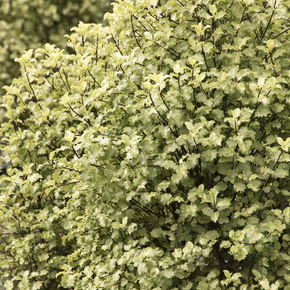
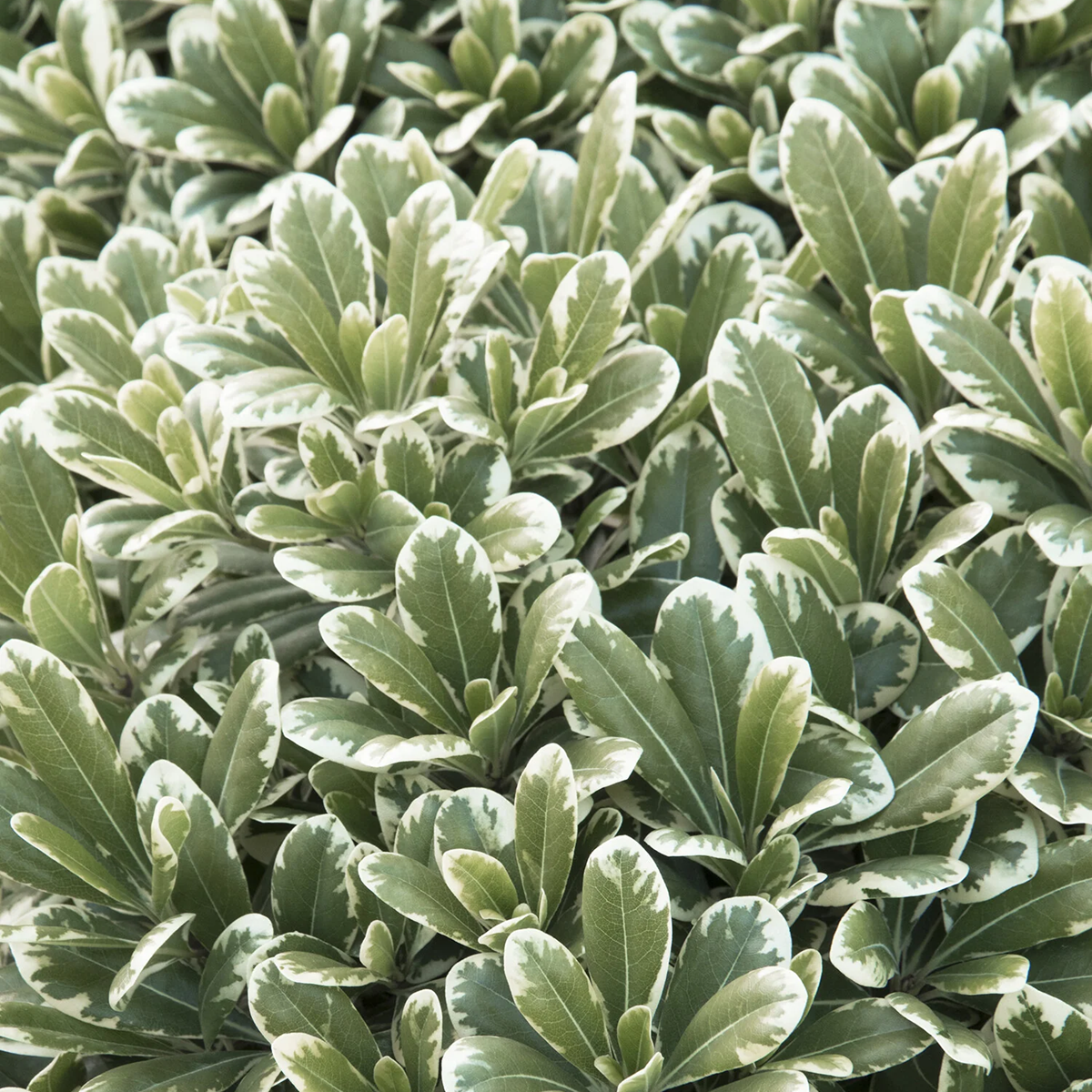
- Glossy, mint green leaves edged in creamy white deliver striking two-tone variegation that brightens borders, pathways, and mixed planting beds year-round.
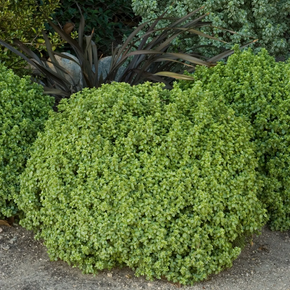
- An exceptionally compact, slow-growing mounded habit stays naturally tidy at just 2 to 2.5 feet tall and wide — little to no pruning required to maintain its neat form.
- Tough, drought-tolerant, and salt-tolerant once established, making it an ideal low-maintenance choice for coastal gardens, waterwise landscapes, and busy homeowners alike.
- Delicate, sweetly fragrant creamy white spring flowers add a seasonal bonus to this already ornamental evergreen foliage shrub.
Pittosporum Cream de Mint (Pittosporum tobira 'Shima') is a refined, dwarf evergreen shrub that brings sophisticated year-round color and texture to warm-climate gardens across USDA zones 8 through 11. Its spoon-shaped, glossy leaves are a soft mint green at the center, each one neatly outlined in a creamy white margin that catches both sunlight and moonlight with equal elegance. Fresh spring growth emerges in a luminous golden-green before maturing to its signature two-toned appearance, while clusters of small, sweetly scented creamy white flowers appear in spring for added seasonal charm. Unlike many variegated shrubs that demand constant attention to stay tidy, Cream de Mint maintains its naturally mounded, compact form with virtually no pruning, topping out at just 2 to 2.5 feet in both height and spread at maturity. This slow-growing, exceptionally low-maintenance selection thrives in full sun to partial shade and adapts readily to a wide range of well-drained soils. Once established, it tolerates mild drought and coastal salt spray, making it a remarkably versatile performer in Southern Oregon and Northern California landscapes. Whether used as a crisp low border along a walkway, a tidy edging plant for mixed shrub beds, a compact foundation planting, a refined groundcover, or a sophisticated specimen in a decorative container, Pittosporum Cream de Mint delivers maximum visual impact with minimum effort — a true workhorse of the ornamental garden.
Plant Description
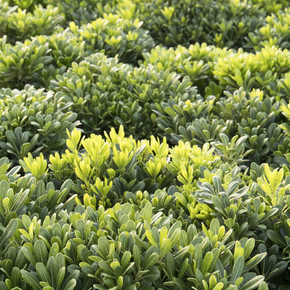
Pittosporum Cream de Mint is a dwarf, mounding evergreen shrub in the Pittosporaceae family, sold under the cultivar name 'Shima' and botanically classified as Pittosporum tobira. The plant is prized above all for its striking foliage: spathulate (spoon-shaped), glossy leaves display a soft mint green center framed by a clearly defined creamy white edge. New growth that flushes in spring emerges in a luminous golden-green hue before transitioning to the mature two-toned coloration. In spring, the plant also produces small, tightly clustered, creamy white flowers with a pleasant, sweet fragrance. The blooms are modest in size and often partially nestled within the dense foliage, making the variegated leaves the true showstopper. The dense, tidy mounded habit does not require pruning to maintain its compact form, and the plant retains its foliage and attractive appearance throughout all four seasons.
Mature Size
| Characteristic | Detail |
|---|---|
| Mature Height | 2 to 2.5 feet |
| Mature Width | 2 to 2.5 feet |
| Growth Rate | Slow |
| Growth Habit | Compact, low mound |
| Form | Naturally rounded; requires little to no pruning to maintain shape |
Hardiness Zones
Pittosporum Cream de Mint is rated hardy in USDA zones 8 through 11, making it well suited to the mild winters of Southern Oregon and Northern California. It performs best where temperatures do not drop significantly below 15 to 20 degrees Fahrenheit for extended periods. In cooler microclimates at the edges of its hardiness range, planting in a sheltered location with good air drainage and protection from hard freezes will help ensure the best performance. This cultivar shares the cold tolerance typical of Pittosporum tobira selections, which are among the more frost-resilient pittosporums available.
Sunlight Requirements
Cream de Mint thrives in full sun to partial shade. It performs well and maintains the brightest, most vivid leaf coloration when planted in a location that receives at least 4 to 6 hours of direct sunlight per day. In hotter inland climates, afternoon shade can help prevent leaf scorch and keep the foliage looking its freshest. In coastal areas and milder inland valleys of Southern Oregon and Northern California, full sun exposure is generally well tolerated. Avoid deep, heavy shade, which can reduce the density of the foliage and diminish the contrast of the creamy white variegation.
Soil and pH Preferences
This dwarf pittosporum is adaptable to a wide range of soil types, provided that drainage is good. Standing water and consistently waterlogged soils are the primary conditions to avoid, as they can lead to root rot. Cream de Mint grows well in sandy, loamy, or clay-based soils as long as excess moisture can drain freely. It tolerates a broad soil pH range, performing best between 6.0 and 7.5 (slightly acidic to neutral). If planting in heavy clay soils, amend the planting area with compost or coarse grit to improve drainage before planting. This cultivar also demonstrates good salt tolerance, making it a strong choice for coastal gardens or near paved areas where salt spray or winter road applications may be a concern.
Watering Guide
Consistent, regular watering during the first growing season after planting is important to help the root system establish quickly and deeply. Water thoroughly and allow the soil to dry slightly between waterings rather than keeping the root zone constantly moist. Once established — typically after one to two growing seasons — Cream de Mint is moderately drought tolerant and requires much less supplemental irrigation. In the hot, dry summers typical of Southern Oregon and Northern California, established plants benefit from occasional deep watering every two to three weeks during prolonged dry spells. Overwatering or poor drainage is more damaging to this plant than brief periods of drought. Avoid frequent shallow waterings, which encourage surface rooting and reduce the plant's long-term drought resilience.
Fertilizing
Pittosporum Cream de Mint is not a heavy feeder and generally performs well without aggressive fertilization. For best results, apply a balanced, slow-release granular fertilizer formulated for ornamental shrubs once in early spring as new growth begins. A complete fertilizer with an N-P-K ratio such as 10-10-10 or a formulation designed for acid-loving plants works well. Avoid over-fertilizing with high-nitrogen products, as excessive nitrogen can promote overly lush, soft growth that is more susceptible to pest and disease pressure and may reduce the distinctiveness of the leaf variegation. If foliage appears pale or yellowish, a light supplemental feeding in early summer may be beneficial. Topdressing the root zone with a 2-inch layer of organic compost each spring also supports steady, healthy growth.
Pruning and Maintenance
One of Cream de Mint's most valued traits is its naturally compact, self-maintaining mounded form that requires little to no routine pruning. Under normal garden conditions, plants can go years without any pruning and remain neat and attractive. If light shaping is desired to tidy up any irregular growth or maintain a specific size, prune lightly in early spring just before new growth emerges. Avoid heavy or hard pruning, as Pittosporum tobira cultivars are less tolerant of severe cutbacks than some other shrub genera. Remove any dead, damaged, or crossing branches as needed throughout the year. Occasional removal of spent flower clusters in late spring can keep the plant looking its tidiest, though this is largely a matter of personal preference rather than a horticultural necessity.
Planting Instructions
- Choose a location with full sun to partial shade and well-draining soil. Avoid low-lying areas where water pools after rain.
- Dig a planting hole two to three times as wide as the root ball and approximately equal to its depth. Avoid planting too deep — the top of the root ball should sit level with or very slightly above the surrounding soil grade.
- If soil is heavy clay, mix the native soil with compost and coarse sand or grit to improve drainage before backfilling.
- Remove the plant from its container and gently loosen any circling roots. Place the root ball in the center of the hole.
- Backfill with the amended or native soil, gently firming as you go to eliminate air pockets. Do not mound soil up against the base of the stems.
- Water thoroughly after planting to settle the soil around the roots.
- Apply a 2- to 3-inch layer of organic mulch such as wood chips or bark around the base of the plant, keeping mulch several inches away from the main stems, to conserve moisture and moderate soil temperature.
- For low hedges or mass plantings, space plants approximately 2 to 2.5 feet apart center-to-center to allow them to fill in and create a seamless effect at maturity.
Seasonal Interest
Cream de Mint delivers reliable ornamental interest in every season of the year. The two-toned mint green and creamy white foliage provides a consistent, elegant backdrop from winter through fall. In spring, fresh new golden-green growth flushes out among the mature leaves, adding a warm luminous quality to the plant's appearance just as the garden awakens. Small clusters of creamy white flowers with a sweet, light fragrance appear in spring alongside the new foliage flush, adding a delicate floral note to the display. Through summer and fall the dense, glossy foliage holds its color and form admirably, remaining attractive even through the heat of inland summers. As an evergreen, it retains its leaves through winter, providing structural interest and foliage color when many other plants have gone dormant.
Landscape Uses
- Low, formal or informal edging along walkways, driveways, and garden paths
- Front-of-border filler in mixed shrub and perennial beds
- Compact low hedge or ribbon planting in residential and commercial landscapes
- Foundation planting beneath windows or along building foundations
- Small-scale groundcover for gentle slopes or flat areas
- Accent plant to provide textural and color contrast among darker or solid-colored shrubs
- Container specimen for patios, entryways, courtyards, and decks
- Mass planting in separated landscape beds to unify a design with repeating texture
- Waterwise and coastal garden planting where salt and drought tolerance are required
Companion Plants
Pittosporum Cream de Mint pairs beautifully with plants that complement or contrast its mint green and creamy white variegated foliage. Its soft, cool tones make it an excellent companion for bold-colored flowering shrubs such as Mexican sage (Salvia leucantha), rockrose (Cistus spp.), or dwarf oleander varieties, where it acts as a calming visual buffer. Its low, mounding form works well alongside taller structural plants like Loropetalum, ornamental grasses such as Festuca glauca or Carex, and compact lavenders. In mixed borders, it contrasts attractively with dark-leaved shrubs like bronze or purple-leafed varieties of Pittosporum tobira 'MoJo' or Loropetalum chinense. As a front-of-border plant, it looks sophisticated paired with mid-border perennials such as agapanthus, salvia, or low-growing ornamental sages that share its preference for well-drained soils and full to partial sun.
Container Growing
The compact size and slow growth rate of Cream de Mint make it an outstanding candidate for container culture on patios, entryways, balconies, and courtyards. Choose a container with adequate drainage holes that is at least 12 to 14 inches in diameter. Use a high-quality, well-draining potting mix, ideally a blend formulated for ornamental shrubs or one amended with perlite for improved drainage. Container-grown plants dry out more quickly than in-ground specimens, so monitor soil moisture regularly and water when the top inch of the potting mix feels dry. Fertilize container plants with a balanced slow-release fertilizer in spring and consider a light liquid feed mid-summer to support healthy growth. Repot every two to three years or when the plant becomes root-bound, stepping up to a container one size larger. In areas at the cooler edge of its hardiness range, container plants can be easily moved to a sheltered location during periods of hard frost.
Pests and Diseases
Pittosporum Cream de Mint is generally a tough, trouble-free plant when grown in appropriate conditions. The most common pest issues to watch for include:
- Aphids: Soft-bodied insects that may cluster on new spring growth. A strong jet of water or an application of insecticidal soap will typically resolve minor infestations.
- Scale insects: Occasionally appear on stems and undersides of leaves. Treat with horticultural oil applied during the dormant season or with a systemic insecticide for persistent infestations.
- Powdery mildew: Can develop in dry conditions with poor air circulation. Prevent by ensuring adequate spacing between plants and providing occasional deep watering during dry spells.
- Leaf spot: Fungal leaf spots may appear during wet periods. Remove heavily affected foliage and improve air circulation. Applying a slow-release fertilizer in spring helps maintain plant vigor and natural disease resistance.
- Root rot: The most serious threat to this plant, caused by consistently waterlogged soil. Always plant in well-draining locations and avoid overwatering to prevent this condition entirely.
Deer and Wildlife Notes
Pittosporum tobira, including the Cream de Mint cultivar, is considered deer-resistant due to its leathery, glossy foliage and the mildly resinous quality of its leaves, which deer generally find unappealing. While no plant is completely deer-proof in conditions of extreme browse pressure, this shrub is a reliable lower-risk choice for gardens in Southern Oregon and Northern California where deer activity is common. The small, sweetly fragrant spring flowers can attract bees and beneficial pollinators, offering a modest but worthwhile contribution to garden ecology. The plant's dense, low form can also provide ground-level shelter for small birds and beneficial insects, adding quiet wildlife value to the landscape.
- Glossy, mint green leaves edged in creamy white deliver striking two-tone variegation that brightens borders, pathways, and mixed planting beds year-round.
- An exceptionally compact, slow-growing mounded habit stays naturally tidy at just 2 to 2.5 feet tall and wide — little to no pruning required to maintain its neat form.
- Tough, drought-tolerant, and salt-tolerant once established, making it an ideal low-maintenance choice for coastal gardens, waterwise landscapes, and busy homeowners alike.
- Delicate, sweetly fragrant creamy white spring flowers add a seasonal bonus to this already ornamental evergreen foliage shrub.
Pittosporum Cream de Mint (Pittosporum tobira 'Shima') is a refined, dwarf evergreen shrub that brings sophisticated year-round color and texture to warm-climate gardens across USDA zones 8 through 11. Its spoon-shaped, glossy leaves are a soft mint green at the center, each one neatly outlined in a creamy white margin that catches both sunlight and moonlight with equal elegance. Fresh spring growth emerges in a luminous golden-green before maturing to its signature two-toned appearance, while clusters of small, sweetly scented creamy white flowers appear in spring for added seasonal charm. Unlike many variegated shrubs that demand constant attention to stay tidy, Cream de Mint maintains its naturally mounded, compact form with virtually no pruning, topping out at just 2 to 2.5 feet in both height and spread at maturity. This slow-growing, exceptionally low-maintenance selection thrives in full sun to partial shade and adapts readily to a wide range of well-drained soils. Once established, it tolerates mild drought and coastal salt spray, making it a remarkably versatile performer in Southern Oregon and Northern California landscapes. Whether used as a crisp low border along a walkway, a tidy edging plant for mixed shrub beds, a compact foundation planting, a refined groundcover, or a sophisticated specimen in a decorative container, Pittosporum Cream de Mint delivers maximum visual impact with minimum effort — a true workhorse of the ornamental garden.
Plant Description
Pittosporum Cream de Mint is a dwarf, mounding evergreen shrub in the Pittosporaceae family, sold under the cultivar name 'Shima' and botanically classified as Pittosporum tobira. The plant is prized above all for its striking foliage: spathulate (spoon-shaped), glossy leaves display a soft mint green center framed by a clearly defined creamy white edge. New growth that flushes in spring emerges in a luminous golden-green hue before transitioning to the mature two-toned coloration. In spring, the plant also produces small, tightly clustered, creamy white flowers with a pleasant, sweet fragrance. The blooms are modest in size and often partially nestled within the dense foliage, making the variegated leaves the true showstopper. The dense, tidy mounded habit does not require pruning to maintain its compact form, and the plant retains its foliage and attractive appearance throughout all four seasons.
Mature Size
| Characteristic | Detail |
|---|---|
| Mature Height | 2 to 2.5 feet |
| Mature Width | 2 to 2.5 feet |
| Growth Rate | Slow |
| Growth Habit | Compact, low mound |
| Form | Naturally rounded; requires little to no pruning to maintain shape |
Hardiness Zones
Pittosporum Cream de Mint is rated hardy in USDA zones 8 through 11, making it well suited to the mild winters of Southern Oregon and Northern California. It performs best where temperatures do not drop significantly below 15 to 20 degrees Fahrenheit for extended periods. In cooler microclimates at the edges of its hardiness range, planting in a sheltered location with good air drainage and protection from hard freezes will help ensure the best performance. This cultivar shares the cold tolerance typical of Pittosporum tobira selections, which are among the more frost-resilient pittosporums available.
Sunlight Requirements
Cream de Mint thrives in full sun to partial shade. It performs well and maintains the brightest, most vivid leaf coloration when planted in a location that receives at least 4 to 6 hours of direct sunlight per day. In hotter inland climates, afternoon shade can help prevent leaf scorch and keep the foliage looking its freshest. In coastal areas and milder inland valleys of Southern Oregon and Northern California, full sun exposure is generally well tolerated. Avoid deep, heavy shade, which can reduce the density of the foliage and diminish the contrast of the creamy white variegation.
Soil and pH Preferences
This dwarf pittosporum is adaptable to a wide range of soil types, provided that drainage is good. Standing water and consistently waterlogged soils are the primary conditions to avoid, as they can lead to root rot. Cream de Mint grows well in sandy, loamy, or clay-based soils as long as excess moisture can drain freely. It tolerates a broad soil pH range, performing best between 6.0 and 7.5 (slightly acidic to neutral). If planting in heavy clay soils, amend the planting area with compost or coarse grit to improve drainage before planting. This cultivar also demonstrates good salt tolerance, making it a strong choice for coastal gardens or near paved areas where salt spray or winter road applications may be a concern.
Watering Guide
Consistent, regular watering during the first growing season after planting is important to help the root system establish quickly and deeply. Water thoroughly and allow the soil to dry slightly between waterings rather than keeping the root zone constantly moist. Once established — typically after one to two growing seasons — Cream de Mint is moderately drought tolerant and requires much less supplemental irrigation. In the hot, dry summers typical of Southern Oregon and Northern California, established plants benefit from occasional deep watering every two to three weeks during prolonged dry spells. Overwatering or poor drainage is more damaging to this plant than brief periods of drought. Avoid frequent shallow waterings, which encourage surface rooting and reduce the plant's long-term drought resilience.
Fertilizing
Pittosporum Cream de Mint is not a heavy feeder and generally performs well without aggressive fertilization. For best results, apply a balanced, slow-release granular fertilizer formulated for ornamental shrubs once in early spring as new growth begins. A complete fertilizer with an N-P-K ratio such as 10-10-10 or a formulation designed for acid-loving plants works well. Avoid over-fertilizing with high-nitrogen products, as excessive nitrogen can promote overly lush, soft growth that is more susceptible to pest and disease pressure and may reduce the distinctiveness of the leaf variegation. If foliage appears pale or yellowish, a light supplemental feeding in early summer may be beneficial. Topdressing the root zone with a 2-inch layer of organic compost each spring also supports steady, healthy growth.
Pruning and Maintenance
One of Cream de Mint's most valued traits is its naturally compact, self-maintaining mounded form that requires little to no routine pruning. Under normal garden conditions, plants can go years without any pruning and remain neat and attractive. If light shaping is desired to tidy up any irregular growth or maintain a specific size, prune lightly in early spring just before new growth emerges. Avoid heavy or hard pruning, as Pittosporum tobira cultivars are less tolerant of severe cutbacks than some other shrub genera. Remove any dead, damaged, or crossing branches as needed throughout the year. Occasional removal of spent flower clusters in late spring can keep the plant looking its tidiest, though this is largely a matter of personal preference rather than a horticultural necessity.
Planting Instructions
- Choose a location with full sun to partial shade and well-draining soil. Avoid low-lying areas where water pools after rain.
- Dig a planting hole two to three times as wide as the root ball and approximately equal to its depth. Avoid planting too deep — the top of the root ball should sit level with or very slightly above the surrounding soil grade.
- If soil is heavy clay, mix the native soil with compost and coarse sand or grit to improve drainage before backfilling.
- Remove the plant from its container and gently loosen any circling roots. Place the root ball in the center of the hole.
- Backfill with the amended or native soil, gently firming as you go to eliminate air pockets. Do not mound soil up against the base of the stems.
- Water thoroughly after planting to settle the soil around the roots.
- Apply a 2- to 3-inch layer of organic mulch such as wood chips or bark around the base of the plant, keeping mulch several inches away from the main stems, to conserve moisture and moderate soil temperature.
- For low hedges or mass plantings, space plants approximately 2 to 2.5 feet apart center-to-center to allow them to fill in and create a seamless effect at maturity.
Seasonal Interest
Cream de Mint delivers reliable ornamental interest in every season of the year. The two-toned mint green and creamy white foliage provides a consistent, elegant backdrop from winter through fall. In spring, fresh new golden-green growth flushes out among the mature leaves, adding a warm luminous quality to the plant's appearance just as the garden awakens. Small clusters of creamy white flowers with a sweet, light fragrance appear in spring alongside the new foliage flush, adding a delicate floral note to the display. Through summer and fall the dense, glossy foliage holds its color and form admirably, remaining attractive even through the heat of inland summers. As an evergreen, it retains its leaves through winter, providing structural interest and foliage color when many other plants have gone dormant.
Landscape Uses
- Low, formal or informal edging along walkways, driveways, and garden paths
- Front-of-border filler in mixed shrub and perennial beds
- Compact low hedge or ribbon planting in residential and commercial landscapes
- Foundation planting beneath windows or along building foundations
- Small-scale groundcover for gentle slopes or flat areas
- Accent plant to provide textural and color contrast among darker or solid-colored shrubs
- Container specimen for patios, entryways, courtyards, and decks
- Mass planting in separated landscape beds to unify a design with repeating texture
- Waterwise and coastal garden planting where salt and drought tolerance are required
Companion Plants
Pittosporum Cream de Mint pairs beautifully with plants that complement or contrast its mint green and creamy white variegated foliage. Its soft, cool tones make it an excellent companion for bold-colored flowering shrubs such as Mexican sage (Salvia leucantha), rockrose (Cistus spp.), or dwarf oleander varieties, where it acts as a calming visual buffer. Its low, mounding form works well alongside taller structural plants like Loropetalum, ornamental grasses such as Festuca glauca or Carex, and compact lavenders. In mixed borders, it contrasts attractively with dark-leaved shrubs like bronze or purple-leafed varieties of Pittosporum tobira 'MoJo' or Loropetalum chinense. As a front-of-border plant, it looks sophisticated paired with mid-border perennials such as agapanthus, salvia, or low-growing ornamental sages that share its preference for well-drained soils and full to partial sun.
Container Growing
The compact size and slow growth rate of Cream de Mint make it an outstanding candidate for container culture on patios, entryways, balconies, and courtyards. Choose a container with adequate drainage holes that is at least 12 to 14 inches in diameter. Use a high-quality, well-draining potting mix, ideally a blend formulated for ornamental shrubs or one amended with perlite for improved drainage. Container-grown plants dry out more quickly than in-ground specimens, so monitor soil moisture regularly and water when the top inch of the potting mix feels dry. Fertilize container plants with a balanced slow-release fertilizer in spring and consider a light liquid feed mid-summer to support healthy growth. Repot every two to three years or when the plant becomes root-bound, stepping up to a container one size larger. In areas at the cooler edge of its hardiness range, container plants can be easily moved to a sheltered location during periods of hard frost.
Pests and Diseases
Pittosporum Cream de Mint is generally a tough, trouble-free plant when grown in appropriate conditions. The most common pest issues to watch for include:
- Aphids: Soft-bodied insects that may cluster on new spring growth. A strong jet of water or an application of insecticidal soap will typically resolve minor infestations.
- Scale insects: Occasionally appear on stems and undersides of leaves. Treat with horticultural oil applied during the dormant season or with a systemic insecticide for persistent infestations.
- Powdery mildew: Can develop in dry conditions with poor air circulation. Prevent by ensuring adequate spacing between plants and providing occasional deep watering during dry spells.
- Leaf spot: Fungal leaf spots may appear during wet periods. Remove heavily affected foliage and improve air circulation. Applying a slow-release fertilizer in spring helps maintain plant vigor and natural disease resistance.
- Root rot: The most serious threat to this plant, caused by consistently waterlogged soil. Always plant in well-draining locations and avoid overwatering to prevent this condition entirely.
Deer and Wildlife Notes
Pittosporum tobira, including the Cream de Mint cultivar, is considered deer-resistant due to its leathery, glossy foliage and the mildly resinous quality of its leaves, which deer generally find unappealing. While no plant is completely deer-proof in conditions of extreme browse pressure, this shrub is a reliable lower-risk choice for gardens in Southern Oregon and Northern California where deer activity is common. The small, sweetly fragrant spring flowers can attract bees and beneficial pollinators, offering a modest but worthwhile contribution to garden ecology. The plant's dense, low form can also provide ground-level shelter for small birds and beneficial insects, adding quiet wildlife value to the landscape.