

Zoom the image with the mouse
Cotton Tail Sea Thrift - 1 Gallon
SKU:
1656545
UPC:
014949026915
$11.99
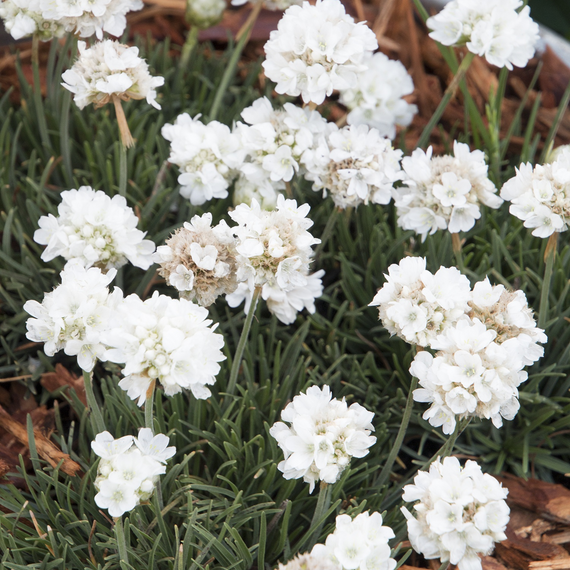
- Charming, pure white pom-pom flower clusters rise on stiff upright stems above a neat, ground-hugging mound of glossy, emerald-green, grass-like foliage from mid-spring through early summer.
- Exceptionally tough and adaptable — drought tolerant, salt tolerant, deer resistant, and cold hardy to USDA Zone 3a — making it an outstanding choice for low-maintenance gardens in challenging conditions.
- Stays attractive year-round as an evergreen perennial, keeping its tidy, compact form with a foliage height of just 6 inches, ideal for edging, rock gardens, and the front of borders.
- Thrives in well-drained, sandy to loamy soils and tolerates a wide range of soil pH levels — a reliable performer for xeriscapes, coastal settings, and pollinator-friendly plantings.
Armeria maritima 'Cotton Tail' — commonly known as Cotton Tail Sea Thrift or Sea Pink — is a compact, evergreen perennial that delivers effortless, four-season beauty in a tidy, ground-hugging package. Crisp, pure white globe-shaped flower clusters bloom atop stiff, upright stems from mid-spring into early summer, hovering above a dense cushion of narrow, glossy, emerald-green foliage that stays neat and attractive all year long. Maturing at just 6 inches tall with an 8-inch flowering height and a 12-inch spread, 'Cotton Tail' is perfectly proportioned for edging pathways, defining the front of perennial borders, filling in rock and alpine gardens, or spilling gracefully over the edges of containers. This selection is exceptionally adaptable — tolerating drought, salt spray, a wide range of soil pH levels, and cold temperatures down to USDA Zone 3a — while requiring virtually no fuss once established. Its deer resistance, long-lived evergreen character, and appeal to bees and butterflies make Cotton Tail Sea Thrift an outstanding choice for low-water landscapes, coastal gardens, and anyone seeking a dependable, high-impact perennial with minimal upkeep.
Plant Description
Cotton Tail Sea Thrift (Armeria maritima 'Cotton Tail') is a dense, herbaceous evergreen perennial forming a compact, ground-hugging cushion of fine, narrow, grass-like foliage. The leaves are small, glossy, and rich emerald green, maintaining their color and form throughout all four seasons. From mid-spring through early summer, stiff, upright stems rise above the foliage mound, each topped with a perfectly round, pom-pom-style cluster of pure white florets. The overall effect is clean, crisp, and charming — evoking classic cottage and coastal garden aesthetics. 'Cotton Tail' is a selected cultivar of the species Armeria maritima, which is native to coastal and mountainous regions of Europe and has a long history of cultivation in ornamental gardens. It is one of the most dependable, low-maintenance perennials available for temperate and mild-climate gardens.
Mature Size
| Measurement | Dimension |
|---|---|
| Foliage Height | Approximately 6 inches |
| Flowering Height | Approximately 8 inches |
| Spread | Approximately 12 inches |
| Growth Rate | Slow |
| Growth Habit | Dense, upright, ground-hugging clump |
| Lifespan | Approximately 10 years under ideal conditions |
Hardiness Zones
Cotton Tail Sea Thrift is cold hardy from USDA Zone 3a through Zone 9b, making it suitable for an exceptionally wide geographic range — from the coldest regions of the continental United States to mild coastal and inland climates in the Pacific Southwest. It handles temperature extremes well on both ends of the spectrum, though in the hottest climates (Zone 9+) it benefits from some afternoon shade and excellent drainage to prevent crown rot during warm, humid periods. In Southern Oregon and Northern California, it is well-suited to the varied microclimates of the region and performs reliably across both valley and coastal settings.
Sunlight Requirements
Cotton Tail Sea Thrift performs best in full sun, ideally receiving 6 to 8 hours of direct sunlight per day. It will tolerate partial shade but flowering will be reduced, and the foliage mound may become less compact. Strong morning sunlight is particularly beneficial, and a location with some relief from the most intense afternoon sun can be helpful in the hottest inland climates. Avoid deeply shaded sites, as poor light leads to sparse, floppy growth and very few blooms.
Soil and pH Preferences
One of the most adaptable aspects of Cotton Tail Sea Thrift is its tolerance for a very wide range of soil types and pH levels. It thrives in well-drained, sandy to loamy soils and is notably forgiving of poor, infertile conditions. In fact, overly rich soils can cause the foliage to sprawl outward and the center of the plant to die out — lean soil is preferred. Heavy clay soils that retain moisture are not suitable and should be amended with coarse sand or grit before planting. This cultivar accepts soil pH ranging from acidic (below 6.0) to slightly alkaline (above 8.0), making soil pH adjustment unnecessary in most garden situations. It is also tolerant of environmental salt, making it an excellent choice for roadsides, coastal gardens, and areas exposed to de-icing salts.
| Soil Characteristic | Preference |
|---|---|
| Soil Type | Sandy, loamy, or gravelly; well-drained |
| Soil Richness | Lean to average; avoid overly fertile soils |
| Soil pH Range | Acidic to alkaline (wide tolerance) |
| Moisture Level | Dry to average; will not tolerate standing water |
| Salt Tolerance | High |
Watering Guide
Once established, Cotton Tail Sea Thrift is drought tolerant and requires very little supplemental irrigation. It is important to water newly planted specimens regularly to help establish a strong root system, but take care not to allow the soil to remain soggy. Once established — typically within one growing season — deep, infrequent watering is all that is needed. Overwatering or planting in poorly drained areas is the most common cause of plant decline, as standing water around the crown can lead to rot and death. In the dry summers of Southern Oregon and Northern California, an occasional deep soak during prolonged dry spells will keep plants looking their best, but frequent irrigation is not necessary or desirable. Container-grown plants will naturally require more frequent watering than in-ground specimens.
Fertilizing
Cotton Tail Sea Thrift is a light feeder that generally does not require regular fertilization, especially when planted in average garden soil. Rich soil and heavy feeding can actually harm the plant, causing lush, floppy growth and increasing susceptibility to root and crown rot. If your soil is very poor and plants appear to be struggling, a single, light application of a balanced, slow-release granular fertilizer in early spring is sufficient. Avoid high-nitrogen fertilizers, as excess nitrogen promotes weak, sprawling foliage at the expense of flowers. In most garden situations, no fertilizer at all is the preferred approach — this plant truly thrives on neglect when drainage is good.
Pruning and Maintenance
Cotton Tail Sea Thrift is a low-maintenance perennial that requires very little care throughout the season. Follow these simple guidelines to keep plants tidy and encourage the best possible flowering:
- Deadheading: Remove spent flower stems promptly after bloom by cutting them back to the base of the foliage mound. Deadheading keeps the plant tidy, prevents seed set, and can encourage a secondary flush of blooms later in the season.
- Shearing after bloom: After the main flowering period, the entire plant can be lightly sheared back to stimulate fresh foliage growth and potentially promote additional blooming.
- Fall cleanup: Cut back any dead or untidy foliage and remove spent bloom stems in late fall to keep the plant clean going into winter. Avoid cutting into healthy green foliage.
- Division: Divide clumps every 3 to 4 years in spring or fall to rejuvenate older plants and prevent the center of the cushion from dying out — a natural occurrence in aging specimens.
- Remove dead center growth: If the center of the clump begins to die out, divide or replant the healthy outer sections into fresh, well-drained soil.
Planting Instructions
- Choose a site with full sun and excellent soil drainage. Avoid low spots or areas where water pools after rain.
- If your soil is heavy clay, work coarse sand, pea gravel, or fine grit into the planting area to a depth of 10 to 12 inches to improve drainage before planting.
- Avoid adding excessive amounts of compost or other rich organic matter, as overly fertile soil is detrimental to Sea Thrift.
- Dig a hole approximately the same depth as the root ball and slightly wider. Set the plant so the crown sits level with or very slightly above the surrounding soil grade — do not plant deeply.
- Backfill with native soil, firm gently, and water in well to settle the roots.
- Space plants approximately 10 to 12 inches apart for border or groundcover use to allow for their mature spread.
- Mulch lightly around — but not directly against — the plant's crown to help retain some soil moisture during establishment, using a coarse, well-draining mulch such as pea gravel or decomposed granite, which also suits the plant's aesthetic.
- Water regularly for the first growing season while the plant establishes its root system, then transition to infrequent, deep watering.
Seasonal Interest
Cotton Tail Sea Thrift offers genuine year-round garden appeal, earning its place as a reliable, all-season performer:
- Spring: The primary show begins in mid-spring when pure white, globe-shaped flower clusters rise on stiff stems above the foliage, creating a charming, airy display that lasts into early summer. This is the plant's peak season of interest.
- Summer: Blooming continues into early summer; deadheading spent flowers can extend the display. After bloom, the neat, glossy foliage mound remains tidy and attractive through the heat of summer.
- Fall: The evergreen cushion of emerald-green foliage holds its color and form as temperatures drop, adding structure to the fading garden. Fall division can be carried out now to rejuvenate older clumps.
- Winter: The evergreen foliage maintains its fresh green appearance through most winters, providing valuable low texture and color in the dormant garden. In colder parts of its range, the foliage may lie flat but recovers cleanly in spring.
Landscape Uses
The compact size, tidy habit, and bold white spring flowers of Cotton Tail Sea Thrift make it one of the most versatile small perennials available for garden design. Recommended landscape applications include:
- Rock and alpine gardens: An ideal plant for tucking into gaps between stones, along rock wall faces, or in raised alpine beds where excellent drainage is naturally provided.
- Border edging: Its low, uniform mound and upright flower stems create a clean, defined edge along pathways, driveways, and garden borders.
- Front of perennial borders: Perfect as a foreground plant that allows taller companions behind it to shine without being obscured.
- Groundcover: Planted in mass groupings, it creates a low, dense carpet with spectacular spring flower impact.
- Xeriscape and water-wise gardens: Drought tolerance and lean soil preference make it a top choice for low-irrigation landscape designs.
- Coastal gardens: Strong salt tolerance makes it well-suited to seaside landscapes where many other perennials struggle.
- Container and patio planting: Works beautifully as a "spiller" element in mixed patio containers, tumbling gracefully over the edges of pots and window boxes.
- Pollinator gardens: The nectar-rich flower clusters attract bees, butterflies, and other beneficial insects during the spring bloom period.
Container Growing
Cotton Tail Sea Thrift is an excellent candidate for outdoor container gardening, where its tidy, spreading habit allows it to spill gracefully over pot edges as a "spiller" in combination plantings. Select a container with generous drainage holes, as good drainage is critical to the plant's health. A pot at least 10 inches wide and 8 inches deep is a good minimum size; wider, shallower containers suit its naturally shallow root system well. Use a well-draining potting mix blended with coarse perlite or horticultural grit to prevent moisture retention. Position the container in full sun. Container-grown plants will dry out more quickly than in-ground specimens and should be checked regularly during warm weather, watering when the top inch of soil is dry. Avoid saucers that allow water to stand beneath the pot. Every few years, refresh the potting mix and trim back the roots slightly when repotting to maintain vigor.
Wildlife Value
Cotton Tail Sea Thrift is a valuable addition to pollinator-friendly and wildlife-supportive gardens. The nectar-rich, white pom-pom flower clusters are particularly attractive to bees — including both honeybees and native bee species — as well as butterflies and other beneficial pollinating insects during the spring bloom period. The plant's dense, low foliage can also provide shelter for small ground-dwelling beneficial insects. On the other side of the equation, Cotton Tail Sea Thrift is notably deer resistant — deer tend to avoid it in favor of more palatable plants — making it a smart choice for gardens in areas with significant deer pressure. It is not known to be particularly attractive to rabbits or other common garden pests.
Pests and Diseases
Cotton Tail Sea Thrift is generally a pest- and disease-free plant when grown in appropriate conditions. The following are the most common issues to watch for:
- Crown and root rot: The most serious threat, caused by poorly drained or overly moist soil. Prevent this by ensuring excellent drainage at planting time and avoiding overwatering. Plants in clay-heavy or waterlogged soils are highly susceptible.
- Leaf rust (Uromyces lineolatus): An occasional fungal issue that can appear in cool, wet conditions, producing rust-colored pustules on the foliage. Improve air circulation and avoid overhead watering to reduce risk. Remove and dispose of affected leaves.
- Aphids: Occasionally may cluster on flower stems in spring. A strong spray of water or an application of insecticidal soap will control minor infestations.
- Center dieback: Older clumps naturally begin to die out in the center after several years — this is a natural growth cycle rather than a disease. Divide and replant the healthy outer sections to rejuvenate the plant.
Maintaining good drainage, appropriate sun exposure, and lean soil conditions are the best overall preventive measures against virtually all issues with this plant.
Companion Plants
Cotton Tail Sea Thrift pairs beautifully with a wide range of plants that share its preference for well-drained, sunny conditions. Consider these combinations for the best visual and cultural compatibility:
- Lavender (Lavandula spp.): Shares the same love of full sun, lean soil, and excellent drainage. The silver-gray foliage and purple flower spikes of lavender create a striking contrast with the white blooms and green cushions of Sea Thrift.
- Dianthus (Dianthus spp.): Fellow cottage-garden perennials with similar compact habits and complementary flower colors in pink, red, and white.
- Creeping Phlox (Phlox subulata): A spreading, mat-forming perennial that blooms around the same time as Sea Thrift, creating a spectacular spring display of combined color.
- Sedums and Stonecrops (Sedum spp.): Drought-tolerant succulents that thrive alongside Sea Thrift in rock gardens and dry borders, offering textural contrast and late-season interest.
- Blue Festuca Grass (Festuca glauca): The cool blue-gray, fine-textured foliage of Blue Fescue provides a beautiful cool-toned contrast to the emerald-green cushions and white flowers of Cotton Tail.
- Yarrow (Achillea millefolium): A tough, drought-tolerant perennial that complements Sea Thrift in low-water and xeriscape plantings, blooming later in summer to extend seasonal interest.
- Candytuft (Iberis sempervirens): Another low-growing, white-flowering evergreen perennial that makes a complementary companion in rock gardens and edging applications.
- Charming, pure white pom-pom flower clusters rise on stiff upright stems above a neat, ground-hugging mound of glossy, emerald-green, grass-like foliage from mid-spring through early summer.
- Exceptionally tough and adaptable — drought tolerant, salt tolerant, deer resistant, and cold hardy to USDA Zone 3a — making it an outstanding choice for low-maintenance gardens in challenging conditions.
- Stays attractive year-round as an evergreen perennial, keeping its tidy, compact form with a foliage height of just 6 inches, ideal for edging, rock gardens, and the front of borders.
- Thrives in well-drained, sandy to loamy soils and tolerates a wide range of soil pH levels — a reliable performer for xeriscapes, coastal settings, and pollinator-friendly plantings.
Armeria maritima 'Cotton Tail' — commonly known as Cotton Tail Sea Thrift or Sea Pink — is a compact, evergreen perennial that delivers effortless, four-season beauty in a tidy, ground-hugging package. Crisp, pure white globe-shaped flower clusters bloom atop stiff, upright stems from mid-spring into early summer, hovering above a dense cushion of narrow, glossy, emerald-green foliage that stays neat and attractive all year long. Maturing at just 6 inches tall with an 8-inch flowering height and a 12-inch spread, 'Cotton Tail' is perfectly proportioned for edging pathways, defining the front of perennial borders, filling in rock and alpine gardens, or spilling gracefully over the edges of containers. This selection is exceptionally adaptable — tolerating drought, salt spray, a wide range of soil pH levels, and cold temperatures down to USDA Zone 3a — while requiring virtually no fuss once established. Its deer resistance, long-lived evergreen character, and appeal to bees and butterflies make Cotton Tail Sea Thrift an outstanding choice for low-water landscapes, coastal gardens, and anyone seeking a dependable, high-impact perennial with minimal upkeep.
Plant Description
Cotton Tail Sea Thrift (Armeria maritima 'Cotton Tail') is a dense, herbaceous evergreen perennial forming a compact, ground-hugging cushion of fine, narrow, grass-like foliage. The leaves are small, glossy, and rich emerald green, maintaining their color and form throughout all four seasons. From mid-spring through early summer, stiff, upright stems rise above the foliage mound, each topped with a perfectly round, pom-pom-style cluster of pure white florets. The overall effect is clean, crisp, and charming — evoking classic cottage and coastal garden aesthetics. 'Cotton Tail' is a selected cultivar of the species Armeria maritima, which is native to coastal and mountainous regions of Europe and has a long history of cultivation in ornamental gardens. It is one of the most dependable, low-maintenance perennials available for temperate and mild-climate gardens.
Mature Size
| Measurement | Dimension |
|---|---|
| Foliage Height | Approximately 6 inches |
| Flowering Height | Approximately 8 inches |
| Spread | Approximately 12 inches |
| Growth Rate | Slow |
| Growth Habit | Dense, upright, ground-hugging clump |
| Lifespan | Approximately 10 years under ideal conditions |
Hardiness Zones
Cotton Tail Sea Thrift is cold hardy from USDA Zone 3a through Zone 9b, making it suitable for an exceptionally wide geographic range — from the coldest regions of the continental United States to mild coastal and inland climates in the Pacific Southwest. It handles temperature extremes well on both ends of the spectrum, though in the hottest climates (Zone 9+) it benefits from some afternoon shade and excellent drainage to prevent crown rot during warm, humid periods. In Southern Oregon and Northern California, it is well-suited to the varied microclimates of the region and performs reliably across both valley and coastal settings.
Sunlight Requirements
Cotton Tail Sea Thrift performs best in full sun, ideally receiving 6 to 8 hours of direct sunlight per day. It will tolerate partial shade but flowering will be reduced, and the foliage mound may become less compact. Strong morning sunlight is particularly beneficial, and a location with some relief from the most intense afternoon sun can be helpful in the hottest inland climates. Avoid deeply shaded sites, as poor light leads to sparse, floppy growth and very few blooms.
Soil and pH Preferences
One of the most adaptable aspects of Cotton Tail Sea Thrift is its tolerance for a very wide range of soil types and pH levels. It thrives in well-drained, sandy to loamy soils and is notably forgiving of poor, infertile conditions. In fact, overly rich soils can cause the foliage to sprawl outward and the center of the plant to die out — lean soil is preferred. Heavy clay soils that retain moisture are not suitable and should be amended with coarse sand or grit before planting. This cultivar accepts soil pH ranging from acidic (below 6.0) to slightly alkaline (above 8.0), making soil pH adjustment unnecessary in most garden situations. It is also tolerant of environmental salt, making it an excellent choice for roadsides, coastal gardens, and areas exposed to de-icing salts.
| Soil Characteristic | Preference |
|---|---|
| Soil Type | Sandy, loamy, or gravelly; well-drained |
| Soil Richness | Lean to average; avoid overly fertile soils |
| Soil pH Range | Acidic to alkaline (wide tolerance) |
| Moisture Level | Dry to average; will not tolerate standing water |
| Salt Tolerance | High |
Watering Guide
Once established, Cotton Tail Sea Thrift is drought tolerant and requires very little supplemental irrigation. It is important to water newly planted specimens regularly to help establish a strong root system, but take care not to allow the soil to remain soggy. Once established — typically within one growing season — deep, infrequent watering is all that is needed. Overwatering or planting in poorly drained areas is the most common cause of plant decline, as standing water around the crown can lead to rot and death. In the dry summers of Southern Oregon and Northern California, an occasional deep soak during prolonged dry spells will keep plants looking their best, but frequent irrigation is not necessary or desirable. Container-grown plants will naturally require more frequent watering than in-ground specimens.
Fertilizing
Cotton Tail Sea Thrift is a light feeder that generally does not require regular fertilization, especially when planted in average garden soil. Rich soil and heavy feeding can actually harm the plant, causing lush, floppy growth and increasing susceptibility to root and crown rot. If your soil is very poor and plants appear to be struggling, a single, light application of a balanced, slow-release granular fertilizer in early spring is sufficient. Avoid high-nitrogen fertilizers, as excess nitrogen promotes weak, sprawling foliage at the expense of flowers. In most garden situations, no fertilizer at all is the preferred approach — this plant truly thrives on neglect when drainage is good.
Pruning and Maintenance
Cotton Tail Sea Thrift is a low-maintenance perennial that requires very little care throughout the season. Follow these simple guidelines to keep plants tidy and encourage the best possible flowering:
- Deadheading: Remove spent flower stems promptly after bloom by cutting them back to the base of the foliage mound. Deadheading keeps the plant tidy, prevents seed set, and can encourage a secondary flush of blooms later in the season.
- Shearing after bloom: After the main flowering period, the entire plant can be lightly sheared back to stimulate fresh foliage growth and potentially promote additional blooming.
- Fall cleanup: Cut back any dead or untidy foliage and remove spent bloom stems in late fall to keep the plant clean going into winter. Avoid cutting into healthy green foliage.
- Division: Divide clumps every 3 to 4 years in spring or fall to rejuvenate older plants and prevent the center of the cushion from dying out — a natural occurrence in aging specimens.
- Remove dead center growth: If the center of the clump begins to die out, divide or replant the healthy outer sections into fresh, well-drained soil.
Planting Instructions
- Choose a site with full sun and excellent soil drainage. Avoid low spots or areas where water pools after rain.
- If your soil is heavy clay, work coarse sand, pea gravel, or fine grit into the planting area to a depth of 10 to 12 inches to improve drainage before planting.
- Avoid adding excessive amounts of compost or other rich organic matter, as overly fertile soil is detrimental to Sea Thrift.
- Dig a hole approximately the same depth as the root ball and slightly wider. Set the plant so the crown sits level with or very slightly above the surrounding soil grade — do not plant deeply.
- Backfill with native soil, firm gently, and water in well to settle the roots.
- Space plants approximately 10 to 12 inches apart for border or groundcover use to allow for their mature spread.
- Mulch lightly around — but not directly against — the plant's crown to help retain some soil moisture during establishment, using a coarse, well-draining mulch such as pea gravel or decomposed granite, which also suits the plant's aesthetic.
- Water regularly for the first growing season while the plant establishes its root system, then transition to infrequent, deep watering.
Seasonal Interest
Cotton Tail Sea Thrift offers genuine year-round garden appeal, earning its place as a reliable, all-season performer:
- Spring: The primary show begins in mid-spring when pure white, globe-shaped flower clusters rise on stiff stems above the foliage, creating a charming, airy display that lasts into early summer. This is the plant's peak season of interest.
- Summer: Blooming continues into early summer; deadheading spent flowers can extend the display. After bloom, the neat, glossy foliage mound remains tidy and attractive through the heat of summer.
- Fall: The evergreen cushion of emerald-green foliage holds its color and form as temperatures drop, adding structure to the fading garden. Fall division can be carried out now to rejuvenate older clumps.
- Winter: The evergreen foliage maintains its fresh green appearance through most winters, providing valuable low texture and color in the dormant garden. In colder parts of its range, the foliage may lie flat but recovers cleanly in spring.
Landscape Uses
The compact size, tidy habit, and bold white spring flowers of Cotton Tail Sea Thrift make it one of the most versatile small perennials available for garden design. Recommended landscape applications include:
- Rock and alpine gardens: An ideal plant for tucking into gaps between stones, along rock wall faces, or in raised alpine beds where excellent drainage is naturally provided.
- Border edging: Its low, uniform mound and upright flower stems create a clean, defined edge along pathways, driveways, and garden borders.
- Front of perennial borders: Perfect as a foreground plant that allows taller companions behind it to shine without being obscured.
- Groundcover: Planted in mass groupings, it creates a low, dense carpet with spectacular spring flower impact.
- Xeriscape and water-wise gardens: Drought tolerance and lean soil preference make it a top choice for low-irrigation landscape designs.
- Coastal gardens: Strong salt tolerance makes it well-suited to seaside landscapes where many other perennials struggle.
- Container and patio planting: Works beautifully as a "spiller" element in mixed patio containers, tumbling gracefully over the edges of pots and window boxes.
- Pollinator gardens: The nectar-rich flower clusters attract bees, butterflies, and other beneficial insects during the spring bloom period.
Container Growing
Cotton Tail Sea Thrift is an excellent candidate for outdoor container gardening, where its tidy, spreading habit allows it to spill gracefully over pot edges as a "spiller" in combination plantings. Select a container with generous drainage holes, as good drainage is critical to the plant's health. A pot at least 10 inches wide and 8 inches deep is a good minimum size; wider, shallower containers suit its naturally shallow root system well. Use a well-draining potting mix blended with coarse perlite or horticultural grit to prevent moisture retention. Position the container in full sun. Container-grown plants will dry out more quickly than in-ground specimens and should be checked regularly during warm weather, watering when the top inch of soil is dry. Avoid saucers that allow water to stand beneath the pot. Every few years, refresh the potting mix and trim back the roots slightly when repotting to maintain vigor.
Wildlife Value
Cotton Tail Sea Thrift is a valuable addition to pollinator-friendly and wildlife-supportive gardens. The nectar-rich, white pom-pom flower clusters are particularly attractive to bees — including both honeybees and native bee species — as well as butterflies and other beneficial pollinating insects during the spring bloom period. The plant's dense, low foliage can also provide shelter for small ground-dwelling beneficial insects. On the other side of the equation, Cotton Tail Sea Thrift is notably deer resistant — deer tend to avoid it in favor of more palatable plants — making it a smart choice for gardens in areas with significant deer pressure. It is not known to be particularly attractive to rabbits or other common garden pests.
Pests and Diseases
Cotton Tail Sea Thrift is generally a pest- and disease-free plant when grown in appropriate conditions. The following are the most common issues to watch for:
- Crown and root rot: The most serious threat, caused by poorly drained or overly moist soil. Prevent this by ensuring excellent drainage at planting time and avoiding overwatering. Plants in clay-heavy or waterlogged soils are highly susceptible.
- Leaf rust (Uromyces lineolatus): An occasional fungal issue that can appear in cool, wet conditions, producing rust-colored pustules on the foliage. Improve air circulation and avoid overhead watering to reduce risk. Remove and dispose of affected leaves.
- Aphids: Occasionally may cluster on flower stems in spring. A strong spray of water or an application of insecticidal soap will control minor infestations.
- Center dieback: Older clumps naturally begin to die out in the center after several years — this is a natural growth cycle rather than a disease. Divide and replant the healthy outer sections to rejuvenate the plant.
Maintaining good drainage, appropriate sun exposure, and lean soil conditions are the best overall preventive measures against virtually all issues with this plant.
Companion Plants
Cotton Tail Sea Thrift pairs beautifully with a wide range of plants that share its preference for well-drained, sunny conditions. Consider these combinations for the best visual and cultural compatibility:
- Lavender (Lavandula spp.): Shares the same love of full sun, lean soil, and excellent drainage. The silver-gray foliage and purple flower spikes of lavender create a striking contrast with the white blooms and green cushions of Sea Thrift.
- Dianthus (Dianthus spp.): Fellow cottage-garden perennials with similar compact habits and complementary flower colors in pink, red, and white.
- Creeping Phlox (Phlox subulata): A spreading, mat-forming perennial that blooms around the same time as Sea Thrift, creating a spectacular spring display of combined color.
- Sedums and Stonecrops (Sedum spp.): Drought-tolerant succulents that thrive alongside Sea Thrift in rock gardens and dry borders, offering textural contrast and late-season interest.
- Blue Festuca Grass (Festuca glauca): The cool blue-gray, fine-textured foliage of Blue Fescue provides a beautiful cool-toned contrast to the emerald-green cushions and white flowers of Cotton Tail.
- Yarrow (Achillea millefolium): A tough, drought-tolerant perennial that complements Sea Thrift in low-water and xeriscape plantings, blooming later in summer to extend seasonal interest.
- Candytuft (Iberis sempervirens): Another low-growing, white-flowering evergreen perennial that makes a complementary companion in rock gardens and edging applications.
Related Products