
Zoom the image with the mouse
Cannova Bronze Orange Canna Lily - 2 Gallon
SKU:
2099095
UPC:
014949442715
$34.99
- Fiery orange blooms crown deep, plummy bronze foliage all season long — flowering continuously from late spring through the first frost for months of nonstop tropical color.
- A compact, virus-free F1 hybrid that stays 3 to 4 feet tall — bold enough to anchor borders and containers without the staking and sprawl of older canna varieties.
- Thrives in heat, humidity, and consistently moist soil — perfect for poolside plantings, water garden edges, patio containers, and mass landscape designs in Southern Oregon and Northern California.
- A magnet for hummingbirds and butterflies, non-toxic to pets, and moderately deer resistant — a hardworking, wildlife-friendly showpiece for warm-season gardens.
Cannova Bronze Orange Canna Lily (Canna x generalis 'Bronze Orange') is one of the most electrifying tropical perennials you can grow, delivering an explosive combination of luminous, saturated orange blooms set against broad, deeply bronzed foliage that commands attention from the moment it emerges in spring. An award-winning F1 hybrid in the Cannova Series, this Ball Seed selection is grown from seed rather than rhizome division, making it entirely virus-free — a significant advantage over older vegetatively propagated canna varieties that are prone to canna virus. Unlike traditional cannas that can reach 6 feet or more and become unwieldy, Cannova Bronze Orange maintains a tidy, upright habit of 3 to 4 feet, making it an ideal "thriller" specimen in large patio containers, a standout mid-border accent, or a stunning mass planting along fences, poolside edges, and water features where its naturally tropical character feels most at home. The succession of flag-like orange flowers rises on strong, upright stems continuously from late spring until frost, attracting hummingbirds and butterflies throughout the season without missing a beat. Hardy as a true perennial in USDA Zones 8 through 11 — which encompasses much of Southern Oregon and virtually all of Northern California — and easily overwintered as a stored rhizome in colder areas, Cannova Bronze Orange Canna Lily brings undeniable, long-season drama to any sunny garden space that can offer it the heat and moisture it craves.
Plant Description
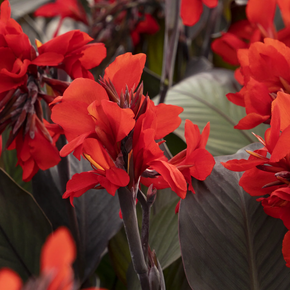
Cannova Bronze Orange Canna Lily is a vigorous, upright tropical perennial that fuses spectacular flower power with equally dramatic foliage. The broad, paddle-shaped leaves emerge in rich, deep bronze tones with plummy, coppery-burgundy overtones that provide a lush, exotic backdrop throughout the entire growing season. Held on strong, sturdy stems, the foliage has a glossy, almost waxy texture that amplifies its tropical character. Atop the stems, bold spikes of large, flag-like flowers open in a saturated fiery orange — vivid and warm, glowing like embers against the dark leaves. Flowers are produced in continuous succession rather than in a single flush, ensuring that the display never stops from late spring through hard frost. As an F1 hybrid in the Cannova Series, this variety is grown from seed, making it completely virus-free — a key distinction from older vegetatively propagated cannas, which are highly susceptible to canna virus transmitted through infected rhizomes and insect vectors. The overall effect is a plant that feels simultaneously lush, bold, and refined — equally at home in a formal landscape border or a casual cottage-style container garden.
Mature Size
| Characteristic | Measurement |
|---|---|
| Mature Height | 30 to 48 inches (3 to 4 feet) |
| Mature Spread | 14 to 20 inches |
| Growth Habit | Upright, compact, slightly spreading |
| Growth Rate | Fast |
| Spacing (in ground) | 18 to 24 inches apart |
| Spacing (in containers) | 1 plant per 18-inch or larger pot |
Cannova Bronze Orange remains noticeably more compact than most older heirloom canna varieties, which frequently reach 5 to 6 feet or taller. Its restrained, self-supporting habit means no staking is required, even in locations with summer breezes. In very long, hot growing seasons such as those found in the lower elevations of Northern California, plants may push toward the upper end of the height range.
Hardiness Zones and Climate
Cannova Bronze Orange Canna Lily is hardy in USDA Zones 8 through 11, covering most of Northern California and the warmer regions of Southern Oregon. In these zones, the underground rhizomes survive winter in the ground and reliably resprout each spring as soil temperatures warm. In Zone 7, it can be grown as a perennial with heavy winter mulching after the first frost. In Zones 6 and below, it is best treated as a stunning tropical annual, or rhizomes can be dug and stored indoors over winter. This canna thrives in hot, humid conditions and actively benefits from summer heat — the hotter the summer, the more robust the growth and flowering. It is well suited to the warm summers of the Rogue Valley and the Sacramento Valley, as well as coastal and inland areas of Northern California.
- Zones 8-11: Fully perennial; leave rhizomes in ground year-round
- Zone 7: Perennial with heavy mulching (4 to 6 inches) after first frost
- Zones 6 and below: Grow as a tropical annual or dig and store rhizomes for winter
- Optimal summer temperature range: 60 to 90°F
Sunlight Requirements
Cannova Bronze Orange Canna Lily demands full sun for peak performance — a minimum of 6 to 8 hours of direct sunlight per day is ideal. Full sun maximizes flower production, intensifies the bronze foliage color, and keeps the plant's habit compact and upright. In hot inland climates, such as the Central Valley or low-elevation sites in Southern Oregon, a small amount of light afternoon shade can prevent leaf scorch during extreme heat events, but will reduce the total number of blooms produced. Avoid heavily shaded sites entirely, as low light causes weak, leggy growth, washed-out foliage, and poor flowering. For best results, choose the sunniest, warmest spot in your garden — near a south- or west-facing wall, poolside, or in an open bed with no canopy overhead.
Soil and pH Preferences
This canna performs best in rich, fertile soil that retains consistent moisture while still draining surface water effectively. It is not fussy about soil pH and will grow well across a range of conditions, though it reaches its full potential in moderately acidic to neutral soil in the pH 6.0 to 7.0 range. Amending planting beds with 3 to 4 inches of compost worked into the top 12 inches of soil before planting will significantly improve performance in both sandy and clay-heavy soils. As a plant native to tropical and subtropical environments, it tolerates and even appreciates heavier, moisture-retentive soils — including clay — as long as standing water does not persist around the crown and rhizomes for extended periods, which can cause rot. It is also notably tolerant of urban soils and pollution, making it a solid choice for city gardens and streetscape plantings.
- Preferred soil type: Rich, humus-amended, moisture-retentive loam
- Soil pH: 6.0 to 7.0 (adaptable to a wider range)
- Tolerates: Clay soils, moist soils, urban pollution
- Avoid: Dry, sandy soils with no organic matter; chronically waterlogged sites
Watering Guide
Cannas are naturally moisture-loving plants with origins in tropical and subtropical wetlands, and Cannova Bronze Orange is no exception. Consistent, generous watering throughout the growing season is essential to achieving the lush foliage and continuous bloom the variety is known for. During active growth in spring and summer, water deeply two to three times per week, maintaining evenly moist — but not waterlogged — soil. Allow the top inch of soil to begin drying slightly between waterings rather than keeping it perpetually saturated. Inconsistent moisture, particularly prolonged dry spells, leads to browning leaf edges, stunted growth, and reduced flowering. Established rhizomes in the ground have some drought tolerance but will perform significantly better with regular irrigation during hot, dry summers. Container-grown plants dry out much faster than those in the ground and may require daily watering during peak summer heat. Mulching the root zone with 2 to 3 inches of organic material such as bark or compost helps retain soil moisture and moderate soil temperature between waterings.
Fertilizing
Cannova Bronze Orange is a heavy feeder that rewards a consistent fertilization program with exceptionally lush growth and nonstop blooms. Begin fertilizing at planting time with a balanced, slow-release granular fertilizer (10-10-10) worked into the soil. Switch to a water-soluble balanced fertilizer (such as 20-20-20) applied every two to three weeks throughout the active growing season for maximum flower production. For particularly outstanding results, some growers supplement with a bloom-boosting fertilizer higher in phosphorus (the middle number) once the plant begins setting flower buds. Container-grown plants, which have a limited soil volume, benefit from even more frequent liquid feeding — every one to two weeks is appropriate. Stop all fertilization approximately six weeks before the average first frost date in your area to allow the plant to naturally slow down and the rhizomes to harden off before winter dormancy. Avoid excessive nitrogen-only fertilizers late in the season, which encourage lush foliage at the expense of root storage and winter hardiness.
Planting Instructions
- Choose a site receiving at least 6 to 8 hours of direct sun daily with access to consistent moisture.
- Wait until all danger of frost has passed and soil has warmed to at least 60°F before planting outdoors.
- Prepare the planting bed by working 3 to 4 inches of compost into the top 12 inches of soil to improve fertility and moisture retention.
- Dig a hole slightly wider and deeper than the root ball of the nursery container.
- Remove the plant from its container carefully, loosening any circling roots before placing it in the hole.
- Set the plant at the same depth it was growing in its nursery container — do not plant too deep, as burying the crown can encourage rot.
- Backfill with amended soil, firm gently around the base, and water thoroughly to settle the roots and eliminate air pockets.
- Apply 2 to 3 inches of organic mulch around the base, keeping mulch pulled back slightly from the stem to prevent crown rot.
- Water deeply immediately after planting and maintain consistent moisture throughout the establishment period.
- For container planting, use a large pot (at least 12 to 18 inches wide and deep) with drainage holes, filled with a rich, moisture-retentive potting mix.
Pruning and Maintenance
Cannova Bronze Orange Canna Lily is relatively low-maintenance once established, but a few routine tasks keep it looking its best and blooming at its maximum potential throughout the season.
- Deadheading: Remove spent flower stalks at their base as soon as blooms fade. This encourages the plant to redirect energy into producing the next round of flowering rather than setting seed.
- Leaf cleanup: Remove yellowed, tattered, or damaged leaves throughout the season by cutting them cleanly at or near ground level to maintain a tidy appearance and improve air circulation.
- Controlling height: In very long, hot growing seasons, plants may push toward the taller end of their size range. After each flush of flowering, cutting the flowering stalk back to the 3rd or 4th leaf (approximately 36 inches from the ground) encourages a more compact, bushy habit and promotes reblooming.
- End-of-season cutback: After the first killing frost, cut foliage and stems back to 6 inches above ground level. In Zones 8 and above, leave rhizomes in place and mulch heavily. In colder zones, dig rhizomes for indoor storage.
- Spring cleanup: In late winter or early spring, remove any remaining dead foliage before new growth emerges. Divide crowded clumps every 3 to 4 years to reinvigorate plants and control spread.
Overwintering and Rhizome Storage
In USDA Zones 8 through 11 — which includes most of our Southern Oregon and Northern California service area — Cannova Bronze Orange rhizomes can remain in the ground year-round. After the first frost kills back the foliage, cut stems to about 6 inches, apply a generous 4 to 6 inch layer of protective mulch over the root zone, and leave the rhizomes undisturbed until spring growth resumes. In Zone 7 or in areas with cold, wet winters, it is wise to dig the rhizomes for storage as a precaution.
To store rhizomes for winter in colder climates:
- Wait until the first frost blackens the foliage, then cut stems back to 6 inches.
- Use a spade or garden fork to carefully lift the entire clump of rhizomes from the ground, working several inches outside the base to avoid cutting the rhizomes.
- Gently shake off excess soil and allow the rhizomes to dry outdoors for 2 to 3 days in a sheltered location.
- Pack the dried rhizomes loosely in barely moist peat moss, vermiculite, or coco coir in a breathable container (mesh bag, cardboard box, or wooden crate).
- Store in a cool, dry, frost-free location at 45 to 55°F — a basement, garage, or root cellar works well.
- Check periodically through winter and lightly mist the packing medium if rhizomes appear to be shriveling.
- Replant outdoors after the last frost date once soil has warmed to 60°F.
Container Growing
Cannova Bronze Orange Canna Lily excels as a container specimen and is one of the best cannas available for patio, deck, and poolside container displays. Its compact, upright habit makes it the ideal "thriller" in large container combinations — plant it at or near the center of the pot, surrounded by lower-growing spillers and mid-height fillers in complementary colors. It is also bold enough to be grown as a solo specimen in a large, dramatic pot, where it creates an instant tropical focal point.
- Minimum container size: 12 to 18 inches wide and deep; larger is always better for moisture retention and root room
- Drainage: Containers must have drainage holes — cannas need moisture but will rot if roots sit in stagnant water
- Potting mix: Use a rich, moisture-retentive potting mix amended with compost or a slow-release fertilizer at planting
- Watering: Containers dry out rapidly in summer heat; check daily and water whenever the top inch of soil is dry — this may mean daily watering during hot spells
- Fertilizing: Supplement with liquid fertilizer every 1 to 2 weeks throughout the growing season, as nutrients leach from containers faster than from ground soil
- Winter storage: In colder climates, allow the pot to dry somewhat after frost, then move the entire container to a cool, frost-free location for winter storage without disturbing the rhizomes
Landscape Uses
Few plants deliver the visual impact of Cannova Bronze Orange across such a wide range of landscape applications. Its combination of tropical foliage drama and continuous orange bloom makes it one of the most versatile warm-season plants available for Southern Oregon and Northern California gardens.
- Poolside and water feature planting: The tropical character of the bold bronze foliage and vivid orange flowers is perfectly at home near pools, ponds, streams, and fountains, creating a resort-like atmosphere.
- Mixed border accent: Use as a dramatic mid-border or back-of-border focal point, anchoring summer color schemes with its height, texture, and bold hue.
- Mass plantings: Planted in sweeping drifts of 5 or more, Cannova Bronze Orange creates breathtaking waves of color across large landscape beds and commercial plantings.
- Container thriller: An outstanding centerpiece plant in large patio pots, planter boxes, and urns.
- Privacy screen or seasonal backdrop: Planted in a row, the upright 3 to 4 foot stems and broad foliage create an effective seasonal screen or colorful backdrop for lower-growing plants.
- Tropical-themed gardens: Pairs naturally with other tropical and subtropical species to create immersive, bold garden rooms.
- Cut flower gardens: The tall flower stalks with their vivid orange blooms make excellent, long-lasting cut flowers for fresh arrangements.
Companion Plants
Cannova Bronze Orange pairs beautifully with plants that complement its fiery orange blooms and deep bronze foliage. Consider these combinations for striking, cohesive garden designs:
- Elephant Ears (Colocasia or Alocasia): The massive, dramatic leaves of elephant ears amplify the tropical theme and provide a bold contrast in leaf size and texture.
- Ornamental Bananas (Musa species): Echoes the lush, tropical look and provides a tall background for the cannas.
- Angelonia (Angelonia angustifolia): Delicate, upright spikes of purple or white blooms soften the boldness of the canna while thriving in the same hot, sunny conditions.
- Persian Shield (Strobilanthes dyerianus): The iridescent purple and silver foliage provides a jewel-toned complement to the orange flowers and bronze leaves.
- Lantana: Heat-loving and long-blooming, orange or yellow lantana echoes the warm color palette and attracts the same pollinators.
- Ornamental Grasses (such as Pennisetum or Miscanthus): Feathery grass plumes add movement and a contrasting fine texture that balances the canna's bold, coarse leaves.
- Salvia 'Black and Blue' or 'Amistad': Deep blue or purple salvia flowers create a dramatic, high-contrast pairing with the orange canna blooms.
- Coleus with dark foliage: Deep burgundy or black-leafed coleus varieties echo the bronze tones of the canna foliage and tie the planting together cohesively.
Wildlife Value
Cannova Bronze Orange Canna Lily is an excellent choice for pollinator and wildlife gardens. The tubular, nectar-rich orange flowers are a premier hummingbird magnet, drawing ruby-throated and rufous hummingbirds repeatedly throughout the day during their summer and fall feeding seasons. The long bloom period — from late spring through frost — means the plant functions as a reliable and consistent nectar source for weeks and months on end, far outlasting most other hummingbird-attracting plants. Butterflies, including swallowtails, fritillaries, and skippers, also visit the flowers regularly for nectar. The canna lily leafroller caterpillar (a North American native species) uses canna foliage as a host plant, supporting native moth populations as part of the broader food web. Cannova Bronze Orange is confirmed non-toxic to dogs and cats, making it a safe choice for gardens and patios shared with pets. It also offers moderate deer resistance, as deer tend to avoid the thick, waxy foliage — though no plant is entirely deer-proof in areas with heavy browsing pressure.
Pests and Diseases
As a virus-free F1 hybrid grown from seed, Cannova Bronze Orange has a significant built-in advantage over older canna varieties — it cannot inherit canna virus through its rhizomes, which is the most common and most damaging disease affecting traditional cannas. That said, like all garden plants, it benefits from regular monitoring for the following pests and issues:
- Aphids: Soft-bodied sap-suckers that cluster on new growth; dislodge with a strong stream of water or treat with insecticidal soap. Monitor closely, as aphids can transmit mosaic viruses.
- Canna Leafroller Caterpillars: The larvae of two native moth species roll themselves inside the leaves, causing ragged, tattered foliage. Treat with Bacillus thuringiensis (Bt) spray applied to thoroughly drench the leaves, especially in late afternoon. Repeat applications may be needed for multiple generations per season.
- Spider Mites: Tiny arachnids that cause silvery stippling and webbing on foliage, especially in hot, dry conditions. Treat with neem oil applied to both leaf surfaces; repeat every 7 to 10 days.
- Japanese Beetles: Feed on flowers and foliage; hand-pick adults into soapy water and apply beneficial nematodes to soil to target grubs.
- Thrips: Tiny insects causing silvery streaking and stippling on leaves and flowers; monitor with blue sticky traps and treat with neem oil or insecticidal soap.
- Scale and Mealybugs: Sap-sucking insects that appear as waxy white masses or brown bumps on stems; treat with horticultural oil or insecticidal soap.
- Canna Rust (Puccinia thaliae): A fungal disease causing orange-yellow pustules on the undersides of leaves. Improve air circulation, avoid overhead watering, and remove and dispose of infected leaves. Fungicide applications may be warranted in severe cases.
- Rhizome Rot: Caused by consistently waterlogged soil, especially in winter. Ensure well-draining amended soil and avoid planting in low-lying areas that collect standing water.
Seasonal Interest
Cannova Bronze Orange delivers a long and exceptionally rewarding season of interest that begins the moment new growth emerges in spring and continues without pause until the first killing frost of autumn.
- Spring (emergence): Rich bronze, tightly rolled leaves unfurl from the ground as soil warms, with the metallic, coppery-burgundy foliage immediately commanding attention in the garden even before the first blooms open.
- Late Spring through Early Summer (first bloom): The first flush of brilliant orange flower spikes emerges above the foliage, signaling the beginning of a non-stop flowering performance. Hummingbirds arrive quickly once blooming begins.
- Summer (peak season): The plant reaches its full mature height and width, with a continuous succession of fresh flower spikes replacing spent ones. The bold, tropical presence is at its most dramatic during the hottest weeks of summer.
- Fall (extended bloom): Flowering continues vigorously into autumn, often with no reduction in intensity, right up until frost blackens the foliage. The warm orange tones harmonize naturally with the surrounding autumn color palette.
- Winter (dormancy): In mild climates (Zones 8-11), rhizomes remain dormant underground before resprouting in spring. In colder regions, stored rhizomes wait out winter in a cool, dry location.
- Fiery orange blooms crown deep, plummy bronze foliage all season long — flowering continuously from late spring through the first frost for months of nonstop tropical color.
- A compact, virus-free F1 hybrid that stays 3 to 4 feet tall — bold enough to anchor borders and containers without the staking and sprawl of older canna varieties.
- Thrives in heat, humidity, and consistently moist soil — perfect for poolside plantings, water garden edges, patio containers, and mass landscape designs in Southern Oregon and Northern California.
- A magnet for hummingbirds and butterflies, non-toxic to pets, and moderately deer resistant — a hardworking, wildlife-friendly showpiece for warm-season gardens.
Cannova Bronze Orange Canna Lily (Canna x generalis 'Bronze Orange') is one of the most electrifying tropical perennials you can grow, delivering an explosive combination of luminous, saturated orange blooms set against broad, deeply bronzed foliage that commands attention from the moment it emerges in spring. An award-winning F1 hybrid in the Cannova Series, this Ball Seed selection is grown from seed rather than rhizome division, making it entirely virus-free — a significant advantage over older vegetatively propagated canna varieties that are prone to canna virus. Unlike traditional cannas that can reach 6 feet or more and become unwieldy, Cannova Bronze Orange maintains a tidy, upright habit of 3 to 4 feet, making it an ideal "thriller" specimen in large patio containers, a standout mid-border accent, or a stunning mass planting along fences, poolside edges, and water features where its naturally tropical character feels most at home. The succession of flag-like orange flowers rises on strong, upright stems continuously from late spring until frost, attracting hummingbirds and butterflies throughout the season without missing a beat. Hardy as a true perennial in USDA Zones 8 through 11 — which encompasses much of Southern Oregon and virtually all of Northern California — and easily overwintered as a stored rhizome in colder areas, Cannova Bronze Orange Canna Lily brings undeniable, long-season drama to any sunny garden space that can offer it the heat and moisture it craves.
Plant Description
Cannova Bronze Orange Canna Lily is a vigorous, upright tropical perennial that fuses spectacular flower power with equally dramatic foliage. The broad, paddle-shaped leaves emerge in rich, deep bronze tones with plummy, coppery-burgundy overtones that provide a lush, exotic backdrop throughout the entire growing season. Held on strong, sturdy stems, the foliage has a glossy, almost waxy texture that amplifies its tropical character. Atop the stems, bold spikes of large, flag-like flowers open in a saturated fiery orange — vivid and warm, glowing like embers against the dark leaves. Flowers are produced in continuous succession rather than in a single flush, ensuring that the display never stops from late spring through hard frost. As an F1 hybrid in the Cannova Series, this variety is grown from seed, making it completely virus-free — a key distinction from older vegetatively propagated cannas, which are highly susceptible to canna virus transmitted through infected rhizomes and insect vectors. The overall effect is a plant that feels simultaneously lush, bold, and refined — equally at home in a formal landscape border or a casual cottage-style container garden.
Mature Size
| Characteristic | Measurement |
|---|---|
| Mature Height | 30 to 48 inches (3 to 4 feet) |
| Mature Spread | 14 to 20 inches |
| Growth Habit | Upright, compact, slightly spreading |
| Growth Rate | Fast |
| Spacing (in ground) | 18 to 24 inches apart |
| Spacing (in containers) | 1 plant per 18-inch or larger pot |
Cannova Bronze Orange remains noticeably more compact than most older heirloom canna varieties, which frequently reach 5 to 6 feet or taller. Its restrained, self-supporting habit means no staking is required, even in locations with summer breezes. In very long, hot growing seasons such as those found in the lower elevations of Northern California, plants may push toward the upper end of the height range.
Hardiness Zones and Climate
Cannova Bronze Orange Canna Lily is hardy in USDA Zones 8 through 11, covering most of Northern California and the warmer regions of Southern Oregon. In these zones, the underground rhizomes survive winter in the ground and reliably resprout each spring as soil temperatures warm. In Zone 7, it can be grown as a perennial with heavy winter mulching after the first frost. In Zones 6 and below, it is best treated as a stunning tropical annual, or rhizomes can be dug and stored indoors over winter. This canna thrives in hot, humid conditions and actively benefits from summer heat — the hotter the summer, the more robust the growth and flowering. It is well suited to the warm summers of the Rogue Valley and the Sacramento Valley, as well as coastal and inland areas of Northern California.
- Zones 8-11: Fully perennial; leave rhizomes in ground year-round
- Zone 7: Perennial with heavy mulching (4 to 6 inches) after first frost
- Zones 6 and below: Grow as a tropical annual or dig and store rhizomes for winter
- Optimal summer temperature range: 60 to 90°F
Sunlight Requirements
Cannova Bronze Orange Canna Lily demands full sun for peak performance — a minimum of 6 to 8 hours of direct sunlight per day is ideal. Full sun maximizes flower production, intensifies the bronze foliage color, and keeps the plant's habit compact and upright. In hot inland climates, such as the Central Valley or low-elevation sites in Southern Oregon, a small amount of light afternoon shade can prevent leaf scorch during extreme heat events, but will reduce the total number of blooms produced. Avoid heavily shaded sites entirely, as low light causes weak, leggy growth, washed-out foliage, and poor flowering. For best results, choose the sunniest, warmest spot in your garden — near a south- or west-facing wall, poolside, or in an open bed with no canopy overhead.
Soil and pH Preferences
This canna performs best in rich, fertile soil that retains consistent moisture while still draining surface water effectively. It is not fussy about soil pH and will grow well across a range of conditions, though it reaches its full potential in moderately acidic to neutral soil in the pH 6.0 to 7.0 range. Amending planting beds with 3 to 4 inches of compost worked into the top 12 inches of soil before planting will significantly improve performance in both sandy and clay-heavy soils. As a plant native to tropical and subtropical environments, it tolerates and even appreciates heavier, moisture-retentive soils — including clay — as long as standing water does not persist around the crown and rhizomes for extended periods, which can cause rot. It is also notably tolerant of urban soils and pollution, making it a solid choice for city gardens and streetscape plantings.
- Preferred soil type: Rich, humus-amended, moisture-retentive loam
- Soil pH: 6.0 to 7.0 (adaptable to a wider range)
- Tolerates: Clay soils, moist soils, urban pollution
- Avoid: Dry, sandy soils with no organic matter; chronically waterlogged sites
Watering Guide
Cannas are naturally moisture-loving plants with origins in tropical and subtropical wetlands, and Cannova Bronze Orange is no exception. Consistent, generous watering throughout the growing season is essential to achieving the lush foliage and continuous bloom the variety is known for. During active growth in spring and summer, water deeply two to three times per week, maintaining evenly moist — but not waterlogged — soil. Allow the top inch of soil to begin drying slightly between waterings rather than keeping it perpetually saturated. Inconsistent moisture, particularly prolonged dry spells, leads to browning leaf edges, stunted growth, and reduced flowering. Established rhizomes in the ground have some drought tolerance but will perform significantly better with regular irrigation during hot, dry summers. Container-grown plants dry out much faster than those in the ground and may require daily watering during peak summer heat. Mulching the root zone with 2 to 3 inches of organic material such as bark or compost helps retain soil moisture and moderate soil temperature between waterings.
Fertilizing
Cannova Bronze Orange is a heavy feeder that rewards a consistent fertilization program with exceptionally lush growth and nonstop blooms. Begin fertilizing at planting time with a balanced, slow-release granular fertilizer (10-10-10) worked into the soil. Switch to a water-soluble balanced fertilizer (such as 20-20-20) applied every two to three weeks throughout the active growing season for maximum flower production. For particularly outstanding results, some growers supplement with a bloom-boosting fertilizer higher in phosphorus (the middle number) once the plant begins setting flower buds. Container-grown plants, which have a limited soil volume, benefit from even more frequent liquid feeding — every one to two weeks is appropriate. Stop all fertilization approximately six weeks before the average first frost date in your area to allow the plant to naturally slow down and the rhizomes to harden off before winter dormancy. Avoid excessive nitrogen-only fertilizers late in the season, which encourage lush foliage at the expense of root storage and winter hardiness.
Planting Instructions
- Choose a site receiving at least 6 to 8 hours of direct sun daily with access to consistent moisture.
- Wait until all danger of frost has passed and soil has warmed to at least 60°F before planting outdoors.
- Prepare the planting bed by working 3 to 4 inches of compost into the top 12 inches of soil to improve fertility and moisture retention.
- Dig a hole slightly wider and deeper than the root ball of the nursery container.
- Remove the plant from its container carefully, loosening any circling roots before placing it in the hole.
- Set the plant at the same depth it was growing in its nursery container — do not plant too deep, as burying the crown can encourage rot.
- Backfill with amended soil, firm gently around the base, and water thoroughly to settle the roots and eliminate air pockets.
- Apply 2 to 3 inches of organic mulch around the base, keeping mulch pulled back slightly from the stem to prevent crown rot.
- Water deeply immediately after planting and maintain consistent moisture throughout the establishment period.
- For container planting, use a large pot (at least 12 to 18 inches wide and deep) with drainage holes, filled with a rich, moisture-retentive potting mix.
Pruning and Maintenance
Cannova Bronze Orange Canna Lily is relatively low-maintenance once established, but a few routine tasks keep it looking its best and blooming at its maximum potential throughout the season.
- Deadheading: Remove spent flower stalks at their base as soon as blooms fade. This encourages the plant to redirect energy into producing the next round of flowering rather than setting seed.
- Leaf cleanup: Remove yellowed, tattered, or damaged leaves throughout the season by cutting them cleanly at or near ground level to maintain a tidy appearance and improve air circulation.
- Controlling height: In very long, hot growing seasons, plants may push toward the taller end of their size range. After each flush of flowering, cutting the flowering stalk back to the 3rd or 4th leaf (approximately 36 inches from the ground) encourages a more compact, bushy habit and promotes reblooming.
- End-of-season cutback: After the first killing frost, cut foliage and stems back to 6 inches above ground level. In Zones 8 and above, leave rhizomes in place and mulch heavily. In colder zones, dig rhizomes for indoor storage.
- Spring cleanup: In late winter or early spring, remove any remaining dead foliage before new growth emerges. Divide crowded clumps every 3 to 4 years to reinvigorate plants and control spread.
Overwintering and Rhizome Storage
In USDA Zones 8 through 11 — which includes most of our Southern Oregon and Northern California service area — Cannova Bronze Orange rhizomes can remain in the ground year-round. After the first frost kills back the foliage, cut stems to about 6 inches, apply a generous 4 to 6 inch layer of protective mulch over the root zone, and leave the rhizomes undisturbed until spring growth resumes. In Zone 7 or in areas with cold, wet winters, it is wise to dig the rhizomes for storage as a precaution.
To store rhizomes for winter in colder climates:
- Wait until the first frost blackens the foliage, then cut stems back to 6 inches.
- Use a spade or garden fork to carefully lift the entire clump of rhizomes from the ground, working several inches outside the base to avoid cutting the rhizomes.
- Gently shake off excess soil and allow the rhizomes to dry outdoors for 2 to 3 days in a sheltered location.
- Pack the dried rhizomes loosely in barely moist peat moss, vermiculite, or coco coir in a breathable container (mesh bag, cardboard box, or wooden crate).
- Store in a cool, dry, frost-free location at 45 to 55°F — a basement, garage, or root cellar works well.
- Check periodically through winter and lightly mist the packing medium if rhizomes appear to be shriveling.
- Replant outdoors after the last frost date once soil has warmed to 60°F.
Container Growing
Cannova Bronze Orange Canna Lily excels as a container specimen and is one of the best cannas available for patio, deck, and poolside container displays. Its compact, upright habit makes it the ideal "thriller" in large container combinations — plant it at or near the center of the pot, surrounded by lower-growing spillers and mid-height fillers in complementary colors. It is also bold enough to be grown as a solo specimen in a large, dramatic pot, where it creates an instant tropical focal point.
- Minimum container size: 12 to 18 inches wide and deep; larger is always better for moisture retention and root room
- Drainage: Containers must have drainage holes — cannas need moisture but will rot if roots sit in stagnant water
- Potting mix: Use a rich, moisture-retentive potting mix amended with compost or a slow-release fertilizer at planting
- Watering: Containers dry out rapidly in summer heat; check daily and water whenever the top inch of soil is dry — this may mean daily watering during hot spells
- Fertilizing: Supplement with liquid fertilizer every 1 to 2 weeks throughout the growing season, as nutrients leach from containers faster than from ground soil
- Winter storage: In colder climates, allow the pot to dry somewhat after frost, then move the entire container to a cool, frost-free location for winter storage without disturbing the rhizomes
Landscape Uses
Few plants deliver the visual impact of Cannova Bronze Orange across such a wide range of landscape applications. Its combination of tropical foliage drama and continuous orange bloom makes it one of the most versatile warm-season plants available for Southern Oregon and Northern California gardens.
- Poolside and water feature planting: The tropical character of the bold bronze foliage and vivid orange flowers is perfectly at home near pools, ponds, streams, and fountains, creating a resort-like atmosphere.
- Mixed border accent: Use as a dramatic mid-border or back-of-border focal point, anchoring summer color schemes with its height, texture, and bold hue.
- Mass plantings: Planted in sweeping drifts of 5 or more, Cannova Bronze Orange creates breathtaking waves of color across large landscape beds and commercial plantings.
- Container thriller: An outstanding centerpiece plant in large patio pots, planter boxes, and urns.
- Privacy screen or seasonal backdrop: Planted in a row, the upright 3 to 4 foot stems and broad foliage create an effective seasonal screen or colorful backdrop for lower-growing plants.
- Tropical-themed gardens: Pairs naturally with other tropical and subtropical species to create immersive, bold garden rooms.
- Cut flower gardens: The tall flower stalks with their vivid orange blooms make excellent, long-lasting cut flowers for fresh arrangements.
Companion Plants
Cannova Bronze Orange pairs beautifully with plants that complement its fiery orange blooms and deep bronze foliage. Consider these combinations for striking, cohesive garden designs:
- Elephant Ears (Colocasia or Alocasia): The massive, dramatic leaves of elephant ears amplify the tropical theme and provide a bold contrast in leaf size and texture.
- Ornamental Bananas (Musa species): Echoes the lush, tropical look and provides a tall background for the cannas.
- Angelonia (Angelonia angustifolia): Delicate, upright spikes of purple or white blooms soften the boldness of the canna while thriving in the same hot, sunny conditions.
- Persian Shield (Strobilanthes dyerianus): The iridescent purple and silver foliage provides a jewel-toned complement to the orange flowers and bronze leaves.
- Lantana: Heat-loving and long-blooming, orange or yellow lantana echoes the warm color palette and attracts the same pollinators.
- Ornamental Grasses (such as Pennisetum or Miscanthus): Feathery grass plumes add movement and a contrasting fine texture that balances the canna's bold, coarse leaves.
- Salvia 'Black and Blue' or 'Amistad': Deep blue or purple salvia flowers create a dramatic, high-contrast pairing with the orange canna blooms.
- Coleus with dark foliage: Deep burgundy or black-leafed coleus varieties echo the bronze tones of the canna foliage and tie the planting together cohesively.
Wildlife Value
Cannova Bronze Orange Canna Lily is an excellent choice for pollinator and wildlife gardens. The tubular, nectar-rich orange flowers are a premier hummingbird magnet, drawing ruby-throated and rufous hummingbirds repeatedly throughout the day during their summer and fall feeding seasons. The long bloom period — from late spring through frost — means the plant functions as a reliable and consistent nectar source for weeks and months on end, far outlasting most other hummingbird-attracting plants. Butterflies, including swallowtails, fritillaries, and skippers, also visit the flowers regularly for nectar. The canna lily leafroller caterpillar (a North American native species) uses canna foliage as a host plant, supporting native moth populations as part of the broader food web. Cannova Bronze Orange is confirmed non-toxic to dogs and cats, making it a safe choice for gardens and patios shared with pets. It also offers moderate deer resistance, as deer tend to avoid the thick, waxy foliage — though no plant is entirely deer-proof in areas with heavy browsing pressure.
Pests and Diseases
As a virus-free F1 hybrid grown from seed, Cannova Bronze Orange has a significant built-in advantage over older canna varieties — it cannot inherit canna virus through its rhizomes, which is the most common and most damaging disease affecting traditional cannas. That said, like all garden plants, it benefits from regular monitoring for the following pests and issues:
- Aphids: Soft-bodied sap-suckers that cluster on new growth; dislodge with a strong stream of water or treat with insecticidal soap. Monitor closely, as aphids can transmit mosaic viruses.
- Canna Leafroller Caterpillars: The larvae of two native moth species roll themselves inside the leaves, causing ragged, tattered foliage. Treat with Bacillus thuringiensis (Bt) spray applied to thoroughly drench the leaves, especially in late afternoon. Repeat applications may be needed for multiple generations per season.
- Spider Mites: Tiny arachnids that cause silvery stippling and webbing on foliage, especially in hot, dry conditions. Treat with neem oil applied to both leaf surfaces; repeat every 7 to 10 days.
- Japanese Beetles: Feed on flowers and foliage; hand-pick adults into soapy water and apply beneficial nematodes to soil to target grubs.
- Thrips: Tiny insects causing silvery streaking and stippling on leaves and flowers; monitor with blue sticky traps and treat with neem oil or insecticidal soap.
- Scale and Mealybugs: Sap-sucking insects that appear as waxy white masses or brown bumps on stems; treat with horticultural oil or insecticidal soap.
- Canna Rust (Puccinia thaliae): A fungal disease causing orange-yellow pustules on the undersides of leaves. Improve air circulation, avoid overhead watering, and remove and dispose of infected leaves. Fungicide applications may be warranted in severe cases.
- Rhizome Rot: Caused by consistently waterlogged soil, especially in winter. Ensure well-draining amended soil and avoid planting in low-lying areas that collect standing water.
Seasonal Interest
Cannova Bronze Orange delivers a long and exceptionally rewarding season of interest that begins the moment new growth emerges in spring and continues without pause until the first killing frost of autumn.
- Spring (emergence): Rich bronze, tightly rolled leaves unfurl from the ground as soil warms, with the metallic, coppery-burgundy foliage immediately commanding attention in the garden even before the first blooms open.
- Late Spring through Early Summer (first bloom): The first flush of brilliant orange flower spikes emerges above the foliage, signaling the beginning of a non-stop flowering performance. Hummingbirds arrive quickly once blooming begins.
- Summer (peak season): The plant reaches its full mature height and width, with a continuous succession of fresh flower spikes replacing spent ones. The bold, tropical presence is at its most dramatic during the hottest weeks of summer.
- Fall (extended bloom): Flowering continues vigorously into autumn, often with no reduction in intensity, right up until frost blackens the foliage. The warm orange tones harmonize naturally with the surrounding autumn color palette.
- Winter (dormancy): In mild climates (Zones 8-11), rhizomes remain dormant underground before resprouting in spring. In colder regions, stored rhizomes wait out winter in a cool, dry location.
Related Products