
Zoom the image with the mouse
Bronze Carpet Stonecrop - 1 Gallon
SKU:
2106095
UPC:
014949709412
$13.99
- Stunning year-round color — new growth flushes salmon-orange in spring, matures to coppery bronze-green in summer, then deepens to rich burgundy-red in fall and winter
- Exceptionally drought-tolerant, low-maintenance ground cover that thrives in poor, rocky, or sandy soils where other plants struggle
- Dainty star-shaped pink flowers bloom in early to mid-summer, attracting butterflies and bees while rising delicately above the dense, mat-forming foliage
- Incredibly cold-hardy through USDA Zone 3, deer and rabbit resistant, and tolerant of slopes, erosion, and urban conditions
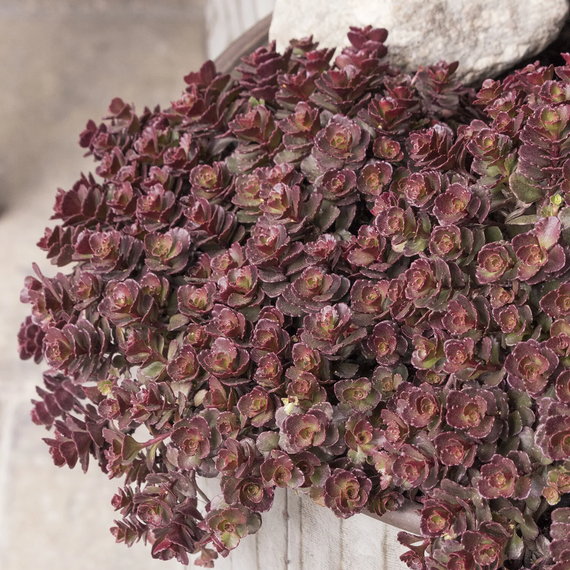
Sedum spurium 'Bronze Carpet' is a captivating, low-growing evergreen stonecrop that delivers a kaleidoscope of foliage color through every season, making it one of the most rewarding ground covers available for Pacific Coast gardens and beyond. Native to the Caucasus region and belonging to the succulent family Crassulaceae, this mat-forming perennial reaches just 3 to 6 inches tall and spreads 12 to 24 inches wide via creeping, branching stems that root readily at their nodes — quickly forming a dense, weed-suppressing carpet of foliage. Leaves emerge a vivid salmon-orange in spring, transition to bronzy green through the summer months, and then transform to deep burgundy-red as temperatures cool in autumn and winter, ensuring the planting never looks dull. In early to mid-summer, upright reddish flower stems rise to about 6 inches, crowned with clusters of tiny, five-petaled, star-shaped pink blooms that are magnets for butterflies and pollinators. Once established, Bronze Carpet Stonecrop is remarkably drought tolerant and thrives in full sun with excellent soil drainage — making it a perfect choice for rock gardens, sunny slopes, border fronts, stone wall pockets, pathway edging, and mixed containers. Its tolerance of poor soils, shallow rocky ground, coastal salt exposure, and urban pollution makes it as versatile as it is beautiful, while its resistance to deer, rabbits, and most serious pests ensures a nearly carefree growing experience in Southern Oregon and Northern California landscapes.
Plant Description
Bronze Carpet Stonecrop (Sedum spurium 'Bronze Carpet') is a herbaceous evergreen perennial succulent in the family Crassulaceae. It is a selected cultivar of Caucasian stonecrop, a species native to the Caucasus region of western Asia. The plant produces a dense mat of sprawling, branching stems that root easily at the nodes wherever they contact the ground. Thick, succulent, obovate leaves up to 1 inch long are arranged in two opposing rows along reddish stems — a trait that gives rise to the common name "two-row stonecrop." The foliage undergoes a remarkable seasonal color journey: new spring growth flushes a vivid salmon-orange, matures to coppery bronze-green over summer, and deepens to rich burgundy-red in fall for a stunning winter display. In early to mid-summer, clusters of tiny, five-petaled, star-shaped pink flowers appear on upright stems rising above the foliage, drawing butterflies and pollinators. This is a truly ground-hugging plant that stays low and dense, forming a tight weed-suppressing carpet over time.
Mature Size
| Attribute | Measurement |
|---|---|
| Foliage Height | 3 inches |
| Height in Bloom | Up to 6 inches |
| Spread | 12 to 24 inches |
| Growth Rate | Fast |
| Spacing (ground cover) | 10 to 12 inches apart |
Hardiness Zones
Bronze Carpet Stonecrop is exceptionally cold-hardy, rated for USDA Hardiness Zones 3 through 9. This means it can tolerate winter temperatures as low as -40 degrees F (Zone 3), making it one of the toughest ground covers available. It is evergreen in mild-winter climates such as those found throughout Southern Oregon and Northern California, where the foliage persists year-round and takes on its best burgundy-red winter color during cooler months. In regions with harsher winters, lower stem leaves may die back, but the newer growth near stem tips overwinters reliably, with the plant resuming vigorous growth in spring.
Sunlight Requirements
Bronze Carpet Stonecrop performs best in full sun, which encourages the most vibrant foliage coloration, compact growth, and prolific flowering. It requires a minimum of 6 hours of direct sunlight per day for optimal performance. It will tolerate partial shade (3 to 6 hours of sun), but reduced light tends to cause less intense foliage color, looser growth habit, and fewer flowers. Avoid deep or full shade, as the plant will become leggy, weak, and prone to rotting in low-light conditions. In the intense summer heat of Southern Oregon and Northern California valleys, a location with light afternoon shade can help prevent leaf scorch during heat waves.
Soil and pH Preferences
One of the greatest strengths of Bronze Carpet Stonecrop is its adaptability to poor soils. It actually thrives in nutrient-poor, sandy, gravelly, or rocky soils where many other plants fail. The single non-negotiable requirement is excellent drainage — this plant will not tolerate wet feet or standing water, which quickly leads to root rot. It grows well across a wide soil pH range and is not particular about acidity or alkalinity. It can handle shallow, rocky soils and slopes where erosion is a concern, and it tolerates coastal salt conditions and urban soil compaction. Amending heavy clay soils with coarse sand or gravel before planting is recommended in areas with poorly draining ground.
Watering Guide
Bronze Carpet Stonecrop is highly drought tolerant once established, making it an excellent choice for water-wise and low-maintenance landscapes. Follow these watering guidelines for best results:
- Newly planted: Water regularly — approximately once or twice per week — for the first growing season to help the root system establish in its new location.
- Established plants: Reduce watering significantly. In most Southern Oregon and Northern California climates, established plants need watering only every 2 to 3 weeks during the summer growing season, and rarely if at all during rainy seasons.
- Signs of thirst: Leaves will begin to look slightly wrinkled or lose their plump succulence when the plant genuinely needs water.
- Overwatering caution: Never allow soil to remain soggy. Root rot is the primary killer of this plant. Always allow the soil to dry out between waterings.
- Watering method: Water at the base of the plant rather than overhead to keep foliage dry and reduce the risk of fungal disease.
Fertilizing
Bronze Carpet Stonecrop is a light feeder and actually performs best in lean, low-nutrient soils. Over-fertilizing encourages lush but weak, floppy growth and can diminish the intensity of the foliage color. For most garden settings, no fertilizer is needed at all once plants are established. If growth appears very slow or foliage color seems pale, a single application of a diluted, balanced, low-nitrogen fertilizer (such as a 5-10-10 formula) in early spring as new growth emerges is sufficient. Avoid high-nitrogen fertilizers entirely, as they promote excessive leafy growth at the expense of flower production and the rich bronze-red color that makes this cultivar special.
Pruning and Maintenance
Bronze Carpet Stonecrop is a genuinely low-maintenance plant. Here are the key care tasks to keep it looking its best:
- Spring cleanup: In early spring, before new growth resumes, use scissors or garden shears to trim away any dead, winter-damaged, or untidy stems. This is the best time for an annual tidy-up.
- After flowering: Once blooms fade in mid-summer, deadhead the spent flower stalks to keep the planting tidy and encourage the plant's energy to return to foliage growth.
- Trimming for shape: If the mat begins to spread beyond its desired area or becomes overly thick in the center, trim back outer stems and thin crowded growth by up to one-third to promote strong, full regrowth and good air circulation.
- Division: Every 3 to 4 years, divide congested clumps in early spring to reinvigorate growth and propagate new plants for other areas of the garden.
- Avoid hard pruning in fall: Do not cut back heavily in autumn, as the winter foliage color is one of this plant's most attractive features.
Planting Instructions
- Choose the right spot: Select a location with full sun to partial shade and well-drained soil. Avoid low-lying areas where water pools after rain.
- Prepare the soil: If your soil is heavy clay, amend it thoroughly with coarse sand or fine gravel to improve drainage. No amendments are needed for sandy or loamy soils.
- Dig the hole: Dig a hole just as deep as the root ball and slightly wider. Place the plant so the crown sits at or just slightly above the surrounding soil level.
- Space correctly: For ground cover use, space plants 10 to 12 inches apart to allow them to knit together into a solid mat within one to two growing seasons.
- Backfill and firm: Fill in around the roots with native soil, gently firming it down to eliminate air pockets.
- Water in: Water thoroughly at planting to settle the soil around the roots.
- Mulch lightly: A thin layer of gravel mulch around (but not on top of) the plants can help retain soil moisture during establishment while maintaining the sharp drainage these plants require. Avoid organic mulch piled against the stems.
- Best planting time: Plant in spring or early fall for best establishment results.
Seasonal Interest
| Season | What to Expect |
|---|---|
| Spring | Vivid salmon-orange new growth flushes from the stem tips, creating a warm, glowing carpet of color as temperatures rise |
| Early Summer | Foliage transitions to coppery bronze-green; upright flower stems rise to 6 inches bearing clusters of dainty star-shaped pink blooms that attract butterflies and bees |
| Late Summer | Dense bronze-green foliage mat provides weed-suppressing ground cover; brick-red stem color adds additional visual interest |
| Fall | Foliage deepens to gorgeous dark burgundy-red — one of the most striking fall color displays available from any ground cover |
| Winter | Evergreen in mild climates; retains rich burgundy-red foliage color through winter, providing year-round structure and color in the landscape |
Landscape Uses
Bronze Carpet Stonecrop is one of the most versatile low-growing perennials available, suited to a wide range of landscape applications:
- Ground cover: Ideal for mass planting in sunny areas where a weed-suppressing, low-maintenance carpet of year-round color is desired
- Rock and alpine gardens: Perfect in gaps between boulders and along rocky outcroppings, mimicking its natural habitat
- Border edging: Creates a neat, colorful edge along pathways, driveways, and garden borders
- Sunny slopes and banks: Excellent for erosion control on slopes due to its fast-spreading, dense mat and tolerance of dry, shallow soils
- Stone wall pockets: Cascades beautifully from crevices and pockets in retaining walls and dry-stacked stone features
- Containers and mixed planters: Adds trailing texture and season-long color contrast to mixed succulent containers and patio pots
- Between stepping stones: Tolerates light foot traffic and fills in beautifully between pavers and stepping stones
- Parking strips and hell strips: Thrives in the hot, dry, reflected-heat conditions common to roadside planting strips
Companion Plants
Bronze Carpet Stonecrop pairs beautifully with plants that share its preference for full sun, excellent drainage, and lean soils. Its low, spreading habit and rich bronze and burgundy foliage tones create excellent contrast with upright forms and contrasting textures. Consider these companions:
- Hens and Chicks (Sempervivum spp.): Fellow succulents with rosette forms and similar care needs — a natural pairing in rock gardens and containers
- Yarrow (Achillea millefolium): Upright, drought-tolerant perennial with fern-like foliage and flat-topped flower clusters that contrast beautifully with Bronze Carpet's mat habit
- Coneflower (Echinacea purpurea): Tall, bold blooms rise above the low stonecrop mat for striking height contrast and extended seasonal interest
- Daylilies (Hemerocallis spp.): Strap-like foliage and showy blooms provide excellent textural contrast above the dense succulent mat
- Lavender (Lavandula spp.): Shares the love of sun and lean, well-drained soils; the silver-gray foliage and purple blooms contrast vividly with bronze-red stonecrop
- Blue Fescue (Festuca glauca): The cool blue-gray, needle-like tufts of this ornamental grass create stunning color contrast against the warm bronze and red tones
- Dianthus (Dianthus spp.): Bright, spicy-scented blooms and narrow blue-green foliage provide excellent seasonal color alongside the stonecrop
- Creeping Thyme (Thymus serpyllum): Another mat-forming, drought-tolerant ground cover that intermingles well to create a tapestry of texture and color
Pests and Diseases
Bronze Carpet Stonecrop has very few serious pest or disease problems, which contributes to its reputation as a carefree perennial. The most important preventative measure is ensuring excellent soil drainage, as overly wet conditions are the primary cause of plant decline. Here is what to watch for:
- Root rot: The most common issue, caused by overwatering or poor drainage. Prevent by planting in well-drained soils and avoiding overwatering. Wilting, blackened stems, and mushy roots are warning signs.
- Slugs and snails: These pests may nibble on succulent foliage, particularly in moist conditions. Hand-pick them in the evening or use iron phosphate bait around affected plantings.
- Scale insects: Occasionally appear as small bumps on stems. Treat light infestations by wiping with rubbing alcohol on a cotton swab, or apply horticultural oil for larger problems.
- Aphids and spider mites: Rarely troublesome but can occur in dry, dusty conditions. A strong blast of water or an application of insecticidal soap typically resolves the issue.
- Deer and rabbits: Both typically leave this plant alone, making it an excellent choice for gardens with persistent wildlife browsing pressure.
Container Growing
Bronze Carpet Stonecrop is an excellent candidate for container and patio pot culture, where its trailing habit, jewel-like foliage colors, and summer flowers can be appreciated up close. Follow these tips for success in containers:
- Container choice: Use a container with ample drainage holes. Terracotta, hypertufa, or unglazed ceramic pots are ideal as they allow the soil to dry more readily between waterings.
- Potting mix: Use a commercial cactus and succulent potting mix, or blend standard potting soil 50/50 with coarse perlite or coarse sand for excellent drainage.
- Watering in containers: Container plants dry out more quickly than in-ground plants, so check soil moisture more frequently. Water when the top inch of potting mix is completely dry.
- Fertilizing in containers: Apply a diluted, balanced, low-nitrogen liquid fertilizer once in early spring and once in early summer. Do not fertilize in late summer or fall.
- Overwintering containers: In USDA Zones 3 to 9, potted plants can be left outdoors year-round. In areas with very hard freezes, move containers to a sheltered location or unheated garage to protect the roots from freeze-thaw cycles.
- Repotting: Repot every 2 to 3 years in spring when the plant has filled its container, moving up only one pot size at a time.
Wildlife Value
While Bronze Carpet Stonecrop is not a native North American plant, it provides meaningful ecological value in the summer garden. Its clusters of small, nectar-rich, star-shaped pink flowers are highly attractive to butterflies and honeybees during the early to mid-summer bloom period, helping support pollinators during a key part of the season. The dense mat of foliage can also provide ground-level shelter for beneficial insects. On the other side of the equation, this plant is notably resistant to browsing by deer and rabbits — a major advantage in rural and semi-rural gardens of Southern Oregon and Northern California where deer pressure can be intense. The plant is not considered invasive and does not produce seeds that are problematic for local ecosystems.
Propagation
Bronze Carpet Stonecrop is easy to propagate using several methods, making it simple to expand plantings or share with fellow gardeners:
- Stem cuttings (easiest method): In spring or early summer, snip 3 to 4 inch stem tip cuttings using clean, sharp scissors. Remove leaves from the bottom inch or two of the cutting, allow the cut end to callous in a shaded spot for 1 to 2 days, then insert into moist, well-draining succulent mix. Roots typically develop within 2 to 4 weeks.
- Division: In early spring, dig up established clumps and gently tease apart rooted sections. Replant divisions at the same depth they were previously growing and water in well.
- Natural layering: Bronze Carpet readily roots at stem nodes wherever they contact moist soil. Simply separate rooted sections from the main plant and transplant to new locations.
- Leaf cuttings: While possible, stem cuttings are faster and more reliable for this cultivar.
Note: As a named cultivar, propagating Bronze Carpet Stonecrop for commercial sale may be subject to plant patent or propagation restrictions.
- Stunning year-round color — new growth flushes salmon-orange in spring, matures to coppery bronze-green in summer, then deepens to rich burgundy-red in fall and winter
- Exceptionally drought-tolerant, low-maintenance ground cover that thrives in poor, rocky, or sandy soils where other plants struggle
- Dainty star-shaped pink flowers bloom in early to mid-summer, attracting butterflies and bees while rising delicately above the dense, mat-forming foliage
- Incredibly cold-hardy through USDA Zone 3, deer and rabbit resistant, and tolerant of slopes, erosion, and urban conditions
Sedum spurium 'Bronze Carpet' is a captivating, low-growing evergreen stonecrop that delivers a kaleidoscope of foliage color through every season, making it one of the most rewarding ground covers available for Pacific Coast gardens and beyond. Native to the Caucasus region and belonging to the succulent family Crassulaceae, this mat-forming perennial reaches just 3 to 6 inches tall and spreads 12 to 24 inches wide via creeping, branching stems that root readily at their nodes — quickly forming a dense, weed-suppressing carpet of foliage. Leaves emerge a vivid salmon-orange in spring, transition to bronzy green through the summer months, and then transform to deep burgundy-red as temperatures cool in autumn and winter, ensuring the planting never looks dull. In early to mid-summer, upright reddish flower stems rise to about 6 inches, crowned with clusters of tiny, five-petaled, star-shaped pink blooms that are magnets for butterflies and pollinators. Once established, Bronze Carpet Stonecrop is remarkably drought tolerant and thrives in full sun with excellent soil drainage — making it a perfect choice for rock gardens, sunny slopes, border fronts, stone wall pockets, pathway edging, and mixed containers. Its tolerance of poor soils, shallow rocky ground, coastal salt exposure, and urban pollution makes it as versatile as it is beautiful, while its resistance to deer, rabbits, and most serious pests ensures a nearly carefree growing experience in Southern Oregon and Northern California landscapes.
Plant Description
Bronze Carpet Stonecrop (Sedum spurium 'Bronze Carpet') is a herbaceous evergreen perennial succulent in the family Crassulaceae. It is a selected cultivar of Caucasian stonecrop, a species native to the Caucasus region of western Asia. The plant produces a dense mat of sprawling, branching stems that root easily at the nodes wherever they contact the ground. Thick, succulent, obovate leaves up to 1 inch long are arranged in two opposing rows along reddish stems — a trait that gives rise to the common name "two-row stonecrop." The foliage undergoes a remarkable seasonal color journey: new spring growth flushes a vivid salmon-orange, matures to coppery bronze-green over summer, and deepens to rich burgundy-red in fall for a stunning winter display. In early to mid-summer, clusters of tiny, five-petaled, star-shaped pink flowers appear on upright stems rising above the foliage, drawing butterflies and pollinators. This is a truly ground-hugging plant that stays low and dense, forming a tight weed-suppressing carpet over time.
Mature Size
| Attribute | Measurement |
|---|---|
| Foliage Height | 3 inches |
| Height in Bloom | Up to 6 inches |
| Spread | 12 to 24 inches |
| Growth Rate | Fast |
| Spacing (ground cover) | 10 to 12 inches apart |
Hardiness Zones
Bronze Carpet Stonecrop is exceptionally cold-hardy, rated for USDA Hardiness Zones 3 through 9. This means it can tolerate winter temperatures as low as -40 degrees F (Zone 3), making it one of the toughest ground covers available. It is evergreen in mild-winter climates such as those found throughout Southern Oregon and Northern California, where the foliage persists year-round and takes on its best burgundy-red winter color during cooler months. In regions with harsher winters, lower stem leaves may die back, but the newer growth near stem tips overwinters reliably, with the plant resuming vigorous growth in spring.
Sunlight Requirements
Bronze Carpet Stonecrop performs best in full sun, which encourages the most vibrant foliage coloration, compact growth, and prolific flowering. It requires a minimum of 6 hours of direct sunlight per day for optimal performance. It will tolerate partial shade (3 to 6 hours of sun), but reduced light tends to cause less intense foliage color, looser growth habit, and fewer flowers. Avoid deep or full shade, as the plant will become leggy, weak, and prone to rotting in low-light conditions. In the intense summer heat of Southern Oregon and Northern California valleys, a location with light afternoon shade can help prevent leaf scorch during heat waves.
Soil and pH Preferences
One of the greatest strengths of Bronze Carpet Stonecrop is its adaptability to poor soils. It actually thrives in nutrient-poor, sandy, gravelly, or rocky soils where many other plants fail. The single non-negotiable requirement is excellent drainage — this plant will not tolerate wet feet or standing water, which quickly leads to root rot. It grows well across a wide soil pH range and is not particular about acidity or alkalinity. It can handle shallow, rocky soils and slopes where erosion is a concern, and it tolerates coastal salt conditions and urban soil compaction. Amending heavy clay soils with coarse sand or gravel before planting is recommended in areas with poorly draining ground.
Watering Guide
Bronze Carpet Stonecrop is highly drought tolerant once established, making it an excellent choice for water-wise and low-maintenance landscapes. Follow these watering guidelines for best results:
- Newly planted: Water regularly — approximately once or twice per week — for the first growing season to help the root system establish in its new location.
- Established plants: Reduce watering significantly. In most Southern Oregon and Northern California climates, established plants need watering only every 2 to 3 weeks during the summer growing season, and rarely if at all during rainy seasons.
- Signs of thirst: Leaves will begin to look slightly wrinkled or lose their plump succulence when the plant genuinely needs water.
- Overwatering caution: Never allow soil to remain soggy. Root rot is the primary killer of this plant. Always allow the soil to dry out between waterings.
- Watering method: Water at the base of the plant rather than overhead to keep foliage dry and reduce the risk of fungal disease.
Fertilizing
Bronze Carpet Stonecrop is a light feeder and actually performs best in lean, low-nutrient soils. Over-fertilizing encourages lush but weak, floppy growth and can diminish the intensity of the foliage color. For most garden settings, no fertilizer is needed at all once plants are established. If growth appears very slow or foliage color seems pale, a single application of a diluted, balanced, low-nitrogen fertilizer (such as a 5-10-10 formula) in early spring as new growth emerges is sufficient. Avoid high-nitrogen fertilizers entirely, as they promote excessive leafy growth at the expense of flower production and the rich bronze-red color that makes this cultivar special.
Pruning and Maintenance
Bronze Carpet Stonecrop is a genuinely low-maintenance plant. Here are the key care tasks to keep it looking its best:
- Spring cleanup: In early spring, before new growth resumes, use scissors or garden shears to trim away any dead, winter-damaged, or untidy stems. This is the best time for an annual tidy-up.
- After flowering: Once blooms fade in mid-summer, deadhead the spent flower stalks to keep the planting tidy and encourage the plant's energy to return to foliage growth.
- Trimming for shape: If the mat begins to spread beyond its desired area or becomes overly thick in the center, trim back outer stems and thin crowded growth by up to one-third to promote strong, full regrowth and good air circulation.
- Division: Every 3 to 4 years, divide congested clumps in early spring to reinvigorate growth and propagate new plants for other areas of the garden.
- Avoid hard pruning in fall: Do not cut back heavily in autumn, as the winter foliage color is one of this plant's most attractive features.
Planting Instructions
- Choose the right spot: Select a location with full sun to partial shade and well-drained soil. Avoid low-lying areas where water pools after rain.
- Prepare the soil: If your soil is heavy clay, amend it thoroughly with coarse sand or fine gravel to improve drainage. No amendments are needed for sandy or loamy soils.
- Dig the hole: Dig a hole just as deep as the root ball and slightly wider. Place the plant so the crown sits at or just slightly above the surrounding soil level.
- Space correctly: For ground cover use, space plants 10 to 12 inches apart to allow them to knit together into a solid mat within one to two growing seasons.
- Backfill and firm: Fill in around the roots with native soil, gently firming it down to eliminate air pockets.
- Water in: Water thoroughly at planting to settle the soil around the roots.
- Mulch lightly: A thin layer of gravel mulch around (but not on top of) the plants can help retain soil moisture during establishment while maintaining the sharp drainage these plants require. Avoid organic mulch piled against the stems.
- Best planting time: Plant in spring or early fall for best establishment results.
Seasonal Interest
| Season | What to Expect |
|---|---|
| Spring | Vivid salmon-orange new growth flushes from the stem tips, creating a warm, glowing carpet of color as temperatures rise |
| Early Summer | Foliage transitions to coppery bronze-green; upright flower stems rise to 6 inches bearing clusters of dainty star-shaped pink blooms that attract butterflies and bees |
| Late Summer | Dense bronze-green foliage mat provides weed-suppressing ground cover; brick-red stem color adds additional visual interest |
| Fall | Foliage deepens to gorgeous dark burgundy-red — one of the most striking fall color displays available from any ground cover |
| Winter | Evergreen in mild climates; retains rich burgundy-red foliage color through winter, providing year-round structure and color in the landscape |
Landscape Uses
Bronze Carpet Stonecrop is one of the most versatile low-growing perennials available, suited to a wide range of landscape applications:
- Ground cover: Ideal for mass planting in sunny areas where a weed-suppressing, low-maintenance carpet of year-round color is desired
- Rock and alpine gardens: Perfect in gaps between boulders and along rocky outcroppings, mimicking its natural habitat
- Border edging: Creates a neat, colorful edge along pathways, driveways, and garden borders
- Sunny slopes and banks: Excellent for erosion control on slopes due to its fast-spreading, dense mat and tolerance of dry, shallow soils
- Stone wall pockets: Cascades beautifully from crevices and pockets in retaining walls and dry-stacked stone features
- Containers and mixed planters: Adds trailing texture and season-long color contrast to mixed succulent containers and patio pots
- Between stepping stones: Tolerates light foot traffic and fills in beautifully between pavers and stepping stones
- Parking strips and hell strips: Thrives in the hot, dry, reflected-heat conditions common to roadside planting strips
Companion Plants
Bronze Carpet Stonecrop pairs beautifully with plants that share its preference for full sun, excellent drainage, and lean soils. Its low, spreading habit and rich bronze and burgundy foliage tones create excellent contrast with upright forms and contrasting textures. Consider these companions:
- Hens and Chicks (Sempervivum spp.): Fellow succulents with rosette forms and similar care needs — a natural pairing in rock gardens and containers
- Yarrow (Achillea millefolium): Upright, drought-tolerant perennial with fern-like foliage and flat-topped flower clusters that contrast beautifully with Bronze Carpet's mat habit
- Coneflower (Echinacea purpurea): Tall, bold blooms rise above the low stonecrop mat for striking height contrast and extended seasonal interest
- Daylilies (Hemerocallis spp.): Strap-like foliage and showy blooms provide excellent textural contrast above the dense succulent mat
- Lavender (Lavandula spp.): Shares the love of sun and lean, well-drained soils; the silver-gray foliage and purple blooms contrast vividly with bronze-red stonecrop
- Blue Fescue (Festuca glauca): The cool blue-gray, needle-like tufts of this ornamental grass create stunning color contrast against the warm bronze and red tones
- Dianthus (Dianthus spp.): Bright, spicy-scented blooms and narrow blue-green foliage provide excellent seasonal color alongside the stonecrop
- Creeping Thyme (Thymus serpyllum): Another mat-forming, drought-tolerant ground cover that intermingles well to create a tapestry of texture and color
Pests and Diseases
Bronze Carpet Stonecrop has very few serious pest or disease problems, which contributes to its reputation as a carefree perennial. The most important preventative measure is ensuring excellent soil drainage, as overly wet conditions are the primary cause of plant decline. Here is what to watch for:
- Root rot: The most common issue, caused by overwatering or poor drainage. Prevent by planting in well-drained soils and avoiding overwatering. Wilting, blackened stems, and mushy roots are warning signs.
- Slugs and snails: These pests may nibble on succulent foliage, particularly in moist conditions. Hand-pick them in the evening or use iron phosphate bait around affected plantings.
- Scale insects: Occasionally appear as small bumps on stems. Treat light infestations by wiping with rubbing alcohol on a cotton swab, or apply horticultural oil for larger problems.
- Aphids and spider mites: Rarely troublesome but can occur in dry, dusty conditions. A strong blast of water or an application of insecticidal soap typically resolves the issue.
- Deer and rabbits: Both typically leave this plant alone, making it an excellent choice for gardens with persistent wildlife browsing pressure.
Container Growing
Bronze Carpet Stonecrop is an excellent candidate for container and patio pot culture, where its trailing habit, jewel-like foliage colors, and summer flowers can be appreciated up close. Follow these tips for success in containers:
- Container choice: Use a container with ample drainage holes. Terracotta, hypertufa, or unglazed ceramic pots are ideal as they allow the soil to dry more readily between waterings.
- Potting mix: Use a commercial cactus and succulent potting mix, or blend standard potting soil 50/50 with coarse perlite or coarse sand for excellent drainage.
- Watering in containers: Container plants dry out more quickly than in-ground plants, so check soil moisture more frequently. Water when the top inch of potting mix is completely dry.
- Fertilizing in containers: Apply a diluted, balanced, low-nitrogen liquid fertilizer once in early spring and once in early summer. Do not fertilize in late summer or fall.
- Overwintering containers: In USDA Zones 3 to 9, potted plants can be left outdoors year-round. In areas with very hard freezes, move containers to a sheltered location or unheated garage to protect the roots from freeze-thaw cycles.
- Repotting: Repot every 2 to 3 years in spring when the plant has filled its container, moving up only one pot size at a time.
Wildlife Value
While Bronze Carpet Stonecrop is not a native North American plant, it provides meaningful ecological value in the summer garden. Its clusters of small, nectar-rich, star-shaped pink flowers are highly attractive to butterflies and honeybees during the early to mid-summer bloom period, helping support pollinators during a key part of the season. The dense mat of foliage can also provide ground-level shelter for beneficial insects. On the other side of the equation, this plant is notably resistant to browsing by deer and rabbits — a major advantage in rural and semi-rural gardens of Southern Oregon and Northern California where deer pressure can be intense. The plant is not considered invasive and does not produce seeds that are problematic for local ecosystems.
Propagation
Bronze Carpet Stonecrop is easy to propagate using several methods, making it simple to expand plantings or share with fellow gardeners:
- Stem cuttings (easiest method): In spring or early summer, snip 3 to 4 inch stem tip cuttings using clean, sharp scissors. Remove leaves from the bottom inch or two of the cutting, allow the cut end to callous in a shaded spot for 1 to 2 days, then insert into moist, well-draining succulent mix. Roots typically develop within 2 to 4 weeks.
- Division: In early spring, dig up established clumps and gently tease apart rooted sections. Replant divisions at the same depth they were previously growing and water in well.
- Natural layering: Bronze Carpet readily roots at stem nodes wherever they contact moist soil. Simply separate rooted sections from the main plant and transplant to new locations.
- Leaf cuttings: While possible, stem cuttings are faster and more reliable for this cultivar.
Note: As a named cultivar, propagating Bronze Carpet Stonecrop for commercial sale may be subject to plant patent or propagation restrictions.