Zoom the image with the mouse
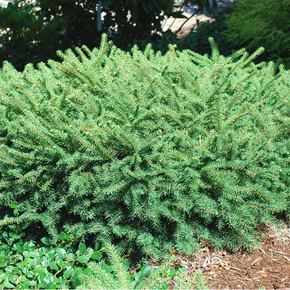
Atrovirens Oriental Spruce - 1 Gallon
SKU:
218340
$9.99
- Exceptionally dark, glossy green needles clothe a naturally formal, dense pyramidal silhouette from the ground up, delivering rich, saturated color and elegant texture year-round.
- Striking purplish-violet female cones emerge in mid to late spring and gradually mature to handsome brown, adding a dramatic seasonal accent against the deep green foliage.
- One of the last spruces to break bud in spring, with a slow and steady growth rate of 6 to 12 inches per year, offering refined structure and very low maintenance once established.
- Cold hardy to USDA Zone 4 and resistant to deer, rabbits, and moderate drought once established, making it a reliable and long-lived addition to the Pacific Northwest and Northern California landscape.
Picea orientalis 'Atrovirens', commonly known as Atrovirens Oriental Spruce, is one of the most elegant and refined conifers available for the home landscape. Native to the Caucasus Mountains of Eastern Europe and Western Asia, this stately evergreen tree develops a strongly upright, conical crown densely clothed in short, tightly set, four-sided needles of an exceptionally deep, lustrous green — darker than virtually any other spruce species. The ascending branches with gently pendulous tips sweep gracefully to the ground, creating a naturally formal yet lush presence that requires no shearing to maintain. In mid to late spring, ornamental female cones up to 4 inches long emerge in a striking purple-violet hue that pops brilliantly against the dark foliage before ripening to classic brown by summer, while small reddish male pollen cones add their own subtle seasonal interest. A slow grower adding 6 to 12 inches per year, 'Atrovirens' typically reaches 30 to 40 feet tall and 15 to 20 feet wide in average landscapes, with exceptional specimens in ideal cool-climate conditions potentially topping 60 to 80 feet. It thrives in full sun to partial sun in moist, well-drained, slightly acidic soils and is notably more heat tolerant than many other spruce cultivars, performing beautifully across the cool-to-mild summer climates of Southern Oregon and Northern California. Whether used as a commanding specimen tree, a natural privacy screen, a windbreak, or a living outdoor holiday tree, Atrovirens Oriental Spruce delivers decades of architectural beauty with minimal care.
Plant Description
Atrovirens Oriental Spruce (Picea orientalis 'Atrovirens') is a large, pyramidal evergreen conifer selected and cultivated before 1911 in Boskoop, Holland for its outstandingly dark needle color. It is considered one of the most ornamental spruces in cultivation. The tree's branches ascend slightly and then tip with gently pendulous stems, creating a layered, sculptural silhouette that is naturally formal without appearing stiff. Dense branching extends fully to ground level, keeping the trunk hidden and giving the tree a full, complete appearance at all stages of life. The bark is dark brown, smooth when young, and develops small rounded, cracked plates with age. The species belongs to the Pinaceae family and is native to mountain forests ranging from the Caucasus region to northeastern Turkey, where it grows at elevations up to 7,000 feet in cool, moist conditions.
Foliage and Cones
The needles of 'Atrovirens' are the tree's most celebrated feature. They are very short — typically under one inch in length — four-sided, tightly set, and arranged in a spiral pattern along the branchlets. Their color is an exceptionally deep, saturated, glossy dark green, darker and richer than most other spruce species or cultivars, a characteristic that earned the cultivar its name (atrovirens means "very dark green" in Latin). The fine texture and deep color create a plush, almost velvety appearance across the entire canopy.
Cones provide outstanding seasonal interest in two forms:
- Female cones: Appear in mid to late spring, hanging downward and measuring up to 4 inches long and about 1 inch wide. They emerge in a striking purple-violet color, aging through summer to a handsome brown at maturity in fall.
- Male pollen cones: Small, reddish, and strawberry-shaped, they appear in spring and add subtle color contrast before releasing pollen.
Mature Size and Growth Rate
| Characteristic | Typical Landscape | Ideal Cool-Climate Conditions |
|---|---|---|
| Height at Maturity | 30 to 40 ft | 60 to 80 ft |
| Width at Maturity | 15 to 20 ft | 25 to 30 ft |
| Annual Growth Rate | 6 to 12 inches per year | 6 to 12 inches per year |
| Growth Habit | Upright, densely pyramidal | Upright, more open pyramidal |
| Recommended Spacing | 30 or more feet apart | 30 or more feet apart |
Its slow, steady pace means 'Atrovirens' is a long-term investment that builds character with every passing year. Young trees are naturally compact and full, while older specimens develop an increasingly grand, architectural presence.
Hardiness Zones and Climate
Atrovirens Oriental Spruce is reliably cold hardy to USDA Zone 4, tolerating winter temperatures as low as -30 degrees F. It performs best across USDA Zones 4 through 7b and is considered one of the more heat-tolerant spruce cultivars, extending usable range into Zone 8 in cool- or mild-summer climates such as those found throughout Southern Oregon and Northern California. It is not well suited to the extreme heat and humidity of the Deep South. Protect newly planted trees from harsh, desiccating winter winds, especially in exposed sites, for the first few years until they are well established. The Caucasus Mountain origins of this species mean it naturally thrives in cool, temperate conditions with consistent moisture.
Sunlight Requirements
For the best foliage density, deepest needle color, and most symmetrical pyramidal form, plant Atrovirens Oriental Spruce in a location that receives a minimum of 6 hours of direct sunlight per day. In the cool-to-mild summer climates of Southern Oregon and Northern California, full sun exposure is ideal and encouraged throughout the day. In areas where summer afternoons can become intensely hot, some light afternoon shade or filtered sun can help reduce stress. Avoid heavily shaded positions, as reduced light leads to open, sparse branching and diminished ornamental quality.
Soil and pH Preferences
Atrovirens Oriental Spruce is adaptable to a reasonably wide range of soil types but always requires good drainage. Consistently soggy or waterlogged soils should be avoided, as they promote root rot and other fungal issues. Ideal growing conditions include:
- Soil types: Loam, sandy loam, gravelly loam, silt, or amended clay — all work well as long as drainage is adequate.
- Soil pH: Performs best in slightly acidic to neutral soils with a pH of approximately 4.5 to 7.0. It tolerates moderately acidic and somewhat alkaline conditions more readily than many conifers.
- Organic matter: A soil rich in organic matter supports healthy root development; amend heavy clay soils with compost to improve both drainage and fertility.
- Poor soils: Tolerates low-fertility soils better than many ornamental trees, making it a practical choice for challenging sites.
Watering Guide
Consistent moisture is critical during establishment and the first two to three years after planting. Once the root system is broadly developed, 'Atrovirens' becomes moderately drought tolerant.
- At planting: Water thoroughly at planting time to settle the soil and eliminate air pockets around the roots.
- First 1 to 3 years: Water deeply and regularly, checking soil moisture before each watering. Adequate winter moisture is especially critical during this period — in dry winters, check the root ball periodically and water if needed.
- Established trees: Deep, infrequent watering during prolonged dry periods is generally sufficient. Allow the soil to begin drying between waterings, but do not allow the root zone to become completely desiccated during extended summer drought.
- Avoid: Overwatering or poorly drained sites, which can lead to root rot and dieback.
Applying a 2 to 3 inch layer of organic mulch around the base — kept well away from the trunk — helps retain soil moisture, moderate soil temperature, and reduce watering frequency.
Fertilizing
Atrovirens Oriental Spruce has modest fertility needs and is notably tolerant of poor soils. Over-fertilizing can actually promote excessive, soft growth that is more susceptible to pest and disease pressure.
- Established trees in average soil: Generally require little to no supplemental fertilizer once they are growing well.
- Young or newly planted trees: A light application of a slow-release, balanced granular fertilizer (such as a 10-10-10 or similar formulation) in early spring before new growth begins can support healthy establishment.
- Application rate: Apply at approximately 1 pound of fertilizer per inch of trunk diameter, or follow the manufacturer's label instructions.
- Optional fall boost: A top-dressing of organic compost applied in autumn helps build long-term soil health and provides a slow, gentle nutrient release over winter.
- Avoid: High-nitrogen fertilizers late in the season, which can stimulate tender new growth vulnerable to early frost damage.
Pruning and Maintenance
One of the most appealing qualities of 'Atrovirens' is that it requires virtually no pruning to maintain its naturally elegant, formal pyramidal shape. Shearing or heavy pruning is strongly discouraged, as it disrupts the tree's inherent beauty and can create unsightly regrowth patterns.
- Routine pruning: Generally unnecessary. The tree self-maintains its conical form throughout its life.
- Corrective pruning: Remove dead, diseased, or damaged branches as needed at any time of year.
- Wayward branches: Any stray or structurally problematic branches can be selectively removed in late winter to early spring before new growth begins.
- Double leaders: Check young trees periodically and remove any competing central leaders early to maintain a single, dominant trunk.
- Timing: Late winter to early spring is the preferred pruning window, when the tree is still dormant and wound closure begins quickly with the spring growth flush.
Overall maintenance is classified as very low. Beyond watering during establishment and occasional mulching, this tree largely takes care of itself.
Planting Instructions
- Select a site with full to mostly full sun and well-drained soil. Allow adequate space — at least 15 to 20 feet from structures, utilities, and other large plants — to accommodate the tree's mature spread.
- Dig a planting hole 2 to 3 times as wide as the root ball and no deeper than the root ball's height. Avoid planting too deeply; the top of the root ball should sit at or very slightly above the surrounding soil grade.
- If the soil is heavy clay, amend the backfill with compost or coarse organic matter to improve drainage. In sandy or gravelly soils, amend to improve moisture retention.
- Remove the tree from its container and gently loosen any circling or tightly bound roots.
- Place the tree in the center of the hole and backfill with the native or amended soil, tamping gently to eliminate air pockets. Do not add fertilizer directly into the planting hole.
- Water thoroughly after planting to settle the soil.
- Apply a 2 to 3 inch layer of organic mulch (wood chips, bark, shredded leaves) in a wide circle around the base. Keep mulch at least 4 to 6 inches away from the trunk to prevent rot and pest issues.
- Install a temporary windbreak or burlap screen if planting in an exposed, wind-prone location, particularly for the first winter after planting.
Landscape Uses
Atrovirens Oriental Spruce is an exceptionally versatile conifer that earns its place in a wide variety of landscape settings:
- Specimen tree: Its commanding size, formal shape, and stunning dark needle color make it a natural focal point in any large yard or garden.
- Privacy screen or windbreak: Dense branching from the ground up creates an effective year-round visual barrier and wind buffer. Plant in rows spaced 30 or more feet apart.
- Foundation planting: In warmer parts of its range where mature size is more modest, it works well as a large corner anchor for tall homes and commercial buildings.
- Conifer and rock gardens: Its refined texture and deep color contrast beautifully with blue-needled, golden, or weeping conifers.
- Outdoor Christmas tree: The naturally symmetrical pyramidal form and dense branching make it an outstanding living holiday display tree.
- Asian and formal garden themes: The elegant, structured form complements Japanese and formal garden designs.
- Naturalized plantings: Attractive when grouped in woodland garden borders or planted in naturalized conifer groves.
Companion Plants
The deep, saturated green of 'Atrovirens' provides a striking backdrop that shows off a wide range of companion plants. Consider pairing it with:
- Blue-needled conifers: Colorado Blue Spruce, Blue Atlas Cedar, or Blue Himalayan Cedar create a vivid color contrast.
- Golden or chartreuse conifers: 'Skylands' Oriental Spruce or 'Gold Mops' Hinoki Cypress pop brilliantly against the dark backdrop.
- Weeping conifers: Weeping Serbian Spruce or Weeping Norway Spruce add flowing textural contrast.
- Deciduous trees: Ornamental cherries, Japanese maples, and dogwoods provide seasonal color change that complements the tree's evergreen constancy.
- Broadleaf shrubs: Variegated hollies, Pieris, and Rhododendrons work well in the mid-layer beneath and around the canopy edge.
- Groundcovers and perennials: Ornamental sedges, heathers, creeping junipers, and native daisies fill in naturally at the base without competing with the roots.
Pests and Diseases
Atrovirens Oriental Spruce is generally a very healthy and resilient tree with good resistance to common pests and diseases. However, like all conifers, it can occasionally be affected by the following:
- Spider mites: Can cause stippled, yellowing, or browning needles, especially during hot, dry weather. Manage with miticide sprays or strong jets of water to dislodge colonies. Adequate irrigation reduces tree stress and susceptibility.
- Spruce adelgids and aphids: Small sap-sucking insects that can cause needle discoloration and distorted new growth. Treat with insecticidal soap or horticultural oil as needed.
- Bagworms: Caterpillars that create distinctive bag-like cases from needles and twigs. Hand-remove bags in fall and winter; treat active infestations with Bt (Bacillus thuringiensis) or appropriate insecticides in late spring.
- Rhizosphaera needle cast: A fungal disease causing inner needles to turn purplish-brown and drop, progressing from the lower canopy upward. Manage by removing fallen debris, improving air circulation, and applying copper-based fungicide preventatively.
- Canker diseases: Fungal cankers can infect bark, causing branch dieback. Prune infected wood well below the canker, disinfect pruning tools between cuts, and avoid wounding the bark.
- Honey fungus (Armillaria): Rarely problematic in well-drained soils. Avoid chronic overwatering and waterlogged conditions that promote its spread.
The best prevention for all of the above is maintaining good cultural practices: proper siting, adequate drainage, appropriate irrigation, and avoiding mechanical damage to the trunk and roots.
Wildlife Value
Atrovirens Oriental Spruce offers significant ecological value to backyard wildlife, particularly in the cool-climate regions of Southern Oregon and Northern California:
- Songbirds: The dense evergreen canopy provides ideal nesting habitat and year-round protective cover for a variety of songbirds.
- Seed-eating birds: Mature cones produce seeds that attract finches, crossbills, chickadees, and other seed-eating species.
- Winter shelter: The ground-sweeping, densely branched form provides critical thermal cover and shelter for small mammals, ground-nesting birds, and even deer during cold or wet weather.
- Deer and rabbit resistance: While the tree provides cover for wildlife, the aromatic foliage and stiff needles make it unattractive as a food source for browsing deer and rabbits — a significant advantage in rural and semi-rural Oregon and California landscapes.
Seasonal Interest
Atrovirens Oriental Spruce delivers something visually interesting in every season, making it a true four-season landscape asset:
- Spring: One of the last spruces to break bud, adding late-season anticipation. Showy purplish-violet female cones emerge and small reddish male pollen cones provide subtle color contrast against the fresh, emerging growth.
- Summer: The densely clothed canopy glows with deep, saturated dark green. Cones mature through summer, transitioning from purple toward brown, while the layered, sculptural branching stands out in the landscape.
- Fall: Mature brown cones become prominent as deciduous neighbors begin to turn and drop their leaves, highlighting the spruce's evergreen permanence and structural form.
- Winter: The dark pyramidal silhouette provides bold, reliable architectural interest against winter skies, snow, and dormant deciduous plants, making it a commanding presence when the rest of the garden is at rest.
- Exceptionally dark, glossy green needles clothe a naturally formal, dense pyramidal silhouette from the ground up, delivering rich, saturated color and elegant texture year-round.
- Striking purplish-violet female cones emerge in mid to late spring and gradually mature to handsome brown, adding a dramatic seasonal accent against the deep green foliage.
- One of the last spruces to break bud in spring, with a slow and steady growth rate of 6 to 12 inches per year, offering refined structure and very low maintenance once established.
- Cold hardy to USDA Zone 4 and resistant to deer, rabbits, and moderate drought once established, making it a reliable and long-lived addition to the Pacific Northwest and Northern California landscape.
Picea orientalis 'Atrovirens', commonly known as Atrovirens Oriental Spruce, is one of the most elegant and refined conifers available for the home landscape. Native to the Caucasus Mountains of Eastern Europe and Western Asia, this stately evergreen tree develops a strongly upright, conical crown densely clothed in short, tightly set, four-sided needles of an exceptionally deep, lustrous green — darker than virtually any other spruce species. The ascending branches with gently pendulous tips sweep gracefully to the ground, creating a naturally formal yet lush presence that requires no shearing to maintain. In mid to late spring, ornamental female cones up to 4 inches long emerge in a striking purple-violet hue that pops brilliantly against the dark foliage before ripening to classic brown by summer, while small reddish male pollen cones add their own subtle seasonal interest. A slow grower adding 6 to 12 inches per year, 'Atrovirens' typically reaches 30 to 40 feet tall and 15 to 20 feet wide in average landscapes, with exceptional specimens in ideal cool-climate conditions potentially topping 60 to 80 feet. It thrives in full sun to partial sun in moist, well-drained, slightly acidic soils and is notably more heat tolerant than many other spruce cultivars, performing beautifully across the cool-to-mild summer climates of Southern Oregon and Northern California. Whether used as a commanding specimen tree, a natural privacy screen, a windbreak, or a living outdoor holiday tree, Atrovirens Oriental Spruce delivers decades of architectural beauty with minimal care.
Plant Description
Atrovirens Oriental Spruce (Picea orientalis 'Atrovirens') is a large, pyramidal evergreen conifer selected and cultivated before 1911 in Boskoop, Holland for its outstandingly dark needle color. It is considered one of the most ornamental spruces in cultivation. The tree's branches ascend slightly and then tip with gently pendulous stems, creating a layered, sculptural silhouette that is naturally formal without appearing stiff. Dense branching extends fully to ground level, keeping the trunk hidden and giving the tree a full, complete appearance at all stages of life. The bark is dark brown, smooth when young, and develops small rounded, cracked plates with age. The species belongs to the Pinaceae family and is native to mountain forests ranging from the Caucasus region to northeastern Turkey, where it grows at elevations up to 7,000 feet in cool, moist conditions.
Foliage and Cones
The needles of 'Atrovirens' are the tree's most celebrated feature. They are very short — typically under one inch in length — four-sided, tightly set, and arranged in a spiral pattern along the branchlets. Their color is an exceptionally deep, saturated, glossy dark green, darker and richer than most other spruce species or cultivars, a characteristic that earned the cultivar its name (atrovirens means "very dark green" in Latin). The fine texture and deep color create a plush, almost velvety appearance across the entire canopy.
Cones provide outstanding seasonal interest in two forms:
- Female cones: Appear in mid to late spring, hanging downward and measuring up to 4 inches long and about 1 inch wide. They emerge in a striking purple-violet color, aging through summer to a handsome brown at maturity in fall.
- Male pollen cones: Small, reddish, and strawberry-shaped, they appear in spring and add subtle color contrast before releasing pollen.
Mature Size and Growth Rate
| Characteristic | Typical Landscape | Ideal Cool-Climate Conditions |
|---|---|---|
| Height at Maturity | 30 to 40 ft | 60 to 80 ft |
| Width at Maturity | 15 to 20 ft | 25 to 30 ft |
| Annual Growth Rate | 6 to 12 inches per year | 6 to 12 inches per year |
| Growth Habit | Upright, densely pyramidal | Upright, more open pyramidal |
| Recommended Spacing | 30 or more feet apart | 30 or more feet apart |
Its slow, steady pace means 'Atrovirens' is a long-term investment that builds character with every passing year. Young trees are naturally compact and full, while older specimens develop an increasingly grand, architectural presence.
Hardiness Zones and Climate
Atrovirens Oriental Spruce is reliably cold hardy to USDA Zone 4, tolerating winter temperatures as low as -30 degrees F. It performs best across USDA Zones 4 through 7b and is considered one of the more heat-tolerant spruce cultivars, extending usable range into Zone 8 in cool- or mild-summer climates such as those found throughout Southern Oregon and Northern California. It is not well suited to the extreme heat and humidity of the Deep South. Protect newly planted trees from harsh, desiccating winter winds, especially in exposed sites, for the first few years until they are well established. The Caucasus Mountain origins of this species mean it naturally thrives in cool, temperate conditions with consistent moisture.
Sunlight Requirements
For the best foliage density, deepest needle color, and most symmetrical pyramidal form, plant Atrovirens Oriental Spruce in a location that receives a minimum of 6 hours of direct sunlight per day. In the cool-to-mild summer climates of Southern Oregon and Northern California, full sun exposure is ideal and encouraged throughout the day. In areas where summer afternoons can become intensely hot, some light afternoon shade or filtered sun can help reduce stress. Avoid heavily shaded positions, as reduced light leads to open, sparse branching and diminished ornamental quality.
Soil and pH Preferences
Atrovirens Oriental Spruce is adaptable to a reasonably wide range of soil types but always requires good drainage. Consistently soggy or waterlogged soils should be avoided, as they promote root rot and other fungal issues. Ideal growing conditions include:
- Soil types: Loam, sandy loam, gravelly loam, silt, or amended clay — all work well as long as drainage is adequate.
- Soil pH: Performs best in slightly acidic to neutral soils with a pH of approximately 4.5 to 7.0. It tolerates moderately acidic and somewhat alkaline conditions more readily than many conifers.
- Organic matter: A soil rich in organic matter supports healthy root development; amend heavy clay soils with compost to improve both drainage and fertility.
- Poor soils: Tolerates low-fertility soils better than many ornamental trees, making it a practical choice for challenging sites.
Watering Guide
Consistent moisture is critical during establishment and the first two to three years after planting. Once the root system is broadly developed, 'Atrovirens' becomes moderately drought tolerant.
- At planting: Water thoroughly at planting time to settle the soil and eliminate air pockets around the roots.
- First 1 to 3 years: Water deeply and regularly, checking soil moisture before each watering. Adequate winter moisture is especially critical during this period — in dry winters, check the root ball periodically and water if needed.
- Established trees: Deep, infrequent watering during prolonged dry periods is generally sufficient. Allow the soil to begin drying between waterings, but do not allow the root zone to become completely desiccated during extended summer drought.
- Avoid: Overwatering or poorly drained sites, which can lead to root rot and dieback.
Applying a 2 to 3 inch layer of organic mulch around the base — kept well away from the trunk — helps retain soil moisture, moderate soil temperature, and reduce watering frequency.
Fertilizing
Atrovirens Oriental Spruce has modest fertility needs and is notably tolerant of poor soils. Over-fertilizing can actually promote excessive, soft growth that is more susceptible to pest and disease pressure.
- Established trees in average soil: Generally require little to no supplemental fertilizer once they are growing well.
- Young or newly planted trees: A light application of a slow-release, balanced granular fertilizer (such as a 10-10-10 or similar formulation) in early spring before new growth begins can support healthy establishment.
- Application rate: Apply at approximately 1 pound of fertilizer per inch of trunk diameter, or follow the manufacturer's label instructions.
- Optional fall boost: A top-dressing of organic compost applied in autumn helps build long-term soil health and provides a slow, gentle nutrient release over winter.
- Avoid: High-nitrogen fertilizers late in the season, which can stimulate tender new growth vulnerable to early frost damage.
Pruning and Maintenance
One of the most appealing qualities of 'Atrovirens' is that it requires virtually no pruning to maintain its naturally elegant, formal pyramidal shape. Shearing or heavy pruning is strongly discouraged, as it disrupts the tree's inherent beauty and can create unsightly regrowth patterns.
- Routine pruning: Generally unnecessary. The tree self-maintains its conical form throughout its life.
- Corrective pruning: Remove dead, diseased, or damaged branches as needed at any time of year.
- Wayward branches: Any stray or structurally problematic branches can be selectively removed in late winter to early spring before new growth begins.
- Double leaders: Check young trees periodically and remove any competing central leaders early to maintain a single, dominant trunk.
- Timing: Late winter to early spring is the preferred pruning window, when the tree is still dormant and wound closure begins quickly with the spring growth flush.
Overall maintenance is classified as very low. Beyond watering during establishment and occasional mulching, this tree largely takes care of itself.
Planting Instructions
- Select a site with full to mostly full sun and well-drained soil. Allow adequate space — at least 15 to 20 feet from structures, utilities, and other large plants — to accommodate the tree's mature spread.
- Dig a planting hole 2 to 3 times as wide as the root ball and no deeper than the root ball's height. Avoid planting too deeply; the top of the root ball should sit at or very slightly above the surrounding soil grade.
- If the soil is heavy clay, amend the backfill with compost or coarse organic matter to improve drainage. In sandy or gravelly soils, amend to improve moisture retention.
- Remove the tree from its container and gently loosen any circling or tightly bound roots.
- Place the tree in the center of the hole and backfill with the native or amended soil, tamping gently to eliminate air pockets. Do not add fertilizer directly into the planting hole.
- Water thoroughly after planting to settle the soil.
- Apply a 2 to 3 inch layer of organic mulch (wood chips, bark, shredded leaves) in a wide circle around the base. Keep mulch at least 4 to 6 inches away from the trunk to prevent rot and pest issues.
- Install a temporary windbreak or burlap screen if planting in an exposed, wind-prone location, particularly for the first winter after planting.
Landscape Uses
Atrovirens Oriental Spruce is an exceptionally versatile conifer that earns its place in a wide variety of landscape settings:
- Specimen tree: Its commanding size, formal shape, and stunning dark needle color make it a natural focal point in any large yard or garden.
- Privacy screen or windbreak: Dense branching from the ground up creates an effective year-round visual barrier and wind buffer. Plant in rows spaced 30 or more feet apart.
- Foundation planting: In warmer parts of its range where mature size is more modest, it works well as a large corner anchor for tall homes and commercial buildings.
- Conifer and rock gardens: Its refined texture and deep color contrast beautifully with blue-needled, golden, or weeping conifers.
- Outdoor Christmas tree: The naturally symmetrical pyramidal form and dense branching make it an outstanding living holiday display tree.
- Asian and formal garden themes: The elegant, structured form complements Japanese and formal garden designs.
- Naturalized plantings: Attractive when grouped in woodland garden borders or planted in naturalized conifer groves.
Companion Plants
The deep, saturated green of 'Atrovirens' provides a striking backdrop that shows off a wide range of companion plants. Consider pairing it with:
- Blue-needled conifers: Colorado Blue Spruce, Blue Atlas Cedar, or Blue Himalayan Cedar create a vivid color contrast.
- Golden or chartreuse conifers: 'Skylands' Oriental Spruce or 'Gold Mops' Hinoki Cypress pop brilliantly against the dark backdrop.
- Weeping conifers: Weeping Serbian Spruce or Weeping Norway Spruce add flowing textural contrast.
- Deciduous trees: Ornamental cherries, Japanese maples, and dogwoods provide seasonal color change that complements the tree's evergreen constancy.
- Broadleaf shrubs: Variegated hollies, Pieris, and Rhododendrons work well in the mid-layer beneath and around the canopy edge.
- Groundcovers and perennials: Ornamental sedges, heathers, creeping junipers, and native daisies fill in naturally at the base without competing with the roots.
Pests and Diseases
Atrovirens Oriental Spruce is generally a very healthy and resilient tree with good resistance to common pests and diseases. However, like all conifers, it can occasionally be affected by the following:
- Spider mites: Can cause stippled, yellowing, or browning needles, especially during hot, dry weather. Manage with miticide sprays or strong jets of water to dislodge colonies. Adequate irrigation reduces tree stress and susceptibility.
- Spruce adelgids and aphids: Small sap-sucking insects that can cause needle discoloration and distorted new growth. Treat with insecticidal soap or horticultural oil as needed.
- Bagworms: Caterpillars that create distinctive bag-like cases from needles and twigs. Hand-remove bags in fall and winter; treat active infestations with Bt (Bacillus thuringiensis) or appropriate insecticides in late spring.
- Rhizosphaera needle cast: A fungal disease causing inner needles to turn purplish-brown and drop, progressing from the lower canopy upward. Manage by removing fallen debris, improving air circulation, and applying copper-based fungicide preventatively.
- Canker diseases: Fungal cankers can infect bark, causing branch dieback. Prune infected wood well below the canker, disinfect pruning tools between cuts, and avoid wounding the bark.
- Honey fungus (Armillaria): Rarely problematic in well-drained soils. Avoid chronic overwatering and waterlogged conditions that promote its spread.
The best prevention for all of the above is maintaining good cultural practices: proper siting, adequate drainage, appropriate irrigation, and avoiding mechanical damage to the trunk and roots.
Wildlife Value
Atrovirens Oriental Spruce offers significant ecological value to backyard wildlife, particularly in the cool-climate regions of Southern Oregon and Northern California:
- Songbirds: The dense evergreen canopy provides ideal nesting habitat and year-round protective cover for a variety of songbirds.
- Seed-eating birds: Mature cones produce seeds that attract finches, crossbills, chickadees, and other seed-eating species.
- Winter shelter: The ground-sweeping, densely branched form provides critical thermal cover and shelter for small mammals, ground-nesting birds, and even deer during cold or wet weather.
- Deer and rabbit resistance: While the tree provides cover for wildlife, the aromatic foliage and stiff needles make it unattractive as a food source for browsing deer and rabbits — a significant advantage in rural and semi-rural Oregon and California landscapes.
Seasonal Interest
Atrovirens Oriental Spruce delivers something visually interesting in every season, making it a true four-season landscape asset:
- Spring: One of the last spruces to break bud, adding late-season anticipation. Showy purplish-violet female cones emerge and small reddish male pollen cones provide subtle color contrast against the fresh, emerging growth.
- Summer: The densely clothed canopy glows with deep, saturated dark green. Cones mature through summer, transitioning from purple toward brown, while the layered, sculptural branching stands out in the landscape.
- Fall: Mature brown cones become prominent as deciduous neighbors begin to turn and drop their leaves, highlighting the spruce's evergreen permanence and structural form.
- Winter: The dark pyramidal silhouette provides bold, reliable architectural interest against winter skies, snow, and dormant deciduous plants, making it a commanding presence when the rest of the garden is at rest.
Related Products