

Zoom the image with the mouse
Centennial Spirit Crape Myrtle - 5 Gallon
SKU:
1210600
UPC:
014949547854
$54.99
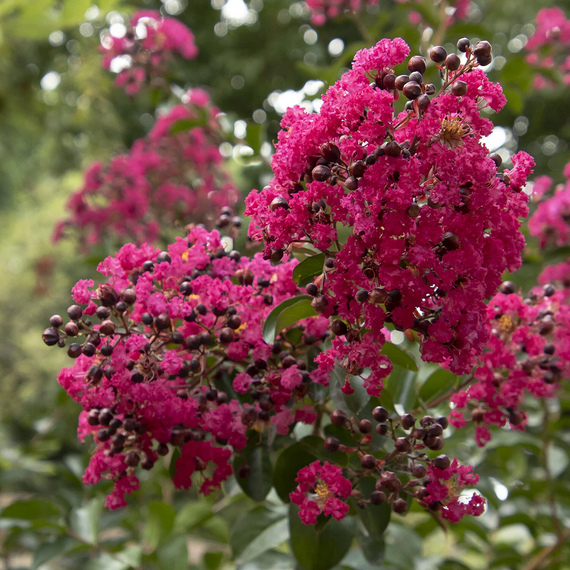
- Spectacular rose-red to deep crimson flower panicles bloom profusely from mid-summer into fall, with color intensity deepening in hot weather
- Four-season appeal featuring glossy dark green summer foliage, brilliant red-orange fall color, and striking exfoliating gray-to-cream bark for winter interest
- Outstanding powdery mildew resistance and minimal suckering, bred for low-maintenance performance in home landscapes
- Adaptable small deciduous tree with excellent drought tolerance once established, suitable for a wide range of well-drained soils
Centennial Spirit Crape Myrtle (Lagerstroemia indica 'Centennial Spirit') is a standout small deciduous tree that delivers bold, multi-season beauty in landscapes across USDA Zones 7-10. Developed at the University of Oklahoma and celebrated for its exceptional disease resistance and non-fading floral display, this cultivar produces massive, foot-long panicles of frilly, crepe-textured rose-red to rich crimson flowers that emerge in mid-summer and continue well into fall, with flower color intensifying to a deeper red during the hottest weather. The thick, glossy dark green foliage creates a lush canopy throughout summer before transitioning to stunning red-orange hues in autumn, while the attractively mottled, exfoliating gray, cream, and tan bark provides year-round structural interest even in the depths of winter. Reaching 15 to 20 feet tall and nearly as wide at maturity with a rounded, upright growth habit, Centennial Spirit is an ideal specimen tree for smaller yards, driveway borders, poolside plantings, and mixed shrub borders throughout Southern Oregon and Northern California. Its proven drought tolerance, minimal maintenance requirements, and selection for reduced suckering make it one of the most reliable and rewarding flowering trees available for warm, sunny western landscapes.
Plant Description
Centennial Spirit Crape Myrtle is an upright, rounded, deciduous small tree with impressive multi-season ornamental appeal. In summer it produces enormous, elongated panicles of tightly clustered, frilly crepe-paper-textured flowers in a vivid rose-red to rich crimson, with color depth that varies with temperature — the hotter the weather, the deeper and more saturated the red. Blooms are non-fading and persist for an unusually long period, from late June through October under ideal conditions. The foliage is thick, leathery, and glossy dark green throughout summer, turning brilliant shades of red and orange in fall. In winter, the handsome exfoliating bark steals the show, peeling away in thin strips to reveal smooth, cream-colored inner bark mottled with gray and tan — a striking feature visible from a distance. This cultivar was selected for minimal suckering and excellent resistance to powdery mildew, and it was bred at the University of Oklahoma, making it particularly well adapted to hot, dry summer conditions.
Mature Size
| Attribute | Details |
|---|---|
| Mature Height | 15 to 20 feet |
| Mature Width | 12 to 20 feet |
| Growth Habit | Upright, rounded canopy |
| Growth Rate | Moderate to fast; can gain several feet per year in ideal conditions |
| Trunk Character | Single to multi-trunk with attractive exfoliating bark |
Hardiness Zones
Centennial Spirit Crape Myrtle is hardy in USDA Zones 7 through 10, making it an excellent fit for Southern Oregon and Northern California. It thrives in the long, hot summers of inland valleys and is well adapted to the Mediterranean-style climate of the Pacific Coast region. It can tolerate brief winter cold spells and is reliably root-hardy even in the cooler portions of Zone 7. In particularly cold winters, tops may experience some dieback, but the plant will typically regenerate vigorously from the base in spring. Planting in a sheltered location with good drainage helps maximize cold hardiness at the cooler end of its range.
Sunlight Requirements
Centennial Spirit Crape Myrtle performs best in full sun, requiring a minimum of 6 to 8 hours of direct sunlight per day. Ample sun exposure is critical for maximizing flower production, enhancing the depth and richness of the red bloom color, and maintaining the compact, upright growth habit that makes this tree so attractive. Plants grown in partial shade will produce noticeably fewer flowers and are more susceptible to powdery mildew due to reduced air circulation and slower foliage drying. For the most spectacular floral display, choose the sunniest available planting site with good air movement around the canopy.
Soil and pH Preferences
One of the practical strengths of Centennial Spirit Crape Myrtle is its adaptability to a wide range of soil types. It grows well in clay, loam, and sandy soils, provided drainage is adequate, as standing water around the roots can lead to root rot. The preferred soil pH is mildly acidic to neutral, ranging from approximately 5.0 to 6.5, though it will tolerate slightly higher pH levels found in some Western soils. In alkaline soils, applying an acidifying fertilizer or sulfur amendment can improve performance. Amending heavy clay soils with compost prior to planting improves drainage and root establishment. This tree also tolerates relatively poor or lean soils once established, making it practical for a variety of landscape situations.
Watering Guide
- At planting: Water deeply and thoroughly at installation to settle the soil around the root ball and eliminate air pockets.
- First growing season: Water regularly — approximately once or twice per week depending on heat and soil type — to support root establishment. Keep the root zone consistently moist but not waterlogged.
- Second season: Reduce watering frequency as the root system expands. Deep, infrequent irrigation encourages deeper rooting and better drought tolerance.
- Established plants: Once well established (typically after 2 years), Centennial Spirit is quite drought tolerant and can thrive on low to moderate supplemental water. In the hot, dry summers of Southern Oregon and Northern California, occasional deep irrigation during prolonged dry periods will maintain vigor and prolong the flowering season.
- Avoid: Overhead irrigation when possible, as wet foliage in still, humid conditions can encourage powdery mildew.
Fertilizing
Centennial Spirit Crape Myrtle is not a heavy feeder, and over-fertilizing — particularly with high-nitrogen products — can reduce flowering and produce excessive soft, vegetative growth that may be more susceptible to pest damage. For best results, apply a balanced, slow-release granular fertilizer formulated for trees and shrubs once in early spring as new growth emerges. A second light application in early summer can help sustain flowering. Avoid fertilizing after midsummer, as late-season fertilization encourages new growth that may not harden off before cold weather arrives. In soils with a higher pH, a fertilizer formulated for acid-loving plants can help maintain appropriate nutrient availability. Topdressing the root zone with compost in spring provides gentle, slow nutrition while also improving soil structure and moisture retention.
Pruning and Maintenance
Centennial Spirit Crape Myrtle requires minimal pruning and is naturally attractive when allowed to develop its full, multi-branched form. Heavy pruning — sometimes called "crape murder" — is strongly discouraged, as it destroys the tree's graceful natural architecture, creates unsightly knobby stubs, and stimulates excessive weak regrowth. The best approach is light corrective pruning:
- Late winter to early spring: Remove any dead, crossing, or rubbing branches before new growth begins. This is also the time to thin interior branches to improve air circulation.
- Basal suckers: Remove any root suckers or sprouts from the base as they appear throughout the growing season to maintain a clean, tidy form. This cultivar was selected for reduced suckering compared to other varieties.
- Deadheading: Removing spent flower clusters after each bloom cycle can encourage a second or third flush of flowers. This is optional but can extend the overall blooming season.
- Lower limbs: Gradually removing the lower branches over several years will reveal more of the beautiful exfoliating bark and create a cleaner, more tree-like silhouette.
Planting Instructions
- Choose a site in full sun with well-drained soil. Avoid low-lying areas where water pools after rain.
- Dig a hole two to three times as wide as the root ball but no deeper than the root ball itself. The top of the root ball should sit at or just slightly above the surrounding soil grade.
- Loosen and lightly amend heavy clay or very sandy soils with compost, but avoid over-amending — Centennial Spirit adapts well to native soils.
- Remove the plant from its container and gently loosen any circling or matted roots before placing it in the hole.
- Backfill with the native soil, firming it gently to eliminate air pockets. Do not bury the root flare.
- Water deeply and thoroughly to settle the soil.
- Apply a 3- to 4-inch layer of organic mulch (wood chips, bark) in a wide ring around the base of the tree, keeping mulch several inches away from the trunk to prevent moisture buildup and potential rot.
- Water regularly throughout the first growing season and into the second to ensure strong root establishment.
Seasonal Interest
| Season | Ornamental Feature |
|---|---|
| Spring | Fresh, glossy dark green foliage emerges; smooth, mottled bark is on full display as leaves unfurl |
| Summer | Spectacular rose-red to deep crimson flower panicles cover the canopy from late June onward; bloom color deepens with heat |
| Fall | Foliage transitions to brilliant shades of red, orange, and yellow; late blooms may persist into early fall |
| Winter | Striking exfoliating bark with mottled gray, cream, and tan tones provides strong architectural interest in the bare winter garden; persistent seed capsules add texture |
Landscape Uses
Centennial Spirit Crape Myrtle is a highly versatile landscape tree suited to a wide range of design applications:
- Specimen or focal point tree: The bold floral display and striking winter bark make it an outstanding standalone feature in lawn areas or at the center of a landscape bed.
- Driveway and street borders: Its upright growth habit, sidewalk-friendly root system, and heat tolerance make it ideal lining driveways or along roadways.
- Privacy screen or hedge: Planted in a row at 10- to 15-foot spacing, multiple trees create a dense seasonal screen with spectacular summer color.
- Mixed shrub borders: Works beautifully as the tall background anchor in a layered mixed border.
- Patio and deck tree: The filtered shade, clean seasonal appearance, and manageable size make it a natural choice near outdoor living areas.
- Firewise landscapes: Recognized as a firewise plant selection for landscapes in fire-prone areas of the West due to its relatively high moisture content and deciduous nature.
- Container growing: Suitable for large decorative containers on patios or in courtyard settings, where the bark and flowers can be appreciated up close.
Companion Plants
Centennial Spirit Crape Myrtle pairs beautifully with plants that complement its bold summer color and share its preference for full sun and well-drained soil. Consider the following companions:
- Russian Sage (Perovskia atriplicifolia): Its airy blue-violet spires provide a cool color contrast to the deep red blooms and share the same heat and drought tolerance.
- Salvia (Salvia species): Blue or purple-flowering salvias like 'May Night' or 'Hot Lips' echo the summer bloom season and attract the same pollinators.
- Ornamental Grasses (Miscanthus, Pennisetum): Flowing grasses at the base soften the tree's structure and provide excellent fall and winter interest that complements the bare bark.
- Daylilies (Hemerocallis): Low-maintenance perennials that fill the ground layer with color during the same summer blooming window.
- Knock Out Roses: Repeat-blooming roses in complementary shades of pink or red create a layered planting with a long season of color.
- Liriope or Mondo Grass: Dark green, low-growing groundcovers that form a tidy, contrasting carpet beneath the exfoliating bark in winter, as recommended by horticulturists for showcasing the tree's architectural features.
- Butterfly Bush (Buddleia): Shares the same sunny, drought-tolerant conditions and provides a pollinator magnet alongside the crape myrtle's flowers.
Pests and Diseases
Centennial Spirit is notably more resistant to common crape myrtle problems than many older varieties, but it is still worth monitoring for the following:
- Powdery Mildew: This cultivar was specifically selected for powdery mildew resistance, which is one of its key advantages. Planting in full sun with good air circulation around the canopy largely prevents this fungal issue. Avoid overhead irrigation and crowding.
- Aphids: Crape myrtle aphids (Tinocallis kahawaluokalani) are a common warm-season pest that feed on leaf undersides. Infestations produce sticky honeydew that drips onto surfaces below and encourages sooty mold. A strong blast of water from a hose dislodges light infestations; beneficial insects like ladybugs provide natural control. Avoid high-nitrogen fertilization, which encourages the soft new growth aphids prefer.
- Sooty Mold: The black, powdery coating on leaves and surfaces below the tree is a secondary result of aphid honeydew, not a primary infection. Controlling aphids resolves sooty mold.
- Crape Myrtle Bark Scale (Acanthococcus lagerstroemiae): A relatively new invasive pest causing white or gray waxy encrustations on bark, twigs, and trunks. Infestations can reduce vigor, flowering, and flower cluster size. Treat with a systemic insecticide applied as a soil drench or bark spray when detected. This pest is spreading westward and should be monitored.
- Cercospora Leaf Spot: May cause spotting and premature defoliation during warm, wet conditions, though Centennial Spirit's resistance and preference for sunny, drier sites minimizes this risk.
Container Growing
Centennial Spirit Crape Myrtle can be grown as a striking patio or courtyard tree in a large container, allowing gardeners in cooler microclimates or with limited in-ground space to enjoy its spectacular flowering performance. Use a large, sturdy container — at least 24 to 30 inches in diameter — with ample drainage holes. Fill with a high-quality, well-draining potting mix amended with perlite for added drainage. Container-grown specimens require more frequent watering than in-ground trees, especially during the heat of summer; check soil moisture regularly and water thoroughly when the top 2 inches feel dry. Fertilize monthly during the growing season with a balanced slow-release or liquid fertilizer. In colder microclimates near the lower end of its hardiness range, containers can be moved to a protected location — such as an unheated garage or against a south-facing wall — during hard freezes. Repot every 2 to 3 years or as the root system outgrows its container, stepping up to a slightly larger pot each time.
Wildlife Value
Centennial Spirit Crape Myrtle provides meaningful value to local wildlife throughout the growing season. Its large, nectar-rich flower panicles are highly attractive to a variety of pollinators, including honeybees, native bumblebees, and numerous butterfly species, making it a productive addition to pollinator gardens. Hummingbirds are also known to visit the blooms in search of nectar. The dense branching structure offers nesting and perching habitat for songbirds. The small, persistent seed capsules that remain on the tree through winter provide a minor food source for seed-eating birds. Because Centennial Spirit is not a native plant, its wildlife value is supplemental rather than primary, but its long bloom season and pollinator appeal make it a worthwhile contributor to any garden designed to support beneficial insects and birds. It is generally not favored by deer, which is an added practical benefit in areas with deer pressure.
- Spectacular rose-red to deep crimson flower panicles bloom profusely from mid-summer into fall, with color intensity deepening in hot weather
- Four-season appeal featuring glossy dark green summer foliage, brilliant red-orange fall color, and striking exfoliating gray-to-cream bark for winter interest
- Outstanding powdery mildew resistance and minimal suckering, bred for low-maintenance performance in home landscapes
- Adaptable small deciduous tree with excellent drought tolerance once established, suitable for a wide range of well-drained soils
Centennial Spirit Crape Myrtle (Lagerstroemia indica 'Centennial Spirit') is a standout small deciduous tree that delivers bold, multi-season beauty in landscapes across USDA Zones 7-10. Developed at the University of Oklahoma and celebrated for its exceptional disease resistance and non-fading floral display, this cultivar produces massive, foot-long panicles of frilly, crepe-textured rose-red to rich crimson flowers that emerge in mid-summer and continue well into fall, with flower color intensifying to a deeper red during the hottest weather. The thick, glossy dark green foliage creates a lush canopy throughout summer before transitioning to stunning red-orange hues in autumn, while the attractively mottled, exfoliating gray, cream, and tan bark provides year-round structural interest even in the depths of winter. Reaching 15 to 20 feet tall and nearly as wide at maturity with a rounded, upright growth habit, Centennial Spirit is an ideal specimen tree for smaller yards, driveway borders, poolside plantings, and mixed shrub borders throughout Southern Oregon and Northern California. Its proven drought tolerance, minimal maintenance requirements, and selection for reduced suckering make it one of the most reliable and rewarding flowering trees available for warm, sunny western landscapes.
Plant Description
Centennial Spirit Crape Myrtle is an upright, rounded, deciduous small tree with impressive multi-season ornamental appeal. In summer it produces enormous, elongated panicles of tightly clustered, frilly crepe-paper-textured flowers in a vivid rose-red to rich crimson, with color depth that varies with temperature — the hotter the weather, the deeper and more saturated the red. Blooms are non-fading and persist for an unusually long period, from late June through October under ideal conditions. The foliage is thick, leathery, and glossy dark green throughout summer, turning brilliant shades of red and orange in fall. In winter, the handsome exfoliating bark steals the show, peeling away in thin strips to reveal smooth, cream-colored inner bark mottled with gray and tan — a striking feature visible from a distance. This cultivar was selected for minimal suckering and excellent resistance to powdery mildew, and it was bred at the University of Oklahoma, making it particularly well adapted to hot, dry summer conditions.
Mature Size
| Attribute | Details |
|---|---|
| Mature Height | 15 to 20 feet |
| Mature Width | 12 to 20 feet |
| Growth Habit | Upright, rounded canopy |
| Growth Rate | Moderate to fast; can gain several feet per year in ideal conditions |
| Trunk Character | Single to multi-trunk with attractive exfoliating bark |
Hardiness Zones
Centennial Spirit Crape Myrtle is hardy in USDA Zones 7 through 10, making it an excellent fit for Southern Oregon and Northern California. It thrives in the long, hot summers of inland valleys and is well adapted to the Mediterranean-style climate of the Pacific Coast region. It can tolerate brief winter cold spells and is reliably root-hardy even in the cooler portions of Zone 7. In particularly cold winters, tops may experience some dieback, but the plant will typically regenerate vigorously from the base in spring. Planting in a sheltered location with good drainage helps maximize cold hardiness at the cooler end of its range.
Sunlight Requirements
Centennial Spirit Crape Myrtle performs best in full sun, requiring a minimum of 6 to 8 hours of direct sunlight per day. Ample sun exposure is critical for maximizing flower production, enhancing the depth and richness of the red bloom color, and maintaining the compact, upright growth habit that makes this tree so attractive. Plants grown in partial shade will produce noticeably fewer flowers and are more susceptible to powdery mildew due to reduced air circulation and slower foliage drying. For the most spectacular floral display, choose the sunniest available planting site with good air movement around the canopy.
Soil and pH Preferences
One of the practical strengths of Centennial Spirit Crape Myrtle is its adaptability to a wide range of soil types. It grows well in clay, loam, and sandy soils, provided drainage is adequate, as standing water around the roots can lead to root rot. The preferred soil pH is mildly acidic to neutral, ranging from approximately 5.0 to 6.5, though it will tolerate slightly higher pH levels found in some Western soils. In alkaline soils, applying an acidifying fertilizer or sulfur amendment can improve performance. Amending heavy clay soils with compost prior to planting improves drainage and root establishment. This tree also tolerates relatively poor or lean soils once established, making it practical for a variety of landscape situations.
Watering Guide
- At planting: Water deeply and thoroughly at installation to settle the soil around the root ball and eliminate air pockets.
- First growing season: Water regularly — approximately once or twice per week depending on heat and soil type — to support root establishment. Keep the root zone consistently moist but not waterlogged.
- Second season: Reduce watering frequency as the root system expands. Deep, infrequent irrigation encourages deeper rooting and better drought tolerance.
- Established plants: Once well established (typically after 2 years), Centennial Spirit is quite drought tolerant and can thrive on low to moderate supplemental water. In the hot, dry summers of Southern Oregon and Northern California, occasional deep irrigation during prolonged dry periods will maintain vigor and prolong the flowering season.
- Avoid: Overhead irrigation when possible, as wet foliage in still, humid conditions can encourage powdery mildew.
Fertilizing
Centennial Spirit Crape Myrtle is not a heavy feeder, and over-fertilizing — particularly with high-nitrogen products — can reduce flowering and produce excessive soft, vegetative growth that may be more susceptible to pest damage. For best results, apply a balanced, slow-release granular fertilizer formulated for trees and shrubs once in early spring as new growth emerges. A second light application in early summer can help sustain flowering. Avoid fertilizing after midsummer, as late-season fertilization encourages new growth that may not harden off before cold weather arrives. In soils with a higher pH, a fertilizer formulated for acid-loving plants can help maintain appropriate nutrient availability. Topdressing the root zone with compost in spring provides gentle, slow nutrition while also improving soil structure and moisture retention.
Pruning and Maintenance
Centennial Spirit Crape Myrtle requires minimal pruning and is naturally attractive when allowed to develop its full, multi-branched form. Heavy pruning — sometimes called "crape murder" — is strongly discouraged, as it destroys the tree's graceful natural architecture, creates unsightly knobby stubs, and stimulates excessive weak regrowth. The best approach is light corrective pruning:
- Late winter to early spring: Remove any dead, crossing, or rubbing branches before new growth begins. This is also the time to thin interior branches to improve air circulation.
- Basal suckers: Remove any root suckers or sprouts from the base as they appear throughout the growing season to maintain a clean, tidy form. This cultivar was selected for reduced suckering compared to other varieties.
- Deadheading: Removing spent flower clusters after each bloom cycle can encourage a second or third flush of flowers. This is optional but can extend the overall blooming season.
- Lower limbs: Gradually removing the lower branches over several years will reveal more of the beautiful exfoliating bark and create a cleaner, more tree-like silhouette.
Planting Instructions
- Choose a site in full sun with well-drained soil. Avoid low-lying areas where water pools after rain.
- Dig a hole two to three times as wide as the root ball but no deeper than the root ball itself. The top of the root ball should sit at or just slightly above the surrounding soil grade.
- Loosen and lightly amend heavy clay or very sandy soils with compost, but avoid over-amending — Centennial Spirit adapts well to native soils.
- Remove the plant from its container and gently loosen any circling or matted roots before placing it in the hole.
- Backfill with the native soil, firming it gently to eliminate air pockets. Do not bury the root flare.
- Water deeply and thoroughly to settle the soil.
- Apply a 3- to 4-inch layer of organic mulch (wood chips, bark) in a wide ring around the base of the tree, keeping mulch several inches away from the trunk to prevent moisture buildup and potential rot.
- Water regularly throughout the first growing season and into the second to ensure strong root establishment.
Seasonal Interest
| Season | Ornamental Feature |
|---|---|
| Spring | Fresh, glossy dark green foliage emerges; smooth, mottled bark is on full display as leaves unfurl |
| Summer | Spectacular rose-red to deep crimson flower panicles cover the canopy from late June onward; bloom color deepens with heat |
| Fall | Foliage transitions to brilliant shades of red, orange, and yellow; late blooms may persist into early fall |
| Winter | Striking exfoliating bark with mottled gray, cream, and tan tones provides strong architectural interest in the bare winter garden; persistent seed capsules add texture |
Landscape Uses
Centennial Spirit Crape Myrtle is a highly versatile landscape tree suited to a wide range of design applications:
- Specimen or focal point tree: The bold floral display and striking winter bark make it an outstanding standalone feature in lawn areas or at the center of a landscape bed.
- Driveway and street borders: Its upright growth habit, sidewalk-friendly root system, and heat tolerance make it ideal lining driveways or along roadways.
- Privacy screen or hedge: Planted in a row at 10- to 15-foot spacing, multiple trees create a dense seasonal screen with spectacular summer color.
- Mixed shrub borders: Works beautifully as the tall background anchor in a layered mixed border.
- Patio and deck tree: The filtered shade, clean seasonal appearance, and manageable size make it a natural choice near outdoor living areas.
- Firewise landscapes: Recognized as a firewise plant selection for landscapes in fire-prone areas of the West due to its relatively high moisture content and deciduous nature.
- Container growing: Suitable for large decorative containers on patios or in courtyard settings, where the bark and flowers can be appreciated up close.
Companion Plants
Centennial Spirit Crape Myrtle pairs beautifully with plants that complement its bold summer color and share its preference for full sun and well-drained soil. Consider the following companions:
- Russian Sage (Perovskia atriplicifolia): Its airy blue-violet spires provide a cool color contrast to the deep red blooms and share the same heat and drought tolerance.
- Salvia (Salvia species): Blue or purple-flowering salvias like 'May Night' or 'Hot Lips' echo the summer bloom season and attract the same pollinators.
- Ornamental Grasses (Miscanthus, Pennisetum): Flowing grasses at the base soften the tree's structure and provide excellent fall and winter interest that complements the bare bark.
- Daylilies (Hemerocallis): Low-maintenance perennials that fill the ground layer with color during the same summer blooming window.
- Knock Out Roses: Repeat-blooming roses in complementary shades of pink or red create a layered planting with a long season of color.
- Liriope or Mondo Grass: Dark green, low-growing groundcovers that form a tidy, contrasting carpet beneath the exfoliating bark in winter, as recommended by horticulturists for showcasing the tree's architectural features.
- Butterfly Bush (Buddleia): Shares the same sunny, drought-tolerant conditions and provides a pollinator magnet alongside the crape myrtle's flowers.
Pests and Diseases
Centennial Spirit is notably more resistant to common crape myrtle problems than many older varieties, but it is still worth monitoring for the following:
- Powdery Mildew: This cultivar was specifically selected for powdery mildew resistance, which is one of its key advantages. Planting in full sun with good air circulation around the canopy largely prevents this fungal issue. Avoid overhead irrigation and crowding.
- Aphids: Crape myrtle aphids (Tinocallis kahawaluokalani) are a common warm-season pest that feed on leaf undersides. Infestations produce sticky honeydew that drips onto surfaces below and encourages sooty mold. A strong blast of water from a hose dislodges light infestations; beneficial insects like ladybugs provide natural control. Avoid high-nitrogen fertilization, which encourages the soft new growth aphids prefer.
- Sooty Mold: The black, powdery coating on leaves and surfaces below the tree is a secondary result of aphid honeydew, not a primary infection. Controlling aphids resolves sooty mold.
- Crape Myrtle Bark Scale (Acanthococcus lagerstroemiae): A relatively new invasive pest causing white or gray waxy encrustations on bark, twigs, and trunks. Infestations can reduce vigor, flowering, and flower cluster size. Treat with a systemic insecticide applied as a soil drench or bark spray when detected. This pest is spreading westward and should be monitored.
- Cercospora Leaf Spot: May cause spotting and premature defoliation during warm, wet conditions, though Centennial Spirit's resistance and preference for sunny, drier sites minimizes this risk.
Container Growing
Centennial Spirit Crape Myrtle can be grown as a striking patio or courtyard tree in a large container, allowing gardeners in cooler microclimates or with limited in-ground space to enjoy its spectacular flowering performance. Use a large, sturdy container — at least 24 to 30 inches in diameter — with ample drainage holes. Fill with a high-quality, well-draining potting mix amended with perlite for added drainage. Container-grown specimens require more frequent watering than in-ground trees, especially during the heat of summer; check soil moisture regularly and water thoroughly when the top 2 inches feel dry. Fertilize monthly during the growing season with a balanced slow-release or liquid fertilizer. In colder microclimates near the lower end of its hardiness range, containers can be moved to a protected location — such as an unheated garage or against a south-facing wall — during hard freezes. Repot every 2 to 3 years or as the root system outgrows its container, stepping up to a slightly larger pot each time.
Wildlife Value
Centennial Spirit Crape Myrtle provides meaningful value to local wildlife throughout the growing season. Its large, nectar-rich flower panicles are highly attractive to a variety of pollinators, including honeybees, native bumblebees, and numerous butterfly species, making it a productive addition to pollinator gardens. Hummingbirds are also known to visit the blooms in search of nectar. The dense branching structure offers nesting and perching habitat for songbirds. The small, persistent seed capsules that remain on the tree through winter provide a minor food source for seed-eating birds. Because Centennial Spirit is not a native plant, its wildlife value is supplemental rather than primary, but its long bloom season and pollinator appeal make it a worthwhile contributor to any garden designed to support beneficial insects and birds. It is generally not favored by deer, which is an added practical benefit in areas with deer pressure.