Zoom the image with the mouse
Double Dynamite Crape Myrtle - 5 Gallon
SKU:
2098920
UPC:
014949436820
$59.99
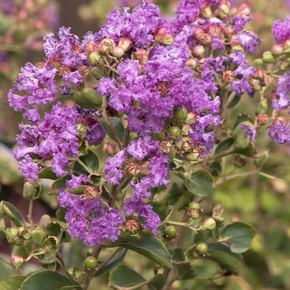
- Explosive double blooms open bright pink and deepen to vivid cherry red, flowering continuously on the same panicle for up to 100 days throughout summer and into fall
- Striking deep purple-green foliage provides rich, dramatic contrast to the bold flower clusters all season long
- Highly mildew resistant and heat tolerant with a naturally upright, compact habit — ideal for landscape borders, hedges, specimen plantings, and patio containers
- Pollinator magnet that attracts bees, butterflies, and hummingbirds, while offering brilliant orange-red fall color and attractive exfoliating bark for winter interest
Double Dynamite Crape Myrtle (Lagerstroemia indica 'Whit X', PP27085) is a spectacular reblooming deciduous shrub bred by Dr. Carl Whitcomb that delivers an unrivaled double show of color from summer through fall. This patented selection sets itself apart with bold, dark purple-green foliage that emerges coppery-bronze in spring and serves as a dramatic backdrop for massive panicles of frilly, cherry-red flowers that begin as bright pink and deepen to intense red as they mature — blooming continuously on the same panicle for an extraordinary display lasting up to 100 days. Reaching 8 to 10 feet tall and spreading 8 to 12 feet wide at maturity, Double Dynamite grows at a moderate to fast rate and forms a dense, upright, multi-stemmed silhouette that suits a wide range of landscape roles. It is highly resistant to powdery mildew, thrives in heat and humidity, and is drought tolerant once established, making it a reliable, low-maintenance choice for Southern Oregon and Northern California gardens. In autumn, the oval leaves transition to brilliant shades of orange and red before dropping to reveal attractive, exfoliating bark that provides subtle winter interest. Whether used as a bold focal point, a summer hedge, a mass planting, or a showpiece container specimen, Double Dynamite Crape Myrtle consistently delivers season-long color, wildlife appeal, and effortless beauty.
Plant Description
Double Dynamite Crape Myrtle is a patented, deciduous flowering shrub (Lagerstroemia indica 'Whit X', PP27085) developed by renowned horticulturist Dr. Carl Whitcomb as an improvement on the classic Dynamite Crape Myrtle. What makes this variety truly exceptional is its ability to produce double blooms on the same panicle — flowers open bright to light pink and rapidly deepen to a rich, vivid cherry red, creating a multi-toned floral display unlike most crape myrtles. The large, frilly flower clusters emerge prolifically at the tips of branches and continue reblooming on the same panicle throughout the season for up to 100 days of color. The foliage is equally striking, emerging in spring with coppery-bronze tones, maturing to deep purple-green through summer, and transitioning to brilliant orange and red in fall. The plant forms a dense, upright, multi-stemmed structure with fine-textured foliage and attractive smooth, exfoliating bark visible in winter dormancy. It is highly resistant to powdery mildew and tolerant of heat, humidity, and urban pollution.
Mature Size
| Characteristic | Detail |
|---|---|
| Mature Height | 8 to 10 feet |
| Mature Spread | 8 to 12 feet |
| Growth Rate | Moderate to fast; typically 1 to 3 feet per year under ideal conditions |
| Growth Habit | Upright, dense, multi-stemmed shrub with a low canopy |
| Canopy Clearance | Approximately 3 feet from the ground |
| Lifespan | Approximately 20 years or more under ideal conditions |
| Suitable Under Power Lines | Yes, due to its compact mature height |
Hardiness Zones and Climate
Double Dynamite Crape Myrtle is best suited to USDA Hardiness Zones 6 to 9, with some sources indicating suitability in Zone 10b in well-managed garden settings. It thrives in the warm, sunny summers typical of Southern Oregon and Northern California and performs exceptionally well in climates with hot, dry summers and mild winters. The plant is highly heat tolerant and humidity tolerant, characteristics that make it well adapted to the Rogue Valley and surrounding inland valleys. It may experience some dieback in the coldest winters at the edge of its hardiness range but typically recovers vigorously from the roots in spring. Avoid planting in sites with persistent cold, wet, poorly drained soils during winter, as this is more stressful to the plant than cold air temperatures alone.
Sunlight Requirements
Double Dynamite Crape Myrtle performs best and flowers most abundantly in full sun, requiring a minimum of 6 hours of direct sunlight per day. In the Pacific Southwest and inland valleys of Southern Oregon and Northern California, a location with all-day sun exposure will produce the most prolific and deeply colored blooms. While it can tolerate light or partial afternoon shade, reduced sun exposure will noticeably diminish the quantity of flowers and may cause the plant to become more open and leggy in habit. For optimal flowering, plant color intensity, and mildew resistance, always prioritize a full-sun location.
Soil and pH Preferences
- Prefers average to moist, well-drained soil; tolerates a range of soil types including loam, sandy loam, and clay
- Ideally suited to slightly acidic to neutral soil pH (approximately 5.0 to 6.5); chlorosis (yellowing of leaves) can occur in highly alkaline soils
- Once established, tolerates drought and drier soil conditions very well
- Amending heavy clay soils with compost or organic matter at planting will improve drainage and encourage faster establishment
- Avoid planting in low-lying areas where water pools after rain, as consistently waterlogged roots can lead to decline
- Highly tolerant of urban soil conditions and pollution, making it an excellent choice for street-side or courtyard plantings
Watering Guide
Newly planted Double Dynamite Crape Myrtles require consistent, regular watering during their first one to two growing seasons to establish a deep, healthy root system. Water deeply and thoroughly at the time of planting, and continue watering at the base of the plant whenever the top few inches of soil become dry. As a general guideline during the establishment period, water once or twice per week depending on heat and soil conditions, always allowing the soil to partially dry between waterings to prevent root rot. Once fully established — typically after one to two full growing seasons — Double Dynamite is quite drought tolerant and will require only occasional deep watering during prolonged dry spells, which is especially relevant during the dry summers of Southern Oregon and Northern California. Always water deeply rather than shallowly to encourage deep root growth. Reduce watering frequency in fall to help the plant harden off and prepare for winter dormancy. Avoid overhead watering, which can promote foliar disease.
Fertilizing
Crape myrtles bloom exclusively on new growth, so encouraging healthy new growth with appropriate fertilization is key to maximizing flowers. Apply a slow-release, balanced fertilizer (such as a 10-10-10 or similar formulation) in early spring as the first new leaves begin to emerge from dormancy. This single annual application is often sufficient for established plants growing in reasonably fertile soil. For gardeners seeking more vigorous growth and prolific blooming, a light additional application in mid-summer can be beneficial. Avoid fertilizing after late summer, as this encourages tender new growth that may be damaged by early fall frosts and prevents the plant from hardening off properly before winter. Do not over-fertilize with high-nitrogen products, as excess nitrogen promotes lush foliage at the expense of flowers. Always water thoroughly after applying fertilizer to help nutrients absorb into the root zone.
Pruning and Maintenance
Double Dynamite Crape Myrtle is a relatively low-maintenance shrub that requires minimal pruning to thrive. The best time to prune is in late winter or very early spring, after the risk of extreme cold has passed but before new growth begins to emerge. At this time, remove any dead, damaged, or crossing branches and thin the interior canopy lightly to improve air circulation and light penetration. Deadheading spent flower clusters during the blooming season can encourage additional flushes of bloom, though this variety is a natural rebloomer even without deadheading. Avoid the common but damaging practice known as "crape murder" — severe, drastic cutting back of the main branches — as this disfigures the plant's natural form, weakens the structure, and reduces blooming. If size control is needed, selective pruning back to a lateral branch is far preferable to topping. Light shaping to maintain a tidy silhouette may be done throughout the growing season as needed.
Planting Instructions
- Choose a location with at least 6 hours of full sun and well-drained soil. Avoid low spots where water can pool.
- Dig a planting hole two to three times as wide as the root ball and no deeper than the height of the root ball, so the top of the root ball sits level with or slightly above the surrounding soil grade.
- If planting in heavy clay or compacted soil, amend the backfill with compost or other organic matter to improve drainage and soil structure.
- Remove the plant from its container, gently loosen any circling or matted roots, and place it in the center of the hole.
- Backfill with the amended soil, firming it gently around the root ball to eliminate air pockets. Do not bury the root flare.
- Water deeply and thoroughly immediately after planting.
- Apply a 2 to 3 inch layer of organic mulch (such as bark or wood chips) around the base of the plant, keeping mulch a few inches away from the trunk to prevent rot and discourage pests.
- Continue regular watering throughout the first growing season to establish a strong root system. Spring and fall are the ideal planting seasons, though container-grown plants can be planted in summer with attentive watering.
Seasonal Interest
| Season | What to Expect |
|---|---|
| Spring | New foliage emerges with attractive coppery-bronze tones, gradually transitioning to deep purple-green as leaves mature |
| Summer | Peak bloom period featuring massive panicles of frilly cherry-red flowers that open pink and deepen to red; continuous reblooming on the same panicle for up to 100 days |
| Fall | Foliage transitions to brilliant shades of orange and red, extending the season of ornamental interest well into autumn |
| Winter | Attractive smooth, exfoliating multi-tone bark is revealed after leaf drop, providing subtle structural and textural interest in the dormant garden |
Landscape Uses
- Specimen or Focal Point: Its bold flower color, distinctive foliage, and striking multi-season presence make it an excellent standalone showpiece in any garden or yard
- Mixed Border: Works beautifully anchoring a perennial or shrub border with long-season color and vertical structure
- Hedge or Screen: Its dense, upright habit and medium stature make it trainable as a summer-flowering hedge or semi-informal screen
- Mass Planting: Planted in groups of three or more, it creates a stunning, high-impact summer display
- Patio or Courtyard Tree: Its compact size and multi-stem form suit it perfectly to patio edges, courtyard plantings, and entryway features
- Container Growing: Well-suited to large patio containers and whiskey barrels, making it an excellent choice for decks, patios, and urban spaces
- Pollinator Garden: An outstanding choice for gardens designed to support bees, butterflies, and hummingbirds throughout summer
- Cut Flowers: The long, bold flower panicles make striking fresh-cut or dried flower arrangements
- Firewise Landscapes: Considered appropriate for use in fire-wise garden designs due to its deciduous habit and water-efficient nature
Container Growing
Double Dynamite Crape Myrtle adapts very well to container culture, making it a stunning choice for large patio pots, whiskey barrels, or decorative planters on decks and patios. Choose a container that is at least 24 inches in diameter with ample drainage holes. Use a high-quality, well-draining potting mix rather than garden soil, which can compact and restrict root growth in containers. Container-grown plants will require more frequent watering than those planted in the ground — check soil moisture regularly during summer heat and water whenever the top inch or two of soil is dry. Fertilize container plants more often than in-ground plants, applying a balanced slow-release fertilizer in spring and supplementing with a liquid fertilizer monthly through the growing season. In colder winters, move containers to a sheltered location to protect the roots from freezing, as container roots are more vulnerable to cold damage than in-ground roots. Repot every two to three years or when the plant becomes root-bound.
Wildlife Value
Double Dynamite Crape Myrtle is an outstanding plant for supporting local wildlife and pollinators throughout the summer months. Its large, nectar-rich flower panicles are a reliable magnet for bees, attracting both native and honeybee species during peak bloom. Butterflies of many species visit the flowers consistently throughout the long blooming season, making it a valuable asset in any pollinator garden. Hummingbirds are also drawn to the vivid red blooms, particularly in the warm, dry summers of Southern Oregon and Northern California. The dense branching structure of mature plants can provide shelter and nesting sites for small birds. The plant is also noted as being deer resistant, an important consideration for gardens in the foothills and rural areas surrounding the Rogue Valley and Klamath Basin where deer browsing pressure can be significant.
Pests and Diseases
Double Dynamite Crape Myrtle is notably resistant to powdery mildew, one of the most common fungal diseases affecting crape myrtles, especially in humid or coastal conditions. Providing adequate spacing for air circulation and planting in full sun greatly reduces any remaining disease risk. While generally a pest-resistant and problem-free plant, the following issues are occasionally encountered:
- Aphids: Crape myrtle aphids (Tinocallis kahawaluokalani) may colonize new growth in spring, producing sticky honeydew and sooty mold on leaves below. In most cases, natural predators (ladybugs, lacewings) manage populations adequately. If needed, a strong jet of water or an insecticidal soap spray will control infestations.
- Crape Myrtle Bark Scale: A relatively newer pest (Acanthococcus lagerstroemiae) that appears as white or gray crusty scale deposits on branches. Treat with dormant oil spray in late winter or a systemic insecticide applied as a soil drench in spring.
- Sooty Mold: Black, powdery mold that grows on honeydew secreted by aphids or scale insects. Address the underlying pest problem to eliminate the mold.
- Chlorosis: Yellowing of leaves can occur in highly alkaline soils; amend soil pH or apply chelated iron if this occurs.
- This variety does not have significant invasive characteristics and is not listed as an invasive species in the western United States.
Companion Plants
Double Dynamite Crape Myrtle pairs beautifully with a wide variety of plants that complement its bold summer color, deep purple-green foliage, and sun-loving nature. Consider these companion plant ideas for the Southern Oregon and Northern California garden:
- Butterfly Bush (Buddleia): Shares the same full-sun preference and long summer bloom season, and attracts the same pollinators for a combined wildlife habitat planting
- Daylilies (Hemerocallis): Hardy, sun-loving perennials that provide bold summer color at a lower growing level beneath the crape myrtle canopy
- Indian Hawthorn (Rhaphiolepis indica): A compact, evergreen shrub that provides winter and spring interest to complement the crape myrtle's deciduous nature
- Ornamental Grasses (Miscanthus, Pennisetum): Feathery, fine-textured grasses contrast beautifully with the bold blooms and structured form of Double Dynamite
- Lavender (Lavandula): Thrives in the same full-sun, well-drained, dry-summer conditions and adds soft purple-blue tones that contrast the cherry-red flowers
- Russian Sage (Perovskia atriplicifolia): A drought-tolerant, silvery-blue perennial that bridges the gap between the crape myrtle's lower canopy and the ground, thriving in the same sunny, dry conditions
- Black-Eyed Susan (Rudbeckia): Warm golden blooms in late summer complement the red flowers and extend the color palette of a sunny mixed border
Toxicity and Safety
Double Dynamite Crape Myrtle is considered non-toxic to humans, dogs, and cats, making it a safe choice for family gardens and pet-friendly landscapes. No parts of the plant — including the flowers, leaves, seeds, or bark — are known to cause toxicity in humans or common domestic animals. This variety is also not considered an invasive species in the western United States and poses no known ecological threat to natural areas.
- Explosive double blooms open bright pink and deepen to vivid cherry red, flowering continuously on the same panicle for up to 100 days throughout summer and into fall
- Striking deep purple-green foliage provides rich, dramatic contrast to the bold flower clusters all season long
- Highly mildew resistant and heat tolerant with a naturally upright, compact habit — ideal for landscape borders, hedges, specimen plantings, and patio containers
- Pollinator magnet that attracts bees, butterflies, and hummingbirds, while offering brilliant orange-red fall color and attractive exfoliating bark for winter interest
Double Dynamite Crape Myrtle (Lagerstroemia indica 'Whit X', PP27085) is a spectacular reblooming deciduous shrub bred by Dr. Carl Whitcomb that delivers an unrivaled double show of color from summer through fall. This patented selection sets itself apart with bold, dark purple-green foliage that emerges coppery-bronze in spring and serves as a dramatic backdrop for massive panicles of frilly, cherry-red flowers that begin as bright pink and deepen to intense red as they mature — blooming continuously on the same panicle for an extraordinary display lasting up to 100 days. Reaching 8 to 10 feet tall and spreading 8 to 12 feet wide at maturity, Double Dynamite grows at a moderate to fast rate and forms a dense, upright, multi-stemmed silhouette that suits a wide range of landscape roles. It is highly resistant to powdery mildew, thrives in heat and humidity, and is drought tolerant once established, making it a reliable, low-maintenance choice for Southern Oregon and Northern California gardens. In autumn, the oval leaves transition to brilliant shades of orange and red before dropping to reveal attractive, exfoliating bark that provides subtle winter interest. Whether used as a bold focal point, a summer hedge, a mass planting, or a showpiece container specimen, Double Dynamite Crape Myrtle consistently delivers season-long color, wildlife appeal, and effortless beauty.
Plant Description
Double Dynamite Crape Myrtle is a patented, deciduous flowering shrub (Lagerstroemia indica 'Whit X', PP27085) developed by renowned horticulturist Dr. Carl Whitcomb as an improvement on the classic Dynamite Crape Myrtle. What makes this variety truly exceptional is its ability to produce double blooms on the same panicle — flowers open bright to light pink and rapidly deepen to a rich, vivid cherry red, creating a multi-toned floral display unlike most crape myrtles. The large, frilly flower clusters emerge prolifically at the tips of branches and continue reblooming on the same panicle throughout the season for up to 100 days of color. The foliage is equally striking, emerging in spring with coppery-bronze tones, maturing to deep purple-green through summer, and transitioning to brilliant orange and red in fall. The plant forms a dense, upright, multi-stemmed structure with fine-textured foliage and attractive smooth, exfoliating bark visible in winter dormancy. It is highly resistant to powdery mildew and tolerant of heat, humidity, and urban pollution.
Mature Size
| Characteristic | Detail |
|---|---|
| Mature Height | 8 to 10 feet |
| Mature Spread | 8 to 12 feet |
| Growth Rate | Moderate to fast; typically 1 to 3 feet per year under ideal conditions |
| Growth Habit | Upright, dense, multi-stemmed shrub with a low canopy |
| Canopy Clearance | Approximately 3 feet from the ground |
| Lifespan | Approximately 20 years or more under ideal conditions |
| Suitable Under Power Lines | Yes, due to its compact mature height |
Hardiness Zones and Climate
Double Dynamite Crape Myrtle is best suited to USDA Hardiness Zones 6 to 9, with some sources indicating suitability in Zone 10b in well-managed garden settings. It thrives in the warm, sunny summers typical of Southern Oregon and Northern California and performs exceptionally well in climates with hot, dry summers and mild winters. The plant is highly heat tolerant and humidity tolerant, characteristics that make it well adapted to the Rogue Valley and surrounding inland valleys. It may experience some dieback in the coldest winters at the edge of its hardiness range but typically recovers vigorously from the roots in spring. Avoid planting in sites with persistent cold, wet, poorly drained soils during winter, as this is more stressful to the plant than cold air temperatures alone.
Sunlight Requirements
Double Dynamite Crape Myrtle performs best and flowers most abundantly in full sun, requiring a minimum of 6 hours of direct sunlight per day. In the Pacific Southwest and inland valleys of Southern Oregon and Northern California, a location with all-day sun exposure will produce the most prolific and deeply colored blooms. While it can tolerate light or partial afternoon shade, reduced sun exposure will noticeably diminish the quantity of flowers and may cause the plant to become more open and leggy in habit. For optimal flowering, plant color intensity, and mildew resistance, always prioritize a full-sun location.
Soil and pH Preferences
- Prefers average to moist, well-drained soil; tolerates a range of soil types including loam, sandy loam, and clay
- Ideally suited to slightly acidic to neutral soil pH (approximately 5.0 to 6.5); chlorosis (yellowing of leaves) can occur in highly alkaline soils
- Once established, tolerates drought and drier soil conditions very well
- Amending heavy clay soils with compost or organic matter at planting will improve drainage and encourage faster establishment
- Avoid planting in low-lying areas where water pools after rain, as consistently waterlogged roots can lead to decline
- Highly tolerant of urban soil conditions and pollution, making it an excellent choice for street-side or courtyard plantings
Watering Guide
Newly planted Double Dynamite Crape Myrtles require consistent, regular watering during their first one to two growing seasons to establish a deep, healthy root system. Water deeply and thoroughly at the time of planting, and continue watering at the base of the plant whenever the top few inches of soil become dry. As a general guideline during the establishment period, water once or twice per week depending on heat and soil conditions, always allowing the soil to partially dry between waterings to prevent root rot. Once fully established — typically after one to two full growing seasons — Double Dynamite is quite drought tolerant and will require only occasional deep watering during prolonged dry spells, which is especially relevant during the dry summers of Southern Oregon and Northern California. Always water deeply rather than shallowly to encourage deep root growth. Reduce watering frequency in fall to help the plant harden off and prepare for winter dormancy. Avoid overhead watering, which can promote foliar disease.
Fertilizing
Crape myrtles bloom exclusively on new growth, so encouraging healthy new growth with appropriate fertilization is key to maximizing flowers. Apply a slow-release, balanced fertilizer (such as a 10-10-10 or similar formulation) in early spring as the first new leaves begin to emerge from dormancy. This single annual application is often sufficient for established plants growing in reasonably fertile soil. For gardeners seeking more vigorous growth and prolific blooming, a light additional application in mid-summer can be beneficial. Avoid fertilizing after late summer, as this encourages tender new growth that may be damaged by early fall frosts and prevents the plant from hardening off properly before winter. Do not over-fertilize with high-nitrogen products, as excess nitrogen promotes lush foliage at the expense of flowers. Always water thoroughly after applying fertilizer to help nutrients absorb into the root zone.
Pruning and Maintenance
Double Dynamite Crape Myrtle is a relatively low-maintenance shrub that requires minimal pruning to thrive. The best time to prune is in late winter or very early spring, after the risk of extreme cold has passed but before new growth begins to emerge. At this time, remove any dead, damaged, or crossing branches and thin the interior canopy lightly to improve air circulation and light penetration. Deadheading spent flower clusters during the blooming season can encourage additional flushes of bloom, though this variety is a natural rebloomer even without deadheading. Avoid the common but damaging practice known as "crape murder" — severe, drastic cutting back of the main branches — as this disfigures the plant's natural form, weakens the structure, and reduces blooming. If size control is needed, selective pruning back to a lateral branch is far preferable to topping. Light shaping to maintain a tidy silhouette may be done throughout the growing season as needed.
Planting Instructions
- Choose a location with at least 6 hours of full sun and well-drained soil. Avoid low spots where water can pool.
- Dig a planting hole two to three times as wide as the root ball and no deeper than the height of the root ball, so the top of the root ball sits level with or slightly above the surrounding soil grade.
- If planting in heavy clay or compacted soil, amend the backfill with compost or other organic matter to improve drainage and soil structure.
- Remove the plant from its container, gently loosen any circling or matted roots, and place it in the center of the hole.
- Backfill with the amended soil, firming it gently around the root ball to eliminate air pockets. Do not bury the root flare.
- Water deeply and thoroughly immediately after planting.
- Apply a 2 to 3 inch layer of organic mulch (such as bark or wood chips) around the base of the plant, keeping mulch a few inches away from the trunk to prevent rot and discourage pests.
- Continue regular watering throughout the first growing season to establish a strong root system. Spring and fall are the ideal planting seasons, though container-grown plants can be planted in summer with attentive watering.
Seasonal Interest
| Season | What to Expect |
|---|---|
| Spring | New foliage emerges with attractive coppery-bronze tones, gradually transitioning to deep purple-green as leaves mature |
| Summer | Peak bloom period featuring massive panicles of frilly cherry-red flowers that open pink and deepen to red; continuous reblooming on the same panicle for up to 100 days |
| Fall | Foliage transitions to brilliant shades of orange and red, extending the season of ornamental interest well into autumn |
| Winter | Attractive smooth, exfoliating multi-tone bark is revealed after leaf drop, providing subtle structural and textural interest in the dormant garden |
Landscape Uses
- Specimen or Focal Point: Its bold flower color, distinctive foliage, and striking multi-season presence make it an excellent standalone showpiece in any garden or yard
- Mixed Border: Works beautifully anchoring a perennial or shrub border with long-season color and vertical structure
- Hedge or Screen: Its dense, upright habit and medium stature make it trainable as a summer-flowering hedge or semi-informal screen
- Mass Planting: Planted in groups of three or more, it creates a stunning, high-impact summer display
- Patio or Courtyard Tree: Its compact size and multi-stem form suit it perfectly to patio edges, courtyard plantings, and entryway features
- Container Growing: Well-suited to large patio containers and whiskey barrels, making it an excellent choice for decks, patios, and urban spaces
- Pollinator Garden: An outstanding choice for gardens designed to support bees, butterflies, and hummingbirds throughout summer
- Cut Flowers: The long, bold flower panicles make striking fresh-cut or dried flower arrangements
- Firewise Landscapes: Considered appropriate for use in fire-wise garden designs due to its deciduous habit and water-efficient nature
Container Growing
Double Dynamite Crape Myrtle adapts very well to container culture, making it a stunning choice for large patio pots, whiskey barrels, or decorative planters on decks and patios. Choose a container that is at least 24 inches in diameter with ample drainage holes. Use a high-quality, well-draining potting mix rather than garden soil, which can compact and restrict root growth in containers. Container-grown plants will require more frequent watering than those planted in the ground — check soil moisture regularly during summer heat and water whenever the top inch or two of soil is dry. Fertilize container plants more often than in-ground plants, applying a balanced slow-release fertilizer in spring and supplementing with a liquid fertilizer monthly through the growing season. In colder winters, move containers to a sheltered location to protect the roots from freezing, as container roots are more vulnerable to cold damage than in-ground roots. Repot every two to three years or when the plant becomes root-bound.
Wildlife Value
Double Dynamite Crape Myrtle is an outstanding plant for supporting local wildlife and pollinators throughout the summer months. Its large, nectar-rich flower panicles are a reliable magnet for bees, attracting both native and honeybee species during peak bloom. Butterflies of many species visit the flowers consistently throughout the long blooming season, making it a valuable asset in any pollinator garden. Hummingbirds are also drawn to the vivid red blooms, particularly in the warm, dry summers of Southern Oregon and Northern California. The dense branching structure of mature plants can provide shelter and nesting sites for small birds. The plant is also noted as being deer resistant, an important consideration for gardens in the foothills and rural areas surrounding the Rogue Valley and Klamath Basin where deer browsing pressure can be significant.
Pests and Diseases
Double Dynamite Crape Myrtle is notably resistant to powdery mildew, one of the most common fungal diseases affecting crape myrtles, especially in humid or coastal conditions. Providing adequate spacing for air circulation and planting in full sun greatly reduces any remaining disease risk. While generally a pest-resistant and problem-free plant, the following issues are occasionally encountered:
- Aphids: Crape myrtle aphids (Tinocallis kahawaluokalani) may colonize new growth in spring, producing sticky honeydew and sooty mold on leaves below. In most cases, natural predators (ladybugs, lacewings) manage populations adequately. If needed, a strong jet of water or an insecticidal soap spray will control infestations.
- Crape Myrtle Bark Scale: A relatively newer pest (Acanthococcus lagerstroemiae) that appears as white or gray crusty scale deposits on branches. Treat with dormant oil spray in late winter or a systemic insecticide applied as a soil drench in spring.
- Sooty Mold: Black, powdery mold that grows on honeydew secreted by aphids or scale insects. Address the underlying pest problem to eliminate the mold.
- Chlorosis: Yellowing of leaves can occur in highly alkaline soils; amend soil pH or apply chelated iron if this occurs.
- This variety does not have significant invasive characteristics and is not listed as an invasive species in the western United States.
Companion Plants
Double Dynamite Crape Myrtle pairs beautifully with a wide variety of plants that complement its bold summer color, deep purple-green foliage, and sun-loving nature. Consider these companion plant ideas for the Southern Oregon and Northern California garden:
- Butterfly Bush (Buddleia): Shares the same full-sun preference and long summer bloom season, and attracts the same pollinators for a combined wildlife habitat planting
- Daylilies (Hemerocallis): Hardy, sun-loving perennials that provide bold summer color at a lower growing level beneath the crape myrtle canopy
- Indian Hawthorn (Rhaphiolepis indica): A compact, evergreen shrub that provides winter and spring interest to complement the crape myrtle's deciduous nature
- Ornamental Grasses (Miscanthus, Pennisetum): Feathery, fine-textured grasses contrast beautifully with the bold blooms and structured form of Double Dynamite
- Lavender (Lavandula): Thrives in the same full-sun, well-drained, dry-summer conditions and adds soft purple-blue tones that contrast the cherry-red flowers
- Russian Sage (Perovskia atriplicifolia): A drought-tolerant, silvery-blue perennial that bridges the gap between the crape myrtle's lower canopy and the ground, thriving in the same sunny, dry conditions
- Black-Eyed Susan (Rudbeckia): Warm golden blooms in late summer complement the red flowers and extend the color palette of a sunny mixed border
Toxicity and Safety
Double Dynamite Crape Myrtle is considered non-toxic to humans, dogs, and cats, making it a safe choice for family gardens and pet-friendly landscapes. No parts of the plant — including the flowers, leaves, seeds, or bark — are known to cause toxicity in humans or common domestic animals. This variety is also not considered an invasive species in the western United States and poses no known ecological threat to natural areas.