

Zoom the image with the mouse
Yellow Trumpet Vine - 5 Gallon
SKU:
230360
UPC:
014949223857
$64.99
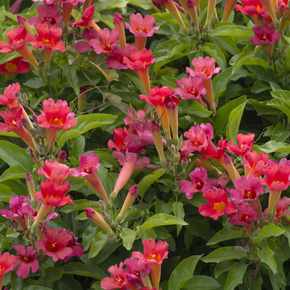
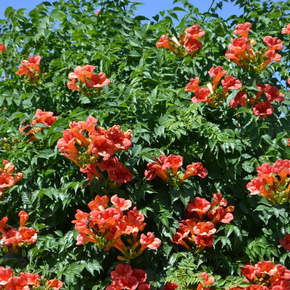
- Stunning golden-yellow, trumpet-shaped blooms cascade in clusters all summer long, attracting hummingbirds and pollinators from June through September
- A vigorous, award-winning North American native woody climber that is heat, cold, and drought tolerant once established — ideal for covering fences, trellises, arbors, and pergolas with bold seasonal color
- Deciduous, self-clinging vine with lush, pinnate dark green foliage that grows 20 to 40 feet, creating a dramatic, full-coverage landscape statement with very little ongoing care
- Deer resistant and adaptable to a wide range of soils including clay, loam, chalk, and sand — thrives in lean conditions and blooms best when left relatively undisturbed
Yellow Trumpet Vine (Campsis radicans f. flava) is a spectacular, award-winning deciduous woody climber celebrated for its rich clusters of golden-yellow, trumpet-shaped flowers that light up the summer garden from early through late season. A native of eastern and central North America and a recipient of the Royal Horticultural Society's prestigious Award of Garden Merit, this vigorous self-clinging vine produces cheerful, 3-inch tubular blooms borne in showy terminal clusters that are a magnet for hummingbirds and large pollinators throughout the warm months. Its lush, pinnately compound dark green foliage gives the vine a bold, tropical presence on any structure, and the blooms are followed by attractive, elongated bean-like seedpods that add further textural interest. Unlike the more common orange and red trumpet vine cultivars, the 'Flava' form offers a distinctly softer, golden palette that pairs beautifully with a wide range of garden color schemes. Hardy in USDA Zones 4 through 9, Yellow Trumpet Vine thrives in full sun to partial shade and adapts to an impressive range of soil types and pH levels, making it one of the most versatile and rewarding flowering vines available for Southern Oregon and Northern California landscapes. Whether draped over a sturdy arbor, climbing a masonry wall, or trained along a fence line, this powerhouse climber rewards the patient gardener with a season-long floral spectacle and exceptional wildlife value.
Plant Description
Yellow Trumpet Vine is a vigorous, woody, deciduous climbing vine belonging to the Bignoniaceae (trumpet vine) family. The botanical form Campsis radicans f. flava is distinguished from the straight species by its rich golden-yellow flowers rather than the typical orange-red hues. The blooms are large, tubular, and trumpet-shaped — approximately 3 inches (8 cm) long — and are produced in spectacular terminal clusters at the ends of branches throughout summer. Each individual flower features a narrow curved tube that flares into five shallow petal lobes at the mouth, a form perfectly adapted for hummingbird pollination. The foliage is pinnately compound, with 7 to 11 leaflets per leaf that are glossy and dark green above, paler and dull green below, with coarsely toothed margins. The vine climbs by means of aerial rootlets and adhesive holdfasts that allow it to cling to rough surfaces including masonry, bark, and wood without additional ties. After flowering, the plant produces long, bean-like seedpods, 4 to 6 inches in length, that split open in fall to release flat, winged seeds. The vine is fully deciduous, dropping its leaves in autumn and re-emerging in late spring.
Mature Size
| Attribute | Details |
|---|---|
| Mature Height | 20 to 40 feet (6 to 12 meters) |
| Mature Spread | 5 to 10 feet (150 cm to 3 meters) |
| Growth Rate | Fast — can extend several feet per season once established |
| Plant Type | Deciduous woody climbing vine |
| Maintenance Level | High — annual pruning strongly recommended to control size and spread |
Yellow Trumpet Vine is a true powerhouse grower. Its ultimate height and spread demand a very sturdy support structure such as a large arbor, heavy-duty pergola, mature tree trunk, or robust masonry wall. Lightweight trellises or weak fencing will not adequately support the weight of a mature vine, which can become quite substantial over time. Plan the planting site with the vine's mature size in mind, allowing at least 10 to 15 feet of horizontal space and ensuring the chosen support is built to last.
Hardiness Zones and Climate
| Attribute | Details |
|---|---|
| USDA Hardiness Zones | 4 to 9 |
| AHS Heat Zones | 3 to 9 |
| Sunset Climate Zones | 1 through 21 |
| Temperature Tolerance | Heat, cold, and drought tolerant once established |
| Regional Suitability | Excellent performer in Southern Oregon and Northern California |
Yellow Trumpet Vine is well-suited to the diverse climates of Southern Oregon and Northern California, tolerating both summer heat and winter cold across a broad range of elevations and microclimates. Its wide Sunset Climate Zone rating means it performs reliably from the cool, wet valleys of the Siskiyous to the warmer inland regions of the Rogue and Shasta areas. In colder portions of Zone 4 and 5, the vine may die back to the ground in severe winters but will typically resprout vigorously from the roots in spring.
Sunlight Requirements
Yellow Trumpet Vine performs best and blooms most abundantly in full sun, defined as a minimum of 6 hours of direct sunlight per day. In full sun conditions, the golden-yellow floral display is at its most prolific and the plant achieves peak vigor. It will tolerate partial shade (3 to 6 hours of direct sun), but flower production will be noticeably reduced in shadier conditions. The vine may continue to grow vigorously in part shade but can become primarily foliage-dominant with few blooms. For maximum hummingbird attraction and the showiest summer color display, always select the sunniest available planting site.
Soil and pH Preferences
| Attribute | Details |
|---|---|
| Preferred Soil Types | Chalk, clay, loam, or sand — highly adaptable |
| Soil pH | Acidic, neutral, or alkaline — tolerates a wide range |
| Drainage | Moist but well-drained; avoid consistently waterlogged conditions |
| Fertility | Lean to average soils preferred; overly rich soils promote excess foliage over flowers |
| Clay Tolerance | Yes — one of its notable tolerances |
One of Yellow Trumpet Vine's greatest strengths is its exceptional adaptability to a wide variety of soil conditions. It performs well in the heavy clay soils common to many parts of Southern Oregon and Northern California, as well as in sandy, rocky, or chalky soils. Importantly, this vine tends to bloom more abundantly when grown in lean, less fertile soils. Planting in overly rich, amended beds can stimulate excessive leafy growth at the expense of flowering. Good drainage is the most critical soil requirement — the vine does not tolerate standing water or chronically waterlogged roots.
Watering Guide
During the first growing season after planting, water Yellow Trumpet Vine regularly — approximately once per week or whenever the top few inches of soil become dry — to encourage a deep, well-established root system. Once fully established, typically after the first full season in the ground, this vine is impressively drought tolerant and can largely survive on natural rainfall in most climates. During extended dry spells or periods of intense summer heat, supplemental irrigation of approximately 1 inch of water per week will support healthy growth and consistent flowering. Avoid overwatering, as the vine does not require frequent irrigation once established and excessive moisture can promote root rot or unnecessarily vigorous vegetative growth at the expense of blooms. In the dry summers typical of Southern Oregon and Northern California, established vines generally benefit from occasional deep watering every 2 to 3 weeks rather than frequent shallow watering.
Fertilizing
Yellow Trumpet Vine is notably self-sufficient when it comes to nutrition and generally does not require supplemental fertilization. In fact, applying fertilizers — particularly those high in nitrogen — can stimulate excessive, uncontrolled vegetative growth and dramatically reduce flower production. The vine thrives and blooms most freely in lean to average soils without any feeding program. If your soil is extremely poor or sandy with almost no organic matter, a single light application of a low-nitrogen, phosphorus-rich fertilizer (such as a bloom-booster formulation) in early spring can gently encourage flowering without triggering runaway growth. As a general rule, less is more with this vine: resist the urge to fertilize and let it work with the natural soil to deliver its best floral display.
Pruning and Maintenance
Regular, disciplined pruning is essential to keeping Yellow Trumpet Vine manageable, shapely, and at its most floriferous. Because this vine blooms on new growth produced in the current season, hard annual pruning in late winter or very early spring — before new buds break — will not sacrifice any flowers and will in fact stimulate a more compact form with heavier bloom clusters. Follow these guidelines:
- In late winter or early spring, cut all lateral branches back to within 3 to 4 buds of the main framework branches.
- Remove any dead, damaged, crossing, or overcrowded shoots entirely at the same time.
- Throughout the growing season, routinely remove any root suckers or underground runners that emerge away from the base of the plant — these can spread considerable distances if left unchecked.
- A second, lighter tidying trim can be done in late summer after the primary flush of bloom if the vine has grown aggressively out of bounds.
- Do not prune after midsummer, as this can remove developing flower buds for the following year and may stimulate tender new growth vulnerable to early frosts.
- Wear gloves when pruning, as the sap can cause contact dermatitis in sensitive individuals.
Old, established vines can be renovated by cutting them back to near ground level in late winter if they have become overgrown. The root system will support vigorous regrowth and flowering within one to two seasons.
Planting Instructions
- Select a full-sun location with well-drained soil and a very sturdy support structure already in place — the mature vine can weigh hundreds of pounds.
- Avoid planting directly against house siding, wood trim, gutters, or downspouts, as the aerial rootlets can penetrate and damage these surfaces over time.
- Allow at least 10 to 15 feet of horizontal space and keep the vine at least 5 to 6 feet away from wooden structures or painted surfaces that could be damaged.
- Dig a planting hole two to three times the width of the root ball and equal in depth. In heavy clay soils, loosen the surrounding soil to encourage outward root expansion.
- Set the plant at the same depth it was growing in the nursery container. Backfill with the native soil — do not amend with compost or fertilizer, as lean soil promotes better flowering.
- Water thoroughly at planting and apply a 2- to 3-inch layer of mulch around the base, keeping mulch a few inches away from the main stem.
- Begin guiding young stems toward the support structure. The vine will naturally attach by aerial rootlets once it reaches a rough surface.
- Water regularly throughout the first growing season to establish deep roots.
Seasonal Interest
| Season | What to Expect |
|---|---|
| Spring | Lush, pinnate dark green foliage emerges in mid-to-late spring as temperatures warm; fresh stems extend rapidly |
| Early Summer | First clusters of golden-yellow trumpet-shaped flowers begin opening at branch tips; hummingbird activity begins |
| Mid to Late Summer | Peak bloom period with the most prolific flower display; blooms continue in successive waves through the season |
| Fall | Flowers give way to ornamental, bean-like seedpods 4 to 6 inches long; foliage drops with little fall color |
| Winter | Deciduous — bare woody stems add structural interest; fully cold-hardy down to Zone 4 |
Landscape Uses
- Arbors and Pergolas: One of the most dramatic vines for overhead structures, providing dense summer shade and an extraordinary floral canopy.
- Fences and Walls: Ideal for covering chain-link, sturdy wood, or masonry walls and fences with lush foliage and summer color.
- Trellises: Effective on large, heavy-duty trellises positioned as garden focal points, along pathways, or as patio screens.
- Slope and Bank Stabilization: The deep, spreading root system is useful for controlling erosion on steep banks and hillsides.
- Hummingbird and Wildlife Garden: An outstanding anchor plant in gardens designed to attract hummingbirds and native pollinators throughout the summer.
- Naturalistic and Informal Gardens: Excellent in large, informal landscape settings where its exuberant growth habit can be appreciated without tight constraint.
- Screening and Privacy: The dense deciduous foliage provides effective seasonal screening from early summer through fall.
Companion Plants
Yellow Trumpet Vine's golden summer blooms pair beautifully with a variety of garden plants. Consider these complementary combinations:
- Purple Coneflower (Echinacea purpurea): The rich purple daisy-like flowers of coneflower create a striking warm-and-cool contrast with the golden trumpet blooms, and both attract pollinators simultaneously.
- English Lavender (Lavandula angustifolia): The soft purple-blue spikes and silvery foliage of lavender planted at the base of the vine create an elegant, fragrant foreground that complements the vine's bold yellow blooms.
- New England Aster (Symphyotrichum novae-angliae): Deep purple-pink asters bloom just as trumpet vine flowers begin to fade, extending the season of interest and providing an outstanding late-summer and fall color bridge.
- Black-Eyed Susan (Rudbeckia hirta): The bright yellow-and-black daisy flowers echo the warm golden tones of the vine while adding cheerful texture at ground level.
- Salvia (Salvia species): Blue and purple salvias planted nearby create a vibrant complementary color combination and attract additional hummingbirds and butterflies to the same area.
- Agapanthus (Agapanthus africanus): The cool blue to white globular flower heads of agapanthus offer a bold textural contrast against the vine's warm, tubular blooms.
Wildlife Value
Yellow Trumpet Vine is one of the most wildlife-friendly vines available to Western gardeners, delivering exceptional ecological value throughout the growing season:
- Hummingbirds: The deep, nectar-rich tubular flowers are perfectly designed for hummingbird foraging. The vine is among the most reliable and prolific hummingbird forage plants available, attracting Anna's, Rufous, and Allen's hummingbirds common to the Southern Oregon and Northern California region throughout the summer.
- Native Bees: Large carpenter bees are strong enough to access the flower tubes and are regular visitors throughout the blooming period.
- Sphinx Moths: Hummingbird clearwing moths visit the flowers at dusk, and the vine serves as a larval host plant for sphinx moth species.
- Nesting Birds: The dense tangle of woody stems and lush foliage provides valuable nesting habitat and cover for a variety of small songbirds.
- Seed-Eating Birds: The persistent bean-like seedpods that develop in fall provide a supplemental food source for finches and other seed-eating birds through the colder months.
- General Wildlife Cover: The dense vine tangles offer shelter and protection for small mammals, lizards, and beneficial insects seeking refuge.
Pests and Diseases
Yellow Trumpet Vine is notably tough and largely free of serious pest or disease problems, which contributes to its reputation as a low-maintenance performer once established. The following are the most commonly encountered minor issues:
- Aphids: Clusters of aphids may occasionally appear on tender new growth in spring. These can usually be dislodged with a firm stream of water from a hose or treated with insecticidal soap if populations become heavy.
- Scale Insects: Scale can occasionally infest older woody stems. Light infestations can be treated with horticultural oil applied in late dormancy before new growth emerges.
- Leafhoppers: Minor leafhopper feeding may cause light stippling on foliage but rarely causes significant harm to an established vine.
- Powdery Mildew: In humid conditions or where air circulation is poor, powdery mildew may appear on foliage in late summer. Good siting with adequate airflow generally prevents this issue.
- Root Rot: Chronically waterlogged or poorly drained soils can lead to root rot. Ensuring well-drained planting sites is the most effective preventative measure.
- Contact Dermatitis: While not a pest or disease issue, it is worth noting that the plant's sap can cause skin irritation, reddening, or blistering in individuals with sensitive skin. Always wear gloves when pruning or handling cut stems.
Container Growing
Yellow Trumpet Vine can be grown in a large container, which offers the significant advantage of easily controlling its otherwise aggressive spreading tendency. Container culture is an excellent option for patio gardens, courtyard settings, or any situation where the vine's spread must be tightly managed. Keep the following in mind for successful container growing:
- Use the largest container practical — a minimum of 20 gallons is recommended to support the plant's substantial root system.
- Choose a heavy, stable container, as the mature vine can become top-heavy when trained up a support.
- Provide a sturdy in-container trellis or position the container adjacent to a wall or fence the vine can climb.
- Use a well-draining potting mix and ensure the container has ample drainage holes to prevent waterlogging.
- Container-grown vines will dry out more quickly than in-ground plants and will require more frequent watering, especially during hot summer months.
- Prune aggressively each late winter or early spring, as the vine's growth habit is not diminished by container confinement.
- Repot or root-prune every 2 to 3 years to prevent the root system from becoming severely potbound and to refresh the growing medium.
- In colder microclimates, containers can be moved to a sheltered location over winter to provide additional frost protection.
Managing Spread and Invasiveness
Yellow Trumpet Vine is an exceptionally vigorous grower, and prospective gardeners should plant it with a clear understanding of its spreading tendencies and a commitment to routine management. The vine spreads by three mechanisms: aerial extension of climbing stems, underground root runners that can emerge as new shoots many feet from the main plant, and self-seeding from the prolific seedpods produced after flowering. To manage the vine responsibly:
- Plant at least 5 to 6 feet away from any wooden structures, painted surfaces, gutters, or downspouts to prevent aerial rootlet damage.
- Inspect the surrounding area regularly throughout the growing season and promptly remove any root sprouts or suckers that emerge away from the main plant.
- Deadhead spent flower clusters before seedpods fully mature to significantly reduce self-seeding and unwanted seedling spread.
- Installing a physical root barrier at planting time can help contain underground runners in areas where spread control is critical.
- Do not plant near septic systems, drain fields, or the foundations of structures, as the aggressive root system can cause damage over time.
- Consider planting in a large buried container or raised bed surround to physically restrict underground spread in smaller garden spaces.
With regular attention and annual hard pruning, Yellow Trumpet Vine can be kept well within bounds and will reward the diligent gardener with one of the most spectacular summer flowering displays of any vine in cultivation.
- Stunning golden-yellow, trumpet-shaped blooms cascade in clusters all summer long, attracting hummingbirds and pollinators from June through September
- A vigorous, award-winning North American native woody climber that is heat, cold, and drought tolerant once established — ideal for covering fences, trellises, arbors, and pergolas with bold seasonal color
- Deciduous, self-clinging vine with lush, pinnate dark green foliage that grows 20 to 40 feet, creating a dramatic, full-coverage landscape statement with very little ongoing care
- Deer resistant and adaptable to a wide range of soils including clay, loam, chalk, and sand — thrives in lean conditions and blooms best when left relatively undisturbed
Yellow Trumpet Vine (Campsis radicans f. flava) is a spectacular, award-winning deciduous woody climber celebrated for its rich clusters of golden-yellow, trumpet-shaped flowers that light up the summer garden from early through late season. A native of eastern and central North America and a recipient of the Royal Horticultural Society's prestigious Award of Garden Merit, this vigorous self-clinging vine produces cheerful, 3-inch tubular blooms borne in showy terminal clusters that are a magnet for hummingbirds and large pollinators throughout the warm months. Its lush, pinnately compound dark green foliage gives the vine a bold, tropical presence on any structure, and the blooms are followed by attractive, elongated bean-like seedpods that add further textural interest. Unlike the more common orange and red trumpet vine cultivars, the 'Flava' form offers a distinctly softer, golden palette that pairs beautifully with a wide range of garden color schemes. Hardy in USDA Zones 4 through 9, Yellow Trumpet Vine thrives in full sun to partial shade and adapts to an impressive range of soil types and pH levels, making it one of the most versatile and rewarding flowering vines available for Southern Oregon and Northern California landscapes. Whether draped over a sturdy arbor, climbing a masonry wall, or trained along a fence line, this powerhouse climber rewards the patient gardener with a season-long floral spectacle and exceptional wildlife value.
Plant Description
Yellow Trumpet Vine is a vigorous, woody, deciduous climbing vine belonging to the Bignoniaceae (trumpet vine) family. The botanical form Campsis radicans f. flava is distinguished from the straight species by its rich golden-yellow flowers rather than the typical orange-red hues. The blooms are large, tubular, and trumpet-shaped — approximately 3 inches (8 cm) long — and are produced in spectacular terminal clusters at the ends of branches throughout summer. Each individual flower features a narrow curved tube that flares into five shallow petal lobes at the mouth, a form perfectly adapted for hummingbird pollination. The foliage is pinnately compound, with 7 to 11 leaflets per leaf that are glossy and dark green above, paler and dull green below, with coarsely toothed margins. The vine climbs by means of aerial rootlets and adhesive holdfasts that allow it to cling to rough surfaces including masonry, bark, and wood without additional ties. After flowering, the plant produces long, bean-like seedpods, 4 to 6 inches in length, that split open in fall to release flat, winged seeds. The vine is fully deciduous, dropping its leaves in autumn and re-emerging in late spring.
Mature Size
| Attribute | Details |
|---|---|
| Mature Height | 20 to 40 feet (6 to 12 meters) |
| Mature Spread | 5 to 10 feet (150 cm to 3 meters) |
| Growth Rate | Fast — can extend several feet per season once established |
| Plant Type | Deciduous woody climbing vine |
| Maintenance Level | High — annual pruning strongly recommended to control size and spread |
Yellow Trumpet Vine is a true powerhouse grower. Its ultimate height and spread demand a very sturdy support structure such as a large arbor, heavy-duty pergola, mature tree trunk, or robust masonry wall. Lightweight trellises or weak fencing will not adequately support the weight of a mature vine, which can become quite substantial over time. Plan the planting site with the vine's mature size in mind, allowing at least 10 to 15 feet of horizontal space and ensuring the chosen support is built to last.
Hardiness Zones and Climate
| Attribute | Details |
|---|---|
| USDA Hardiness Zones | 4 to 9 |
| AHS Heat Zones | 3 to 9 |
| Sunset Climate Zones | 1 through 21 |
| Temperature Tolerance | Heat, cold, and drought tolerant once established |
| Regional Suitability | Excellent performer in Southern Oregon and Northern California |
Yellow Trumpet Vine is well-suited to the diverse climates of Southern Oregon and Northern California, tolerating both summer heat and winter cold across a broad range of elevations and microclimates. Its wide Sunset Climate Zone rating means it performs reliably from the cool, wet valleys of the Siskiyous to the warmer inland regions of the Rogue and Shasta areas. In colder portions of Zone 4 and 5, the vine may die back to the ground in severe winters but will typically resprout vigorously from the roots in spring.
Sunlight Requirements
Yellow Trumpet Vine performs best and blooms most abundantly in full sun, defined as a minimum of 6 hours of direct sunlight per day. In full sun conditions, the golden-yellow floral display is at its most prolific and the plant achieves peak vigor. It will tolerate partial shade (3 to 6 hours of direct sun), but flower production will be noticeably reduced in shadier conditions. The vine may continue to grow vigorously in part shade but can become primarily foliage-dominant with few blooms. For maximum hummingbird attraction and the showiest summer color display, always select the sunniest available planting site.
Soil and pH Preferences
| Attribute | Details |
|---|---|
| Preferred Soil Types | Chalk, clay, loam, or sand — highly adaptable |
| Soil pH | Acidic, neutral, or alkaline — tolerates a wide range |
| Drainage | Moist but well-drained; avoid consistently waterlogged conditions |
| Fertility | Lean to average soils preferred; overly rich soils promote excess foliage over flowers |
| Clay Tolerance | Yes — one of its notable tolerances |
One of Yellow Trumpet Vine's greatest strengths is its exceptional adaptability to a wide variety of soil conditions. It performs well in the heavy clay soils common to many parts of Southern Oregon and Northern California, as well as in sandy, rocky, or chalky soils. Importantly, this vine tends to bloom more abundantly when grown in lean, less fertile soils. Planting in overly rich, amended beds can stimulate excessive leafy growth at the expense of flowering. Good drainage is the most critical soil requirement — the vine does not tolerate standing water or chronically waterlogged roots.
Watering Guide
During the first growing season after planting, water Yellow Trumpet Vine regularly — approximately once per week or whenever the top few inches of soil become dry — to encourage a deep, well-established root system. Once fully established, typically after the first full season in the ground, this vine is impressively drought tolerant and can largely survive on natural rainfall in most climates. During extended dry spells or periods of intense summer heat, supplemental irrigation of approximately 1 inch of water per week will support healthy growth and consistent flowering. Avoid overwatering, as the vine does not require frequent irrigation once established and excessive moisture can promote root rot or unnecessarily vigorous vegetative growth at the expense of blooms. In the dry summers typical of Southern Oregon and Northern California, established vines generally benefit from occasional deep watering every 2 to 3 weeks rather than frequent shallow watering.
Fertilizing
Yellow Trumpet Vine is notably self-sufficient when it comes to nutrition and generally does not require supplemental fertilization. In fact, applying fertilizers — particularly those high in nitrogen — can stimulate excessive, uncontrolled vegetative growth and dramatically reduce flower production. The vine thrives and blooms most freely in lean to average soils without any feeding program. If your soil is extremely poor or sandy with almost no organic matter, a single light application of a low-nitrogen, phosphorus-rich fertilizer (such as a bloom-booster formulation) in early spring can gently encourage flowering without triggering runaway growth. As a general rule, less is more with this vine: resist the urge to fertilize and let it work with the natural soil to deliver its best floral display.
Pruning and Maintenance
Regular, disciplined pruning is essential to keeping Yellow Trumpet Vine manageable, shapely, and at its most floriferous. Because this vine blooms on new growth produced in the current season, hard annual pruning in late winter or very early spring — before new buds break — will not sacrifice any flowers and will in fact stimulate a more compact form with heavier bloom clusters. Follow these guidelines:
- In late winter or early spring, cut all lateral branches back to within 3 to 4 buds of the main framework branches.
- Remove any dead, damaged, crossing, or overcrowded shoots entirely at the same time.
- Throughout the growing season, routinely remove any root suckers or underground runners that emerge away from the base of the plant — these can spread considerable distances if left unchecked.
- A second, lighter tidying trim can be done in late summer after the primary flush of bloom if the vine has grown aggressively out of bounds.
- Do not prune after midsummer, as this can remove developing flower buds for the following year and may stimulate tender new growth vulnerable to early frosts.
- Wear gloves when pruning, as the sap can cause contact dermatitis in sensitive individuals.
Old, established vines can be renovated by cutting them back to near ground level in late winter if they have become overgrown. The root system will support vigorous regrowth and flowering within one to two seasons.
Planting Instructions
- Select a full-sun location with well-drained soil and a very sturdy support structure already in place — the mature vine can weigh hundreds of pounds.
- Avoid planting directly against house siding, wood trim, gutters, or downspouts, as the aerial rootlets can penetrate and damage these surfaces over time.
- Allow at least 10 to 15 feet of horizontal space and keep the vine at least 5 to 6 feet away from wooden structures or painted surfaces that could be damaged.
- Dig a planting hole two to three times the width of the root ball and equal in depth. In heavy clay soils, loosen the surrounding soil to encourage outward root expansion.
- Set the plant at the same depth it was growing in the nursery container. Backfill with the native soil — do not amend with compost or fertilizer, as lean soil promotes better flowering.
- Water thoroughly at planting and apply a 2- to 3-inch layer of mulch around the base, keeping mulch a few inches away from the main stem.
- Begin guiding young stems toward the support structure. The vine will naturally attach by aerial rootlets once it reaches a rough surface.
- Water regularly throughout the first growing season to establish deep roots.
Seasonal Interest
| Season | What to Expect |
|---|---|
| Spring | Lush, pinnate dark green foliage emerges in mid-to-late spring as temperatures warm; fresh stems extend rapidly |
| Early Summer | First clusters of golden-yellow trumpet-shaped flowers begin opening at branch tips; hummingbird activity begins |
| Mid to Late Summer | Peak bloom period with the most prolific flower display; blooms continue in successive waves through the season |
| Fall | Flowers give way to ornamental, bean-like seedpods 4 to 6 inches long; foliage drops with little fall color |
| Winter | Deciduous — bare woody stems add structural interest; fully cold-hardy down to Zone 4 |
Landscape Uses
- Arbors and Pergolas: One of the most dramatic vines for overhead structures, providing dense summer shade and an extraordinary floral canopy.
- Fences and Walls: Ideal for covering chain-link, sturdy wood, or masonry walls and fences with lush foliage and summer color.
- Trellises: Effective on large, heavy-duty trellises positioned as garden focal points, along pathways, or as patio screens.
- Slope and Bank Stabilization: The deep, spreading root system is useful for controlling erosion on steep banks and hillsides.
- Hummingbird and Wildlife Garden: An outstanding anchor plant in gardens designed to attract hummingbirds and native pollinators throughout the summer.
- Naturalistic and Informal Gardens: Excellent in large, informal landscape settings where its exuberant growth habit can be appreciated without tight constraint.
- Screening and Privacy: The dense deciduous foliage provides effective seasonal screening from early summer through fall.
Companion Plants
Yellow Trumpet Vine's golden summer blooms pair beautifully with a variety of garden plants. Consider these complementary combinations:
- Purple Coneflower (Echinacea purpurea): The rich purple daisy-like flowers of coneflower create a striking warm-and-cool contrast with the golden trumpet blooms, and both attract pollinators simultaneously.
- English Lavender (Lavandula angustifolia): The soft purple-blue spikes and silvery foliage of lavender planted at the base of the vine create an elegant, fragrant foreground that complements the vine's bold yellow blooms.
- New England Aster (Symphyotrichum novae-angliae): Deep purple-pink asters bloom just as trumpet vine flowers begin to fade, extending the season of interest and providing an outstanding late-summer and fall color bridge.
- Black-Eyed Susan (Rudbeckia hirta): The bright yellow-and-black daisy flowers echo the warm golden tones of the vine while adding cheerful texture at ground level.
- Salvia (Salvia species): Blue and purple salvias planted nearby create a vibrant complementary color combination and attract additional hummingbirds and butterflies to the same area.
- Agapanthus (Agapanthus africanus): The cool blue to white globular flower heads of agapanthus offer a bold textural contrast against the vine's warm, tubular blooms.
Wildlife Value
Yellow Trumpet Vine is one of the most wildlife-friendly vines available to Western gardeners, delivering exceptional ecological value throughout the growing season:
- Hummingbirds: The deep, nectar-rich tubular flowers are perfectly designed for hummingbird foraging. The vine is among the most reliable and prolific hummingbird forage plants available, attracting Anna's, Rufous, and Allen's hummingbirds common to the Southern Oregon and Northern California region throughout the summer.
- Native Bees: Large carpenter bees are strong enough to access the flower tubes and are regular visitors throughout the blooming period.
- Sphinx Moths: Hummingbird clearwing moths visit the flowers at dusk, and the vine serves as a larval host plant for sphinx moth species.
- Nesting Birds: The dense tangle of woody stems and lush foliage provides valuable nesting habitat and cover for a variety of small songbirds.
- Seed-Eating Birds: The persistent bean-like seedpods that develop in fall provide a supplemental food source for finches and other seed-eating birds through the colder months.
- General Wildlife Cover: The dense vine tangles offer shelter and protection for small mammals, lizards, and beneficial insects seeking refuge.
Pests and Diseases
Yellow Trumpet Vine is notably tough and largely free of serious pest or disease problems, which contributes to its reputation as a low-maintenance performer once established. The following are the most commonly encountered minor issues:
- Aphids: Clusters of aphids may occasionally appear on tender new growth in spring. These can usually be dislodged with a firm stream of water from a hose or treated with insecticidal soap if populations become heavy.
- Scale Insects: Scale can occasionally infest older woody stems. Light infestations can be treated with horticultural oil applied in late dormancy before new growth emerges.
- Leafhoppers: Minor leafhopper feeding may cause light stippling on foliage but rarely causes significant harm to an established vine.
- Powdery Mildew: In humid conditions or where air circulation is poor, powdery mildew may appear on foliage in late summer. Good siting with adequate airflow generally prevents this issue.
- Root Rot: Chronically waterlogged or poorly drained soils can lead to root rot. Ensuring well-drained planting sites is the most effective preventative measure.
- Contact Dermatitis: While not a pest or disease issue, it is worth noting that the plant's sap can cause skin irritation, reddening, or blistering in individuals with sensitive skin. Always wear gloves when pruning or handling cut stems.
Container Growing
Yellow Trumpet Vine can be grown in a large container, which offers the significant advantage of easily controlling its otherwise aggressive spreading tendency. Container culture is an excellent option for patio gardens, courtyard settings, or any situation where the vine's spread must be tightly managed. Keep the following in mind for successful container growing:
- Use the largest container practical — a minimum of 20 gallons is recommended to support the plant's substantial root system.
- Choose a heavy, stable container, as the mature vine can become top-heavy when trained up a support.
- Provide a sturdy in-container trellis or position the container adjacent to a wall or fence the vine can climb.
- Use a well-draining potting mix and ensure the container has ample drainage holes to prevent waterlogging.
- Container-grown vines will dry out more quickly than in-ground plants and will require more frequent watering, especially during hot summer months.
- Prune aggressively each late winter or early spring, as the vine's growth habit is not diminished by container confinement.
- Repot or root-prune every 2 to 3 years to prevent the root system from becoming severely potbound and to refresh the growing medium.
- In colder microclimates, containers can be moved to a sheltered location over winter to provide additional frost protection.
Managing Spread and Invasiveness
Yellow Trumpet Vine is an exceptionally vigorous grower, and prospective gardeners should plant it with a clear understanding of its spreading tendencies and a commitment to routine management. The vine spreads by three mechanisms: aerial extension of climbing stems, underground root runners that can emerge as new shoots many feet from the main plant, and self-seeding from the prolific seedpods produced after flowering. To manage the vine responsibly:
- Plant at least 5 to 6 feet away from any wooden structures, painted surfaces, gutters, or downspouts to prevent aerial rootlet damage.
- Inspect the surrounding area regularly throughout the growing season and promptly remove any root sprouts or suckers that emerge away from the main plant.
- Deadhead spent flower clusters before seedpods fully mature to significantly reduce self-seeding and unwanted seedling spread.
- Installing a physical root barrier at planting time can help contain underground runners in areas where spread control is critical.
- Do not plant near septic systems, drain fields, or the foundations of structures, as the aggressive root system can cause damage over time.
- Consider planting in a large buried container or raised bed surround to physically restrict underground spread in smaller garden spaces.
With regular attention and annual hard pruning, Yellow Trumpet Vine can be kept well within bounds and will reward the diligent gardener with one of the most spectacular summer flowering displays of any vine in cultivation.
Related Products