Zoom the image with the mouse
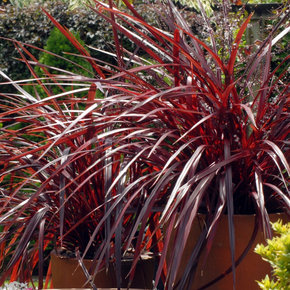
Superstar Cordyline
SKU:
1931495-P
UPC:
014949480908
$24.99 - $34.99
- Striking dark purple-red, broad glossy strap-like foliage delivers bold, year-round tropical drama in the garden or on the patio
- Upright arching habit and architectural form make it a standout focal point in landscape beds, mixed borders, and large containers
- Low-maintenance and water-wise once established, with excellent adaptability to coastal and dry garden settings
- Patent-protected variety (PP #23,715) with superior foliage color, gloss, and form compared to standard cordylines
Superstar Cordyline (Cordyline obtecta 'Albatross' PP #23,715) is a patented, show-stopping evergreen prized for its wide, glossy, dark purple-red strap-like leaves that arch gracefully outward from a strong, upright central stem, creating a lush, tropical silhouette unlike anything else in the landscape. Maturing to approximately 5 to 6 feet tall and 2 to 3 feet wide, this bold architectural specimen thrives in full sun to partial shade in USDA Hardiness Zones 8 through 11, making it an excellent year-round garden plant throughout Southern Oregon and Northern California coastal and inland valleys. Its refined, sword-shaped foliage adds dramatic color contrast whether planted as a specimen in a mixed border, used as a centerpiece in an oversized patio container, or grouped for a striking tropical hedge effect. Superstar Cordyline performs admirably in coastal gardens and dry Mediterranean-style landscapes, tolerating moderate drought once established while demanding little in the way of routine care. In colder climates at the edge of its hardiness range, it transitions beautifully to a striking indoor accent plant during the winter months, then returns to outdoor display when frost danger has passed. Bred by Gordon Scott and introduced under the Albatross plant patent, Superstar represents a refined advancement in cordyline breeding, offering superior leaf width, a deeper jewel-toned color, and a glossy sheen that sets it apart in any planting design.
Plant Description
Superstar Cordyline is a bold, broadleaf evergreen shrub belonging to the Asparagaceae family, native in species form to the islands of New Zealand and nearby Pacific regions. The 'Albatross' cultivar (sold under the trade name Superstar) was bred by Gordon Scott and carries U.S. Plant Patent #23,715. It is distinguished from other cordylines by its exceptionally wide, shiny, dark purple-red to deep burgundy leaves that are smooth on both surfaces with entire (uninterrupted) margins and pointed tips. The foliage is linear in shape, typically reaching 40 to 50 cm in individual leaf length and 3 to 4 cm in width, and arches softly downward from a strong central upright stem. The overall plant habit is ascending and architectural, lending a dramatic, tropical quality to any setting. Flowers, when produced on mature plants, are inconspicuous and white, appearing on branched panicles, and are of secondary ornamental interest compared to the spectacular foliage. This plant is classified as an evergreen perennial shrub and retains its foliage color and gloss throughout all four seasons.
Mature Size
| Attribute | Measurement |
|---|---|
| Mature Height | 5 to 6 feet (approximately 150 cm) |
| Mature Spread | 2 to 3 feet (approximately 80 cm) |
| Growth Rate | Moderate |
| Individual Leaf Length | 40 to 50 cm |
| Individual Leaf Width | 3 to 4 cm |
| Plant Form | Upright, arching, architectural |
Hardiness Zones and Temperature Tolerance
Superstar Cordyline is rated for USDA Hardiness Zones 8 through 11, tolerating minimum temperatures down to approximately 17 to 18 degrees F (-8 to -5 degrees C) with some protection. In the warmer portions of Zone 8 and all of Zones 9 through 11 — including most of Southern Oregon's coastal regions and the bulk of Northern California — it can remain outdoors year-round as a fully evergreen landscape shrub. In colder inland or high-elevation microclimates near the edge of Zone 8, plants benefit from a sheltered south-facing location, mulching around the root zone in winter, and protection from prolonged hard freezes. In areas regularly experiencing temperatures below 17 degrees F, Superstar Cordyline is best grown in a container so it can be brought indoors or into a frost-free greenhouse before the first hard frost. It is not suited for regions with harsh, prolonged winters and should be treated as a frost-tender evergreen or overwintered annual north of Zone 8.
Sunlight Requirements
Superstar Cordyline performs best and develops its richest, most saturated dark purple-red foliage color in full sun, receiving a minimum of 6 hours of direct sunlight per day. It also grows well in partial sun or bright dappled shade, particularly in the hottest inland garden settings where afternoon shade helps prevent leaf scorch during peak summer heat. In deeper shade, the plant will survive but foliage color tends to become less vibrant and the overall growth habit may become more open and leggy. For container-grown plants brought indoors for winter, place them in the brightest location available — a south- or west-facing window or a sunroom — and avoid spots with dim, indirect light for extended periods. Full sun is the optimal choice for showcasing the stunning foliage contrast this variety is celebrated for.
Soil and pH Preferences
Superstar Cordyline thrives in fertile, well-drained soil and does not tolerate prolonged wet or waterlogged conditions, which can quickly lead to root rot. It adapts to a range of soil types including sandy loam, loamy garden soil, and even moderately rocky substrates, provided drainage is adequate. The ideal soil pH range is 6.0 to 7.0 (slightly acidic to neutral). When planting in heavy clay soils, amend the planting area generously with organic compost, coarse horticultural grit, or perlite to improve drainage and aeration. For container culture, use a high-quality, well-draining potting mix amended with perlite or coarse sand to prevent moisture retention around the roots. Avoid soils that compact easily or that tend to stay soggy after rainfall. This plant demonstrates reasonable tolerance for poor or lean soils once established, making it a practical choice for dry, low-fertility garden conditions common in Southern Oregon and Northern California landscapes.
Watering Guide
Superstar Cordyline prefers consistently moist but never waterlogged soil, particularly during its first growing season while it establishes a strong root system. Water newly planted specimens deeply and regularly to keep the root zone moist. Once established, it demonstrates good tolerance for moderate drought and is considered water-wise compared to many ornamental shrubs. During the active growing season (spring through summer), water when the top inch or two of soil feels dry to the touch. Reduce watering frequency significantly in fall and winter, allowing the soil surface to dry out slightly between waterings, as the plant's water uptake naturally decreases in cooler conditions and overwatering during dormancy is the most common cause of root rot. Container-grown plants dry out more quickly than in-ground plants and will need more frequent monitoring, especially during hot summer weather. Watch for yellowing lower leaves as a sign of overwatering, and browning leaf tips as an indicator of underwatering or low humidity indoors.
Fertilizing
Feed Superstar Cordyline in early spring as new growth resumes to support vigorous foliage development and maintain the deep, rich leaf color. A balanced, slow-release granular fertilizer (such as a 10-10-10 or similar formula) worked lightly into the soil around the base of the plant is an effective and convenient option. Alternatively, a balanced liquid fertilizer applied at half-strength every two to four weeks throughout the spring and summer growing season provides a steady, gentle nutrient supply. Avoid fertilizing in late fall and winter when the plant is not actively growing, as feeding during this period can encourage soft, frost-vulnerable new growth and contribute to salt buildup in the soil. Container-grown Superstar Cordylines will benefit from more regular feeding during the growing season, as nutrients leach more quickly from potting mix with repeated watering. Do not over-fertilize, as excessive nitrogen can encourage rapid, soft growth at the expense of the intense foliage coloration that makes this variety exceptional.
Pruning and Maintenance
Superstar Cordyline is naturally low-maintenance and requires very little pruning to maintain its attractive upright, arching form. Remove any lower leaves that become brown, damaged, or unsightly by pulling them downward and snapping them cleanly from the stem, or cutting them off close to the trunk with clean, sharp pruners. This tidying practice improves the plant's appearance and is best done in early spring before the main flush of new growth. If the plant becomes too tall or top-heavy, it can be cut back to the desired height in late winter or early spring — new growth will regenerate from the cut stem. Avoid pruning in fall or when frost is expected, as fresh cut tissue is more susceptible to cold damage. In very exposed or windy garden locations, the long strap-like leaves can occasionally develop tears or splits at the tips, which are cosmetic only and do not harm the plant's health. Overall, a light annual clean-up in early spring is all that is needed to keep Superstar Cordyline looking its best.
Planting Instructions
- Select a planting site with full sun to partial shade and well-drained soil, sheltered from strong prevailing winds that can shred the broad foliage.
- Dig a planting hole twice as wide as the root ball and approximately equal in depth, so the top of the root ball sits level with or very slightly above the surrounding soil grade.
- Amend the backfill soil with quality compost at a ratio of roughly 1 part compost to 3 parts native soil to improve fertility and drainage. In heavy clay, also incorporate coarse horticultural grit or perlite.
- Remove the plant from its container, gently loosen any circling roots, and set it in the center of the hole.
- Backfill around the root ball, firming the soil gently as you go to eliminate air pockets.
- Create a shallow watering basin around the plant's drip line to direct irrigation water toward the root zone.
- Water deeply and thoroughly immediately after planting.
- Apply a 2 to 3 inch layer of organic mulch (bark, wood chips, or compost) around the base of the plant, keeping mulch several inches away from the trunk to prevent rot and pest harborage.
- Keep the root zone consistently moist for the first growing season until the plant is well established.
Container Growing
Superstar Cordyline is an outstanding container plant and is frequently used as a dramatic centerpiece in large patio pots, mixed planters, and decorative urns. When growing in a container, choose a pot that is generously sized — at least 6 to 8 inches wider than the root ball — and tall enough to accommodate the cordyline's developing taproot system. Ensure the container has ample drainage holes to prevent water from pooling around the roots. Use a premium, well-draining potting mix blended with perlite or coarse sand for added aeration. Container-grown plants require more frequent watering and fertilizing than in-ground specimens and should be monitored closely during hot, dry weather. Repot every two to three years or when roots begin circling the container, stepping up to the next pot size to maintain vigorous growth. One of the great advantages of container culture is portability — in borderline climate zones (Zone 8 and colder), simply move the container to a frost-free garage, greenhouse, or bright indoor space before the first hard frost and bring it back outside in spring when temperatures reliably stay above freezing. Indoors, place in the brightest available light and reduce watering frequency during the winter rest period.
Landscape Uses
Superstar Cordyline is an extraordinarily versatile landscape plant whose dramatic upright form and deep jewel-toned foliage earn it a place in a wide variety of garden design styles. Its most popular uses include:
- Focal point specimen: Plant singly in a prominent bed or border position where its bold color and architectural form can be fully appreciated.
- Tropical and exotic gardens: Pairs naturally with other bold-textured tropicals to create a lush, resort-style atmosphere in warm-climate gardens.
- Container centerpiece: Outstanding as the "thriller" element in large mixed patio containers surrounded by trailing and mounding companions.
- Mediterranean and dry gardens: Well-suited to low-water, gravel, or drought-tolerant planting schemes common in Southern Oregon and Northern California.
- Coastal gardens: Demonstrates good salt air and wind tolerance, making it a reliable performer in coastal landscapes.
- Mixed borders: Provides strong vertical accent and year-round foliage color interest among flowering perennials, grasses, and low-growing shrubs.
- Poolside planting: Its bold tropical look and tolerance for reflected heat make it ideal near swimming pools and hardscaped outdoor living areas.
- Indoor-outdoor accent: Transitions seamlessly from patio to interior living spaces as a houseplant during cooler months.
Companion Plants
The dark, glossy burgundy foliage of Superstar Cordyline serves as a rich backdrop that makes surrounding plants pop. Consider these complementary pairings for stunning combinations:
- Bird of Paradise (Strelitzia reginae): Bold orange and blue flowers create a striking tropical contrast alongside Superstar's deep purple foliage.
- Hibiscus: Vibrant blooms in red, coral, or yellow provide a vivid color complement to the deep burgundy leaves.
- Purple Fountain Grass (Pennisetum setaceum 'Rubrum'): Echoes the purple tones while adding soft, feathery texture and movement.
- Agave: Architectural rosette form and contrasting blue-grey or green tones create a sculptural, water-wise combination.
- Bromeliads: Vivid, colorful foliage textures harmonize beautifully with the glossy cordyline leaves in tropical-themed plantings.
- Petunias, Marigolds, or Zinnias: Bright annual blooms in orange, yellow, or lime green provide eye-catching seasonal color contrast.
- Caladium or Elephant Ear (Colocasia): Large, boldly patterned foliage plants that amplify the lush, tropical drama when planted nearby.
- New Zealand Flax (Phormium): A fellow architectural foliage plant that complements Superstar's form while introducing additional leaf color variation.
Pests and Diseases
Superstar Cordyline is generally a robust, pest-resistant plant when grown in appropriate conditions, but the following issues can occasionally arise:
- Mealybugs: Among the most common pests, mealybugs appear as white cottony masses on leaf undersides and near the stem base. They cause yellowing, distorted leaves and may produce sticky honeydew that leads to sooty mold. Treat by isolating the plant and applying insecticidal soap, neem oil, or a strong stream of water to dislodge them.
- Scale Insects: Appear as small brown or tan bumps on stems and leaf undersides. Treat with horticultural oil or insecticidal soap sprays.
- Spider Mites: More likely during hot, dry conditions; look for fine webbing and stippled, dull foliage. Increase humidity and apply miticide or neem oil as needed.
- Thrips: Cause silvery streaking or distortion on new foliage. Treat with insecticidal soap or neem oil at the first sign of damage.
- Root Rot (Fusarium or Phytophthora): Almost always caused by overwatering or poor drainage. Symptoms include wilting, yellowing foliage, and soft, darkened roots. Prevent by ensuring excellent drainage and avoiding waterlogged conditions.
- Bacterial and Fungal Leaf Spot: Can cause brown or tan spots on foliage, particularly in humid, poorly ventilated conditions. Remove affected leaves, improve air circulation, and avoid wetting foliage during overhead irrigation.
Seasonal Interest and Year-Round Appeal
One of Superstar Cordyline's greatest strengths as a landscape plant is its consistent, year-round ornamental value. Unlike many flowering plants that offer only a brief seasonal show, Superstar delivers visual impact through every season:
- Spring: Flush of new growth at the center of the plant unfurls in rich, deep burgundy-red, reinvigorating the plant's color intensity after winter. An ideal time for light pruning and the first application of fertilizer.
- Summer: Foliage reaches peak lushness, with the broad glossy leaves at their most vibrant in full sun. The upright form provides strong vertical structure among summer annuals and perennials in mixed plantings and containers.
- Fall: As surrounding deciduous plants begin to fade and drop leaves, Superstar Cordyline maintains its full tropical presence, making it a valuable anchor for the late-season garden.
- Winter: Retains its evergreen foliage in Zones 8 through 11, providing color and structure during the bare-garden months. In borderline zones, a potted specimen brought indoors continues to serve as a striking tropical accent in the home.
Overwintering in Colder Climates
In areas at the cooler margins of its hardiness range (Zone 8 and colder), Superstar Cordyline benefits from proactive winter protection to ensure its survival and maintain its best appearance through the following growing season. For in-ground plants in Zone 8, apply a generous 3 to 4 inch layer of organic mulch around the root zone before the first hard frost to insulate the roots. Choose a sheltered planting location protected from cold north and east winds, and consider loosely wrapping the foliage with frost cloth or burlap during periods of hard freeze. For container-grown plants, move pots to a frost-free garage, greenhouse, or bright indoor space before temperatures drop below 25 degrees F. Indoors, provide the brightest available light (a south-facing window is ideal), reduce watering to allow the soil to dry slightly between waterings, and maintain temperatures above 60 degrees F. Resume normal watering and begin fertilizing again in early spring once the plant shows signs of new growth or once it is returned outdoors after the last frost date.
- Striking dark purple-red, broad glossy strap-like foliage delivers bold, year-round tropical drama in the garden or on the patio
- Upright arching habit and architectural form make it a standout focal point in landscape beds, mixed borders, and large containers
- Low-maintenance and water-wise once established, with excellent adaptability to coastal and dry garden settings
- Patent-protected variety (PP #23,715) with superior foliage color, gloss, and form compared to standard cordylines
Superstar Cordyline (Cordyline obtecta 'Albatross' PP #23,715) is a patented, show-stopping evergreen prized for its wide, glossy, dark purple-red strap-like leaves that arch gracefully outward from a strong, upright central stem, creating a lush, tropical silhouette unlike anything else in the landscape. Maturing to approximately 5 to 6 feet tall and 2 to 3 feet wide, this bold architectural specimen thrives in full sun to partial shade in USDA Hardiness Zones 8 through 11, making it an excellent year-round garden plant throughout Southern Oregon and Northern California coastal and inland valleys. Its refined, sword-shaped foliage adds dramatic color contrast whether planted as a specimen in a mixed border, used as a centerpiece in an oversized patio container, or grouped for a striking tropical hedge effect. Superstar Cordyline performs admirably in coastal gardens and dry Mediterranean-style landscapes, tolerating moderate drought once established while demanding little in the way of routine care. In colder climates at the edge of its hardiness range, it transitions beautifully to a striking indoor accent plant during the winter months, then returns to outdoor display when frost danger has passed. Bred by Gordon Scott and introduced under the Albatross plant patent, Superstar represents a refined advancement in cordyline breeding, offering superior leaf width, a deeper jewel-toned color, and a glossy sheen that sets it apart in any planting design.
Plant Description
Superstar Cordyline is a bold, broadleaf evergreen shrub belonging to the Asparagaceae family, native in species form to the islands of New Zealand and nearby Pacific regions. The 'Albatross' cultivar (sold under the trade name Superstar) was bred by Gordon Scott and carries U.S. Plant Patent #23,715. It is distinguished from other cordylines by its exceptionally wide, shiny, dark purple-red to deep burgundy leaves that are smooth on both surfaces with entire (uninterrupted) margins and pointed tips. The foliage is linear in shape, typically reaching 40 to 50 cm in individual leaf length and 3 to 4 cm in width, and arches softly downward from a strong central upright stem. The overall plant habit is ascending and architectural, lending a dramatic, tropical quality to any setting. Flowers, when produced on mature plants, are inconspicuous and white, appearing on branched panicles, and are of secondary ornamental interest compared to the spectacular foliage. This plant is classified as an evergreen perennial shrub and retains its foliage color and gloss throughout all four seasons.
Mature Size
| Attribute | Measurement |
|---|---|
| Mature Height | 5 to 6 feet (approximately 150 cm) |
| Mature Spread | 2 to 3 feet (approximately 80 cm) |
| Growth Rate | Moderate |
| Individual Leaf Length | 40 to 50 cm |
| Individual Leaf Width | 3 to 4 cm |
| Plant Form | Upright, arching, architectural |
Hardiness Zones and Temperature Tolerance
Superstar Cordyline is rated for USDA Hardiness Zones 8 through 11, tolerating minimum temperatures down to approximately 17 to 18 degrees F (-8 to -5 degrees C) with some protection. In the warmer portions of Zone 8 and all of Zones 9 through 11 — including most of Southern Oregon's coastal regions and the bulk of Northern California — it can remain outdoors year-round as a fully evergreen landscape shrub. In colder inland or high-elevation microclimates near the edge of Zone 8, plants benefit from a sheltered south-facing location, mulching around the root zone in winter, and protection from prolonged hard freezes. In areas regularly experiencing temperatures below 17 degrees F, Superstar Cordyline is best grown in a container so it can be brought indoors or into a frost-free greenhouse before the first hard frost. It is not suited for regions with harsh, prolonged winters and should be treated as a frost-tender evergreen or overwintered annual north of Zone 8.
Sunlight Requirements
Superstar Cordyline performs best and develops its richest, most saturated dark purple-red foliage color in full sun, receiving a minimum of 6 hours of direct sunlight per day. It also grows well in partial sun or bright dappled shade, particularly in the hottest inland garden settings where afternoon shade helps prevent leaf scorch during peak summer heat. In deeper shade, the plant will survive but foliage color tends to become less vibrant and the overall growth habit may become more open and leggy. For container-grown plants brought indoors for winter, place them in the brightest location available — a south- or west-facing window or a sunroom — and avoid spots with dim, indirect light for extended periods. Full sun is the optimal choice for showcasing the stunning foliage contrast this variety is celebrated for.
Soil and pH Preferences
Superstar Cordyline thrives in fertile, well-drained soil and does not tolerate prolonged wet or waterlogged conditions, which can quickly lead to root rot. It adapts to a range of soil types including sandy loam, loamy garden soil, and even moderately rocky substrates, provided drainage is adequate. The ideal soil pH range is 6.0 to 7.0 (slightly acidic to neutral). When planting in heavy clay soils, amend the planting area generously with organic compost, coarse horticultural grit, or perlite to improve drainage and aeration. For container culture, use a high-quality, well-draining potting mix amended with perlite or coarse sand to prevent moisture retention around the roots. Avoid soils that compact easily or that tend to stay soggy after rainfall. This plant demonstrates reasonable tolerance for poor or lean soils once established, making it a practical choice for dry, low-fertility garden conditions common in Southern Oregon and Northern California landscapes.
Watering Guide
Superstar Cordyline prefers consistently moist but never waterlogged soil, particularly during its first growing season while it establishes a strong root system. Water newly planted specimens deeply and regularly to keep the root zone moist. Once established, it demonstrates good tolerance for moderate drought and is considered water-wise compared to many ornamental shrubs. During the active growing season (spring through summer), water when the top inch or two of soil feels dry to the touch. Reduce watering frequency significantly in fall and winter, allowing the soil surface to dry out slightly between waterings, as the plant's water uptake naturally decreases in cooler conditions and overwatering during dormancy is the most common cause of root rot. Container-grown plants dry out more quickly than in-ground plants and will need more frequent monitoring, especially during hot summer weather. Watch for yellowing lower leaves as a sign of overwatering, and browning leaf tips as an indicator of underwatering or low humidity indoors.
Fertilizing
Feed Superstar Cordyline in early spring as new growth resumes to support vigorous foliage development and maintain the deep, rich leaf color. A balanced, slow-release granular fertilizer (such as a 10-10-10 or similar formula) worked lightly into the soil around the base of the plant is an effective and convenient option. Alternatively, a balanced liquid fertilizer applied at half-strength every two to four weeks throughout the spring and summer growing season provides a steady, gentle nutrient supply. Avoid fertilizing in late fall and winter when the plant is not actively growing, as feeding during this period can encourage soft, frost-vulnerable new growth and contribute to salt buildup in the soil. Container-grown Superstar Cordylines will benefit from more regular feeding during the growing season, as nutrients leach more quickly from potting mix with repeated watering. Do not over-fertilize, as excessive nitrogen can encourage rapid, soft growth at the expense of the intense foliage coloration that makes this variety exceptional.
Pruning and Maintenance
Superstar Cordyline is naturally low-maintenance and requires very little pruning to maintain its attractive upright, arching form. Remove any lower leaves that become brown, damaged, or unsightly by pulling them downward and snapping them cleanly from the stem, or cutting them off close to the trunk with clean, sharp pruners. This tidying practice improves the plant's appearance and is best done in early spring before the main flush of new growth. If the plant becomes too tall or top-heavy, it can be cut back to the desired height in late winter or early spring — new growth will regenerate from the cut stem. Avoid pruning in fall or when frost is expected, as fresh cut tissue is more susceptible to cold damage. In very exposed or windy garden locations, the long strap-like leaves can occasionally develop tears or splits at the tips, which are cosmetic only and do not harm the plant's health. Overall, a light annual clean-up in early spring is all that is needed to keep Superstar Cordyline looking its best.
Planting Instructions
- Select a planting site with full sun to partial shade and well-drained soil, sheltered from strong prevailing winds that can shred the broad foliage.
- Dig a planting hole twice as wide as the root ball and approximately equal in depth, so the top of the root ball sits level with or very slightly above the surrounding soil grade.
- Amend the backfill soil with quality compost at a ratio of roughly 1 part compost to 3 parts native soil to improve fertility and drainage. In heavy clay, also incorporate coarse horticultural grit or perlite.
- Remove the plant from its container, gently loosen any circling roots, and set it in the center of the hole.
- Backfill around the root ball, firming the soil gently as you go to eliminate air pockets.
- Create a shallow watering basin around the plant's drip line to direct irrigation water toward the root zone.
- Water deeply and thoroughly immediately after planting.
- Apply a 2 to 3 inch layer of organic mulch (bark, wood chips, or compost) around the base of the plant, keeping mulch several inches away from the trunk to prevent rot and pest harborage.
- Keep the root zone consistently moist for the first growing season until the plant is well established.
Container Growing
Superstar Cordyline is an outstanding container plant and is frequently used as a dramatic centerpiece in large patio pots, mixed planters, and decorative urns. When growing in a container, choose a pot that is generously sized — at least 6 to 8 inches wider than the root ball — and tall enough to accommodate the cordyline's developing taproot system. Ensure the container has ample drainage holes to prevent water from pooling around the roots. Use a premium, well-draining potting mix blended with perlite or coarse sand for added aeration. Container-grown plants require more frequent watering and fertilizing than in-ground specimens and should be monitored closely during hot, dry weather. Repot every two to three years or when roots begin circling the container, stepping up to the next pot size to maintain vigorous growth. One of the great advantages of container culture is portability — in borderline climate zones (Zone 8 and colder), simply move the container to a frost-free garage, greenhouse, or bright indoor space before the first hard frost and bring it back outside in spring when temperatures reliably stay above freezing. Indoors, place in the brightest available light and reduce watering frequency during the winter rest period.
Landscape Uses
Superstar Cordyline is an extraordinarily versatile landscape plant whose dramatic upright form and deep jewel-toned foliage earn it a place in a wide variety of garden design styles. Its most popular uses include:
- Focal point specimen: Plant singly in a prominent bed or border position where its bold color and architectural form can be fully appreciated.
- Tropical and exotic gardens: Pairs naturally with other bold-textured tropicals to create a lush, resort-style atmosphere in warm-climate gardens.
- Container centerpiece: Outstanding as the "thriller" element in large mixed patio containers surrounded by trailing and mounding companions.
- Mediterranean and dry gardens: Well-suited to low-water, gravel, or drought-tolerant planting schemes common in Southern Oregon and Northern California.
- Coastal gardens: Demonstrates good salt air and wind tolerance, making it a reliable performer in coastal landscapes.
- Mixed borders: Provides strong vertical accent and year-round foliage color interest among flowering perennials, grasses, and low-growing shrubs.
- Poolside planting: Its bold tropical look and tolerance for reflected heat make it ideal near swimming pools and hardscaped outdoor living areas.
- Indoor-outdoor accent: Transitions seamlessly from patio to interior living spaces as a houseplant during cooler months.
Companion Plants
The dark, glossy burgundy foliage of Superstar Cordyline serves as a rich backdrop that makes surrounding plants pop. Consider these complementary pairings for stunning combinations:
- Bird of Paradise (Strelitzia reginae): Bold orange and blue flowers create a striking tropical contrast alongside Superstar's deep purple foliage.
- Hibiscus: Vibrant blooms in red, coral, or yellow provide a vivid color complement to the deep burgundy leaves.
- Purple Fountain Grass (Pennisetum setaceum 'Rubrum'): Echoes the purple tones while adding soft, feathery texture and movement.
- Agave: Architectural rosette form and contrasting blue-grey or green tones create a sculptural, water-wise combination.
- Bromeliads: Vivid, colorful foliage textures harmonize beautifully with the glossy cordyline leaves in tropical-themed plantings.
- Petunias, Marigolds, or Zinnias: Bright annual blooms in orange, yellow, or lime green provide eye-catching seasonal color contrast.
- Caladium or Elephant Ear (Colocasia): Large, boldly patterned foliage plants that amplify the lush, tropical drama when planted nearby.
- New Zealand Flax (Phormium): A fellow architectural foliage plant that complements Superstar's form while introducing additional leaf color variation.
Pests and Diseases
Superstar Cordyline is generally a robust, pest-resistant plant when grown in appropriate conditions, but the following issues can occasionally arise:
- Mealybugs: Among the most common pests, mealybugs appear as white cottony masses on leaf undersides and near the stem base. They cause yellowing, distorted leaves and may produce sticky honeydew that leads to sooty mold. Treat by isolating the plant and applying insecticidal soap, neem oil, or a strong stream of water to dislodge them.
- Scale Insects: Appear as small brown or tan bumps on stems and leaf undersides. Treat with horticultural oil or insecticidal soap sprays.
- Spider Mites: More likely during hot, dry conditions; look for fine webbing and stippled, dull foliage. Increase humidity and apply miticide or neem oil as needed.
- Thrips: Cause silvery streaking or distortion on new foliage. Treat with insecticidal soap or neem oil at the first sign of damage.
- Root Rot (Fusarium or Phytophthora): Almost always caused by overwatering or poor drainage. Symptoms include wilting, yellowing foliage, and soft, darkened roots. Prevent by ensuring excellent drainage and avoiding waterlogged conditions.
- Bacterial and Fungal Leaf Spot: Can cause brown or tan spots on foliage, particularly in humid, poorly ventilated conditions. Remove affected leaves, improve air circulation, and avoid wetting foliage during overhead irrigation.
Seasonal Interest and Year-Round Appeal
One of Superstar Cordyline's greatest strengths as a landscape plant is its consistent, year-round ornamental value. Unlike many flowering plants that offer only a brief seasonal show, Superstar delivers visual impact through every season:
- Spring: Flush of new growth at the center of the plant unfurls in rich, deep burgundy-red, reinvigorating the plant's color intensity after winter. An ideal time for light pruning and the first application of fertilizer.
- Summer: Foliage reaches peak lushness, with the broad glossy leaves at their most vibrant in full sun. The upright form provides strong vertical structure among summer annuals and perennials in mixed plantings and containers.
- Fall: As surrounding deciduous plants begin to fade and drop leaves, Superstar Cordyline maintains its full tropical presence, making it a valuable anchor for the late-season garden.
- Winter: Retains its evergreen foliage in Zones 8 through 11, providing color and structure during the bare-garden months. In borderline zones, a potted specimen brought indoors continues to serve as a striking tropical accent in the home.
Overwintering in Colder Climates
In areas at the cooler margins of its hardiness range (Zone 8 and colder), Superstar Cordyline benefits from proactive winter protection to ensure its survival and maintain its best appearance through the following growing season. For in-ground plants in Zone 8, apply a generous 3 to 4 inch layer of organic mulch around the root zone before the first hard frost to insulate the roots. Choose a sheltered planting location protected from cold north and east winds, and consider loosely wrapping the foliage with frost cloth or burlap during periods of hard freeze. For container-grown plants, move pots to a frost-free garage, greenhouse, or bright indoor space before temperatures drop below 25 degrees F. Indoors, provide the brightest available light (a south-facing window is ideal), reduce watering to allow the soil to dry slightly between waterings, and maintain temperatures above 60 degrees F. Resume normal watering and begin fertilizing again in early spring once the plant shows signs of new growth or once it is returned outdoors after the last frost date.