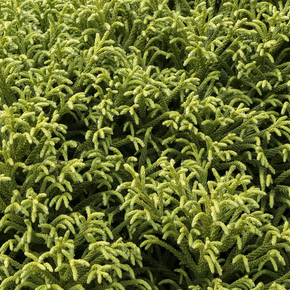
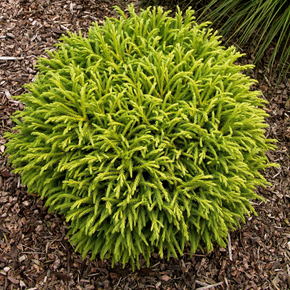
Juniperus procumbens 'Nana', commonly known as Dwarf Japanese Garden Juniper, is one of the most beloved and widely used evergreen ground covers in American horticulture, and it's easy to understand why. Introduced from Japan in 1922, this slow-growing, mat-forming conifer in the Cupressaceae family produces long, trailing branches that radiate outward in all directions, densely clothed in prickly, awl-shaped blue-green needles arranged in attractive whorls of three. The foliage maintains its striking blue-green color through all four seasons, taking on a handsome purplish cast in colder months for added winter interest. At maturity, this dwarf cultivar reaches only 6 to 12 inches in height while spreading 5 to 6 feet wide, forming a tidy, cushion-like mound that gracefully grows up and over rocks, walls, and other obstacles in its path. Its exceptional adaptability to poor, dry, sandy, and rocky soils — combined with strong deer resistance, erosion control capability, and tolerance for urban conditions — makes it an outstanding, virtually no-fuss choice for Southern Oregon and Northern California landscapes. Whether planted en masse as a weed-suppressing ground cover, featured as a focal point in a rock garden, used to stabilize a sunny bank, or cultivated as a prized bonsai specimen, Dwarf Japanese Garden Juniper delivers timeless structure and year-round beauty with minimal effort. This cultivar is a recipient of the prestigious Award of Garden Merit from the Royal Horticultural Society, a testament to its outstanding performance in the garden.
Dwarf Japanese Garden Juniper (Juniperus procumbens 'Nana') is a compact, prostrate evergreen conifer native to the rocky, mountainous regions of southern Japan. It forms a dense, cushion-like mat with stiff, variably-lengthed branches that spread outward and slightly above the ground, often layering on top of one another to create a beautifully textured appearance. The small, rigid needles are awl-shaped and spiny-pointed, measuring approximately 1/4 inch in length, and are arranged in whorls of three along each stem. Foliage is a vibrant blue-green during the growing season and transitions to a soft purplish hue in winter. New growth in spring emerges as a brighter, fresher green before maturing to the signature blue-green. Branch tips are slightly ascending, giving the plant a lively, animated texture. The species name procumbens means "prostrate" or "low growing," perfectly describing this plant's ground-hugging character. 'Nana' is a more compact, less vigorous selection than the straight species, making it ideal for residential landscapes and container culture alike.
| Attribute | Measurement |
|---|---|
| Mature Height | 6 to 12 inches (occasionally to 24 inches) |
| Mature Spread | 5 to 6 feet wide (can reach 10-15 feet given enough time and space) |
| Growth Rate | Slow — typically 10 years to spread approximately 10 feet |
| Growth Habit | Dense, mat-forming, prostrate to mounding |
| Texture | Fine |
Because of its slow growth rate, Dwarf Japanese Garden Juniper is well suited to smaller spaces where a reliable, long-lived evergreen ground cover is desired without the concern of rapid spreading or overcrowding. Where space is limited, the plant will mound up and layer upon itself rather than spreading aggressively outward.
Dwarf Japanese Garden Juniper is reliably cold hardy in USDA Hardiness Zones 4 through 9, making it an excellent choice for gardens across a broad range of climates — from frigid northern winters down through the warmer conditions found throughout Southern Oregon and Northern California. It also performs well across a wide range of Sunset Climate Zones, including Zones 1 through 24. Its adaptability to both cold snaps and summer heat makes it an exceptionally dependable year-round performer in our region.
Dwarf Japanese Garden Juniper performs best in full sun, requiring a minimum of 6 hours of direct sunlight per day. Full sun exposure encourages the densest foliage, most compact growth habit, and most vibrant blue-green color. While the plant can tolerate some light shade, reduced sun typically results in looser, less vigorous growth and diminished foliage density. For best landscape results, choose an open, unobstructed planting site with maximum sun exposure throughout the day. Adequate air circulation around the plant is also beneficial, particularly in more humid microclimates, as it helps reduce the risk of fungal disease.
One of the most adaptable conifers available, Dwarf Japanese Garden Juniper tolerates a remarkably wide range of soil types and pH levels. It grows well in sandy, loamy, clay, chalky, and shallow rocky soils. A well-drained soil is the most critical requirement — this juniper will not tolerate wet, waterlogged, or poorly drained conditions, which can quickly lead to root rot. It actually tends to thrive in drier, sandier soils that many other plants find inhospitable. Acceptable soil pH ranges from slightly acidic to alkaline (approximately 6.0 to 8.0). Amending heavy clay soils with coarse sand or fine gravel to improve drainage before planting is strongly recommended.
During the establishment period (the first one to two growing seasons after planting), water regularly to help the root system become well anchored. Deep, infrequent watering is preferred over frequent shallow irrigation, as it encourages deeper root development. Once fully established, Dwarf Japanese Garden Juniper is notably drought tolerant and requires very little supplemental irrigation in most Pacific Northwest and Northern California landscapes. In periods of prolonged summer heat or drought, occasional deep watering will keep plants looking their best. Always allow the soil to dry out between waterings. Avoid overhead irrigation and standing water at the base of the plant, as consistent moisture on the foliage can encourage fungal issues.
Dwarf Japanese Garden Juniper has modest fertilizer needs. In most landscape settings with reasonably fertile soil, little to no fertilizing is necessary. If growth appears sluggish or foliage color is dull, apply a balanced, slow-release granular fertilizer formulated for conifers or acid-loving plants once in early spring, just as new growth begins. Avoid high-nitrogen fertilizers, which can stimulate soft, leggy growth that detracts from the plant's naturally compact form. Organic amendments such as compost worked into the planting hole at the time of installation, or applied as a light top dressing in spring, can also support healthy establishment and long-term vigor. Do not fertilize in late summer or fall, as this can push tender new growth susceptible to cold damage.
Dwarf Japanese Garden Juniper is one of the lowest-maintenance landscape plants available, and routine pruning is generally not required. Its naturally neat, layered form is most beautiful when left unpruned. However, light trimming may be performed in late winter or very early spring to tidy up any wayward branches, remove winter-damaged or dead wood, or gently guide the plant's spread. Always prune just above a healthy side bud or lateral branch — never cut back into bare, leafless wood, as junipers do not reliably regenerate new growth from bare stems. Remove any crossing or rubbing branches to improve air circulation through the interior of the plant. For bonsai applications, more precise and frequent pinching and shaping is performed throughout the growing season to develop the desired miniature form.
Dwarf Japanese Garden Juniper provides attractive interest throughout all four seasons. In spring, bright fresh green new growth emerges at the branch tips, creating a beautiful two-toned contrast with the established blue-green foliage. Through summer, the dense mat of blue-green needles remains rich and consistent, providing steady landscape structure while many other plants cycle through bloom. In fall, the foliage retains its color as temperatures drop, and as winter sets in, the needles gradually take on a subtle purplish or plum-tinted hue that adds unexpected warmth and interest to the winter garden. The evergreen nature of this plant ensures it contributes structure and color to the landscape even during the coldest and drabbest months of the year.
Dwarf Japanese Garden Juniper pairs beautifully with plants that share its sun and well-drained soil preferences, and that provide contrasting form, color, or texture. Consider these combinations:
Dwarf Japanese Garden Juniper is generally a tough, pest- and disease-resistant plant with no serious or chronic problems under proper growing conditions. However, gardeners should be aware of the following occasional issues:
Note: The prickly needles may cause mild skin irritation when handling. Wearing gloves when pruning or planting is recommended.
Dwarf Japanese Garden Juniper is one of the most popular and widely used subjects for bonsai cultivation in the world, and it is equally well suited to decorative container growing on patios, entryways, and terraces. When growing in a container, use a well-draining bonsai or cactus-blend potting mix, or blend standard potting soil with coarse sand or perlite at a ratio of approximately 1:1. Ensure the container has generous drainage holes. Container-grown plants will require more frequent watering than those in the ground, as pots dry out faster — check soil moisture regularly during warm weather. Place in a location receiving at least 6 hours of direct sunlight. Fertilize container plants with a diluted balanced liquid fertilizer or slow-release granular formula every 4-6 weeks during the growing season. For bonsai, meticulous pinching of new growth through the growing season, along with careful branch wiring and selection, develops the classic aged appearance this species is so famous for. Re-pot bonsai specimens every 2-3 years in early spring to refresh the growing medium and manage root growth.
Dwarf Japanese Garden Juniper is deer resistant, making it a reliable choice in landscapes where deer browsing is a persistent concern — an important quality for many Southern Oregon and Northern California gardeners. The dense branching can provide low-level shelter and nesting habitat for small birds and beneficial insects. While the species-type Juniperus procumbens can occasionally produce small, fleshy, berry-like seed cones (blackish at maturity), cultivated plants of 'Nana' rarely produce significant numbers of berries. When present, the berries may be consumed by certain birds. The plant is generally considered non-toxic to humans and pets, though ingestion of large quantities of plant material may cause mild digestive upset in some animals, and the prickly foliage can cause skin irritation upon contact.
Juniperus procumbens 'Nana', commonly known as Dwarf Japanese Garden Juniper, is one of the most beloved and widely used evergreen ground covers in American horticulture, and it's easy to understand why. Introduced from Japan in 1922, this slow-growing, mat-forming conifer in the Cupressaceae family produces long, trailing branches that radiate outward in all directions, densely clothed in prickly, awl-shaped blue-green needles arranged in attractive whorls of three. The foliage maintains its striking blue-green color through all four seasons, taking on a handsome purplish cast in colder months for added winter interest. At maturity, this dwarf cultivar reaches only 6 to 12 inches in height while spreading 5 to 6 feet wide, forming a tidy, cushion-like mound that gracefully grows up and over rocks, walls, and other obstacles in its path. Its exceptional adaptability to poor, dry, sandy, and rocky soils — combined with strong deer resistance, erosion control capability, and tolerance for urban conditions — makes it an outstanding, virtually no-fuss choice for Southern Oregon and Northern California landscapes. Whether planted en masse as a weed-suppressing ground cover, featured as a focal point in a rock garden, used to stabilize a sunny bank, or cultivated as a prized bonsai specimen, Dwarf Japanese Garden Juniper delivers timeless structure and year-round beauty with minimal effort. This cultivar is a recipient of the prestigious Award of Garden Merit from the Royal Horticultural Society, a testament to its outstanding performance in the garden.
Dwarf Japanese Garden Juniper (Juniperus procumbens 'Nana') is a compact, prostrate evergreen conifer native to the rocky, mountainous regions of southern Japan. It forms a dense, cushion-like mat with stiff, variably-lengthed branches that spread outward and slightly above the ground, often layering on top of one another to create a beautifully textured appearance. The small, rigid needles are awl-shaped and spiny-pointed, measuring approximately 1/4 inch in length, and are arranged in whorls of three along each stem. Foliage is a vibrant blue-green during the growing season and transitions to a soft purplish hue in winter. New growth in spring emerges as a brighter, fresher green before maturing to the signature blue-green. Branch tips are slightly ascending, giving the plant a lively, animated texture. The species name procumbens means "prostrate" or "low growing," perfectly describing this plant's ground-hugging character. 'Nana' is a more compact, less vigorous selection than the straight species, making it ideal for residential landscapes and container culture alike.
| Attribute | Measurement |
|---|---|
| Mature Height | 6 to 12 inches (occasionally to 24 inches) |
| Mature Spread | 5 to 6 feet wide (can reach 10-15 feet given enough time and space) |
| Growth Rate | Slow — typically 10 years to spread approximately 10 feet |
| Growth Habit | Dense, mat-forming, prostrate to mounding |
| Texture | Fine |
Because of its slow growth rate, Dwarf Japanese Garden Juniper is well suited to smaller spaces where a reliable, long-lived evergreen ground cover is desired without the concern of rapid spreading or overcrowding. Where space is limited, the plant will mound up and layer upon itself rather than spreading aggressively outward.
Dwarf Japanese Garden Juniper is reliably cold hardy in USDA Hardiness Zones 4 through 9, making it an excellent choice for gardens across a broad range of climates — from frigid northern winters down through the warmer conditions found throughout Southern Oregon and Northern California. It also performs well across a wide range of Sunset Climate Zones, including Zones 1 through 24. Its adaptability to both cold snaps and summer heat makes it an exceptionally dependable year-round performer in our region.
Dwarf Japanese Garden Juniper performs best in full sun, requiring a minimum of 6 hours of direct sunlight per day. Full sun exposure encourages the densest foliage, most compact growth habit, and most vibrant blue-green color. While the plant can tolerate some light shade, reduced sun typically results in looser, less vigorous growth and diminished foliage density. For best landscape results, choose an open, unobstructed planting site with maximum sun exposure throughout the day. Adequate air circulation around the plant is also beneficial, particularly in more humid microclimates, as it helps reduce the risk of fungal disease.
One of the most adaptable conifers available, Dwarf Japanese Garden Juniper tolerates a remarkably wide range of soil types and pH levels. It grows well in sandy, loamy, clay, chalky, and shallow rocky soils. A well-drained soil is the most critical requirement — this juniper will not tolerate wet, waterlogged, or poorly drained conditions, which can quickly lead to root rot. It actually tends to thrive in drier, sandier soils that many other plants find inhospitable. Acceptable soil pH ranges from slightly acidic to alkaline (approximately 6.0 to 8.0). Amending heavy clay soils with coarse sand or fine gravel to improve drainage before planting is strongly recommended.
During the establishment period (the first one to two growing seasons after planting), water regularly to help the root system become well anchored. Deep, infrequent watering is preferred over frequent shallow irrigation, as it encourages deeper root development. Once fully established, Dwarf Japanese Garden Juniper is notably drought tolerant and requires very little supplemental irrigation in most Pacific Northwest and Northern California landscapes. In periods of prolonged summer heat or drought, occasional deep watering will keep plants looking their best. Always allow the soil to dry out between waterings. Avoid overhead irrigation and standing water at the base of the plant, as consistent moisture on the foliage can encourage fungal issues.
Dwarf Japanese Garden Juniper has modest fertilizer needs. In most landscape settings with reasonably fertile soil, little to no fertilizing is necessary. If growth appears sluggish or foliage color is dull, apply a balanced, slow-release granular fertilizer formulated for conifers or acid-loving plants once in early spring, just as new growth begins. Avoid high-nitrogen fertilizers, which can stimulate soft, leggy growth that detracts from the plant's naturally compact form. Organic amendments such as compost worked into the planting hole at the time of installation, or applied as a light top dressing in spring, can also support healthy establishment and long-term vigor. Do not fertilize in late summer or fall, as this can push tender new growth susceptible to cold damage.
Dwarf Japanese Garden Juniper is one of the lowest-maintenance landscape plants available, and routine pruning is generally not required. Its naturally neat, layered form is most beautiful when left unpruned. However, light trimming may be performed in late winter or very early spring to tidy up any wayward branches, remove winter-damaged or dead wood, or gently guide the plant's spread. Always prune just above a healthy side bud or lateral branch — never cut back into bare, leafless wood, as junipers do not reliably regenerate new growth from bare stems. Remove any crossing or rubbing branches to improve air circulation through the interior of the plant. For bonsai applications, more precise and frequent pinching and shaping is performed throughout the growing season to develop the desired miniature form.
Dwarf Japanese Garden Juniper provides attractive interest throughout all four seasons. In spring, bright fresh green new growth emerges at the branch tips, creating a beautiful two-toned contrast with the established blue-green foliage. Through summer, the dense mat of blue-green needles remains rich and consistent, providing steady landscape structure while many other plants cycle through bloom. In fall, the foliage retains its color as temperatures drop, and as winter sets in, the needles gradually take on a subtle purplish or plum-tinted hue that adds unexpected warmth and interest to the winter garden. The evergreen nature of this plant ensures it contributes structure and color to the landscape even during the coldest and drabbest months of the year.
Dwarf Japanese Garden Juniper pairs beautifully with plants that share its sun and well-drained soil preferences, and that provide contrasting form, color, or texture. Consider these combinations:
Dwarf Japanese Garden Juniper is generally a tough, pest- and disease-resistant plant with no serious or chronic problems under proper growing conditions. However, gardeners should be aware of the following occasional issues:
Note: The prickly needles may cause mild skin irritation when handling. Wearing gloves when pruning or planting is recommended.
Dwarf Japanese Garden Juniper is one of the most popular and widely used subjects for bonsai cultivation in the world, and it is equally well suited to decorative container growing on patios, entryways, and terraces. When growing in a container, use a well-draining bonsai or cactus-blend potting mix, or blend standard potting soil with coarse sand or perlite at a ratio of approximately 1:1. Ensure the container has generous drainage holes. Container-grown plants will require more frequent watering than those in the ground, as pots dry out faster — check soil moisture regularly during warm weather. Place in a location receiving at least 6 hours of direct sunlight. Fertilize container plants with a diluted balanced liquid fertilizer or slow-release granular formula every 4-6 weeks during the growing season. For bonsai, meticulous pinching of new growth through the growing season, along with careful branch wiring and selection, develops the classic aged appearance this species is so famous for. Re-pot bonsai specimens every 2-3 years in early spring to refresh the growing medium and manage root growth.
Dwarf Japanese Garden Juniper is deer resistant, making it a reliable choice in landscapes where deer browsing is a persistent concern — an important quality for many Southern Oregon and Northern California gardeners. The dense branching can provide low-level shelter and nesting habitat for small birds and beneficial insects. While the species-type Juniperus procumbens can occasionally produce small, fleshy, berry-like seed cones (blackish at maturity), cultivated plants of 'Nana' rarely produce significant numbers of berries. When present, the berries may be consumed by certain birds. The plant is generally considered non-toxic to humans and pets, though ingestion of large quantities of plant material may cause mild digestive upset in some animals, and the prickly foliage can cause skin irritation upon contact.