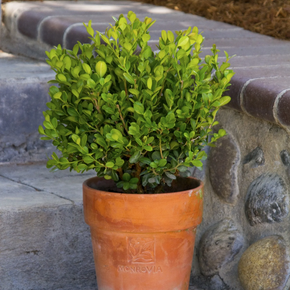
Zoom the image with the mouse
Otto Luyken English Laurel - 1 Gallon
SKU:
114100
UPC:
753768010766
$12.99
- Compact, spreading broadleaf evergreen shrub smothered in sweetly fragrant, creamy white flower spikes each spring — blooms freely even in heavy shade
- Year-round glossy, deep green lanceolate foliage on a naturally tidy, low-mounding form ideal for hedges, borders, and foundation plantings
- Exceptionally tough and adaptable — tolerates shade, dry and poor soils, urban pollution, and moderate salt exposure with very low maintenance needs
- Attracts pollinator bees in spring and produces ornamental purple-black drupes in late summer that draw songbirds throughout the season
Prunus laurocerasus 'Otto Luyken' — commonly known as Otto Luyken English Laurel or Otto Luyken Cherry Laurel — is a refined, compact cultivar of the classic English laurel, introduced by Hesse Nurseries in Germany around 1968 and beloved ever since for its outstanding combination of ornamental beauty and rugged adaptability. This broadleaf evergreen shrub grows in a dense, low, spreading mound typically reaching 3 to 4 feet tall with a graceful spread of 6 to 8 feet, making it far more manageable in residential and commercial landscapes than the full-sized species. Its narrow, lanceolate leaves are a rich, lustrous deep green — held in a distinctive upswept angle of 45 to 60 degrees along the stems — and provide handsome, dense screening and texture in the garden throughout all four seasons. In mid-spring, from April through May, the shrub erupts in a stunning show of fragrant, creamy white flowers arranged in cylindrical racemes 3 to 6 inches long rising above the foliage, attracting bees and other pollinators in abundance. These blooms give way to small round drupes that ripen from red to glossy purplish-black in late summer and fall, providing a valuable food source for songbirds. Reliably hardy in USDA Zones 6 through 8, Otto Luyken English Laurel is well suited to the diverse climates of Southern Oregon and Northern California, thriving in full sun to full shade, tolerating dry and poor soils, urban pollution, and moderate salt exposure, and demanding very little from the gardener once established. Whether planted as a low formal hedge, a weed-suppressing mass planting under trees, a tidy foundation shrub, or a shade garden specimen, this versatile, low-maintenance evergreen delivers exceptional year-round garden value.
Plant Description
Otto Luyken English Laurel is a compact, dense, spreading broadleaf evergreen shrub in the rose family (Rosaceae). It was introduced by Hesse Nurseries in Germany around 1968 as a dwarf cultivar of the full-sized English laurel (Prunus laurocerasus), which is native to southeastern Europe and southwestern Asia. The cultivar is distinguished by its notably narrow, lanceolate leaves that are held at a characteristic upswept angle of 45 to 60 degrees along the stems — a key identification trait that separates it from other cherry laurel cultivars in the trade. The foliage is a rich, glossy deep green on the upper surface with a lighter pale green underside. Each leaf is simple, alternate, 3 to 6 inches long and less than 1 inch wide, with entire (smooth) margins and at least 2 conspicuous glands on the underside near the midrib. Stems and buds are green. The overall plant habit is low, broad, and mounding — growing wider than it is tall — and very dense, making it an outstanding screening and ground-covering shrub. All parts of the plant, including fruits, leaves, and stems, contain cyanogenic glycoside compounds (amygdalin) and are toxic if ingested by humans, cats, dogs, and horses. Exercise caution and keep away from children and pets.
Mature Size
| Attribute | Typical Range |
|---|---|
| Mature Height (established, initial years) | 3 to 4 feet |
| Mature Height (over time, unpruned) | 6 to 10 feet |
| Mature Spread | 6 to 8 feet |
| Growth Rate | Moderate to rapid |
| Plant Habit | Low, spreading, mounding — wider than tall |
| Texture | Medium |
Otto Luyken is the most compact of the common cherry laurel cultivars. When given adequate space, it naturally maintains a tidy, spreading mound without requiring frequent pruning. Plan for a minimum width of 7 to 8 feet at maturity when spacing plants for hedges or mass plantings.
Hardiness Zones and Climate
Otto Luyken English Laurel is reliably hardy in USDA Plant Hardiness Zones 6a through 8b. It is an excellent fit for the maritime and transitional climates of Southern Oregon and Northern California, where mild, wet winters and warm, dry summers are the norm. In the hotter end of its range (Zone 8), the shrub benefits from afternoon shade and consistent moisture to prevent leaf scorch. In cooler areas (Zones 6 to 7), it performs best with more direct sunlight. The shrub is generally tolerant of brief cold snaps but can sustain leaf damage during extreme or prolonged cold events. A 2 to 3-inch layer of mulch over the root zone provides valuable insulation during unusually cold winters. The cultivar is moderately tolerant of salt spray and coastal conditions, making it suitable for gardens in proximity to the Pacific Coast.
Sunlight Requirements
One of the standout qualities of Otto Luyken English Laurel is its remarkable flexibility regarding light. It performs well across a wide range of light conditions:
- Full Sun (6+ hours of direct sun daily): Excellent growth and flowering; best results in cooler coastal and foothill climates. Ensure adequate moisture to prevent stress in hot, exposed sites.
- Partial Shade (2 to 6 hours of direct sun): Ideal in most climates — vigorous growth with excellent flowering. Morning sun with afternoon shade is particularly beneficial in warmer inland zones.
- Full to Heavy Shade: Otto Luyken is one of the few flowering shrubs that will bloom freely even in dense shade, making it invaluable under established trees and in north-facing exposures where other flowering shrubs struggle.
As a general rule, provide more sun in cooler climates and more shade in hotter climates for optimal performance.
Soil and pH Preferences
Otto Luyken English Laurel is adaptable to a range of soil types but performs best in moist, organically rich, well-drained loamy soil. Good drainage is essential — standing water and consistently saturated soils will promote root rot and decline.
- Soil Types: Loam, sandy loam, clay loam, and sandy soils are all acceptable, provided drainage is adequate. Amend heavy clay soils with compost or other organic matter to improve drainage and aeration.
- Soil pH: Prefers slightly acidic to neutral soils (pH below 6.0 to approximately 7.0). It tolerates mildly alkaline soils but may develop chlorosis (yellowing leaves) in poor, highly chalky, or strongly alkaline conditions.
- Soil Amendments: Incorporating 2 to 4 inches of compost into the planting area improves fertility, moisture retention, and drainage. Use pine bark mulch or pine needle mulch to maintain soil acidity over time.
- Drought Tolerance: Once well established, Otto Luyken shows good tolerance for dry and poor soils, though consistent moisture produces the best growth and appearance.
Watering Guide
Proper watering is critical during the establishment period and remains important for long-term health, though mature plants are reasonably drought tolerant.
- At Planting: Water thoroughly at planting time to settle the soil around the roots and eliminate air pockets.
- First Season: Water deeply once or twice per week during the first growing season, allowing the top inch or two of soil to dry slightly between waterings. Consistent moisture during this period encourages rapid root establishment.
- Established Plants: Once established (typically after 1 to 2 full growing seasons), Otto Luyken becomes moderately drought tolerant and generally requires supplemental irrigation only during prolonged dry spells. In Southern Oregon and Northern California, plan to water during the dry summer months.
- Watering Method: Drip irrigation or soaker hoses at the base of the plant are preferred. Avoid frequent overhead irrigation, which promotes shot-hole fungal disease on the foliage.
- Overwatering: Avoid waterlogged conditions, which can quickly lead to root rot. Ensure the planting site has adequate drainage before planting.
Fertilizing
Otto Luyken English Laurel has modest fertilizer needs and is notably intolerant of heavy or excessive fertilization, which can damage the root system and cause unnecessary lush growth that is prone to pest and disease problems.
- Fertilizer Type: Use a balanced, slow-release fertilizer formulated for ornamental trees and shrubs, or a fertilizer specifically designed for acid-loving broadleaf evergreens.
- Application Timing: Feed once in early spring as new growth begins, and optionally a second time in early summer. Avoid fertilizing after midsummer, as late-season feeding can stimulate tender new growth susceptible to cold damage.
- Application Rate: Follow the product label directions carefully and err on the side of underfertilizing rather than over-applying.
- Organic Option: A 2 to 3-inch layer of composted organic mulch refreshed annually around the drip line provides a gentle, slow nutrient release and improves soil health over time — often sufficient for established plants in good soil.
- Note: Avoid high-nitrogen fertilizers, which promote excessive leafy growth and can make the plant more susceptible to insects and foliar disease.
Pruning and Maintenance
Otto Luyken is naturally compact and tidy, requiring minimal pruning compared to larger laurel varieties. However, periodic pruning helps maintain shape, encourage dense branching, and keep the plant vigorous.
- Best Timing: The primary pruning window is late winter to early spring, just before new growth emerges — or immediately after flowering in late spring to early summer. Avoid heavy pruning in late fall, which can stimulate frost-tender new growth.
- Tools: Always use bypass hand pruners (not shears) for cuts on individual branches. Loppers are appropriate for stems up to 1.5 to 2 inches in diameter. A pruning saw handles larger, older stems during rejuvenation pruning.
- Technique: Selectively prune individual branches back to an outward-facing bud or lateral branch rather than shearing the entire shrub. Shearing creates a dense outer shell of foliage while the interior becomes bare and unhealthy. Use selective heading and thinning cuts to maintain a natural, layered appearance.
- Dead and Diseased Wood: Remove dead, damaged, or diseased branches as soon as they are noticed, at any time of year. Sterilize tools between cuts when removing diseased wood.
- Rejuvenation: Severely overgrown or leggy plants can be rejuvenated by removing one-third of the oldest stems annually over 3 years, or by cutting the entire plant back to 6 to 12 inches from the ground in very early spring. Recovery will be vigorous.
- Mulching: Maintain a 2 to 3-inch layer of organic mulch within the drip line, keeping it a few inches away from the trunk, to conserve moisture, moderate soil temperature, and suppress weeds.
Planting Instructions
Follow these steps for the best establishment success with Otto Luyken English Laurel:
- Choose the right site: Select a location with well-drained soil and appropriate light — full sun to full shade. Avoid low spots or areas where water pools after rain.
- Timing: Fall planting is ideal, allowing the root system to establish before the stress of summer heat. Spring planting is also successful but requires more frequent watering through the first summer.
- Dig the planting hole: Dig the hole twice as wide as the root ball but no deeper than the height of the root ball. The top of the root ball should sit at or slightly above the surrounding soil grade to ensure good drainage away from the crown.
- Amend the soil: Backfill with the native soil mixed with compost (up to 25% compost by volume). In very sandy soils, a higher compost ratio improves moisture retention.
- Set the plant: Remove the plant from its container, gently loosen any circling or compacted roots, and place in the hole. Ensure the root flare is visible at the soil surface.
- Backfill and water: Fill in around the roots, gently tamping to eliminate air pockets. Water thoroughly immediately after planting.
- Mulch: Apply 2 to 3 inches of organic mulch (shredded bark, pine bark, or compost) over the root zone in a ring extending to the drip line, keeping mulch a few inches away from the base of the stem.
- Spacing: For a continuous hedge or mass planting, space plants 4 to 5 feet apart on center for a full, dense effect. Allow 7 to 8 feet of space for individual specimens.
Seasonal Interest
| Season | Ornamental Features |
|---|---|
| Spring (April - May) | Peak flowering — dense, upright racemes of fragrant, creamy white flowers rise above the glossy foliage; pollinators are abundant |
| Summer | Rich, deep green glossy foliage provides dense screening and texture; fruit begins developing and ripening from red to purplish-black |
| Fall | Glossy black ornamental drupes ripen and attract songbirds; foliage remains a vibrant dark green |
| Winter | Fully evergreen — dense foliage provides year-round structure, screening, and winter shelter for birds in the landscape |
Landscape Uses
Otto Luyken English Laurel is one of the most versatile evergreen shrubs available for Pacific Northwest and Northern California gardens. Its compact size, shade tolerance, and year-round foliage make it suitable for a wide range of applications:
- Low Hedge or Formal Border: Its dense, naturally tidy growth habit makes it ideal for low formal hedges along walkways, driveways, and property lines.
- Foundation Planting: Well-sized for planting at the base of structures without overwhelming the space, providing a year-round green backdrop for the home's exterior.
- Privacy Screen: When planted in mass or as a row, creates a dense evergreen screen for privacy, noise buffering, and wind protection.
- Mass Planting and Ground Cover: Exceptional when planted in large sweeping masses under trees or on slopes, where its spreading habit suppresses weeds and covers ground quickly.
- Shade Garden: One of the best flowering evergreen shrubs for difficult shaded areas under mature trees or on north-facing exposures.
- Specimen Shrub: Its layered, spreading architecture and seasonal flowering make it an attractive standalone specimen in a mixed border or entry planting.
- Woodland Garden: Blends naturally into woodland-style garden designs, particularly under oaks, Douglas firs, or other native canopy trees common in the Southern Oregon and Northern California region.
- Erosion Control: Dense root system and spreading habit make it useful on slopes and banks where ground stabilization is needed.
Companion Plants
Otto Luyken English Laurel pairs beautifully with a wide range of trees, shrubs, and perennials that share its preference for well-drained soils and partial to full shade conditions common in Southern Oregon and Northern California landscapes:
- Rhododendrons and Azaleas: Share similar acidic soil and shade preferences; their bold flower colors contrast beautifully with Otto Luyken's white flower spikes in spring.
- Hellebores (Helleborus spp.): Excellent shade-tolerant perennial companions that bloom in late winter to early spring before the laurel flowers, providing sequential seasonal interest.
- Japanese Forest Grass (Hakonechloa macra): Golden or variegated foliage provides a soft, luminous contrast against the deep green of the laurel in shaded beds.
- Mahonia (Mahonia aquifolium — Oregon Grape): A Pacific Northwest native that thrives in similar conditions, with yellow winter flowers, blue-black berries, and bold evergreen texture complementing the laurel's finer foliage.
- Ferns (Dryopteris, Polystichum spp.): Native sword ferns and wood ferns layer beautifully in front of or beneath Otto Luyken in shaded woodland garden settings.
- Heavenly Bamboo (Nandina domestica): Contrasting fine, upright texture and vivid red winter color provide dramatic seasonal interest alongside the laurel's spreading, glossy green mound.
- Hosta spp.: Bold, broad foliage in blue, gold, and variegated forms creates striking textural contrast in shade garden plantings with Otto Luyken serving as the structural backdrop.
- Flowering Dogwood (Cornus florida or Cornus nuttallii): Native Pacific dogwood or flowering dogwood make elegant canopy companions, with the laurel filling in the understory below.
Pests and Diseases
Otto Luyken English Laurel has better overall pest and disease resistance than most other species within the Prunus genus. However, certain conditions can make it susceptible to the following issues:
- Shot-Hole Disease (Wilsonomyces carpophilus): The most common fungal problem on cherry laurels. Infected leaves develop small, angular, reddish-brown spots that eventually fall out, leaving distinctive shot-hole perforations. Avoid overhead irrigation, improve air circulation with selective pruning, and remove and dispose of affected foliage. Fungicide treatments can be applied preventively in wet seasons.
- Powdery Mildew: White powdery coating on new foliage and shoots, more prevalent in humid conditions with poor air circulation. Improve spacing and airflow; treat with appropriate fungicides if necessary.
- Root Rot (Phytophthora spp.): Associated with consistently waterlogged or poorly drained soils. Prevention through proper planting in well-drained sites is the best approach. Avoid overwatering.
- Aphids: Occasional infestations may occur on new growth in spring. Natural predators (ladybugs, parasitic wasps) typically keep populations in check; treat with insecticidal soap or a strong water spray if needed.
- Scale Insects: Soft or armored scales can occasionally colonize stems. Treat with horticultural oil in late winter to early spring before scales mature.
- Chlorosis: Yellowing foliage due to iron or manganese deficiency, most often occurring in alkaline or poorly drained soils. Amend soil pH and improve drainage; apply chelated iron if necessary.
Wildlife Value
Otto Luyken English Laurel offers meaningful value for garden wildlife throughout the seasons:
- Pollinators: The fragrant spring flower spikes are a rich source of nectar and pollen for honeybees, native bees, and other beneficial pollinators during the critical April to May bloom period.
- Songbirds: The ornamental purple-black drupes that ripen in late summer and fall are eagerly consumed by a variety of songbirds, including thrushes, robins, waxwings, and other frugivorous species common to Southern Oregon and Northern California.
- Winter Shelter: The dense, low-spreading evergreen canopy provides valuable shelter, roosting cover, and thermal protection for birds during cold winter months.
- Deer Resistance: Otto Luyken is generally considered deer resistant, making it especially practical in the rural and semi-rural landscapes of the Rogue Valley and surrounding foothills where deer browsing pressure is common.
Important note: While the fruit is beneficial to birds, all parts of this plant — including berries, leaves, and stems — are toxic to humans, dogs, cats, and horses due to the presence of cyanogenic glycosides. Plant accordingly in households with children or pets.
Container Growing
While Otto Luyken English Laurel is primarily grown as a landscape shrub, it can be successfully grown in large containers for patios, entryways, and courtyard gardens, particularly in climates where winter temperatures stay within its hardiness range.
- Container Size: Choose a large, sturdy container with a minimum diameter of 18 to 24 inches and multiple drainage holes. The shrub's spreading habit means wide, shallow pots are preferable to tall, narrow ones.
- Potting Mix: Use a high-quality, well-draining potting mix formulated for shrubs or acid-loving plants. Amend with perlite if additional drainage is needed.
- Watering: Container plants dry out more quickly than in-ground plants. Check soil moisture regularly and water deeply when the top inch of the potting mix is dry. Ensure excess water drains freely from the bottom of the pot.
- Fertilizing: Feed container-grown plants with a slow-release, balanced shrub fertilizer in spring and early summer, as nutrients are depleted more rapidly in containers.
- Winter Protection: In Zone 6 or in areas that experience hard freezes, move containers to a sheltered location (unheated garage, covered patio) to protect both the roots and foliage from extreme cold. Container roots are more vulnerable to freezing than in-ground roots.
- Repotting: Repot into a larger container every 2 to 3 years as the root system fills the current pot, or root-prune and refresh the potting mix to maintain vigor in the same container.
- Compact, spreading broadleaf evergreen shrub smothered in sweetly fragrant, creamy white flower spikes each spring — blooms freely even in heavy shade
- Year-round glossy, deep green lanceolate foliage on a naturally tidy, low-mounding form ideal for hedges, borders, and foundation plantings
- Exceptionally tough and adaptable — tolerates shade, dry and poor soils, urban pollution, and moderate salt exposure with very low maintenance needs
- Attracts pollinator bees in spring and produces ornamental purple-black drupes in late summer that draw songbirds throughout the season
Prunus laurocerasus 'Otto Luyken' — commonly known as Otto Luyken English Laurel or Otto Luyken Cherry Laurel — is a refined, compact cultivar of the classic English laurel, introduced by Hesse Nurseries in Germany around 1968 and beloved ever since for its outstanding combination of ornamental beauty and rugged adaptability. This broadleaf evergreen shrub grows in a dense, low, spreading mound typically reaching 3 to 4 feet tall with a graceful spread of 6 to 8 feet, making it far more manageable in residential and commercial landscapes than the full-sized species. Its narrow, lanceolate leaves are a rich, lustrous deep green — held in a distinctive upswept angle of 45 to 60 degrees along the stems — and provide handsome, dense screening and texture in the garden throughout all four seasons. In mid-spring, from April through May, the shrub erupts in a stunning show of fragrant, creamy white flowers arranged in cylindrical racemes 3 to 6 inches long rising above the foliage, attracting bees and other pollinators in abundance. These blooms give way to small round drupes that ripen from red to glossy purplish-black in late summer and fall, providing a valuable food source for songbirds. Reliably hardy in USDA Zones 6 through 8, Otto Luyken English Laurel is well suited to the diverse climates of Southern Oregon and Northern California, thriving in full sun to full shade, tolerating dry and poor soils, urban pollution, and moderate salt exposure, and demanding very little from the gardener once established. Whether planted as a low formal hedge, a weed-suppressing mass planting under trees, a tidy foundation shrub, or a shade garden specimen, this versatile, low-maintenance evergreen delivers exceptional year-round garden value.
Plant Description
Otto Luyken English Laurel is a compact, dense, spreading broadleaf evergreen shrub in the rose family (Rosaceae). It was introduced by Hesse Nurseries in Germany around 1968 as a dwarf cultivar of the full-sized English laurel (Prunus laurocerasus), which is native to southeastern Europe and southwestern Asia. The cultivar is distinguished by its notably narrow, lanceolate leaves that are held at a characteristic upswept angle of 45 to 60 degrees along the stems — a key identification trait that separates it from other cherry laurel cultivars in the trade. The foliage is a rich, glossy deep green on the upper surface with a lighter pale green underside. Each leaf is simple, alternate, 3 to 6 inches long and less than 1 inch wide, with entire (smooth) margins and at least 2 conspicuous glands on the underside near the midrib. Stems and buds are green. The overall plant habit is low, broad, and mounding — growing wider than it is tall — and very dense, making it an outstanding screening and ground-covering shrub. All parts of the plant, including fruits, leaves, and stems, contain cyanogenic glycoside compounds (amygdalin) and are toxic if ingested by humans, cats, dogs, and horses. Exercise caution and keep away from children and pets.
Mature Size
| Attribute | Typical Range |
|---|---|
| Mature Height (established, initial years) | 3 to 4 feet |
| Mature Height (over time, unpruned) | 6 to 10 feet |
| Mature Spread | 6 to 8 feet |
| Growth Rate | Moderate to rapid |
| Plant Habit | Low, spreading, mounding — wider than tall |
| Texture | Medium |
Otto Luyken is the most compact of the common cherry laurel cultivars. When given adequate space, it naturally maintains a tidy, spreading mound without requiring frequent pruning. Plan for a minimum width of 7 to 8 feet at maturity when spacing plants for hedges or mass plantings.
Hardiness Zones and Climate
Otto Luyken English Laurel is reliably hardy in USDA Plant Hardiness Zones 6a through 8b. It is an excellent fit for the maritime and transitional climates of Southern Oregon and Northern California, where mild, wet winters and warm, dry summers are the norm. In the hotter end of its range (Zone 8), the shrub benefits from afternoon shade and consistent moisture to prevent leaf scorch. In cooler areas (Zones 6 to 7), it performs best with more direct sunlight. The shrub is generally tolerant of brief cold snaps but can sustain leaf damage during extreme or prolonged cold events. A 2 to 3-inch layer of mulch over the root zone provides valuable insulation during unusually cold winters. The cultivar is moderately tolerant of salt spray and coastal conditions, making it suitable for gardens in proximity to the Pacific Coast.
Sunlight Requirements
One of the standout qualities of Otto Luyken English Laurel is its remarkable flexibility regarding light. It performs well across a wide range of light conditions:
- Full Sun (6+ hours of direct sun daily): Excellent growth and flowering; best results in cooler coastal and foothill climates. Ensure adequate moisture to prevent stress in hot, exposed sites.
- Partial Shade (2 to 6 hours of direct sun): Ideal in most climates — vigorous growth with excellent flowering. Morning sun with afternoon shade is particularly beneficial in warmer inland zones.
- Full to Heavy Shade: Otto Luyken is one of the few flowering shrubs that will bloom freely even in dense shade, making it invaluable under established trees and in north-facing exposures where other flowering shrubs struggle.
As a general rule, provide more sun in cooler climates and more shade in hotter climates for optimal performance.
Soil and pH Preferences
Otto Luyken English Laurel is adaptable to a range of soil types but performs best in moist, organically rich, well-drained loamy soil. Good drainage is essential — standing water and consistently saturated soils will promote root rot and decline.
- Soil Types: Loam, sandy loam, clay loam, and sandy soils are all acceptable, provided drainage is adequate. Amend heavy clay soils with compost or other organic matter to improve drainage and aeration.
- Soil pH: Prefers slightly acidic to neutral soils (pH below 6.0 to approximately 7.0). It tolerates mildly alkaline soils but may develop chlorosis (yellowing leaves) in poor, highly chalky, or strongly alkaline conditions.
- Soil Amendments: Incorporating 2 to 4 inches of compost into the planting area improves fertility, moisture retention, and drainage. Use pine bark mulch or pine needle mulch to maintain soil acidity over time.
- Drought Tolerance: Once well established, Otto Luyken shows good tolerance for dry and poor soils, though consistent moisture produces the best growth and appearance.
Watering Guide
Proper watering is critical during the establishment period and remains important for long-term health, though mature plants are reasonably drought tolerant.
- At Planting: Water thoroughly at planting time to settle the soil around the roots and eliminate air pockets.
- First Season: Water deeply once or twice per week during the first growing season, allowing the top inch or two of soil to dry slightly between waterings. Consistent moisture during this period encourages rapid root establishment.
- Established Plants: Once established (typically after 1 to 2 full growing seasons), Otto Luyken becomes moderately drought tolerant and generally requires supplemental irrigation only during prolonged dry spells. In Southern Oregon and Northern California, plan to water during the dry summer months.
- Watering Method: Drip irrigation or soaker hoses at the base of the plant are preferred. Avoid frequent overhead irrigation, which promotes shot-hole fungal disease on the foliage.
- Overwatering: Avoid waterlogged conditions, which can quickly lead to root rot. Ensure the planting site has adequate drainage before planting.
Fertilizing
Otto Luyken English Laurel has modest fertilizer needs and is notably intolerant of heavy or excessive fertilization, which can damage the root system and cause unnecessary lush growth that is prone to pest and disease problems.
- Fertilizer Type: Use a balanced, slow-release fertilizer formulated for ornamental trees and shrubs, or a fertilizer specifically designed for acid-loving broadleaf evergreens.
- Application Timing: Feed once in early spring as new growth begins, and optionally a second time in early summer. Avoid fertilizing after midsummer, as late-season feeding can stimulate tender new growth susceptible to cold damage.
- Application Rate: Follow the product label directions carefully and err on the side of underfertilizing rather than over-applying.
- Organic Option: A 2 to 3-inch layer of composted organic mulch refreshed annually around the drip line provides a gentle, slow nutrient release and improves soil health over time — often sufficient for established plants in good soil.
- Note: Avoid high-nitrogen fertilizers, which promote excessive leafy growth and can make the plant more susceptible to insects and foliar disease.
Pruning and Maintenance
Otto Luyken is naturally compact and tidy, requiring minimal pruning compared to larger laurel varieties. However, periodic pruning helps maintain shape, encourage dense branching, and keep the plant vigorous.
- Best Timing: The primary pruning window is late winter to early spring, just before new growth emerges — or immediately after flowering in late spring to early summer. Avoid heavy pruning in late fall, which can stimulate frost-tender new growth.
- Tools: Always use bypass hand pruners (not shears) for cuts on individual branches. Loppers are appropriate for stems up to 1.5 to 2 inches in diameter. A pruning saw handles larger, older stems during rejuvenation pruning.
- Technique: Selectively prune individual branches back to an outward-facing bud or lateral branch rather than shearing the entire shrub. Shearing creates a dense outer shell of foliage while the interior becomes bare and unhealthy. Use selective heading and thinning cuts to maintain a natural, layered appearance.
- Dead and Diseased Wood: Remove dead, damaged, or diseased branches as soon as they are noticed, at any time of year. Sterilize tools between cuts when removing diseased wood.
- Rejuvenation: Severely overgrown or leggy plants can be rejuvenated by removing one-third of the oldest stems annually over 3 years, or by cutting the entire plant back to 6 to 12 inches from the ground in very early spring. Recovery will be vigorous.
- Mulching: Maintain a 2 to 3-inch layer of organic mulch within the drip line, keeping it a few inches away from the trunk, to conserve moisture, moderate soil temperature, and suppress weeds.
Planting Instructions
Follow these steps for the best establishment success with Otto Luyken English Laurel:
- Choose the right site: Select a location with well-drained soil and appropriate light — full sun to full shade. Avoid low spots or areas where water pools after rain.
- Timing: Fall planting is ideal, allowing the root system to establish before the stress of summer heat. Spring planting is also successful but requires more frequent watering through the first summer.
- Dig the planting hole: Dig the hole twice as wide as the root ball but no deeper than the height of the root ball. The top of the root ball should sit at or slightly above the surrounding soil grade to ensure good drainage away from the crown.
- Amend the soil: Backfill with the native soil mixed with compost (up to 25% compost by volume). In very sandy soils, a higher compost ratio improves moisture retention.
- Set the plant: Remove the plant from its container, gently loosen any circling or compacted roots, and place in the hole. Ensure the root flare is visible at the soil surface.
- Backfill and water: Fill in around the roots, gently tamping to eliminate air pockets. Water thoroughly immediately after planting.
- Mulch: Apply 2 to 3 inches of organic mulch (shredded bark, pine bark, or compost) over the root zone in a ring extending to the drip line, keeping mulch a few inches away from the base of the stem.
- Spacing: For a continuous hedge or mass planting, space plants 4 to 5 feet apart on center for a full, dense effect. Allow 7 to 8 feet of space for individual specimens.
Seasonal Interest
| Season | Ornamental Features |
|---|---|
| Spring (April - May) | Peak flowering — dense, upright racemes of fragrant, creamy white flowers rise above the glossy foliage; pollinators are abundant |
| Summer | Rich, deep green glossy foliage provides dense screening and texture; fruit begins developing and ripening from red to purplish-black |
| Fall | Glossy black ornamental drupes ripen and attract songbirds; foliage remains a vibrant dark green |
| Winter | Fully evergreen — dense foliage provides year-round structure, screening, and winter shelter for birds in the landscape |
Landscape Uses
Otto Luyken English Laurel is one of the most versatile evergreen shrubs available for Pacific Northwest and Northern California gardens. Its compact size, shade tolerance, and year-round foliage make it suitable for a wide range of applications:
- Low Hedge or Formal Border: Its dense, naturally tidy growth habit makes it ideal for low formal hedges along walkways, driveways, and property lines.
- Foundation Planting: Well-sized for planting at the base of structures without overwhelming the space, providing a year-round green backdrop for the home's exterior.
- Privacy Screen: When planted in mass or as a row, creates a dense evergreen screen for privacy, noise buffering, and wind protection.
- Mass Planting and Ground Cover: Exceptional when planted in large sweeping masses under trees or on slopes, where its spreading habit suppresses weeds and covers ground quickly.
- Shade Garden: One of the best flowering evergreen shrubs for difficult shaded areas under mature trees or on north-facing exposures.
- Specimen Shrub: Its layered, spreading architecture and seasonal flowering make it an attractive standalone specimen in a mixed border or entry planting.
- Woodland Garden: Blends naturally into woodland-style garden designs, particularly under oaks, Douglas firs, or other native canopy trees common in the Southern Oregon and Northern California region.
- Erosion Control: Dense root system and spreading habit make it useful on slopes and banks where ground stabilization is needed.
Companion Plants
Otto Luyken English Laurel pairs beautifully with a wide range of trees, shrubs, and perennials that share its preference for well-drained soils and partial to full shade conditions common in Southern Oregon and Northern California landscapes:
- Rhododendrons and Azaleas: Share similar acidic soil and shade preferences; their bold flower colors contrast beautifully with Otto Luyken's white flower spikes in spring.
- Hellebores (Helleborus spp.): Excellent shade-tolerant perennial companions that bloom in late winter to early spring before the laurel flowers, providing sequential seasonal interest.
- Japanese Forest Grass (Hakonechloa macra): Golden or variegated foliage provides a soft, luminous contrast against the deep green of the laurel in shaded beds.
- Mahonia (Mahonia aquifolium — Oregon Grape): A Pacific Northwest native that thrives in similar conditions, with yellow winter flowers, blue-black berries, and bold evergreen texture complementing the laurel's finer foliage.
- Ferns (Dryopteris, Polystichum spp.): Native sword ferns and wood ferns layer beautifully in front of or beneath Otto Luyken in shaded woodland garden settings.
- Heavenly Bamboo (Nandina domestica): Contrasting fine, upright texture and vivid red winter color provide dramatic seasonal interest alongside the laurel's spreading, glossy green mound.
- Hosta spp.: Bold, broad foliage in blue, gold, and variegated forms creates striking textural contrast in shade garden plantings with Otto Luyken serving as the structural backdrop.
- Flowering Dogwood (Cornus florida or Cornus nuttallii): Native Pacific dogwood or flowering dogwood make elegant canopy companions, with the laurel filling in the understory below.
Pests and Diseases
Otto Luyken English Laurel has better overall pest and disease resistance than most other species within the Prunus genus. However, certain conditions can make it susceptible to the following issues:
- Shot-Hole Disease (Wilsonomyces carpophilus): The most common fungal problem on cherry laurels. Infected leaves develop small, angular, reddish-brown spots that eventually fall out, leaving distinctive shot-hole perforations. Avoid overhead irrigation, improve air circulation with selective pruning, and remove and dispose of affected foliage. Fungicide treatments can be applied preventively in wet seasons.
- Powdery Mildew: White powdery coating on new foliage and shoots, more prevalent in humid conditions with poor air circulation. Improve spacing and airflow; treat with appropriate fungicides if necessary.
- Root Rot (Phytophthora spp.): Associated with consistently waterlogged or poorly drained soils. Prevention through proper planting in well-drained sites is the best approach. Avoid overwatering.
- Aphids: Occasional infestations may occur on new growth in spring. Natural predators (ladybugs, parasitic wasps) typically keep populations in check; treat with insecticidal soap or a strong water spray if needed.
- Scale Insects: Soft or armored scales can occasionally colonize stems. Treat with horticultural oil in late winter to early spring before scales mature.
- Chlorosis: Yellowing foliage due to iron or manganese deficiency, most often occurring in alkaline or poorly drained soils. Amend soil pH and improve drainage; apply chelated iron if necessary.
Wildlife Value
Otto Luyken English Laurel offers meaningful value for garden wildlife throughout the seasons:
- Pollinators: The fragrant spring flower spikes are a rich source of nectar and pollen for honeybees, native bees, and other beneficial pollinators during the critical April to May bloom period.
- Songbirds: The ornamental purple-black drupes that ripen in late summer and fall are eagerly consumed by a variety of songbirds, including thrushes, robins, waxwings, and other frugivorous species common to Southern Oregon and Northern California.
- Winter Shelter: The dense, low-spreading evergreen canopy provides valuable shelter, roosting cover, and thermal protection for birds during cold winter months.
- Deer Resistance: Otto Luyken is generally considered deer resistant, making it especially practical in the rural and semi-rural landscapes of the Rogue Valley and surrounding foothills where deer browsing pressure is common.
Important note: While the fruit is beneficial to birds, all parts of this plant — including berries, leaves, and stems — are toxic to humans, dogs, cats, and horses due to the presence of cyanogenic glycosides. Plant accordingly in households with children or pets.
Container Growing
While Otto Luyken English Laurel is primarily grown as a landscape shrub, it can be successfully grown in large containers for patios, entryways, and courtyard gardens, particularly in climates where winter temperatures stay within its hardiness range.
- Container Size: Choose a large, sturdy container with a minimum diameter of 18 to 24 inches and multiple drainage holes. The shrub's spreading habit means wide, shallow pots are preferable to tall, narrow ones.
- Potting Mix: Use a high-quality, well-draining potting mix formulated for shrubs or acid-loving plants. Amend with perlite if additional drainage is needed.
- Watering: Container plants dry out more quickly than in-ground plants. Check soil moisture regularly and water deeply when the top inch of the potting mix is dry. Ensure excess water drains freely from the bottom of the pot.
- Fertilizing: Feed container-grown plants with a slow-release, balanced shrub fertilizer in spring and early summer, as nutrients are depleted more rapidly in containers.
- Winter Protection: In Zone 6 or in areas that experience hard freezes, move containers to a sheltered location (unheated garage, covered patio) to protect both the roots and foliage from extreme cold. Container roots are more vulnerable to freezing than in-ground roots.
- Repotting: Repot into a larger container every 2 to 3 years as the root system fills the current pot, or root-prune and refresh the potting mix to maintain vigor in the same container.
Related Products