
Zoom the image with the mouse
Dropmore Scarlet Trumpet Honeysuckle - 1 Gallon
SKU:
1928970
UPC:
014949592717
$17.99
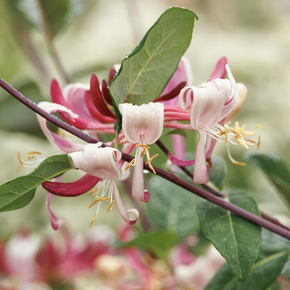
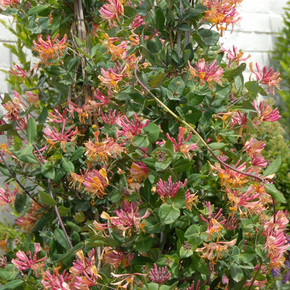
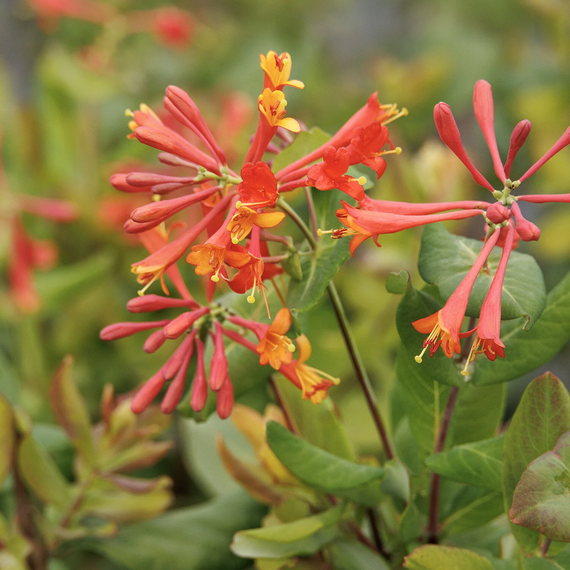
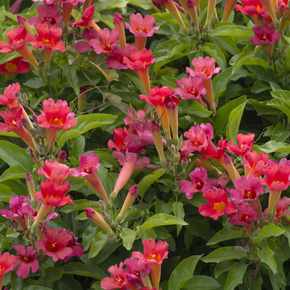
- Vivid scarlet-red, tubular flower clusters with glowing orange throats bloom in succession from late spring through fall, delivering months of eye-catching color.
- An irresistible magnet for hummingbirds and pollinators, this vigorous climbing vine rewards wildlife gardens with nectar-rich blooms all season long.
- Exceptionally cold-hardy for a honeysuckle vine - reliably hardy down to USDA Zone 3 - while remaining semi-evergreen in milder Pacific Coast climates.
- Low-maintenance and fast-growing, it quickly clothes trellises, arbors, fences, and pergolas with handsome blue-green foliage and bold floral color.
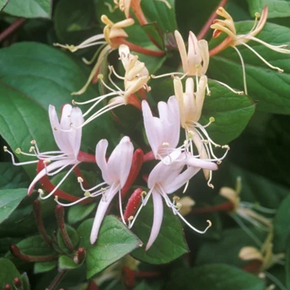
Dropmore Scarlet Trumpet Honeysuckle (Lonicera x brownii 'Dropmore Scarlet') is one of the most stunning and reliable flowering vines available to Western gardeners, delivering a spectacular seasonal show from late spring all the way through autumn. This vigorous semi-evergreen twining climber was originally developed in Dropmore, Manitoba as a hybrid between Lonicera hirsuta and Lonicera sempervirens, bred specifically for extreme cold hardiness and heavy blooming performance. Clusters of long, tubular, flaming scarlet flowers open to reveal vivid orange throats, appearing in successive flushes throughout the growing season and eventually giving way to small, bright red berries in late summer and fall. The attractive, waxy blue-green foliage remains semi-evergreen in the mild winters of Southern Oregon and Northern California, providing year-round structure and color in the garden. Unlike many invasive honeysuckle species, Dropmore Scarlet is a well-behaved, non-invasive climber that reaches 8 to 12 feet tall with a spread of 6 to 10 feet, making it perfectly suited to covering fences, walls, arbors, and pergolas without taking over surrounding plantings. Hummingbirds are powerfully attracted to its nectar-rich blossoms, making it a must-have centerpiece for any wildlife or pollinator garden. Easy to grow, adaptable to a wide range of soil types, and tolerant of both full sun and partial shade, this exceptional vine brings bold, long-lasting color and wildlife habitat value to virtually any landscape setting.
Plant Description
Dropmore Scarlet Trumpet Honeysuckle is a vigorous, twining semi-evergreen climbing vine celebrated for its extraordinary floral display and exceptional cold hardiness. It is an artificial hybrid (Lonicera x brownii) created from a cross between two North American natives - Lonicera hirsuta (Hairy Honeysuckle) and Lonicera sempervirens (Trumpet Honeysuckle) - developed at the Dropmore research station in Manitoba, Canada. The result is a vine that combines spectacular scarlet flower color and prolific blooming with a toughness that few ornamental climbers can match. Dense clusters of 1.5- to 2-inch-long, narrowly tubular flowers glow in rich scarlet-red with warm orange interiors, appearing from late spring and continuing in successive waves into fall. The blooms are not notably fragrant but more than compensate with sheer visual impact. Waxy, rounded, blue-green leaves are arranged in opposite pairs along the stems, with the leaf pairs immediately below each flower cluster fusing together at the base to form a distinctive perfoliate disc that gives the vine a refined, ornamental appearance. In the mild climates of Southern Oregon and Northern California, foliage is retained through much of the winter, providing attractive year-round coverage. Small, round, bright red berries follow the flowers in late summer and fall, adding further seasonal interest and attracting songbirds. Stems twine naturally around supports, making installation and training straightforward on any suitable structure.
Mature Size
| Attribute | Typical Range |
|---|---|
| Height | 8 - 12 feet (up to 15-20 feet in ideal conditions) |
| Spread / Width | 6 - 10 feet |
| Growth Rate | Rapid - can extend several feet per season |
| Time to Flowering | Flowers typically appear in the first growing season |
| Time to Full Size | 12 - 18 months to reach near-mature dimensions |
| Climbing Method | Twining stems - requires a support structure |
In the mild, long-season climates of Southern Oregon and Northern California, this vine can reach the larger end of its size range and may retain some foliage through winter, resulting in a denser and more substantial plant year over year. In warmer microclimates it may push toward the 15- to 20-foot range with adequate support and nutrition.
Hardiness Zones
Dropmore Scarlet Trumpet Honeysuckle is one of the most cold-hardy ornamental flowering vines available, performing reliably across a wide geographic range. It was specifically bred for extreme cold tolerance, making it uniquely valuable where other showy vines struggle.
- USDA Hardiness Zones: 3a through 9a
- AHS Heat Zones: 1 through 9
- Cold Tolerance: Hardy to approximately -40 degrees F (Zone 3a), making it suitable for virtually all continental US climates
- Southern Oregon and Northern California: Thrives in Zones 7 and 8, where mild winters allow the foliage to remain semi-evergreen and the growing season delivers the most prolific floral performance
- Behavior in Mild Winters: In Zones 7-9, foliage is typically retained through winter; the vine may show minimal dieback and resumes growth vigorously in spring
- Behavior in Cold Winters: In Zones 3-6, the vine is fully deciduous but root-hardy; it regenerates reliably from the base each spring
Sunlight Requirements
Dropmore Scarlet Trumpet Honeysuckle is adaptable in terms of light but rewards gardeners who provide optimal sun exposure with the most prolific flowering.
- Ideal Exposure: Full sun to partial shade; at least 6 hours of direct sunlight daily produces the best flowering results
- Full Sun: Tolerated well and promotes maximum bloom production; the preferred exposure in mild coastal and inland valley climates
- Partial Shade: The vine will grow and bloom in partial shade (2-6 hours of direct sun), though flower quantity will be somewhat reduced
- Hot Afternoon Sun: In the hotter inland areas of Southern Oregon and Northern California, some protection from intense late-afternoon sun can help prevent leaf scorch and moisture stress during peak summer heat
- Positioning: An east- or north-facing fence or a structure that receives morning sun and light afternoon shade is ideal in hot-summer climates
Soil and pH Preferences
One of the strengths of Dropmore Scarlet Trumpet Honeysuckle is its adaptability to a wide variety of soil conditions, although certain conditions produce the best growth and flowering.
- Preferred Soil Type: Fertile, humus-rich, moist, well-drained loamy soil is ideal
- Soil Adaptability: Tolerates clay, sandy, chalky, and silty soils; however, drainage must be adequate in clay-heavy sites
- Soil pH: Performs well across a range of 6.0 to 7.5 (slightly acidic to neutral); also tolerates mildly alkaline conditions
- Drainage: Moist but well-drained conditions are preferred; avoid consistently waterlogged or standing-water sites, which promote root rot
- Soil Amendments at Planting: Incorporate generous amounts of compost or aged manure to improve fertility and moisture retention; add perlite or coarse sand to heavy clay soils to improve drainage and aeration
- Mulching: Apply 2-3 inches of organic mulch around the root zone to conserve moisture, moderate soil temperature, and gradually improve soil structure
- Black Walnut Tolerance: This vine is noted to be tolerant of black walnut (juglone) toxicity - an advantage in landscapes where black walnut trees are present
Watering Guide
Dropmore Scarlet Trumpet Honeysuckle has moderate, average water needs. Consistent moisture during establishment and warm-season dry spells is the key to vigorous growth and continuous blooming.
- Establishment Phase (Year 1): Water regularly and deeply during the first growing season to develop a strong, extensive root system. Keep the root zone consistently moist but never waterlogged
- Established Plants: Once well-established, the vine demonstrates good drought tolerance; however, it performs significantly better with supplemental irrigation during dry spells, particularly in the warm, dry summers of Southern Oregon and Northern California
- Watering Frequency: In hot, dry weather, water deeply once or twice per week; reduce frequency in cooler seasons or when natural rainfall is adequate
- Watering Method: Water at the base of the plant rather than overhead to reduce the risk of foliar disease; drip irrigation or soaker hoses are ideal
- Mulch: Maintaining a mulch layer over the root zone significantly reduces moisture evaporation and helps keep roots cool during summer heat
- Winter: Reduce irrigation in fall and winter; the plant requires little supplemental water during dormancy or semi-dormancy in mild climates
- Signs of Underwatering: Wilting foliage, curling leaves, and reduced bloom production
- Signs of Overwatering: Yellowing leaves, soft stems at the base, root rot - ensure drainage is adequate before increasing irrigation
Fertilizing
Dropmore Scarlet Trumpet Honeysuckle is not a heavy feeder and will perform admirably in enriched garden soil with minimal supplemental fertilizing. However, a thoughtful fertilizing routine will support vigorous growth and maximize the blooming display.
- When to Fertilize: Apply fertilizer once in early spring just as new growth begins to emerge, before buds break
- Fertilizer Type: Use a slow-release, granular fertilizer formulated for flowering vines or shrubs with a balanced N-P-K ratio (e.g., 10-10-10 or similar); a product with slightly elevated phosphorus and potassium relative to nitrogen supports bloom production
- Nitrogen Caution: Avoid high-nitrogen fertilizers or excessive feeding, as too much nitrogen encourages lush, excessive foliage growth at the direct expense of flower production - resulting in a green vine with fewer blooms
- Organic Options: Top-dressing with compost or well-aged manure in early spring is an excellent low-input approach that feeds the vine gently over the entire season while improving soil biology
- Mid-Season: A light application of a low-nitrogen, bloom-boosting fertilizer in midsummer can extend the flowering display into fall
- Fall and Winter: Do not fertilize in late summer or fall, as this stimulates new tender growth that is susceptible to cold damage
- Container Plants: Plants grown in containers benefit from a balanced liquid fertilizer applied every 3-4 weeks during the active growing season, as nutrients leach more rapidly from container media
Pruning and Maintenance
Dropmore Scarlet Trumpet Honeysuckle is considered a low- to medium-maintenance vine. Regular pruning keeps the plant tidy, improves air circulation, and encourages the most prolific blooming. Because this vine blooms on the current season's new growth as well as older wood, it is flexible in its pruning timing.
- Primary Pruning Time: Late winter to early spring, before new growth begins - this is the best time for major shaping and thinning
- Annual Hard Cutback: In late winter, prune all side branches back to 18-48 inches from the ground, cutting just above a dormant bud; this rejuvenates the vine and promotes a fresh flush of vigorous, flower-bearing new growth
- Deadheading: Remove spent flower clusters throughout summer and fall by cutting just above the pair of leaves below the flower head; this encourages continuous reblooming rather than seed set
- Light Tidying: Trim errant, tangled, or crossing stems at any time during the growing season to maintain a tidy form and prevent the vine from outgrowing its support structure
- Rejuvenation Pruning: If the vine becomes severely overgrown or tangled, it can be cut down close to ground level; it will regenerate vigorously from the base in spring
- Dead and Diseased Wood: Remove any dead, broken, or diseased branches promptly, making clean cuts with sharp bypass pruners just above a healthy bud or branch junction
- Tool Care: Always use clean, sharp bypass pruners; disinfect blades between cuts if disease is suspected
- Training: Guide young stems onto the support structure and loosely tie or weave them as needed; stems twine naturally but may need initial guidance to achieve the desired coverage pattern
Planting Instructions
- Choose the right location: Select a site in full sun to partial shade with well-drained soil and a sturdy support structure such as a trellis, arbor, fence, or pergola already in place.
- Prepare the soil: Dig a planting hole two to three times the width of the root ball and approximately the same depth. Amend native soil generously with compost or aged manure to improve fertility and drainage. In clay-heavy soils, mix in perlite or coarse grit to aid drainage.
- Distance from structures: Plant at least 12-18 inches away from the base of any wall or fence to allow room for root development and to ensure adequate moisture reaches the root zone; walls can create a rain shadow effect that dries out the soil.
- Planting depth: Set the root ball at the same depth it was growing in its nursery container - do not plant deeper, as this can invite crown rot. The top of the root ball should sit flush with or just slightly above the surrounding soil level.
- Backfill and firm: Fill in with the amended soil, firming gently around the root ball to eliminate air pockets. Do not compact the soil tightly.
- Water in thoroughly: Water deeply and thoroughly immediately after planting to settle the soil and eliminate any remaining air pockets around the roots.
- Mulch: Apply 2-3 inches of organic mulch (wood chips, shredded bark, or compost) around the base of the plant, keeping mulch a few inches away from the main stem to prevent rot.
- Spacing for multiple plants: Space plants 3-5 feet apart when planting multiple vines for a continuous coverage effect.
- Initial training: Guide the new stems toward the support structure and loosely tie or weave them in place to encourage upward growth from the start.
Seasonal Interest
| Season | What to Expect |
|---|---|
| Spring | Fresh blue-green foliage emerges rapidly; the first flush of vibrant scarlet tubular flower clusters opens from late spring onward; hummingbirds and pollinators arrive |
| Summer | Peak blooming continues in successive waves through the entire summer; dense, lush foliage provides shade and privacy on arbors and trellises; hummingbird activity is at its highest |
| Fall | Flowering continues into fall with further flushes of scarlet blooms; small, bright red ornamental berries develop and attract songbirds and migratory species; foliage may take on subtle color in cooler weather |
| Winter | In the mild winters of Southern Oregon and Northern California (Zones 7-8), foliage is partially to fully retained, providing attractive green coverage on structures; in colder zones the vine is dormant but the framework of stems remains ornamental |
Landscape Uses
Dropmore Scarlet Trumpet Honeysuckle is one of the most versatile flowering vines for the Pacific Coast garden. Its vigor, long bloom season, and wildlife value make it suitable for a wide range of landscape applications.
- Trellises and Arbors: Ideal for covering garden structures with a dense, colorful curtain of flowers and foliage from late spring through fall
- Fences and Walls: Quickly transforms bare fences, chain-link, or masonry walls into lush living features; attaches easily with wire or trellis panels
- Pergolas: Creates a spectacular floral canopy overhead, draping structures with cascading scarlet blooms visible from below
- Privacy Screening: Dense, semi-evergreen foliage provides effective privacy screening on decks, patios, and property boundaries when grown on appropriate structures
- Hummingbird and Pollinator Gardens: An anchor plant for any dedicated wildlife or hummingbird garden; the long season of nectar-rich blooms draws consistent wildlife activity
- Cottage and Informal Gardens: The exuberant, naturalistic growth habit pairs beautifully with the relaxed aesthetic of cottage-style plantings
- Woodland Garden Edges: Tolerates the partial shade of woodland margins while brightening edges with bold color
- Hillside or Slope Coverage: Can be used as a sprawling ground cover on slopes when grown without vertical support
- Container Gardens: Suitable for large containers on decks or patios when provided with a trellis or obelisk for support; brings the full floral display to small-space gardens
Wildlife Value
Dropmore Scarlet Trumpet Honeysuckle is one of the top-rated vines for attracting beneficial wildlife to the garden. Its long season of bloom and berry production creates a sustained wildlife resource from spring through fall.
- Hummingbirds: The vivid scarlet, tubular flowers are perfectly shaped and colored to attract hummingbirds; the successive wave blooming habit means hummingbirds return to feed throughout the entire growing season - one of the best hummingbird vines available to Pacific Coast gardeners
- Bees and Bumblebees: Native bees and bumblebees actively forage on the flowers, which provide accessible nectar over an exceptionally long season
- Butterflies: Attracted to the nectar-rich flowers, particularly during the summer and fall blooming periods
- Songbirds: The small, bright red berries that ripen in late summer and fall attract a variety of songbirds and migrating bird species that feed on the fruit
- Nesting Habitat: The dense, twining foliage provides excellent nesting cover and shelter for small birds throughout the year, especially in mild-winter climates where the semi-evergreen foliage persists
- Non-Invasive: Unlike the notorious Japanese Honeysuckle (Lonicera japonica), Dropmore Scarlet produces relatively few viable seeds and is not considered invasive, making it a responsible choice for gardeners conscious of ecological impact
Companion Plants
Dropmore Scarlet Trumpet Honeysuckle pairs beautifully with a wide range of garden plants. Consider the following companions to create stunning combinations in the landscape:
- Clematis: A classic and highly recommended pairing - large-flowered clematis in purple, blue, or deep pink shades create stunning color contrast when co-trained on the same structure; both appreciate similar growing conditions
- Climbing Roses: Deep red, pink, or white climbing roses intertwining with the honeysuckle on an arbor or fence create a romantic, cottage-garden effect
- Russian Sage (Perovskia atriplicifolia): The airy silver-blue spikes of Russian sage planted at the base of the vine create striking color contrast with the scarlet flowers above
- Lavender: Low-growing lavender planted beneath provides fragrance, pollinates alongside the honeysuckle, and creates attractive color and textural contrast
- Catmint (Nepeta): Soft blue-purple catmint at the vine's feet creates an appealing two-layer planting and extends the pollinator value of the combination
- Salvia: Perennial salvias in blue or purple tones echo the hummingbird-attracting theme while providing complementary color beneath the vine
- Golden Hops (Humulus lupulus 'Aureus'): The brilliant chartreuse foliage of golden hops creates a vivid backdrop that makes the scarlet flowers of the honeysuckle pop even more dramatically
- Perennial Peas (Lathyrus latifolius): A graceful co-climber that weaves through the honeysuckle with pink or white flowers for additional interest
Pests and Diseases
Dropmore Scarlet Trumpet Honeysuckle is generally considered to have no serious pest or disease problems, and it is one of the easier flowering vines to maintain in good health. The following are the most common minor issues to be aware of:
- Aphids: The most common pest; small colonies may appear on new growth in spring. Dislodge with a strong stream of water or treat with insecticidal soap or neem oil for heavier infestations. Encouraging natural predators such as ladybugs and lacewings is an effective biological control.
- Thrips: Occasionally cause distorted or silvery-streaked foliage; treat with insecticidal soap if populations become significant
- Spider Mites: More likely during hot, dry spells; regular misting of foliage and maintaining adequate soil moisture helps deter them; treat with a miticide or neem oil if needed
- Whiteflies: Occasionally present; yellow sticky traps and neem oil sprays are effective management tools
- Scale Insects: Can be managed by pruning out heavily affected stems and applying dormant oil spray in late winter before bud break
- Powdery Mildew: May appear in conditions with poor air circulation and high humidity; avoid overhead watering, provide adequate spacing, and prune to improve airflow through the canopy
- Root Rot: Caused by poorly drained or consistently waterlogged soil; ensure good drainage at planting to prevent this issue
- Leaf Scorch: Can occur on exposed foliage during extreme summer heat; ensure consistent moisture and consider providing afternoon shade in the hottest inland microclimates
Note on Berry Toxicity: The small red berries produced in late summer and fall are mildly toxic to humans if ingested in quantity, potentially causing stomach upset, nausea, or vomiting. Keep this in mind in gardens frequented by young children. The berries pose no significant concern for wildlife, which feed on them without harm.
Container Growing
Dropmore Scarlet Trumpet Honeysuckle adapts well to container culture, making it an excellent choice for decks, patios, and balconies where it can be given a trellis or obelisk to climb. Follow these guidelines for success in containers:
- Container Size: Choose a large, sturdy container - at least 15-20 gallons - to accommodate the vigorous root system and provide sufficient soil volume to buffer against moisture and temperature extremes
- Potting Mix: Use a high-quality, well-draining potting mix amended with perlite for additional drainage; avoid heavy, dense mixes that can become waterlogged
- Support Structure: Install a trellis, obelisk, or cage in the container at planting time; the vine twines naturally and will cover a support structure fully within one season
- Watering: Container plants dry out significantly faster than in-ground plantings and require more frequent watering - check soil moisture daily during warm weather and water when the top inch of soil is dry
- Fertilizing: Feed container plants with a balanced liquid fertilizer every 3-4 weeks throughout the active growing season, as nutrients leach more rapidly from containers with frequent watering
- Winter Care in Containers: In Zone 7-8 microclimates, containers can remain outdoors; in colder locations or on exposed sites, move containers to a sheltered location or unheated garage to protect roots from freezing solid
- Repotting: Repot into a larger container when the plant becomes root-bound or every 1-2 years to refresh the growing medium and maintain vigor
Propagation
Dropmore Scarlet Trumpet Honeysuckle can be propagated at home using several methods. Vegetative propagation is preferred for ensuring the new plant is true to the parent cultivar.
- Stem Cuttings (Most Common): Take softwood cuttings in late spring to early summer, or semi-ripe cuttings in mid- to late summer. Cut 4-6 inch stem sections just below a leaf node, remove lower leaves, dip the cut end in rooting hormone, and insert into a well-draining propagation mix. Keep moist and warm until roots develop (typically 4-8 weeks).
- Leaf-Bud Cuttings: Leaf bud cuttings can also be taken from late spring through late summer and rooted in the same manner as stem cuttings
- Layering: In summer, bend a long, flexible stem to the ground, wound the stem where it contacts soil, peg it in place, and cover with moist soil or compost; roots typically develop within the season and the new plant can be severed from the parent the following spring
- Seeds: Seed propagation is possible but not ideal for this cultivar, as seedlings may not be true to the parent plant's characteristics. Seeds require cold stratification (chilling) to break dormancy before germination
- Vivid scarlet-red, tubular flower clusters with glowing orange throats bloom in succession from late spring through fall, delivering months of eye-catching color.
- An irresistible magnet for hummingbirds and pollinators, this vigorous climbing vine rewards wildlife gardens with nectar-rich blooms all season long.
- Exceptionally cold-hardy for a honeysuckle vine - reliably hardy down to USDA Zone 3 - while remaining semi-evergreen in milder Pacific Coast climates.
- Low-maintenance and fast-growing, it quickly clothes trellises, arbors, fences, and pergolas with handsome blue-green foliage and bold floral color.
Dropmore Scarlet Trumpet Honeysuckle (Lonicera x brownii 'Dropmore Scarlet') is one of the most stunning and reliable flowering vines available to Western gardeners, delivering a spectacular seasonal show from late spring all the way through autumn. This vigorous semi-evergreen twining climber was originally developed in Dropmore, Manitoba as a hybrid between Lonicera hirsuta and Lonicera sempervirens, bred specifically for extreme cold hardiness and heavy blooming performance. Clusters of long, tubular, flaming scarlet flowers open to reveal vivid orange throats, appearing in successive flushes throughout the growing season and eventually giving way to small, bright red berries in late summer and fall. The attractive, waxy blue-green foliage remains semi-evergreen in the mild winters of Southern Oregon and Northern California, providing year-round structure and color in the garden. Unlike many invasive honeysuckle species, Dropmore Scarlet is a well-behaved, non-invasive climber that reaches 8 to 12 feet tall with a spread of 6 to 10 feet, making it perfectly suited to covering fences, walls, arbors, and pergolas without taking over surrounding plantings. Hummingbirds are powerfully attracted to its nectar-rich blossoms, making it a must-have centerpiece for any wildlife or pollinator garden. Easy to grow, adaptable to a wide range of soil types, and tolerant of both full sun and partial shade, this exceptional vine brings bold, long-lasting color and wildlife habitat value to virtually any landscape setting.
Plant Description
Dropmore Scarlet Trumpet Honeysuckle is a vigorous, twining semi-evergreen climbing vine celebrated for its extraordinary floral display and exceptional cold hardiness. It is an artificial hybrid (Lonicera x brownii) created from a cross between two North American natives - Lonicera hirsuta (Hairy Honeysuckle) and Lonicera sempervirens (Trumpet Honeysuckle) - developed at the Dropmore research station in Manitoba, Canada. The result is a vine that combines spectacular scarlet flower color and prolific blooming with a toughness that few ornamental climbers can match. Dense clusters of 1.5- to 2-inch-long, narrowly tubular flowers glow in rich scarlet-red with warm orange interiors, appearing from late spring and continuing in successive waves into fall. The blooms are not notably fragrant but more than compensate with sheer visual impact. Waxy, rounded, blue-green leaves are arranged in opposite pairs along the stems, with the leaf pairs immediately below each flower cluster fusing together at the base to form a distinctive perfoliate disc that gives the vine a refined, ornamental appearance. In the mild climates of Southern Oregon and Northern California, foliage is retained through much of the winter, providing attractive year-round coverage. Small, round, bright red berries follow the flowers in late summer and fall, adding further seasonal interest and attracting songbirds. Stems twine naturally around supports, making installation and training straightforward on any suitable structure.
Mature Size
| Attribute | Typical Range |
|---|---|
| Height | 8 - 12 feet (up to 15-20 feet in ideal conditions) |
| Spread / Width | 6 - 10 feet |
| Growth Rate | Rapid - can extend several feet per season |
| Time to Flowering | Flowers typically appear in the first growing season |
| Time to Full Size | 12 - 18 months to reach near-mature dimensions |
| Climbing Method | Twining stems - requires a support structure |
In the mild, long-season climates of Southern Oregon and Northern California, this vine can reach the larger end of its size range and may retain some foliage through winter, resulting in a denser and more substantial plant year over year. In warmer microclimates it may push toward the 15- to 20-foot range with adequate support and nutrition.
Hardiness Zones
Dropmore Scarlet Trumpet Honeysuckle is one of the most cold-hardy ornamental flowering vines available, performing reliably across a wide geographic range. It was specifically bred for extreme cold tolerance, making it uniquely valuable where other showy vines struggle.
- USDA Hardiness Zones: 3a through 9a
- AHS Heat Zones: 1 through 9
- Cold Tolerance: Hardy to approximately -40 degrees F (Zone 3a), making it suitable for virtually all continental US climates
- Southern Oregon and Northern California: Thrives in Zones 7 and 8, where mild winters allow the foliage to remain semi-evergreen and the growing season delivers the most prolific floral performance
- Behavior in Mild Winters: In Zones 7-9, foliage is typically retained through winter; the vine may show minimal dieback and resumes growth vigorously in spring
- Behavior in Cold Winters: In Zones 3-6, the vine is fully deciduous but root-hardy; it regenerates reliably from the base each spring
Sunlight Requirements
Dropmore Scarlet Trumpet Honeysuckle is adaptable in terms of light but rewards gardeners who provide optimal sun exposure with the most prolific flowering.
- Ideal Exposure: Full sun to partial shade; at least 6 hours of direct sunlight daily produces the best flowering results
- Full Sun: Tolerated well and promotes maximum bloom production; the preferred exposure in mild coastal and inland valley climates
- Partial Shade: The vine will grow and bloom in partial shade (2-6 hours of direct sun), though flower quantity will be somewhat reduced
- Hot Afternoon Sun: In the hotter inland areas of Southern Oregon and Northern California, some protection from intense late-afternoon sun can help prevent leaf scorch and moisture stress during peak summer heat
- Positioning: An east- or north-facing fence or a structure that receives morning sun and light afternoon shade is ideal in hot-summer climates
Soil and pH Preferences
One of the strengths of Dropmore Scarlet Trumpet Honeysuckle is its adaptability to a wide variety of soil conditions, although certain conditions produce the best growth and flowering.
- Preferred Soil Type: Fertile, humus-rich, moist, well-drained loamy soil is ideal
- Soil Adaptability: Tolerates clay, sandy, chalky, and silty soils; however, drainage must be adequate in clay-heavy sites
- Soil pH: Performs well across a range of 6.0 to 7.5 (slightly acidic to neutral); also tolerates mildly alkaline conditions
- Drainage: Moist but well-drained conditions are preferred; avoid consistently waterlogged or standing-water sites, which promote root rot
- Soil Amendments at Planting: Incorporate generous amounts of compost or aged manure to improve fertility and moisture retention; add perlite or coarse sand to heavy clay soils to improve drainage and aeration
- Mulching: Apply 2-3 inches of organic mulch around the root zone to conserve moisture, moderate soil temperature, and gradually improve soil structure
- Black Walnut Tolerance: This vine is noted to be tolerant of black walnut (juglone) toxicity - an advantage in landscapes where black walnut trees are present
Watering Guide
Dropmore Scarlet Trumpet Honeysuckle has moderate, average water needs. Consistent moisture during establishment and warm-season dry spells is the key to vigorous growth and continuous blooming.
- Establishment Phase (Year 1): Water regularly and deeply during the first growing season to develop a strong, extensive root system. Keep the root zone consistently moist but never waterlogged
- Established Plants: Once well-established, the vine demonstrates good drought tolerance; however, it performs significantly better with supplemental irrigation during dry spells, particularly in the warm, dry summers of Southern Oregon and Northern California
- Watering Frequency: In hot, dry weather, water deeply once or twice per week; reduce frequency in cooler seasons or when natural rainfall is adequate
- Watering Method: Water at the base of the plant rather than overhead to reduce the risk of foliar disease; drip irrigation or soaker hoses are ideal
- Mulch: Maintaining a mulch layer over the root zone significantly reduces moisture evaporation and helps keep roots cool during summer heat
- Winter: Reduce irrigation in fall and winter; the plant requires little supplemental water during dormancy or semi-dormancy in mild climates
- Signs of Underwatering: Wilting foliage, curling leaves, and reduced bloom production
- Signs of Overwatering: Yellowing leaves, soft stems at the base, root rot - ensure drainage is adequate before increasing irrigation
Fertilizing
Dropmore Scarlet Trumpet Honeysuckle is not a heavy feeder and will perform admirably in enriched garden soil with minimal supplemental fertilizing. However, a thoughtful fertilizing routine will support vigorous growth and maximize the blooming display.
- When to Fertilize: Apply fertilizer once in early spring just as new growth begins to emerge, before buds break
- Fertilizer Type: Use a slow-release, granular fertilizer formulated for flowering vines or shrubs with a balanced N-P-K ratio (e.g., 10-10-10 or similar); a product with slightly elevated phosphorus and potassium relative to nitrogen supports bloom production
- Nitrogen Caution: Avoid high-nitrogen fertilizers or excessive feeding, as too much nitrogen encourages lush, excessive foliage growth at the direct expense of flower production - resulting in a green vine with fewer blooms
- Organic Options: Top-dressing with compost or well-aged manure in early spring is an excellent low-input approach that feeds the vine gently over the entire season while improving soil biology
- Mid-Season: A light application of a low-nitrogen, bloom-boosting fertilizer in midsummer can extend the flowering display into fall
- Fall and Winter: Do not fertilize in late summer or fall, as this stimulates new tender growth that is susceptible to cold damage
- Container Plants: Plants grown in containers benefit from a balanced liquid fertilizer applied every 3-4 weeks during the active growing season, as nutrients leach more rapidly from container media
Pruning and Maintenance
Dropmore Scarlet Trumpet Honeysuckle is considered a low- to medium-maintenance vine. Regular pruning keeps the plant tidy, improves air circulation, and encourages the most prolific blooming. Because this vine blooms on the current season's new growth as well as older wood, it is flexible in its pruning timing.
- Primary Pruning Time: Late winter to early spring, before new growth begins - this is the best time for major shaping and thinning
- Annual Hard Cutback: In late winter, prune all side branches back to 18-48 inches from the ground, cutting just above a dormant bud; this rejuvenates the vine and promotes a fresh flush of vigorous, flower-bearing new growth
- Deadheading: Remove spent flower clusters throughout summer and fall by cutting just above the pair of leaves below the flower head; this encourages continuous reblooming rather than seed set
- Light Tidying: Trim errant, tangled, or crossing stems at any time during the growing season to maintain a tidy form and prevent the vine from outgrowing its support structure
- Rejuvenation Pruning: If the vine becomes severely overgrown or tangled, it can be cut down close to ground level; it will regenerate vigorously from the base in spring
- Dead and Diseased Wood: Remove any dead, broken, or diseased branches promptly, making clean cuts with sharp bypass pruners just above a healthy bud or branch junction
- Tool Care: Always use clean, sharp bypass pruners; disinfect blades between cuts if disease is suspected
- Training: Guide young stems onto the support structure and loosely tie or weave them as needed; stems twine naturally but may need initial guidance to achieve the desired coverage pattern
Planting Instructions
- Choose the right location: Select a site in full sun to partial shade with well-drained soil and a sturdy support structure such as a trellis, arbor, fence, or pergola already in place.
- Prepare the soil: Dig a planting hole two to three times the width of the root ball and approximately the same depth. Amend native soil generously with compost or aged manure to improve fertility and drainage. In clay-heavy soils, mix in perlite or coarse grit to aid drainage.
- Distance from structures: Plant at least 12-18 inches away from the base of any wall or fence to allow room for root development and to ensure adequate moisture reaches the root zone; walls can create a rain shadow effect that dries out the soil.
- Planting depth: Set the root ball at the same depth it was growing in its nursery container - do not plant deeper, as this can invite crown rot. The top of the root ball should sit flush with or just slightly above the surrounding soil level.
- Backfill and firm: Fill in with the amended soil, firming gently around the root ball to eliminate air pockets. Do not compact the soil tightly.
- Water in thoroughly: Water deeply and thoroughly immediately after planting to settle the soil and eliminate any remaining air pockets around the roots.
- Mulch: Apply 2-3 inches of organic mulch (wood chips, shredded bark, or compost) around the base of the plant, keeping mulch a few inches away from the main stem to prevent rot.
- Spacing for multiple plants: Space plants 3-5 feet apart when planting multiple vines for a continuous coverage effect.
- Initial training: Guide the new stems toward the support structure and loosely tie or weave them in place to encourage upward growth from the start.
Seasonal Interest
| Season | What to Expect |
|---|---|
| Spring | Fresh blue-green foliage emerges rapidly; the first flush of vibrant scarlet tubular flower clusters opens from late spring onward; hummingbirds and pollinators arrive |
| Summer | Peak blooming continues in successive waves through the entire summer; dense, lush foliage provides shade and privacy on arbors and trellises; hummingbird activity is at its highest |
| Fall | Flowering continues into fall with further flushes of scarlet blooms; small, bright red ornamental berries develop and attract songbirds and migratory species; foliage may take on subtle color in cooler weather |
| Winter | In the mild winters of Southern Oregon and Northern California (Zones 7-8), foliage is partially to fully retained, providing attractive green coverage on structures; in colder zones the vine is dormant but the framework of stems remains ornamental |
Landscape Uses
Dropmore Scarlet Trumpet Honeysuckle is one of the most versatile flowering vines for the Pacific Coast garden. Its vigor, long bloom season, and wildlife value make it suitable for a wide range of landscape applications.
- Trellises and Arbors: Ideal for covering garden structures with a dense, colorful curtain of flowers and foliage from late spring through fall
- Fences and Walls: Quickly transforms bare fences, chain-link, or masonry walls into lush living features; attaches easily with wire or trellis panels
- Pergolas: Creates a spectacular floral canopy overhead, draping structures with cascading scarlet blooms visible from below
- Privacy Screening: Dense, semi-evergreen foliage provides effective privacy screening on decks, patios, and property boundaries when grown on appropriate structures
- Hummingbird and Pollinator Gardens: An anchor plant for any dedicated wildlife or hummingbird garden; the long season of nectar-rich blooms draws consistent wildlife activity
- Cottage and Informal Gardens: The exuberant, naturalistic growth habit pairs beautifully with the relaxed aesthetic of cottage-style plantings
- Woodland Garden Edges: Tolerates the partial shade of woodland margins while brightening edges with bold color
- Hillside or Slope Coverage: Can be used as a sprawling ground cover on slopes when grown without vertical support
- Container Gardens: Suitable for large containers on decks or patios when provided with a trellis or obelisk for support; brings the full floral display to small-space gardens
Wildlife Value
Dropmore Scarlet Trumpet Honeysuckle is one of the top-rated vines for attracting beneficial wildlife to the garden. Its long season of bloom and berry production creates a sustained wildlife resource from spring through fall.
- Hummingbirds: The vivid scarlet, tubular flowers are perfectly shaped and colored to attract hummingbirds; the successive wave blooming habit means hummingbirds return to feed throughout the entire growing season - one of the best hummingbird vines available to Pacific Coast gardeners
- Bees and Bumblebees: Native bees and bumblebees actively forage on the flowers, which provide accessible nectar over an exceptionally long season
- Butterflies: Attracted to the nectar-rich flowers, particularly during the summer and fall blooming periods
- Songbirds: The small, bright red berries that ripen in late summer and fall attract a variety of songbirds and migrating bird species that feed on the fruit
- Nesting Habitat: The dense, twining foliage provides excellent nesting cover and shelter for small birds throughout the year, especially in mild-winter climates where the semi-evergreen foliage persists
- Non-Invasive: Unlike the notorious Japanese Honeysuckle (Lonicera japonica), Dropmore Scarlet produces relatively few viable seeds and is not considered invasive, making it a responsible choice for gardeners conscious of ecological impact
Companion Plants
Dropmore Scarlet Trumpet Honeysuckle pairs beautifully with a wide range of garden plants. Consider the following companions to create stunning combinations in the landscape:
- Clematis: A classic and highly recommended pairing - large-flowered clematis in purple, blue, or deep pink shades create stunning color contrast when co-trained on the same structure; both appreciate similar growing conditions
- Climbing Roses: Deep red, pink, or white climbing roses intertwining with the honeysuckle on an arbor or fence create a romantic, cottage-garden effect
- Russian Sage (Perovskia atriplicifolia): The airy silver-blue spikes of Russian sage planted at the base of the vine create striking color contrast with the scarlet flowers above
- Lavender: Low-growing lavender planted beneath provides fragrance, pollinates alongside the honeysuckle, and creates attractive color and textural contrast
- Catmint (Nepeta): Soft blue-purple catmint at the vine's feet creates an appealing two-layer planting and extends the pollinator value of the combination
- Salvia: Perennial salvias in blue or purple tones echo the hummingbird-attracting theme while providing complementary color beneath the vine
- Golden Hops (Humulus lupulus 'Aureus'): The brilliant chartreuse foliage of golden hops creates a vivid backdrop that makes the scarlet flowers of the honeysuckle pop even more dramatically
- Perennial Peas (Lathyrus latifolius): A graceful co-climber that weaves through the honeysuckle with pink or white flowers for additional interest
Pests and Diseases
Dropmore Scarlet Trumpet Honeysuckle is generally considered to have no serious pest or disease problems, and it is one of the easier flowering vines to maintain in good health. The following are the most common minor issues to be aware of:
- Aphids: The most common pest; small colonies may appear on new growth in spring. Dislodge with a strong stream of water or treat with insecticidal soap or neem oil for heavier infestations. Encouraging natural predators such as ladybugs and lacewings is an effective biological control.
- Thrips: Occasionally cause distorted or silvery-streaked foliage; treat with insecticidal soap if populations become significant
- Spider Mites: More likely during hot, dry spells; regular misting of foliage and maintaining adequate soil moisture helps deter them; treat with a miticide or neem oil if needed
- Whiteflies: Occasionally present; yellow sticky traps and neem oil sprays are effective management tools
- Scale Insects: Can be managed by pruning out heavily affected stems and applying dormant oil spray in late winter before bud break
- Powdery Mildew: May appear in conditions with poor air circulation and high humidity; avoid overhead watering, provide adequate spacing, and prune to improve airflow through the canopy
- Root Rot: Caused by poorly drained or consistently waterlogged soil; ensure good drainage at planting to prevent this issue
- Leaf Scorch: Can occur on exposed foliage during extreme summer heat; ensure consistent moisture and consider providing afternoon shade in the hottest inland microclimates
Note on Berry Toxicity: The small red berries produced in late summer and fall are mildly toxic to humans if ingested in quantity, potentially causing stomach upset, nausea, or vomiting. Keep this in mind in gardens frequented by young children. The berries pose no significant concern for wildlife, which feed on them without harm.
Container Growing
Dropmore Scarlet Trumpet Honeysuckle adapts well to container culture, making it an excellent choice for decks, patios, and balconies where it can be given a trellis or obelisk to climb. Follow these guidelines for success in containers:
- Container Size: Choose a large, sturdy container - at least 15-20 gallons - to accommodate the vigorous root system and provide sufficient soil volume to buffer against moisture and temperature extremes
- Potting Mix: Use a high-quality, well-draining potting mix amended with perlite for additional drainage; avoid heavy, dense mixes that can become waterlogged
- Support Structure: Install a trellis, obelisk, or cage in the container at planting time; the vine twines naturally and will cover a support structure fully within one season
- Watering: Container plants dry out significantly faster than in-ground plantings and require more frequent watering - check soil moisture daily during warm weather and water when the top inch of soil is dry
- Fertilizing: Feed container plants with a balanced liquid fertilizer every 3-4 weeks throughout the active growing season, as nutrients leach more rapidly from containers with frequent watering
- Winter Care in Containers: In Zone 7-8 microclimates, containers can remain outdoors; in colder locations or on exposed sites, move containers to a sheltered location or unheated garage to protect roots from freezing solid
- Repotting: Repot into a larger container when the plant becomes root-bound or every 1-2 years to refresh the growing medium and maintain vigor
Propagation
Dropmore Scarlet Trumpet Honeysuckle can be propagated at home using several methods. Vegetative propagation is preferred for ensuring the new plant is true to the parent cultivar.
- Stem Cuttings (Most Common): Take softwood cuttings in late spring to early summer, or semi-ripe cuttings in mid- to late summer. Cut 4-6 inch stem sections just below a leaf node, remove lower leaves, dip the cut end in rooting hormone, and insert into a well-draining propagation mix. Keep moist and warm until roots develop (typically 4-8 weeks).
- Leaf-Bud Cuttings: Leaf bud cuttings can also be taken from late spring through late summer and rooted in the same manner as stem cuttings
- Layering: In summer, bend a long, flexible stem to the ground, wound the stem where it contacts soil, peg it in place, and cover with moist soil or compost; roots typically develop within the season and the new plant can be severed from the parent the following spring
- Seeds: Seed propagation is possible but not ideal for this cultivar, as seedlings may not be true to the parent plant's characteristics. Seeds require cold stratification (chilling) to break dormancy before germination