Zoom the image with the mouse
Yellow Trumpet Vine - 1 Gallon
SKU:
217040
UPC:
014949223819
$21.99
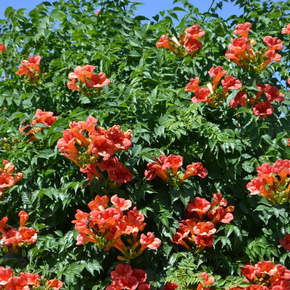
- Vigorous, self‑clinging climber with abundant yellow, trumpet‑shaped flowers in summer; a hummingbird favorite.
- Fast growth; clinging stems typically reach 25–30 ft. with support for quick coverage of vertical spaces.
- Easy‑care and waterwise once established; thrives in full sun and lean, well‑drained soils.
- Excellent for arbors, fences, trellises, and privacy screens; can also be trained as a groundcover or espalier.
Yellow Trumpet Vine (Campsis radicans ‘Flava’) is a bold, fast‑climbing deciduous vine that delivers sunny, trumpet‑shaped blooms through summer and lush green foliage that quickly cloaks structures. Give it full sun, a sturdy support, and lean, well‑drained soil; after the first season it becomes notably drought‑tolerant and low‑maintenance, rewarding you with reliable color and strong pollinator appeal on walls, pergolas, and garden entries.
Botanical Name
Campsis radicans ‘Flava’ — Yellow Trumpet Vine.
Plant Type & Habit
Deciduous, woody, self‑clinging climber with a fast growth rate and strong vertical coverage.
Mature Size
Clinging stems typically reach about 25–30 ft. with support; spread varies by training and structure.
Hardiness
USDA Zones 4–9.
Light & Exposure
Full sun is best for vigorous growth and abundant flowering.
Soil & Water
Performs in lean, well‑drained soils. Water deeply and regularly the first season to establish; once established, water deeply only occasionally. Keep slightly on the dry side and feed sparingly (avoid high‑nitrogen fertilizers) to encourage blooms.
Flowers & Bloom Season
Clusters of showy, yellow trumpets in summer create a vibrant seasonal display.
Pollinators & Wildlife
Highly attractive to hummingbirds and other pollinators.
Uses & Landscape Ideas
- Privacy screens on fences, lattices, and pergolas.
- Arbors, trellises, and sunny walls for bold vertical color.
- Groundcover on large, sunny slopes or to mask utility areas.
- Can be trained as an espalier for structured spaces.
Training & Support
Provide a sturdy support (trellis, arbor, fence, or masonry). Guide young shoots to the structure; the vine will self‑cling as it matures.
Pruning & Maintenance
Prune annually to control size and maintain coverage. Favor bloom by avoiding high‑nitrogen feeding. Wear gloves if you have sensitive skin, as sap may irritate.
Toughness & Problem Solving
Waterwise once established; useful for erosion control, and tolerant of coastal exposure and urban pollution. Generally rabbit resistant.
Planting & Spacing
Plant at the same depth as in the container near your support. Space based on structure width and desired density, ensuring good air circulation and access for pruning.
Regional Notes
Best performance in warm, sunny exposures. Monitor vigor and direct growth where needed on structures.
Companion Ideas
Pairs beautifully with Butterfly Bush (Buddleja), Coneflower (Echinacea), Milkweed (Asclepias), Salvia, and Bee Balm (Monarda) to build a pollinator‑rich summer display.
- Vigorous, self‑clinging climber with abundant yellow, trumpet‑shaped flowers in summer; a hummingbird favorite.
- Fast growth; clinging stems typically reach 25–30 ft. with support for quick coverage of vertical spaces.
- Easy‑care and waterwise once established; thrives in full sun and lean, well‑drained soils.
- Excellent for arbors, fences, trellises, and privacy screens; can also be trained as a groundcover or espalier.
Yellow Trumpet Vine (Campsis radicans ‘Flava’) is a bold, fast‑climbing deciduous vine that delivers sunny, trumpet‑shaped blooms through summer and lush green foliage that quickly cloaks structures. Give it full sun, a sturdy support, and lean, well‑drained soil; after the first season it becomes notably drought‑tolerant and low‑maintenance, rewarding you with reliable color and strong pollinator appeal on walls, pergolas, and garden entries.
Botanical Name
Campsis radicans ‘Flava’ — Yellow Trumpet Vine.
Plant Type & Habit
Deciduous, woody, self‑clinging climber with a fast growth rate and strong vertical coverage.
Mature Size
Clinging stems typically reach about 25–30 ft. with support; spread varies by training and structure.
Hardiness
USDA Zones 4–9.
Light & Exposure
Full sun is best for vigorous growth and abundant flowering.
Soil & Water
Performs in lean, well‑drained soils. Water deeply and regularly the first season to establish; once established, water deeply only occasionally. Keep slightly on the dry side and feed sparingly (avoid high‑nitrogen fertilizers) to encourage blooms.
Flowers & Bloom Season
Clusters of showy, yellow trumpets in summer create a vibrant seasonal display.
Pollinators & Wildlife
Highly attractive to hummingbirds and other pollinators.
Uses & Landscape Ideas
- Privacy screens on fences, lattices, and pergolas.
- Arbors, trellises, and sunny walls for bold vertical color.
- Groundcover on large, sunny slopes or to mask utility areas.
- Can be trained as an espalier for structured spaces.
Training & Support
Provide a sturdy support (trellis, arbor, fence, or masonry). Guide young shoots to the structure; the vine will self‑cling as it matures.
Pruning & Maintenance
Prune annually to control size and maintain coverage. Favor bloom by avoiding high‑nitrogen feeding. Wear gloves if you have sensitive skin, as sap may irritate.
Toughness & Problem Solving
Waterwise once established; useful for erosion control, and tolerant of coastal exposure and urban pollution. Generally rabbit resistant.
Planting & Spacing
Plant at the same depth as in the container near your support. Space based on structure width and desired density, ensuring good air circulation and access for pruning.
Regional Notes
Best performance in warm, sunny exposures. Monitor vigor and direct growth where needed on structures.
Companion Ideas
Pairs beautifully with Butterfly Bush (Buddleja), Coneflower (Echinacea), Milkweed (Asclepias), Salvia, and Bee Balm (Monarda) to build a pollinator‑rich summer display.
Related Products