


Zoom the image with the mouse
Sun Parasol Original XP Bluephoria Mandevilla - 1 Gallon
SKU:
2232910
UPC:
014949052426
$24.99
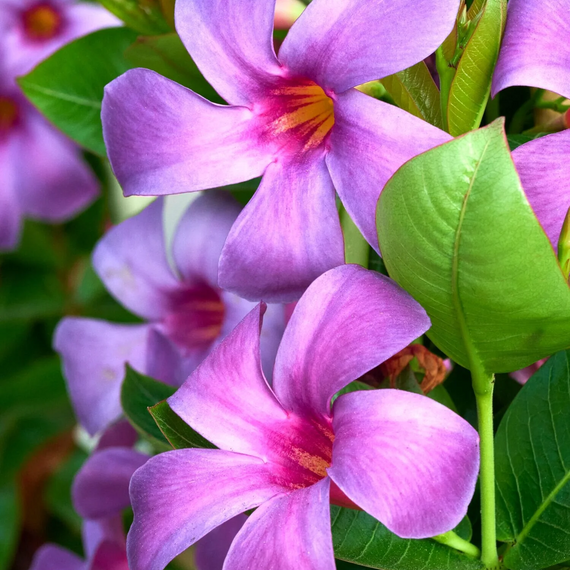
- Captivating color-shifting blooms open from coral-pink buds, transition through soft pink, and mature to striking lavender-blue — often all three shades visible at once on the same plant
- Breakthrough Sun Parasol Original XP genetics deliver superior branching, earlier blooming, and exceptional flower power compared to standard mandevilla varieties
- Compact, mounding habit with light trailing makes it an outstanding thriller for containers, hanging baskets, patio planters, and garden beds
- A true pollinator magnet — draws hummingbirds, butterflies, and bees from spring through first frost with self-cleaning blooms that never need deadheading
Sun Parasol Original XP Bluephoria Mandevilla (Mandevilla hybrid 'Sunpa 4351') is a revolutionary tropical showstopper that redefines what a compact mandevilla can do. Part of the award-winning Sun Parasol Original XP series from Suntory Flowers, Bluephoria earns its name with an enchanting color progression: salmon-coral buds unfurl to reveal soft pink petals that gradually deepen into luminous lavender-blue, creating an ever-changing mosaic of color against a backdrop of rich, glossy dark green foliage. Thanks to breakthrough XP genetics, this variety blooms significantly earlier in the season and produces far more flower-laden branches than traditional mandevilla, resulting in a lush, full plant that puts on a continuous show from late spring all the way to the first fall frost. The naturally mounded, upright habit — with a gentle trail over container edges — makes it equally stunning as a solo specimen or as a dramatic centerpiece in mixed tropical arrangements. Hardy as a perennial in USDA Zones 10-11, Bluephoria is grown as a heat-loving annual throughout most of the country and thrives in the intense summers of Southern Oregon and Northern California, making it an irresistible choice for anyone wanting bold, long-lasting tropical color all season long.
Plant Description
Sun Parasol Original XP Bluephoria is a compact, well-branched tropical mandevilla hybrid celebrated for its mesmerizing, multi-tonal blooms. The funnel-shaped, five-petaled flowers emerge from coral-salmon buds and pass through soft pink before settling into a cool lavender-blue — a color shift that is virtually unique in the mandevilla world. Because flowers at different stages of development coexist simultaneously on the same plant, Bluephoria always presents a rich blend of pink and blue-lavender tones rather than a single flat color. The foliage is equally attractive: deep, gleaming green leaves provide a lush, tropical backdrop that makes the bloom colors pop. The plant has a naturally mounded, upright form with a slight trailing tendency at the edges, and its superior branching means it fills out quickly and densely. Patented variety 'Sunpa 4351', PP 35,918.
Mature Size
| Dimension | Measurement |
|---|---|
| Garden Height | 12 to 24 inches |
| Spread | 24 to 36 inches |
| Habit | Upright, mounding, with light trailing |
| Container Role | Thriller / focal point |
Hardiness and Climate
Bluephoria is perennial in USDA Hardiness Zones 10-11, where it may overwinter outdoors as an evergreen. In all cooler regions — including most of Southern Oregon and Northern California — it is grown as a warm-season annual and performs best during the long, hot summers of the region. It is not frost tolerant and should not be exposed to temperatures consistently below 45-50 degrees F. Bring plants indoors before the first frost if you wish to overwinter them. Mandevilla thrives in heat and humidity and is exceptionally well-suited to the warm inland valleys and sun-drenched summer climates of the Pacific Southwest.
Sunlight Requirements
Bluephoria performs best in full sun, receiving a minimum of 6 hours of direct sunlight per day. It blooms most prolifically and produces the richest color when given maximum sun exposure. In regions with extremely intense afternoon heat — such as the hot interior valleys of Northern California — some light midday or afternoon shade can help prevent flower bleaching and leaf scorch. On the coast or at higher elevations where summers are cooler, full sun all day is ideal. Avoid placing this plant in deep shade, as reduced light leads to sparse flowering and weak, leggy growth.
Watering Guide
Mandevilla prefers consistently moist but well-drained soil. During the active growing season, water moderately once or twice per week, allowing the top inch of soil to dry slightly between waterings. Containers may need more frequent watering in hot weather — check soil moisture daily during heat waves. Avoid letting the plant sit in standing water, as soggy roots invite rot. Reduce watering frequency in cooler fall temperatures and drastically cut back if overwintering the plant indoors in a near-dormant state, providing only enough moisture to keep the soil from going completely dry. Resume normal watering as growth picks up in spring.
Soil and pH Preferences
Plant Bluephoria in fertile, moist, well-drained soil. For container growing, use a high-quality peat and perlite-based potting mix that drains freely while retaining adequate moisture. The preferred soil pH range is 5.5 to 6.0 (slightly acidic). Avoid heavy clay soils or any mix that stays waterlogged, as this quickly leads to root problems. Amending native soil with compost and coarse perlite before in-ground planting in garden beds will greatly improve drainage and fertility. Good airflow around the plant also supports healthy foliage.
Fertilizing
- Feed with a balanced, water-soluble fertilizer (such as 20-20-20) once every one to two weeks during the peak growing season (late spring through midsummer) for the most vigorous growth and heaviest bloom production.
- Transition to every two weeks from midsummer through early September to maintain blooming without pushing excessive soft growth late in the season.
- Discontinue fertilizing by early September so the plant can harden off before cooler fall temperatures arrive.
- Avoid fertilizers that are excessively high in nitrogen, as this promotes leafy growth at the expense of flowers. A balanced or slightly phosphorus-forward formula supports the best floral display.
- If overwintering indoors, do not fertilize during the dormant period. Resume feeding when new growth appears in late winter or early spring.
Pruning and Maintenance
Bluephoria is a low-maintenance plant under normal growing conditions. Spent flowers are self-cleaning — they shrivel and fall away naturally — so no deadheading is required. Light trimming or tip-pinching throughout the season can help maintain a compact, bushy shape and encourage additional branching. If the plant becomes leggy, a moderate cutback will rejuvenate it quickly. Before bringing the plant indoors for winter, prune it back to a manageable size. For dormancy storage, cut the entire plant back to approximately 10 inches. Always use clean, sharp pruners to prevent disease transmission. Wipe blades with isopropyl alcohol between cuts if working around plants showing any signs of disease.
Planting Instructions
- Choose a location with at least 6 hours of full sun and protection from harsh, drying winds.
- Wait until all danger of frost has passed and nighttime temperatures are consistently above 55-60 degrees F before planting outdoors.
- For containers, select a pot with drainage holes at least 10-12 inches in diameter. Fill with a quality peat and perlite potting mix at a pH of 5.5 to 6.0.
- For in-ground planting, loosen soil 12 inches deep and amend with compost and perlite to improve drainage.
- Plant at the same depth as the nursery root ball, firm the soil gently around the roots, and water thoroughly to settle the soil.
- Space plants 24 to 30 inches apart to allow for their mature spread and adequate airflow.
- Mulch the base of in-ground plants to retain moisture and moderate soil temperature.
- If transplanting from indoors, harden off plants over 7-10 days by gradually increasing outdoor exposure before leaving them in full sun conditions all day.
Container Growing
Bluephoria is exceptionally well-suited to container culture and truly shines as the centerpiece "thriller" in a mixed patio planter, a standalone specimen in a decorative pot, or the star of a hanging basket. Use a well-draining peat and perlite potting mix and select a container with adequate drainage holes. Containers dry out faster than garden beds, so check soil moisture regularly — daily during hot spells — and water when the top inch of soil feels dry. Because containers are nutrient-limited, consistent fertilizing every one to two weeks during the growing season is important for sustained heavy flowering. Repot in fresh potting mix each spring if overwintering the same plant. A small, unobtrusive stake or mini-trellis can be added to guide any trailing stems if a more upright, contained look is desired.
Seasonal Interest and Bloom Time
Bluephoria is among the earliest-blooming varieties in the Sun Parasol family, thanks to its advanced XP genetics, and will begin flowering in late spring once temperatures are reliably warm. It continues to produce a near-continuous flush of blooms throughout the summer and into fall, right up until the first frost. Unlike many tropical plants that slow down in peak summer heat, Bluephoria is notably heat-tolerant and maintains strong flower production during the hottest months. The ever-changing palette — coral-pink buds, blush-pink open flowers, and lavender-blue mature blooms — means the plant looks different and interesting at every stage, making it a dynamic focal point across the entire warm season.
Landscape Uses
- Stunning solo specimen in a decorative patio or deck container
- Centerpiece "thriller" in mixed tropical container arrangements
- Hanging basket — the slight trailing stems cascade beautifully over the edges
- Tropical accent in garden beds and borders for seasonal color
- Balcony and courtyard planting where heat tolerance and compact size are important
- Small trellis or obelisk feature — can be gently trained upward for a vertical accent
- Mass planting in warm-climate landscapes (Zones 10-11) for season-long color
Companion Plants
Bluephoria pairs beautifully with other heat-loving tropicals and annuals that share its preference for full sun and regular moisture. For a lush, layered tropical container, combine it with Persian Shield for its iridescent purple foliage, Sweet Potato Vine in chartreuse or purple for trailing contrast, or the bold architectural leaves of Canna or Elephant Ears for dramatic height. Lantana in yellow or orange complements the lavender-blue tones of Bluephoria and shares its affinity for heat and full sun. Calibrachoa in shades of pink or purple can fill in at the base of a container for a cascading effect. In garden beds, pair with Pentas, Angelonia, or Portulaca for a coordinated, all-season tropical display.
Wildlife Value
Bluephoria is an outstanding pollinator plant. The large, funnel-shaped blooms are particularly attractive to hummingbirds, which are drawn to the tubular flower form and the progression from pink to lavender. Butterflies, including swallowtails and skippers, regularly visit the blooms for nectar, and bees are also frequent pollinators. Planting Bluephoria near a seating area or along a patio edge offers the bonus of watching this wildlife activity up close throughout the season. The continuous bloom cycle means there is nearly always an open flower available to visiting pollinators from late spring through fall.
Pests and Diseases
Sun Parasol Original XP Bluephoria has good overall garden health, but a few common pests and conditions should be monitored:
- Spider Mites: The most common pest, especially in hot, dry conditions. Watch for fine webbing and stippled, pale foliage. Treat with insecticidal soap or a strong spray of water to knock mites off foliage.
- Whiteflies: Can be problematic, particularly when plants are grown indoors over winter. Yellow sticky traps and insecticidal soap are effective controls.
- Aphids and Thrips: Occasional visitors; treat with insecticidal soap or neem oil at first sign of infestation.
- Mealybugs: More common on overwintered indoor plants. Remove with a cotton swab dipped in rubbing alcohol or apply neem oil.
- Foliar Leaf Spot: Prevented by ensuring good airflow around the plant and watering at the base of the plant rather than overhead. Watering in the morning helps foliage dry quickly.
- Root Rot: Caused by overwatering or poorly draining soil. Always use a well-draining mix and ensure containers have adequate drainage holes.
- Sap Caution: The milky sap inside the plant can cause skin and eye irritation. Wear gloves when pruning and wash hands thoroughly afterward.
Overwintering Indoors
In climates outside USDA Zones 10-11, Bluephoria can be saved year after year by overwintering it indoors. Bring the plant inside before the first frost and before nighttime temperatures consistently drop below 55-60 degrees F. There are two main approaches:
- As a Houseplant: Prune the plant to a manageable size and place it in the brightest, sunniest window available — ideally south-facing — or supplement with an LED grow light. Maintain indoor temperatures between 60 and 70 degrees F, away from cold drafts and heating vents. Water lightly about once a week. The plant will not bloom indoors in winter but will maintain healthy foliage and be ready for spring.
- Dormant Storage: Cut the plant back to approximately 10 inches, then store it in a dark location at 55-60 degrees F (such as a heated garage). Water sparingly — just enough to keep the soil from going completely dry. In late winter, move the plant to a sunny, warm location and resume regular watering and fertilizing. New growth should emerge over several weeks.
In either case, gradually harden off the plant over 7-10 days before moving it back outdoors in spring, and wait until nighttime temperatures are reliably above 60 degrees F.
- Captivating color-shifting blooms open from coral-pink buds, transition through soft pink, and mature to striking lavender-blue — often all three shades visible at once on the same plant
- Breakthrough Sun Parasol Original XP genetics deliver superior branching, earlier blooming, and exceptional flower power compared to standard mandevilla varieties
- Compact, mounding habit with light trailing makes it an outstanding thriller for containers, hanging baskets, patio planters, and garden beds
- A true pollinator magnet — draws hummingbirds, butterflies, and bees from spring through first frost with self-cleaning blooms that never need deadheading
Sun Parasol Original XP Bluephoria Mandevilla (Mandevilla hybrid 'Sunpa 4351') is a revolutionary tropical showstopper that redefines what a compact mandevilla can do. Part of the award-winning Sun Parasol Original XP series from Suntory Flowers, Bluephoria earns its name with an enchanting color progression: salmon-coral buds unfurl to reveal soft pink petals that gradually deepen into luminous lavender-blue, creating an ever-changing mosaic of color against a backdrop of rich, glossy dark green foliage. Thanks to breakthrough XP genetics, this variety blooms significantly earlier in the season and produces far more flower-laden branches than traditional mandevilla, resulting in a lush, full plant that puts on a continuous show from late spring all the way to the first fall frost. The naturally mounded, upright habit — with a gentle trail over container edges — makes it equally stunning as a solo specimen or as a dramatic centerpiece in mixed tropical arrangements. Hardy as a perennial in USDA Zones 10-11, Bluephoria is grown as a heat-loving annual throughout most of the country and thrives in the intense summers of Southern Oregon and Northern California, making it an irresistible choice for anyone wanting bold, long-lasting tropical color all season long.
Plant Description
Sun Parasol Original XP Bluephoria is a compact, well-branched tropical mandevilla hybrid celebrated for its mesmerizing, multi-tonal blooms. The funnel-shaped, five-petaled flowers emerge from coral-salmon buds and pass through soft pink before settling into a cool lavender-blue — a color shift that is virtually unique in the mandevilla world. Because flowers at different stages of development coexist simultaneously on the same plant, Bluephoria always presents a rich blend of pink and blue-lavender tones rather than a single flat color. The foliage is equally attractive: deep, gleaming green leaves provide a lush, tropical backdrop that makes the bloom colors pop. The plant has a naturally mounded, upright form with a slight trailing tendency at the edges, and its superior branching means it fills out quickly and densely. Patented variety 'Sunpa 4351', PP 35,918.
Mature Size
| Dimension | Measurement |
|---|---|
| Garden Height | 12 to 24 inches |
| Spread | 24 to 36 inches |
| Habit | Upright, mounding, with light trailing |
| Container Role | Thriller / focal point |
Hardiness and Climate
Bluephoria is perennial in USDA Hardiness Zones 10-11, where it may overwinter outdoors as an evergreen. In all cooler regions — including most of Southern Oregon and Northern California — it is grown as a warm-season annual and performs best during the long, hot summers of the region. It is not frost tolerant and should not be exposed to temperatures consistently below 45-50 degrees F. Bring plants indoors before the first frost if you wish to overwinter them. Mandevilla thrives in heat and humidity and is exceptionally well-suited to the warm inland valleys and sun-drenched summer climates of the Pacific Southwest.
Sunlight Requirements
Bluephoria performs best in full sun, receiving a minimum of 6 hours of direct sunlight per day. It blooms most prolifically and produces the richest color when given maximum sun exposure. In regions with extremely intense afternoon heat — such as the hot interior valleys of Northern California — some light midday or afternoon shade can help prevent flower bleaching and leaf scorch. On the coast or at higher elevations where summers are cooler, full sun all day is ideal. Avoid placing this plant in deep shade, as reduced light leads to sparse flowering and weak, leggy growth.
Watering Guide
Mandevilla prefers consistently moist but well-drained soil. During the active growing season, water moderately once or twice per week, allowing the top inch of soil to dry slightly between waterings. Containers may need more frequent watering in hot weather — check soil moisture daily during heat waves. Avoid letting the plant sit in standing water, as soggy roots invite rot. Reduce watering frequency in cooler fall temperatures and drastically cut back if overwintering the plant indoors in a near-dormant state, providing only enough moisture to keep the soil from going completely dry. Resume normal watering as growth picks up in spring.
Soil and pH Preferences
Plant Bluephoria in fertile, moist, well-drained soil. For container growing, use a high-quality peat and perlite-based potting mix that drains freely while retaining adequate moisture. The preferred soil pH range is 5.5 to 6.0 (slightly acidic). Avoid heavy clay soils or any mix that stays waterlogged, as this quickly leads to root problems. Amending native soil with compost and coarse perlite before in-ground planting in garden beds will greatly improve drainage and fertility. Good airflow around the plant also supports healthy foliage.
Fertilizing
- Feed with a balanced, water-soluble fertilizer (such as 20-20-20) once every one to two weeks during the peak growing season (late spring through midsummer) for the most vigorous growth and heaviest bloom production.
- Transition to every two weeks from midsummer through early September to maintain blooming without pushing excessive soft growth late in the season.
- Discontinue fertilizing by early September so the plant can harden off before cooler fall temperatures arrive.
- Avoid fertilizers that are excessively high in nitrogen, as this promotes leafy growth at the expense of flowers. A balanced or slightly phosphorus-forward formula supports the best floral display.
- If overwintering indoors, do not fertilize during the dormant period. Resume feeding when new growth appears in late winter or early spring.
Pruning and Maintenance
Bluephoria is a low-maintenance plant under normal growing conditions. Spent flowers are self-cleaning — they shrivel and fall away naturally — so no deadheading is required. Light trimming or tip-pinching throughout the season can help maintain a compact, bushy shape and encourage additional branching. If the plant becomes leggy, a moderate cutback will rejuvenate it quickly. Before bringing the plant indoors for winter, prune it back to a manageable size. For dormancy storage, cut the entire plant back to approximately 10 inches. Always use clean, sharp pruners to prevent disease transmission. Wipe blades with isopropyl alcohol between cuts if working around plants showing any signs of disease.
Planting Instructions
- Choose a location with at least 6 hours of full sun and protection from harsh, drying winds.
- Wait until all danger of frost has passed and nighttime temperatures are consistently above 55-60 degrees F before planting outdoors.
- For containers, select a pot with drainage holes at least 10-12 inches in diameter. Fill with a quality peat and perlite potting mix at a pH of 5.5 to 6.0.
- For in-ground planting, loosen soil 12 inches deep and amend with compost and perlite to improve drainage.
- Plant at the same depth as the nursery root ball, firm the soil gently around the roots, and water thoroughly to settle the soil.
- Space plants 24 to 30 inches apart to allow for their mature spread and adequate airflow.
- Mulch the base of in-ground plants to retain moisture and moderate soil temperature.
- If transplanting from indoors, harden off plants over 7-10 days by gradually increasing outdoor exposure before leaving them in full sun conditions all day.
Container Growing
Bluephoria is exceptionally well-suited to container culture and truly shines as the centerpiece "thriller" in a mixed patio planter, a standalone specimen in a decorative pot, or the star of a hanging basket. Use a well-draining peat and perlite potting mix and select a container with adequate drainage holes. Containers dry out faster than garden beds, so check soil moisture regularly — daily during hot spells — and water when the top inch of soil feels dry. Because containers are nutrient-limited, consistent fertilizing every one to two weeks during the growing season is important for sustained heavy flowering. Repot in fresh potting mix each spring if overwintering the same plant. A small, unobtrusive stake or mini-trellis can be added to guide any trailing stems if a more upright, contained look is desired.
Seasonal Interest and Bloom Time
Bluephoria is among the earliest-blooming varieties in the Sun Parasol family, thanks to its advanced XP genetics, and will begin flowering in late spring once temperatures are reliably warm. It continues to produce a near-continuous flush of blooms throughout the summer and into fall, right up until the first frost. Unlike many tropical plants that slow down in peak summer heat, Bluephoria is notably heat-tolerant and maintains strong flower production during the hottest months. The ever-changing palette — coral-pink buds, blush-pink open flowers, and lavender-blue mature blooms — means the plant looks different and interesting at every stage, making it a dynamic focal point across the entire warm season.
Landscape Uses
- Stunning solo specimen in a decorative patio or deck container
- Centerpiece "thriller" in mixed tropical container arrangements
- Hanging basket — the slight trailing stems cascade beautifully over the edges
- Tropical accent in garden beds and borders for seasonal color
- Balcony and courtyard planting where heat tolerance and compact size are important
- Small trellis or obelisk feature — can be gently trained upward for a vertical accent
- Mass planting in warm-climate landscapes (Zones 10-11) for season-long color
Companion Plants
Bluephoria pairs beautifully with other heat-loving tropicals and annuals that share its preference for full sun and regular moisture. For a lush, layered tropical container, combine it with Persian Shield for its iridescent purple foliage, Sweet Potato Vine in chartreuse or purple for trailing contrast, or the bold architectural leaves of Canna or Elephant Ears for dramatic height. Lantana in yellow or orange complements the lavender-blue tones of Bluephoria and shares its affinity for heat and full sun. Calibrachoa in shades of pink or purple can fill in at the base of a container for a cascading effect. In garden beds, pair with Pentas, Angelonia, or Portulaca for a coordinated, all-season tropical display.
Wildlife Value
Bluephoria is an outstanding pollinator plant. The large, funnel-shaped blooms are particularly attractive to hummingbirds, which are drawn to the tubular flower form and the progression from pink to lavender. Butterflies, including swallowtails and skippers, regularly visit the blooms for nectar, and bees are also frequent pollinators. Planting Bluephoria near a seating area or along a patio edge offers the bonus of watching this wildlife activity up close throughout the season. The continuous bloom cycle means there is nearly always an open flower available to visiting pollinators from late spring through fall.
Pests and Diseases
Sun Parasol Original XP Bluephoria has good overall garden health, but a few common pests and conditions should be monitored:
- Spider Mites: The most common pest, especially in hot, dry conditions. Watch for fine webbing and stippled, pale foliage. Treat with insecticidal soap or a strong spray of water to knock mites off foliage.
- Whiteflies: Can be problematic, particularly when plants are grown indoors over winter. Yellow sticky traps and insecticidal soap are effective controls.
- Aphids and Thrips: Occasional visitors; treat with insecticidal soap or neem oil at first sign of infestation.
- Mealybugs: More common on overwintered indoor plants. Remove with a cotton swab dipped in rubbing alcohol or apply neem oil.
- Foliar Leaf Spot: Prevented by ensuring good airflow around the plant and watering at the base of the plant rather than overhead. Watering in the morning helps foliage dry quickly.
- Root Rot: Caused by overwatering or poorly draining soil. Always use a well-draining mix and ensure containers have adequate drainage holes.
- Sap Caution: The milky sap inside the plant can cause skin and eye irritation. Wear gloves when pruning and wash hands thoroughly afterward.
Overwintering Indoors
In climates outside USDA Zones 10-11, Bluephoria can be saved year after year by overwintering it indoors. Bring the plant inside before the first frost and before nighttime temperatures consistently drop below 55-60 degrees F. There are two main approaches:
- As a Houseplant: Prune the plant to a manageable size and place it in the brightest, sunniest window available — ideally south-facing — or supplement with an LED grow light. Maintain indoor temperatures between 60 and 70 degrees F, away from cold drafts and heating vents. Water lightly about once a week. The plant will not bloom indoors in winter but will maintain healthy foliage and be ready for spring.
- Dormant Storage: Cut the plant back to approximately 10 inches, then store it in a dark location at 55-60 degrees F (such as a heated garage). Water sparingly — just enough to keep the soil from going completely dry. In late winter, move the plant to a sunny, warm location and resume regular watering and fertilizing. New growth should emerge over several weeks.
In either case, gradually harden off the plant over 7-10 days before moving it back outdoors in spring, and wait until nighttime temperatures are reliably above 60 degrees F.
Related Products


