

Zoom the image with the mouse
Summer Gold Chinese Dogwood - 5 Gallon
SKU:
606151
UPC:
014949361429
$119.99
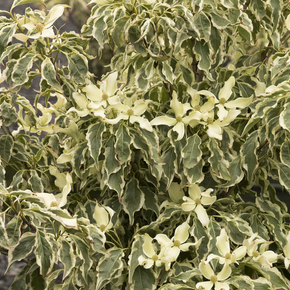
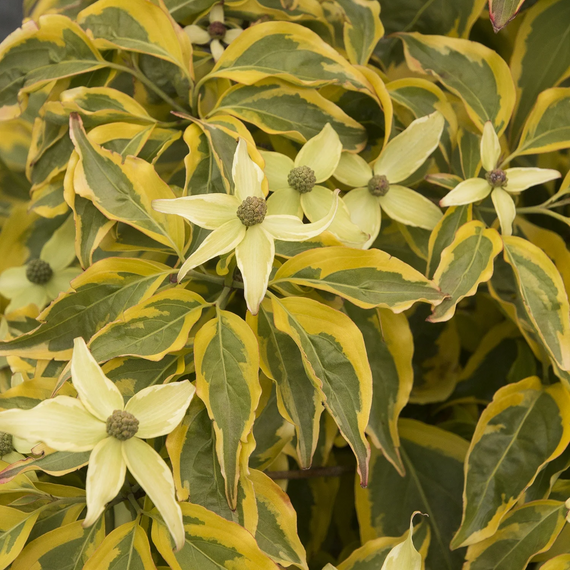
- Showy variegation: bright green leaves with wide golden margins, blushing pink in summer and turning brilliant red in fall.
- Four-season appeal: creamy white, flower-like bracts in late spring to early summer, attractive mottled bark, and ornamental red berries for birds.
- Compact small tree for modern spaces—slowly to ~8 ft. tall and 4–6 ft. wide; may gradually reach ~15 ft. in ideal conditions.
- Performs best in filtered to partial sun with evenly moist, slightly acidic, well-drained soil and a cool, mulched root zone.
Summer Gold Chinese Dogwood (Cornus kousa ‘SUMMER GOLD’ PP22,765) brings luminous, golden‑margined foliage to the landscape from spring through fall, then caps the display with creamy white bracts in late spring to early summer. Its naturally upright, slender youth habit broadens gracefully with age, while the gently rippled leaves flush pink in summer and finish in vivid red each autumn. Compact size, improved disease resistance, and ornamental berries for birds make this a refined, multi‑season focal point for small gardens, entries, and woodland edges.
Plant Description
Upright when young, broadening with age; a small, deciduous ornamental dogwood selected for persistent golden variegation and tidy form—ideal as a specimen or at the woodland edge.
Foliage & Variegation
Uncrinkled leaves with bright green centers and prominent golden-yellow margins; foliage often develops soft pink highlights in summer and turns brilliant red in fall for extended seasonal color.
Flowers & Bloom Time
Masses of creamy white, four-bracted “flowers” (floral bracts) in late spring to early summer create a refined, floating display above the variegated canopy.
Fruit & Wildlife
Decorative red, strawberry-like berries follow bloom and are appreciated by birds—adding wildlife value without messy drop in most settings.
Sun Requirements
Best in filtered sun to partial sun; provide afternoon shade or shelter from harsh exposures in hotter regions to preserve leaf variegation quality.
Watering Needs
Keep soil evenly moist but never soggy. Water deeply and regularly during the first few seasons to establish; thereafter, maintain consistent moisture during heat.
Soil Requirements
Enriched, slightly acidic, well-drained sandy loam is ideal. Apply a thick organic mulch to keep the shallow root zone cool and conserve moisture.
Growth & Size
Slowly reaches about 8 ft. tall and 4–6 ft. wide; in excellent conditions may eventually attain ~15 ft. tall, retaining a balanced, garden-friendly footprint.
Hardiness
USDA Zones 5–8 (cold hardy for most temperate gardens); shelter from reflected heat and drying winds in hot-summer sites.
Special Features
Improved pest and disease resistance for C. kousa, multi-season interest (bracts, foliage, bark, berries), compact habit, and pollinator-friendly bloom.
Landscape Uses
Perfect scale for entries, patio focal points, courtyard beds, and woodland-edge compositions; pairs beautifully with hydrangeas, viburnums, witch hazels, mahonias, and snowberries.
Care Instructions
Plant at or slightly above grade in well-drained soil. Water to establish; fertilize lightly in early spring. Prune in winter to shape or remove crossing/dead wood; avoid heavy summer pruning.
Spacing & Placement
Allow 4–6 ft. for individual specimens; provide understory companions that appreciate dappled light and similar moisture, and maintain a 2–3 in. mulch layer (kept off the trunk).
Breeding & Origin
Discovered as a chance seedling in Oregon and selected for broad, stable golden margins and a strong, upright habit; protected by U.S. Plant Patent 22,765.
- Showy variegation: bright green leaves with wide golden margins, blushing pink in summer and turning brilliant red in fall.
- Four-season appeal: creamy white, flower-like bracts in late spring to early summer, attractive mottled bark, and ornamental red berries for birds.
- Compact small tree for modern spaces—slowly to ~8 ft. tall and 4–6 ft. wide; may gradually reach ~15 ft. in ideal conditions.
- Performs best in filtered to partial sun with evenly moist, slightly acidic, well-drained soil and a cool, mulched root zone.
Summer Gold Chinese Dogwood (Cornus kousa ‘SUMMER GOLD’ PP22,765) brings luminous, golden‑margined foliage to the landscape from spring through fall, then caps the display with creamy white bracts in late spring to early summer. Its naturally upright, slender youth habit broadens gracefully with age, while the gently rippled leaves flush pink in summer and finish in vivid red each autumn. Compact size, improved disease resistance, and ornamental berries for birds make this a refined, multi‑season focal point for small gardens, entries, and woodland edges.
Plant Description
Upright when young, broadening with age; a small, deciduous ornamental dogwood selected for persistent golden variegation and tidy form—ideal as a specimen or at the woodland edge.
Foliage & Variegation
Uncrinkled leaves with bright green centers and prominent golden-yellow margins; foliage often develops soft pink highlights in summer and turns brilliant red in fall for extended seasonal color.
Flowers & Bloom Time
Masses of creamy white, four-bracted “flowers” (floral bracts) in late spring to early summer create a refined, floating display above the variegated canopy.
Fruit & Wildlife
Decorative red, strawberry-like berries follow bloom and are appreciated by birds—adding wildlife value without messy drop in most settings.
Sun Requirements
Best in filtered sun to partial sun; provide afternoon shade or shelter from harsh exposures in hotter regions to preserve leaf variegation quality.
Watering Needs
Keep soil evenly moist but never soggy. Water deeply and regularly during the first few seasons to establish; thereafter, maintain consistent moisture during heat.
Soil Requirements
Enriched, slightly acidic, well-drained sandy loam is ideal. Apply a thick organic mulch to keep the shallow root zone cool and conserve moisture.
Growth & Size
Slowly reaches about 8 ft. tall and 4–6 ft. wide; in excellent conditions may eventually attain ~15 ft. tall, retaining a balanced, garden-friendly footprint.
Hardiness
USDA Zones 5–8 (cold hardy for most temperate gardens); shelter from reflected heat and drying winds in hot-summer sites.
Special Features
Improved pest and disease resistance for C. kousa, multi-season interest (bracts, foliage, bark, berries), compact habit, and pollinator-friendly bloom.
Landscape Uses
Perfect scale for entries, patio focal points, courtyard beds, and woodland-edge compositions; pairs beautifully with hydrangeas, viburnums, witch hazels, mahonias, and snowberries.
Care Instructions
Plant at or slightly above grade in well-drained soil. Water to establish; fertilize lightly in early spring. Prune in winter to shape or remove crossing/dead wood; avoid heavy summer pruning.
Spacing & Placement
Allow 4–6 ft. for individual specimens; provide understory companions that appreciate dappled light and similar moisture, and maintain a 2–3 in. mulch layer (kept off the trunk).
Breeding & Origin
Discovered as a chance seedling in Oregon and selected for broad, stable golden margins and a strong, upright habit; protected by U.S. Plant Patent 22,765.
Related Products