Saint Mary Southern Magnolia (Magnolia grandiflora ‘Saint Mary’) delivers classic, evergreen elegance in a compact, pyramidal form. Dense branching and glossy foliage with showy bronze undersides create year-round structure, while abundant, fragrant, white cup-shaped flowers open in summer for an unmistakably Southern display. Sized just right for courtyards, front lawns, and privacy accents, this slow-growing selection excels in full sun and rich, well‑drained, acidic soil, with deep watering to establish and consistent moisture thereafter.
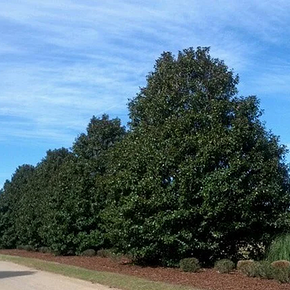
A dwarf southern magnolia with a naturally compact, pyramidal habit and dense, well-spaced branching. Evergreen leaves are glossy deep green above with distinctive bronze undersides for year-round color and texture.
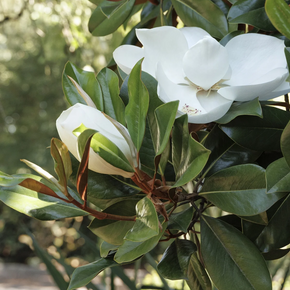
Large, white, cup-shaped blossoms appear in summer, releasing a rich, classic magnolia fragrance. Flowers are showy on the tree and striking when floated indoors for display.
Summer, extending seasonal interest beyond spring-flowering ornamentals and pairing beautifully with warm‑season companions.
Broad, leathery leaves with bronze felted undersides (“indumentum”) lend a tailored look. The compact, pyramidal silhouette reads formal when left natural or lightly clipped.
Full sun (6+ hours/day). Tolerates coastal exposures and urban settings when soil drains well and roots have room to expand.
Water deeply and regularly during the first several growing seasons to establish a wide, resilient root system. Once established, maintain even moisture; tolerates brief dry spells but performs best with regular watering.
Deep, nutrient‑rich, acidic, well‑drained soil is ideal. Mulch broadly to conserve moisture and moderate soil temperature; avoid chronically wet or compacted sites.
Slow-growing; typically matures around 20–25 ft. tall and 20–25 ft. wide, offering a stately presence without overwhelming smaller properties.
USDA Zones 7–9.
Deer and rabbit resistant; tolerates coastal exposure and road salt; suitable near areas that may experience periodic wetness if drainage is adequate.
Four‑season specimen for front lawns and courtyards; evergreen privacy screen or clipped standard; elegant anchor for mixed borders; formal pairings at gates or entries.
Feed in early spring before new growth. Water deeply to establish; reduce frequency after establishment while maintaining even moisture. Prune only as needed to maintain clearance or symmetry, avoiding heavy summer cuts.
Allow 20–25 ft. of lateral space for mature spread. Site where the pyramidal form is showcased—flanking drive entries, as a lawn specimen, or in a staggered screen.
Pair with camellias, hydrangeas, aucuba, and viburnums for layered, shade‑tolerant structure, or underplant with glossy evergreens and white‑blooming perennials to echo summer flowers.
Saint Mary Southern Magnolia (Magnolia grandiflora ‘Saint Mary’) delivers classic, evergreen elegance in a compact, pyramidal form. Dense branching and glossy foliage with showy bronze undersides create year-round structure, while abundant, fragrant, white cup-shaped flowers open in summer for an unmistakably Southern display. Sized just right for courtyards, front lawns, and privacy accents, this slow-growing selection excels in full sun and rich, well‑drained, acidic soil, with deep watering to establish and consistent moisture thereafter.
A dwarf southern magnolia with a naturally compact, pyramidal habit and dense, well-spaced branching. Evergreen leaves are glossy deep green above with distinctive bronze undersides for year-round color and texture.
Large, white, cup-shaped blossoms appear in summer, releasing a rich, classic magnolia fragrance. Flowers are showy on the tree and striking when floated indoors for display.
Summer, extending seasonal interest beyond spring-flowering ornamentals and pairing beautifully with warm‑season companions.
Broad, leathery leaves with bronze felted undersides (“indumentum”) lend a tailored look. The compact, pyramidal silhouette reads formal when left natural or lightly clipped.
Full sun (6+ hours/day). Tolerates coastal exposures and urban settings when soil drains well and roots have room to expand.
Water deeply and regularly during the first several growing seasons to establish a wide, resilient root system. Once established, maintain even moisture; tolerates brief dry spells but performs best with regular watering.
Deep, nutrient‑rich, acidic, well‑drained soil is ideal. Mulch broadly to conserve moisture and moderate soil temperature; avoid chronically wet or compacted sites.
Slow-growing; typically matures around 20–25 ft. tall and 20–25 ft. wide, offering a stately presence without overwhelming smaller properties.
USDA Zones 7–9.
Deer and rabbit resistant; tolerates coastal exposure and road salt; suitable near areas that may experience periodic wetness if drainage is adequate.
Four‑season specimen for front lawns and courtyards; evergreen privacy screen or clipped standard; elegant anchor for mixed borders; formal pairings at gates or entries.
Feed in early spring before new growth. Water deeply to establish; reduce frequency after establishment while maintaining even moisture. Prune only as needed to maintain clearance or symmetry, avoiding heavy summer cuts.
Allow 20–25 ft. of lateral space for mature spread. Site where the pyramidal form is showcased—flanking drive entries, as a lawn specimen, or in a staggered screen.
Pair with camellias, hydrangeas, aucuba, and viburnums for layered, shade‑tolerant structure, or underplant with glossy evergreens and white‑blooming perennials to echo summer flowers.