


Zoom the image with the mouse
Purple Potion Agapanthus - 2 Gallon
SKU:
1955190
UPC:
014949436646
$34.99
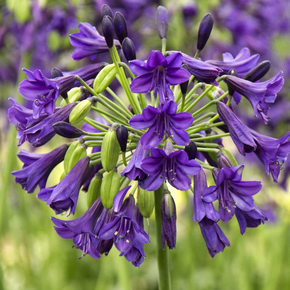
- Extraordinarily deep violet flower clusters rise on strong, upright stems — a saturated purple hue rarely seen in any other agapanthus variety.
- Bred for improved cold hardiness and sturdy, non-flopping scapes that keep blooms well above the tidy, strap-leaf foliage all summer long.
- Low-maintenance and waterwise once established, making it an ideal choice for sunny borders, mass plantings, poolside edges, and patio containers.
- A magnet for pollinators and hummingbirds, delivering months of eye-catching summer color in USDA Zones 7-10.
Purple Potion Lily of the Nile (Agapanthus inapertus 'HinGrkop') is a standout evergreen perennial that commands attention with its extraordinarily deep violet flower clusters — a color intensity and depth that is truly unique among agapanthus. Carefully selected for increased cold hardiness and exceptionally sturdy flower scapes that hold each magnificent bloom upright without flopping, Purple Potion forms a compact, clump-forming mound of narrow, glossy green strap-shaped leaves reaching about 12 inches tall and up to 20 inches wide, while the bold flowering stalks rise to approximately 26 inches, creating beautiful proportional contrast. The large, spherical umbels of trumpet-shaped violet blooms appear in summer, making a dramatic statement in mixed perennial borders, sweeping mass plantings, formal pathway edgings, and sunny container arrangements. A native of Southern Africa and a member of the Amaryllidaceae family, this selection thrives in full sun and well-drained soil, proving surprisingly drought-tolerant once established while continuing to reward gardeners with stunning, pollinator-friendly blooms. Whether planted as a mid-border focal point, repeated in drifts for bold seasonal impact, or showcased in a decorative container on a sunny patio, Purple Potion Agapanthus delivers dependable, low-maintenance beauty season after season in gardens across USDA Hardiness Zones 7 through 10.
Plant Description
Purple Potion Agapanthus is a clump-forming, evergreen perennial belonging to the family Amaryllidaceae, native to Southern Africa. It produces dense mounds of narrow, glossy, strap-shaped green leaves from which tall, strong flower scapes emerge each summer bearing spectacular rounded umbels of deep violet, trumpet-shaped blooms. The cultivar name 'HinGrkop' reflects its carefully selected lineage within the Agapanthus inapertus species — a deciduous species known for producing particularly vivid, pendant to semi-upright flower clusters. What sets Purple Potion apart from other agapanthus varieties is the extraordinary saturation and depth of its violet-purple flower color, a shade that is genuinely unique within the agapanthus genus. The plant is further distinguished by its sturdy, upright flower scapes, which were specifically selected to prevent the flopping habit sometimes seen in other varieties, and by its improved tolerance to cooler temperatures compared to many other agapanthus cultivars. Foliage remains attractive and tidy throughout the growing season, providing lush green texture even when the plant is not in bloom.
Mature Size
| Measurement | Dimension |
|---|---|
| Foliage Height | Approximately 12 inches |
| Foliage Spread | Approximately 18-20 inches |
| Flower Scape Height | Up to 26 inches |
| Recommended Spacing | 18-24 inches on center |
| Growth Rate | Moderate |
Hardiness and Climate
Purple Potion Agapanthus is rated for USDA Hardiness Zones 7 through 10, making it suitable for a wide range of climates including much of the Pacific Coast, the South, the Southwest, and mild inland valleys. It was specifically selected for improved hardiness compared to many standard agapanthus varieties, and established plants are generally capable of surviving temperatures down to approximately 10°F (-12°C). In the warmer end of its range (Zones 9-10), the foliage remains evergreen year-round. In cooler zones (Zone 7-8), plants may experience some foliage dieback during hard frosts but will typically re-emerge in spring. In areas at the edge of hardiness, a generous layer of mulch around the crown before winter provides excellent root insulation. For gardeners outside of Zones 7-10, container growing is highly recommended so plants can be brought indoors to a bright, frost-free location for winter protection. This variety performs exceptionally well in the mild climate of Southern Oregon and Northern California, where summer heat and relatively mild winters create ideal growing conditions.
Sunlight Requirements
Purple Potion Agapanthus thrives in full sun, ideally receiving a minimum of 6 to 8 hours of direct sunlight per day. Full sun exposure encourages the densest bloom production, the most compact and upright foliage habit, and the richest flower color saturation. In the hottest inland growing regions, plants can benefit from some light afternoon shade during the peak of summer to help foliage stay fresh and green, but this should be considered an accommodation rather than a preference. Insufficient sunlight will result in reduced flowering, longer and more floppy foliage, and an overall decline in the dramatic effect that defines this variety. For container-grown plants, positioning pots in the sunniest available spot — such as a south- or west-facing patio, deck, or entryway — will yield the best performance throughout the growing season.
Soil and pH Preferences
This variety performs best in average to fertile, well-drained soil. Good drainage is the single most critical soil requirement for Purple Potion Agapanthus, as consistently soggy or waterlogged conditions will cause root rot and rapid decline. The plant adapts well to sandy-loam, loamy, and moderately amended clay soils, provided drainage is adequate. Enriching the planting area with compost before planting improves both drainage in heavy soils and moisture retention in sandy soils. The ideal soil pH range is approximately 5.5 to 6.5 (mildly acidic to neutral). In areas with very alkaline or heavy clay soil, planting in raised beds or large containers filled with a quality, well-draining growing mix is an excellent alternative that can dramatically improve plant performance. Avoid planting in low-lying areas or spots where water pools after rain or irrigation.
Watering Guide
- At planting: Water thoroughly after planting to settle the soil around the roots and eliminate air pockets. Keep the soil consistently moist (but never waterlogged) for the first several weeks as the plant establishes.
- First growing season: Water regularly and deeply throughout the first season to encourage strong root development. Allow the top inch of soil to dry slightly between waterings to prevent overwatering.
- Established plants: Once well-established, Purple Potion Agapanthus demonstrates good drought tolerance. Water deeply but less frequently — allowing soil to partially dry between waterings — while ensuring plants receive adequate moisture during the bud-formation and flowering period for the best bloom display.
- Container plants: Container-grown specimens dry out faster than in-ground plants and will require more frequent watering, especially during summer heat. Check the top 2-3 inches of potting mix and water when dry.
- Winter/dormancy: Gradually reduce watering as temperatures cool in autumn. Overwintering plants should be kept nearly dry to prevent root rot during the dormant period.
Fertilizing
Purple Potion Agapanthus responds well to regular feeding during the active growing season. Apply a balanced, slow-release granular fertilizer in early spring as new growth emerges to give plants a strong seasonal start. A second application of a balanced or bloom-promoting fertilizer (one slightly higher in phosphorus to support flower production) can be made in early to mid-summer, approximately 6 to 8 weeks after the first application. Avoid fertilizers that are excessively high in nitrogen, as this encourages lush vegetative growth at the expense of flowering. A 2- to 3-inch top dressing of quality compost applied in spring also serves as an excellent organic slow-release nutrient source. Do not fertilize during the fall or winter dormancy period. Container-grown plants benefit from more frequent feeding — a diluted liquid fertilizer applied every two weeks during spring and summer is an effective approach for maintaining vigor and encouraging repeat blooming.
Pruning and Maintenance
Purple Potion Agapanthus is a low-maintenance plant that requires minimal pruning. Deadhead spent flower scapes by cutting them down to the base of the plant promptly after blooming concludes. Timely removal of spent stems can occasionally encourage the plant to rebloom and directs the plant's energy toward root and foliage development rather than seed production. In late winter or early spring, tidy up the foliage clump by removing any dead, yellowed, or damaged leaves. Evergreen varieties like Purple Potion typically require less aggressive cleanup than deciduous types. Avoid cutting back healthy green foliage, as it continues to photosynthesize and store energy for the next blooming cycle. Plants bloom best and most prolifically when left undisturbed in the ground; resist the urge to divide until clumps become noticeably overcrowded, typically every 4 to 6 years. Division is best performed in late winter or early spring before new growth begins.
Planting Instructions
- Select a planting site with full sun and well-drained soil. Avoid low spots where water collects.
- Prepare the soil by loosening it to a depth of 12 inches and incorporating compost to improve drainage and fertility.
- Dig a planting hole 2 to 3 times the width of the root ball and equal in depth.
- Set the plant so the crown sits at or just slightly above the surrounding soil surface — never plant too deep.
- Backfill with the amended soil and firm gently to eliminate air pockets.
- Water thoroughly after planting to settle the soil around the roots.
- Apply a 2- to 3-inch layer of mulch around the plant, keeping mulch pulled a few inches away from the crown to prevent rot and pest issues.
- Space multiple plants 18 to 24 inches apart on center for a border planting, or 12 to 18 inches apart for a tighter mass planting effect.
- In mild climates like Southern Oregon and Northern California, planting can be done from spring through fall; spring planting gives the longest establishment period before winter.
Container Growing
Purple Potion Agapanthus is an excellent candidate for container cultivation and actually blooms most prolifically when its roots are slightly pot-bound. Choose a container at least 12 to 14 inches wide with ample drainage holes at the bottom. Fill with a high-quality, well-draining potting mix — avoid heavy garden soils that compact and hold excess moisture in pots. Position containers in a full-sun location such as a south-facing patio, deck, or entryway. Water when the top 2 to 3 inches of potting mix feel dry, and fertilize regularly with a liquid bloom fertilizer every 2 weeks during the growing season. Avoid repotting too frequently; allow the plant to become comfortably root-bound before sizing up to a larger container, as crowded roots encourage the best flowering. In areas outside Zones 8-10, container growing is especially practical because pots can be moved to a bright, frost-free indoor location for winter protection. Allow plants to rest through winter with minimal watering before resuming regular care in spring.
Seasonal Interest
Purple Potion Agapanthus delivers its most dramatic seasonal display in summer, when tall, upright flowering scapes emerge well above the foliage and open into large, rounded umbels packed with deep violet, trumpet-shaped blooms. The flowering period typically spans several weeks in midsummer, and prompt deadheading of spent stems may stimulate occasional rebloom later in the season. Outside of the flowering period, the compact clumps of narrow, glossy green foliage provide clean, attractive texture in the garden year-round in warm climates. In late summer and fall, after the flowering period concludes, the seed heads left on undeadheaded stems can add interesting architectural detail before being removed. The tidy evergreen mounds maintain their presence and structure through the winter months in Zones 8-10, providing reliable garden structure even in the off-season. This makes Purple Potion a true four-season garden asset in mild climates.
Landscape Uses
- Perennial borders: Ideal as a mid-border or rear-border accent, providing bold vertical interest with flower scapes rising to 26 inches above lower-growing companion plants.
- Mass plantings: Plant in sweeping drifts of 5, 7, or more plants for a dramatic, eye-catching summer color display — spectacular when the deep violet blooms open simultaneously.
- Pathway and driveway edging: Repeated clumps along a formal walkway or driveway create a structured, elegant seasonal statement.
- Poolside plantings: The clean, upright habit and tolerance for reflected heat and bright conditions make this an excellent poolside accent.
- Containers and patio planters: A single large pot or grouping of containers creates a sophisticated focal point on patios, entries, and decks.
- Mediterranean and water-wise gardens: Pairs beautifully with other drought-tolerant plantings once established, fitting naturally into xeriscape and low-water garden designs.
- Coastal gardens: Suitable for coastal exposure where salt air and wind can challenge less durable perennials.
- Cottage and informal gardens: The bold color and relaxed clumping habit blend naturally into cottage-style mixed plantings.
Companion Plants
Purple Potion Agapanthus pairs beautifully with a wide range of summer-blooming perennials, ornamental grasses, and drought-tolerant shrubs. For color harmony and contrast, consider planting it alongside:
- Daylilies (Hemerocallis): Warm gold or orange tones create a vivid contrast against the deep violet blooms.
- Shasta Daisy (Leucanthemum x superbum): Crisp white daisies provide a classic, clean complement to the rich purple flowers.
- Lavender (Lavandula spp.): Echoes the purple palette while adding fragrance and texture in water-wise plantings.
- Ornamental grasses (e.g., Festuca, Pennisetum): Airy, fine-textured grasses provide a beautiful foil to the bold, structured agapanthus flower heads.
- Yarrow (Achillea): Flat-topped yellow or white yarrow flowers contrast in both form and color with the rounded agapanthus umbels.
- Society Garlic (Tulbaghia violacea): A fellow South African native that echoes the purple palette on a smaller scale, creating a cohesive planting theme.
- Heuchera (Coral Bells): Deep burgundy or chartreuse foliage varieties provide striking color and textural contrast at the border's edge.
- Rosemary (Salvia rosmarinus): In Mediterranean or water-wise gardens, rosemary's silvery-green texture and blue flowers harmonize with Purple Potion beautifully.
Pests and Diseases
Purple Potion Agapanthus is generally a tough, resilient plant with excellent pest and disease resistance. However, gardeners should be aware of a few potential issues:
- Slugs and snails: The most common pest concern, particularly in cool, moist conditions or on young foliage. Apply diatomaceous earth as a barrier around plants, use iron phosphate slug bait, or remove pests by hand in the early morning or evening.
- Aphids: Occasionally found on developing flower buds and soft new growth. A strong spray of water dislodges most infestations; insecticidal soap can be used for heavier infestations.
- Root rot: The most serious disease risk, caused by consistently waterlogged soil. Prevention through proper drainage and careful watering practices is far more effective than treatment. Ensure planting sites and containers have excellent drainage.
- Agapanthus gall midge: An uncommon but possible pest in some regions that causes distorted, swollen flower buds. Remove and destroy affected buds promptly to limit spread.
- Deer: Generally avoided by deer, making this an excellent choice for gardens in deer-prone areas like Southern Oregon and Northern California foothills.
- Rabbits: Also generally resistant to rabbit browsing.
Overall, with good cultural practices — appropriate sun, excellent drainage, and moderate consistent watering — Purple Potion Agapanthus remains largely trouble-free throughout the growing season.
Wildlife Value
Purple Potion Agapanthus is a meaningful contributor to the garden ecosystem, particularly during its summer bloom period. The large, nectar-rich violet flower clusters are highly attractive to hummingbirds, whose long bills are well-suited to the trumpet-shaped individual florets. Bumblebees, honeybees, and a variety of native bee species also visit the blooms regularly for nectar and pollen, making this an excellent addition to pollinator-friendly garden designs. Butterflies are similarly drawn to the flowers. The plant's generally pest-resistant nature means it supports beneficial insect activity without requiring pesticide applications that could harm the very pollinators it attracts. For gardeners in Southern Oregon and Northern California seeking to create wildlife-supportive landscapes, Purple Potion Agapanthus serves as a reliable late-spring through summer nectar source when many other early bloomers have concluded their season.
Toxicity and Safety
All parts of Agapanthus inapertus 'Purple Potion' are considered toxic if ingested. The plant contains compounds including saponins that can cause nausea, vomiting, diarrhea, and abdominal discomfort in humans and animals. Skin contact with the sap from cut stems or leaves may cause mild irritation in sensitive individuals, so wearing gloves when handling or dividing the plant is recommended. Keep this plant out of reach of children and pets, including cats and dogs. Despite its toxicity when ingested, it poses no hazard simply from proximity in the garden and is considered safe for planting in landscapes where children and pets are present, provided reasonable precautions are observed. The plant is generally avoided by deer, rabbits, and other browsing wildlife, which is actually a significant landscape advantage in many areas of Southern Oregon and Northern California.
- Extraordinarily deep violet flower clusters rise on strong, upright stems — a saturated purple hue rarely seen in any other agapanthus variety.
- Bred for improved cold hardiness and sturdy, non-flopping scapes that keep blooms well above the tidy, strap-leaf foliage all summer long.
- Low-maintenance and waterwise once established, making it an ideal choice for sunny borders, mass plantings, poolside edges, and patio containers.
- A magnet for pollinators and hummingbirds, delivering months of eye-catching summer color in USDA Zones 7-10.
Purple Potion Lily of the Nile (Agapanthus inapertus 'HinGrkop') is a standout evergreen perennial that commands attention with its extraordinarily deep violet flower clusters — a color intensity and depth that is truly unique among agapanthus. Carefully selected for increased cold hardiness and exceptionally sturdy flower scapes that hold each magnificent bloom upright without flopping, Purple Potion forms a compact, clump-forming mound of narrow, glossy green strap-shaped leaves reaching about 12 inches tall and up to 20 inches wide, while the bold flowering stalks rise to approximately 26 inches, creating beautiful proportional contrast. The large, spherical umbels of trumpet-shaped violet blooms appear in summer, making a dramatic statement in mixed perennial borders, sweeping mass plantings, formal pathway edgings, and sunny container arrangements. A native of Southern Africa and a member of the Amaryllidaceae family, this selection thrives in full sun and well-drained soil, proving surprisingly drought-tolerant once established while continuing to reward gardeners with stunning, pollinator-friendly blooms. Whether planted as a mid-border focal point, repeated in drifts for bold seasonal impact, or showcased in a decorative container on a sunny patio, Purple Potion Agapanthus delivers dependable, low-maintenance beauty season after season in gardens across USDA Hardiness Zones 7 through 10.
Plant Description
Purple Potion Agapanthus is a clump-forming, evergreen perennial belonging to the family Amaryllidaceae, native to Southern Africa. It produces dense mounds of narrow, glossy, strap-shaped green leaves from which tall, strong flower scapes emerge each summer bearing spectacular rounded umbels of deep violet, trumpet-shaped blooms. The cultivar name 'HinGrkop' reflects its carefully selected lineage within the Agapanthus inapertus species — a deciduous species known for producing particularly vivid, pendant to semi-upright flower clusters. What sets Purple Potion apart from other agapanthus varieties is the extraordinary saturation and depth of its violet-purple flower color, a shade that is genuinely unique within the agapanthus genus. The plant is further distinguished by its sturdy, upright flower scapes, which were specifically selected to prevent the flopping habit sometimes seen in other varieties, and by its improved tolerance to cooler temperatures compared to many other agapanthus cultivars. Foliage remains attractive and tidy throughout the growing season, providing lush green texture even when the plant is not in bloom.
Mature Size
| Measurement | Dimension |
|---|---|
| Foliage Height | Approximately 12 inches |
| Foliage Spread | Approximately 18-20 inches |
| Flower Scape Height | Up to 26 inches |
| Recommended Spacing | 18-24 inches on center |
| Growth Rate | Moderate |
Hardiness and Climate
Purple Potion Agapanthus is rated for USDA Hardiness Zones 7 through 10, making it suitable for a wide range of climates including much of the Pacific Coast, the South, the Southwest, and mild inland valleys. It was specifically selected for improved hardiness compared to many standard agapanthus varieties, and established plants are generally capable of surviving temperatures down to approximately 10°F (-12°C). In the warmer end of its range (Zones 9-10), the foliage remains evergreen year-round. In cooler zones (Zone 7-8), plants may experience some foliage dieback during hard frosts but will typically re-emerge in spring. In areas at the edge of hardiness, a generous layer of mulch around the crown before winter provides excellent root insulation. For gardeners outside of Zones 7-10, container growing is highly recommended so plants can be brought indoors to a bright, frost-free location for winter protection. This variety performs exceptionally well in the mild climate of Southern Oregon and Northern California, where summer heat and relatively mild winters create ideal growing conditions.
Sunlight Requirements
Purple Potion Agapanthus thrives in full sun, ideally receiving a minimum of 6 to 8 hours of direct sunlight per day. Full sun exposure encourages the densest bloom production, the most compact and upright foliage habit, and the richest flower color saturation. In the hottest inland growing regions, plants can benefit from some light afternoon shade during the peak of summer to help foliage stay fresh and green, but this should be considered an accommodation rather than a preference. Insufficient sunlight will result in reduced flowering, longer and more floppy foliage, and an overall decline in the dramatic effect that defines this variety. For container-grown plants, positioning pots in the sunniest available spot — such as a south- or west-facing patio, deck, or entryway — will yield the best performance throughout the growing season.
Soil and pH Preferences
This variety performs best in average to fertile, well-drained soil. Good drainage is the single most critical soil requirement for Purple Potion Agapanthus, as consistently soggy or waterlogged conditions will cause root rot and rapid decline. The plant adapts well to sandy-loam, loamy, and moderately amended clay soils, provided drainage is adequate. Enriching the planting area with compost before planting improves both drainage in heavy soils and moisture retention in sandy soils. The ideal soil pH range is approximately 5.5 to 6.5 (mildly acidic to neutral). In areas with very alkaline or heavy clay soil, planting in raised beds or large containers filled with a quality, well-draining growing mix is an excellent alternative that can dramatically improve plant performance. Avoid planting in low-lying areas or spots where water pools after rain or irrigation.
Watering Guide
- At planting: Water thoroughly after planting to settle the soil around the roots and eliminate air pockets. Keep the soil consistently moist (but never waterlogged) for the first several weeks as the plant establishes.
- First growing season: Water regularly and deeply throughout the first season to encourage strong root development. Allow the top inch of soil to dry slightly between waterings to prevent overwatering.
- Established plants: Once well-established, Purple Potion Agapanthus demonstrates good drought tolerance. Water deeply but less frequently — allowing soil to partially dry between waterings — while ensuring plants receive adequate moisture during the bud-formation and flowering period for the best bloom display.
- Container plants: Container-grown specimens dry out faster than in-ground plants and will require more frequent watering, especially during summer heat. Check the top 2-3 inches of potting mix and water when dry.
- Winter/dormancy: Gradually reduce watering as temperatures cool in autumn. Overwintering plants should be kept nearly dry to prevent root rot during the dormant period.
Fertilizing
Purple Potion Agapanthus responds well to regular feeding during the active growing season. Apply a balanced, slow-release granular fertilizer in early spring as new growth emerges to give plants a strong seasonal start. A second application of a balanced or bloom-promoting fertilizer (one slightly higher in phosphorus to support flower production) can be made in early to mid-summer, approximately 6 to 8 weeks after the first application. Avoid fertilizers that are excessively high in nitrogen, as this encourages lush vegetative growth at the expense of flowering. A 2- to 3-inch top dressing of quality compost applied in spring also serves as an excellent organic slow-release nutrient source. Do not fertilize during the fall or winter dormancy period. Container-grown plants benefit from more frequent feeding — a diluted liquid fertilizer applied every two weeks during spring and summer is an effective approach for maintaining vigor and encouraging repeat blooming.
Pruning and Maintenance
Purple Potion Agapanthus is a low-maintenance plant that requires minimal pruning. Deadhead spent flower scapes by cutting them down to the base of the plant promptly after blooming concludes. Timely removal of spent stems can occasionally encourage the plant to rebloom and directs the plant's energy toward root and foliage development rather than seed production. In late winter or early spring, tidy up the foliage clump by removing any dead, yellowed, or damaged leaves. Evergreen varieties like Purple Potion typically require less aggressive cleanup than deciduous types. Avoid cutting back healthy green foliage, as it continues to photosynthesize and store energy for the next blooming cycle. Plants bloom best and most prolifically when left undisturbed in the ground; resist the urge to divide until clumps become noticeably overcrowded, typically every 4 to 6 years. Division is best performed in late winter or early spring before new growth begins.
Planting Instructions
- Select a planting site with full sun and well-drained soil. Avoid low spots where water collects.
- Prepare the soil by loosening it to a depth of 12 inches and incorporating compost to improve drainage and fertility.
- Dig a planting hole 2 to 3 times the width of the root ball and equal in depth.
- Set the plant so the crown sits at or just slightly above the surrounding soil surface — never plant too deep.
- Backfill with the amended soil and firm gently to eliminate air pockets.
- Water thoroughly after planting to settle the soil around the roots.
- Apply a 2- to 3-inch layer of mulch around the plant, keeping mulch pulled a few inches away from the crown to prevent rot and pest issues.
- Space multiple plants 18 to 24 inches apart on center for a border planting, or 12 to 18 inches apart for a tighter mass planting effect.
- In mild climates like Southern Oregon and Northern California, planting can be done from spring through fall; spring planting gives the longest establishment period before winter.
Container Growing
Purple Potion Agapanthus is an excellent candidate for container cultivation and actually blooms most prolifically when its roots are slightly pot-bound. Choose a container at least 12 to 14 inches wide with ample drainage holes at the bottom. Fill with a high-quality, well-draining potting mix — avoid heavy garden soils that compact and hold excess moisture in pots. Position containers in a full-sun location such as a south-facing patio, deck, or entryway. Water when the top 2 to 3 inches of potting mix feel dry, and fertilize regularly with a liquid bloom fertilizer every 2 weeks during the growing season. Avoid repotting too frequently; allow the plant to become comfortably root-bound before sizing up to a larger container, as crowded roots encourage the best flowering. In areas outside Zones 8-10, container growing is especially practical because pots can be moved to a bright, frost-free indoor location for winter protection. Allow plants to rest through winter with minimal watering before resuming regular care in spring.
Seasonal Interest
Purple Potion Agapanthus delivers its most dramatic seasonal display in summer, when tall, upright flowering scapes emerge well above the foliage and open into large, rounded umbels packed with deep violet, trumpet-shaped blooms. The flowering period typically spans several weeks in midsummer, and prompt deadheading of spent stems may stimulate occasional rebloom later in the season. Outside of the flowering period, the compact clumps of narrow, glossy green foliage provide clean, attractive texture in the garden year-round in warm climates. In late summer and fall, after the flowering period concludes, the seed heads left on undeadheaded stems can add interesting architectural detail before being removed. The tidy evergreen mounds maintain their presence and structure through the winter months in Zones 8-10, providing reliable garden structure even in the off-season. This makes Purple Potion a true four-season garden asset in mild climates.
Landscape Uses
- Perennial borders: Ideal as a mid-border or rear-border accent, providing bold vertical interest with flower scapes rising to 26 inches above lower-growing companion plants.
- Mass plantings: Plant in sweeping drifts of 5, 7, or more plants for a dramatic, eye-catching summer color display — spectacular when the deep violet blooms open simultaneously.
- Pathway and driveway edging: Repeated clumps along a formal walkway or driveway create a structured, elegant seasonal statement.
- Poolside plantings: The clean, upright habit and tolerance for reflected heat and bright conditions make this an excellent poolside accent.
- Containers and patio planters: A single large pot or grouping of containers creates a sophisticated focal point on patios, entries, and decks.
- Mediterranean and water-wise gardens: Pairs beautifully with other drought-tolerant plantings once established, fitting naturally into xeriscape and low-water garden designs.
- Coastal gardens: Suitable for coastal exposure where salt air and wind can challenge less durable perennials.
- Cottage and informal gardens: The bold color and relaxed clumping habit blend naturally into cottage-style mixed plantings.
Companion Plants
Purple Potion Agapanthus pairs beautifully with a wide range of summer-blooming perennials, ornamental grasses, and drought-tolerant shrubs. For color harmony and contrast, consider planting it alongside:
- Daylilies (Hemerocallis): Warm gold or orange tones create a vivid contrast against the deep violet blooms.
- Shasta Daisy (Leucanthemum x superbum): Crisp white daisies provide a classic, clean complement to the rich purple flowers.
- Lavender (Lavandula spp.): Echoes the purple palette while adding fragrance and texture in water-wise plantings.
- Ornamental grasses (e.g., Festuca, Pennisetum): Airy, fine-textured grasses provide a beautiful foil to the bold, structured agapanthus flower heads.
- Yarrow (Achillea): Flat-topped yellow or white yarrow flowers contrast in both form and color with the rounded agapanthus umbels.
- Society Garlic (Tulbaghia violacea): A fellow South African native that echoes the purple palette on a smaller scale, creating a cohesive planting theme.
- Heuchera (Coral Bells): Deep burgundy or chartreuse foliage varieties provide striking color and textural contrast at the border's edge.
- Rosemary (Salvia rosmarinus): In Mediterranean or water-wise gardens, rosemary's silvery-green texture and blue flowers harmonize with Purple Potion beautifully.
Pests and Diseases
Purple Potion Agapanthus is generally a tough, resilient plant with excellent pest and disease resistance. However, gardeners should be aware of a few potential issues:
- Slugs and snails: The most common pest concern, particularly in cool, moist conditions or on young foliage. Apply diatomaceous earth as a barrier around plants, use iron phosphate slug bait, or remove pests by hand in the early morning or evening.
- Aphids: Occasionally found on developing flower buds and soft new growth. A strong spray of water dislodges most infestations; insecticidal soap can be used for heavier infestations.
- Root rot: The most serious disease risk, caused by consistently waterlogged soil. Prevention through proper drainage and careful watering practices is far more effective than treatment. Ensure planting sites and containers have excellent drainage.
- Agapanthus gall midge: An uncommon but possible pest in some regions that causes distorted, swollen flower buds. Remove and destroy affected buds promptly to limit spread.
- Deer: Generally avoided by deer, making this an excellent choice for gardens in deer-prone areas like Southern Oregon and Northern California foothills.
- Rabbits: Also generally resistant to rabbit browsing.
Overall, with good cultural practices — appropriate sun, excellent drainage, and moderate consistent watering — Purple Potion Agapanthus remains largely trouble-free throughout the growing season.
Wildlife Value
Purple Potion Agapanthus is a meaningful contributor to the garden ecosystem, particularly during its summer bloom period. The large, nectar-rich violet flower clusters are highly attractive to hummingbirds, whose long bills are well-suited to the trumpet-shaped individual florets. Bumblebees, honeybees, and a variety of native bee species also visit the blooms regularly for nectar and pollen, making this an excellent addition to pollinator-friendly garden designs. Butterflies are similarly drawn to the flowers. The plant's generally pest-resistant nature means it supports beneficial insect activity without requiring pesticide applications that could harm the very pollinators it attracts. For gardeners in Southern Oregon and Northern California seeking to create wildlife-supportive landscapes, Purple Potion Agapanthus serves as a reliable late-spring through summer nectar source when many other early bloomers have concluded their season.
Toxicity and Safety
All parts of Agapanthus inapertus 'Purple Potion' are considered toxic if ingested. The plant contains compounds including saponins that can cause nausea, vomiting, diarrhea, and abdominal discomfort in humans and animals. Skin contact with the sap from cut stems or leaves may cause mild irritation in sensitive individuals, so wearing gloves when handling or dividing the plant is recommended. Keep this plant out of reach of children and pets, including cats and dogs. Despite its toxicity when ingested, it poses no hazard simply from proximity in the garden and is considered safe for planting in landscapes where children and pets are present, provided reasonable precautions are observed. The plant is generally avoided by deer, rabbits, and other browsing wildlife, which is actually a significant landscape advantage in many areas of Southern Oregon and Northern California.
Related Products


