


Zoom the image with the mouse
Agapanthus Sun Stripe - 2 Gallon
SKU:
2094370
UPC:
014949252895
$49.99
- Strikingly variegated, broad strap-like leaves feature a rich green and cream marbled center with a wide, soft yellow margin — offering bold, year-round foliage interest unlike any other Lily of the Nile.
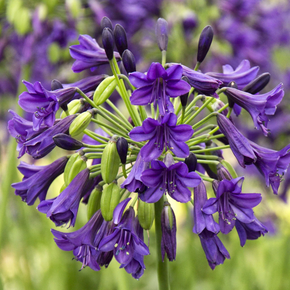
- Produces loose, rounded clusters of soft lavender-blue flowers on upright stalks in summer, attracting hummingbirds, bees, and butterflies to the garden.
- A tough, low-maintenance perennial that is drought tolerant once established, deer and rabbit resistant, and well-suited to coastal and seaside gardens.
- Versatile and eye-catching in perennial borders, containers, rock gardens, and mass plantings — and the blooms make excellent cut flowers for summer arrangements.
Agapanthus Sun Stripe (Agapanthus africanus 'MonKageyama') is a patented, one-of-a-kind Lily of the Nile that truly earns its place in the garden year-round thanks to its spectacular variegated foliage. The exceptionally broad, strap-like leaves display a stunning combination of green and cream marbling at the center, bordered by a wide, soft yellow margin that catches the light and brightens any planting. In midsummer, tall upright stalks rise above the foliage to present loose, rounded clusters of soft lavender-blue flowers that are irresistible to hummingbirds, butterflies, and beneficial bees. Discovered by F.K. Nursery in Southern California, this cultivar is prized as much for its dramatic, grassy texture as for its summer blooms, making it an outstanding choice for perennial borders, cottage gardens, rock gardens, and patio containers. Sun Stripe Agapanthus is cold hardy in USDA Zones 8 through 11, performs well in full sun to partial shade, and becomes impressively drought tolerant once established — all while remaining resistant to deer, rabbits, and the challenges of coastal salt exposure. Whether planted as a bold specimen, a colorful edging plant, or as part of a pollinator-friendly garden design, this striking Agapanthus delivers four-season foliage beauty with rewarding summer color.
Plant Description
Sun Stripe Agapanthus is a clump-forming, semi-evergreen to evergreen perennial grown for both its dramatic foliage and its charming summer flowers. The leaves are exceptionally broad and strap-like compared to most agapanthus cultivars, and they display a bold variegation pattern: a green and cream marbled center is framed by a wide, soft yellow margin that gives the plant a luminous quality even when not in bloom. In summer, stiff upright flower stalks emerge above the leaf mound, each topped with a loose, rounded umbel of soft lavender-blue tubular flowers. The seed heads that follow are also ornamentally attractive. This cultivar was discovered by F.K. Nursery in Southern California and carries plant patent PP22,414. It is also known by the common names Lily of the Nile and African Lily, reflecting its origins in South Africa.
Mature Size
| Attribute | Measurement |
|---|---|
| Foliage Height | 15 to 20 inches |
| Height in Bloom | Up to 24 inches (flower stalks) |
| Spread | 18 to 24 inches |
| Growth Rate | Moderate |
| Plant Form | Low, clump-forming mound |
Hardiness Zones
Sun Stripe Agapanthus is hardy in USDA Zones 8a through 11. It performs best where winters are mild and frosts are light or infrequent. In the cooler end of its range (Zone 8), the plant may die back to the ground in winter but will typically re-emerge in spring. In Zones 9 through 11, including much of Southern Oregon and Northern California, it tends to remain semi-evergreen to evergreen through the year. In areas that experience occasional hard freezes, applying a 4 to 6 inch layer of mulch over the root zone in late fall will provide added protection.
Sunlight Requirements
Sun Stripe Agapanthus thrives in full sun to partial shade. It produces the most abundant blooms when given at least 6 hours of direct sunlight per day. In regions with very hot, intense summers, some afternoon shade will help prevent leaf scorch and keep the foliage colors looking their best. The variegated leaves tend to show their most vivid cream and yellow tones when the plant receives bright, direct morning sun. Avoid deep shade, which results in reduced flowering and less vibrant foliage coloration.
Soil and pH Preferences
- Prefers fertile, moist, and well-drained soil for best performance.
- Adapts to a wide range of soil types including loam, sand, chalk, and clay, provided drainage is adequate.
- Tolerates slightly alkaline to neutral soil pH, and Agapanthus africanus species can also perform in mildly acidic conditions.
- Avoid waterlogged or permanently wet soils, which can lead to root rot.
- Amending the planting area with organic compost at the time of planting improves soil structure and supports healthy root development.
- Demonstrates good salt tolerance, making it a dependable choice for coastal and seaside landscapes.
Watering Guide
Water Sun Stripe Agapanthus regularly during the active growing season from spring through fall, allowing the top 3 inches of soil to dry out between waterings. Consistent moisture during the growing season supports healthy foliage and encourages flower production. Once established, this plant becomes noticeably drought tolerant and can handle dry periods with reduced watering. In its native South African climate, agapanthus experience seasonal rains followed by drier periods, and mimicking this rhythm in the garden encourages strong blooming. Reduce watering significantly in winter when the plant slows or goes dormant. Overwatering during cool months is one of the most common causes of decline.
Fertilizing
Sun Stripe Agapanthus is a moderately heavy feeder that benefits from seasonal fertilization to support its lush foliage and summer blooms. Apply a balanced, slow-release granular fertilizer such as a 10-10-10 or 5-5-5 formula in early spring as new growth begins, and again approximately two months later in early summer. A fertilizer slightly higher in phosphorus than nitrogen can promote more prolific flowering. Avoid high-nitrogen fertilizers, which encourage excessive leafy growth at the expense of blooms. Discontinue fertilizing by late summer to allow the plant to prepare for its winter rest period. Incorporating organic compost into the soil at planting time provides a slow, gentle nutrient boost throughout the season.
Pruning and Maintenance
- Deadhead spent flower stalks promptly after blooms fade to encourage potential rebloom and to keep the planting looking tidy.
- After deadheading, allow the foliage to remain intact so the leaves can continue photosynthesizing and replenishing energy reserves in the rhizomes for next season's growth and bloom.
- Remove yellowed, damaged, or dead leaves as needed throughout the season.
- In late winter or early spring before new growth emerges, trim back any tattered or frost-damaged foliage to tidy the clump.
- Divide established clumps every 4 to 5 years to maintain vigor and flowering. Divide evergreen types immediately after flowering, or in early spring just as growth resumes.
- Note that agapanthus actually blooms best when slightly root-bound and left undisturbed, so avoid unnecessary division of in-ground plants.
Planting Instructions
- Choose a planting site with full sun to partial shade and well-drained soil.
- Dig a hole twice as wide as the root ball and approximately the same depth.
- Amend the backfill soil with organic compost to improve fertility and drainage.
- Set the plant so the crown sits at or just slightly above the surrounding soil level to prevent crown rot.
- Backfill, firm the soil gently, and water deeply to settle the roots.
- Space individual plants 18 to 24 inches apart when planting in groups or mass plantings.
- Apply a 2 to 3 inch layer of mulch around (but not touching) the crown to conserve moisture and moderate soil temperature.
- Water consistently during the establishment period. New plants may take 2 to 3 seasons to reach peak bloom as their root system develops.
Seasonal Interest
| Season | What to Expect |
|---|---|
| Spring | Fresh new foliage emerges with vivid green, cream, and soft yellow variegation; plant fills out and expands its clump. |
| Summer | Peak bloom season: tall stalks rise above the foliage carrying rounded umbels of soft lavender-blue flowers; foliage remains bold and attractive. |
| Fall | Ornamental seed heads follow the flowers and add structural interest; foliage remains attractive into autumn. |
| Winter | Semi-evergreen in Zones 8 to 9; fully evergreen in Zones 10 to 11. Foliage provides color and texture in the garden even through mild winters. |
Landscape Uses
- Perennial borders: Use as a bold mid-border specimen where its variegated foliage contrasts beautifully with solid-colored companions.
- Container growing: An excellent patio or deck plant in large containers, where it actually blooms most prolifically when slightly pot-bound.
- Mass plantings: Planted in groups, the striped foliage and blue summer flowers create a dramatic, cohesive display. Clumps intensify over time.
- Cottage and rock gardens: The compact, grassy mound and cheerful blue blooms blend naturally into informal cottage and rock garden styles.
- Edging and borders: Low, tidy habit makes it suitable for edging along paths, driveways, or garden beds.
- Coastal landscapes: Salt-tolerant and wind-resilient, it is well-suited to seaside gardens.
- Cut flower gardens: Flower stems are excellent for fresh-cut arrangements, adding a loose, airy quality to bouquets.
- Pollinator gardens: Lavender-blue blooms are highly attractive to hummingbirds, bees, and butterflies throughout the summer season.
Companion Plants
Sun Stripe Agapanthus pairs beautifully with plants that share its preference for full sun to partial shade and well-drained soils. Its bold variegated foliage and lavender-blue summer flowers combine especially well with:
- Lavender (Lavandula spp.): Echoes the purple-blue flower tones and thrives in the same sunny, dry conditions.
- Russian Sage (Perovskia atriplicifolia): The airy, silver-blue spikes of Russian Sage provide a soft, complementary backdrop to the bold agapanthus foliage.
- Ornamental grasses (Festuca, Pennisetum, Stipa): Fine-textured grasses echo the strap-like form while providing contrasting movement and color.
- Crocosmia: Fiery orange-red crocosmia blooms create a striking color contrast with the blue agapanthus flowers in summer borders.
- Salvia: Purple or blue salvias reinforce the cool-toned summer color scheme and attract the same pollinators.
- Daylilies (Hemerocallis): Their strap-like foliage and warm summer bloom tones complement the agapanthus in mixed perennial plantings.
- Catmint (Nepeta): Soft, billowing blue-purple catmint softens the base of agapanthus clumps and extends the flowering season.
Container Growing
Sun Stripe Agapanthus is an outstanding container plant and actually blooms most reliably when its roots are slightly confined — a quality that makes it ideally suited to pot culture. Choose a container with good drainage holes that is only modestly larger than the root ball, as too large a pot can reduce flowering. Use a well-draining potting mix, and place the container in a sunny to partly shaded location on a patio, deck, or entryway. Water when the top 3 inches of mix feel dry, and fertilize monthly during the growing season with a balanced liquid fertilizer. In winter in Zone 8 or cooler, move containers to a frost-protected location such as a covered porch or unheated garage. Repot only when the plant is severely root-bound and declining, as mild congestion actually encourages the best bloom production.
Wildlife Value and Resistance
- Hummingbirds: The tubular lavender-blue flowers are a reliable nectar source that draws hummingbirds throughout the summer blooming period.
- Bees and beneficial insects: Honey bees and native bees are frequent visitors to the open flower clusters.
- Butterflies: Various butterfly species are attracted to the blooms, making this plant a valuable addition to pollinator gardens.
- Deer resistant: The foliage is generally unpalatable to deer, making it a reliable choice in areas with significant deer pressure.
- Rabbit resistant: Similarly avoided by rabbits, adding to its value as a low-worry landscape plant.
Pests and Diseases
Sun Stripe Agapanthus is generally a robust, trouble-free plant with few serious pest or disease concerns. The following occasional issues may arise:
- Slugs and snails: May cause chewing damage on young leaves, particularly in moist, shaded conditions. Control with physical barriers or approved baits.
- Leaf-boring insects: Occasional boring or chewing damage may be noticed on leaves but is rarely severe enough to threaten plant health.
- Botrytis (gray mold): In humid conditions with poor air circulation, botrytis fungus can affect foliage and flowers. Improve air circulation and avoid overhead watering to minimize the risk.
- Root rot: Caused by poorly drained or consistently waterlogged soil. Ensure good drainage at the planting site and avoid overwatering, especially during the cooler months.
- Verticillium wilt: This cultivar has been noted to show resistance to verticillium wilt, a significant advantage in garden soils where this pathogen is present.
- Strikingly variegated, broad strap-like leaves feature a rich green and cream marbled center with a wide, soft yellow margin — offering bold, year-round foliage interest unlike any other Lily of the Nile.
- Produces loose, rounded clusters of soft lavender-blue flowers on upright stalks in summer, attracting hummingbirds, bees, and butterflies to the garden.
- A tough, low-maintenance perennial that is drought tolerant once established, deer and rabbit resistant, and well-suited to coastal and seaside gardens.
- Versatile and eye-catching in perennial borders, containers, rock gardens, and mass plantings — and the blooms make excellent cut flowers for summer arrangements.
Agapanthus Sun Stripe (Agapanthus africanus 'MonKageyama') is a patented, one-of-a-kind Lily of the Nile that truly earns its place in the garden year-round thanks to its spectacular variegated foliage. The exceptionally broad, strap-like leaves display a stunning combination of green and cream marbling at the center, bordered by a wide, soft yellow margin that catches the light and brightens any planting. In midsummer, tall upright stalks rise above the foliage to present loose, rounded clusters of soft lavender-blue flowers that are irresistible to hummingbirds, butterflies, and beneficial bees. Discovered by F.K. Nursery in Southern California, this cultivar is prized as much for its dramatic, grassy texture as for its summer blooms, making it an outstanding choice for perennial borders, cottage gardens, rock gardens, and patio containers. Sun Stripe Agapanthus is cold hardy in USDA Zones 8 through 11, performs well in full sun to partial shade, and becomes impressively drought tolerant once established — all while remaining resistant to deer, rabbits, and the challenges of coastal salt exposure. Whether planted as a bold specimen, a colorful edging plant, or as part of a pollinator-friendly garden design, this striking Agapanthus delivers four-season foliage beauty with rewarding summer color.
Plant Description
Sun Stripe Agapanthus is a clump-forming, semi-evergreen to evergreen perennial grown for both its dramatic foliage and its charming summer flowers. The leaves are exceptionally broad and strap-like compared to most agapanthus cultivars, and they display a bold variegation pattern: a green and cream marbled center is framed by a wide, soft yellow margin that gives the plant a luminous quality even when not in bloom. In summer, stiff upright flower stalks emerge above the leaf mound, each topped with a loose, rounded umbel of soft lavender-blue tubular flowers. The seed heads that follow are also ornamentally attractive. This cultivar was discovered by F.K. Nursery in Southern California and carries plant patent PP22,414. It is also known by the common names Lily of the Nile and African Lily, reflecting its origins in South Africa.
Mature Size
| Attribute | Measurement |
|---|---|
| Foliage Height | 15 to 20 inches |
| Height in Bloom | Up to 24 inches (flower stalks) |
| Spread | 18 to 24 inches |
| Growth Rate | Moderate |
| Plant Form | Low, clump-forming mound |
Hardiness Zones
Sun Stripe Agapanthus is hardy in USDA Zones 8a through 11. It performs best where winters are mild and frosts are light or infrequent. In the cooler end of its range (Zone 8), the plant may die back to the ground in winter but will typically re-emerge in spring. In Zones 9 through 11, including much of Southern Oregon and Northern California, it tends to remain semi-evergreen to evergreen through the year. In areas that experience occasional hard freezes, applying a 4 to 6 inch layer of mulch over the root zone in late fall will provide added protection.
Sunlight Requirements
Sun Stripe Agapanthus thrives in full sun to partial shade. It produces the most abundant blooms when given at least 6 hours of direct sunlight per day. In regions with very hot, intense summers, some afternoon shade will help prevent leaf scorch and keep the foliage colors looking their best. The variegated leaves tend to show their most vivid cream and yellow tones when the plant receives bright, direct morning sun. Avoid deep shade, which results in reduced flowering and less vibrant foliage coloration.
Soil and pH Preferences
- Prefers fertile, moist, and well-drained soil for best performance.
- Adapts to a wide range of soil types including loam, sand, chalk, and clay, provided drainage is adequate.
- Tolerates slightly alkaline to neutral soil pH, and Agapanthus africanus species can also perform in mildly acidic conditions.
- Avoid waterlogged or permanently wet soils, which can lead to root rot.
- Amending the planting area with organic compost at the time of planting improves soil structure and supports healthy root development.
- Demonstrates good salt tolerance, making it a dependable choice for coastal and seaside landscapes.
Watering Guide
Water Sun Stripe Agapanthus regularly during the active growing season from spring through fall, allowing the top 3 inches of soil to dry out between waterings. Consistent moisture during the growing season supports healthy foliage and encourages flower production. Once established, this plant becomes noticeably drought tolerant and can handle dry periods with reduced watering. In its native South African climate, agapanthus experience seasonal rains followed by drier periods, and mimicking this rhythm in the garden encourages strong blooming. Reduce watering significantly in winter when the plant slows or goes dormant. Overwatering during cool months is one of the most common causes of decline.
Fertilizing
Sun Stripe Agapanthus is a moderately heavy feeder that benefits from seasonal fertilization to support its lush foliage and summer blooms. Apply a balanced, slow-release granular fertilizer such as a 10-10-10 or 5-5-5 formula in early spring as new growth begins, and again approximately two months later in early summer. A fertilizer slightly higher in phosphorus than nitrogen can promote more prolific flowering. Avoid high-nitrogen fertilizers, which encourage excessive leafy growth at the expense of blooms. Discontinue fertilizing by late summer to allow the plant to prepare for its winter rest period. Incorporating organic compost into the soil at planting time provides a slow, gentle nutrient boost throughout the season.
Pruning and Maintenance
- Deadhead spent flower stalks promptly after blooms fade to encourage potential rebloom and to keep the planting looking tidy.
- After deadheading, allow the foliage to remain intact so the leaves can continue photosynthesizing and replenishing energy reserves in the rhizomes for next season's growth and bloom.
- Remove yellowed, damaged, or dead leaves as needed throughout the season.
- In late winter or early spring before new growth emerges, trim back any tattered or frost-damaged foliage to tidy the clump.
- Divide established clumps every 4 to 5 years to maintain vigor and flowering. Divide evergreen types immediately after flowering, or in early spring just as growth resumes.
- Note that agapanthus actually blooms best when slightly root-bound and left undisturbed, so avoid unnecessary division of in-ground plants.
Planting Instructions
- Choose a planting site with full sun to partial shade and well-drained soil.
- Dig a hole twice as wide as the root ball and approximately the same depth.
- Amend the backfill soil with organic compost to improve fertility and drainage.
- Set the plant so the crown sits at or just slightly above the surrounding soil level to prevent crown rot.
- Backfill, firm the soil gently, and water deeply to settle the roots.
- Space individual plants 18 to 24 inches apart when planting in groups or mass plantings.
- Apply a 2 to 3 inch layer of mulch around (but not touching) the crown to conserve moisture and moderate soil temperature.
- Water consistently during the establishment period. New plants may take 2 to 3 seasons to reach peak bloom as their root system develops.
Seasonal Interest
| Season | What to Expect |
|---|---|
| Spring | Fresh new foliage emerges with vivid green, cream, and soft yellow variegation; plant fills out and expands its clump. |
| Summer | Peak bloom season: tall stalks rise above the foliage carrying rounded umbels of soft lavender-blue flowers; foliage remains bold and attractive. |
| Fall | Ornamental seed heads follow the flowers and add structural interest; foliage remains attractive into autumn. |
| Winter | Semi-evergreen in Zones 8 to 9; fully evergreen in Zones 10 to 11. Foliage provides color and texture in the garden even through mild winters. |
Landscape Uses
- Perennial borders: Use as a bold mid-border specimen where its variegated foliage contrasts beautifully with solid-colored companions.
- Container growing: An excellent patio or deck plant in large containers, where it actually blooms most prolifically when slightly pot-bound.
- Mass plantings: Planted in groups, the striped foliage and blue summer flowers create a dramatic, cohesive display. Clumps intensify over time.
- Cottage and rock gardens: The compact, grassy mound and cheerful blue blooms blend naturally into informal cottage and rock garden styles.
- Edging and borders: Low, tidy habit makes it suitable for edging along paths, driveways, or garden beds.
- Coastal landscapes: Salt-tolerant and wind-resilient, it is well-suited to seaside gardens.
- Cut flower gardens: Flower stems are excellent for fresh-cut arrangements, adding a loose, airy quality to bouquets.
- Pollinator gardens: Lavender-blue blooms are highly attractive to hummingbirds, bees, and butterflies throughout the summer season.
Companion Plants
Sun Stripe Agapanthus pairs beautifully with plants that share its preference for full sun to partial shade and well-drained soils. Its bold variegated foliage and lavender-blue summer flowers combine especially well with:
- Lavender (Lavandula spp.): Echoes the purple-blue flower tones and thrives in the same sunny, dry conditions.
- Russian Sage (Perovskia atriplicifolia): The airy, silver-blue spikes of Russian Sage provide a soft, complementary backdrop to the bold agapanthus foliage.
- Ornamental grasses (Festuca, Pennisetum, Stipa): Fine-textured grasses echo the strap-like form while providing contrasting movement and color.
- Crocosmia: Fiery orange-red crocosmia blooms create a striking color contrast with the blue agapanthus flowers in summer borders.
- Salvia: Purple or blue salvias reinforce the cool-toned summer color scheme and attract the same pollinators.
- Daylilies (Hemerocallis): Their strap-like foliage and warm summer bloom tones complement the agapanthus in mixed perennial plantings.
- Catmint (Nepeta): Soft, billowing blue-purple catmint softens the base of agapanthus clumps and extends the flowering season.
Container Growing
Sun Stripe Agapanthus is an outstanding container plant and actually blooms most reliably when its roots are slightly confined — a quality that makes it ideally suited to pot culture. Choose a container with good drainage holes that is only modestly larger than the root ball, as too large a pot can reduce flowering. Use a well-draining potting mix, and place the container in a sunny to partly shaded location on a patio, deck, or entryway. Water when the top 3 inches of mix feel dry, and fertilize monthly during the growing season with a balanced liquid fertilizer. In winter in Zone 8 or cooler, move containers to a frost-protected location such as a covered porch or unheated garage. Repot only when the plant is severely root-bound and declining, as mild congestion actually encourages the best bloom production.
Wildlife Value and Resistance
- Hummingbirds: The tubular lavender-blue flowers are a reliable nectar source that draws hummingbirds throughout the summer blooming period.
- Bees and beneficial insects: Honey bees and native bees are frequent visitors to the open flower clusters.
- Butterflies: Various butterfly species are attracted to the blooms, making this plant a valuable addition to pollinator gardens.
- Deer resistant: The foliage is generally unpalatable to deer, making it a reliable choice in areas with significant deer pressure.
- Rabbit resistant: Similarly avoided by rabbits, adding to its value as a low-worry landscape plant.
Pests and Diseases
Sun Stripe Agapanthus is generally a robust, trouble-free plant with few serious pest or disease concerns. The following occasional issues may arise:
- Slugs and snails: May cause chewing damage on young leaves, particularly in moist, shaded conditions. Control with physical barriers or approved baits.
- Leaf-boring insects: Occasional boring or chewing damage may be noticed on leaves but is rarely severe enough to threaten plant health.
- Botrytis (gray mold): In humid conditions with poor air circulation, botrytis fungus can affect foliage and flowers. Improve air circulation and avoid overhead watering to minimize the risk.
- Root rot: Caused by poorly drained or consistently waterlogged soil. Ensure good drainage at the planting site and avoid overwatering, especially during the cooler months.
- Verticillium wilt: This cultivar has been noted to show resistance to verticillium wilt, a significant advantage in garden soils where this pathogen is present.
Related Products


