

Zoom the image with the mouse
Phenomenal Lavender - 2 Gallon
SKU:
2016950
UPC:
014949411179
$11.99
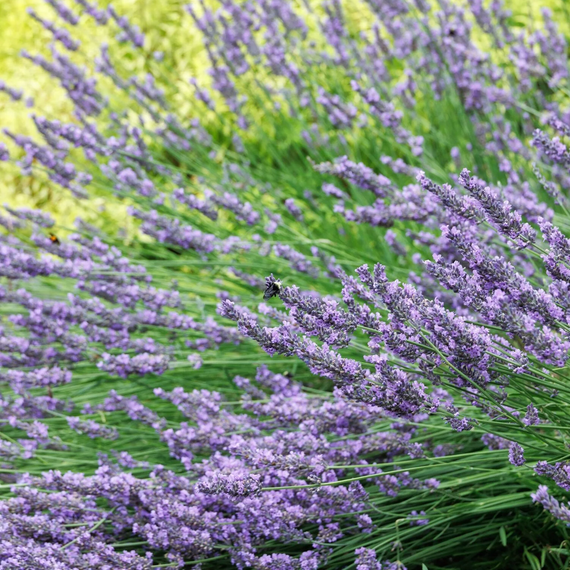
- Sweetly fragrant mounds of silver-green foliage yield tall violet-blue flower spikes in summer with a prolific rebloom in fall, providing two full seasons of color and fragrance
- Exceptionally cold hardy across USDA Zones 4 through 8 with superior disease resistance and heat and humidity tolerance far exceeding typical lavender varieties
- Evergreen foliage does not die back in winter like other lavenders, delivering year-round structure and silver-green color in the garden landscape
- Deer resistant, rabbit resistant, and edible with fast growth to 2 to 3 feet, named a "Must-Grow Perennial" by Better Homes and Gardens magazine
Phenomenal Lavender (Lavandula x intermedia 'Niko') is a truly exceptional lavender variety that stands apart through a remarkable combination of ornamental beauty, cold hardiness, disease resistance, and practical versatility. Quickly growing to 2 to 3 feet tall and wide, this fast-growing evergreen perennial produces elegant mounds of attractive silver-green foliage from which long, intensely fragrant violet-blue flower spikes emerge in summer and again in fall, providing two flushes of sensational bloom and fragrance. Unlike many lavender varieties that die back to the ground in winter, Phenomenal maintains its attractive evergreen form year-round. Its outstanding disease resistance and superior heat and humidity tolerance directly address the primary challenges that cause traditional lavenders to fail in many American garden climates. Rated for USDA Zones 4 through 8, deer and rabbit resistant, and offering outstanding ornamental and edible qualities, Phenomenal Lavender is a must-have perennial for sunny gardens where fragrance, beauty, reliability, and four-season interest are all equally valued.
Plant Details
| Attribute | Details |
|---|---|
| Botanical Name | Lavandula x intermedia 'Niko' |
| Plant Type | Evergreen Perennial |
| Flower Color | Violet-blue |
| Foliage Color | Gray-green to silver |
| Bloom Time | Summer, and again in fall |
| Growth Rate | Fast |
| Mature Size | 2-3 ft. tall and wide |
| Minimum Plant Spacing | 3 ft. apart |
| USDA Zones | 4 - 8 |
| Light | Full sun |
| Water | Let soil go almost dry between waterings |
| Special Features | Fragrant, Edible, Easy Care, Waterwise, Dramatic Foliage Color, Fast Growing, Repeat Flowering |
| Flower Attributes | Flowers for Cutting and Drying, Fragrant, Repeat Flowering, Showy Flowers |
| Landscape Use | Border, Container, Hedge |
| Deer Resistant | Yes |
| Rabbit Resistant | Yes |
| Evergreen | Yes |
Size and Growth Habit
Phenomenal Lavender quickly reaches 2 to 3 feet in both height and spread, forming a handsome, well-rounded, mounded clump of silver-green foliage topped with long, upright flower spikes during its two bloom periods. Its tidy, uniform habit makes it an excellent choice for formal plantings, fragrant low hedges, and neat border arrangements where a consistent, predictable size and shape are desired. Space plants a minimum of 3 feet apart to ensure adequate air circulation, which is critically important for disease prevention and long-term plant health in this lavender variety. Proper spacing also allows each plant to develop its full, graceful, naturally mounded form without crowding from neighbors.
Sunlight Requirements
Phenomenal Lavender requires full sun with at least 6 to 8 hours of direct sunlight per day for the strongest growth, most prolific flowering across both bloom periods, and best fragrance development. Maximum sun exposure also promotes the tightest, most compact plant habit and the most intense silver-green foliage coloration that makes this variety so visually striking. In less than full sun, flowering will be reduced, the plant may develop a looser, more open and floppy habit, and it will be more susceptible to the fungal issues that can afflict lavender in inadequate light and poor air circulation. Choose the sunniest, most open location available for long-term success.
Watering
Let the soil go almost completely dry between waterings. Phenomenal Lavender is a Mediterranean-adapted plant that is optimized for dry conditions and performs best when not over-watered. During the first growing season, water regularly enough to establish a strong root system, then progressively reduce frequency as the plant matures and roots deepen. Once well established, this lavender tolerates periodic drought and typically thrives with minimal supplemental irrigation in regions with average natural rainfall. Avoid overhead watering, which can promote fungal disease on the foliage and flowers. Water at the base of the plant, allowing the soil to dry adequately between each application, and never let plants stand in waterlogged soil.
Soil Requirements
Phenomenal Lavender thrives in lean, loose, fast-draining, slightly alkaline soil and will not tolerate heavy, soggy, or consistently moist growing conditions. Excellent drainage is the single most critical factor in lavender success; more lavender plants are lost to poor drainage than to any other cause, including cold winters. In heavy clay soils, incorporate generous quantities of coarse gravel, grit, or perlite to dramatically improve drainage before planting. Raised beds are an excellent option in clay-heavy landscapes. Plant with the crown slightly above soil level rather than at or below grade, which significantly helps prevent crown rot at the plant's most vulnerable point. Avoid richly amended, highly fertile soils, which promote excess vegetative growth at the expense of flowering and fragrance intensity.
Care and Maintenance
- Deadheading after summer bloom: Lightly shear spent flower spikes after the main summer bloom to stimulate the secondary fall flowering flush and maintain a tidy form.
- Pruning caution: Never cut back into old, bare, hardened wood below the green foliage zone; lavender does not regenerate from bare wood and the plant may not recover.
- Crown positioning: Always plant with the crown slightly above soil level to prevent crown rot, the most common lavender killer.
- Spacing: Maintain a minimum 3-foot spacing between plants to maximize air circulation and minimize any residual fungal disease risk.
- Fertilizing: Lavender requires little to no fertilizer; avoid high-nitrogen fertilizers that promote lush foliage at the expense of flowers and fragrance.
- Winter: In Zone 4 and 5, a light mulch of coarse gravel (not organic mulch that holds moisture) around the base can help moderate soil temperature without trapping excess winter moisture.
Landscape Uses
Phenomenal Lavender is one of the most versatile and high-performing ornamental perennials available for sunny gardens. Use it as a fragrant, low informal hedge along pathways, garden edges, and property boundaries where its scent and silvery beauty can be fully appreciated. Plant it in mixed perennial borders where the silver-green foliage provides excellent color and textural contrast and the violet-blue flower spikes add an elegant, upright vertical element. It is equally effective in containers on sunny patios and terraces, in waterwise and drought-resistant garden designs, and as a fragrant cutting and drying garden plant. Its exceptional repeat blooming, evergreen foliage, and year-round architectural structure make it a true four-season garden plant throughout its hardiness range.
Companion Plants
| Plant | Why It Works |
|---|---|
| Black-Eyed Susan (Rudbeckia) | Warm golden yellow blooms provide striking warm-cool color contrast with the violet-blue lavender spikes |
| Rosemary (Rosmarinus) | Natural culinary and ornamental companion sharing identical soil, drainage, and sun requirements for a Mediterranean-style garden |
| Rose (Rosa) | A timeless classic pairing where lavender's fragrant silver foliage and blue flowers complement the richness of rose blooms perfectly |
| Coneflower (Echinacea) | Bold summer color in warm tones layers beautifully alongside the cool violet-blue lavender, extending the bloom display |
| Shasta Daisy (Chrysanthemum) | Crisp white flowers highlight and contrast the violet-blue lavender spikes for a cool, elegant color composition |
Fragrance and Culinary Uses
Phenomenal Lavender produces the quintessential classic lavender fragrance, intensely sweet and floral with resinous depth, that has made lavender one of the world's most beloved aromatic plants. The fragrant flower spikes and foliage contain high concentrations of linalool and other aromatic compounds that release readily when foliage is brushed against or warmed by sun. The flowers are fully edible and safe for use in a wide range of culinary applications including baked goods, shortbread, confections, herbal teas, lemonades, cocktails, salad dressings, and savory preparations such as herb rubs for meats. Harvest flower spikes when just beginning to open for the most concentrated fragrance and culinary flavor. Dried lavender retains its fragrance for many months and is excellent for sachets, potpourri, sleep pillows, and homemade bath and beauty preparations.
Wildlife and Pollinators
Phenomenal Lavender is among the most outstanding pollinator plants available, drawing honey bees, native bumblebees, butterflies, and other beneficial insects in exceptional numbers throughout its two bloom periods each season. The nectar-rich violet-blue flower spikes are particularly attractive to bees, which visit repeatedly and in large numbers throughout summer and again in fall during the second bloom flush. Its deer and rabbit resistance ensures the plant remains intact and continues providing nectar resources even in landscapes with significant wildlife browsing pressure. The strongly aromatic foliage is naturally avoided by most browsing animals, making it one of the most reliably deer-resistant fragrant perennials available to North American gardeners.
USDA Hardiness Zones
Phenomenal Lavender is rated for USDA Hardiness Zones 4 through 8, a significantly broader cold hardiness range than most lavender varieties, which are typically rated for only Zones 5 or 6 through 8. This extended cold hardiness, combined with its exceptional disease resistance and superior heat and humidity tolerance, makes it one of the most geographically versatile lavenders available to North American gardeners. Unlike many lavender varieties that die back, decline, or fail entirely in Zone 4 and 5 winters, Phenomenal maintains its attractive evergreen character and returns reliably and vigorously each spring throughout its entire rated hardiness range.
History and Background
Phenomenal Lavender was discovered as a whole-plant mutation, or sport, of Lavandula 'Grosso,' one of the most widely grown commercial lavender cultivars prized by the essential oil industry. It was found as a single distinct and superior plant growing in a cultivated field in Kintnersville, Pennsylvania in 2007. Its superior performance characteristics, including significantly broader cold hardiness, enhanced heat and humidity tolerance, and exceptional disease resistance, distinguished it immediately from the parent variety and led to its development and introduction as a named cultivar. Phenomenal Lavender was awarded U.S. Plant Patent #24,193 and was subsequently named a "Must-Grow Perennial" for 2013 by Better Homes and Gardens magazine, a prestigious recognition that brought this extraordinary variety to the attention of home gardeners across North America. Asexual reproduction of this patented plant is prohibited under the Plant Patent Act.
- Sweetly fragrant mounds of silver-green foliage yield tall violet-blue flower spikes in summer with a prolific rebloom in fall, providing two full seasons of color and fragrance
- Exceptionally cold hardy across USDA Zones 4 through 8 with superior disease resistance and heat and humidity tolerance far exceeding typical lavender varieties
- Evergreen foliage does not die back in winter like other lavenders, delivering year-round structure and silver-green color in the garden landscape
- Deer resistant, rabbit resistant, and edible with fast growth to 2 to 3 feet, named a "Must-Grow Perennial" by Better Homes and Gardens magazine
Phenomenal Lavender (Lavandula x intermedia 'Niko') is a truly exceptional lavender variety that stands apart through a remarkable combination of ornamental beauty, cold hardiness, disease resistance, and practical versatility. Quickly growing to 2 to 3 feet tall and wide, this fast-growing evergreen perennial produces elegant mounds of attractive silver-green foliage from which long, intensely fragrant violet-blue flower spikes emerge in summer and again in fall, providing two flushes of sensational bloom and fragrance. Unlike many lavender varieties that die back to the ground in winter, Phenomenal maintains its attractive evergreen form year-round. Its outstanding disease resistance and superior heat and humidity tolerance directly address the primary challenges that cause traditional lavenders to fail in many American garden climates. Rated for USDA Zones 4 through 8, deer and rabbit resistant, and offering outstanding ornamental and edible qualities, Phenomenal Lavender is a must-have perennial for sunny gardens where fragrance, beauty, reliability, and four-season interest are all equally valued.
Plant Details
| Attribute | Details |
|---|---|
| Botanical Name | Lavandula x intermedia 'Niko' |
| Plant Type | Evergreen Perennial |
| Flower Color | Violet-blue |
| Foliage Color | Gray-green to silver |
| Bloom Time | Summer, and again in fall |
| Growth Rate | Fast |
| Mature Size | 2-3 ft. tall and wide |
| Minimum Plant Spacing | 3 ft. apart |
| USDA Zones | 4 - 8 |
| Light | Full sun |
| Water | Let soil go almost dry between waterings |
| Special Features | Fragrant, Edible, Easy Care, Waterwise, Dramatic Foliage Color, Fast Growing, Repeat Flowering |
| Flower Attributes | Flowers for Cutting and Drying, Fragrant, Repeat Flowering, Showy Flowers |
| Landscape Use | Border, Container, Hedge |
| Deer Resistant | Yes |
| Rabbit Resistant | Yes |
| Evergreen | Yes |
Size and Growth Habit
Phenomenal Lavender quickly reaches 2 to 3 feet in both height and spread, forming a handsome, well-rounded, mounded clump of silver-green foliage topped with long, upright flower spikes during its two bloom periods. Its tidy, uniform habit makes it an excellent choice for formal plantings, fragrant low hedges, and neat border arrangements where a consistent, predictable size and shape are desired. Space plants a minimum of 3 feet apart to ensure adequate air circulation, which is critically important for disease prevention and long-term plant health in this lavender variety. Proper spacing also allows each plant to develop its full, graceful, naturally mounded form without crowding from neighbors.
Sunlight Requirements
Phenomenal Lavender requires full sun with at least 6 to 8 hours of direct sunlight per day for the strongest growth, most prolific flowering across both bloom periods, and best fragrance development. Maximum sun exposure also promotes the tightest, most compact plant habit and the most intense silver-green foliage coloration that makes this variety so visually striking. In less than full sun, flowering will be reduced, the plant may develop a looser, more open and floppy habit, and it will be more susceptible to the fungal issues that can afflict lavender in inadequate light and poor air circulation. Choose the sunniest, most open location available for long-term success.
Watering
Let the soil go almost completely dry between waterings. Phenomenal Lavender is a Mediterranean-adapted plant that is optimized for dry conditions and performs best when not over-watered. During the first growing season, water regularly enough to establish a strong root system, then progressively reduce frequency as the plant matures and roots deepen. Once well established, this lavender tolerates periodic drought and typically thrives with minimal supplemental irrigation in regions with average natural rainfall. Avoid overhead watering, which can promote fungal disease on the foliage and flowers. Water at the base of the plant, allowing the soil to dry adequately between each application, and never let plants stand in waterlogged soil.
Soil Requirements
Phenomenal Lavender thrives in lean, loose, fast-draining, slightly alkaline soil and will not tolerate heavy, soggy, or consistently moist growing conditions. Excellent drainage is the single most critical factor in lavender success; more lavender plants are lost to poor drainage than to any other cause, including cold winters. In heavy clay soils, incorporate generous quantities of coarse gravel, grit, or perlite to dramatically improve drainage before planting. Raised beds are an excellent option in clay-heavy landscapes. Plant with the crown slightly above soil level rather than at or below grade, which significantly helps prevent crown rot at the plant's most vulnerable point. Avoid richly amended, highly fertile soils, which promote excess vegetative growth at the expense of flowering and fragrance intensity.
Care and Maintenance
- Deadheading after summer bloom: Lightly shear spent flower spikes after the main summer bloom to stimulate the secondary fall flowering flush and maintain a tidy form.
- Pruning caution: Never cut back into old, bare, hardened wood below the green foliage zone; lavender does not regenerate from bare wood and the plant may not recover.
- Crown positioning: Always plant with the crown slightly above soil level to prevent crown rot, the most common lavender killer.
- Spacing: Maintain a minimum 3-foot spacing between plants to maximize air circulation and minimize any residual fungal disease risk.
- Fertilizing: Lavender requires little to no fertilizer; avoid high-nitrogen fertilizers that promote lush foliage at the expense of flowers and fragrance.
- Winter: In Zone 4 and 5, a light mulch of coarse gravel (not organic mulch that holds moisture) around the base can help moderate soil temperature without trapping excess winter moisture.
Landscape Uses
Phenomenal Lavender is one of the most versatile and high-performing ornamental perennials available for sunny gardens. Use it as a fragrant, low informal hedge along pathways, garden edges, and property boundaries where its scent and silvery beauty can be fully appreciated. Plant it in mixed perennial borders where the silver-green foliage provides excellent color and textural contrast and the violet-blue flower spikes add an elegant, upright vertical element. It is equally effective in containers on sunny patios and terraces, in waterwise and drought-resistant garden designs, and as a fragrant cutting and drying garden plant. Its exceptional repeat blooming, evergreen foliage, and year-round architectural structure make it a true four-season garden plant throughout its hardiness range.
Companion Plants
| Plant | Why It Works |
|---|---|
| Black-Eyed Susan (Rudbeckia) | Warm golden yellow blooms provide striking warm-cool color contrast with the violet-blue lavender spikes |
| Rosemary (Rosmarinus) | Natural culinary and ornamental companion sharing identical soil, drainage, and sun requirements for a Mediterranean-style garden |
| Rose (Rosa) | A timeless classic pairing where lavender's fragrant silver foliage and blue flowers complement the richness of rose blooms perfectly |
| Coneflower (Echinacea) | Bold summer color in warm tones layers beautifully alongside the cool violet-blue lavender, extending the bloom display |
| Shasta Daisy (Chrysanthemum) | Crisp white flowers highlight and contrast the violet-blue lavender spikes for a cool, elegant color composition |
Fragrance and Culinary Uses
Phenomenal Lavender produces the quintessential classic lavender fragrance, intensely sweet and floral with resinous depth, that has made lavender one of the world's most beloved aromatic plants. The fragrant flower spikes and foliage contain high concentrations of linalool and other aromatic compounds that release readily when foliage is brushed against or warmed by sun. The flowers are fully edible and safe for use in a wide range of culinary applications including baked goods, shortbread, confections, herbal teas, lemonades, cocktails, salad dressings, and savory preparations such as herb rubs for meats. Harvest flower spikes when just beginning to open for the most concentrated fragrance and culinary flavor. Dried lavender retains its fragrance for many months and is excellent for sachets, potpourri, sleep pillows, and homemade bath and beauty preparations.
Wildlife and Pollinators
Phenomenal Lavender is among the most outstanding pollinator plants available, drawing honey bees, native bumblebees, butterflies, and other beneficial insects in exceptional numbers throughout its two bloom periods each season. The nectar-rich violet-blue flower spikes are particularly attractive to bees, which visit repeatedly and in large numbers throughout summer and again in fall during the second bloom flush. Its deer and rabbit resistance ensures the plant remains intact and continues providing nectar resources even in landscapes with significant wildlife browsing pressure. The strongly aromatic foliage is naturally avoided by most browsing animals, making it one of the most reliably deer-resistant fragrant perennials available to North American gardeners.
USDA Hardiness Zones
Phenomenal Lavender is rated for USDA Hardiness Zones 4 through 8, a significantly broader cold hardiness range than most lavender varieties, which are typically rated for only Zones 5 or 6 through 8. This extended cold hardiness, combined with its exceptional disease resistance and superior heat and humidity tolerance, makes it one of the most geographically versatile lavenders available to North American gardeners. Unlike many lavender varieties that die back, decline, or fail entirely in Zone 4 and 5 winters, Phenomenal maintains its attractive evergreen character and returns reliably and vigorously each spring throughout its entire rated hardiness range.
History and Background
Phenomenal Lavender was discovered as a whole-plant mutation, or sport, of Lavandula 'Grosso,' one of the most widely grown commercial lavender cultivars prized by the essential oil industry. It was found as a single distinct and superior plant growing in a cultivated field in Kintnersville, Pennsylvania in 2007. Its superior performance characteristics, including significantly broader cold hardiness, enhanced heat and humidity tolerance, and exceptional disease resistance, distinguished it immediately from the parent variety and led to its development and introduction as a named cultivar. Phenomenal Lavender was awarded U.S. Plant Patent #24,193 and was subsequently named a "Must-Grow Perennial" for 2013 by Better Homes and Gardens magazine, a prestigious recognition that brought this extraordinary variety to the attention of home gardeners across North America. Asexual reproduction of this patented plant is prohibited under the Plant Patent Act.
Related Products