
Zoom the image with the mouse
Northern Exposure Red Heuchera - 1 Gallon
SKU:
2018060
UPC:
014949462232
$12.99
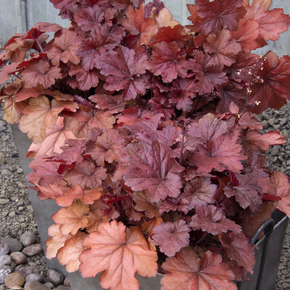
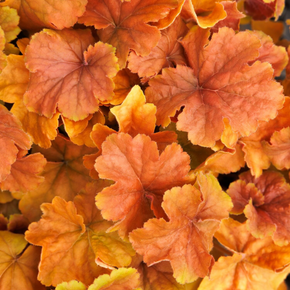
- Exceptionally cold-hardy coral bells featuring bold, rounded burgundy-red leaves with fluted edges that form a dense, tidy mound with four-season interest
- Bred from the hardy species Heuchera richardsonii for superior rust resistance, longer-lasting beauty, and outstanding longevity compared to other coral bells varieties
- Versatile performer thriving in full sun to full shade, with increased sun tolerance and notable drought resistance once established
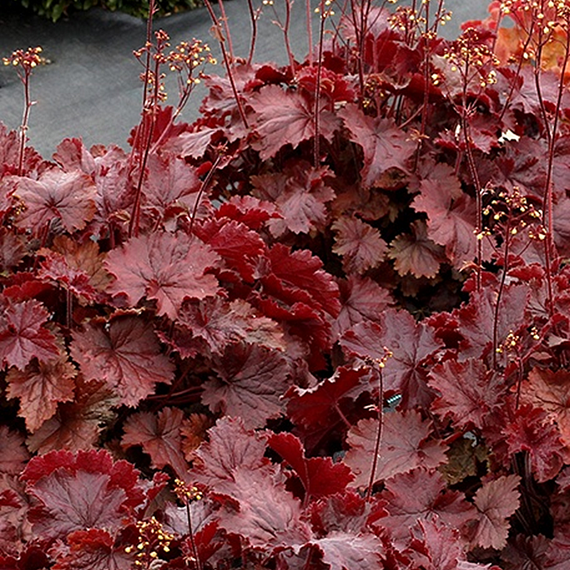
- Slender stems rise above the foliage in spring bearing airy greenish-yellow flowers that attract hummingbirds, butterflies, and bees — and the plant is reliably deer resistant
Northern Exposure Red Heuchera (Heuchera x 'TNHEUNER' PP#29,420) is a standout evergreen perennial coral bells that delivers vivid color and reliable performance across a remarkably wide range of climates and garden conditions. Dense, rounded leaves in rich burgundy-red with attractively fluted edges form a naturally mounding habit that requires virtually no pinching or shaping to maintain its tidy appearance. Unlike many coral bells varieties that can fade or struggle through seasonal extremes, Northern Exposure Red was specifically bred from Heuchera richardsonii — a species native to the northern US and Canada — giving it exceptional cold hardiness down to USDA Zone 3, superior rust resistance, and an extended season of bold color from spring through fall and into winter in milder climates. From mid-spring through early summer, slender flower stems rise up to 18 inches above the foliage and bear delicate bell-shaped greenish-yellow blooms beloved by pollinators including hummingbirds and butterflies. Whether used as a striking edger along a path, massed for a dramatic groundcover effect, planted in rock gardens and mixed borders, or showcased in a patio container, this low-maintenance coral bells delivers exceptional, long-lasting beauty with minimal care — making it one of the most rewarding perennials available for gardens across Southern Oregon and Northern California.
Plant Description
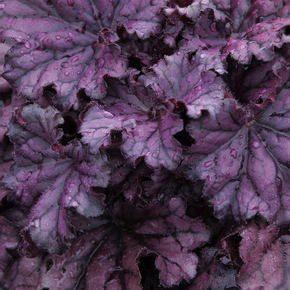
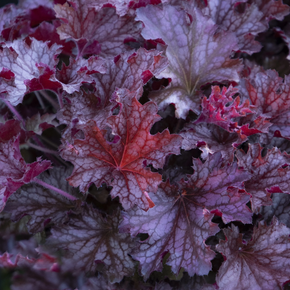
Northern Exposure Red Heuchera is a clump-forming, evergreen perennial prized for its year-round foliage impact. The large, rounded leaves display a rich, clear dark red to burgundy-red coloration with attractively fluted and lobed edges and a slightly textured surface. Leaves are borne on hairy reddish-purple stems in a dense, naturally mounding basal rosette that maintains its shape without any pinching or trimming. From mid-spring into early summer, slender upright flower stems rise up to 18 inches above the foliage, bearing masses of small, delicate bell-shaped greenish-yellow flowers. This cultivar was specially bred from the hardy species Heuchera richardsonii, giving it notably superior rust resistance, extended seasonal performance, and greater longevity than many other coral bells varieties. It is classified as part of the Northern Exposure series, a group developed for exceptional cold hardiness, robust garden performance, and outstanding crown count.
Mature Size
| Attribute | Measurement |
|---|---|
| Foliage Height | 12 - 14 inches |
| Foliage Spread | 18 - 20 inches |
| Flower Stem Height | Up to 18 inches above foliage |
| Recommended Spacing | 16 - 20 inches on center |
| Growth Habit | Dense, low mounding |
| Growth Rate | Fast |
Hardiness and Climate Zones
Northern Exposure Red Heuchera is one of the hardiest coral bells available, performing reliably across an exceptionally wide range of climates. It was specifically bred from cold-hardy parent species, and university trials confirmed approximately 75% survival at USDA Zone 3 conditions. It is equally at home in warm southern gardens through Zone 10, making it one of the most adaptable heucheras on the market.
- USDA Hardiness Zones: 3 - 10
- AHS Heat Zones: 1 - 8
- Suitable for the full range of climates found across Southern Oregon and Northern California
- Evergreen in warmer zones (7 and above); semi-evergreen to dormant in colder zones
- Tolerates both hot summers and harsh winters better than most coral bells varieties
Sunlight Requirements
Northern Exposure Red Heuchera offers increased sun tolerance compared to many other coral bells varieties, making it highly versatile in the garden. Its saturated, dark red foliage color is much more sun-tolerant than lighter-colored heuchera varieties.
- Ideal: Partial shade — 4 to 6 hours of direct sunlight per day, with protection from harsh afternoon sun
- Full Sun: Tolerated, especially in cooler regions or when consistent soil moisture is maintained; may cause leaf edges to brown in very hot, dry conditions
- Full Shade: Grows well in full shade, including dry shade once established; foliage color may be slightly less vibrant in deep shade
- Tip: In the warmer inland valleys of Southern Oregon and Northern California, site plants where they receive morning sun and afternoon shade for best foliage color and plant health
Soil and pH Preferences
Northern Exposure Red Heuchera adapts to a variety of soil types but performs best in conditions that mimic its woodland heritage. Good drainage is the single most critical soil requirement, especially during winter months when wet soil is far more damaging than cold temperatures alone.
- Soil Type: Performs well in clay, loam, or sandy soils; rich, humusy, organically amended soil is ideal
- Drainage: Must be well-drained; avoid low spots or areas where water pools — soggy winter soil is a primary cause of plant decline
- Soil pH: Prefers slightly acidic to neutral soil; optimal range is 5.5 to 6.5
- Amendments: Work compost or aged organic matter into heavy clay soils before planting to improve drainage and fertility
- Other Tolerances: Moderately salt tolerant; can be grown in coastal garden settings
Watering Guide
Once established, Northern Exposure Red Heuchera has good drought tolerance and actually prefers conditions on the slightly drier side compared to many other shade perennials. Overwatering — particularly in poorly drained soil — is more harmful than underwatering for established plants.
- Newly Planted: Water regularly to keep the root zone evenly moist during the first growing season while plants establish
- Established Plants: Water deeply but infrequently; allow the top inch of soil to dry between waterings
- General Rule: Approximately 1 inch of water per week during the growing season, adjusted for rainfall
- Heat Waves: Provide supplemental water during extended hot, dry spells, especially for plants in full or part sun
- Winter: Avoid planting in areas with standing water or where snow accumulates in winter; excess winter moisture is more damaging than cold temperatures
- Containers: Container-grown plants require more frequent watering than in-ground plants; check soil moisture every few days during warm weather
Fertilizing
Northern Exposure Red Heuchera is a low-maintenance plant with modest fertility needs. Avoid over-fertilizing, which can encourage lush, weak growth and reduce the plant's natural hardiness and longevity.
- In-Ground Plants: Apply a thin layer of compost around the base of the plant each spring, or use a balanced slow-release granular fertilizer (such as 10-10-10) once in early spring
- Application Rate: Follow package directions; less is more — light annual feeding is sufficient for healthy growth
- Container Plants: Supplement with a balanced water-soluble fertilizer every 3 to 4 weeks during the active growing season (spring through summer)
- Avoid: High-nitrogen fertilizers that promote excessive leafy growth at the expense of foliage color and plant structure
- Timing: Do not fertilize in late summer or fall, as this can stimulate tender new growth that is vulnerable to early frost damage
Pruning and Maintenance
Northern Exposure Red Heuchera is one of the easiest perennials to maintain and requires very little routine care once established. Its naturally mounding habit means no pinching is needed to keep it tidy.
- Spring Cleanup: In early spring, before new growth emerges, trim back any tattered, discolored, or winter-damaged foliage using clean, sharp shears to encourage fresh growth
- Deadheading: Remove spent flower stems after blooming to keep the plant looking tidy and to potentially encourage additional bloom
- Fall Care: Do not cut back healthy foliage in autumn — the leaves protect the crown through winter and provide continued visual interest; remove only dead or damaged material
- Division: Divide clumps every 3 to 4 years in early spring or fall to rejuvenate plants and maintain vigor; replant divisions at the same depth, being careful not to bury the crown
- Crown Heaving: In colder zones, apply a light winter mulch after the ground freezes to help prevent frost heaving; remove mulch in early spring
- Critical Note: Never bury the crown of the plant when planting or mulching — a buried crown is a leading cause of plant failure in heucheras
Planting Instructions
- Choose a planting site with well-drained soil and appropriate light conditions — partial shade is ideal, though full sun and full shade are also tolerated
- Dig a planting hole twice as wide as the root ball and no deeper than the existing root ball height
- Amend heavy clay soil or poor sandy soil with compost or aged organic matter to improve fertility and drainage
- Remove the plant from its container and gently loosen any circling roots
- Set the plant in the hole so the crown (where the stems meet the roots) sits at or just slightly above soil level — never bury the crown
- Backfill with native soil and firm gently around the roots to eliminate air pockets
- Water thoroughly after planting to settle the soil
- Apply a 1 to 2 inch layer of mulch around (but not touching) the crown to conserve moisture and moderate soil temperature
- Space plants 16 to 20 inches apart for mass plantings or groundcover use
- Best planting times are spring or fall; in colder zones (5 and below), early fall planting allows roots to establish before winter
Seasonal Interest
Northern Exposure Red Heuchera delivers ornamental value in every season, making it one of the most reliable four-season perennials for the garden.
- Spring: Fresh, vivid burgundy-red foliage emerges with excellent color intensity; slender flower stems rise above the mound bearing delicate greenish-yellow blooms from mid-spring, attracting early-season pollinators
- Summer: Dense, rich-colored foliage mound remains attractive and provides long-lasting contrast in borders and containers; the dark red color holds better in summer heat than many lighter-colored heuchera varieties
- Fall: Foliage often intensifies and takes on deeper, richer hues as temperatures cool; one of the best seasons for foliage color
- Winter: Remains evergreen in Zones 7 and warmer, offering continued color and structure in the winter garden; semi-evergreen in colder zones with some foliage persisting even through moderate winters
Landscape Uses
The bold foliage, adaptable nature, and compact mounding habit of Northern Exposure Red Heuchera make it one of the most versatile perennials for a wide range of landscape applications.
- Mixed Borders: Stunning as a mid-border accent or edging plant, providing rich color contrast against green or chartreuse neighbors
- Mass Plantings: Planted in groups of three or more, it creates a dramatic, eye-catching carpet of deep red foliage — particularly effective on slopes and banks
- Rock Gardens: Its compact habit and drought tolerance once established make it an excellent choice for rock gardens and gravel planting schemes
- Woodland and Shade Gardens: Thrives under trees and in dappled light alongside other woodland perennials
- Edging: Creates a neat, colorful border along pathways, driveways, and garden beds
- Containers and Patio Pots: Excellent as a "thriller" or "filler" in mixed container combinations; pairs beautifully with contrasting foliage plants and flowering annuals
- Groundcover: Effective as a low-maintenance groundcover for shaded or partially shaded areas
- Coastal and City Gardens: Salt tolerant and adaptable to urban conditions
- Underplanting: Works well beneath roses, shrubs, and ornamental trees where its colorful foliage fills the ground layer beautifully
Companion Plants
Northern Exposure Red Heuchera combines beautifully with a wide range of plants. Its deep burgundy-red foliage creates striking contrasts with both bright and cool-toned companions.
- Shade and Part-Shade Companions: Astilbe, bleeding heart (Lamprocapnos), Japanese forest grass (Hakonechloa macra), hosta, hellebore, ferns, lungwort (Pulmonaria), and foam flower (Tiarella)
- Sunny Border Companions: Ornamental grasses, daylilies, iris, lady's mantle (Alchemilla), geranium (Cranesbill), catmint (Nepeta), and yarrow (Achillea)
- Foliage Contrast Pairings: The dark red foliage pops dramatically against chartreuse or golden plants such as golden Japanese forest grass, lime-colored coleus, or gold-leafed hostas
- Container Companions: Pairs well with silver dusty miller, purple fountain grass, or trailing sweet potato vine for bold container combinations
- Other Northern Exposure Series Members: Plant alongside Northern Exposure Purple, Lime, Silver, or Amber for a coordinated, multi-colored coral bells display
Wildlife Value
Northern Exposure Red Heuchera is a valuable plant for supporting local wildlife, particularly pollinating insects and birds.
- Hummingbirds: The delicate bell-shaped flowers are highly attractive to hummingbirds during spring and early summer bloom; a reliable hummingbird garden plant
- Butterflies: Flowers attract a variety of butterfly species foraging for nectar
- Bees: Both native bees and honeybees visit the flowers regularly, making this a worthwhile addition to pollinator-friendly garden designs
- Deer Resistance: Reliably deer resistant — an important trait for gardens in Southern Oregon and Northern California where deer pressure can be significant
- Rabbit Resistance: Also largely avoided by rabbits
- Songbirds: The dense mounding foliage provides cover and shelter for small ground-foraging birds
Pests and Diseases
Northern Exposure Red Heuchera is notably disease resistant, particularly regarding the rust fungus that can plague other heuchera varieties. It was bred specifically with improved rust resistance and long-term garden durability in mind.
- Rust (Puccinia heucherae): This cultivar has excellent, built-in rust resistance — one of its key breeding achievements. If rust does appear, remove and discard affected foliage; do not compost it at home, as this spreads the spores
- Root Rot / Phytophthora: Can occur in poorly drained or consistently wet soils; prevent by ensuring good drainage and avoiding overwatering
- Vine Weevil: Larvae can feed on roots; watch for notched leaf margins (adult feeding) and wilting; treat with beneficial nematodes if infestation is confirmed
- Foliar Nematodes: Occasionally reported; avoid overhead watering and remove affected foliage promptly
- Leaf Scorch: Not a disease, but a cultural issue from too much direct sun or insufficient moisture; relocate to a shadier spot or increase watering if brown leaf edges appear
- Prevention: Ensure good air circulation, avoid burying the crown, keep mulch away from the crown, and water at the soil level rather than overhead when possible
Container Growing
Northern Exposure Red Heuchera is an excellent candidate for container gardening, offering bold, year-round foliage color on patios, decks, and entryways. Its compact, mounding habit suits a wide variety of pot sizes and styles.
- Container Size: Choose a pot at least 10 to 12 inches in diameter with adequate depth for the root ball; larger containers retain moisture better and require less frequent watering
- Drainage: Ensure the container has drainage holes — standing water in containers is fatal to heucheras
- Potting Mix: Use a high-quality, well-draining potting mix; amend with perlite if needed to improve drainage
- Watering: Container plants dry out faster than in-ground plants; check soil moisture every 2 to 3 days in warm weather and water when the top inch feels dry
- Fertilizing: Feed container plants with a balanced water-soluble fertilizer every 3 to 4 weeks through the growing season
- Overwintering in Containers: In Zones 6b and warmer, containers can be overwintered outdoors in a sheltered spot; in colder zones, transplant into the garden in early fall or move containers to an unheated garage or shed to protect roots from hard freezes
- Combination Planting: Pairs beautifully with trailing plants like creeping jenny, bacopa, or sweet potato vine and upright bloomers like salvia or snapdragons for a dynamic mixed planter
- Exceptionally cold-hardy coral bells featuring bold, rounded burgundy-red leaves with fluted edges that form a dense, tidy mound with four-season interest
- Bred from the hardy species Heuchera richardsonii for superior rust resistance, longer-lasting beauty, and outstanding longevity compared to other coral bells varieties
- Versatile performer thriving in full sun to full shade, with increased sun tolerance and notable drought resistance once established
- Slender stems rise above the foliage in spring bearing airy greenish-yellow flowers that attract hummingbirds, butterflies, and bees — and the plant is reliably deer resistant
Northern Exposure Red Heuchera (Heuchera x 'TNHEUNER' PP#29,420) is a standout evergreen perennial coral bells that delivers vivid color and reliable performance across a remarkably wide range of climates and garden conditions. Dense, rounded leaves in rich burgundy-red with attractively fluted edges form a naturally mounding habit that requires virtually no pinching or shaping to maintain its tidy appearance. Unlike many coral bells varieties that can fade or struggle through seasonal extremes, Northern Exposure Red was specifically bred from Heuchera richardsonii — a species native to the northern US and Canada — giving it exceptional cold hardiness down to USDA Zone 3, superior rust resistance, and an extended season of bold color from spring through fall and into winter in milder climates. From mid-spring through early summer, slender flower stems rise up to 18 inches above the foliage and bear delicate bell-shaped greenish-yellow blooms beloved by pollinators including hummingbirds and butterflies. Whether used as a striking edger along a path, massed for a dramatic groundcover effect, planted in rock gardens and mixed borders, or showcased in a patio container, this low-maintenance coral bells delivers exceptional, long-lasting beauty with minimal care — making it one of the most rewarding perennials available for gardens across Southern Oregon and Northern California.
Plant Description
Northern Exposure Red Heuchera is a clump-forming, evergreen perennial prized for its year-round foliage impact. The large, rounded leaves display a rich, clear dark red to burgundy-red coloration with attractively fluted and lobed edges and a slightly textured surface. Leaves are borne on hairy reddish-purple stems in a dense, naturally mounding basal rosette that maintains its shape without any pinching or trimming. From mid-spring into early summer, slender upright flower stems rise up to 18 inches above the foliage, bearing masses of small, delicate bell-shaped greenish-yellow flowers. This cultivar was specially bred from the hardy species Heuchera richardsonii, giving it notably superior rust resistance, extended seasonal performance, and greater longevity than many other coral bells varieties. It is classified as part of the Northern Exposure series, a group developed for exceptional cold hardiness, robust garden performance, and outstanding crown count.
Mature Size
| Attribute | Measurement |
|---|---|
| Foliage Height | 12 - 14 inches |
| Foliage Spread | 18 - 20 inches |
| Flower Stem Height | Up to 18 inches above foliage |
| Recommended Spacing | 16 - 20 inches on center |
| Growth Habit | Dense, low mounding |
| Growth Rate | Fast |
Hardiness and Climate Zones
Northern Exposure Red Heuchera is one of the hardiest coral bells available, performing reliably across an exceptionally wide range of climates. It was specifically bred from cold-hardy parent species, and university trials confirmed approximately 75% survival at USDA Zone 3 conditions. It is equally at home in warm southern gardens through Zone 10, making it one of the most adaptable heucheras on the market.
- USDA Hardiness Zones: 3 - 10
- AHS Heat Zones: 1 - 8
- Suitable for the full range of climates found across Southern Oregon and Northern California
- Evergreen in warmer zones (7 and above); semi-evergreen to dormant in colder zones
- Tolerates both hot summers and harsh winters better than most coral bells varieties
Sunlight Requirements
Northern Exposure Red Heuchera offers increased sun tolerance compared to many other coral bells varieties, making it highly versatile in the garden. Its saturated, dark red foliage color is much more sun-tolerant than lighter-colored heuchera varieties.
- Ideal: Partial shade — 4 to 6 hours of direct sunlight per day, with protection from harsh afternoon sun
- Full Sun: Tolerated, especially in cooler regions or when consistent soil moisture is maintained; may cause leaf edges to brown in very hot, dry conditions
- Full Shade: Grows well in full shade, including dry shade once established; foliage color may be slightly less vibrant in deep shade
- Tip: In the warmer inland valleys of Southern Oregon and Northern California, site plants where they receive morning sun and afternoon shade for best foliage color and plant health
Soil and pH Preferences
Northern Exposure Red Heuchera adapts to a variety of soil types but performs best in conditions that mimic its woodland heritage. Good drainage is the single most critical soil requirement, especially during winter months when wet soil is far more damaging than cold temperatures alone.
- Soil Type: Performs well in clay, loam, or sandy soils; rich, humusy, organically amended soil is ideal
- Drainage: Must be well-drained; avoid low spots or areas where water pools — soggy winter soil is a primary cause of plant decline
- Soil pH: Prefers slightly acidic to neutral soil; optimal range is 5.5 to 6.5
- Amendments: Work compost or aged organic matter into heavy clay soils before planting to improve drainage and fertility
- Other Tolerances: Moderately salt tolerant; can be grown in coastal garden settings
Watering Guide
Once established, Northern Exposure Red Heuchera has good drought tolerance and actually prefers conditions on the slightly drier side compared to many other shade perennials. Overwatering — particularly in poorly drained soil — is more harmful than underwatering for established plants.
- Newly Planted: Water regularly to keep the root zone evenly moist during the first growing season while plants establish
- Established Plants: Water deeply but infrequently; allow the top inch of soil to dry between waterings
- General Rule: Approximately 1 inch of water per week during the growing season, adjusted for rainfall
- Heat Waves: Provide supplemental water during extended hot, dry spells, especially for plants in full or part sun
- Winter: Avoid planting in areas with standing water or where snow accumulates in winter; excess winter moisture is more damaging than cold temperatures
- Containers: Container-grown plants require more frequent watering than in-ground plants; check soil moisture every few days during warm weather
Fertilizing
Northern Exposure Red Heuchera is a low-maintenance plant with modest fertility needs. Avoid over-fertilizing, which can encourage lush, weak growth and reduce the plant's natural hardiness and longevity.
- In-Ground Plants: Apply a thin layer of compost around the base of the plant each spring, or use a balanced slow-release granular fertilizer (such as 10-10-10) once in early spring
- Application Rate: Follow package directions; less is more — light annual feeding is sufficient for healthy growth
- Container Plants: Supplement with a balanced water-soluble fertilizer every 3 to 4 weeks during the active growing season (spring through summer)
- Avoid: High-nitrogen fertilizers that promote excessive leafy growth at the expense of foliage color and plant structure
- Timing: Do not fertilize in late summer or fall, as this can stimulate tender new growth that is vulnerable to early frost damage
Pruning and Maintenance
Northern Exposure Red Heuchera is one of the easiest perennials to maintain and requires very little routine care once established. Its naturally mounding habit means no pinching is needed to keep it tidy.
- Spring Cleanup: In early spring, before new growth emerges, trim back any tattered, discolored, or winter-damaged foliage using clean, sharp shears to encourage fresh growth
- Deadheading: Remove spent flower stems after blooming to keep the plant looking tidy and to potentially encourage additional bloom
- Fall Care: Do not cut back healthy foliage in autumn — the leaves protect the crown through winter and provide continued visual interest; remove only dead or damaged material
- Division: Divide clumps every 3 to 4 years in early spring or fall to rejuvenate plants and maintain vigor; replant divisions at the same depth, being careful not to bury the crown
- Crown Heaving: In colder zones, apply a light winter mulch after the ground freezes to help prevent frost heaving; remove mulch in early spring
- Critical Note: Never bury the crown of the plant when planting or mulching — a buried crown is a leading cause of plant failure in heucheras
Planting Instructions
- Choose a planting site with well-drained soil and appropriate light conditions — partial shade is ideal, though full sun and full shade are also tolerated
- Dig a planting hole twice as wide as the root ball and no deeper than the existing root ball height
- Amend heavy clay soil or poor sandy soil with compost or aged organic matter to improve fertility and drainage
- Remove the plant from its container and gently loosen any circling roots
- Set the plant in the hole so the crown (where the stems meet the roots) sits at or just slightly above soil level — never bury the crown
- Backfill with native soil and firm gently around the roots to eliminate air pockets
- Water thoroughly after planting to settle the soil
- Apply a 1 to 2 inch layer of mulch around (but not touching) the crown to conserve moisture and moderate soil temperature
- Space plants 16 to 20 inches apart for mass plantings or groundcover use
- Best planting times are spring or fall; in colder zones (5 and below), early fall planting allows roots to establish before winter
Seasonal Interest
Northern Exposure Red Heuchera delivers ornamental value in every season, making it one of the most reliable four-season perennials for the garden.
- Spring: Fresh, vivid burgundy-red foliage emerges with excellent color intensity; slender flower stems rise above the mound bearing delicate greenish-yellow blooms from mid-spring, attracting early-season pollinators
- Summer: Dense, rich-colored foliage mound remains attractive and provides long-lasting contrast in borders and containers; the dark red color holds better in summer heat than many lighter-colored heuchera varieties
- Fall: Foliage often intensifies and takes on deeper, richer hues as temperatures cool; one of the best seasons for foliage color
- Winter: Remains evergreen in Zones 7 and warmer, offering continued color and structure in the winter garden; semi-evergreen in colder zones with some foliage persisting even through moderate winters
Landscape Uses
The bold foliage, adaptable nature, and compact mounding habit of Northern Exposure Red Heuchera make it one of the most versatile perennials for a wide range of landscape applications.
- Mixed Borders: Stunning as a mid-border accent or edging plant, providing rich color contrast against green or chartreuse neighbors
- Mass Plantings: Planted in groups of three or more, it creates a dramatic, eye-catching carpet of deep red foliage — particularly effective on slopes and banks
- Rock Gardens: Its compact habit and drought tolerance once established make it an excellent choice for rock gardens and gravel planting schemes
- Woodland and Shade Gardens: Thrives under trees and in dappled light alongside other woodland perennials
- Edging: Creates a neat, colorful border along pathways, driveways, and garden beds
- Containers and Patio Pots: Excellent as a "thriller" or "filler" in mixed container combinations; pairs beautifully with contrasting foliage plants and flowering annuals
- Groundcover: Effective as a low-maintenance groundcover for shaded or partially shaded areas
- Coastal and City Gardens: Salt tolerant and adaptable to urban conditions
- Underplanting: Works well beneath roses, shrubs, and ornamental trees where its colorful foliage fills the ground layer beautifully
Companion Plants
Northern Exposure Red Heuchera combines beautifully with a wide range of plants. Its deep burgundy-red foliage creates striking contrasts with both bright and cool-toned companions.
- Shade and Part-Shade Companions: Astilbe, bleeding heart (Lamprocapnos), Japanese forest grass (Hakonechloa macra), hosta, hellebore, ferns, lungwort (Pulmonaria), and foam flower (Tiarella)
- Sunny Border Companions: Ornamental grasses, daylilies, iris, lady's mantle (Alchemilla), geranium (Cranesbill), catmint (Nepeta), and yarrow (Achillea)
- Foliage Contrast Pairings: The dark red foliage pops dramatically against chartreuse or golden plants such as golden Japanese forest grass, lime-colored coleus, or gold-leafed hostas
- Container Companions: Pairs well with silver dusty miller, purple fountain grass, or trailing sweet potato vine for bold container combinations
- Other Northern Exposure Series Members: Plant alongside Northern Exposure Purple, Lime, Silver, or Amber for a coordinated, multi-colored coral bells display
Wildlife Value
Northern Exposure Red Heuchera is a valuable plant for supporting local wildlife, particularly pollinating insects and birds.
- Hummingbirds: The delicate bell-shaped flowers are highly attractive to hummingbirds during spring and early summer bloom; a reliable hummingbird garden plant
- Butterflies: Flowers attract a variety of butterfly species foraging for nectar
- Bees: Both native bees and honeybees visit the flowers regularly, making this a worthwhile addition to pollinator-friendly garden designs
- Deer Resistance: Reliably deer resistant — an important trait for gardens in Southern Oregon and Northern California where deer pressure can be significant
- Rabbit Resistance: Also largely avoided by rabbits
- Songbirds: The dense mounding foliage provides cover and shelter for small ground-foraging birds
Pests and Diseases
Northern Exposure Red Heuchera is notably disease resistant, particularly regarding the rust fungus that can plague other heuchera varieties. It was bred specifically with improved rust resistance and long-term garden durability in mind.
- Rust (Puccinia heucherae): This cultivar has excellent, built-in rust resistance — one of its key breeding achievements. If rust does appear, remove and discard affected foliage; do not compost it at home, as this spreads the spores
- Root Rot / Phytophthora: Can occur in poorly drained or consistently wet soils; prevent by ensuring good drainage and avoiding overwatering
- Vine Weevil: Larvae can feed on roots; watch for notched leaf margins (adult feeding) and wilting; treat with beneficial nematodes if infestation is confirmed
- Foliar Nematodes: Occasionally reported; avoid overhead watering and remove affected foliage promptly
- Leaf Scorch: Not a disease, but a cultural issue from too much direct sun or insufficient moisture; relocate to a shadier spot or increase watering if brown leaf edges appear
- Prevention: Ensure good air circulation, avoid burying the crown, keep mulch away from the crown, and water at the soil level rather than overhead when possible
Container Growing
Northern Exposure Red Heuchera is an excellent candidate for container gardening, offering bold, year-round foliage color on patios, decks, and entryways. Its compact, mounding habit suits a wide variety of pot sizes and styles.
- Container Size: Choose a pot at least 10 to 12 inches in diameter with adequate depth for the root ball; larger containers retain moisture better and require less frequent watering
- Drainage: Ensure the container has drainage holes — standing water in containers is fatal to heucheras
- Potting Mix: Use a high-quality, well-draining potting mix; amend with perlite if needed to improve drainage
- Watering: Container plants dry out faster than in-ground plants; check soil moisture every 2 to 3 days in warm weather and water when the top inch feels dry
- Fertilizing: Feed container plants with a balanced water-soluble fertilizer every 3 to 4 weeks through the growing season
- Overwintering in Containers: In Zones 6b and warmer, containers can be overwintered outdoors in a sheltered spot; in colder zones, transplant into the garden in early fall or move containers to an unheated garage or shed to protect roots from hard freezes
- Combination Planting: Pairs beautifully with trailing plants like creeping jenny, bacopa, or sweet potato vine and upright bloomers like salvia or snapdragons for a dynamic mixed planter