

Zoom the image with the mouse
Mexican Redbud - 5 Gallon
SKU:
2173480
UPC:
014949235157
$129.99
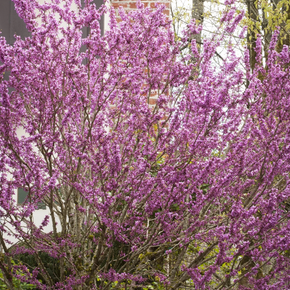
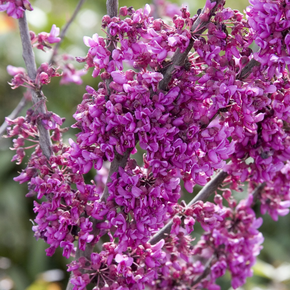
- Dazzling rose-violet blooms smother bare branches in early spring before the leaves emerge, delivering one of the most eye-catching floral displays of any small tree.
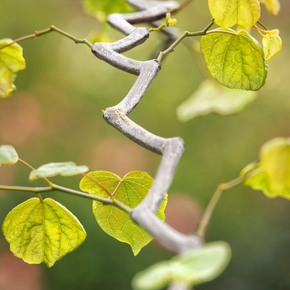
- Leathery, dark glossy-green heart-shaped leaves with distinctive wavy margins provide cooling shade through summer, then shift to warm golden yellow in fall for a stunning three-season show.
- Exceptionally tough and drought-tolerant once established, this Chihuahuan Desert native thrives in heat, alkaline or rocky soils, and arid conditions with very low water requirements.
- A pollinator magnet that draws bees, butterflies, and songbirds, while serving as a larval host plant for Henry's Elfin butterfly — all in a compact, thornless, and non-toxic package.
Mexican Redbud (Cercis canadensis var. mexicana) is a stunning small deciduous tree native to the rocky limestone canyons of southwest Texas and northeastern Mexico, prized for its extraordinary three-season ornamental appeal and remarkable resilience in challenging growing conditions. Each spring, clusters of showy rose-violet, pea-shaped flowers burst directly from bare branches and even mature trunk wood before the foliage appears, creating a breathtaking floral spectacle that signals the end of winter. As the blooms fade, distinctive heart-shaped leaves with a characteristic undulating margin emerge in a fresh lime green before deepening to a rich, glossy dark green through summer — noticeably thicker and more leathery than those of its eastern cousins, an adaptation that grants superior drought and heat tolerance. Come autumn, the foliage transitions to brilliant golden yellow, offering a warm finale before the tree enters dormancy. Maturing to a graceful, rounded canopy of 12 to 18 feet tall and equally wide, Mexican Redbud is perfectly scaled for smaller yards, patio gardens, parkways, and mixed border plantings. Its adaptability to alkaline, sandy, clay, or shallow rocky soils — combined with low water needs once established — makes it an outstanding choice for water-wise and native-inspired landscapes across Southern Oregon and Northern California. Whether planted as a focal specimen, a flowering understory accent, or a seasonal screen, Mexican Redbud brings unmatched ornamental value, low-maintenance charm, and vital ecological benefits to any garden setting.
Plant Description
Mexican Redbud is a woody, deciduous tree or large multi-stemmed shrub in the legume family (Fabaceae). It is a naturally occurring variety of eastern redbud native to the Chihuahuan Desert region of southwest Texas and northeastern Mexico, where it grows in rocky limestone canyons and hillsides. The genus name Cercis derives from the Greek word kerkis, meaning "weaver's shuttle," a reference to the long, flat seed pods that resemble the tool used to pass thread through a loom. The common name "redbud" refers to the reddish inner bark of the stems. Compared to eastern redbud (Cercis canadensis), the Mexican variety is smaller, slower growing, more heat and drought tolerant, and features distinctly glossier, more leathery foliage with a wavy leaf margin — traits that reflect its adaptation to an arid, sun-drenched native habitat. The tree naturally grows with multiple trunks and a dense, rounded to spreading crown, and can be selectively pruned into a more traditional single-leader tree form.
Mature Size and Growth Rate
Mexican Redbud is considered a slow to moderate grower, typically adding less growth per season than the eastern redbud. At maturity it generally reaches:
- Height: 12 to 18 feet
- Spread: 12 to 15 feet
- Form: Dense, rounded to spreading canopy; naturally multi-trunked
Its compact stature makes it ideal for smaller residential lots, patio gardens, and areas where a large-canopy tree would be out of scale. With patience, it develops into a beautifully structured specimen tree that rewards the long-term gardener.
Hardiness Zones and Climate Tolerance
Mexican Redbud is a notably tough and adaptable tree well suited to a wide range of climates:
- USDA Hardiness Zones: 6a through 9b
- Cold hardiness: Survives temperatures as low as -5°F, making it surprisingly cold hardy for a desert native
- Heat tolerance: Excellent; thrives in hot, dry summers typical of Southern Oregon and Northern California
- Drought tolerance: High once established; native to the arid Chihuahuan Desert
This variety outperforms eastern redbud in high-heat and low-water environments, making it a top choice for gardeners in Mediterranean and semi-arid Western climates where summer heat and drought stress are common concerns.
Sunlight Requirements
Mexican Redbud performs well across a range of light conditions, offering flexibility in placement within the landscape:
- Full Sun: 6 or more hours of direct sunlight per day — produces the most abundant flowering and tightest, most compact growth habit
- Partial Shade: 2 to 6 hours of direct sunlight — acceptable and particularly useful in hotter inland climates where afternoon shade can reduce heat stress; slightly reduced bloom density may occur
For the most spectacular spring flower display, a full-sun location is recommended. In regions with very hot summers, a site with morning sun and light afternoon shade can help maintain foliage quality through the heat of the season.
Soil and pH Preferences
One of the most adaptable small trees available for Western gardens, Mexican Redbud tolerates a wide range of soil types and pH levels:
- Soil types: Sandy, loam, clay, shallow rocky, or decomposed granite — provided drainage is adequate
- pH range: Acidic to highly alkaline (approximately pH 5.6 to 8.5); naturally grows in limestone-derived alkaline soils and is one of the few ornamental trees that genuinely thrives in high-pH conditions
- Drainage: Well-draining soils are essential; this tree is highly susceptible to root rot and stem rot in poorly drained or consistently wet soils — avoid planting in low spots or areas with standing water
- Soil amendment: Amending the planting hole is generally not recommended; backfilling with native soil encourages a stronger, more adapted root system
Watering Guide
Newly Planted Trees
Consistent watering during the establishment period (typically the first one to two growing seasons) is critical for success. A general schedule for trees planted in spring or fall:
| Time After Planting | Watering Frequency |
|---|---|
| Weeks 1 - 2 | Every 3 to 4 days |
| Weeks 3 - 4 | Every 6 to 7 days |
| Weeks 5 - 6 | Every 7 to 10 days |
| Weeks 7 - 8 | Every 10 to 14 days |
| After Week 8 | Gradually extend intervals based on season and rainfall |
Established Trees
Once fully established (typically after 1 to 2 years), Mexican Redbud is highly drought tolerant and requires only deep, infrequent watering. During the active growing season, watering once or twice per month is generally sufficient, adjusting for summer heat and rainfall. Trees in partial shade will need less supplemental water than those in full sun. No supplemental irrigation is typically needed during winter dormancy. Always water deeply to encourage deep root development, and avoid frequent shallow watering. Overwatering is the most common cause of decline in this species.
Fertilizing
Mexican Redbud is a light feeder that generally thrives without regular fertilization, particularly when planted in reasonably fertile native soils. As a member of the legume family (Fabaceae), it has the ability to fix atmospheric nitrogen through root associations, naturally improving the soil around it over time.
- In average garden soils, fertilizing is typically unnecessary and can even promote excessive, weak vegetative growth at the expense of flowering
- If growth appears unusually slow or foliage is pale and lacking vigor, a light application of a balanced, slow-release granular fertilizer (such as 10-10-10) in early spring can be beneficial
- Avoid high-nitrogen fertilizers, which encourage lush leafy growth but reduce bloom production
- A top-dressing of compost around the root zone in spring can improve soil structure and provide gentle, slow-release nutrients without risk of over-fertilization
- Do not fertilize in late summer or fall, as this can stimulate new growth that is vulnerable to early frost damage
Pruning and Maintenance
Mexican Redbud requires moderate pruning to develop and maintain an attractive structure, especially if a tree form (rather than a multi-stemmed shrub) is desired.
- Timing: Prune immediately after flowering in spring, as the tree blooms on new wood and pruning at this time will not sacrifice the following year's flower buds
- Young trees: Avoid significant structural pruning for the first two to three years after planting to allow the root system to establish; suckers may be removed during dormancy before this period ends
- Suckers: This species naturally produces root and basal suckers; remove them promptly at their point of origin if a clean tree form is desired
- Dead or damaged wood: Remove dead, crossing, or rubbing branches any time of year to maintain good air circulation and reduce disease pressure
- Canker-infected branches: Prune and dispose of any branches showing canker symptoms; disinfect pruning tools between cuts to prevent spreading fungal disease
- Professional pruning: For significant structural shaping, especially in the early years, hiring a certified arborist is strongly recommended to ensure the long-term health and beauty of the tree
Planting Instructions
Follow these steps for the best start with your Mexican Redbud:
- Choose the right time: Fall planting is ideal in most Western regions, giving the tree three full seasons to develop roots before facing summer heat. Early spring is the second-best option.
- Select the site carefully: Choose a location with well-draining soil and adequate sun exposure. Avoid low spots, areas near irrigation systems prone to overwatering, and locations with compacted or chronically wet soils.
- Dig the right hole: Dig a hole two to three times as wide as the root ball but no deeper than the height of the root ball. The top of the root ball should sit at or very slightly above the surrounding soil grade.
- Backfill with native soil: Do not amend the backfill soil. Using the original native soil encourages the roots to grow outward and adapt to the surrounding environment.
- Water thoroughly at planting: Soak the planting hole thoroughly to settle the soil and eliminate air pockets around the roots.
- Mulch the root zone: Apply a 2 to 4 inch layer of organic mulch (wood chips or bark) in a wide ring around the base of the tree, keeping mulch a few inches away from direct contact with the trunk. This conserves soil moisture, moderates soil temperature, and suppresses weeds.
- Stake only if necessary: Staking is rarely needed unless the tree is in a very windy location. If used, remove stakes after the first growing season.
Seasonal Interest
Mexican Redbud delivers exceptional ornamental value across three distinct seasons, making it one of the most rewarding small trees available for Western gardens:
- Winter (dormant): Attractive branching structure adds architectural interest to the winter garden; smooth gray-brown bark and the persistent outline of the rounded crown remain visually appealing
- Early Spring: The standout season — clusters of showy rose-violet to orchid-pink, pea-shaped flowers blanket every branch and even emerge directly from older woody stems before any leaves appear; red flower buds can remain closed for up to two weeks before opening, prolonging the display
- Spring into Summer: Fresh lime-green emerging leaves create a stunning contrast with remaining blooms; leaves mature to a rich, dark glossy green with distinctive wavy margins, providing a refined shade canopy through the hottest months; flat, green seed pods develop and gradually turn papery brown by late summer
- Fall: Foliage transitions to warm golden yellow, rivaling the fall color of aspens; one of the few small trees in the Western landscape to offer genuine autumn color before leaf drop
Landscape Uses
The compact size, exceptional flowering, and low water needs of Mexican Redbud make it one of the most versatile small trees for residential and commercial landscapes in Southern Oregon and Northern California:
- Specimen or focal point tree: Plant singly in a lawn or garden bed where its spring bloom display can be fully appreciated
- Patio tree: Its manageable size, lack of thorns, and non-toxic nature make it ideal near outdoor living areas and patios
- Understory tree: Works beautifully under taller native oaks or in the dappled shade of an open woodland garden
- Mixed border anchor: Provides height, seasonal structure, and flowering interest at the back of a mixed shrub or perennial border
- Foundation planting: Well-proportioned for use near structures where larger trees would eventually become a problem
- Pollinator and native garden: A natural fit for wildlife-friendly, drought-tolerant, or California and Pacific Northwest native plant garden designs
- Screening: Multiple trees planted in a loose grouping create a seasonal screen or informal hedge with outstanding spring color
- Parkway and street-side planting: Tolerates poor soils and reflected heat; suitable for residential parkway strips with adequate drainage
Companion Plants
Mexican Redbud pairs beautifully with a wide range of drought-tolerant and native plants that share its preference for well-drained soils and minimal supplemental water. Consider these combinations for a cohesive, low-maintenance landscape:
- Desert Marigold (Baileya multiradiata): Cheerful yellow daisy-like blooms complement the spring rose-violet flowers and summer green foliage; both share low-water needs and a love of full sun
- Purple Sage (Salvia leucophylla): Aromatic silver-and-purple foliage provides a beautiful color contrast throughout the growing season; both thrive in hot, dry conditions
- Mexican Feather Grass (Nassella tenuissima): Soft, airy texture creates a graceful contrast to the bold, rounded canopy of the redbud; drought tolerant and visually harmonious
- Blackfoot Daisy (Melampodium leucanthum): Low-growing white blooms extend seasonal color from summer into fall when the redbud is not in flower
- Autumn Sage (Salvia greggii): Repeated red, pink, or coral blooms from spring through fall complement the redbud's seasonal rhythm and attract the same pollinator community
- Blue Grama Grass (Bouteloua gracilis): A fine-textured native grass that creates a naturalistic understory without competing aggressively for water or nutrients
- Western Redbud (Cercis occidentalis): A California native relative that can be planted alongside for a redbud grove effect with complementary seasonal interest
Plants to avoid nearby: Eucalyptus species, which are allelopathic and heavy water consumers that can compete aggressively with and inhibit surrounding plantings including Mexican Redbud. Also avoid planting with aggressive spreading grasses that may outcompete young trees for nutrients and root space.
Pests and Diseases
Mexican Redbud is relatively problem-free when sited correctly, but there are a few pests and diseases to be aware of:
Common Pests
- Leafcutter Bees: The most frequently observed "damage" — these important native bees cut clean, circular or oval sections from the leaves to line their nest cells. The damage is cosmetic and rarely harms the tree; leafcutter bees are beneficial pollinators and should not be discouraged or controlled
- Scale Insects: Occasional infestations of soft or armored scale can occur on stems and branches; treat with horticultural oil spray during the dormant season or with insecticidal soap on active crawlers
- Aphids: May appear on new growth in spring; typically controlled naturally by beneficial insects; a strong jet of water or insecticidal soap can be used for heavy infestations
Common Diseases
- Botryosphaeria Canker: The most serious disease of redbud species; begins as small sunken, blackening areas on bark that slowly enlarge, girdling stems and causing dieback above the infection. Prune out and dispose of affected branches; disinfect tools between cuts; avoid drought stress which increases susceptibility
- Verticillium Wilt: A soil-borne fungal disease causing sudden wilting, yellowing, and dieback of individual branches; there is no cure, but tree stress should be minimized; remove and replace severely affected trees if necessary
- Root Rot and Stem Rot: Almost always the result of overwatering or poor drainage; prevention through proper siting and watering practices is the best strategy — there is no effective treatment once established
- Cercospora Leaf Spot: Brown, circular spots with halos may appear during prolonged wet weather; rarely serious; fungicide applications on a 10-day interval can be used if defoliation is occurring
Other Concerns
- Deer: Young trees can suffer browsing damage from deer; protective caging is advisable in areas with high deer pressure until the tree is well established
- Seed pod litter: Flat brown seed pods can create seasonal litter; consider placement away from pools or paved areas where cleanup may be inconvenient
Wildlife Value
Mexican Redbud is an outstanding wildlife-support plant that makes a meaningful ecological contribution to any garden or landscape:
- Larval host plant: Serves as a documented larval host for Henry's Elfin butterfly (Callophrys henrici), a small and increasingly rare native butterfly that depends on redbud species for caterpillar development
- Pollinator attraction: The early spring flowers are a critical nectar source for native bees, bumble bees, and honeybees at a time when few other trees are in bloom, providing an important food resource after winter
- Specialized bee forage: Attracts specialist native bees that have co-evolved with Cercis species
- Butterfly nectar source: The blooms attract a variety of spring butterflies in addition to its role as a host plant
- Songbird habitat: Seed pods attract seed-eating songbirds in fall and winter; dense branching provides nesting and perching habitat
- Leafcutter bee nesting material: Provides leaf material harvested by native leafcutter bees to construct nest cells in nearby cavities
- Non-toxic: Safe around children, dogs, cats, and other pets — no toxic compounds present in foliage, flowers, or seeds
Edibility and Ethnobotanical Notes
Like other members of the redbud genus, Mexican Redbud has a history of limited edible use:
- Flowers: The fresh blossoms are edible and can be eaten raw directly from the branch, tossed into spring salads, or used as a colorful edible garnish; they have a mildly sweet, slightly tangy flavor
- Flower buds: Unopened buds can be pickled similarly to capers and used as a condiment
- Young seed pods: When still green and tender, the immature pods can be eaten raw, sauteed, or lightly boiled; they become tough and papery as they mature and are no longer palatable once dried
As with any wild or ornamental plant intended for consumption, positively confirm plant identity with multiple reliable references before eating any part of the plant.
Container Growing
While Mexican Redbud is best suited to in-ground planting where its root system can fully develop, it can be grown in large containers for several years, particularly on patios and in courtyard gardens:
- Container size: Use the largest container practical — a minimum of 25 to 30 gallons for long-term container culture; larger is always better for root health and stability
- Potting mix: Use a well-draining mix; incorporate coarse perlite or decomposed granite to improve drainage and prevent waterlogging; avoid moisture-retaining mixes
- Watering in containers: Container-grown trees dry out faster than in-ground plantings and will require more frequent watering, especially during summer heat; check soil moisture regularly and water when the top 2 to 3 inches are dry
- Fertilizing in containers: Apply a balanced slow-release granular fertilizer in early spring; container plants benefit from light feeding more than in-ground trees since nutrients leach out with regular watering
- Root pruning: Repot or root-prune every two to three years to prevent the tree from becoming root-bound and to refresh the growing medium
- Winter protection: Container roots are more exposed to freezing than in-ground roots; in zones 6 and 7, move containers to a sheltered location or wrap pots with insulating material during hard freezes
- Long-term planning: For the healthiest, longest-lived specimens and the most spectacular flowering displays, transitioning the tree to an in-ground planting is recommended when space allows
- Dazzling rose-violet blooms smother bare branches in early spring before the leaves emerge, delivering one of the most eye-catching floral displays of any small tree.
- Leathery, dark glossy-green heart-shaped leaves with distinctive wavy margins provide cooling shade through summer, then shift to warm golden yellow in fall for a stunning three-season show.
- Exceptionally tough and drought-tolerant once established, this Chihuahuan Desert native thrives in heat, alkaline or rocky soils, and arid conditions with very low water requirements.
- A pollinator magnet that draws bees, butterflies, and songbirds, while serving as a larval host plant for Henry's Elfin butterfly — all in a compact, thornless, and non-toxic package.
Mexican Redbud (Cercis canadensis var. mexicana) is a stunning small deciduous tree native to the rocky limestone canyons of southwest Texas and northeastern Mexico, prized for its extraordinary three-season ornamental appeal and remarkable resilience in challenging growing conditions. Each spring, clusters of showy rose-violet, pea-shaped flowers burst directly from bare branches and even mature trunk wood before the foliage appears, creating a breathtaking floral spectacle that signals the end of winter. As the blooms fade, distinctive heart-shaped leaves with a characteristic undulating margin emerge in a fresh lime green before deepening to a rich, glossy dark green through summer — noticeably thicker and more leathery than those of its eastern cousins, an adaptation that grants superior drought and heat tolerance. Come autumn, the foliage transitions to brilliant golden yellow, offering a warm finale before the tree enters dormancy. Maturing to a graceful, rounded canopy of 12 to 18 feet tall and equally wide, Mexican Redbud is perfectly scaled for smaller yards, patio gardens, parkways, and mixed border plantings. Its adaptability to alkaline, sandy, clay, or shallow rocky soils — combined with low water needs once established — makes it an outstanding choice for water-wise and native-inspired landscapes across Southern Oregon and Northern California. Whether planted as a focal specimen, a flowering understory accent, or a seasonal screen, Mexican Redbud brings unmatched ornamental value, low-maintenance charm, and vital ecological benefits to any garden setting.
Plant Description
Mexican Redbud is a woody, deciduous tree or large multi-stemmed shrub in the legume family (Fabaceae). It is a naturally occurring variety of eastern redbud native to the Chihuahuan Desert region of southwest Texas and northeastern Mexico, where it grows in rocky limestone canyons and hillsides. The genus name Cercis derives from the Greek word kerkis, meaning "weaver's shuttle," a reference to the long, flat seed pods that resemble the tool used to pass thread through a loom. The common name "redbud" refers to the reddish inner bark of the stems. Compared to eastern redbud (Cercis canadensis), the Mexican variety is smaller, slower growing, more heat and drought tolerant, and features distinctly glossier, more leathery foliage with a wavy leaf margin — traits that reflect its adaptation to an arid, sun-drenched native habitat. The tree naturally grows with multiple trunks and a dense, rounded to spreading crown, and can be selectively pruned into a more traditional single-leader tree form.
Mature Size and Growth Rate
Mexican Redbud is considered a slow to moderate grower, typically adding less growth per season than the eastern redbud. At maturity it generally reaches:
- Height: 12 to 18 feet
- Spread: 12 to 15 feet
- Form: Dense, rounded to spreading canopy; naturally multi-trunked
Its compact stature makes it ideal for smaller residential lots, patio gardens, and areas where a large-canopy tree would be out of scale. With patience, it develops into a beautifully structured specimen tree that rewards the long-term gardener.
Hardiness Zones and Climate Tolerance
Mexican Redbud is a notably tough and adaptable tree well suited to a wide range of climates:
- USDA Hardiness Zones: 6a through 9b
- Cold hardiness: Survives temperatures as low as -5°F, making it surprisingly cold hardy for a desert native
- Heat tolerance: Excellent; thrives in hot, dry summers typical of Southern Oregon and Northern California
- Drought tolerance: High once established; native to the arid Chihuahuan Desert
This variety outperforms eastern redbud in high-heat and low-water environments, making it a top choice for gardeners in Mediterranean and semi-arid Western climates where summer heat and drought stress are common concerns.
Sunlight Requirements
Mexican Redbud performs well across a range of light conditions, offering flexibility in placement within the landscape:
- Full Sun: 6 or more hours of direct sunlight per day — produces the most abundant flowering and tightest, most compact growth habit
- Partial Shade: 2 to 6 hours of direct sunlight — acceptable and particularly useful in hotter inland climates where afternoon shade can reduce heat stress; slightly reduced bloom density may occur
For the most spectacular spring flower display, a full-sun location is recommended. In regions with very hot summers, a site with morning sun and light afternoon shade can help maintain foliage quality through the heat of the season.
Soil and pH Preferences
One of the most adaptable small trees available for Western gardens, Mexican Redbud tolerates a wide range of soil types and pH levels:
- Soil types: Sandy, loam, clay, shallow rocky, or decomposed granite — provided drainage is adequate
- pH range: Acidic to highly alkaline (approximately pH 5.6 to 8.5); naturally grows in limestone-derived alkaline soils and is one of the few ornamental trees that genuinely thrives in high-pH conditions
- Drainage: Well-draining soils are essential; this tree is highly susceptible to root rot and stem rot in poorly drained or consistently wet soils — avoid planting in low spots or areas with standing water
- Soil amendment: Amending the planting hole is generally not recommended; backfilling with native soil encourages a stronger, more adapted root system
Watering Guide
Newly Planted Trees
Consistent watering during the establishment period (typically the first one to two growing seasons) is critical for success. A general schedule for trees planted in spring or fall:
| Time After Planting | Watering Frequency |
|---|---|
| Weeks 1 - 2 | Every 3 to 4 days |
| Weeks 3 - 4 | Every 6 to 7 days |
| Weeks 5 - 6 | Every 7 to 10 days |
| Weeks 7 - 8 | Every 10 to 14 days |
| After Week 8 | Gradually extend intervals based on season and rainfall |
Established Trees
Once fully established (typically after 1 to 2 years), Mexican Redbud is highly drought tolerant and requires only deep, infrequent watering. During the active growing season, watering once or twice per month is generally sufficient, adjusting for summer heat and rainfall. Trees in partial shade will need less supplemental water than those in full sun. No supplemental irrigation is typically needed during winter dormancy. Always water deeply to encourage deep root development, and avoid frequent shallow watering. Overwatering is the most common cause of decline in this species.
Fertilizing
Mexican Redbud is a light feeder that generally thrives without regular fertilization, particularly when planted in reasonably fertile native soils. As a member of the legume family (Fabaceae), it has the ability to fix atmospheric nitrogen through root associations, naturally improving the soil around it over time.
- In average garden soils, fertilizing is typically unnecessary and can even promote excessive, weak vegetative growth at the expense of flowering
- If growth appears unusually slow or foliage is pale and lacking vigor, a light application of a balanced, slow-release granular fertilizer (such as 10-10-10) in early spring can be beneficial
- Avoid high-nitrogen fertilizers, which encourage lush leafy growth but reduce bloom production
- A top-dressing of compost around the root zone in spring can improve soil structure and provide gentle, slow-release nutrients without risk of over-fertilization
- Do not fertilize in late summer or fall, as this can stimulate new growth that is vulnerable to early frost damage
Pruning and Maintenance
Mexican Redbud requires moderate pruning to develop and maintain an attractive structure, especially if a tree form (rather than a multi-stemmed shrub) is desired.
- Timing: Prune immediately after flowering in spring, as the tree blooms on new wood and pruning at this time will not sacrifice the following year's flower buds
- Young trees: Avoid significant structural pruning for the first two to three years after planting to allow the root system to establish; suckers may be removed during dormancy before this period ends
- Suckers: This species naturally produces root and basal suckers; remove them promptly at their point of origin if a clean tree form is desired
- Dead or damaged wood: Remove dead, crossing, or rubbing branches any time of year to maintain good air circulation and reduce disease pressure
- Canker-infected branches: Prune and dispose of any branches showing canker symptoms; disinfect pruning tools between cuts to prevent spreading fungal disease
- Professional pruning: For significant structural shaping, especially in the early years, hiring a certified arborist is strongly recommended to ensure the long-term health and beauty of the tree
Planting Instructions
Follow these steps for the best start with your Mexican Redbud:
- Choose the right time: Fall planting is ideal in most Western regions, giving the tree three full seasons to develop roots before facing summer heat. Early spring is the second-best option.
- Select the site carefully: Choose a location with well-draining soil and adequate sun exposure. Avoid low spots, areas near irrigation systems prone to overwatering, and locations with compacted or chronically wet soils.
- Dig the right hole: Dig a hole two to three times as wide as the root ball but no deeper than the height of the root ball. The top of the root ball should sit at or very slightly above the surrounding soil grade.
- Backfill with native soil: Do not amend the backfill soil. Using the original native soil encourages the roots to grow outward and adapt to the surrounding environment.
- Water thoroughly at planting: Soak the planting hole thoroughly to settle the soil and eliminate air pockets around the roots.
- Mulch the root zone: Apply a 2 to 4 inch layer of organic mulch (wood chips or bark) in a wide ring around the base of the tree, keeping mulch a few inches away from direct contact with the trunk. This conserves soil moisture, moderates soil temperature, and suppresses weeds.
- Stake only if necessary: Staking is rarely needed unless the tree is in a very windy location. If used, remove stakes after the first growing season.
Seasonal Interest
Mexican Redbud delivers exceptional ornamental value across three distinct seasons, making it one of the most rewarding small trees available for Western gardens:
- Winter (dormant): Attractive branching structure adds architectural interest to the winter garden; smooth gray-brown bark and the persistent outline of the rounded crown remain visually appealing
- Early Spring: The standout season — clusters of showy rose-violet to orchid-pink, pea-shaped flowers blanket every branch and even emerge directly from older woody stems before any leaves appear; red flower buds can remain closed for up to two weeks before opening, prolonging the display
- Spring into Summer: Fresh lime-green emerging leaves create a stunning contrast with remaining blooms; leaves mature to a rich, dark glossy green with distinctive wavy margins, providing a refined shade canopy through the hottest months; flat, green seed pods develop and gradually turn papery brown by late summer
- Fall: Foliage transitions to warm golden yellow, rivaling the fall color of aspens; one of the few small trees in the Western landscape to offer genuine autumn color before leaf drop
Landscape Uses
The compact size, exceptional flowering, and low water needs of Mexican Redbud make it one of the most versatile small trees for residential and commercial landscapes in Southern Oregon and Northern California:
- Specimen or focal point tree: Plant singly in a lawn or garden bed where its spring bloom display can be fully appreciated
- Patio tree: Its manageable size, lack of thorns, and non-toxic nature make it ideal near outdoor living areas and patios
- Understory tree: Works beautifully under taller native oaks or in the dappled shade of an open woodland garden
- Mixed border anchor: Provides height, seasonal structure, and flowering interest at the back of a mixed shrub or perennial border
- Foundation planting: Well-proportioned for use near structures where larger trees would eventually become a problem
- Pollinator and native garden: A natural fit for wildlife-friendly, drought-tolerant, or California and Pacific Northwest native plant garden designs
- Screening: Multiple trees planted in a loose grouping create a seasonal screen or informal hedge with outstanding spring color
- Parkway and street-side planting: Tolerates poor soils and reflected heat; suitable for residential parkway strips with adequate drainage
Companion Plants
Mexican Redbud pairs beautifully with a wide range of drought-tolerant and native plants that share its preference for well-drained soils and minimal supplemental water. Consider these combinations for a cohesive, low-maintenance landscape:
- Desert Marigold (Baileya multiradiata): Cheerful yellow daisy-like blooms complement the spring rose-violet flowers and summer green foliage; both share low-water needs and a love of full sun
- Purple Sage (Salvia leucophylla): Aromatic silver-and-purple foliage provides a beautiful color contrast throughout the growing season; both thrive in hot, dry conditions
- Mexican Feather Grass (Nassella tenuissima): Soft, airy texture creates a graceful contrast to the bold, rounded canopy of the redbud; drought tolerant and visually harmonious
- Blackfoot Daisy (Melampodium leucanthum): Low-growing white blooms extend seasonal color from summer into fall when the redbud is not in flower
- Autumn Sage (Salvia greggii): Repeated red, pink, or coral blooms from spring through fall complement the redbud's seasonal rhythm and attract the same pollinator community
- Blue Grama Grass (Bouteloua gracilis): A fine-textured native grass that creates a naturalistic understory without competing aggressively for water or nutrients
- Western Redbud (Cercis occidentalis): A California native relative that can be planted alongside for a redbud grove effect with complementary seasonal interest
Plants to avoid nearby: Eucalyptus species, which are allelopathic and heavy water consumers that can compete aggressively with and inhibit surrounding plantings including Mexican Redbud. Also avoid planting with aggressive spreading grasses that may outcompete young trees for nutrients and root space.
Pests and Diseases
Mexican Redbud is relatively problem-free when sited correctly, but there are a few pests and diseases to be aware of:
Common Pests
- Leafcutter Bees: The most frequently observed "damage" — these important native bees cut clean, circular or oval sections from the leaves to line their nest cells. The damage is cosmetic and rarely harms the tree; leafcutter bees are beneficial pollinators and should not be discouraged or controlled
- Scale Insects: Occasional infestations of soft or armored scale can occur on stems and branches; treat with horticultural oil spray during the dormant season or with insecticidal soap on active crawlers
- Aphids: May appear on new growth in spring; typically controlled naturally by beneficial insects; a strong jet of water or insecticidal soap can be used for heavy infestations
Common Diseases
- Botryosphaeria Canker: The most serious disease of redbud species; begins as small sunken, blackening areas on bark that slowly enlarge, girdling stems and causing dieback above the infection. Prune out and dispose of affected branches; disinfect tools between cuts; avoid drought stress which increases susceptibility
- Verticillium Wilt: A soil-borne fungal disease causing sudden wilting, yellowing, and dieback of individual branches; there is no cure, but tree stress should be minimized; remove and replace severely affected trees if necessary
- Root Rot and Stem Rot: Almost always the result of overwatering or poor drainage; prevention through proper siting and watering practices is the best strategy — there is no effective treatment once established
- Cercospora Leaf Spot: Brown, circular spots with halos may appear during prolonged wet weather; rarely serious; fungicide applications on a 10-day interval can be used if defoliation is occurring
Other Concerns
- Deer: Young trees can suffer browsing damage from deer; protective caging is advisable in areas with high deer pressure until the tree is well established
- Seed pod litter: Flat brown seed pods can create seasonal litter; consider placement away from pools or paved areas where cleanup may be inconvenient
Wildlife Value
Mexican Redbud is an outstanding wildlife-support plant that makes a meaningful ecological contribution to any garden or landscape:
- Larval host plant: Serves as a documented larval host for Henry's Elfin butterfly (Callophrys henrici), a small and increasingly rare native butterfly that depends on redbud species for caterpillar development
- Pollinator attraction: The early spring flowers are a critical nectar source for native bees, bumble bees, and honeybees at a time when few other trees are in bloom, providing an important food resource after winter
- Specialized bee forage: Attracts specialist native bees that have co-evolved with Cercis species
- Butterfly nectar source: The blooms attract a variety of spring butterflies in addition to its role as a host plant
- Songbird habitat: Seed pods attract seed-eating songbirds in fall and winter; dense branching provides nesting and perching habitat
- Leafcutter bee nesting material: Provides leaf material harvested by native leafcutter bees to construct nest cells in nearby cavities
- Non-toxic: Safe around children, dogs, cats, and other pets — no toxic compounds present in foliage, flowers, or seeds
Edibility and Ethnobotanical Notes
Like other members of the redbud genus, Mexican Redbud has a history of limited edible use:
- Flowers: The fresh blossoms are edible and can be eaten raw directly from the branch, tossed into spring salads, or used as a colorful edible garnish; they have a mildly sweet, slightly tangy flavor
- Flower buds: Unopened buds can be pickled similarly to capers and used as a condiment
- Young seed pods: When still green and tender, the immature pods can be eaten raw, sauteed, or lightly boiled; they become tough and papery as they mature and are no longer palatable once dried
As with any wild or ornamental plant intended for consumption, positively confirm plant identity with multiple reliable references before eating any part of the plant.
Container Growing
While Mexican Redbud is best suited to in-ground planting where its root system can fully develop, it can be grown in large containers for several years, particularly on patios and in courtyard gardens:
- Container size: Use the largest container practical — a minimum of 25 to 30 gallons for long-term container culture; larger is always better for root health and stability
- Potting mix: Use a well-draining mix; incorporate coarse perlite or decomposed granite to improve drainage and prevent waterlogging; avoid moisture-retaining mixes
- Watering in containers: Container-grown trees dry out faster than in-ground plantings and will require more frequent watering, especially during summer heat; check soil moisture regularly and water when the top 2 to 3 inches are dry
- Fertilizing in containers: Apply a balanced slow-release granular fertilizer in early spring; container plants benefit from light feeding more than in-ground trees since nutrients leach out with regular watering
- Root pruning: Repot or root-prune every two to three years to prevent the tree from becoming root-bound and to refresh the growing medium
- Winter protection: Container roots are more exposed to freezing than in-ground roots; in zones 6 and 7, move containers to a sheltered location or wrap pots with insulating material during hard freezes
- Long-term planning: For the healthiest, longest-lived specimens and the most spectacular flowering displays, transitioning the tree to an in-ground planting is recommended when space allows
Related Products