


Zoom the image with the mouse
Little Gem Norway Spruce - 5 Gallon
SKU:
195510
$89.99
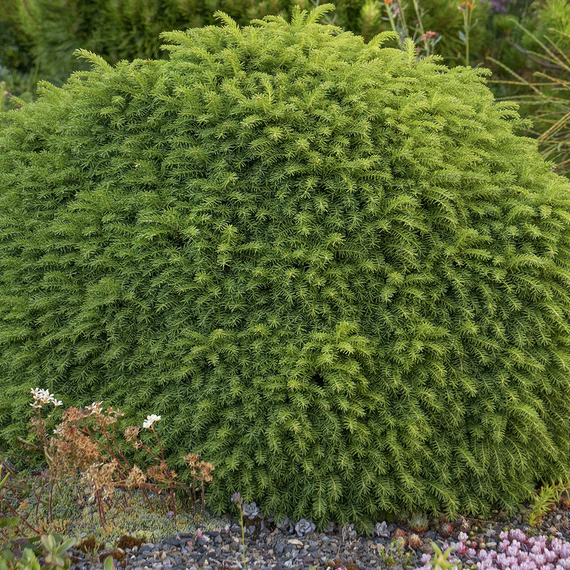
- Award-winning dwarf evergreen conifer forming a naturally dense, flat-topped globe of rich, dark green needles with no pruning required
- Exceptionally slow-growing at roughly 1-3 inches per year, reaching only 12-24 inches tall and up to 2-3 feet wide at full maturity
- Hardy in USDA Zones 3-7, tolerating extreme cold, wind, air pollution, deer, and a wide range of soil types with ease
- Perfectly scaled for rock gardens, container plantings, front-of-border accents, and small-space landscapes with four-season evergreen interest
Picea abies 'Little Gem' - the Little Gem Norway Spruce - is a treasured dwarf conifer and a standout among miniature evergreens, earning the prestigious Royal Horticultural Society Award of Garden Merit for its consistent beauty and reliable low-maintenance performance. A compact sport of the well-known Bird's Nest Spruce (Picea abies 'Nidiformis'), this charming cultivar develops into a naturally tidy, flat-topped bun or cushion of extraordinarily dense, finely textured foliage that requires virtually no shaping or intervention to maintain its sculptural form. Each spring, a flush of bright lime-green new growth emerges at the tips of layered, short branches, creating a stunning two-toned contrast before maturing to the deep, glossy, dark green that defines this plant throughout the remaining seasons. Growing an incredibly modest 1 to 3 inches per year and ultimately reaching just 1 to 2 feet tall by 2 to 3 feet wide over many years, this miniature marvel is ideally suited for small urban gardens, rock gardens, alpine-themed plantings, patio containers, foundation borders, and conifer collections where year-round structure, texture, and refined beauty are desired without the demands of constant upkeep.
Plant Description
Little Gem Norway Spruce (Picea abies 'Little Gem') is a dwarf, needled evergreen conifer in the Pinaceae family. It originated as a sport of Picea abies 'Nidiformis' (Bird's Nest Spruce) and has become one of the most popular miniature conifers available in horticulture today. The plant forms a dense, flat-topped globe or bun shape with tightly layered, short branches radiating outward in a symmetrical pattern. The four-sided, needle-like leaves are tiny, soft, and closely packed along the stems, giving the plant a remarkably fine texture that invites close inspection. New needles flush bright, fresh green in spring and gradually deepen to a rich, glossy dark green as the season progresses. Unlike the full-sized Norway spruce species, 'Little Gem' will not produce the large, pendulous cones characteristic of the parent species at a young age, and its entire character is defined by its compact, cushion-like architectural form. It is a recipient of the Royal Horticultural Society's prestigious Award of Garden Merit.
Mature Size
| Attribute | Detail |
|---|---|
| Growth Rate | Very slow; approximately 1-3 inches per year |
| Height at 10 Years | Approximately 10-12 inches tall |
| Spread at 10 Years | Approximately 18-24 inches wide |
| Ultimate Mature Height | Up to 18-24 inches tall over many decades |
| Ultimate Mature Spread | Up to 2-3 feet wide at full maturity |
| Recommended Spacing | 18-24 inches on center |
Hardiness and Climate
Little Gem Norway Spruce is cold-hardy in USDA Hardiness Zones 3 through 7, tolerating extreme winter temperatures as low as -40 degrees F in the coldest zones. It performs best in cool to moderate climates and genuinely thrives where summers remain relatively mild. In regions with hot, humid summers - particularly south of Zone 7 - it may struggle, as Norway spruce cultivars prefer cool summer temperatures for optimal health and appearance. For gardeners in Southern Oregon and Northern California, this spruce performs exceptionally well in the cooler mountain foothills and higher elevations but may show stress in hot, dry valley locations during peak summer heat. Providing afternoon shade and consistent soil moisture can help extend its comfort range into warmer microclimates. It has good tolerance for urban conditions, air pollution, and wind exposure.
Sunlight Requirements
Little Gem Norway Spruce performs best in full sun, defined as 6 or more hours of direct sunlight per day. Ample sun exposure promotes the densest foliage, the most compact and symmetrical form, and the most vibrant needle color. It will tolerate partial shade (3-6 hours of direct sun, ideally morning sun with protection from harsh afternoon rays), which can actually be beneficial in hotter climates where intense afternoon sun may cause foliage scorch or desiccation. However, in deep shade the plant will produce noticeably loose, sparse growth and lose its characteristic tight, bun-shaped habit. For best results, avoid planting in locations with fewer than 3-4 hours of direct sun per day.
Soil and pH Preferences
This cultivar thrives in average to rich, slightly acidic, evenly moist, well-drained soils. It is adaptable to a range of soil textures including sand, loam, and even clay - provided drainage is adequate. Soil pH ideally falls between 5.0 and 6.5 (slightly acidic to neutral). Like all members of the Picea genus, 'Little Gem' absolutely cannot tolerate waterlogged or consistently soggy conditions, which will cause root rot and rapid decline. If your native soil is heavy clay, amending the planting area with compost, coarse sand, or pine bark fines will greatly improve drainage and root health. Incorporating organic matter such as compost, aged leaf mold, or peat moss helps acidify the soil, improve structure, and encourage vigorous establishment. A soil test before planting is recommended if your soil pH is unknown.
Watering Guide
Consistent moisture is critical during the first year after planting while the root system is becoming established. Water deeply and thoroughly immediately after planting, and continue to check soil moisture every 2-3 days during dry or warm periods. The goal is to keep the root zone evenly moist but never waterlogged - insert a finger 2-3 inches into the soil; if it feels dry, it is time to water. Once established after the first growing season, Little Gem Norway Spruce develops reasonable drought tolerance and typically requires supplemental watering only during extended dry spells. Reduce watering frequency in cool or wet weather. Soaker hoses or drip irrigation at the base of the plant are ideal delivery methods, as they keep foliage dry and reduce the risk of fungal issues. Avoid overhead watering when possible. Mulching around the base of the plant (see Planting Instructions) helps conserve soil moisture between waterings.
Fertilizing
Little Gem Norway Spruce has modest nutritional needs and does not require heavy feeding. In most garden soils with reasonable organic content, annual fertilization once per year in early spring is sufficient to support healthy growth. Use a slow-release, balanced fertilizer formulated for acid-loving evergreens or conifers, following the package directions for application rates. Avoid over-fertilizing, which can stimulate excessive, soft growth that is out of character for this dwarf cultivar and may make the plant more susceptible to pest damage. Do not fertilize after midsummer, as late-season feeding can encourage tender new growth that may be damaged by early frosts. In poor or sandy soils, a light supplemental feeding of a diluted liquid fertilizer in late spring can be beneficial. Always water thoroughly before and after applying any fertilizer to avoid root burn.
Pruning and Maintenance
One of the most appealing qualities of Little Gem Norway Spruce is that it requires virtually no pruning to maintain its naturally tidy, globe-shaped form. The plant's inherently dense, slow-growing habit means it stays compact and symmetrical without any intervention. In general, pruning is discouraged unless absolutely necessary, as removing branches can disrupt the plant's natural shape and slow its already gradual growth. If a wayward or dead branch needs to be removed for aesthetic or health reasons, do so with clean, sharp pruning shears in late winter or very early spring before new growth begins. If you wish to lightly encourage greater density, pinching back approximately one-third of the soft new spring growth (candles) with your fingers as it elongates can help create a slightly more compact appearance. Never cut back into old, bare wood, as Norway spruce does not regenerate foliage from leafless stems. Remove any dead, damaged, or diseased branches promptly at any time of year.
Planting Instructions
- Choose a site with full sun and well-drained soil. Avoid low-lying areas where water collects.
- Dig a planting hole 2 to 3 times wider than the root ball but no deeper than the root ball's height.
- Gently remove the plant from its container and inspect the roots. Loosen or lightly score any circling roots to encourage outward growth.
- Locate the root flare - the point where the trunk widens at the base - and ensure it sits at or very slightly above the surrounding soil grade. Planting too deep is a common and serious mistake for conifers.
- Backfill the hole with the native soil, incorporating compost or other organic amendments if soil quality is poor. Firm the soil gently to eliminate air pockets without over-compacting.
- Water deeply and thoroughly to settle the soil around the roots and eliminate remaining air pockets.
- Apply a 2-3 inch layer of organic mulch (pine bark, shredded wood chips, or leaf mold) over the root zone extending to the drip line. Keep mulch pulled back 2-3 inches from the trunk to prevent moisture buildup and potential rot.
- Continue regular watering throughout the first growing season to support establishment.
Seasonal Interest
Little Gem Norway Spruce offers genuine four-season garden appeal. In early spring, vibrant lime-green new growth flushes at the tips of every branch, creating a striking two-toned display against the deep, dark green of the older foliage - this brief seasonal show is one of the plant's most charming features. Through summer, the needles transition to a rich, uniform deep green, and the plant's dense, sculptural cushion form adds consistent texture and structure to the landscape. In autumn and winter, when many plants have lost their foliage and the garden quiets, 'Little Gem' remains a bold and reliable evergreen presence, providing color, form, and life to the winter garden. Its compact mounding shape can also hold a light dusting of snow beautifully, adding another layer of seasonal charm in colder climates.
Landscape Uses
The versatility of Little Gem Norway Spruce makes it a valuable asset in a wide range of landscape applications. Its small stature and refined texture make it especially useful in situations where most conifers would quickly outgrow the available space. Recommended uses include:
- Rock gardens and alpine-themed plantings, where its mounding form mimics the natural growth of high-altitude conifers
- Front-of-border accents in mixed perennial or shrub beds, providing low, year-round evergreen structure
- Foundation plantings near entryways, windows, or building corners where a small-scale, long-lived evergreen is needed
- Container and patio plantings, bringing architectural evergreen form to decks, patios, and courtyards
- Conifer and dwarf evergreen collections or specialty gardens
- Small-space and urban gardens where compact plants are essential
- Low-maintenance edging or repetitive planting along pathways or garden borders
- Zen or Japanese-style gardens where a calm, structured evergreen element is desired
Container Growing
Little Gem Norway Spruce is an excellent candidate for container culture, making it a wonderful choice for patios, entryways, rooftop gardens, and balconies where in-ground planting is not possible. Choose a container that is at least 2-3 inches larger in diameter than the root ball, with ample drainage holes to prevent water from pooling at the base. Use a high-quality, well-draining potting mix formulated for conifers or acid-loving plants, or blend standard potting soil with perlite and pine bark fines for improved drainage and slight acidity. Container-grown plants dry out more quickly than those in the ground, so check soil moisture regularly - especially during warm weather - and water when the top 2 inches of the mix feel dry. Fertilize lightly with a slow-release, acid-loving evergreen fertilizer in spring. In the coldest zones, containers may need to be moved to a sheltered, unheated garage or shed over winter to protect the roots from freeze-thaw cycles, as container roots are more vulnerable to extreme cold than in-ground roots.
Pests and Diseases
Little Gem Norway Spruce is generally healthy and trouble-free when sited correctly, but it can be susceptible to a number of common conifer pests and diseases worth monitoring for:
- Spider Mites: The most common pest concern, especially in hot and dry conditions. Look for fine webbing and a dusty, bronzed, or stippled appearance to the needles. Control with insecticidal soap, horticultural oil, or a strong spray of water to knock mites off the foliage.
- Adelgids and Aphids: Small, soft-bodied insects that feed on sap and may cause distorted or yellowing new growth. Treat with insecticidal soap or neem oil if populations become significant.
- Bagworms: Caterpillars that construct small, spindle-shaped bags from foliage. Hand-pick bags in late fall or winter, or treat with appropriate pesticides in early summer when larvae are young.
- Cytospora Canker: A fungal disease that causes browning and die-back of individual branches. Improve air circulation, avoid overhead irrigation, and prune out infected branches promptly with sterilized tools.
- Needle Cast: Fungal diseases causing premature needle drop and browning. Reduce by avoiding overhead watering and ensuring good air circulation.
- Root Rot: Results from poorly drained or consistently waterlogged soil. Prevention through proper site selection and soil preparation is the best strategy.
Healthy plants in well-drained, properly sited locations are far more resistant to all of the above. Regular monitoring and early intervention are key to keeping problems manageable.
Companion Plants
Little Gem Norway Spruce pairs beautifully with a wide range of plants that share its preference for well-drained, slightly acidic soil and full sun. When designing combinations, use its fine, dark green texture and mounding form as a foil to contrast with bolder foliage, colorful flowers, or differing growth habits. Excellent companion plant ideas include:
- Other dwarf conifers in contrasting forms and colors, such as golden or blue-needled varieties, to create a multi-textured conifer garden
- Dwarf mugo pine (Pinus mugo pumilio) for a complementary alpine aesthetic
- Blue fescue (Festuca glauca) or other ornamental grasses for soft texture and color contrast
- Heathers and heaths (Calluna and Erica species) which share the same acidic soil preference and provide seasonal color
- Creeping phlox (Phlox subulata) as a low flowering groundcover that cascades among the mounds
- Sedum and sempervivum (hens and chicks) in rock garden settings for succulent texture contrast
- Dwarf rhododendrons and azaleas that thrive in similar acidic soil conditions
- Ornamental alliums or small spring bulbs planted nearby for seasonal color interest
Wildlife Value
While Little Gem Norway Spruce is too small to provide the large-scale wildlife habitat of its full-sized Norway spruce relatives, it still contributes meaningfully to the garden ecosystem. The dense, compact evergreen foliage provides protective shelter and cover for small birds and beneficial insects, particularly during cold winter months. The plant's evergreen structure offers nesting opportunities and wind protection for small songbirds. Like other spruces, it is resistant to deer browsing and rabbit damage, making it a reliable choice in landscapes where these animals are prevalent. Its year-round foliage also provides consistent foraging habitat for insectivorous birds that hunt for overwintering insects and larvae sheltering within the dense needles. The plant is not known to be significantly attractive to pollinators, as it is a wind-pollinated conifer.
- Award-winning dwarf evergreen conifer forming a naturally dense, flat-topped globe of rich, dark green needles with no pruning required
- Exceptionally slow-growing at roughly 1-3 inches per year, reaching only 12-24 inches tall and up to 2-3 feet wide at full maturity
- Hardy in USDA Zones 3-7, tolerating extreme cold, wind, air pollution, deer, and a wide range of soil types with ease
- Perfectly scaled for rock gardens, container plantings, front-of-border accents, and small-space landscapes with four-season evergreen interest
Picea abies 'Little Gem' - the Little Gem Norway Spruce - is a treasured dwarf conifer and a standout among miniature evergreens, earning the prestigious Royal Horticultural Society Award of Garden Merit for its consistent beauty and reliable low-maintenance performance. A compact sport of the well-known Bird's Nest Spruce (Picea abies 'Nidiformis'), this charming cultivar develops into a naturally tidy, flat-topped bun or cushion of extraordinarily dense, finely textured foliage that requires virtually no shaping or intervention to maintain its sculptural form. Each spring, a flush of bright lime-green new growth emerges at the tips of layered, short branches, creating a stunning two-toned contrast before maturing to the deep, glossy, dark green that defines this plant throughout the remaining seasons. Growing an incredibly modest 1 to 3 inches per year and ultimately reaching just 1 to 2 feet tall by 2 to 3 feet wide over many years, this miniature marvel is ideally suited for small urban gardens, rock gardens, alpine-themed plantings, patio containers, foundation borders, and conifer collections where year-round structure, texture, and refined beauty are desired without the demands of constant upkeep.
Plant Description
Little Gem Norway Spruce (Picea abies 'Little Gem') is a dwarf, needled evergreen conifer in the Pinaceae family. It originated as a sport of Picea abies 'Nidiformis' (Bird's Nest Spruce) and has become one of the most popular miniature conifers available in horticulture today. The plant forms a dense, flat-topped globe or bun shape with tightly layered, short branches radiating outward in a symmetrical pattern. The four-sided, needle-like leaves are tiny, soft, and closely packed along the stems, giving the plant a remarkably fine texture that invites close inspection. New needles flush bright, fresh green in spring and gradually deepen to a rich, glossy dark green as the season progresses. Unlike the full-sized Norway spruce species, 'Little Gem' will not produce the large, pendulous cones characteristic of the parent species at a young age, and its entire character is defined by its compact, cushion-like architectural form. It is a recipient of the Royal Horticultural Society's prestigious Award of Garden Merit.
Mature Size
| Attribute | Detail |
|---|---|
| Growth Rate | Very slow; approximately 1-3 inches per year |
| Height at 10 Years | Approximately 10-12 inches tall |
| Spread at 10 Years | Approximately 18-24 inches wide |
| Ultimate Mature Height | Up to 18-24 inches tall over many decades |
| Ultimate Mature Spread | Up to 2-3 feet wide at full maturity |
| Recommended Spacing | 18-24 inches on center |
Hardiness and Climate
Little Gem Norway Spruce is cold-hardy in USDA Hardiness Zones 3 through 7, tolerating extreme winter temperatures as low as -40 degrees F in the coldest zones. It performs best in cool to moderate climates and genuinely thrives where summers remain relatively mild. In regions with hot, humid summers - particularly south of Zone 7 - it may struggle, as Norway spruce cultivars prefer cool summer temperatures for optimal health and appearance. For gardeners in Southern Oregon and Northern California, this spruce performs exceptionally well in the cooler mountain foothills and higher elevations but may show stress in hot, dry valley locations during peak summer heat. Providing afternoon shade and consistent soil moisture can help extend its comfort range into warmer microclimates. It has good tolerance for urban conditions, air pollution, and wind exposure.
Sunlight Requirements
Little Gem Norway Spruce performs best in full sun, defined as 6 or more hours of direct sunlight per day. Ample sun exposure promotes the densest foliage, the most compact and symmetrical form, and the most vibrant needle color. It will tolerate partial shade (3-6 hours of direct sun, ideally morning sun with protection from harsh afternoon rays), which can actually be beneficial in hotter climates where intense afternoon sun may cause foliage scorch or desiccation. However, in deep shade the plant will produce noticeably loose, sparse growth and lose its characteristic tight, bun-shaped habit. For best results, avoid planting in locations with fewer than 3-4 hours of direct sun per day.
Soil and pH Preferences
This cultivar thrives in average to rich, slightly acidic, evenly moist, well-drained soils. It is adaptable to a range of soil textures including sand, loam, and even clay - provided drainage is adequate. Soil pH ideally falls between 5.0 and 6.5 (slightly acidic to neutral). Like all members of the Picea genus, 'Little Gem' absolutely cannot tolerate waterlogged or consistently soggy conditions, which will cause root rot and rapid decline. If your native soil is heavy clay, amending the planting area with compost, coarse sand, or pine bark fines will greatly improve drainage and root health. Incorporating organic matter such as compost, aged leaf mold, or peat moss helps acidify the soil, improve structure, and encourage vigorous establishment. A soil test before planting is recommended if your soil pH is unknown.
Watering Guide
Consistent moisture is critical during the first year after planting while the root system is becoming established. Water deeply and thoroughly immediately after planting, and continue to check soil moisture every 2-3 days during dry or warm periods. The goal is to keep the root zone evenly moist but never waterlogged - insert a finger 2-3 inches into the soil; if it feels dry, it is time to water. Once established after the first growing season, Little Gem Norway Spruce develops reasonable drought tolerance and typically requires supplemental watering only during extended dry spells. Reduce watering frequency in cool or wet weather. Soaker hoses or drip irrigation at the base of the plant are ideal delivery methods, as they keep foliage dry and reduce the risk of fungal issues. Avoid overhead watering when possible. Mulching around the base of the plant (see Planting Instructions) helps conserve soil moisture between waterings.
Fertilizing
Little Gem Norway Spruce has modest nutritional needs and does not require heavy feeding. In most garden soils with reasonable organic content, annual fertilization once per year in early spring is sufficient to support healthy growth. Use a slow-release, balanced fertilizer formulated for acid-loving evergreens or conifers, following the package directions for application rates. Avoid over-fertilizing, which can stimulate excessive, soft growth that is out of character for this dwarf cultivar and may make the plant more susceptible to pest damage. Do not fertilize after midsummer, as late-season feeding can encourage tender new growth that may be damaged by early frosts. In poor or sandy soils, a light supplemental feeding of a diluted liquid fertilizer in late spring can be beneficial. Always water thoroughly before and after applying any fertilizer to avoid root burn.
Pruning and Maintenance
One of the most appealing qualities of Little Gem Norway Spruce is that it requires virtually no pruning to maintain its naturally tidy, globe-shaped form. The plant's inherently dense, slow-growing habit means it stays compact and symmetrical without any intervention. In general, pruning is discouraged unless absolutely necessary, as removing branches can disrupt the plant's natural shape and slow its already gradual growth. If a wayward or dead branch needs to be removed for aesthetic or health reasons, do so with clean, sharp pruning shears in late winter or very early spring before new growth begins. If you wish to lightly encourage greater density, pinching back approximately one-third of the soft new spring growth (candles) with your fingers as it elongates can help create a slightly more compact appearance. Never cut back into old, bare wood, as Norway spruce does not regenerate foliage from leafless stems. Remove any dead, damaged, or diseased branches promptly at any time of year.
Planting Instructions
- Choose a site with full sun and well-drained soil. Avoid low-lying areas where water collects.
- Dig a planting hole 2 to 3 times wider than the root ball but no deeper than the root ball's height.
- Gently remove the plant from its container and inspect the roots. Loosen or lightly score any circling roots to encourage outward growth.
- Locate the root flare - the point where the trunk widens at the base - and ensure it sits at or very slightly above the surrounding soil grade. Planting too deep is a common and serious mistake for conifers.
- Backfill the hole with the native soil, incorporating compost or other organic amendments if soil quality is poor. Firm the soil gently to eliminate air pockets without over-compacting.
- Water deeply and thoroughly to settle the soil around the roots and eliminate remaining air pockets.
- Apply a 2-3 inch layer of organic mulch (pine bark, shredded wood chips, or leaf mold) over the root zone extending to the drip line. Keep mulch pulled back 2-3 inches from the trunk to prevent moisture buildup and potential rot.
- Continue regular watering throughout the first growing season to support establishment.
Seasonal Interest
Little Gem Norway Spruce offers genuine four-season garden appeal. In early spring, vibrant lime-green new growth flushes at the tips of every branch, creating a striking two-toned display against the deep, dark green of the older foliage - this brief seasonal show is one of the plant's most charming features. Through summer, the needles transition to a rich, uniform deep green, and the plant's dense, sculptural cushion form adds consistent texture and structure to the landscape. In autumn and winter, when many plants have lost their foliage and the garden quiets, 'Little Gem' remains a bold and reliable evergreen presence, providing color, form, and life to the winter garden. Its compact mounding shape can also hold a light dusting of snow beautifully, adding another layer of seasonal charm in colder climates.
Landscape Uses
The versatility of Little Gem Norway Spruce makes it a valuable asset in a wide range of landscape applications. Its small stature and refined texture make it especially useful in situations where most conifers would quickly outgrow the available space. Recommended uses include:
- Rock gardens and alpine-themed plantings, where its mounding form mimics the natural growth of high-altitude conifers
- Front-of-border accents in mixed perennial or shrub beds, providing low, year-round evergreen structure
- Foundation plantings near entryways, windows, or building corners where a small-scale, long-lived evergreen is needed
- Container and patio plantings, bringing architectural evergreen form to decks, patios, and courtyards
- Conifer and dwarf evergreen collections or specialty gardens
- Small-space and urban gardens where compact plants are essential
- Low-maintenance edging or repetitive planting along pathways or garden borders
- Zen or Japanese-style gardens where a calm, structured evergreen element is desired
Container Growing
Little Gem Norway Spruce is an excellent candidate for container culture, making it a wonderful choice for patios, entryways, rooftop gardens, and balconies where in-ground planting is not possible. Choose a container that is at least 2-3 inches larger in diameter than the root ball, with ample drainage holes to prevent water from pooling at the base. Use a high-quality, well-draining potting mix formulated for conifers or acid-loving plants, or blend standard potting soil with perlite and pine bark fines for improved drainage and slight acidity. Container-grown plants dry out more quickly than those in the ground, so check soil moisture regularly - especially during warm weather - and water when the top 2 inches of the mix feel dry. Fertilize lightly with a slow-release, acid-loving evergreen fertilizer in spring. In the coldest zones, containers may need to be moved to a sheltered, unheated garage or shed over winter to protect the roots from freeze-thaw cycles, as container roots are more vulnerable to extreme cold than in-ground roots.
Pests and Diseases
Little Gem Norway Spruce is generally healthy and trouble-free when sited correctly, but it can be susceptible to a number of common conifer pests and diseases worth monitoring for:
- Spider Mites: The most common pest concern, especially in hot and dry conditions. Look for fine webbing and a dusty, bronzed, or stippled appearance to the needles. Control with insecticidal soap, horticultural oil, or a strong spray of water to knock mites off the foliage.
- Adelgids and Aphids: Small, soft-bodied insects that feed on sap and may cause distorted or yellowing new growth. Treat with insecticidal soap or neem oil if populations become significant.
- Bagworms: Caterpillars that construct small, spindle-shaped bags from foliage. Hand-pick bags in late fall or winter, or treat with appropriate pesticides in early summer when larvae are young.
- Cytospora Canker: A fungal disease that causes browning and die-back of individual branches. Improve air circulation, avoid overhead irrigation, and prune out infected branches promptly with sterilized tools.
- Needle Cast: Fungal diseases causing premature needle drop and browning. Reduce by avoiding overhead watering and ensuring good air circulation.
- Root Rot: Results from poorly drained or consistently waterlogged soil. Prevention through proper site selection and soil preparation is the best strategy.
Healthy plants in well-drained, properly sited locations are far more resistant to all of the above. Regular monitoring and early intervention are key to keeping problems manageable.
Companion Plants
Little Gem Norway Spruce pairs beautifully with a wide range of plants that share its preference for well-drained, slightly acidic soil and full sun. When designing combinations, use its fine, dark green texture and mounding form as a foil to contrast with bolder foliage, colorful flowers, or differing growth habits. Excellent companion plant ideas include:
- Other dwarf conifers in contrasting forms and colors, such as golden or blue-needled varieties, to create a multi-textured conifer garden
- Dwarf mugo pine (Pinus mugo pumilio) for a complementary alpine aesthetic
- Blue fescue (Festuca glauca) or other ornamental grasses for soft texture and color contrast
- Heathers and heaths (Calluna and Erica species) which share the same acidic soil preference and provide seasonal color
- Creeping phlox (Phlox subulata) as a low flowering groundcover that cascades among the mounds
- Sedum and sempervivum (hens and chicks) in rock garden settings for succulent texture contrast
- Dwarf rhododendrons and azaleas that thrive in similar acidic soil conditions
- Ornamental alliums or small spring bulbs planted nearby for seasonal color interest
Wildlife Value
While Little Gem Norway Spruce is too small to provide the large-scale wildlife habitat of its full-sized Norway spruce relatives, it still contributes meaningfully to the garden ecosystem. The dense, compact evergreen foliage provides protective shelter and cover for small birds and beneficial insects, particularly during cold winter months. The plant's evergreen structure offers nesting opportunities and wind protection for small songbirds. Like other spruces, it is resistant to deer browsing and rabbit damage, making it a reliable choice in landscapes where these animals are prevalent. Its year-round foliage also provides consistent foraging habitat for insectivorous birds that hunt for overwintering insects and larvae sheltering within the dense needles. The plant is not known to be significantly attractive to pollinators, as it is a wind-pollinated conifer.
Related Products


