


Zoom the image with the mouse
Kumasaka Camellia - 5 Gallon
SKU:
104415
UPC:
014949182352
$79.99
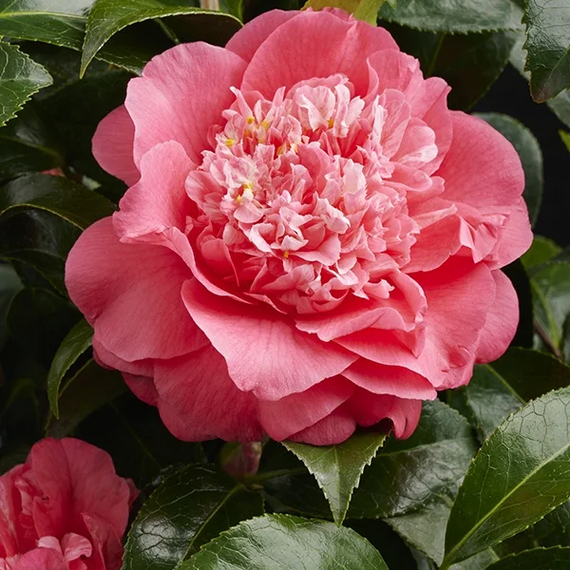
- Spectacular bright rose-pink double blooms of classic beauty display magnificently against lustrous dark green foliage from winter through mid-spring
- Moderate-growing evergreen shrub reaching 6 to 8 feet tall and wide, ideal as a statement specimen, flowering privacy screen, or espalier subject
- Non-toxic to cats and dogs with outstanding cut flower performance, blooming during the winter season when few other flowering shrubs are active
- Hardy across USDA Zones 8 through 10 in filtered sun to partial shade, offering timeless elegance with minimal care in mild-climate gardens
Kumasaka Camellia (Camellia japonica 'Kumasaka') is a timeless and spectacular evergreen shrub that has been treasured in gardens for more than three centuries, producing breathtaking bright rose-pink, fully double blooms displayed magnificently against glossy dark green foliage. Blooming from winter through mid-spring — depending on climate — it provides vibrant color during the season when most flowering plants lie dormant, making it an invaluable and irreplaceable addition to mild-climate gardens. Growing at a moderate rate to 6 to 8 feet tall and wide, it is excellent as a bold specimen, massed for a flowering privacy screen, trained as an espalier against walls, or placed near entryways where visitors can appreciate the magnificent blooms at close range. Non-toxic to cats and dogs and prized for both its landscape and cut flower value, Kumasaka Camellia is a refined and elegant choice for shade and partial shade gardens across USDA Zones 8 through 10.
Plant Details
| Attribute | Details |
|---|---|
| Botanical Name | Camellia japonica 'Kumasaka' |
| Plant Type | Evergreen Shrub |
| Flower Color | Bright rose-pink (fully double) |
| Foliage Color | Glossy dark green |
| Bloom Time | Winter through mid-spring (climate dependent) |
| Growth Rate | Moderate |
| Growth Habit | Upright |
| Mature Size | 6-8 ft. tall and wide (larger with age) |
| USDA Zones | 8 - 10 |
| Light | Filtered sun, Full shade, Partial shade, Partial sun |
| Water | When top 3 in. of soil is dry; mulch to retain moisture |
| Special Features | Non-toxic to Cats and Dogs, Winter Bloomer, Flowers for Cutting |
| Landscape Use | Border, Container, Espalier, Privacy Screen, Foundation Plant |
The Spectacular Winter Bloom
One of Kumasaka Camellia's greatest gifts to the garden is its bloom season: winter through mid-spring, a time when most flowering plants are completely dormant. The fully double, bright rose-pink flowers are classical in their perfection — symmetrical, full, and richly colored with a formal, organized arrangement of overlapping petals that has made this variety a treasured classic for over 300 years. The glossy dark green foliage provides an elegant, polished backdrop that makes the pink blooms appear even more vivid by contrast. Both the blooms and foliage are excellent additions to indoor winter cut flower arrangements, extending the beauty of the garden into the home.
Size and Growth Habit
Kumasaka Camellia grows in an upright habit at a moderate rate, typically reaching 6 to 8 feet tall and wide over many years, with the potential to grow larger with age in ideal conditions. Its naturally upright, somewhat columnar form develops over time into a broader, more open shrub as it matures. The dense evergreen foliage provides year-round screening and privacy even when the plant is not in bloom. For container growing, it can be maintained at a smaller scale through periodic pruning. As an espalier subject, it responds well to training against walls and fences, where the flat form highlights the blooms beautifully.
Light Requirements
Kumasaka Camellia thrives in filtered sun to partial shade. Unlike many flowering shrubs that demand full sun, camellias perform best with protection from harsh direct afternoon sun, which can scorch both the flowers and foliage. An east-facing exposure that receives bright morning sun and afternoon shade is ideal. Dappled shade beneath high-branching trees replicates the plant's natural woodland habitat conditions. Full shade is tolerated but typically reduces flowering. Avoid harsh, unobstructed western or southern sun exposures that create extreme afternoon heat and light intensity.
Watering
Water Kumasaka Camellia deeply and regularly during the first growing season to establish an extensive root system. Once established, water when the top 3 inches of soil feel dry. Camellias require consistent moisture, particularly during active growth and flower bud development in late summer and fall — the period when the buds for winter blooms are setting. Maintain a 2 to 3 inch layer of organic mulch over the root zone to retain moisture and keep roots cool. Avoid allowing the soil to dry out completely or to remain waterlogged, as both extremes can cause bud drop before blooming.
Soil Requirements
Provide organically rich, well-drained, acidic soil with a pH of approximately 5.5 to 6.5. Camellias are acid-loving plants that will develop chlorosis (yellowing foliage) in alkaline soils due to iron deficiency. Incorporate generous quantities of peat moss, pine bark, or azalea compost into planting beds to lower pH and improve drainage. A thick layer of acidic organic mulch (pine bark, pine needles) over the root zone helps maintain appropriate soil acidity, retain moisture, and keep the shallow root system cool. Never use wood ash or lime near camellias, as these will raise soil pH.
Care and Maintenance
- Fertilizing: Feed with an acid-forming fertilizer formulated for azaleas and camellias after flowering ends in spring, before new growth begins.
- Pruning: Prune lightly to shape immediately after flowering ends in spring, before new growth emerges; never prune in fall when flower buds are forming.
- Mulching: Maintain a 2-3 inch layer of acidic mulch over the root zone at all times; refresh annually.
- Bud drop prevention: Maintain consistent moisture during late summer and fall bud-set period to prevent premature bud drop.
- Pest monitoring: Check for tea scale, spider mites, and camellia petal blight; treat promptly if detected to protect the prized winter blooms.
Landscape Uses
Kumasaka Camellia makes a striking shrub as a single focal point anywhere in the landscape, particularly beautiful near the front door where visitors can appreciate the magnificent winter-to-spring blooms at close range. Use in a protected eastern entryway or against a north-facing wall where morning light illuminates the flowers beautifully. Group plants for a spectacular flowering privacy screen or backdrop that combines year-round evergreen structure with winter and spring blooming. Use as an espalier against sheltered walls to create a living tapestry of glossy foliage and pink blooms. Plant as part of a Japanese-style tranquility or Zen garden where its refined elegance fits the aesthetic perfectly.
Companion Plants
| Plant | Why It Works |
|---|---|
| Azalea (Azalea) | Spring-blooming acid-loving shrub that continues the flowering season after the camellia's winter-spring display ends |
| Forsythia (Forsythia) | Bright yellow late-winter blooms create a stunning warm-cool color contrast when flowering alongside the pink camellia |
| Lace Fern (Microlepia) | Delicate fern fronds provide elegant textural contrast at the base of the camellia in shaded garden settings |
| Lily of the Valley Shrub (Pieris) | Acid-loving companion with white spring blooms and red new foliage that complements the camellia in similar conditions |
| Clematis (Clematis) | Spring-blooming vine can be trained to interweave with the camellia for a romantic, layered flowering display |
Cut Flower Use
Kumasaka Camellia produces stunning cut flowers and foliage that are exceptional for winter and early spring indoor arrangements. Harvest stems with several blooms or buds and foliage branches in the early morning, cutting at an angle and immediately placing in cool, clean water. The fully double rose-pink blooms are remarkably long-lasting as cut flowers and are widely used in formal floral arrangements, wedding bouquets, and Japanese-style ikebana compositions. The glossy, dark green foliage branches are equally valuable as dramatic, long-lasting greenery in mixed arrangements during the winter months.
USDA Hardiness Zones
Kumasaka Camellia is rated for USDA Zones 8 through 10. In Zone 8, it is reliably cold hardy to approximately 10 to 15 degrees Fahrenheit, though severe late-season freezes while the plant is in bud or bloom can damage or destroy the flowers. Planting in a sheltered, east-facing location provides some protection from the coldest temperatures and late-season freezes that might otherwise damage the winter blooms. In Zone 9 and 10, it performs with remarkable reliability as a year-round, long-lived landscape shrub, one of the finest winter-blooming plants available for these climates.
History and Background
Camellia japonica 'Kumasaka' is an ancient variety whose history dates back to 1695, making it one of the oldest named camellia cultivars still in cultivation. It was first exported from Asia to Europe in 1895, approximately 200 years after its initial cultivation. The Camellia genus was named by Carolus Linnaeus in honor of Georg Josef Kamel, a Jesuit missionary who cultivated an important garden of local medicinal plants on the Philippine island of Luzon in the 17th century. Camellias are native to eastern and southern Asia — C. japonica specifically to China, Japan, Korea, and Taiwan. In Asian symbolism, red camellias represent wealth and white camellias signify loveliness; camellias as a genus represent longevity and faithfulness and have long been a primary floral component in Asian ceremonial and wedding traditions.
- Spectacular bright rose-pink double blooms of classic beauty display magnificently against lustrous dark green foliage from winter through mid-spring
- Moderate-growing evergreen shrub reaching 6 to 8 feet tall and wide, ideal as a statement specimen, flowering privacy screen, or espalier subject
- Non-toxic to cats and dogs with outstanding cut flower performance, blooming during the winter season when few other flowering shrubs are active
- Hardy across USDA Zones 8 through 10 in filtered sun to partial shade, offering timeless elegance with minimal care in mild-climate gardens
Kumasaka Camellia (Camellia japonica 'Kumasaka') is a timeless and spectacular evergreen shrub that has been treasured in gardens for more than three centuries, producing breathtaking bright rose-pink, fully double blooms displayed magnificently against glossy dark green foliage. Blooming from winter through mid-spring — depending on climate — it provides vibrant color during the season when most flowering plants lie dormant, making it an invaluable and irreplaceable addition to mild-climate gardens. Growing at a moderate rate to 6 to 8 feet tall and wide, it is excellent as a bold specimen, massed for a flowering privacy screen, trained as an espalier against walls, or placed near entryways where visitors can appreciate the magnificent blooms at close range. Non-toxic to cats and dogs and prized for both its landscape and cut flower value, Kumasaka Camellia is a refined and elegant choice for shade and partial shade gardens across USDA Zones 8 through 10.
Plant Details
| Attribute | Details |
|---|---|
| Botanical Name | Camellia japonica 'Kumasaka' |
| Plant Type | Evergreen Shrub |
| Flower Color | Bright rose-pink (fully double) |
| Foliage Color | Glossy dark green |
| Bloom Time | Winter through mid-spring (climate dependent) |
| Growth Rate | Moderate |
| Growth Habit | Upright |
| Mature Size | 6-8 ft. tall and wide (larger with age) |
| USDA Zones | 8 - 10 |
| Light | Filtered sun, Full shade, Partial shade, Partial sun |
| Water | When top 3 in. of soil is dry; mulch to retain moisture |
| Special Features | Non-toxic to Cats and Dogs, Winter Bloomer, Flowers for Cutting |
| Landscape Use | Border, Container, Espalier, Privacy Screen, Foundation Plant |
The Spectacular Winter Bloom
One of Kumasaka Camellia's greatest gifts to the garden is its bloom season: winter through mid-spring, a time when most flowering plants are completely dormant. The fully double, bright rose-pink flowers are classical in their perfection — symmetrical, full, and richly colored with a formal, organized arrangement of overlapping petals that has made this variety a treasured classic for over 300 years. The glossy dark green foliage provides an elegant, polished backdrop that makes the pink blooms appear even more vivid by contrast. Both the blooms and foliage are excellent additions to indoor winter cut flower arrangements, extending the beauty of the garden into the home.
Size and Growth Habit
Kumasaka Camellia grows in an upright habit at a moderate rate, typically reaching 6 to 8 feet tall and wide over many years, with the potential to grow larger with age in ideal conditions. Its naturally upright, somewhat columnar form develops over time into a broader, more open shrub as it matures. The dense evergreen foliage provides year-round screening and privacy even when the plant is not in bloom. For container growing, it can be maintained at a smaller scale through periodic pruning. As an espalier subject, it responds well to training against walls and fences, where the flat form highlights the blooms beautifully.
Light Requirements
Kumasaka Camellia thrives in filtered sun to partial shade. Unlike many flowering shrubs that demand full sun, camellias perform best with protection from harsh direct afternoon sun, which can scorch both the flowers and foliage. An east-facing exposure that receives bright morning sun and afternoon shade is ideal. Dappled shade beneath high-branching trees replicates the plant's natural woodland habitat conditions. Full shade is tolerated but typically reduces flowering. Avoid harsh, unobstructed western or southern sun exposures that create extreme afternoon heat and light intensity.
Watering
Water Kumasaka Camellia deeply and regularly during the first growing season to establish an extensive root system. Once established, water when the top 3 inches of soil feel dry. Camellias require consistent moisture, particularly during active growth and flower bud development in late summer and fall — the period when the buds for winter blooms are setting. Maintain a 2 to 3 inch layer of organic mulch over the root zone to retain moisture and keep roots cool. Avoid allowing the soil to dry out completely or to remain waterlogged, as both extremes can cause bud drop before blooming.
Soil Requirements
Provide organically rich, well-drained, acidic soil with a pH of approximately 5.5 to 6.5. Camellias are acid-loving plants that will develop chlorosis (yellowing foliage) in alkaline soils due to iron deficiency. Incorporate generous quantities of peat moss, pine bark, or azalea compost into planting beds to lower pH and improve drainage. A thick layer of acidic organic mulch (pine bark, pine needles) over the root zone helps maintain appropriate soil acidity, retain moisture, and keep the shallow root system cool. Never use wood ash or lime near camellias, as these will raise soil pH.
Care and Maintenance
- Fertilizing: Feed with an acid-forming fertilizer formulated for azaleas and camellias after flowering ends in spring, before new growth begins.
- Pruning: Prune lightly to shape immediately after flowering ends in spring, before new growth emerges; never prune in fall when flower buds are forming.
- Mulching: Maintain a 2-3 inch layer of acidic mulch over the root zone at all times; refresh annually.
- Bud drop prevention: Maintain consistent moisture during late summer and fall bud-set period to prevent premature bud drop.
- Pest monitoring: Check for tea scale, spider mites, and camellia petal blight; treat promptly if detected to protect the prized winter blooms.
Landscape Uses
Kumasaka Camellia makes a striking shrub as a single focal point anywhere in the landscape, particularly beautiful near the front door where visitors can appreciate the magnificent winter-to-spring blooms at close range. Use in a protected eastern entryway or against a north-facing wall where morning light illuminates the flowers beautifully. Group plants for a spectacular flowering privacy screen or backdrop that combines year-round evergreen structure with winter and spring blooming. Use as an espalier against sheltered walls to create a living tapestry of glossy foliage and pink blooms. Plant as part of a Japanese-style tranquility or Zen garden where its refined elegance fits the aesthetic perfectly.
Companion Plants
| Plant | Why It Works |
|---|---|
| Azalea (Azalea) | Spring-blooming acid-loving shrub that continues the flowering season after the camellia's winter-spring display ends |
| Forsythia (Forsythia) | Bright yellow late-winter blooms create a stunning warm-cool color contrast when flowering alongside the pink camellia |
| Lace Fern (Microlepia) | Delicate fern fronds provide elegant textural contrast at the base of the camellia in shaded garden settings |
| Lily of the Valley Shrub (Pieris) | Acid-loving companion with white spring blooms and red new foliage that complements the camellia in similar conditions |
| Clematis (Clematis) | Spring-blooming vine can be trained to interweave with the camellia for a romantic, layered flowering display |
Cut Flower Use
Kumasaka Camellia produces stunning cut flowers and foliage that are exceptional for winter and early spring indoor arrangements. Harvest stems with several blooms or buds and foliage branches in the early morning, cutting at an angle and immediately placing in cool, clean water. The fully double rose-pink blooms are remarkably long-lasting as cut flowers and are widely used in formal floral arrangements, wedding bouquets, and Japanese-style ikebana compositions. The glossy, dark green foliage branches are equally valuable as dramatic, long-lasting greenery in mixed arrangements during the winter months.
USDA Hardiness Zones
Kumasaka Camellia is rated for USDA Zones 8 through 10. In Zone 8, it is reliably cold hardy to approximately 10 to 15 degrees Fahrenheit, though severe late-season freezes while the plant is in bud or bloom can damage or destroy the flowers. Planting in a sheltered, east-facing location provides some protection from the coldest temperatures and late-season freezes that might otherwise damage the winter blooms. In Zone 9 and 10, it performs with remarkable reliability as a year-round, long-lived landscape shrub, one of the finest winter-blooming plants available for these climates.
History and Background
Camellia japonica 'Kumasaka' is an ancient variety whose history dates back to 1695, making it one of the oldest named camellia cultivars still in cultivation. It was first exported from Asia to Europe in 1895, approximately 200 years after its initial cultivation. The Camellia genus was named by Carolus Linnaeus in honor of Georg Josef Kamel, a Jesuit missionary who cultivated an important garden of local medicinal plants on the Philippine island of Luzon in the 17th century. Camellias are native to eastern and southern Asia — C. japonica specifically to China, Japan, Korea, and Taiwan. In Asian symbolism, red camellias represent wealth and white camellias signify loveliness; camellias as a genus represent longevity and faithfulness and have long been a primary floral component in Asian ceremonial and wedding traditions.
Related Products


