Zoom the image with the mouse
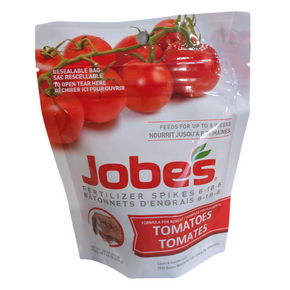
Jobe's 15-3-3 Fertilizer Tree and Shrub Stake
SKU:
STAKET
UPC:
073035026109
$1.49
- Slow-release 15-3-3 NPK formula delivers a continuous supply of nitrogen, phosphorus, and potassium directly to the active root zone all season long
- No runoff, no measuring, and no mess — simply drive the pre-measured spike into the soil at the tree's dripline for targeted, below-surface feeding
- Ideal for all deciduous trees and shrubs, applied just twice a year — once in early spring and once in late fall
- Sold individually so you can purchase exactly the quantity you need for any size landscape project, from a single specimen tree to an entire yard
Jobe's Tree Stakes are the smart, fuss-free way to keep your deciduous trees and shrubs vigorously healthy year after year. Each individual fertilizer spike is formulated with a high-nitrogen 15-3-3 NPK ratio — providing a powerful boost of nitrogen to drive lush, robust foliage growth, phosphorus to support strong root development and healthy cell division, and potassium to promote overall plant vitality, efficient water uptake, and disease resistance. The spike's slow-release technology means nutrients are broken down gradually in the soil and taken up continuously by the tree's active feeder roots, exactly where they're needed most, without the risk of surface runoff, chemical burn, unpleasant odors, or wasted product. Simply position the stake at the tree's dripline and drive it into the ground — no mixing, no measuring, and no special equipment required. Applied just twice annually in early spring and late fall, Jobe's Tree Stakes make tree nutrition effortless, whether you're caring for a single shade tree, a row of ornamental shrubs, or an entire orchard. Sold individually, these stakes allow you to dial in precisely the number needed for every tree in your landscape.
Product Overview
Jobe's Tree Stakes are individual slow-release fertilizer spikes engineered specifically for deciduous trees and shrubs. Each spike is a pre-measured, solid fertilizer insert that is driven directly into the soil beneath a tree's dripline, placing nutrients at the depth where active feeder roots are actively growing and absorbing water and minerals. Unlike broadcast granular fertilizers or liquid feeds, these spikes eliminate surface runoff and concentrate nutrition right in the root zone. The slow-release design breaks down the fertilizer gradually over the growing season, providing a steady, uninterrupted supply of essential nutrients rather than a single overwhelming flush. Being sold individually allows homeowners, landscapers, and nursery professionals alike to purchase exactly the number of spikes required for their specific trees — no waste, no guessing.
NPK Ratio and Nutrient Profile
| Nutrient | Analysis | Primary Role |
|---|---|---|
| Nitrogen (N) | 15% | Drives strong foliage growth, chlorophyll production, and healthy green leaf color; critical during the early stages of the growing season |
| Phosphorus (P) | 3% | Supports robust root system development, cell division, new tissue formation, and accelerates maturity and establishment |
| Potassium (K) | 3% | Promotes overall plant health, efficient water movement, stronger stress and disease tolerance, and improved nutrient uptake and enzyme activity |
The high nitrogen ratio (15) relative to phosphorus and potassium (3-3) makes this formula especially beneficial for deciduous trees that require strong seasonal vegetative push in spring and a nutritional reserve heading into dormancy in fall.
Compatible Trees and Shrubs
Jobe's Tree Stakes are suitable for all deciduous trees and shrubs grown in outdoor landscape settings. Suitable plant types include, but are not limited to:
- Shade and ornamental trees such as maples, oaks, elms, ashes, and lindens
- Flowering trees such as dogwoods, redbuds, crabapples, and magnolias
- Fruit trees including apples, pears, cherries, peaches, plums, and apricots
- Nut trees such as walnuts, almonds, and hazelnuts
- Deciduous ornamental shrubs including lilacs, forsythia, viburnum, spirea, and weigela
- Large hedging shrubs and privacy screens
Note: These stakes are formulated for deciduous plants. For evergreen trees and shrubs, conifers, or acid-loving plants such as rhododendrons and azaleas, a product specifically formulated for those plant types is recommended.
Application Timing
For best results, apply Jobe's Tree Stakes twice per year:
- Early Spring: Apply just as trees begin to break dormancy and buds start to swell. This gives feeder roots immediate access to nutrients as the tree enters its most active period of growth, supporting strong canopy development and vigorous shoot extension throughout the spring and summer.
- Late Fall: Apply after leaf drop but before the ground freezes solid. Fall applications replenish nutrient reserves in the root zone, supporting root activity that often continues at low levels even as air temperatures drop, and priming the tree for a strong flush of spring growth the following year.
In Southern Oregon and Northern California climates, spring applications are typically best made from late February through April, and fall applications from October through November, depending on local conditions and the species being fertilized.
How to Apply
- Determine the number of spikes needed based on the trunk diameter of the tree (see the Spike Quantity Guide tab for details).
- Locate the tree's dripline — the outermost edge of the tree's canopy directly below the branch tips. This is where feeder roots are most concentrated.
- Space the required number of spikes evenly around the dripline, distributing them in a circle for uniform nutrient delivery.
- Place the plastic drive cap (if included) on top of the spike to protect it from splitting during insertion.
- Using a hammer or rubber mallet, drive the spike firmly into the soil until the top is level with or just below the soil surface. In hard or rocky soils, pre-moisten the ground with water or use a screwdriver or rod to create a starter hole.
- Remove the drive cap and water the area thoroughly after application to begin activating the slow-release formula.
- Repeat the process at each spike position around the dripline.
Avoid placing spikes directly against the tree's trunk, as this can concentrate fertilizer salts near sensitive bark tissue.
Spike Quantity Guide
The number of spikes required per application depends on the diameter of the tree's trunk, measured at chest height (approximately 4.5 feet above ground). Use the following general guide:
| Trunk Diameter | Recommended Number of Spikes |
|---|---|
| Up to 2 inches | 2 spikes |
| 2 to 4 inches | 3 to 4 spikes |
| 4 to 6 inches | 5 to 6 spikes |
| 6 to 9 inches | 7 to 9 spikes |
| 9 inches and above | Add 1 additional spike per inch of trunk diameter |
For large multi-stemmed shrubs, estimate based on the collective canopy spread and distribute spikes evenly around the perimeter. Being sold individually allows you to buy exactly the right number of spikes for each tree without leftover product.
Slow-Release Technology
Unlike liquid or quick-release granular fertilizers that deliver a sudden surge of nutrients — which can result in fertilizer burn, excessive tender growth, or rapid leaching out of the root zone — Jobe's Tree Stakes use a slow-release compressed fertilizer formulation. As soil moisture gradually penetrates the spike, it dissolves and releases nutrients incrementally over the growing season. This steady feeding approach offers several advantages:
- Nutrients remain in the root zone longer rather than washing away with rain or irrigation
- Reduces the risk of over-fertilizing or chemical burn to roots and foliage
- Provides a consistent, season-long feeding without repeat applications mid-season
- Eliminates odors and runoff associated with liquid and organic fertilizers
- No mixing, measuring, or spraying equipment required
Soil and Watering Considerations
Jobe's Tree Stakes work effectively in a wide range of soil types, including loamy garden soils, sandy soils, and clay-heavy soils common in Southern Oregon and Northern California. A few tips to optimize performance:
- Hard or dry soils: Water the area around the dripline thoroughly 24 hours before application to soften the ground and make spike insertion easier. Hard, compacted, or dry soils can cause spikes to crack or crumble during hammering.
- Sandy soils: Nutrients may release slightly faster in sandy, fast-draining soils. Monitor trees and consider an additional mid-season evaluation in very porous soils.
- Clay soils: Clay soils retain nutrients longer. Ensure good drainage around the root zone so that moisture can move through and activate the spike without waterlogging.
- Watering after application: Always water deeply after inserting spikes to help begin the nutrient release process and carry nutrients into the surrounding root zone.
Storage and Handling
To maintain the effectiveness of individual Jobe's Tree Stakes:
- Store unused spikes in a cool, dry location away from direct sunlight and moisture
- Keep spikes dry until use — exposure to humidity or rain can begin to degrade the spike and cause premature release of nutrients
- Store in a sealed container or zip-lock bag if the original packaging has been opened
- Keep out of reach of children and pets
- Do not store near food, beverages, or animal feed
- Wash hands thoroughly after handling
Properly stored spikes have an extended shelf life, making it practical to stock up for the season and use as needed across multiple trees and applications.
Advantages Over Other Fertilizer Types
| Fertilizer Type | Jobe's Tree Stakes |
|---|---|
| Broadcast granular | Spikes target the root zone directly; granular fertilizers can be unevenly distributed and are subject to surface runoff and erosion |
| Liquid fertilizers | Spikes require no mixing, measuring, or spray equipment, and do not create runoff into driveways, waterways, or lawns |
| Quick-release fertilizers | Slow-release formula provides season-long feeding versus a short-lived nutrient spike that can cause flush growth or root burn |
| Multi-tree bulk packs | Sold individually so you buy only what you need — ideal for small collections or fine-tuning quantities per tree size |
Safety and Environmental Notes
Jobe's Tree Stakes are designed with safety and environmental responsibility in mind:
- The below-surface placement of spikes eliminates the risk of surface fertilizer runoff into storm drains, streams, or paved areas
- Pre-measured spikes reduce the chance of over-application and excess nutrient loading in the soil
- No liquid chemicals or powders are mixed or sprayed, reducing exposure risks during application
- Manufactured in the USA
- Avoid using near water features, ponds, or wetlands where nutrient runoff could contribute to algae growth
- As with all fertilizer products, keep away from children and pets until spikes are fully inserted and the area has been watered in
- Wear gloves during application if you have sensitive skin
Frequently Asked Questions
- Can I use these spikes on newly planted trees? Yes, but use with care on newly transplanted trees that are still establishing. For trees planted within the last 4 to 6 weeks, wait until you see signs of new growth before fertilizing, and use a reduced number of spikes to avoid stressing tender new roots.
- Will these work on evergreen trees? These spikes are formulated and labeled for deciduous trees and shrubs. For evergreens, conifers, or broadleaf evergreens, choose a product specifically designed for those species.
- What if a spike breaks during insertion? Wet the soil first and try again, or use a metal rod or screwdriver to pre-punch a pilot hole. Broken spikes can be gently pushed into the pilot hole and will still function effectively.
- Can I use these for fruit trees? Yes. Many gardeners and orchardists use Jobe's Tree Stakes on apple, pear, cherry, peach, plum, and similar deciduous fruit trees with excellent results for foliage health and fruit production.
- How long does one spike last? The slow-release formula is designed to last an entire growing season (approximately 6 months), which is why just two applications per year — spring and fall — are recommended.
- Why are these sold individually? Selling individually gives you the flexibility to purchase the exact number of spikes needed for each specific tree based on its trunk diameter, so you only buy what you need without wasting product or money.
- Slow-release 15-3-3 NPK formula delivers a continuous supply of nitrogen, phosphorus, and potassium directly to the active root zone all season long
- No runoff, no measuring, and no mess — simply drive the pre-measured spike into the soil at the tree's dripline for targeted, below-surface feeding
- Ideal for all deciduous trees and shrubs, applied just twice a year — once in early spring and once in late fall
- Sold individually so you can purchase exactly the quantity you need for any size landscape project, from a single specimen tree to an entire yard
Jobe's Tree Stakes are the smart, fuss-free way to keep your deciduous trees and shrubs vigorously healthy year after year. Each individual fertilizer spike is formulated with a high-nitrogen 15-3-3 NPK ratio — providing a powerful boost of nitrogen to drive lush, robust foliage growth, phosphorus to support strong root development and healthy cell division, and potassium to promote overall plant vitality, efficient water uptake, and disease resistance. The spike's slow-release technology means nutrients are broken down gradually in the soil and taken up continuously by the tree's active feeder roots, exactly where they're needed most, without the risk of surface runoff, chemical burn, unpleasant odors, or wasted product. Simply position the stake at the tree's dripline and drive it into the ground — no mixing, no measuring, and no special equipment required. Applied just twice annually in early spring and late fall, Jobe's Tree Stakes make tree nutrition effortless, whether you're caring for a single shade tree, a row of ornamental shrubs, or an entire orchard. Sold individually, these stakes allow you to dial in precisely the number needed for every tree in your landscape.
Product Overview
Jobe's Tree Stakes are individual slow-release fertilizer spikes engineered specifically for deciduous trees and shrubs. Each spike is a pre-measured, solid fertilizer insert that is driven directly into the soil beneath a tree's dripline, placing nutrients at the depth where active feeder roots are actively growing and absorbing water and minerals. Unlike broadcast granular fertilizers or liquid feeds, these spikes eliminate surface runoff and concentrate nutrition right in the root zone. The slow-release design breaks down the fertilizer gradually over the growing season, providing a steady, uninterrupted supply of essential nutrients rather than a single overwhelming flush. Being sold individually allows homeowners, landscapers, and nursery professionals alike to purchase exactly the number of spikes required for their specific trees — no waste, no guessing.
NPK Ratio and Nutrient Profile
| Nutrient | Analysis | Primary Role |
|---|---|---|
| Nitrogen (N) | 15% | Drives strong foliage growth, chlorophyll production, and healthy green leaf color; critical during the early stages of the growing season |
| Phosphorus (P) | 3% | Supports robust root system development, cell division, new tissue formation, and accelerates maturity and establishment |
| Potassium (K) | 3% | Promotes overall plant health, efficient water movement, stronger stress and disease tolerance, and improved nutrient uptake and enzyme activity |
The high nitrogen ratio (15) relative to phosphorus and potassium (3-3) makes this formula especially beneficial for deciduous trees that require strong seasonal vegetative push in spring and a nutritional reserve heading into dormancy in fall.
Compatible Trees and Shrubs
Jobe's Tree Stakes are suitable for all deciduous trees and shrubs grown in outdoor landscape settings. Suitable plant types include, but are not limited to:
- Shade and ornamental trees such as maples, oaks, elms, ashes, and lindens
- Flowering trees such as dogwoods, redbuds, crabapples, and magnolias
- Fruit trees including apples, pears, cherries, peaches, plums, and apricots
- Nut trees such as walnuts, almonds, and hazelnuts
- Deciduous ornamental shrubs including lilacs, forsythia, viburnum, spirea, and weigela
- Large hedging shrubs and privacy screens
Note: These stakes are formulated for deciduous plants. For evergreen trees and shrubs, conifers, or acid-loving plants such as rhododendrons and azaleas, a product specifically formulated for those plant types is recommended.
Application Timing
For best results, apply Jobe's Tree Stakes twice per year:
- Early Spring: Apply just as trees begin to break dormancy and buds start to swell. This gives feeder roots immediate access to nutrients as the tree enters its most active period of growth, supporting strong canopy development and vigorous shoot extension throughout the spring and summer.
- Late Fall: Apply after leaf drop but before the ground freezes solid. Fall applications replenish nutrient reserves in the root zone, supporting root activity that often continues at low levels even as air temperatures drop, and priming the tree for a strong flush of spring growth the following year.
In Southern Oregon and Northern California climates, spring applications are typically best made from late February through April, and fall applications from October through November, depending on local conditions and the species being fertilized.
How to Apply
- Determine the number of spikes needed based on the trunk diameter of the tree (see the Spike Quantity Guide tab for details).
- Locate the tree's dripline — the outermost edge of the tree's canopy directly below the branch tips. This is where feeder roots are most concentrated.
- Space the required number of spikes evenly around the dripline, distributing them in a circle for uniform nutrient delivery.
- Place the plastic drive cap (if included) on top of the spike to protect it from splitting during insertion.
- Using a hammer or rubber mallet, drive the spike firmly into the soil until the top is level with or just below the soil surface. In hard or rocky soils, pre-moisten the ground with water or use a screwdriver or rod to create a starter hole.
- Remove the drive cap and water the area thoroughly after application to begin activating the slow-release formula.
- Repeat the process at each spike position around the dripline.
Avoid placing spikes directly against the tree's trunk, as this can concentrate fertilizer salts near sensitive bark tissue.
Spike Quantity Guide
The number of spikes required per application depends on the diameter of the tree's trunk, measured at chest height (approximately 4.5 feet above ground). Use the following general guide:
| Trunk Diameter | Recommended Number of Spikes |
|---|---|
| Up to 2 inches | 2 spikes |
| 2 to 4 inches | 3 to 4 spikes |
| 4 to 6 inches | 5 to 6 spikes |
| 6 to 9 inches | 7 to 9 spikes |
| 9 inches and above | Add 1 additional spike per inch of trunk diameter |
For large multi-stemmed shrubs, estimate based on the collective canopy spread and distribute spikes evenly around the perimeter. Being sold individually allows you to buy exactly the right number of spikes for each tree without leftover product.
Slow-Release Technology
Unlike liquid or quick-release granular fertilizers that deliver a sudden surge of nutrients — which can result in fertilizer burn, excessive tender growth, or rapid leaching out of the root zone — Jobe's Tree Stakes use a slow-release compressed fertilizer formulation. As soil moisture gradually penetrates the spike, it dissolves and releases nutrients incrementally over the growing season. This steady feeding approach offers several advantages:
- Nutrients remain in the root zone longer rather than washing away with rain or irrigation
- Reduces the risk of over-fertilizing or chemical burn to roots and foliage
- Provides a consistent, season-long feeding without repeat applications mid-season
- Eliminates odors and runoff associated with liquid and organic fertilizers
- No mixing, measuring, or spraying equipment required
Soil and Watering Considerations
Jobe's Tree Stakes work effectively in a wide range of soil types, including loamy garden soils, sandy soils, and clay-heavy soils common in Southern Oregon and Northern California. A few tips to optimize performance:
- Hard or dry soils: Water the area around the dripline thoroughly 24 hours before application to soften the ground and make spike insertion easier. Hard, compacted, or dry soils can cause spikes to crack or crumble during hammering.
- Sandy soils: Nutrients may release slightly faster in sandy, fast-draining soils. Monitor trees and consider an additional mid-season evaluation in very porous soils.
- Clay soils: Clay soils retain nutrients longer. Ensure good drainage around the root zone so that moisture can move through and activate the spike without waterlogging.
- Watering after application: Always water deeply after inserting spikes to help begin the nutrient release process and carry nutrients into the surrounding root zone.
Storage and Handling
To maintain the effectiveness of individual Jobe's Tree Stakes:
- Store unused spikes in a cool, dry location away from direct sunlight and moisture
- Keep spikes dry until use — exposure to humidity or rain can begin to degrade the spike and cause premature release of nutrients
- Store in a sealed container or zip-lock bag if the original packaging has been opened
- Keep out of reach of children and pets
- Do not store near food, beverages, or animal feed
- Wash hands thoroughly after handling
Properly stored spikes have an extended shelf life, making it practical to stock up for the season and use as needed across multiple trees and applications.
Advantages Over Other Fertilizer Types
| Fertilizer Type | Jobe's Tree Stakes |
|---|---|
| Broadcast granular | Spikes target the root zone directly; granular fertilizers can be unevenly distributed and are subject to surface runoff and erosion |
| Liquid fertilizers | Spikes require no mixing, measuring, or spray equipment, and do not create runoff into driveways, waterways, or lawns |
| Quick-release fertilizers | Slow-release formula provides season-long feeding versus a short-lived nutrient spike that can cause flush growth or root burn |
| Multi-tree bulk packs | Sold individually so you buy only what you need — ideal for small collections or fine-tuning quantities per tree size |
Safety and Environmental Notes
Jobe's Tree Stakes are designed with safety and environmental responsibility in mind:
- The below-surface placement of spikes eliminates the risk of surface fertilizer runoff into storm drains, streams, or paved areas
- Pre-measured spikes reduce the chance of over-application and excess nutrient loading in the soil
- No liquid chemicals or powders are mixed or sprayed, reducing exposure risks during application
- Manufactured in the USA
- Avoid using near water features, ponds, or wetlands where nutrient runoff could contribute to algae growth
- As with all fertilizer products, keep away from children and pets until spikes are fully inserted and the area has been watered in
- Wear gloves during application if you have sensitive skin
Frequently Asked Questions
- Can I use these spikes on newly planted trees? Yes, but use with care on newly transplanted trees that are still establishing. For trees planted within the last 4 to 6 weeks, wait until you see signs of new growth before fertilizing, and use a reduced number of spikes to avoid stressing tender new roots.
- Will these work on evergreen trees? These spikes are formulated and labeled for deciduous trees and shrubs. For evergreens, conifers, or broadleaf evergreens, choose a product specifically designed for those species.
- What if a spike breaks during insertion? Wet the soil first and try again, or use a metal rod or screwdriver to pre-punch a pilot hole. Broken spikes can be gently pushed into the pilot hole and will still function effectively.
- Can I use these for fruit trees? Yes. Many gardeners and orchardists use Jobe's Tree Stakes on apple, pear, cherry, peach, plum, and similar deciduous fruit trees with excellent results for foliage health and fruit production.
- How long does one spike last? The slow-release formula is designed to last an entire growing season (approximately 6 months), which is why just two applications per year — spring and fall — are recommended.
- Why are these sold individually? Selling individually gives you the flexibility to purchase the exact number of spikes needed for each specific tree based on its trunk diameter, so you only buy what you need without wasting product or money.