

Zoom the image with the mouse
Hardy Fiber Banana - 5 Gallon
SKU:
2008085
UPC:
541537571729
$79.99
- One of the hardiest bananas available, with rhizomes surviving down to -10°F (-23°C) when properly mulched, making it a remarkable cold-climate tropical statement plant for gardens in USDA Zones 5-10.
- Delivers instant, dramatic tropical impact with enormous paddle-shaped leaves reaching up to 6 feet long and 2 feet wide, unfurling on a bold pseudo-stem that can rocket to 6-15 feet tall in a single growing season.
- A fast-growing, low-maintenance herbaceous perennial that dies back to the ground after frost in colder zones yet rebounds vigorously each spring from its resilient underground rhizome.
- Versatile landscape showstopper equally at home as a bold patio container specimen, a dramatic poolside accent, a lush privacy screen, or the commanding centerpiece of a tropical-style garden border.
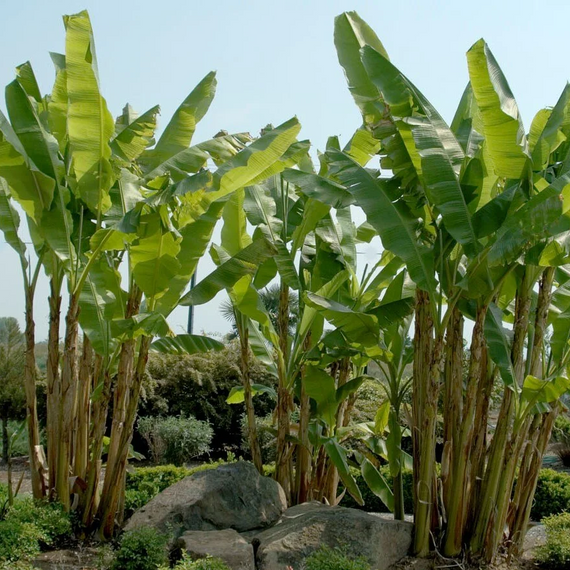
The Hardy Fiber Banana (Musa basjoo) is the ultimate cold-climate tropical, delivering the full visual drama of a lush banana planting to gardens far beyond the tropics. Native to Sichuan, China, and long cultivated in Japan for its strong stem fibers, this rapid-growing herbaceous perennial forms an impressive clump of broad, arching, bright green leaves — each one up to 6 feet long and 2 feet wide — rising from a robust, trunk-like pseudo-stem that can reach 6 to 15 feet tall in a single season. Unlike true woody trees, Musa basjoo grows from a dense underground rhizome that is remarkably cold-hardy, capable of surviving winter temperatures as low as -10°F with appropriate mulching and protection, making it reliably perennial across USDA Hardiness Zones 5 through 10. In warmer climates such as those found throughout Southern Oregon and Northern California, this banana thrives with ease, often producing its showy, creamy-yellow summer inflorescence with pendant bracts and ornamental small fruits. Requiring full sun to partial shade, consistently moist and fertile well-drained soil, and regular feeding during the growing season, this fast-growing perennial rewards minimal effort with maximal tropical grandeur — transforming poolsides, patios, borders, and garden beds into lush, resort-worthy retreats year after year.
Plant Description
The Hardy Fiber Banana (Musa basjoo) is a fast-growing, clump-forming herbaceous perennial that produces an unmistakably tropical presence in the garden. It is not a true tree; its bold, trunk-like "stem" is actually a pseudo-stem — a tightly overlapping column of leaf bases — from which enormous, paddle-shaped, bright green leaves arch dramatically outward and upward. Each leaf can reach up to 6 feet long and 2 feet wide, with a prominent central midrib and a gracefully rounded tip. New leaves emerge as a tightly furled cigar-shaped roll from the center of the plant, unfurling to full size within days during warm weather. The plant grows from a dense underground rhizome system that gradually expands outward, sending up new pups (offshoots) around the base of established stems to form a lush, multi-stemmed clump over time. In late summer on mature specimens, a spectacular torpedo-shaped inflorescence emerges from the top of the pseudo-stem, featuring creamy-yellow tubular flowers held within reddish-brown to purple bracts. Small, green to yellow ornamental fruits follow, though they are seedy and not intended for eating. Each individual pseudo-stem is monocarpic — it flowers once and then declines — but the persistent rhizome continuously generates new replacement stems to sustain and expand the clump for many years.
Mature Size
| Characteristic | Typical Range |
|---|---|
| Mature Height | 6 to 15 feet (occasionally taller in optimal conditions) |
| Mature Spread | 6 to 15 feet (clump width expands over time via rhizomes) |
| Individual Leaf Length | Up to 6 feet |
| Individual Leaf Width | Up to 2 feet |
| Growth Rate | Rapid — can produce a new leaf weekly during peak summer growth |
| Time to Mature Height | One full growing season under ideal conditions |
Hardiness Zones and Cold Tolerance
Musa basjoo is the hardiest banana commonly available to gardeners and is rated for USDA Hardiness Zones 5 through 10. Understanding what "hardy" means at each level helps set expectations:
- Zones 9-10 (including most of Northern California's low elevations): The plant is essentially evergreen, may retain its pseudo-stem through winter, and performs at its absolute best with lush, year-round foliage.
- Zones 8-9 (including much of Southern Oregon's milder valleys): Foliage dies back with hard frosts but the pseudo-stem often survives mild winters intact, allowing the plant to regain impressive height very early in spring.
- Zones 6-7: Foliage and pseudo-stems are cut down by winter cold, but the underground rhizome reliably overwinters with a thick layer of dry mulch and proper site selection, bouncing back to produce full, impressive plants by midsummer.
- Zone 5 (with protection): The rhizome can survive temperatures down to approximately -10°F (-23°C) in sheltered microclimates with heavy mulching and a protective leaf-cage or wrapping around the base.
The key distinction: the leaves are damaged near 28-30°F, the pseudo-stem may survive light frosts when wrapped and kept dry, and the rhizome is the most cold-tolerant part of the plant. Winter wet combined with deep cold is more dangerous than cold alone.
Sunlight Requirements
Hardy Fiber Banana performs best in full sun, which is defined as 6 or more hours of direct sunlight per day. Full sun exposure promotes the fastest growth, the largest leaves, and the most vigorous clumps. In warmer, drier climates — such as the inland valleys of Southern Oregon and Northern California — providing a touch of afternoon shade can reduce leaf edge scorch and help the plant retain a tidier appearance during the hottest weeks of summer. In cooler coastal climates or shadier garden situations, the plant will still grow well with a minimum of 2 to 6 hours of direct sun (partial shade), though overall height and leaf size may be somewhat reduced compared to full-sun specimens. Regardless of climate, situating the plant against a south- or west-facing wall or fence is highly recommended, as the reflected heat and wind protection will encourage faster growth, a longer effective growing season, and better overwintering success in marginal zones.
Soil and pH Preferences
Musa basjoo thrives in deep, fertile, humus-rich soil that retains consistent moisture while still providing excellent drainage. It is a heavy feeder and rewards generous soil preparation before planting. The following soil conditions are ideal:
- Soil texture: Loam is ideal; sandy loam works well with added organic matter. Heavy clay soils should be amended with compost and the planting area mounded slightly to improve drainage and prevent crown rot in winter.
- Organic matter: Incorporate generous amounts of compost or well-aged manure into the planting hole and surrounding area before planting. Topdressing with compost midseason significantly boosts performance.
- Soil pH: Adaptable to a fairly wide range of approximately 5.5 to 7.5 (acidic to slightly alkaline). Growth is most vigorous in slightly acidic to neutral soils (pH 6.0 to 7.0).
- Drainage: Good drainage is non-negotiable, especially in winter. Soggy soil combined with cold temperatures is the primary cause of rhizome loss. If planting in a site with heavy or slow-draining soil, raise the planting area or install drainage before planting.
- Mulch: Apply a 3 to 4-inch layer of organic mulch (wood chips, straw, or shredded bark) over the root zone to conserve moisture, moderate soil temperature, and gradually enrich the soil as it breaks down.
Watering Guide
Consistent, deep watering is one of the most important factors in achieving the fast growth and enormous leaf size that make this plant so spectacular. Musa basjoo has high moisture requirements during its active growing season due to the enormous surface area of its leaves, which transpire heavily in warm weather.
- Frequency: Water deeply and regularly, aiming for consistently moist — but not waterlogged — soil. Do not allow the soil to dry out completely between waterings during the growing season.
- Method: Deep, infrequent soakings are more effective than frequent shallow watering. This encourages deep root development and ensures the lower root zone stays adequately moist.
- During heat waves: During periods of intense summer heat, the plant's water demand increases dramatically. Container-grown plants may require daily watering in hot, dry conditions.
- In winter (in-ground): Significantly reduce watering once the plant goes dormant in colder zones. The combination of cold and wet soil is the leading cause of rhizome rot. In mild-winter climates where the plant remains semi-evergreen, continue to water moderately during dry spells.
- Container plants: Pots dry out faster than in-ground plantings. Check soil moisture frequently and water thoroughly when the top inch or two of soil becomes dry.
Fertilizing
As a rapid, large-leafed grower, the Hardy Fiber Banana is a vigorous feeder and responds enthusiastically to regular nutrition during its active growing season. A "little and often" approach is preferred over infrequent heavy applications, which can lead to salt buildup and leaf edge burn.
- Spring (at emergence): Apply a balanced, slow-release granular fertilizer (such as a 10-10-10 or similar) to the root zone as new growth emerges. Incorporate a generous layer of compost around the base at the same time.
- Throughout the growing season: Supplement slow-release granules with periodic applications of a balanced liquid fertilizer every 2 to 4 weeks during active growth (late spring through late summer). Dilute liquid fertilizers to the recommended rate to avoid overapplication.
- Compost topdressing: Applying a fresh layer of compost in midsummer provides a slow-release nutrient boost while also improving soil moisture retention and microbial health.
- Late summer/fall: Reduce or stop fertilizing approximately 6 to 8 weeks before the first expected frost to allow the plant to harden off naturally and prepare for dormancy.
- What to avoid: Avoid high-salt synthetic fertilizers applied in large quantities at once, as these can scorch the roots and leaf edges. Do not fertilize during winter dormancy.
Pruning and Maintenance
Hardy Fiber Banana requires relatively straightforward maintenance focused on managing the clump size, removing spent or damaged foliage, and preparing the plant for winter in colder climates.
- Leaf grooming: Remove individual leaves that have become tattered, yellowed, or fully spent by cutting them cleanly at the base of the petiole. Some leaf tatter from wind is entirely normal and cosmetic — it does not harm the plant.
- Managing the clump: Maintain a clump of 1 to 3 strong pseudo-stems for the best combination of visual impact and plant health. Remove excess pups (suckers) at the soil level using a sharp spade. Thinning the clump improves airflow, focuses the plant's energy into the strongest stems, and keeps the planting from becoming overcrowded.
- After frost (Zones 6-8): Once a hard freeze kills the foliage, cut back damaged pseudo-stems to approximately 1 to 3 feet above the ground if you wish to attempt overwintering the stem (which can provide a head start in spring). Alternatively, cut to ground level and apply heavy mulch over the crown. Do not delay cleanup too long in wet climates, as soggy decaying stems can harbor rot.
- Spring cleanup: In spring, remove any mushy or dead stem tissue down to firm, healthy material. New pups will emerge from the rhizome as soil temperatures warm.
- After flowering: Once a pseudo-stem has flowered and produced fruit, it will naturally decline. Cut it to the ground and allow younger replacement stems to take over.
Planting Instructions
- Select the right site: Choose a location with full sun (at least 6 hours per day), shelter from strong prevailing winds, and well-drained soil. A south- or west-facing wall or fence is ideal for maximizing warmth and extending the season.
- Prepare the soil: Dig a planting hole at least twice the width of the root ball and to the same depth. Incorporate generous amounts of compost or well-aged manure into the excavated soil. In clay soils, mound the planting area 6 to 12 inches above the surrounding grade to improve drainage.
- Plant at the correct depth: Set the plant so the crown (where the stem meets the roots) is level with, or very slightly above, the surrounding soil surface. Avoid burying the crown deeply, which can promote rot.
- Backfill and firm: Fill in around the root ball with the amended soil, firming gently to eliminate large air pockets. Avoid compacting the soil heavily.
- Water thoroughly: Water deeply immediately after planting to settle the soil around the roots. Continue to water consistently as the plant establishes.
- Apply mulch: Spread a 3 to 4-inch layer of organic mulch over the root zone, keeping it a few inches away from direct contact with the pseudo-stem to discourage rot.
- Spacing: For individual specimens, allow at least 6 to 8 feet of space in all directions to accommodate the plant's eventual mature spread. For a dramatic grove effect, plant multiple specimens 6 to 8 feet apart.
- Best planting time: Plant in spring after the last frost date when soil temperatures have warmed, giving the plant the maximum length of the growing season to establish before winter.
Seasonal Interest
Musa basjoo delivers its most dramatic display from spring through fall, with the following seasonal progression:
- Spring: New growth emerges from the underground rhizome as soil temperatures warm. Tightly furled cigar-shaped leaf shoots push upward rapidly, and the plant increases in height noticeably week by week. This is one of the most exciting times in the garden as the banana announces the arrival of summer.
- Early to midsummer: The plant enters its peak growth phase, producing lush, enormous bright green paddle-shaped leaves at a remarkable pace — sometimes a new leaf every week. The pseudo-stem thickens and the plant reaches its full dramatic presence by midsummer.
- Late summer: On mature stems in favorable climates, the showy inflorescence emerges — a striking, torpedo-shaped cluster with creamy-yellow flowers and dark reddish-brown to purple bracts. Small ornamental fruits may follow. The foliage remains lush and tropical through the warmest months.
- Fall: The plant remains attractive until the first hard frosts, which cause the foliage to collapse. In mild-winter areas (Zones 8-10), the plant may remain semi-evergreen through the cooler months.
- Winter: In colder zones, the plant enters dormancy below ground. The rhizome is protected under mulch, awaiting the return of warm temperatures to begin the cycle again.
Landscape Uses
The Hardy Fiber Banana is one of the most versatile bold-foliage plants available for temperate gardens. Its extraordinary scale and tropical character make it a go-to choice for a wide range of landscape applications:
- Tropical and exotic-themed gardens: The quintessential anchor plant for creating a lush, resort-style tropical garden in non-tropical climates.
- Specimen or focal point: Planted alone in a prominent location — such as the center of a large bed, at the end of a pathway, or flanking an entry — a single clump commands attention from across the garden.
- Backdrop planting: The enormous vertical leaves create an ideal living backdrop for lower-growing flowering perennials, ornamental grasses, and shrubs, making surrounding plants pop by contrast.
- Privacy screening: A well-established clump creates a dense, tall visual screen that is effective during the warm months. Its rapid growth makes it one of the fastest seasonal screening options available.
- Poolside and water feature accent: The bold tropical foliage pairs naturally with water, creating a resort or spa aesthetic around pools, ponds, and water gardens (plant in well-drained soil away from the water's edge).
- Patio and courtyard container: Spectacular when grown in a large decorative container on a patio, deck, or courtyard, where it provides instant tropical ambiance in a controlled setting.
- Border planting: Used at the back of a mixed border, the banana provides dramatic vertical structure and a bold tropical note that elevates the entire planting composition.
- Asian-inspired gardens: With its Japanese cultural heritage, Musa basjoo is a natural fit for Japanese, Chinese, or broadly Asian-inspired garden styles.
Companion Plants
The Hardy Fiber Banana's enormous, bold leaves pair beautifully with both fine-textured and similarly bold tropical companions. Consider combining it with the following plants for a cohesive, layered tropical garden design:
- Canna (Canna spp.): Bold, upright foliage and brilliant flowers in oranges, reds, and yellows create a lush, colorful tropical composition alongside the banana's green paddles.
- Elephant Ear (Colocasia or Alocasia spp.): Large, dramatic leaves in a variety of shapes and colors layer beautifully with banana foliage for a multi-textured jungle effect.
- Hardy Ginger Lily (Hedychium spp.): Fragrant, exotic flowers on tall, leafy stems complement the banana's architecture while adding seasonal fragrance.
- Dahlia (Dahlia spp.): Bold, colorful flowers provide a striking contrast to the banana's enormous foliage and fill the mid-border layer beautifully.
- Ornamental Grasses (Miscanthus, Pennisetum, Muhlenbergia): Fine-textured grasses provide excellent contrast to the banana's broad leaves, adding movement and softness to the composition.
- Windmill Palm (Trachycarpus fortunei): Another cold-hardy plant with a tropical character, this palm pairs naturally with bananas for a layered, exotic grove effect.
- Black-eyed Susan (Rudbeckia spp.) and Purple Coneflower (Echinacea spp.): Classic perennials that shine against the banana's bold green foliage backdrop, creating a dramatic contrast of scale and texture.
- Ferns (Osmunda, Dryopteris): The fine, lacy texture of large ferns creates beautiful contrast with the banana's broad, smooth leaves in shadier garden situations.
Pests and Diseases
Hardy Fiber Banana is generally a robust, trouble-free plant in temperate gardens, especially when grown in well-drained soil with good airflow. Most problems are related to poor cultural conditions rather than aggressive pest or disease pressure.
Common Insect Pests:
- Aphids: May cluster on new growth and flower spikes. Control with a strong stream of water, insecticidal soap, or by encouraging beneficial insects such as ladybugs.
- Spider Mites: More common on indoor or container-grown plants in dry conditions. Increase humidity and treat with insecticidal soap or neem oil.
- Mealybugs and Scale: Occasional pests on greenhouse or overwintered container plants. Treat with insecticidal soap or horticultural oil.
- Grasshoppers and Borers: Occasional outdoor pests in some regions. Physical removal and maintaining overall plant vigor are the best defenses.
- Slugs and Snails: Can chew holes in young emerging leaves in spring. Use iron phosphate-based baits or diatomaceous earth around emerging pups if slugs are a known issue.
Common Diseases:
- Crown and Root Rot (Pythium, Phytophthora): The most common serious problem, caused by overwatering or poor drainage, particularly in winter. Prevention through excellent drainage and avoiding overly wet winter conditions is essential.
- Leaf Spot (Anthracnose and other fungal spots): Can occur in dense, damp planting conditions. Improve airflow by thinning the clump, remove badly affected leaves, and avoid overhead irrigation in the evening.
- Mosaic Virus: Viral infection causing mottled, distorted foliage. No cure — remove and destroy affected plants and control aphid vectors.
Maintaining good cultural practices — proper drainage, adequate spacing, clean removal of spent stems, and consistent watering without waterlogging — will minimize the likelihood of pest and disease issues significantly.
Container Growing
The Hardy Fiber Banana is an outstanding container plant and is an especially popular choice for patios, decks, courtyards, and balconies where in-ground planting is not possible. Container culture also provides the practical benefit of allowing the plant to be moved indoors for overwintering in colder climates.
- Container size: Choose the largest container practical — a minimum of 20 to 30 gallons is recommended for a well-established plant. Larger containers hold more soil moisture, dry down more slowly, and allow for greater root development, all of which translate to faster growth and larger leaves.
- Potting mix: Use a high-quality potting mix amended with bark fines and perlite or pumice for improved drainage and structural integrity. Avoid heavy, poorly draining mixes that can become waterlogged.
- Drainage: Ensure the container has large, unobstructed drainage holes. Elevating the pot on pot feet improves air circulation around the base and helps prevent sitting water in winter.
- Watering: Container plants dry out significantly faster than in-ground plantings. During hot summer weather, large containers may need daily watering. Water thoroughly each time, allowing water to drain freely from the bottom.
- Fertilizing: Apply slow-release granular fertilizer in spring, supplemented by periodic dilute liquid fertilizer applications during the growing season. Container plants require more frequent feeding than in-ground plants as nutrients leach out with regular watering.
- Repotting: Refresh the top third of the potting mix annually. Up-pot to the next container size when roots begin to circle tightly or growth becomes noticeably stunted.
- Overwintering containers: Before the first hard frost, move containers into an unheated garage, shed, or bright, frost-free room. Water very sparingly during dormancy — just enough to prevent the rhizome from completely desiccating. Resume normal watering as new growth emerges in spring.
Overwintering Guide
Successfully overwintering Hardy Fiber Banana in colder climates is highly achievable with a little preparation. Choose the strategy that best fits your climate zone:
Method 1 - Leaf Cage (best for Zones 6-7, and sheltered Zone 5 microclimates):
- After a hard frost kills the foliage, remove the dead leaves from each stem.
- Cut each pseudo-stem back to a 1 to 3-foot stub (preserving the stub can give the plant a head start in spring).
- Surround the clump with a cylinder of wire fencing or hardware cloth.
- Fill the cylinder loosely with dry straw, shredded leaves, or other insulating material.
- Cap the top to shed most rainfall while still allowing some air circulation.
- In spring, gradually remove the cage and insulation as temperatures reliably warm above freezing. Cut any mushy stem tissue back to firm, healthy material.
Method 2 - Low Cut and Deep Mulch (best for very cold or very wet winters):
- After frost, cut pseudo-stems to near ground level.
- Heap a thick (12 to 18-inch) layer of dry mulch, straw, or shredded leaves over the crown.
- Uncover gradually in spring as temperatures warm and new growth begins to emerge.
Method 3 - Container Overwintering:
- Before the first hard frost, move the container into an unheated but frost-free garage, shed, or bright interior room.
- Water very sparingly during dormancy — just enough to prevent complete desiccation of the rhizome.
- Return the container outdoors after the last frost date and resume normal care as new growth emerges.
Key overwintering principle: The rhizome is far more cold-tolerant than the above-ground portions of the plant. The greatest threat to winter survival is not cold alone, but the combination of persistent cold and saturated, waterlogged soil. Prioritizing excellent drainage at the planting site and keeping the crown mulch as dry as possible are the most critical factors in successful overwintering.
Wildlife Value
While Musa basjoo is grown primarily as an ornamental foliage plant, it does offer some wildlife value in the garden setting:
- Pollinators: When mature pseudo-stems produce their summer inflorescences, the tubular flowers within the bracts attract pollinating insects, including bees and other beneficial insects foraging for nectar and pollen.
- Bird habitat and shelter: The dense clump of broad, overlapping leaves and layered pseudo-stems provides shelter and perching structure for small birds, particularly during windy or stormy weather. The bold architectural form of a mature clump can serve as cover from predators.
- Insect habitat: The large, shaded micro-environment created beneath and within the clump provides habitat for beneficial ground-dwelling insects and other invertebrates.
- Ornamental fruit: In warmer climates where small ornamental fruits develop, they may attract the attention of some wildlife, though the fruits are predominantly seedy and of limited food value to most wildlife species.
Ethnobotany and Historical Uses
Musa basjoo has a rich cultural history that adds an interesting dimension to its garden appeal, extending well beyond its role as a purely ornamental plant:
- Fiber production (bashōfu): The plant's common name, Hardy Fiber Banana, directly references its most historically significant use. In the Ryukyu Islands (Okinawa) of Japan, the fibrous pseudo-stem has been used for centuries to produce bashōfu — a delicate, lightweight textile traditionally woven into high-quality summer kimono and formal garments. This textile tradition is recognized as an important cultural heritage craft in Japan.
- Medicinal uses: In traditional herbal systems, various parts of the plant — including the stem, rhizome, flower, and leaves — have been used medicinally in different cultures for a range of purposes.
- Botanical name origin: The genus name Musa is derived from the Arabic word mauz, meaning banana fruit. The species epithet basjoo is derived from the Japanese word basho, itself meaning banana plant — making this one of the few plants whose scientific name honors both its Arabic and Japanese cultural connections simultaneously.
- Cultivation history: Although native to Sichuan and adjacent regions of China, Musa basjoo has been cultivated in Japan for so long — particularly in Okinawa for fiber production — that it was historically assumed to have originated there and was formerly known botanically as Musa japonica.
- One of the hardiest bananas available, with rhizomes surviving down to -10°F (-23°C) when properly mulched, making it a remarkable cold-climate tropical statement plant for gardens in USDA Zones 5-10.
- Delivers instant, dramatic tropical impact with enormous paddle-shaped leaves reaching up to 6 feet long and 2 feet wide, unfurling on a bold pseudo-stem that can rocket to 6-15 feet tall in a single growing season.
- A fast-growing, low-maintenance herbaceous perennial that dies back to the ground after frost in colder zones yet rebounds vigorously each spring from its resilient underground rhizome.
- Versatile landscape showstopper equally at home as a bold patio container specimen, a dramatic poolside accent, a lush privacy screen, or the commanding centerpiece of a tropical-style garden border.
The Hardy Fiber Banana (Musa basjoo) is the ultimate cold-climate tropical, delivering the full visual drama of a lush banana planting to gardens far beyond the tropics. Native to Sichuan, China, and long cultivated in Japan for its strong stem fibers, this rapid-growing herbaceous perennial forms an impressive clump of broad, arching, bright green leaves — each one up to 6 feet long and 2 feet wide — rising from a robust, trunk-like pseudo-stem that can reach 6 to 15 feet tall in a single season. Unlike true woody trees, Musa basjoo grows from a dense underground rhizome that is remarkably cold-hardy, capable of surviving winter temperatures as low as -10°F with appropriate mulching and protection, making it reliably perennial across USDA Hardiness Zones 5 through 10. In warmer climates such as those found throughout Southern Oregon and Northern California, this banana thrives with ease, often producing its showy, creamy-yellow summer inflorescence with pendant bracts and ornamental small fruits. Requiring full sun to partial shade, consistently moist and fertile well-drained soil, and regular feeding during the growing season, this fast-growing perennial rewards minimal effort with maximal tropical grandeur — transforming poolsides, patios, borders, and garden beds into lush, resort-worthy retreats year after year.
Plant Description
The Hardy Fiber Banana (Musa basjoo) is a fast-growing, clump-forming herbaceous perennial that produces an unmistakably tropical presence in the garden. It is not a true tree; its bold, trunk-like "stem" is actually a pseudo-stem — a tightly overlapping column of leaf bases — from which enormous, paddle-shaped, bright green leaves arch dramatically outward and upward. Each leaf can reach up to 6 feet long and 2 feet wide, with a prominent central midrib and a gracefully rounded tip. New leaves emerge as a tightly furled cigar-shaped roll from the center of the plant, unfurling to full size within days during warm weather. The plant grows from a dense underground rhizome system that gradually expands outward, sending up new pups (offshoots) around the base of established stems to form a lush, multi-stemmed clump over time. In late summer on mature specimens, a spectacular torpedo-shaped inflorescence emerges from the top of the pseudo-stem, featuring creamy-yellow tubular flowers held within reddish-brown to purple bracts. Small, green to yellow ornamental fruits follow, though they are seedy and not intended for eating. Each individual pseudo-stem is monocarpic — it flowers once and then declines — but the persistent rhizome continuously generates new replacement stems to sustain and expand the clump for many years.
Mature Size
| Characteristic | Typical Range |
|---|---|
| Mature Height | 6 to 15 feet (occasionally taller in optimal conditions) |
| Mature Spread | 6 to 15 feet (clump width expands over time via rhizomes) |
| Individual Leaf Length | Up to 6 feet |
| Individual Leaf Width | Up to 2 feet |
| Growth Rate | Rapid — can produce a new leaf weekly during peak summer growth |
| Time to Mature Height | One full growing season under ideal conditions |
Hardiness Zones and Cold Tolerance
Musa basjoo is the hardiest banana commonly available to gardeners and is rated for USDA Hardiness Zones 5 through 10. Understanding what "hardy" means at each level helps set expectations:
- Zones 9-10 (including most of Northern California's low elevations): The plant is essentially evergreen, may retain its pseudo-stem through winter, and performs at its absolute best with lush, year-round foliage.
- Zones 8-9 (including much of Southern Oregon's milder valleys): Foliage dies back with hard frosts but the pseudo-stem often survives mild winters intact, allowing the plant to regain impressive height very early in spring.
- Zones 6-7: Foliage and pseudo-stems are cut down by winter cold, but the underground rhizome reliably overwinters with a thick layer of dry mulch and proper site selection, bouncing back to produce full, impressive plants by midsummer.
- Zone 5 (with protection): The rhizome can survive temperatures down to approximately -10°F (-23°C) in sheltered microclimates with heavy mulching and a protective leaf-cage or wrapping around the base.
The key distinction: the leaves are damaged near 28-30°F, the pseudo-stem may survive light frosts when wrapped and kept dry, and the rhizome is the most cold-tolerant part of the plant. Winter wet combined with deep cold is more dangerous than cold alone.
Sunlight Requirements
Hardy Fiber Banana performs best in full sun, which is defined as 6 or more hours of direct sunlight per day. Full sun exposure promotes the fastest growth, the largest leaves, and the most vigorous clumps. In warmer, drier climates — such as the inland valleys of Southern Oregon and Northern California — providing a touch of afternoon shade can reduce leaf edge scorch and help the plant retain a tidier appearance during the hottest weeks of summer. In cooler coastal climates or shadier garden situations, the plant will still grow well with a minimum of 2 to 6 hours of direct sun (partial shade), though overall height and leaf size may be somewhat reduced compared to full-sun specimens. Regardless of climate, situating the plant against a south- or west-facing wall or fence is highly recommended, as the reflected heat and wind protection will encourage faster growth, a longer effective growing season, and better overwintering success in marginal zones.
Soil and pH Preferences
Musa basjoo thrives in deep, fertile, humus-rich soil that retains consistent moisture while still providing excellent drainage. It is a heavy feeder and rewards generous soil preparation before planting. The following soil conditions are ideal:
- Soil texture: Loam is ideal; sandy loam works well with added organic matter. Heavy clay soils should be amended with compost and the planting area mounded slightly to improve drainage and prevent crown rot in winter.
- Organic matter: Incorporate generous amounts of compost or well-aged manure into the planting hole and surrounding area before planting. Topdressing with compost midseason significantly boosts performance.
- Soil pH: Adaptable to a fairly wide range of approximately 5.5 to 7.5 (acidic to slightly alkaline). Growth is most vigorous in slightly acidic to neutral soils (pH 6.0 to 7.0).
- Drainage: Good drainage is non-negotiable, especially in winter. Soggy soil combined with cold temperatures is the primary cause of rhizome loss. If planting in a site with heavy or slow-draining soil, raise the planting area or install drainage before planting.
- Mulch: Apply a 3 to 4-inch layer of organic mulch (wood chips, straw, or shredded bark) over the root zone to conserve moisture, moderate soil temperature, and gradually enrich the soil as it breaks down.
Watering Guide
Consistent, deep watering is one of the most important factors in achieving the fast growth and enormous leaf size that make this plant so spectacular. Musa basjoo has high moisture requirements during its active growing season due to the enormous surface area of its leaves, which transpire heavily in warm weather.
- Frequency: Water deeply and regularly, aiming for consistently moist — but not waterlogged — soil. Do not allow the soil to dry out completely between waterings during the growing season.
- Method: Deep, infrequent soakings are more effective than frequent shallow watering. This encourages deep root development and ensures the lower root zone stays adequately moist.
- During heat waves: During periods of intense summer heat, the plant's water demand increases dramatically. Container-grown plants may require daily watering in hot, dry conditions.
- In winter (in-ground): Significantly reduce watering once the plant goes dormant in colder zones. The combination of cold and wet soil is the leading cause of rhizome rot. In mild-winter climates where the plant remains semi-evergreen, continue to water moderately during dry spells.
- Container plants: Pots dry out faster than in-ground plantings. Check soil moisture frequently and water thoroughly when the top inch or two of soil becomes dry.
Fertilizing
As a rapid, large-leafed grower, the Hardy Fiber Banana is a vigorous feeder and responds enthusiastically to regular nutrition during its active growing season. A "little and often" approach is preferred over infrequent heavy applications, which can lead to salt buildup and leaf edge burn.
- Spring (at emergence): Apply a balanced, slow-release granular fertilizer (such as a 10-10-10 or similar) to the root zone as new growth emerges. Incorporate a generous layer of compost around the base at the same time.
- Throughout the growing season: Supplement slow-release granules with periodic applications of a balanced liquid fertilizer every 2 to 4 weeks during active growth (late spring through late summer). Dilute liquid fertilizers to the recommended rate to avoid overapplication.
- Compost topdressing: Applying a fresh layer of compost in midsummer provides a slow-release nutrient boost while also improving soil moisture retention and microbial health.
- Late summer/fall: Reduce or stop fertilizing approximately 6 to 8 weeks before the first expected frost to allow the plant to harden off naturally and prepare for dormancy.
- What to avoid: Avoid high-salt synthetic fertilizers applied in large quantities at once, as these can scorch the roots and leaf edges. Do not fertilize during winter dormancy.
Pruning and Maintenance
Hardy Fiber Banana requires relatively straightforward maintenance focused on managing the clump size, removing spent or damaged foliage, and preparing the plant for winter in colder climates.
- Leaf grooming: Remove individual leaves that have become tattered, yellowed, or fully spent by cutting them cleanly at the base of the petiole. Some leaf tatter from wind is entirely normal and cosmetic — it does not harm the plant.
- Managing the clump: Maintain a clump of 1 to 3 strong pseudo-stems for the best combination of visual impact and plant health. Remove excess pups (suckers) at the soil level using a sharp spade. Thinning the clump improves airflow, focuses the plant's energy into the strongest stems, and keeps the planting from becoming overcrowded.
- After frost (Zones 6-8): Once a hard freeze kills the foliage, cut back damaged pseudo-stems to approximately 1 to 3 feet above the ground if you wish to attempt overwintering the stem (which can provide a head start in spring). Alternatively, cut to ground level and apply heavy mulch over the crown. Do not delay cleanup too long in wet climates, as soggy decaying stems can harbor rot.
- Spring cleanup: In spring, remove any mushy or dead stem tissue down to firm, healthy material. New pups will emerge from the rhizome as soil temperatures warm.
- After flowering: Once a pseudo-stem has flowered and produced fruit, it will naturally decline. Cut it to the ground and allow younger replacement stems to take over.
Planting Instructions
- Select the right site: Choose a location with full sun (at least 6 hours per day), shelter from strong prevailing winds, and well-drained soil. A south- or west-facing wall or fence is ideal for maximizing warmth and extending the season.
- Prepare the soil: Dig a planting hole at least twice the width of the root ball and to the same depth. Incorporate generous amounts of compost or well-aged manure into the excavated soil. In clay soils, mound the planting area 6 to 12 inches above the surrounding grade to improve drainage.
- Plant at the correct depth: Set the plant so the crown (where the stem meets the roots) is level with, or very slightly above, the surrounding soil surface. Avoid burying the crown deeply, which can promote rot.
- Backfill and firm: Fill in around the root ball with the amended soil, firming gently to eliminate large air pockets. Avoid compacting the soil heavily.
- Water thoroughly: Water deeply immediately after planting to settle the soil around the roots. Continue to water consistently as the plant establishes.
- Apply mulch: Spread a 3 to 4-inch layer of organic mulch over the root zone, keeping it a few inches away from direct contact with the pseudo-stem to discourage rot.
- Spacing: For individual specimens, allow at least 6 to 8 feet of space in all directions to accommodate the plant's eventual mature spread. For a dramatic grove effect, plant multiple specimens 6 to 8 feet apart.
- Best planting time: Plant in spring after the last frost date when soil temperatures have warmed, giving the plant the maximum length of the growing season to establish before winter.
Seasonal Interest
Musa basjoo delivers its most dramatic display from spring through fall, with the following seasonal progression:
- Spring: New growth emerges from the underground rhizome as soil temperatures warm. Tightly furled cigar-shaped leaf shoots push upward rapidly, and the plant increases in height noticeably week by week. This is one of the most exciting times in the garden as the banana announces the arrival of summer.
- Early to midsummer: The plant enters its peak growth phase, producing lush, enormous bright green paddle-shaped leaves at a remarkable pace — sometimes a new leaf every week. The pseudo-stem thickens and the plant reaches its full dramatic presence by midsummer.
- Late summer: On mature stems in favorable climates, the showy inflorescence emerges — a striking, torpedo-shaped cluster with creamy-yellow flowers and dark reddish-brown to purple bracts. Small ornamental fruits may follow. The foliage remains lush and tropical through the warmest months.
- Fall: The plant remains attractive until the first hard frosts, which cause the foliage to collapse. In mild-winter areas (Zones 8-10), the plant may remain semi-evergreen through the cooler months.
- Winter: In colder zones, the plant enters dormancy below ground. The rhizome is protected under mulch, awaiting the return of warm temperatures to begin the cycle again.
Landscape Uses
The Hardy Fiber Banana is one of the most versatile bold-foliage plants available for temperate gardens. Its extraordinary scale and tropical character make it a go-to choice for a wide range of landscape applications:
- Tropical and exotic-themed gardens: The quintessential anchor plant for creating a lush, resort-style tropical garden in non-tropical climates.
- Specimen or focal point: Planted alone in a prominent location — such as the center of a large bed, at the end of a pathway, or flanking an entry — a single clump commands attention from across the garden.
- Backdrop planting: The enormous vertical leaves create an ideal living backdrop for lower-growing flowering perennials, ornamental grasses, and shrubs, making surrounding plants pop by contrast.
- Privacy screening: A well-established clump creates a dense, tall visual screen that is effective during the warm months. Its rapid growth makes it one of the fastest seasonal screening options available.
- Poolside and water feature accent: The bold tropical foliage pairs naturally with water, creating a resort or spa aesthetic around pools, ponds, and water gardens (plant in well-drained soil away from the water's edge).
- Patio and courtyard container: Spectacular when grown in a large decorative container on a patio, deck, or courtyard, where it provides instant tropical ambiance in a controlled setting.
- Border planting: Used at the back of a mixed border, the banana provides dramatic vertical structure and a bold tropical note that elevates the entire planting composition.
- Asian-inspired gardens: With its Japanese cultural heritage, Musa basjoo is a natural fit for Japanese, Chinese, or broadly Asian-inspired garden styles.
Companion Plants
The Hardy Fiber Banana's enormous, bold leaves pair beautifully with both fine-textured and similarly bold tropical companions. Consider combining it with the following plants for a cohesive, layered tropical garden design:
- Canna (Canna spp.): Bold, upright foliage and brilliant flowers in oranges, reds, and yellows create a lush, colorful tropical composition alongside the banana's green paddles.
- Elephant Ear (Colocasia or Alocasia spp.): Large, dramatic leaves in a variety of shapes and colors layer beautifully with banana foliage for a multi-textured jungle effect.
- Hardy Ginger Lily (Hedychium spp.): Fragrant, exotic flowers on tall, leafy stems complement the banana's architecture while adding seasonal fragrance.
- Dahlia (Dahlia spp.): Bold, colorful flowers provide a striking contrast to the banana's enormous foliage and fill the mid-border layer beautifully.
- Ornamental Grasses (Miscanthus, Pennisetum, Muhlenbergia): Fine-textured grasses provide excellent contrast to the banana's broad leaves, adding movement and softness to the composition.
- Windmill Palm (Trachycarpus fortunei): Another cold-hardy plant with a tropical character, this palm pairs naturally with bananas for a layered, exotic grove effect.
- Black-eyed Susan (Rudbeckia spp.) and Purple Coneflower (Echinacea spp.): Classic perennials that shine against the banana's bold green foliage backdrop, creating a dramatic contrast of scale and texture.
- Ferns (Osmunda, Dryopteris): The fine, lacy texture of large ferns creates beautiful contrast with the banana's broad, smooth leaves in shadier garden situations.
Pests and Diseases
Hardy Fiber Banana is generally a robust, trouble-free plant in temperate gardens, especially when grown in well-drained soil with good airflow. Most problems are related to poor cultural conditions rather than aggressive pest or disease pressure.
Common Insect Pests:
- Aphids: May cluster on new growth and flower spikes. Control with a strong stream of water, insecticidal soap, or by encouraging beneficial insects such as ladybugs.
- Spider Mites: More common on indoor or container-grown plants in dry conditions. Increase humidity and treat with insecticidal soap or neem oil.
- Mealybugs and Scale: Occasional pests on greenhouse or overwintered container plants. Treat with insecticidal soap or horticultural oil.
- Grasshoppers and Borers: Occasional outdoor pests in some regions. Physical removal and maintaining overall plant vigor are the best defenses.
- Slugs and Snails: Can chew holes in young emerging leaves in spring. Use iron phosphate-based baits or diatomaceous earth around emerging pups if slugs are a known issue.
Common Diseases:
- Crown and Root Rot (Pythium, Phytophthora): The most common serious problem, caused by overwatering or poor drainage, particularly in winter. Prevention through excellent drainage and avoiding overly wet winter conditions is essential.
- Leaf Spot (Anthracnose and other fungal spots): Can occur in dense, damp planting conditions. Improve airflow by thinning the clump, remove badly affected leaves, and avoid overhead irrigation in the evening.
- Mosaic Virus: Viral infection causing mottled, distorted foliage. No cure — remove and destroy affected plants and control aphid vectors.
Maintaining good cultural practices — proper drainage, adequate spacing, clean removal of spent stems, and consistent watering without waterlogging — will minimize the likelihood of pest and disease issues significantly.
Container Growing
The Hardy Fiber Banana is an outstanding container plant and is an especially popular choice for patios, decks, courtyards, and balconies where in-ground planting is not possible. Container culture also provides the practical benefit of allowing the plant to be moved indoors for overwintering in colder climates.
- Container size: Choose the largest container practical — a minimum of 20 to 30 gallons is recommended for a well-established plant. Larger containers hold more soil moisture, dry down more slowly, and allow for greater root development, all of which translate to faster growth and larger leaves.
- Potting mix: Use a high-quality potting mix amended with bark fines and perlite or pumice for improved drainage and structural integrity. Avoid heavy, poorly draining mixes that can become waterlogged.
- Drainage: Ensure the container has large, unobstructed drainage holes. Elevating the pot on pot feet improves air circulation around the base and helps prevent sitting water in winter.
- Watering: Container plants dry out significantly faster than in-ground plantings. During hot summer weather, large containers may need daily watering. Water thoroughly each time, allowing water to drain freely from the bottom.
- Fertilizing: Apply slow-release granular fertilizer in spring, supplemented by periodic dilute liquid fertilizer applications during the growing season. Container plants require more frequent feeding than in-ground plants as nutrients leach out with regular watering.
- Repotting: Refresh the top third of the potting mix annually. Up-pot to the next container size when roots begin to circle tightly or growth becomes noticeably stunted.
- Overwintering containers: Before the first hard frost, move containers into an unheated garage, shed, or bright, frost-free room. Water very sparingly during dormancy — just enough to prevent the rhizome from completely desiccating. Resume normal watering as new growth emerges in spring.
Overwintering Guide
Successfully overwintering Hardy Fiber Banana in colder climates is highly achievable with a little preparation. Choose the strategy that best fits your climate zone:
Method 1 - Leaf Cage (best for Zones 6-7, and sheltered Zone 5 microclimates):
- After a hard frost kills the foliage, remove the dead leaves from each stem.
- Cut each pseudo-stem back to a 1 to 3-foot stub (preserving the stub can give the plant a head start in spring).
- Surround the clump with a cylinder of wire fencing or hardware cloth.
- Fill the cylinder loosely with dry straw, shredded leaves, or other insulating material.
- Cap the top to shed most rainfall while still allowing some air circulation.
- In spring, gradually remove the cage and insulation as temperatures reliably warm above freezing. Cut any mushy stem tissue back to firm, healthy material.
Method 2 - Low Cut and Deep Mulch (best for very cold or very wet winters):
- After frost, cut pseudo-stems to near ground level.
- Heap a thick (12 to 18-inch) layer of dry mulch, straw, or shredded leaves over the crown.
- Uncover gradually in spring as temperatures warm and new growth begins to emerge.
Method 3 - Container Overwintering:
- Before the first hard frost, move the container into an unheated but frost-free garage, shed, or bright interior room.
- Water very sparingly during dormancy — just enough to prevent complete desiccation of the rhizome.
- Return the container outdoors after the last frost date and resume normal care as new growth emerges.
Key overwintering principle: The rhizome is far more cold-tolerant than the above-ground portions of the plant. The greatest threat to winter survival is not cold alone, but the combination of persistent cold and saturated, waterlogged soil. Prioritizing excellent drainage at the planting site and keeping the crown mulch as dry as possible are the most critical factors in successful overwintering.
Wildlife Value
While Musa basjoo is grown primarily as an ornamental foliage plant, it does offer some wildlife value in the garden setting:
- Pollinators: When mature pseudo-stems produce their summer inflorescences, the tubular flowers within the bracts attract pollinating insects, including bees and other beneficial insects foraging for nectar and pollen.
- Bird habitat and shelter: The dense clump of broad, overlapping leaves and layered pseudo-stems provides shelter and perching structure for small birds, particularly during windy or stormy weather. The bold architectural form of a mature clump can serve as cover from predators.
- Insect habitat: The large, shaded micro-environment created beneath and within the clump provides habitat for beneficial ground-dwelling insects and other invertebrates.
- Ornamental fruit: In warmer climates where small ornamental fruits develop, they may attract the attention of some wildlife, though the fruits are predominantly seedy and of limited food value to most wildlife species.
Ethnobotany and Historical Uses
Musa basjoo has a rich cultural history that adds an interesting dimension to its garden appeal, extending well beyond its role as a purely ornamental plant:
- Fiber production (bashōfu): The plant's common name, Hardy Fiber Banana, directly references its most historically significant use. In the Ryukyu Islands (Okinawa) of Japan, the fibrous pseudo-stem has been used for centuries to produce bashōfu — a delicate, lightweight textile traditionally woven into high-quality summer kimono and formal garments. This textile tradition is recognized as an important cultural heritage craft in Japan.
- Medicinal uses: In traditional herbal systems, various parts of the plant — including the stem, rhizome, flower, and leaves — have been used medicinally in different cultures for a range of purposes.
- Botanical name origin: The genus name Musa is derived from the Arabic word mauz, meaning banana fruit. The species epithet basjoo is derived from the Japanese word basho, itself meaning banana plant — making this one of the few plants whose scientific name honors both its Arabic and Japanese cultural connections simultaneously.
- Cultivation history: Although native to Sichuan and adjacent regions of China, Musa basjoo has been cultivated in Japan for so long — particularly in Okinawa for fiber production — that it was historically assumed to have originated there and was formerly known botanically as Musa japonica.
Related Products