


Zoom the image with the mouse
Granvia Pink Strawflower - 1 Gallon
SKU:
2325215
UPC:
014949072660
$13.99
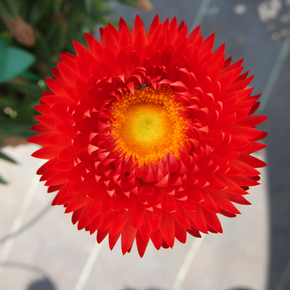
- Supersized blooms up to 3-4 inches across — twice the size of standard strawflowers — featuring layered, hot-pink papery bracts that fade to white at the base with a golden center
- Vigorous, mildew-resistant plants bloom continuously from late spring through fall frost, delivering nonstop color in beds, borders, and large patio containers
- Exceptional cut and dried flower — blooms retain their vivid pink color for a year or more, making them perfect for fresh arrangements, dried bouquets, and craft projects
- Heat-tolerant, drought-tolerant, and low-maintenance once established — an ideal choice for sunny Southern Oregon and Northern California gardens
Granvia Pink Strawflower (Xerochrysum bracteatum 'Granvia Pink') is a showstopping, supersized take on the beloved classic strawflower, delivering blooms that are genuinely twice the size of typical varieties, with large 3 to 4 inch flower heads composed of many layers of pointed, hot-pink papery bracts that elegantly fade to white near the base and open gradually to reveal warm golden centers. Native to the grasslands of Australia and belonging to the Asteraceae (daisy) family, this vigorous, upright plant grows 18 to 30 inches tall with an 18 to 24 inch spread, producing sturdy, well-branched stems that rise above lush, fuzzy gray-green foliage throughout the entire growing season, from late spring until the first hard frost. Granvia Pink earns its "everlasting" reputation through remarkable cut and dried flower performance — fresh-cut stems stay firm in a vase for up to 10 days, and when air-dried by hanging upside down, the blooms hold their brilliant pink color for a year or more, making them superb for dried arrangements, wreaths, and potpourri. A built-in mildew resistance and exceptional tolerance for summer heat and drought make this variety exceptionally easy to grow with minimal care once established, thriving in full sun and well-drained soil. Whether massed in landscape beds for a season-long color statement, displayed in large patio containers as a bold focal point, or harvested regularly for the cutting garden, Granvia Pink Strawflower is a hardworking, high-impact annual that rewards both beginning and experienced gardeners with continuous, breathtaking blooms all season long.
Plant Description
Granvia Pink Strawflower is a dramatically supersized cultivar of the Australian native Xerochrysum bracteatum, producing flower heads that are 3 to 4 inches across — genuinely twice the size of standard strawflower varieties. Each bloom is composed of many layers of pointed, papery bracts in a vivid hot-pink that fades beautifully to white near the base, surrounding a warm golden central disc. The bracts have a distinctive stiff, dry, straw-like texture that gives the plant its common name and accounts for its outstanding longevity both on the plant and as a cut or dried flower. The foliage is a soft gray-green, slightly fuzzy in texture, and carried on sturdy, well-branched, upright stems. This variety belongs to the Asteraceae (daisy) family and is also sold under the genus names Bracteantha and Helichrysum. It is grown as a warm-season annual throughout most of the country and as a short-lived tender perennial in frost-free climates.
Mature Size
| Attribute | Measurement |
|---|---|
| Mature Height | 18 to 30 inches |
| Mature Spread | 18 to 24 inches |
| Flower Diameter | 3 to 4 inches |
| Plant Habit | Upright, well-branched |
| Recommended Spacing | 18 to 24 inches apart |
Hardiness and Climate
Granvia Pink Strawflower is grown as a warm-season annual in most of the United States, providing season-long color from late spring through fall frost. In frost-free climates it behaves as a short-lived tender perennial, often returning for 2 to 3 years from the root crown. It is officially perennial in USDA Hardiness Zones 8 through 10. In Southern Oregon and Northern California, it performs as a long-blooming annual and is one of the most heat-tolerant choices available for summer containers and garden beds. The plant handles high summer temperatures and dry spells with ease once it is well established, making it an excellent performer in the warm, sunny conditions typical of the region.
Sunlight Requirements
Granvia Pink Strawflower requires full sun to perform its best. Plant it in a location that receives a minimum of 6 to 8 hours of direct sunlight per day. Full sun exposure encourages the most prolific flowering, the richest petal color, the sturdiest stem growth, and the best overall plant health. Insufficient light results in leggier growth, fewer blooms, and increased susceptibility to fungal problems. This is one of the best annuals for the hottest, sunniest spots in the garden or on a sunny south- or west-facing patio.
Soil and pH Preferences
Granvia Pink performs well in a wide range of soils as long as drainage is excellent. Soggy or waterlogged conditions will quickly lead to root rot and plant decline. For the best results, consider the following soil guidelines:
- Soil type: Well-drained loam, sandy loam, or any organically amended garden bed with good drainage
- Preferred soil pH: 5.5 to 6.5 (slightly acidic) is ideal; it will also tolerate near-neutral soil up to about pH 7.0
- Amending heavy clay soils with compost, perlite, or coarse sand before planting will significantly improve drainage and aeration
- Rich, overly fertile soils are not required — average to moderately fertile soil is sufficient and actually encourages more flowering than extremely nitrogen-rich conditions
- For containers, use a high-quality, well-drained potting mix with added perlite for extra drainage
Watering Guide
Once established, Granvia Pink Strawflower is notably drought-tolerant and performs best when allowed to dry out somewhat between waterings. Overwatering is the most common mistake and can cause root rot, yellowing leaves, and plant death. Follow these guidelines for healthy watering:
- Water newly planted specimens regularly until well established, keeping the soil evenly moist but never soggy
- Once established in garden beds, water only when the top inch of soil feels dry — about once per week in average summer conditions, more often during extreme heat
- Container-grown plants dry out more quickly than in-ground plants and will need more frequent monitoring, especially during hot weather
- Always water at the base of the plant rather than overhead to keep foliage dry and reduce the risk of fungal disease
- Drier conditions are always preferable to wet ones for this plant — when in doubt, skip a watering
Fertilizing
Granvia Pink Strawflower does not demand heavy feeding, but a modest fertilizer program supports vigorous growth and abundant blooming throughout the season. Follow these fertilizing tips:
- Work a balanced, slow-release granular fertilizer into the planting hole or surrounding soil at planting time according to package directions
- Apply a balanced liquid fertilizer at half-strength every two to four weeks during the active growing season to sustain continuous blooming
- Avoid fertilizers that are excessively high in nitrogen, as too much nitrogen promotes leafy growth at the expense of flowers
- A topdress of compost mid-season can provide a gentle, organic nutrient boost while also helping to retain soil moisture
- Container plants typically benefit from more regular liquid feeding than in-ground plants since nutrients leach out more readily with watering
Pruning and Deadheading
Granvia Pink Strawflower is a continuous bloomer, and regular deadheading or cutting greatly extends the flowering season by preventing the plant from setting seed. Here is how to keep it looking its best:
- Deadhead spent blooms regularly by snipping the stem back to just above a set of healthy leaves or a branching node to encourage the formation of new flower buds
- For the cutting garden, harvest stems frequently — the act of cutting flowers serves as deadheading and stimulates the plant to produce even more blooms
- Young plants can be lightly pinched back when they have developed several sets of leaves to promote a more compact, bushy habit with more branching stems and therefore more flowers
- If plants become leggy in midsummer, a moderate trim by one-third of their height can rejuvenate them and trigger a fresh flush of growth and flowers
- In areas where Granvia Pink overwinters as a tender perennial, cut back old growth in early spring to make way for new shoots emerging from the root crown
- Tall stems can be staked with bamboo canes and soft garden twine if they lean after heavy wind or rain
Planting Instructions
- Choose a planting location that receives full sun (at least 6 to 8 hours of direct sunlight daily) and has well-drained soil.
- Prepare the planting bed by loosening the soil to a depth of 8 to 10 inches. Mix in 2 to 3 inches of compost to improve soil structure and add nutrients if desired.
- Dig a hole slightly larger than the root ball of your transplant.
- Remove the plant from its nursery container and gently loosen any tightly circling roots.
- Set the plant in the hole at the same depth it was growing in the container — do not bury the crown deeper than it was growing previously.
- Backfill the hole with soil and firm it gently around the base of the plant.
- Space plants 18 to 24 inches apart to allow for good air circulation, which is important for mildew prevention.
- Water thoroughly after planting to settle the soil around the roots.
- Keep the soil consistently moist for the first few weeks while the plant establishes, then transition to a more moderate watering schedule.
- A light layer of mulch around (but not directly against) the base of the plant can help retain moisture and regulate soil temperature during the establishment period.
Cutting and Drying Flowers
One of the most rewarding aspects of growing Granvia Pink Strawflower is its exceptional performance as both a fresh-cut and an everlasting dried flower. Its large, papery blooms are among the best of any annual for this purpose.
- For fresh arrangements: Cut stems when the flower heads have begun to open but the golden center disc is not yet fully exposed. Use clean, sharp scissors or pruners and make a 45-degree cut just above a leaf node. Recut stems under water and place in a clean vase. Change the water daily and recut stem ends to extend vase life up to 10 days.
- For dried arrangements: Harvest stems when the blooms are beginning to open but before the centers are fully visible — the flowers will continue opening as they dry. Bundle 5 to 10 stems together with a rubber band and hang them upside down in a warm, dry, well-ventilated spot out of direct sunlight. Allow to dry for 1 to 2 weeks until the stems are completely stiff and dry.
- Dried Granvia Pink blooms retain their vibrant color for a year or more and are excellent for dried wreaths, bouquets, potpourri, and other craft projects.
- Regular harvesting also acts as deadheading and encourages the plant to produce more flowers throughout the season.
Container Growing
Granvia Pink Strawflower is an outstanding choice for containers, patio pots, and large planters, where its supersized blooms create dramatic visual impact. Keep these tips in mind for container success:
- Use a large container — at least 12 to 16 inches in diameter — to accommodate the plant's vigorous root system and spread of 18 to 24 inches
- Ensure the container has ample drainage holes; this plant will not tolerate sitting in water
- Fill with a high-quality, well-draining potting mix; mixing in extra perlite or coarse grit improves drainage further
- Container plants dry out faster than those in the ground, so check soil moisture more frequently, especially during hot weather
- Feed container plants with a balanced liquid fertilizer every two to three weeks throughout the growing season to compensate for nutrients that leach with watering
- Position containers in the sunniest spot available — a south- or west-facing patio is ideal
- Granvia Pink makes a striking centerpiece "thriller" plant in large mixed container combinations, pairing well with trailing companions that spill over the pot edges
Landscape Uses
The large, vivid blooms and vigorous, upright habit of Granvia Pink Strawflower make it one of the most versatile and eye-catching annuals available for the garden. Consider these landscape applications:
- Mass plantings in sunny garden beds and borders for sweeping drifts of season-long color
- Mid-border placement, where its 18 to 30 inch height works well behind lower-growing edging plants
- Anchor plant in large patio containers, window boxes, and decorative planters
- Cutting garden staple — plant in dedicated rows for a steady supply of fresh and dried flowers all season
- Xeriscape and water-wise landscape designs, where its drought tolerance reduces irrigation demand
- Cottage garden designs, where its papery, jewel-like blooms complement other sun-loving annuals and perennials
- A natural fall mum alternative for late-season color in beds and containers as temperatures begin to drop
Companion Plants
Granvia Pink Strawflower pairs beautifully with plants that share its preference for full sun, well-drained soil, and moderate water needs. Consider these excellent companions for beds and containers:
- Zinnia — Bold summer color in harmonizing or contrasting shades; shares the same love of heat and sun
- Black-Eyed Susan (Rudbeckia) — Warm golden-yellow blooms provide a stunning color contrast with the hot pink of Granvia
- Yarrow (Achillea) — Flat-topped flower clusters in yellow, white, or red complement the papery texture of strawflower bracts
- Salvia — Spiky blue or purple flower spikes create beautiful color contrast and attract pollinators
- Lavender (Lavandula) — Shares drought tolerance and full sun preference; silvery foliage and purple blooms pair elegantly with pink
- Marigold (Tagetes) — Fellow heat lover with warm orange and yellow tones that pop against Granvia's pink
- Gomphrena (Globe Amaranth) — Another everlasting flower that enjoys the same growing conditions and complements in dried arrangements
- Dusty Miller (Senecio) — Silvery foliage acts as a neutral backdrop that makes the hot-pink blooms pop in containers and borders
Pests and Diseases
Granvia Pink Strawflower is notably robust and mildew-resistant, making it less susceptible to disease than many other annuals. However, a few issues can arise, especially when growing conditions are less than ideal.
- Aphids: Small soft-bodied insects that cluster on new growth and stem tips. Knock off with a strong stream of water or treat with insecticidal soap spray.
- Thrips: Tiny insects that cause silvery streaking or distortion on petals and leaves. Monitor regularly and treat with insecticidal soap or neem oil if populations are high.
- Whiteflies: Small white flying insects found on the undersides of leaves. Yellow sticky traps and insecticidal soap applications are effective controls.
- Leafhoppers and Grasshoppers: May nibble on foliage occasionally; keep weeds down around plants to reduce habitat and apply diatomaceous earth as a deterrent if needed.
- Root Rot: Caused by overwatering or poorly drained soil. Prevention through correct watering and excellent drainage is the best approach; affected plants generally cannot be saved.
- Powdery Mildew: Granvia Pink has improved mildew resistance compared to standard strawflower varieties. Ensure good plant spacing (18 to 24 inches) for adequate air circulation as an additional preventive measure.
- Gray Mold (Botrytis): Can occur in cool, humid, or overly wet conditions. Remove and dispose of affected plant material immediately and improve air circulation.
Wildlife Value
Granvia Pink Strawflower is a welcome addition to pollinator-friendly gardens. Its large, open flower heads provide an accessible and attractive nectar and pollen source for a variety of beneficial wildlife throughout the long blooming season:
- Bees: Both honeybees and native bees, including bumble bees, are frequently attracted to the golden central disc of the flowers
- Butterflies: The open, flat flower form is easily accessible to a wide range of butterfly species seeking nectar
- Other beneficial insects: Hoverflies and other beneficial insects visit the blooms, helping with garden pollination
- While not a primary food source for birds, the dried seed heads left at the end of the season can attract small songbirds
- The plant is generally considered deer-resistant, making it a practical choice for gardens where deer browsing is a concern
- Supersized blooms up to 3-4 inches across — twice the size of standard strawflowers — featuring layered, hot-pink papery bracts that fade to white at the base with a golden center
- Vigorous, mildew-resistant plants bloom continuously from late spring through fall frost, delivering nonstop color in beds, borders, and large patio containers
- Exceptional cut and dried flower — blooms retain their vivid pink color for a year or more, making them perfect for fresh arrangements, dried bouquets, and craft projects
- Heat-tolerant, drought-tolerant, and low-maintenance once established — an ideal choice for sunny Southern Oregon and Northern California gardens
Granvia Pink Strawflower (Xerochrysum bracteatum 'Granvia Pink') is a showstopping, supersized take on the beloved classic strawflower, delivering blooms that are genuinely twice the size of typical varieties, with large 3 to 4 inch flower heads composed of many layers of pointed, hot-pink papery bracts that elegantly fade to white near the base and open gradually to reveal warm golden centers. Native to the grasslands of Australia and belonging to the Asteraceae (daisy) family, this vigorous, upright plant grows 18 to 30 inches tall with an 18 to 24 inch spread, producing sturdy, well-branched stems that rise above lush, fuzzy gray-green foliage throughout the entire growing season, from late spring until the first hard frost. Granvia Pink earns its "everlasting" reputation through remarkable cut and dried flower performance — fresh-cut stems stay firm in a vase for up to 10 days, and when air-dried by hanging upside down, the blooms hold their brilliant pink color for a year or more, making them superb for dried arrangements, wreaths, and potpourri. A built-in mildew resistance and exceptional tolerance for summer heat and drought make this variety exceptionally easy to grow with minimal care once established, thriving in full sun and well-drained soil. Whether massed in landscape beds for a season-long color statement, displayed in large patio containers as a bold focal point, or harvested regularly for the cutting garden, Granvia Pink Strawflower is a hardworking, high-impact annual that rewards both beginning and experienced gardeners with continuous, breathtaking blooms all season long.
Plant Description
Granvia Pink Strawflower is a dramatically supersized cultivar of the Australian native Xerochrysum bracteatum, producing flower heads that are 3 to 4 inches across — genuinely twice the size of standard strawflower varieties. Each bloom is composed of many layers of pointed, papery bracts in a vivid hot-pink that fades beautifully to white near the base, surrounding a warm golden central disc. The bracts have a distinctive stiff, dry, straw-like texture that gives the plant its common name and accounts for its outstanding longevity both on the plant and as a cut or dried flower. The foliage is a soft gray-green, slightly fuzzy in texture, and carried on sturdy, well-branched, upright stems. This variety belongs to the Asteraceae (daisy) family and is also sold under the genus names Bracteantha and Helichrysum. It is grown as a warm-season annual throughout most of the country and as a short-lived tender perennial in frost-free climates.
Mature Size
| Attribute | Measurement |
|---|---|
| Mature Height | 18 to 30 inches |
| Mature Spread | 18 to 24 inches |
| Flower Diameter | 3 to 4 inches |
| Plant Habit | Upright, well-branched |
| Recommended Spacing | 18 to 24 inches apart |
Hardiness and Climate
Granvia Pink Strawflower is grown as a warm-season annual in most of the United States, providing season-long color from late spring through fall frost. In frost-free climates it behaves as a short-lived tender perennial, often returning for 2 to 3 years from the root crown. It is officially perennial in USDA Hardiness Zones 8 through 10. In Southern Oregon and Northern California, it performs as a long-blooming annual and is one of the most heat-tolerant choices available for summer containers and garden beds. The plant handles high summer temperatures and dry spells with ease once it is well established, making it an excellent performer in the warm, sunny conditions typical of the region.
Sunlight Requirements
Granvia Pink Strawflower requires full sun to perform its best. Plant it in a location that receives a minimum of 6 to 8 hours of direct sunlight per day. Full sun exposure encourages the most prolific flowering, the richest petal color, the sturdiest stem growth, and the best overall plant health. Insufficient light results in leggier growth, fewer blooms, and increased susceptibility to fungal problems. This is one of the best annuals for the hottest, sunniest spots in the garden or on a sunny south- or west-facing patio.
Soil and pH Preferences
Granvia Pink performs well in a wide range of soils as long as drainage is excellent. Soggy or waterlogged conditions will quickly lead to root rot and plant decline. For the best results, consider the following soil guidelines:
- Soil type: Well-drained loam, sandy loam, or any organically amended garden bed with good drainage
- Preferred soil pH: 5.5 to 6.5 (slightly acidic) is ideal; it will also tolerate near-neutral soil up to about pH 7.0
- Amending heavy clay soils with compost, perlite, or coarse sand before planting will significantly improve drainage and aeration
- Rich, overly fertile soils are not required — average to moderately fertile soil is sufficient and actually encourages more flowering than extremely nitrogen-rich conditions
- For containers, use a high-quality, well-drained potting mix with added perlite for extra drainage
Watering Guide
Once established, Granvia Pink Strawflower is notably drought-tolerant and performs best when allowed to dry out somewhat between waterings. Overwatering is the most common mistake and can cause root rot, yellowing leaves, and plant death. Follow these guidelines for healthy watering:
- Water newly planted specimens regularly until well established, keeping the soil evenly moist but never soggy
- Once established in garden beds, water only when the top inch of soil feels dry — about once per week in average summer conditions, more often during extreme heat
- Container-grown plants dry out more quickly than in-ground plants and will need more frequent monitoring, especially during hot weather
- Always water at the base of the plant rather than overhead to keep foliage dry and reduce the risk of fungal disease
- Drier conditions are always preferable to wet ones for this plant — when in doubt, skip a watering
Fertilizing
Granvia Pink Strawflower does not demand heavy feeding, but a modest fertilizer program supports vigorous growth and abundant blooming throughout the season. Follow these fertilizing tips:
- Work a balanced, slow-release granular fertilizer into the planting hole or surrounding soil at planting time according to package directions
- Apply a balanced liquid fertilizer at half-strength every two to four weeks during the active growing season to sustain continuous blooming
- Avoid fertilizers that are excessively high in nitrogen, as too much nitrogen promotes leafy growth at the expense of flowers
- A topdress of compost mid-season can provide a gentle, organic nutrient boost while also helping to retain soil moisture
- Container plants typically benefit from more regular liquid feeding than in-ground plants since nutrients leach out more readily with watering
Pruning and Deadheading
Granvia Pink Strawflower is a continuous bloomer, and regular deadheading or cutting greatly extends the flowering season by preventing the plant from setting seed. Here is how to keep it looking its best:
- Deadhead spent blooms regularly by snipping the stem back to just above a set of healthy leaves or a branching node to encourage the formation of new flower buds
- For the cutting garden, harvest stems frequently — the act of cutting flowers serves as deadheading and stimulates the plant to produce even more blooms
- Young plants can be lightly pinched back when they have developed several sets of leaves to promote a more compact, bushy habit with more branching stems and therefore more flowers
- If plants become leggy in midsummer, a moderate trim by one-third of their height can rejuvenate them and trigger a fresh flush of growth and flowers
- In areas where Granvia Pink overwinters as a tender perennial, cut back old growth in early spring to make way for new shoots emerging from the root crown
- Tall stems can be staked with bamboo canes and soft garden twine if they lean after heavy wind or rain
Planting Instructions
- Choose a planting location that receives full sun (at least 6 to 8 hours of direct sunlight daily) and has well-drained soil.
- Prepare the planting bed by loosening the soil to a depth of 8 to 10 inches. Mix in 2 to 3 inches of compost to improve soil structure and add nutrients if desired.
- Dig a hole slightly larger than the root ball of your transplant.
- Remove the plant from its nursery container and gently loosen any tightly circling roots.
- Set the plant in the hole at the same depth it was growing in the container — do not bury the crown deeper than it was growing previously.
- Backfill the hole with soil and firm it gently around the base of the plant.
- Space plants 18 to 24 inches apart to allow for good air circulation, which is important for mildew prevention.
- Water thoroughly after planting to settle the soil around the roots.
- Keep the soil consistently moist for the first few weeks while the plant establishes, then transition to a more moderate watering schedule.
- A light layer of mulch around (but not directly against) the base of the plant can help retain moisture and regulate soil temperature during the establishment period.
Cutting and Drying Flowers
One of the most rewarding aspects of growing Granvia Pink Strawflower is its exceptional performance as both a fresh-cut and an everlasting dried flower. Its large, papery blooms are among the best of any annual for this purpose.
- For fresh arrangements: Cut stems when the flower heads have begun to open but the golden center disc is not yet fully exposed. Use clean, sharp scissors or pruners and make a 45-degree cut just above a leaf node. Recut stems under water and place in a clean vase. Change the water daily and recut stem ends to extend vase life up to 10 days.
- For dried arrangements: Harvest stems when the blooms are beginning to open but before the centers are fully visible — the flowers will continue opening as they dry. Bundle 5 to 10 stems together with a rubber band and hang them upside down in a warm, dry, well-ventilated spot out of direct sunlight. Allow to dry for 1 to 2 weeks until the stems are completely stiff and dry.
- Dried Granvia Pink blooms retain their vibrant color for a year or more and are excellent for dried wreaths, bouquets, potpourri, and other craft projects.
- Regular harvesting also acts as deadheading and encourages the plant to produce more flowers throughout the season.
Container Growing
Granvia Pink Strawflower is an outstanding choice for containers, patio pots, and large planters, where its supersized blooms create dramatic visual impact. Keep these tips in mind for container success:
- Use a large container — at least 12 to 16 inches in diameter — to accommodate the plant's vigorous root system and spread of 18 to 24 inches
- Ensure the container has ample drainage holes; this plant will not tolerate sitting in water
- Fill with a high-quality, well-draining potting mix; mixing in extra perlite or coarse grit improves drainage further
- Container plants dry out faster than those in the ground, so check soil moisture more frequently, especially during hot weather
- Feed container plants with a balanced liquid fertilizer every two to three weeks throughout the growing season to compensate for nutrients that leach with watering
- Position containers in the sunniest spot available — a south- or west-facing patio is ideal
- Granvia Pink makes a striking centerpiece "thriller" plant in large mixed container combinations, pairing well with trailing companions that spill over the pot edges
Landscape Uses
The large, vivid blooms and vigorous, upright habit of Granvia Pink Strawflower make it one of the most versatile and eye-catching annuals available for the garden. Consider these landscape applications:
- Mass plantings in sunny garden beds and borders for sweeping drifts of season-long color
- Mid-border placement, where its 18 to 30 inch height works well behind lower-growing edging plants
- Anchor plant in large patio containers, window boxes, and decorative planters
- Cutting garden staple — plant in dedicated rows for a steady supply of fresh and dried flowers all season
- Xeriscape and water-wise landscape designs, where its drought tolerance reduces irrigation demand
- Cottage garden designs, where its papery, jewel-like blooms complement other sun-loving annuals and perennials
- A natural fall mum alternative for late-season color in beds and containers as temperatures begin to drop
Companion Plants
Granvia Pink Strawflower pairs beautifully with plants that share its preference for full sun, well-drained soil, and moderate water needs. Consider these excellent companions for beds and containers:
- Zinnia — Bold summer color in harmonizing or contrasting shades; shares the same love of heat and sun
- Black-Eyed Susan (Rudbeckia) — Warm golden-yellow blooms provide a stunning color contrast with the hot pink of Granvia
- Yarrow (Achillea) — Flat-topped flower clusters in yellow, white, or red complement the papery texture of strawflower bracts
- Salvia — Spiky blue or purple flower spikes create beautiful color contrast and attract pollinators
- Lavender (Lavandula) — Shares drought tolerance and full sun preference; silvery foliage and purple blooms pair elegantly with pink
- Marigold (Tagetes) — Fellow heat lover with warm orange and yellow tones that pop against Granvia's pink
- Gomphrena (Globe Amaranth) — Another everlasting flower that enjoys the same growing conditions and complements in dried arrangements
- Dusty Miller (Senecio) — Silvery foliage acts as a neutral backdrop that makes the hot-pink blooms pop in containers and borders
Pests and Diseases
Granvia Pink Strawflower is notably robust and mildew-resistant, making it less susceptible to disease than many other annuals. However, a few issues can arise, especially when growing conditions are less than ideal.
- Aphids: Small soft-bodied insects that cluster on new growth and stem tips. Knock off with a strong stream of water or treat with insecticidal soap spray.
- Thrips: Tiny insects that cause silvery streaking or distortion on petals and leaves. Monitor regularly and treat with insecticidal soap or neem oil if populations are high.
- Whiteflies: Small white flying insects found on the undersides of leaves. Yellow sticky traps and insecticidal soap applications are effective controls.
- Leafhoppers and Grasshoppers: May nibble on foliage occasionally; keep weeds down around plants to reduce habitat and apply diatomaceous earth as a deterrent if needed.
- Root Rot: Caused by overwatering or poorly drained soil. Prevention through correct watering and excellent drainage is the best approach; affected plants generally cannot be saved.
- Powdery Mildew: Granvia Pink has improved mildew resistance compared to standard strawflower varieties. Ensure good plant spacing (18 to 24 inches) for adequate air circulation as an additional preventive measure.
- Gray Mold (Botrytis): Can occur in cool, humid, or overly wet conditions. Remove and dispose of affected plant material immediately and improve air circulation.
Wildlife Value
Granvia Pink Strawflower is a welcome addition to pollinator-friendly gardens. Its large, open flower heads provide an accessible and attractive nectar and pollen source for a variety of beneficial wildlife throughout the long blooming season:
- Bees: Both honeybees and native bees, including bumble bees, are frequently attracted to the golden central disc of the flowers
- Butterflies: The open, flat flower form is easily accessible to a wide range of butterfly species seeking nectar
- Other beneficial insects: Hoverflies and other beneficial insects visit the blooms, helping with garden pollination
- While not a primary food source for birds, the dried seed heads left at the end of the season can attract small songbirds
- The plant is generally considered deer-resistant, making it a practical choice for gardens where deer browsing is a concern


