
Zoom the image with the mouse
Flower Carpet Pink Supreme Rose - 2 Gallon
SKU:
1931460
UPC:
014949212547
$37.99
- Produces up to 2,000 vivid lipstick-pink blooms per season in large clusters — no deadheading required — flowering continuously from late spring all the way through the first frost of fall.
- Winner of the prestigious ADR Award for disease resistance, this rose shows exceptional tolerance to black spot and powdery mildew, making it one of the lowest-maintenance roses available for home gardens.
- Low, spreading groundcover habit reaches 2 to 2.5 feet tall and 3 to 3.5 feet wide, making it ideal for slopes, mass plantings, border edging, and large patio containers.
- Improved heat, humidity, and cold tolerance compared to the original Flower Carpet Pink, performing beautifully across a wide range of climates in USDA Zones 5 through 11.
Flower Carpet Pink Supreme Rose (Rosa 'NOA168098F') is a standout groundcover rose that delivers an extraordinary season-long show of bold, iridescent lipstick-pink blooms from late spring until frost — with virtually no fuss. Semi-double flowers measuring approximately 2 inches across are borne in clusters of up to 60 blooms per stem, and a mature plant can produce as many as 2,000 roses in a single season, all atop a dense, spreading carpet of rich, glossy dark green foliage. Bred as an improvement on the original Flower Carpet Pink, this cultivar boasts more compact growth, brighter flower color, a longer bloom season, and dramatically increased resistance to the black spot and powdery mildew that plague ordinary roses. Recognized with the ADR Award in 2010 — the world's top honor for rose disease resistance — Flower Carpet Pink Supreme thrives in full sun with average moisture and adapts to a wide range of soil types and pH levels, including clay and sandy soils. Its naturally mounded, low-growing habit makes it a go-to choice for weed-suppressing groundcover, erosion control on gentle slopes, front-of-border plantings, mass landscape displays, low informal hedging, and container gardening. Hardy in USDA Zones 5 through 11 and tolerant of heat, humidity, and urban pollution, this deciduous shrub rose is an outstanding, long-lived addition to any Southern Oregon or Northern California garden seeking season-long color without the typical rose maintenance demands.
Plant Description
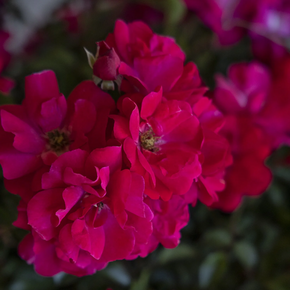
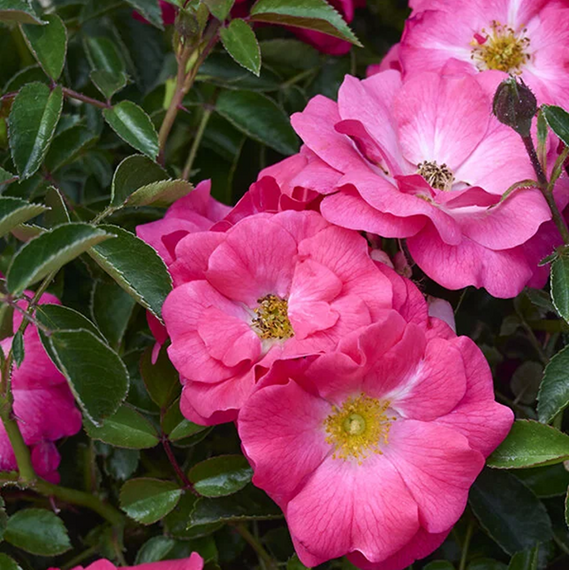
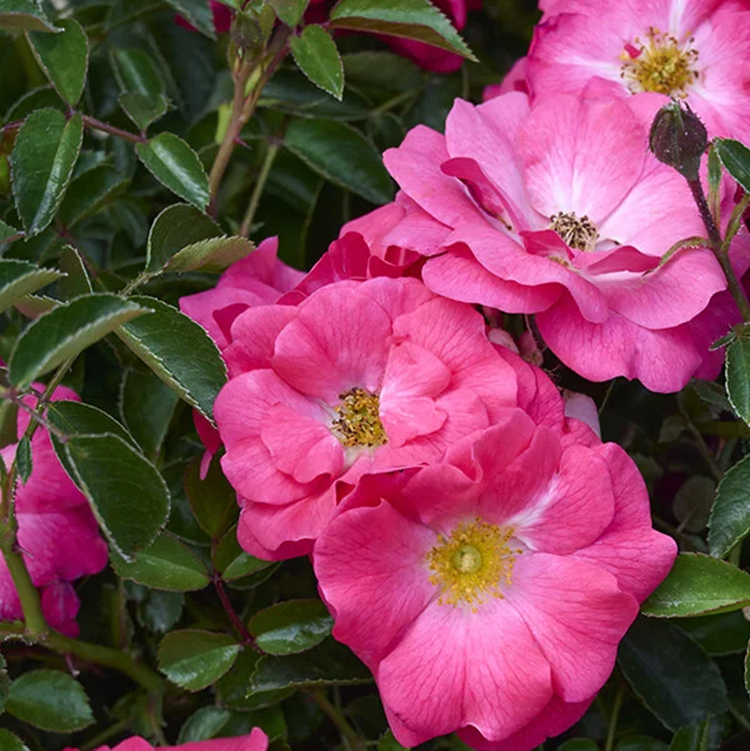
Flower Carpet Pink Supreme Rose is a low-growing, mound-forming deciduous shrub rose celebrated for its extraordinary floral output and exceptional ease of care. Its semi-double blooms are a vivid, iridescent lipstick pink with contrasting white centers and golden stamens, measuring roughly 2 inches (5 cm) wide and carried in dense clusters at the tips of arching stems. The flowers begin as rich fuchsia-pink buds and open to a slightly lighter, luminous pink, creating a two-toned effect within each cluster. Foliage is a distinguishing feature as well — the leaves are notably thick, glossy, and deep green, remaining attractive and largely disease-free throughout the entire growing season. The plant's naturally spreading, rounded habit forms a tidy, weed-suppressing mound that hugs the ground and fills in quickly. A single mature plant is capable of producing up to 2,000 individual roses over the course of a season, with up to 60 developing flowers and buds counted on a single stem at one time. Flower Carpet Pink Supreme is an interspecific hybrid developed by crossing the groundcover rose 'Immensee' with an unnamed seedling, and was introduced as a significant improvement over the original Flower Carpet Pink in terms of color vibrancy, bloom duration, compactness, and disease resistance.
Mature Size and Growth Habit
| Attribute | Detail |
|---|---|
| Mature Height | 2 to 2.5 feet (60 to 80 cm) |
| Mature Spread | 3 to 3.5 feet (90 to 100 cm) |
| Growth Rate | Fast |
| Habit | Low, spreading, mounded, ground-hugging |
| Plant Type | Deciduous shrub rose |
| Time to Maturity | 2 to 5 years |
| Expected Lifespan | Approximately 30 years under ideal conditions |
Because it fills out densely all the way to the ground, Flower Carpet Pink Supreme does not typically require low-growing plants placed in front of it to hide a bare base. Its fast growth rate means it establishes and begins spreading to cover soil quickly after planting.
Hardiness and Climate Zones
| Zone System | Range |
|---|---|
| USDA Hardiness Zones | 5 to 11 |
| AHS Heat Zones | 1 to 11 |
| Sunset Garden Zones | 6 through 24 |
| RHS Hardiness Rating | H6 (hardy to approximately -20°C / -4°F) |
Flower Carpet Pink Supreme performs exceptionally well across a wide climate spectrum and is notably more cold- and heat-tolerant than earlier Flower Carpet varieties. In Zones 6 and colder, a light layer of mulch around the root zone in late fall is recommended for added winter protection. In areas of intense summer heat, situating the plant where it receives afternoon shade and ensuring adequate moisture during heat waves will help maintain peak flowering performance. In mild climates such as those of Southern Oregon and Northern California, this rose thrives with minimal weather-related stress.
Sunlight Requirements
Flower Carpet Pink Supreme Rose performs best in full sun, defined as a minimum of 6 to 8 hours of direct sunlight per day. Full sun exposure promotes the most prolific flowering, the strongest stems, and the best overall disease resistance. The plant will tolerate partial shade — approximately 4 to 5 hours of sun daily — but flowering will be noticeably reduced in lower-light conditions. In regions with extremely intense afternoon sun and heat, light afternoon shade can help prevent stress without significantly compromising bloom production. When selecting a planting site, prioritize locations with unobstructed morning and midday sun for the best results.
Soil and pH Preferences
One of the strengths of Flower Carpet Pink Supreme is its adaptability to a wide range of soil conditions. It grows well in chalk, clay, loam, and sandy soils, making it a versatile choice for the varied garden soils found across Southern Oregon and Northern California. For best performance, the ideal soil is fertile, humus-rich, and well-drained while retaining adequate moisture. It is not particular about soil pH and tolerates acidic, neutral, and alkaline conditions equally. Amending planting soil with compost or well-rotted organic matter at planting time will improve fertility and drainage in both heavy clay and sandy soils. Avoid sites with chronically waterlogged or standing water, as consistently saturated roots can lead to root rot and decline. This rose also demonstrates a strong tolerance for urban soils and pollution, making it suitable for streetside and courtyard plantings.
Watering Guide
Flower Carpet Pink Supreme has average water needs and appreciates consistent moisture, especially during its establishment period in the first season after planting. Water deeply and thoroughly at planting, then continue to irrigate regularly during the first growing season, allowing the top 3 to 4 inches of soil to dry out between waterings. Once established, this rose develops good drought tolerance and requires less supplemental irrigation, though it benefits from regular deep watering during extended dry periods and heat waves. Avoid shallow, frequent watering, which encourages shallow root development. Always water at the base of the plant rather than overhead to keep foliage dry and minimize any risk of fungal disease. Applying a 2 to 3 inch layer of mulch around the root zone conserves soil moisture, moderates soil temperature, and reduces weed competition.
Fertilizing
For optimal flowering and foliage health, fertilize Flower Carpet Pink Supreme with a balanced rose fertilizer or a general-purpose slow-release granular fertilizer formulated for flowering shrubs. Apply the first feeding in early spring as new growth begins to emerge, and follow with a second application in early summer to support the long bloom season. Avoid fertilizing after midsummer in colder climates, as late-season nitrogen can stimulate tender new growth that may be damaged by early frosts. Mulching the root zone annually in late winter with well-rotted compost or aged organic matter serves the dual purpose of gradually improving soil fertility and conserving moisture. In the fertile soils of Southern Oregon and Northern California, a light feeding schedule is often sufficient; observe your plant's foliage color and vigor as a guide — deep green, glossy leaves indicate adequate nutrition.
Pruning and Maintenance
Flower Carpet Pink Supreme is celebrated for requiring minimal pruning compared to traditional hybrid tea or floribunda roses. There is no need for deadheading spent blooms — the plant is self-cleaning and will continue to produce new flower clusters without intervention throughout the season. Annual pruning should be performed once in late winter or early spring, just as new growth is beginning to emerge. Cut the entire plant back by approximately one-third to two-thirds of its overall height to refresh the plant, encourage vigorous new growth, and maintain a tidy, compact shape. For a more strongly ground-hugging form, vertical or upright stems can be cut back to the plant's main lateral framework. Light trimming or shaping to improve appearance can be done at any time during the growing season without harming the plant. Pruning can be accomplished quickly and easily with garden shears or a hedge trimmer — no specialized rose pruning knowledge is required.
Planting Instructions
- Select a site receiving at least 6 to 8 hours of direct sunlight daily with well-drained soil and good air circulation.
- Dig a planting hole two to three times wider than the root ball and just as deep, so the bud union (the swollen area at the base of the canes) sits at or just above the soil surface.
- Amend the backfill soil with compost or aged organic matter to improve fertility and drainage.
- Remove the plant from its container and gently loosen any circling roots before placing it in the hole.
- Backfill the hole, firming the soil gently around the roots to eliminate air pockets.
- Water deeply and thoroughly immediately after planting.
- Apply a 2 to 3 inch layer of mulch (such as shredded bark or compost) around the base of the plant, keeping mulch a few inches away from the canes to prevent crown rot.
- Space multiple plants 3 to 4 feet apart on center for groundcover or mass planting purposes. For quicker coverage of a large area, spacing plants 36 inches apart is recommended.
- Planting can be done in spring, summer, or fall; spring and fall plantings benefit from cooler temperatures that aid establishment.
Seasonal Interest
Flower Carpet Pink Supreme delivers multi-season ornamental interest from mid-spring through the onset of winter. Flowering begins in late spring and continues in successive flushes essentially without pause through summer and into fall, right up to the first killing frost. The glossy, dark green foliage remains dense and attractive from spring through fall, providing a rich backdrop that makes the vivid pink blooms pop visually. As a deciduous rose, the plant drops its leaves in winter, but the arching branching structure remains. The extraordinarily long bloom season — spanning spring, all three phases of summer, and fall — makes this one of the most continuously colorful roses available for the garden. In mild Northern California climates, flowering may begin earlier in spring and extend later into autumn than in colder regions.
Landscape Uses
- Groundcover for large sunny areas, suppressing weeds while providing season-long color
- Mass plantings along roadsides, berms, and open slopes for high-impact, low-care coverage
- Erosion control on gentle to moderate slopes where its spreading root system stabilizes soil
- Front-of-border accent or low edging along walkways, driveways, and garden beds
- Low informal hedging or flowering barrier planting
- Mixed shrub borders combined with ornamental grasses, lavender, or salvia for contrasting texture
- Container and patio planting where the spreading stems spill gracefully over pot edges
- City and courtyard gardens — highly tolerant of urban pollution and difficult urban soils
- Cottage and informal garden styles where its relaxed, spreading habit fits naturally
Container Growing
Flower Carpet Pink Supreme is well suited to container and patio culture, and its naturally spreading, mounding habit makes it an especially attractive "spiller" in large combination containers. Choose a container that is at least 18 to 24 inches in diameter with ample drainage holes. Use a high-quality, well-draining potting mix amended with a slow-release fertilizer at planting. Container-grown specimens may require more frequent watering than in-ground plants, as pots dry out faster — check soil moisture regularly and water when the top 2 to 3 inches are dry. Fertilize every 4 to 6 weeks during the growing season with a liquid rose fertilizer to compensate for nutrient leaching from frequent watering. In colder zones, move containers to a sheltered, unheated garage or shed over winter to protect the root ball from hard freezes. In the mild winters of Southern Oregon and Northern California, outdoor containers can typically remain in place with minimal protection.
Companion Plants
Flower Carpet Pink Supreme pairs beautifully with a wide range of perennials, ornamental grasses, and other shrubs. Consider the following companions for complementary color, texture, and seasonal interest:
- Lavender (Lavandula spp.) — contrasting blue-purple spikes complement the hot pink blooms and share the same sun and drainage preferences
- Salvia (Salvia nemorosa) — blue or purple flower spikes echo the lavender combination and bloom simultaneously in summer
- Catmint (Nepeta spp.) — soft lavender-blue mounding companion that spills attractively at the rose's feet
- Ornamental Alliums — globe-shaped purple or white flowers in late spring create a striking contrast with emerging rose clusters
- Geranium (Cranesbill, Geranium Rozanne) — a low-growing, blue-flowered perennial that weaves naturally among the rose's spreading stems
- Russian Sage (Perovskia atriplicifolia) — tall, airy silver-blue foliage and flowers create a stunning backdrop contrast
- Clustered Bellflower (Campanula glomerata) — rich violet-blue blooms provide bold color contrast alongside the pink roses
- Low ornamental grasses — fine-textured grasses such as Blue Fescue (Festuca glauca) provide textural contrast and year-round interest
Pests and Diseases
Flower Carpet Pink Supreme has earned its reputation as one of the most disease-resistant roses commercially available, having won the ADR Award — the world's premier designation for rose disease resistance. It shows significantly improved resistance to black spot (Diplocarpon rosae) and powdery mildew compared to the original Flower Carpet varieties and most other landscape roses. Routine chemical spraying and dusting is generally not necessary; treat only if symptoms appear despite the plant's natural resistance. While the plant is highly resistant, the following pests and diseases are worth monitoring:
- Aphids — small soft-bodied insects that cluster on new growth; manage with a strong stream of water or insecticidal soap
- Rose slugworm sawfly — larvae skeletonize leaf surfaces; hand-pick or treat with spinosad if infestations are heavy
- Spider mites — more common in hot, dry conditions; increase irrigation and use miticide or insecticidal soap if needed
- Scale insects — treat with horticultural oil applied in late winter before bud break
- Rose black spot — largely resisted by this cultivar; ensure good air circulation and avoid overhead watering as preventive measures
- Powdery mildew — rarely a significant problem; improve air circulation if observed
- Deer and rabbits — can cause browsing damage; physical barriers or repellents may be needed in high-pressure areas
Wildlife Value
Flower Carpet Pink Supreme provides genuine ecological value in the garden. The clusters of open, semi-double blooms with exposed stamens and nectar are readily accessible to pollinators, making this rose a reliable food source throughout its exceptionally long bloom season. Key wildlife interactions include:
- Bees — both honeybees and native bees visit the flowers regularly for pollen and nectar from late spring through fall
- Butterflies — the abundant, brightly colored blooms attract a diversity of butterfly species throughout the summer
- Other beneficial insects — the open flower form supports a range of beneficial pollinators that contribute to overall garden health
Unlike some rose cultivars, Flower Carpet Pink Supreme produces relatively little ornamental fruit (hip) development that would attract birds in winter, so its primary wildlife value is concentrated in its exceptional value as a pollinator plant during the long flowering season. Its dense, spreading growth habit also provides low-level shelter for beneficial ground-dwelling insects.
Awards and Recognition
Flower Carpet Pink Supreme has received significant recognition from horticultural organizations around the world, validating its outstanding performance in garden trials:
- ADR Award (2010) — the Allgemeine Deutsche Rosenneuheitenprufung (ADR) is widely regarded as the most rigorous and prestigious independent rose trial in the world, specifically evaluating disease resistance, ornamental value, and environmental performance across multiple test sites over several years. The 2010 ADR Award to Flower Carpet Pink Supreme is a direct certification of its superior disease resistance and garden performance.
- Recognized as a top performer for disease resistance, exceeding the disease-resistance ratings of the original Flower Carpet Pink rose series
- Widely recommended by horticultural professionals, extension services, and landscape designers across USDA Zones 5 through 11 for low-maintenance, high-impact landscape use
- Produces up to 2,000 vivid lipstick-pink blooms per season in large clusters — no deadheading required — flowering continuously from late spring all the way through the first frost of fall.
- Winner of the prestigious ADR Award for disease resistance, this rose shows exceptional tolerance to black spot and powdery mildew, making it one of the lowest-maintenance roses available for home gardens.
- Low, spreading groundcover habit reaches 2 to 2.5 feet tall and 3 to 3.5 feet wide, making it ideal for slopes, mass plantings, border edging, and large patio containers.
- Improved heat, humidity, and cold tolerance compared to the original Flower Carpet Pink, performing beautifully across a wide range of climates in USDA Zones 5 through 11.
Flower Carpet Pink Supreme Rose (Rosa 'NOA168098F') is a standout groundcover rose that delivers an extraordinary season-long show of bold, iridescent lipstick-pink blooms from late spring until frost — with virtually no fuss. Semi-double flowers measuring approximately 2 inches across are borne in clusters of up to 60 blooms per stem, and a mature plant can produce as many as 2,000 roses in a single season, all atop a dense, spreading carpet of rich, glossy dark green foliage. Bred as an improvement on the original Flower Carpet Pink, this cultivar boasts more compact growth, brighter flower color, a longer bloom season, and dramatically increased resistance to the black spot and powdery mildew that plague ordinary roses. Recognized with the ADR Award in 2010 — the world's top honor for rose disease resistance — Flower Carpet Pink Supreme thrives in full sun with average moisture and adapts to a wide range of soil types and pH levels, including clay and sandy soils. Its naturally mounded, low-growing habit makes it a go-to choice for weed-suppressing groundcover, erosion control on gentle slopes, front-of-border plantings, mass landscape displays, low informal hedging, and container gardening. Hardy in USDA Zones 5 through 11 and tolerant of heat, humidity, and urban pollution, this deciduous shrub rose is an outstanding, long-lived addition to any Southern Oregon or Northern California garden seeking season-long color without the typical rose maintenance demands.
Plant Description
Flower Carpet Pink Supreme Rose is a low-growing, mound-forming deciduous shrub rose celebrated for its extraordinary floral output and exceptional ease of care. Its semi-double blooms are a vivid, iridescent lipstick pink with contrasting white centers and golden stamens, measuring roughly 2 inches (5 cm) wide and carried in dense clusters at the tips of arching stems. The flowers begin as rich fuchsia-pink buds and open to a slightly lighter, luminous pink, creating a two-toned effect within each cluster. Foliage is a distinguishing feature as well — the leaves are notably thick, glossy, and deep green, remaining attractive and largely disease-free throughout the entire growing season. The plant's naturally spreading, rounded habit forms a tidy, weed-suppressing mound that hugs the ground and fills in quickly. A single mature plant is capable of producing up to 2,000 individual roses over the course of a season, with up to 60 developing flowers and buds counted on a single stem at one time. Flower Carpet Pink Supreme is an interspecific hybrid developed by crossing the groundcover rose 'Immensee' with an unnamed seedling, and was introduced as a significant improvement over the original Flower Carpet Pink in terms of color vibrancy, bloom duration, compactness, and disease resistance.
Mature Size and Growth Habit
| Attribute | Detail |
|---|---|
| Mature Height | 2 to 2.5 feet (60 to 80 cm) |
| Mature Spread | 3 to 3.5 feet (90 to 100 cm) |
| Growth Rate | Fast |
| Habit | Low, spreading, mounded, ground-hugging |
| Plant Type | Deciduous shrub rose |
| Time to Maturity | 2 to 5 years |
| Expected Lifespan | Approximately 30 years under ideal conditions |
Because it fills out densely all the way to the ground, Flower Carpet Pink Supreme does not typically require low-growing plants placed in front of it to hide a bare base. Its fast growth rate means it establishes and begins spreading to cover soil quickly after planting.
Hardiness and Climate Zones
| Zone System | Range |
|---|---|
| USDA Hardiness Zones | 5 to 11 |
| AHS Heat Zones | 1 to 11 |
| Sunset Garden Zones | 6 through 24 |
| RHS Hardiness Rating | H6 (hardy to approximately -20°C / -4°F) |
Flower Carpet Pink Supreme performs exceptionally well across a wide climate spectrum and is notably more cold- and heat-tolerant than earlier Flower Carpet varieties. In Zones 6 and colder, a light layer of mulch around the root zone in late fall is recommended for added winter protection. In areas of intense summer heat, situating the plant where it receives afternoon shade and ensuring adequate moisture during heat waves will help maintain peak flowering performance. In mild climates such as those of Southern Oregon and Northern California, this rose thrives with minimal weather-related stress.
Sunlight Requirements
Flower Carpet Pink Supreme Rose performs best in full sun, defined as a minimum of 6 to 8 hours of direct sunlight per day. Full sun exposure promotes the most prolific flowering, the strongest stems, and the best overall disease resistance. The plant will tolerate partial shade — approximately 4 to 5 hours of sun daily — but flowering will be noticeably reduced in lower-light conditions. In regions with extremely intense afternoon sun and heat, light afternoon shade can help prevent stress without significantly compromising bloom production. When selecting a planting site, prioritize locations with unobstructed morning and midday sun for the best results.
Soil and pH Preferences
One of the strengths of Flower Carpet Pink Supreme is its adaptability to a wide range of soil conditions. It grows well in chalk, clay, loam, and sandy soils, making it a versatile choice for the varied garden soils found across Southern Oregon and Northern California. For best performance, the ideal soil is fertile, humus-rich, and well-drained while retaining adequate moisture. It is not particular about soil pH and tolerates acidic, neutral, and alkaline conditions equally. Amending planting soil with compost or well-rotted organic matter at planting time will improve fertility and drainage in both heavy clay and sandy soils. Avoid sites with chronically waterlogged or standing water, as consistently saturated roots can lead to root rot and decline. This rose also demonstrates a strong tolerance for urban soils and pollution, making it suitable for streetside and courtyard plantings.
Watering Guide
Flower Carpet Pink Supreme has average water needs and appreciates consistent moisture, especially during its establishment period in the first season after planting. Water deeply and thoroughly at planting, then continue to irrigate regularly during the first growing season, allowing the top 3 to 4 inches of soil to dry out between waterings. Once established, this rose develops good drought tolerance and requires less supplemental irrigation, though it benefits from regular deep watering during extended dry periods and heat waves. Avoid shallow, frequent watering, which encourages shallow root development. Always water at the base of the plant rather than overhead to keep foliage dry and minimize any risk of fungal disease. Applying a 2 to 3 inch layer of mulch around the root zone conserves soil moisture, moderates soil temperature, and reduces weed competition.
Fertilizing
For optimal flowering and foliage health, fertilize Flower Carpet Pink Supreme with a balanced rose fertilizer or a general-purpose slow-release granular fertilizer formulated for flowering shrubs. Apply the first feeding in early spring as new growth begins to emerge, and follow with a second application in early summer to support the long bloom season. Avoid fertilizing after midsummer in colder climates, as late-season nitrogen can stimulate tender new growth that may be damaged by early frosts. Mulching the root zone annually in late winter with well-rotted compost or aged organic matter serves the dual purpose of gradually improving soil fertility and conserving moisture. In the fertile soils of Southern Oregon and Northern California, a light feeding schedule is often sufficient; observe your plant's foliage color and vigor as a guide — deep green, glossy leaves indicate adequate nutrition.
Pruning and Maintenance
Flower Carpet Pink Supreme is celebrated for requiring minimal pruning compared to traditional hybrid tea or floribunda roses. There is no need for deadheading spent blooms — the plant is self-cleaning and will continue to produce new flower clusters without intervention throughout the season. Annual pruning should be performed once in late winter or early spring, just as new growth is beginning to emerge. Cut the entire plant back by approximately one-third to two-thirds of its overall height to refresh the plant, encourage vigorous new growth, and maintain a tidy, compact shape. For a more strongly ground-hugging form, vertical or upright stems can be cut back to the plant's main lateral framework. Light trimming or shaping to improve appearance can be done at any time during the growing season without harming the plant. Pruning can be accomplished quickly and easily with garden shears or a hedge trimmer — no specialized rose pruning knowledge is required.
Planting Instructions
- Select a site receiving at least 6 to 8 hours of direct sunlight daily with well-drained soil and good air circulation.
- Dig a planting hole two to three times wider than the root ball and just as deep, so the bud union (the swollen area at the base of the canes) sits at or just above the soil surface.
- Amend the backfill soil with compost or aged organic matter to improve fertility and drainage.
- Remove the plant from its container and gently loosen any circling roots before placing it in the hole.
- Backfill the hole, firming the soil gently around the roots to eliminate air pockets.
- Water deeply and thoroughly immediately after planting.
- Apply a 2 to 3 inch layer of mulch (such as shredded bark or compost) around the base of the plant, keeping mulch a few inches away from the canes to prevent crown rot.
- Space multiple plants 3 to 4 feet apart on center for groundcover or mass planting purposes. For quicker coverage of a large area, spacing plants 36 inches apart is recommended.
- Planting can be done in spring, summer, or fall; spring and fall plantings benefit from cooler temperatures that aid establishment.
Seasonal Interest
Flower Carpet Pink Supreme delivers multi-season ornamental interest from mid-spring through the onset of winter. Flowering begins in late spring and continues in successive flushes essentially without pause through summer and into fall, right up to the first killing frost. The glossy, dark green foliage remains dense and attractive from spring through fall, providing a rich backdrop that makes the vivid pink blooms pop visually. As a deciduous rose, the plant drops its leaves in winter, but the arching branching structure remains. The extraordinarily long bloom season — spanning spring, all three phases of summer, and fall — makes this one of the most continuously colorful roses available for the garden. In mild Northern California climates, flowering may begin earlier in spring and extend later into autumn than in colder regions.
Landscape Uses
- Groundcover for large sunny areas, suppressing weeds while providing season-long color
- Mass plantings along roadsides, berms, and open slopes for high-impact, low-care coverage
- Erosion control on gentle to moderate slopes where its spreading root system stabilizes soil
- Front-of-border accent or low edging along walkways, driveways, and garden beds
- Low informal hedging or flowering barrier planting
- Mixed shrub borders combined with ornamental grasses, lavender, or salvia for contrasting texture
- Container and patio planting where the spreading stems spill gracefully over pot edges
- City and courtyard gardens — highly tolerant of urban pollution and difficult urban soils
- Cottage and informal garden styles where its relaxed, spreading habit fits naturally
Container Growing
Flower Carpet Pink Supreme is well suited to container and patio culture, and its naturally spreading, mounding habit makes it an especially attractive "spiller" in large combination containers. Choose a container that is at least 18 to 24 inches in diameter with ample drainage holes. Use a high-quality, well-draining potting mix amended with a slow-release fertilizer at planting. Container-grown specimens may require more frequent watering than in-ground plants, as pots dry out faster — check soil moisture regularly and water when the top 2 to 3 inches are dry. Fertilize every 4 to 6 weeks during the growing season with a liquid rose fertilizer to compensate for nutrient leaching from frequent watering. In colder zones, move containers to a sheltered, unheated garage or shed over winter to protect the root ball from hard freezes. In the mild winters of Southern Oregon and Northern California, outdoor containers can typically remain in place with minimal protection.
Companion Plants
Flower Carpet Pink Supreme pairs beautifully with a wide range of perennials, ornamental grasses, and other shrubs. Consider the following companions for complementary color, texture, and seasonal interest:
- Lavender (Lavandula spp.) — contrasting blue-purple spikes complement the hot pink blooms and share the same sun and drainage preferences
- Salvia (Salvia nemorosa) — blue or purple flower spikes echo the lavender combination and bloom simultaneously in summer
- Catmint (Nepeta spp.) — soft lavender-blue mounding companion that spills attractively at the rose's feet
- Ornamental Alliums — globe-shaped purple or white flowers in late spring create a striking contrast with emerging rose clusters
- Geranium (Cranesbill, Geranium Rozanne) — a low-growing, blue-flowered perennial that weaves naturally among the rose's spreading stems
- Russian Sage (Perovskia atriplicifolia) — tall, airy silver-blue foliage and flowers create a stunning backdrop contrast
- Clustered Bellflower (Campanula glomerata) — rich violet-blue blooms provide bold color contrast alongside the pink roses
- Low ornamental grasses — fine-textured grasses such as Blue Fescue (Festuca glauca) provide textural contrast and year-round interest
Pests and Diseases
Flower Carpet Pink Supreme has earned its reputation as one of the most disease-resistant roses commercially available, having won the ADR Award — the world's premier designation for rose disease resistance. It shows significantly improved resistance to black spot (Diplocarpon rosae) and powdery mildew compared to the original Flower Carpet varieties and most other landscape roses. Routine chemical spraying and dusting is generally not necessary; treat only if symptoms appear despite the plant's natural resistance. While the plant is highly resistant, the following pests and diseases are worth monitoring:
- Aphids — small soft-bodied insects that cluster on new growth; manage with a strong stream of water or insecticidal soap
- Rose slugworm sawfly — larvae skeletonize leaf surfaces; hand-pick or treat with spinosad if infestations are heavy
- Spider mites — more common in hot, dry conditions; increase irrigation and use miticide or insecticidal soap if needed
- Scale insects — treat with horticultural oil applied in late winter before bud break
- Rose black spot — largely resisted by this cultivar; ensure good air circulation and avoid overhead watering as preventive measures
- Powdery mildew — rarely a significant problem; improve air circulation if observed
- Deer and rabbits — can cause browsing damage; physical barriers or repellents may be needed in high-pressure areas
Wildlife Value
Flower Carpet Pink Supreme provides genuine ecological value in the garden. The clusters of open, semi-double blooms with exposed stamens and nectar are readily accessible to pollinators, making this rose a reliable food source throughout its exceptionally long bloom season. Key wildlife interactions include:
- Bees — both honeybees and native bees visit the flowers regularly for pollen and nectar from late spring through fall
- Butterflies — the abundant, brightly colored blooms attract a diversity of butterfly species throughout the summer
- Other beneficial insects — the open flower form supports a range of beneficial pollinators that contribute to overall garden health
Unlike some rose cultivars, Flower Carpet Pink Supreme produces relatively little ornamental fruit (hip) development that would attract birds in winter, so its primary wildlife value is concentrated in its exceptional value as a pollinator plant during the long flowering season. Its dense, spreading growth habit also provides low-level shelter for beneficial ground-dwelling insects.
Awards and Recognition
Flower Carpet Pink Supreme has received significant recognition from horticultural organizations around the world, validating its outstanding performance in garden trials:
- ADR Award (2010) — the Allgemeine Deutsche Rosenneuheitenprufung (ADR) is widely regarded as the most rigorous and prestigious independent rose trial in the world, specifically evaluating disease resistance, ornamental value, and environmental performance across multiple test sites over several years. The 2010 ADR Award to Flower Carpet Pink Supreme is a direct certification of its superior disease resistance and garden performance.
- Recognized as a top performer for disease resistance, exceeding the disease-resistance ratings of the original Flower Carpet Pink rose series
- Widely recommended by horticultural professionals, extension services, and landscape designers across USDA Zones 5 through 11 for low-maintenance, high-impact landscape use