
Zoom the image with the mouse
Evolution Pink Prism Sedum - 1 Gallon
SKU:
2121700
UPC:
014949333921
$12.99
- Exceptionally sturdy, upright stems support enormous flat-topped clusters of icy soft-pink, star-shaped flowers from late summer into fall — without the flopping habit common in other tall sedums.
- A proven pollinator magnet that draws bees, butterflies, and beneficial insects to the garden at a time when most other perennials have finished blooming.
- Remarkably tough and low-maintenance: deer resistant, drought tolerant once established, and adaptable to poor, rocky, or sandy soils as long as drainage is good.
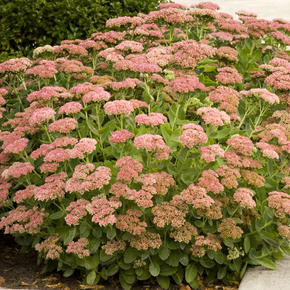
- Compact, clump-forming habit reaches just 12 inches tall by 16 inches wide, making it ideal for small gardens, rock gardens, borders, and containers.
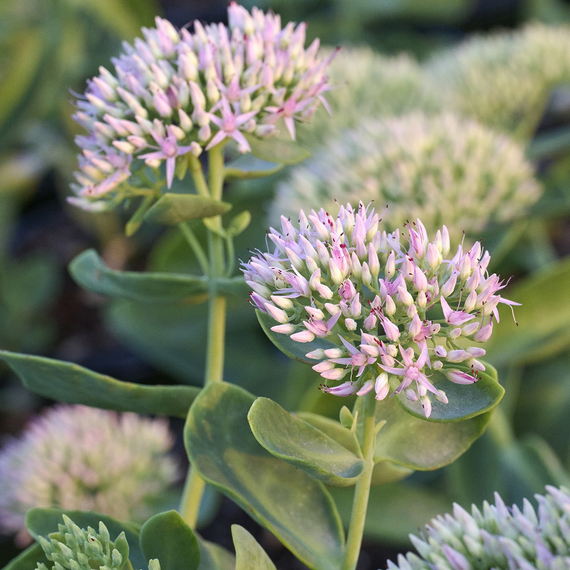
Sedum 'Crystal Pink' (Hylotelephium spectabile 'Crystal Pink'), also sold under the trade name Evolution Pink Prism Sedum, is a standout upright stonecrop perennial that delivers some of the showiest late-season color available in a compact, well-behaved package. Hardy in USDA Zones 4 through 9, this patented cultivar (PP22094) forms tidy, mounding clumps of thick, fleshy, blue-green foliage that look attractive from spring through summer before erupting in a spectacular late-summer and fall display of large, domed flower heads packed with hundreds of tiny, star-shaped blooms in the softest icy pink imaginable. Unlike many taller sedums that tend to sprawl and split at the center, 'Crystal Pink' holds its sturdy stems upright through rain and wind, keeping the garden looking polished right up until frost. As temperatures cool, the flower heads transform into attractive tan seedheads that persist through winter, providing structural interest and a valuable food source for songbirds. The foliage dies back in winter and re-emerges reliably each spring. With its exceptional drought tolerance, deer resistance, and virtually care-free nature, Sedum 'Crystal Pink' is a must-have perennial for water-wise gardens, pollinator plantings, rock gardens, mixed borders, and sunny container combinations throughout Southern Oregon and Northern California.
Plant Description
Sedum 'Crystal Pink' is a low-growing, clump-forming deciduous perennial belonging to the family Crassulaceae. Botanically classified as Hylotelephium spectabile 'Crystal Pink', it is commonly called stonecrop or showy sedum. The plant produces thick, fleshy, oval-shaped blue-green leaves with slightly serrated margins that are held on stout, upright stems. Beginning in mid to late summer and continuing into fall, the stems are topped with impressively large, flat-topped corymbs densely packed with tiny star-shaped flowers in a soft, icy pink color — some of the most delicate and refined pink tones found in the stonecrop world. What distinguishes 'Crystal Pink' from older favorites like 'Autumn Joy' is its notably sturdy stem structure: the flowering stems remain upright and do not splay outward or collapse under the weight of the blooms, even in wet weather. After the flowers fade, the seedheads dry to a warm tan and persist attractively through fall and winter. The plant goes dormant in winter and re-emerges vigorously in spring. It is a patented variety (US Plant Patent PP22094) bred for superior garden performance.
Mature Size
| Attribute | Measurement |
|---|---|
| Mature Height | 10 to 12 inches (25 to 30 cm) |
| Mature Spread | 15 to 16 inches (38 to 40 cm) |
| Flower Head Height | Up to 16 inches (40 cm) at peak bloom |
| Growth Habit | Compact, mounding, upright |
| Growth Rate | Moderate |
| Recommended Spacing | 16 inches (40 cm) on center |
Hardiness and Climate
Sedum 'Crystal Pink' is hardy in USDA Plant Hardiness Zones 4 through 9, tolerating winter temperatures as low as -30 degrees F (-34 degrees C) in Zone 4. It also performs well in AHS Heat Zones 1 through 9, making it suitable for a broad range of climates including the mild Mediterranean conditions common to Southern Oregon and Northern California. It is adapted to temperate, Mediterranean, and even some subtropical climates, and thrives in the hot, dry summers characteristic of the Pacific Coast region. In colder zones (5 and below), planting in a location with full sun improves winter hardiness. The plant enters dormancy in winter and re-emerges reliably each spring.
Sunlight Requirements
Sedum 'Crystal Pink' performs best in full sun, requiring a minimum of 6 hours of direct sunlight per day for optimal flowering and the most compact, upright growth habit. In hotter inland climates, the plant can tolerate a small amount of afternoon shade without significant reduction in bloom quality, but too much shade will result in weak, leggy stems that are more prone to flopping. In the Pacific Northwest and Northern California coastal regions, full sun exposure is strongly recommended to encourage prolific flowering and sturdy stem growth. Avoid locations with dense shade or competition from overhanging trees.
Soil and pH Preferences
One of the keys to success with 'Crystal Pink' is providing excellent soil drainage. This sedum thrives in average to lean soils and adapts well to chalk, loam, and sandy soil types. It performs admirably in rocky or gravelly soils that would challenge most other perennials. Soil pH can range from neutral to slightly alkaline, with an ideal range of approximately 6.0 to 7.5. Rich, fertile, or clay-heavy soils should be avoided — overly fertile conditions encourage excessive soft growth that makes stems weak and prone to flopping, while poorly drained or waterlogged soils invite root rot. If your native soil is heavy clay or drains poorly, amend the planting area generously with coarse sand, pea gravel, or perlite before planting, or consider raised beds and container culture. Lean, mineral soils that drain quickly are ideal.
Watering Guide
Sedum 'Crystal Pink' is a drought-tolerant plant once established, making it an excellent choice for water-wise and xeriscape gardens. During the first growing season, water regularly to help the root system become established. Once established, the plant's thick, fleshy leaves store moisture, and it requires only low to moderate supplemental watering. In most of Southern Oregon and Northern California, natural rainfall during the cooler months will be sufficient, with only occasional deep watering needed during prolonged summer dry spells. Overwatering is one of the most common mistakes with this plant — too much moisture causes root rot, mushy foliage, and can lead to stem collapse. Always allow the soil to dry out between waterings. Avoid overhead irrigation if possible, as consistently wet foliage can encourage fungal issues.
Fertilizing
Sedum 'Crystal Pink' is well adapted to lean soils and requires very little fertilizer. In most garden situations, no supplemental feeding is necessary if the soil is average in quality. If you feel the plant needs a nutritional boost — particularly in sandy or very poor soils — apply a single application of a balanced, slow-release granular fertilizer (such as a 10-10-10 formulation) in early spring as new growth emerges. Avoid high-nitrogen fertilizers entirely, as excess nitrogen promotes lush but weak, floppy stem growth that detracts from the plant's naturally compact and upright habit. Do not fertilize in late summer or fall. In container culture, a light application of a diluted balanced liquid fertilizer once in spring is sufficient for the season.
Pruning and Maintenance
Sedum 'Crystal Pink' is a genuinely low-maintenance perennial, but a few simple tasks will keep it looking its best year after year:
- Spring pinching: To maintain an especially compact form and prevent any tendency toward legginess, stems can be lightly pinched back by one-third in late spring (around late May or early June). This encourages bushier, more upright growth and does not significantly delay flowering.
- After bloom: The dried flower and seedheads are ornamentally attractive and provide food for birds, so many gardeners choose to leave them standing through fall and winter. This is highly encouraged for wildlife value and winter garden interest.
- Late winter to early spring cutback: Cut all stems back to the ground in late winter or very early spring, just before or as new basal growth begins to emerge. This is the primary annual maintenance task required.
- Dividing: Divide clumps every 3 to 4 years in early spring or early fall to rejuvenate the plant, maintain vigor, and control spread. Divisions root readily and make excellent plants for new garden areas.
- Deadheading: Deadheading is generally not necessary and is not recommended if winter seedhead interest and bird food are desired.
Planting Instructions
- Choose a planting site that receives at least 6 hours of full sun daily and has good to excellent soil drainage.
- Prepare the planting area by loosening the soil to a depth of 12 inches. If native soil is heavy clay or drains poorly, amend with coarse sand, pea gravel, or perlite and work it in thoroughly.
- Dig a planting hole slightly wider than the root ball and just deep enough so that the top of the root ball sits level with the surrounding soil surface. Avoid burying the stems, as this can cause rot at the crown.
- Remove the plant from its nursery container, gently loosen any circling roots, and set it in the hole.
- Backfill with native soil, tamp gently to eliminate air pockets, and water in thoroughly.
- Space plants 16 inches apart on center for a natural-looking mass or border planting.
- Water regularly for the first 4 to 6 weeks until the plant is established, then reduce watering frequency significantly.
- Mulching is optional — if used, keep mulch pulled back slightly from the crown to ensure good air circulation and prevent rot. A thin layer of gravel mulch is ideal for sedums.
- The best times to plant are spring (after the last frost) and early fall (at least 6 weeks before the first expected frost).
Seasonal Interest
Sedum 'Crystal Pink' provides year-round garden interest across multiple seasons:
- Spring: Fresh new shoots of thick, bright blue-green foliage emerge from the base, forming attractive low mounds that brighten the garden as other plants are just waking up.
- Summer: The foliage mound fills out fully through summer, providing rich texture and a handsome blue-green contrast in beds and borders. Flat-topped flower buds begin forming by midsummer, offering a preview of the bloom to come.
- Late Summer and Fall: The main event — large, domed corymbs of soft icy-pink star-shaped flowers open from late summer and continue through fall. Flowers on strong, upright stems provide bold color when most other perennials are winding down, and serve as a critical late-season nectar source for pollinators.
- Winter: After frost, the foliage dies back but the upright dried seedheads persist, providing architectural interest, texture, and color in the winter garden. They also supply seeds for birds through the cold months.
Landscape Uses
The compact size, sturdy habit, and exceptional drought tolerance of Sedum 'Crystal Pink' make it one of the most versatile perennials available for the Southern Oregon and Northern California garden. Recommended uses include:
- Mixed perennial borders and flower beds — especially valuable for its late-season bloom when other perennials are fading
- Rock gardens and gravel gardens, where its love of lean, well-drained soils is perfectly accommodated
- Dry gardens and xeriscape plantings that require beauty with minimal irrigation
- Mass plantings along slopes, pathways, or driveways for a bold, low-water seasonal display
- Patio and deck containers, where its compact size and drought tolerance make it ideal for low-maintenance container gardens
- Pollinator gardens as a critical late-season nectar source for butterflies and bees
- Cut flower gardens — the flower heads make long-lasting fresh-cut arrangements and can also be air-dried for dried floral use
- Small gardens and urban courtyard plantings where a compact footprint is important
- Curbside and hellstrip plantings due to its tolerance of heat, drought, and reflected light
Companion Plants
Sedum 'Crystal Pink' pairs beautifully with plants that share its preference for full sun, good drainage, and low water needs, or that complement its late-summer-to-fall bloom season with contrasting color, texture, or form. Consider combining it with:
- Blue-leaved ornamental grasses (such as blue oat grass or blue fescue) — the silvery-blue foliage creates a stunning contrast with the pink flower heads
- Coneflowers (Echinacea) — especially purple or white varieties that overlap in bloom time and share pollinator appeal
- Russian sage (Salvia yangii) — the airy lavender-blue plumes make a classic, high-contrast companion in dry borders
- Black-eyed Susans (Rudbeckia) — warm yellow daisies complement the cool pink of 'Crystal Pink' for a bold late-season pairing
- Ornamental grasses (Miscanthus, Pennisetum) — their arching form and fall interest extend the seasonal display
- Asters — blooming at the same time in purple, blue, or white, asters create a beautiful late-season combination
- Goldenrod (Solidago) — golden yellow plumes contrast vividly with the soft pink flower heads
- Lavender — shares the preference for well-drained, lean soils and adds fragrance and fine texture to the planting
- Purple coneflower (Echinacea purpurea) 'Hope' — a noted companion for its complementary color and simultaneous bloom period
Pests and Diseases
Sedum 'Crystal Pink' is notably pest- and disease-resistant, and most problems arise from cultural issues such as overwatering or poor drainage rather than true pest or disease pressure. Key considerations include:
- Root rot: The most common problem, caused by poorly drained soils or excessive watering. Ensure excellent drainage and avoid overwatering to prevent this issue. 'Crystal Pink' has been noted to have low resistance to root rot, so soil drainage is especially critical.
- Leaf spot: Occasional bacterial or fungal leaf spotting can occur in humid conditions. 'Crystal Pink' has high resistance to leaf spot. Remove affected foliage and improve air circulation if spotted.
- Powdery mildew: 'Crystal Pink' shows high resistance to powdery mildew compared to many other tall sedums.
- Slugs and snails: May nibble on the fleshy foliage, particularly in spring. Use appropriate slug controls in damp garden areas.
- Mealybugs and scale insects: Rarely problematic outdoors but can occasionally appear. Treat with insecticidal soap or neem oil if infestations are noted.
- Deer and rabbits: Sedum 'Crystal Pink' is considered deer and rabbit resistant, making it a reliable choice in areas with heavy wildlife pressure.
- Birds and squirrels: May occasionally nibble on the succulent foliage or seedheads, but this is rarely severe enough to cause lasting damage.
Container Growing
Sedum 'Crystal Pink' is an excellent candidate for container culture, particularly on sunny patios, decks, and entryways. Its compact size, drought tolerance, and long season of interest make it well suited to life in a pot. For best results:
- Use a container with ample drainage holes — drainage is non-negotiable for container-grown sedums.
- Choose a well-draining potting mix formulated for succulents or cacti, or blend standard potting mix with perlite or coarse sand at a ratio of roughly 1:1 to ensure fast drainage.
- Place containers in full sun, ideally receiving 6 or more hours of direct sunlight daily.
- Water thoroughly when the top inch of the growing medium is dry, then allow the medium to dry out again before re-watering. Container plants will need more frequent watering than in-ground plants during hot weather, but avoid keeping the mix consistently wet.
- Apply a light application of balanced slow-release fertilizer once in spring; container culture in lean mix may benefit from a single diluted liquid feed mid-season.
- In colder zones, containers may need to be moved to a sheltered, frost-protected location for winter if the pot is small, as root zones in containers are more vulnerable to freeze damage than in-ground plantings.
- 'Crystal Pink' pairs beautifully with other drought-tolerant plants in mixed containers, including ornamental grasses, lavender, and low-growing creeping sedums for a multi-textured display.
Wildlife Value
Sedum 'Crystal Pink' is a valuable plant for wildlife, particularly during the late season when natural food and nectar sources are becoming scarce. Key wildlife benefits include:
- Butterflies: The large, flat-topped flower clusters serve as excellent landing platforms and nectar sources for a wide variety of butterfly species, including monarchs, swallowtails, and skippers, during their late-summer and fall migration and feeding periods.
- Bees: Honeybees, bumblebees, and native solitary bees are strongly attracted to the flowers for both nectar and pollen, making 'Crystal Pink' a top-performing addition to pollinator gardens.
- Other beneficial insects: Hoverflies and other beneficial pollinating and predatory insects are also attracted to the blooms.
- Birds: The persistent dried seedheads that remain on the plant through fall and winter provide a valuable seed food source for finches, chickadees, and other seed-eating songbirds. Leaving the stems standing through winter maximizes this benefit.
- Deer and rabbit resistance: While wildlife-friendly to pollinators and birds, 'Crystal Pink' is resistant to browsing by deer and rabbits, making it a wildlife-balanced plant that gives to pollinators without being consumed by larger herbivores.
- Exceptionally sturdy, upright stems support enormous flat-topped clusters of icy soft-pink, star-shaped flowers from late summer into fall — without the flopping habit common in other tall sedums.
- A proven pollinator magnet that draws bees, butterflies, and beneficial insects to the garden at a time when most other perennials have finished blooming.
- Remarkably tough and low-maintenance: deer resistant, drought tolerant once established, and adaptable to poor, rocky, or sandy soils as long as drainage is good.
- Compact, clump-forming habit reaches just 12 inches tall by 16 inches wide, making it ideal for small gardens, rock gardens, borders, and containers.
Sedum 'Crystal Pink' (Hylotelephium spectabile 'Crystal Pink'), also sold under the trade name Evolution Pink Prism Sedum, is a standout upright stonecrop perennial that delivers some of the showiest late-season color available in a compact, well-behaved package. Hardy in USDA Zones 4 through 9, this patented cultivar (PP22094) forms tidy, mounding clumps of thick, fleshy, blue-green foliage that look attractive from spring through summer before erupting in a spectacular late-summer and fall display of large, domed flower heads packed with hundreds of tiny, star-shaped blooms in the softest icy pink imaginable. Unlike many taller sedums that tend to sprawl and split at the center, 'Crystal Pink' holds its sturdy stems upright through rain and wind, keeping the garden looking polished right up until frost. As temperatures cool, the flower heads transform into attractive tan seedheads that persist through winter, providing structural interest and a valuable food source for songbirds. The foliage dies back in winter and re-emerges reliably each spring. With its exceptional drought tolerance, deer resistance, and virtually care-free nature, Sedum 'Crystal Pink' is a must-have perennial for water-wise gardens, pollinator plantings, rock gardens, mixed borders, and sunny container combinations throughout Southern Oregon and Northern California.
Plant Description
Sedum 'Crystal Pink' is a low-growing, clump-forming deciduous perennial belonging to the family Crassulaceae. Botanically classified as Hylotelephium spectabile 'Crystal Pink', it is commonly called stonecrop or showy sedum. The plant produces thick, fleshy, oval-shaped blue-green leaves with slightly serrated margins that are held on stout, upright stems. Beginning in mid to late summer and continuing into fall, the stems are topped with impressively large, flat-topped corymbs densely packed with tiny star-shaped flowers in a soft, icy pink color — some of the most delicate and refined pink tones found in the stonecrop world. What distinguishes 'Crystal Pink' from older favorites like 'Autumn Joy' is its notably sturdy stem structure: the flowering stems remain upright and do not splay outward or collapse under the weight of the blooms, even in wet weather. After the flowers fade, the seedheads dry to a warm tan and persist attractively through fall and winter. The plant goes dormant in winter and re-emerges vigorously in spring. It is a patented variety (US Plant Patent PP22094) bred for superior garden performance.
Mature Size
| Attribute | Measurement |
|---|---|
| Mature Height | 10 to 12 inches (25 to 30 cm) |
| Mature Spread | 15 to 16 inches (38 to 40 cm) |
| Flower Head Height | Up to 16 inches (40 cm) at peak bloom |
| Growth Habit | Compact, mounding, upright |
| Growth Rate | Moderate |
| Recommended Spacing | 16 inches (40 cm) on center |
Hardiness and Climate
Sedum 'Crystal Pink' is hardy in USDA Plant Hardiness Zones 4 through 9, tolerating winter temperatures as low as -30 degrees F (-34 degrees C) in Zone 4. It also performs well in AHS Heat Zones 1 through 9, making it suitable for a broad range of climates including the mild Mediterranean conditions common to Southern Oregon and Northern California. It is adapted to temperate, Mediterranean, and even some subtropical climates, and thrives in the hot, dry summers characteristic of the Pacific Coast region. In colder zones (5 and below), planting in a location with full sun improves winter hardiness. The plant enters dormancy in winter and re-emerges reliably each spring.
Sunlight Requirements
Sedum 'Crystal Pink' performs best in full sun, requiring a minimum of 6 hours of direct sunlight per day for optimal flowering and the most compact, upright growth habit. In hotter inland climates, the plant can tolerate a small amount of afternoon shade without significant reduction in bloom quality, but too much shade will result in weak, leggy stems that are more prone to flopping. In the Pacific Northwest and Northern California coastal regions, full sun exposure is strongly recommended to encourage prolific flowering and sturdy stem growth. Avoid locations with dense shade or competition from overhanging trees.
Soil and pH Preferences
One of the keys to success with 'Crystal Pink' is providing excellent soil drainage. This sedum thrives in average to lean soils and adapts well to chalk, loam, and sandy soil types. It performs admirably in rocky or gravelly soils that would challenge most other perennials. Soil pH can range from neutral to slightly alkaline, with an ideal range of approximately 6.0 to 7.5. Rich, fertile, or clay-heavy soils should be avoided — overly fertile conditions encourage excessive soft growth that makes stems weak and prone to flopping, while poorly drained or waterlogged soils invite root rot. If your native soil is heavy clay or drains poorly, amend the planting area generously with coarse sand, pea gravel, or perlite before planting, or consider raised beds and container culture. Lean, mineral soils that drain quickly are ideal.
Watering Guide
Sedum 'Crystal Pink' is a drought-tolerant plant once established, making it an excellent choice for water-wise and xeriscape gardens. During the first growing season, water regularly to help the root system become established. Once established, the plant's thick, fleshy leaves store moisture, and it requires only low to moderate supplemental watering. In most of Southern Oregon and Northern California, natural rainfall during the cooler months will be sufficient, with only occasional deep watering needed during prolonged summer dry spells. Overwatering is one of the most common mistakes with this plant — too much moisture causes root rot, mushy foliage, and can lead to stem collapse. Always allow the soil to dry out between waterings. Avoid overhead irrigation if possible, as consistently wet foliage can encourage fungal issues.
Fertilizing
Sedum 'Crystal Pink' is well adapted to lean soils and requires very little fertilizer. In most garden situations, no supplemental feeding is necessary if the soil is average in quality. If you feel the plant needs a nutritional boost — particularly in sandy or very poor soils — apply a single application of a balanced, slow-release granular fertilizer (such as a 10-10-10 formulation) in early spring as new growth emerges. Avoid high-nitrogen fertilizers entirely, as excess nitrogen promotes lush but weak, floppy stem growth that detracts from the plant's naturally compact and upright habit. Do not fertilize in late summer or fall. In container culture, a light application of a diluted balanced liquid fertilizer once in spring is sufficient for the season.
Pruning and Maintenance
Sedum 'Crystal Pink' is a genuinely low-maintenance perennial, but a few simple tasks will keep it looking its best year after year:
- Spring pinching: To maintain an especially compact form and prevent any tendency toward legginess, stems can be lightly pinched back by one-third in late spring (around late May or early June). This encourages bushier, more upright growth and does not significantly delay flowering.
- After bloom: The dried flower and seedheads are ornamentally attractive and provide food for birds, so many gardeners choose to leave them standing through fall and winter. This is highly encouraged for wildlife value and winter garden interest.
- Late winter to early spring cutback: Cut all stems back to the ground in late winter or very early spring, just before or as new basal growth begins to emerge. This is the primary annual maintenance task required.
- Dividing: Divide clumps every 3 to 4 years in early spring or early fall to rejuvenate the plant, maintain vigor, and control spread. Divisions root readily and make excellent plants for new garden areas.
- Deadheading: Deadheading is generally not necessary and is not recommended if winter seedhead interest and bird food are desired.
Planting Instructions
- Choose a planting site that receives at least 6 hours of full sun daily and has good to excellent soil drainage.
- Prepare the planting area by loosening the soil to a depth of 12 inches. If native soil is heavy clay or drains poorly, amend with coarse sand, pea gravel, or perlite and work it in thoroughly.
- Dig a planting hole slightly wider than the root ball and just deep enough so that the top of the root ball sits level with the surrounding soil surface. Avoid burying the stems, as this can cause rot at the crown.
- Remove the plant from its nursery container, gently loosen any circling roots, and set it in the hole.
- Backfill with native soil, tamp gently to eliminate air pockets, and water in thoroughly.
- Space plants 16 inches apart on center for a natural-looking mass or border planting.
- Water regularly for the first 4 to 6 weeks until the plant is established, then reduce watering frequency significantly.
- Mulching is optional — if used, keep mulch pulled back slightly from the crown to ensure good air circulation and prevent rot. A thin layer of gravel mulch is ideal for sedums.
- The best times to plant are spring (after the last frost) and early fall (at least 6 weeks before the first expected frost).
Seasonal Interest
Sedum 'Crystal Pink' provides year-round garden interest across multiple seasons:
- Spring: Fresh new shoots of thick, bright blue-green foliage emerge from the base, forming attractive low mounds that brighten the garden as other plants are just waking up.
- Summer: The foliage mound fills out fully through summer, providing rich texture and a handsome blue-green contrast in beds and borders. Flat-topped flower buds begin forming by midsummer, offering a preview of the bloom to come.
- Late Summer and Fall: The main event — large, domed corymbs of soft icy-pink star-shaped flowers open from late summer and continue through fall. Flowers on strong, upright stems provide bold color when most other perennials are winding down, and serve as a critical late-season nectar source for pollinators.
- Winter: After frost, the foliage dies back but the upright dried seedheads persist, providing architectural interest, texture, and color in the winter garden. They also supply seeds for birds through the cold months.
Landscape Uses
The compact size, sturdy habit, and exceptional drought tolerance of Sedum 'Crystal Pink' make it one of the most versatile perennials available for the Southern Oregon and Northern California garden. Recommended uses include:
- Mixed perennial borders and flower beds — especially valuable for its late-season bloom when other perennials are fading
- Rock gardens and gravel gardens, where its love of lean, well-drained soils is perfectly accommodated
- Dry gardens and xeriscape plantings that require beauty with minimal irrigation
- Mass plantings along slopes, pathways, or driveways for a bold, low-water seasonal display
- Patio and deck containers, where its compact size and drought tolerance make it ideal for low-maintenance container gardens
- Pollinator gardens as a critical late-season nectar source for butterflies and bees
- Cut flower gardens — the flower heads make long-lasting fresh-cut arrangements and can also be air-dried for dried floral use
- Small gardens and urban courtyard plantings where a compact footprint is important
- Curbside and hellstrip plantings due to its tolerance of heat, drought, and reflected light
Companion Plants
Sedum 'Crystal Pink' pairs beautifully with plants that share its preference for full sun, good drainage, and low water needs, or that complement its late-summer-to-fall bloom season with contrasting color, texture, or form. Consider combining it with:
- Blue-leaved ornamental grasses (such as blue oat grass or blue fescue) — the silvery-blue foliage creates a stunning contrast with the pink flower heads
- Coneflowers (Echinacea) — especially purple or white varieties that overlap in bloom time and share pollinator appeal
- Russian sage (Salvia yangii) — the airy lavender-blue plumes make a classic, high-contrast companion in dry borders
- Black-eyed Susans (Rudbeckia) — warm yellow daisies complement the cool pink of 'Crystal Pink' for a bold late-season pairing
- Ornamental grasses (Miscanthus, Pennisetum) — their arching form and fall interest extend the seasonal display
- Asters — blooming at the same time in purple, blue, or white, asters create a beautiful late-season combination
- Goldenrod (Solidago) — golden yellow plumes contrast vividly with the soft pink flower heads
- Lavender — shares the preference for well-drained, lean soils and adds fragrance and fine texture to the planting
- Purple coneflower (Echinacea purpurea) 'Hope' — a noted companion for its complementary color and simultaneous bloom period
Pests and Diseases
Sedum 'Crystal Pink' is notably pest- and disease-resistant, and most problems arise from cultural issues such as overwatering or poor drainage rather than true pest or disease pressure. Key considerations include:
- Root rot: The most common problem, caused by poorly drained soils or excessive watering. Ensure excellent drainage and avoid overwatering to prevent this issue. 'Crystal Pink' has been noted to have low resistance to root rot, so soil drainage is especially critical.
- Leaf spot: Occasional bacterial or fungal leaf spotting can occur in humid conditions. 'Crystal Pink' has high resistance to leaf spot. Remove affected foliage and improve air circulation if spotted.
- Powdery mildew: 'Crystal Pink' shows high resistance to powdery mildew compared to many other tall sedums.
- Slugs and snails: May nibble on the fleshy foliage, particularly in spring. Use appropriate slug controls in damp garden areas.
- Mealybugs and scale insects: Rarely problematic outdoors but can occasionally appear. Treat with insecticidal soap or neem oil if infestations are noted.
- Deer and rabbits: Sedum 'Crystal Pink' is considered deer and rabbit resistant, making it a reliable choice in areas with heavy wildlife pressure.
- Birds and squirrels: May occasionally nibble on the succulent foliage or seedheads, but this is rarely severe enough to cause lasting damage.
Container Growing
Sedum 'Crystal Pink' is an excellent candidate for container culture, particularly on sunny patios, decks, and entryways. Its compact size, drought tolerance, and long season of interest make it well suited to life in a pot. For best results:
- Use a container with ample drainage holes — drainage is non-negotiable for container-grown sedums.
- Choose a well-draining potting mix formulated for succulents or cacti, or blend standard potting mix with perlite or coarse sand at a ratio of roughly 1:1 to ensure fast drainage.
- Place containers in full sun, ideally receiving 6 or more hours of direct sunlight daily.
- Water thoroughly when the top inch of the growing medium is dry, then allow the medium to dry out again before re-watering. Container plants will need more frequent watering than in-ground plants during hot weather, but avoid keeping the mix consistently wet.
- Apply a light application of balanced slow-release fertilizer once in spring; container culture in lean mix may benefit from a single diluted liquid feed mid-season.
- In colder zones, containers may need to be moved to a sheltered, frost-protected location for winter if the pot is small, as root zones in containers are more vulnerable to freeze damage than in-ground plantings.
- 'Crystal Pink' pairs beautifully with other drought-tolerant plants in mixed containers, including ornamental grasses, lavender, and low-growing creeping sedums for a multi-textured display.
Wildlife Value
Sedum 'Crystal Pink' is a valuable plant for wildlife, particularly during the late season when natural food and nectar sources are becoming scarce. Key wildlife benefits include:
- Butterflies: The large, flat-topped flower clusters serve as excellent landing platforms and nectar sources for a wide variety of butterfly species, including monarchs, swallowtails, and skippers, during their late-summer and fall migration and feeding periods.
- Bees: Honeybees, bumblebees, and native solitary bees are strongly attracted to the flowers for both nectar and pollen, making 'Crystal Pink' a top-performing addition to pollinator gardens.
- Other beneficial insects: Hoverflies and other beneficial pollinating and predatory insects are also attracted to the blooms.
- Birds: The persistent dried seedheads that remain on the plant through fall and winter provide a valuable seed food source for finches, chickadees, and other seed-eating songbirds. Leaving the stems standing through winter maximizes this benefit.
- Deer and rabbit resistance: While wildlife-friendly to pollinators and birds, 'Crystal Pink' is resistant to browsing by deer and rabbits, making it a wildlife-balanced plant that gives to pollinators without being consumed by larger herbivores.