Zoom the image with the mouse
Devotion Echeveria - 2 Gallon
SKU:
2325080
UPC:
014949490679
$39.99
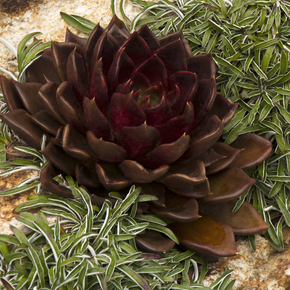
- Stunning rosettes of velvety, soft-to-the-touch green leaves edged in rich burgundy-red that deepens in intensity with full sun exposure and cool night temperatures, delivering year-round color interest.
- A compact, clump-forming evergreen succulent that stays tidy at roughly 6 inches tall and wide, making it an ideal choice for containers, rock gardens, and succulent arrangements both indoors and out.
- Exceptionally low-maintenance and drought-tolerant once established, thriving with minimal watering and little to no fertilizer, perfect for busy gardeners and water-conscious landscapes.
- Non-toxic to people, cats, and dogs, and easily propagated from leaf cuttings or offsets, so you can multiply your collection and share with friends season after season.
Echeveria Devotion (Echeveria pulvinata 'BCEC-12.001', PP #27,118) is a patented, award-winning succulent cultivar prized for its spectacular year-round foliage display and effortless care requirements, making it one of the most versatile and sought-after succulents available today. Native to the semi-arid regions of Oaxaca, Mexico and belonging to the family Crassulaceae, this compact, clump-forming perennial produces tightly symmetrical rosettes of thick, plump leaves clothed in fine, velvety white hairs that give the foliage an irresistibly soft, chenille-like texture. Under bright sunlight and cooler overnight temperatures — conditions common to Southern Oregon and Northern California — the leaf margins and tips ignite in vivid shades of burgundy and deep red, creating a fiery two-toned display against the soft green centers that looks equally stunning on a sun-drenched patio, nestled among rocks in a xeriscape garden, or showcased on a bright indoor windowsill. Remaining evergreen and attractively compact at approximately 6 inches tall, Echeveria Devotion gradually forms small, tidy clumps that are perfectly suited to containers, dish gardens, mixed succulent bowls, and rockeries. A true low-water champion, it stores moisture in its thick foliage, requires very little supplemental irrigation, and performs beautifully in the warm, dry summers and mild winters of the Pacific Coast and inland valleys of our region.
Plant Description
Echeveria Devotion is a compact, clump-forming evergreen succulent perennial in the Crassulaceae (stonecrop) family. Its scientific name is Echeveria pulvinata 'BCEC-12.001', and it holds US Plant Patent #27,118. It is sometimes sold under the trade name Devotion Echeveria or Chenille Plant. The rosettes are composed of thick, spatula-shaped leaves densely coated in fine, silvery-white hairs that create a distinctly velvety, soft-to-the-touch surface. The foliage base color is a fresh green, while the leaf margins, tips, and upper surfaces flush to a rich, warm burgundy-red — a color response triggered by strong sunlight and cooler temperatures. This striking two-tone coloration intensifies in fall and winter and remains vibrant year-round in mild climates. This patented cultivar was selected specifically for its exceptionally showy leaf coloration and compact, branching habit. It is a non-flowering selection, meaning all of its ornamental energy is focused entirely on its foliage.
Mature Size
| Characteristic | Measurement |
|---|---|
| Mature Height | Approximately 6 inches (15 cm) |
| Mature Spread | Approximately 6-12 inches (15-30 cm), forming small clumps over time |
| Leaf Length | Approximately 2-3 inches (5-7.5 cm) |
| Leaf Width | Approximately 0.75-1 inch (2-2.5 cm) |
| Time to Mature Size | 2 to 5 years |
| Growth Rate | Slow to moderate |
| Plant Habit | Compact, clump-forming, branching rosette |
Hardiness Zones and Temperature
Echeveria Devotion is rated for USDA Hardiness Zones 9a through 11b, tolerating outdoor temperatures as low as approximately 20-25 degrees F (-6 to -4 degrees C) when kept on the dry side. In the mild coastal and valley climates of Southern Oregon and Northern California, it can be grown outdoors year-round in protected, frost-free microclimates but should be moved indoors or under cover when hard freezes are forecast. It performs best with warm days and cool (but not freezing) nights, as the temperature fluctuation actually intensifies the burgundy-red coloration in the foliage. Ideal daytime temperatures are between 65-80 degrees F (18-27 degrees C). Avoid prolonged exposure to frost, freezing rain, or standing water during cold periods, as wet and cold together are the most damaging combination for this succulent. In colder inland areas, grow as a container plant that can be brought indoors for winter protection.
Sunlight Requirements
Echeveria Devotion thrives in full sun and requires a minimum of 4 to 6 hours of direct sunlight per day for the best color, compactness, and overall health. Outdoors, a south- or west-facing position is ideal. In full sun, especially combined with cool nights, the foliage develops its most vivid burgundy-red coloration. If grown in too much shade, the plant will etiolate (stretch) toward the light, lose its tight rosette form, and fade to a duller, washed-out green. Indoors, position the plant within 12 inches of a bright south-facing window. If natural light is insufficient, a dedicated grow light positioned 6-12 inches above the plant for 12-14 hours per day is an excellent substitute. Avoid transitioning a plant from low light to intense afternoon sun too quickly, as it can cause sunscald on the leaves. Gradual acclimation over 1-2 weeks is recommended when moving plants outside in spring.
Soil and pH Preferences
Like all echeverias, Devotion demands exceptionally well-draining soil. Standing moisture around the roots is the single most common cause of decline and death. Use a commercially prepared cactus and succulent potting mix, or create your own blend using one part standard potting soil, one part coarse perlite, and one part pumice or coarse horticultural sand (never fine-grained sand, which can compact and impede drainage). A pH range of 6.0 to 7.5 (slightly acidic to slightly alkaline) is well tolerated. In the ground, plant in raised beds, mounded areas, or sloped positions to ensure water never pools at the crown or roots. In containers, always use a pot with at least one drainage hole, and never allow the plant to sit in a saucer of standing water. Refreshing the potting mix every 1-2 years helps maintain good soil structure and adequate nutrition.
Watering Guide
Echeveria Devotion is a drought-tolerant succulent that stores water in its thick, fleshy leaves. Overwatering is far more dangerous than underwatering. Follow the "soak and dry" method: water deeply and thoroughly until water drains freely from the bottom of the pot, then allow the soil to dry out completely before watering again. During the active growing season in spring and summer, this may mean watering once every 7-14 days depending on temperature, pot size, and sun exposure. In fall and winter, when the plant enters a semi-dormant state, reduce watering to once every 3-4 weeks or less — just enough to prevent the leaves from shriveling. Always water at the soil level rather than overhead; water sitting in the center of the rosette can cause crown rot and fungal disease. Outdoor plants receiving natural rainfall may need no supplemental irrigation during cool, wet winters in our region.
Fertilizing
Echeveria Devotion has modest nutritional needs and can thrive in lean soils with little or no supplemental feeding. Excessive fertilizer, especially nitrogen-heavy formulas, promotes soft, weak, etiolated growth and can diminish the vibrant red coloration that makes this plant so striking. If you choose to fertilize, apply a balanced, low-nitrogen cactus or succulent fertilizer diluted to half or quarter strength once a month during the spring and summer growing season only. Cease all fertilizing in fall and winter when the plant slows its growth. Alternatively, repotting into fresh succulent potting mix once a year provides sufficient nutrition without the risk of over-fertilizing. Slow-release granular fertilizers formulated for cacti and succulents, applied once at the start of spring, are another low-effort option.
Pruning and Maintenance
Echeveria Devotion requires very little pruning or grooming to look its best. The following simple tasks will keep your plant healthy and attractive:
- Remove dead or dried lower leaves regularly by gently pulling them away from the base of the rosette. Never leave dead leaf debris sitting at the base of the plant, as it traps moisture and provides a hiding place for pests.
- If a stem becomes leggy or stretched due to insufficient light, you can cut the rosette head off with a clean, sharp, sterile knife, allow the cut end to callus over for 3-5 days, and then replant it in fresh succulent mix. The original stem will often produce new offsets.
- No deadheading is required, as this cultivar does not produce flowers.
- Wipe leaves gently with a soft, dry cloth if dust accumulates, being careful not to disrupt the natural velvety coating of fine hairs on the foliage.
- Inspect the plant during repotting and trim away any mushy, blackened, or dead roots with sterile scissors, allowing cut surfaces to air-dry before replanting.
Planting Instructions
Follow these steps for successful establishment of Echeveria Devotion:
- Choose a planting site with full sun and excellent drainage. In the ground, select a sloped area or raised bed, or amend the native soil with generous amounts of coarse perlite and pumice.
- For container planting, select a pot only slightly larger than the root ball, with at least one drainage hole. Terracotta pots are ideal as they allow excess moisture to evaporate through the pot walls.
- Fill the container approximately two-thirds full with a quality cactus and succulent potting mix. Position the plant at the same depth it was growing in its nursery container.
- Backfill around the roots, pressing the soil gently to eliminate air pockets. A top dressing of coarse gravel or small pebbles can improve drainage and reduce the risk of stem rot at the soil line.
- Wait 7-10 days before watering after transplanting to allow any disturbed roots time to heal.
- Acclimate plants gradually if moving from indoors to a full-sun outdoor location in spring, starting with a few hours of morning sun and increasing exposure over 1-2 weeks.
Container Growing
Echeveria Devotion is exceptionally well-suited to container culture and is an outstanding choice for patios, balconies, and indoor bright-light spaces throughout Southern Oregon and Northern California. When growing in containers, keep these tips in mind:
- Always choose a container with adequate drainage holes. Terracotta, concrete, or unglazed ceramic pots are preferred over plastic or glazed containers, as they promote faster soil drying.
- Select a pot that is just slightly larger than the root ball. Overly large containers hold excess moisture and significantly increase the risk of root rot.
- Use a well-draining cactus and succulent mix, amended with extra perlite or pumice if needed.
- Echeveria Devotion makes a stunning centerpiece in mixed succulent bowls or dish gardens. Pair it with other low-water succulents of contrasting color, texture, and form for a dynamic arrangement.
- Repot every 1-2 years, or when the plant becomes visibly rootbound, ideally in early spring before the main growing season begins.
- Bring containers indoors before the first frost if you are in Zone 9a or cooler. Place in the brightest available window or under grow lights.
Seasonal Interest
Echeveria Devotion delivers outstanding year-round ornamental value, with its appearance subtly shifting through the seasons to remain perpetually eye-catching:
- Spring: New growth emerges fresh and vivid green with the characteristic soft, velvety texture as temperatures warm and day length increases. This is the most active period of vegetative growth.
- Summer: Intense sunlight deepens the burgundy-red edging on the leaves, and the overall rosette form tightens to its most compact shape. The plant may produce offsets around the base.
- Fall: Cooler night temperatures trigger the most intense and saturated red coloration of the year, making this one of the plant's most spectacular seasons. The contrast between the warm red edges and cool green centers is at its peak.
- Winter: The plant enters a semi-dormant state but remains evergreen and colorful. In frost-free climates or indoors near a bright window, it continues to look attractive throughout the cold months, providing color when most other garden plants have gone dormant.
Landscape Uses
Echeveria Devotion's compact size, vivid coloration, drought tolerance, and year-round evergreen habit make it a highly versatile landscape and design plant suited to a wide range of applications:
- Rock Gardens and Xeriscape: An outstanding choice for low-water rock gardens, gravel gardens, and xeriscaping designs where excellent drainage is naturally present.
- Container and Patio Gardens: Spectacular as a solo specimen in a decorative pot or as the focal point of a mixed succulent container arrangement on patios, decks, and balconies.
- Succulent Collections and Dish Gardens: A must-have for dedicated succulent collections, dish gardens, and living walls, where its rich color and texture contrast beautifully with other varieties.
- Indoor Accent Plant: Thrives as a long-lived houseplant on a bright, sunny south- or west-facing windowsill, adding bold color to interior spaces.
- Edging and Border Accents: In Zone 9b and warmer, use as a low edging or ground-level accent plant along sunny, well-drained garden paths or border fronts.
- Wedding and Event Decor: The rosettes are commonly used as natural, non-toxic embellishments for floral arrangements, bouquets, and decorative centerpieces.
Companion Plants
Echeveria Devotion combines beautifully with other drought-tolerant, sun-loving plants that share its well-draining soil and low-water requirements. Consider pairing it with the following:
- Sedum (Stonecrop): Low-growing sedums provide complementary rosette forms and similar cultural requirements, with a wide range of contrasting leaf colors and textures.
- Sempervivum (Hen and Chicks): Tough, cold-hardier rosette succulents that echo Echeveria's form while offering a broader palette of greens, purples, and reds.
- Aeonium: Bold, architectural rosette plants in shades of near-black, burgundy, and green that create dramatic contrast alongside Devotion's velvety foliage.
- Aloe: Structural, spiky aloes provide an excellent textural counterpoint to the soft, rounded rosettes of Echeveria Devotion in containers or in-ground plantings.
- Agave: Large-scale agaves used as background anchors contrast dramatically with the delicate, plush texture of Echeveria Devotion in sunny, dry garden designs.
- Graptopetalum and x Graptoveria hybrids: Close relatives with similar care needs and complementary pastel to lavender foliage tones that blend naturally with Devotion's warm red-and-green palette.
- Delosperma (Ice Plant): Low-growing, mat-forming ground covers that work well as a colorful, drought-tolerant underplanting around larger succulent specimens.
Propagation
Echeveria Devotion is easy to propagate and can be multiplied using two reliable methods:
- Leaf Cuttings: Gently twist a healthy, plump leaf from the stem with a clean, side-to-side motion, ensuring the base of the leaf is fully intact (no partial tears). Allow the leaf to air-dry on a tray in a warm, shaded location for 3-5 days until the cut end forms a dry callus. Place the calloused leaf on top of (not buried in) a tray of barely moist, well-draining succulent mix. Keep in bright, indirect light and mist lightly every few days. New pink root threads and tiny plantlets will emerge from the leaf base within 3-6 weeks. Once plantlets are large enough to handle, transplant to individual small pots.
- Offsets (Pups): Mature clumps naturally produce small offsets around their base. When these pups are roughly one-third to one-half the size of the mother plant and have visible roots, gently separate them by hand or with a clean knife. Allow the separation point to callus for 2-3 days, then pot into fresh, barely moist succulent mix. Hold off on watering for one week to encourage root development.
The best time to propagate is in spring or early summer during the plant's most active growth period. Both methods are best performed using sterile tools to prevent disease transmission.
Pests and Diseases
Echeveria Devotion is generally quite resistant to pests and disease when grown in the correct conditions. The most common issues are related to improper watering or poor air circulation:
- Mealybugs: The most frequent pest, appearing as white, cottony masses in the crevices between leaves. Treat by removing visible colonies with a cotton swab dipped in 70% isopropyl alcohol, then spray with a neem oil solution or insecticidal soap. Repeat every 7-10 days as needed.
- Aphids: Occasionally cluster on new growth. Knock off with a strong stream of water or treat with insecticidal soap.
- Vine Weevil: Adult weevils notch leaf margins while larvae damage roots. Inspect roots during repotting and treat with a systemic insecticide or beneficial nematodes if larvae are found.
- Spider Mites: More likely in hot, dry indoor conditions. Increase humidity slightly and treat with neem oil or insecticidal soap spray.
- Root Rot (Overwatering): The most serious and common disease issue. Prevention through well-draining soil and careful watering practices is essential. Affected plants show mushy stems or yellowing, translucent leaves. Remove from soil, cut away all rotten roots, dust with powdered sulfur or cinnamon, and allow to dry for several days before replanting in fresh, dry mix.
- Crown Rot / Fungal Disease: Caused by water sitting in the rosette center or prolonged humid conditions. Water only at the soil level and ensure good air circulation around the plant.
Toxicity and Pet Safety
Echeveria Devotion is considered non-toxic to humans, cats, and dogs, making it a worry-free choice for households with children and pets. While it is not considered a food plant and casual ingestion of plant material is not recommended for obvious reasons, there are no known toxic compounds in this species. It is commonly used as a non-toxic ornamental element in wedding cakes, floral arrangements, and table centerpieces. If a child or pet ingests a significant quantity of plant material, consult a physician or veterinarian as a precaution, as mild stomach upset may occasionally occur. For any concerns regarding ingestion, contact the American Association of Poison Control Centers or your veterinarian.
- Stunning rosettes of velvety, soft-to-the-touch green leaves edged in rich burgundy-red that deepens in intensity with full sun exposure and cool night temperatures, delivering year-round color interest.
- A compact, clump-forming evergreen succulent that stays tidy at roughly 6 inches tall and wide, making it an ideal choice for containers, rock gardens, and succulent arrangements both indoors and out.
- Exceptionally low-maintenance and drought-tolerant once established, thriving with minimal watering and little to no fertilizer, perfect for busy gardeners and water-conscious landscapes.
- Non-toxic to people, cats, and dogs, and easily propagated from leaf cuttings or offsets, so you can multiply your collection and share with friends season after season.
Echeveria Devotion (Echeveria pulvinata 'BCEC-12.001', PP #27,118) is a patented, award-winning succulent cultivar prized for its spectacular year-round foliage display and effortless care requirements, making it one of the most versatile and sought-after succulents available today. Native to the semi-arid regions of Oaxaca, Mexico and belonging to the family Crassulaceae, this compact, clump-forming perennial produces tightly symmetrical rosettes of thick, plump leaves clothed in fine, velvety white hairs that give the foliage an irresistibly soft, chenille-like texture. Under bright sunlight and cooler overnight temperatures — conditions common to Southern Oregon and Northern California — the leaf margins and tips ignite in vivid shades of burgundy and deep red, creating a fiery two-toned display against the soft green centers that looks equally stunning on a sun-drenched patio, nestled among rocks in a xeriscape garden, or showcased on a bright indoor windowsill. Remaining evergreen and attractively compact at approximately 6 inches tall, Echeveria Devotion gradually forms small, tidy clumps that are perfectly suited to containers, dish gardens, mixed succulent bowls, and rockeries. A true low-water champion, it stores moisture in its thick foliage, requires very little supplemental irrigation, and performs beautifully in the warm, dry summers and mild winters of the Pacific Coast and inland valleys of our region.
Plant Description
Echeveria Devotion is a compact, clump-forming evergreen succulent perennial in the Crassulaceae (stonecrop) family. Its scientific name is Echeveria pulvinata 'BCEC-12.001', and it holds US Plant Patent #27,118. It is sometimes sold under the trade name Devotion Echeveria or Chenille Plant. The rosettes are composed of thick, spatula-shaped leaves densely coated in fine, silvery-white hairs that create a distinctly velvety, soft-to-the-touch surface. The foliage base color is a fresh green, while the leaf margins, tips, and upper surfaces flush to a rich, warm burgundy-red — a color response triggered by strong sunlight and cooler temperatures. This striking two-tone coloration intensifies in fall and winter and remains vibrant year-round in mild climates. This patented cultivar was selected specifically for its exceptionally showy leaf coloration and compact, branching habit. It is a non-flowering selection, meaning all of its ornamental energy is focused entirely on its foliage.
Mature Size
| Characteristic | Measurement |
|---|---|
| Mature Height | Approximately 6 inches (15 cm) |
| Mature Spread | Approximately 6-12 inches (15-30 cm), forming small clumps over time |
| Leaf Length | Approximately 2-3 inches (5-7.5 cm) |
| Leaf Width | Approximately 0.75-1 inch (2-2.5 cm) |
| Time to Mature Size | 2 to 5 years |
| Growth Rate | Slow to moderate |
| Plant Habit | Compact, clump-forming, branching rosette |
Hardiness Zones and Temperature
Echeveria Devotion is rated for USDA Hardiness Zones 9a through 11b, tolerating outdoor temperatures as low as approximately 20-25 degrees F (-6 to -4 degrees C) when kept on the dry side. In the mild coastal and valley climates of Southern Oregon and Northern California, it can be grown outdoors year-round in protected, frost-free microclimates but should be moved indoors or under cover when hard freezes are forecast. It performs best with warm days and cool (but not freezing) nights, as the temperature fluctuation actually intensifies the burgundy-red coloration in the foliage. Ideal daytime temperatures are between 65-80 degrees F (18-27 degrees C). Avoid prolonged exposure to frost, freezing rain, or standing water during cold periods, as wet and cold together are the most damaging combination for this succulent. In colder inland areas, grow as a container plant that can be brought indoors for winter protection.
Sunlight Requirements
Echeveria Devotion thrives in full sun and requires a minimum of 4 to 6 hours of direct sunlight per day for the best color, compactness, and overall health. Outdoors, a south- or west-facing position is ideal. In full sun, especially combined with cool nights, the foliage develops its most vivid burgundy-red coloration. If grown in too much shade, the plant will etiolate (stretch) toward the light, lose its tight rosette form, and fade to a duller, washed-out green. Indoors, position the plant within 12 inches of a bright south-facing window. If natural light is insufficient, a dedicated grow light positioned 6-12 inches above the plant for 12-14 hours per day is an excellent substitute. Avoid transitioning a plant from low light to intense afternoon sun too quickly, as it can cause sunscald on the leaves. Gradual acclimation over 1-2 weeks is recommended when moving plants outside in spring.
Soil and pH Preferences
Like all echeverias, Devotion demands exceptionally well-draining soil. Standing moisture around the roots is the single most common cause of decline and death. Use a commercially prepared cactus and succulent potting mix, or create your own blend using one part standard potting soil, one part coarse perlite, and one part pumice or coarse horticultural sand (never fine-grained sand, which can compact and impede drainage). A pH range of 6.0 to 7.5 (slightly acidic to slightly alkaline) is well tolerated. In the ground, plant in raised beds, mounded areas, or sloped positions to ensure water never pools at the crown or roots. In containers, always use a pot with at least one drainage hole, and never allow the plant to sit in a saucer of standing water. Refreshing the potting mix every 1-2 years helps maintain good soil structure and adequate nutrition.
Watering Guide
Echeveria Devotion is a drought-tolerant succulent that stores water in its thick, fleshy leaves. Overwatering is far more dangerous than underwatering. Follow the "soak and dry" method: water deeply and thoroughly until water drains freely from the bottom of the pot, then allow the soil to dry out completely before watering again. During the active growing season in spring and summer, this may mean watering once every 7-14 days depending on temperature, pot size, and sun exposure. In fall and winter, when the plant enters a semi-dormant state, reduce watering to once every 3-4 weeks or less — just enough to prevent the leaves from shriveling. Always water at the soil level rather than overhead; water sitting in the center of the rosette can cause crown rot and fungal disease. Outdoor plants receiving natural rainfall may need no supplemental irrigation during cool, wet winters in our region.
Fertilizing
Echeveria Devotion has modest nutritional needs and can thrive in lean soils with little or no supplemental feeding. Excessive fertilizer, especially nitrogen-heavy formulas, promotes soft, weak, etiolated growth and can diminish the vibrant red coloration that makes this plant so striking. If you choose to fertilize, apply a balanced, low-nitrogen cactus or succulent fertilizer diluted to half or quarter strength once a month during the spring and summer growing season only. Cease all fertilizing in fall and winter when the plant slows its growth. Alternatively, repotting into fresh succulent potting mix once a year provides sufficient nutrition without the risk of over-fertilizing. Slow-release granular fertilizers formulated for cacti and succulents, applied once at the start of spring, are another low-effort option.
Pruning and Maintenance
Echeveria Devotion requires very little pruning or grooming to look its best. The following simple tasks will keep your plant healthy and attractive:
- Remove dead or dried lower leaves regularly by gently pulling them away from the base of the rosette. Never leave dead leaf debris sitting at the base of the plant, as it traps moisture and provides a hiding place for pests.
- If a stem becomes leggy or stretched due to insufficient light, you can cut the rosette head off with a clean, sharp, sterile knife, allow the cut end to callus over for 3-5 days, and then replant it in fresh succulent mix. The original stem will often produce new offsets.
- No deadheading is required, as this cultivar does not produce flowers.
- Wipe leaves gently with a soft, dry cloth if dust accumulates, being careful not to disrupt the natural velvety coating of fine hairs on the foliage.
- Inspect the plant during repotting and trim away any mushy, blackened, or dead roots with sterile scissors, allowing cut surfaces to air-dry before replanting.
Planting Instructions
Follow these steps for successful establishment of Echeveria Devotion:
- Choose a planting site with full sun and excellent drainage. In the ground, select a sloped area or raised bed, or amend the native soil with generous amounts of coarse perlite and pumice.
- For container planting, select a pot only slightly larger than the root ball, with at least one drainage hole. Terracotta pots are ideal as they allow excess moisture to evaporate through the pot walls.
- Fill the container approximately two-thirds full with a quality cactus and succulent potting mix. Position the plant at the same depth it was growing in its nursery container.
- Backfill around the roots, pressing the soil gently to eliminate air pockets. A top dressing of coarse gravel or small pebbles can improve drainage and reduce the risk of stem rot at the soil line.
- Wait 7-10 days before watering after transplanting to allow any disturbed roots time to heal.
- Acclimate plants gradually if moving from indoors to a full-sun outdoor location in spring, starting with a few hours of morning sun and increasing exposure over 1-2 weeks.
Container Growing
Echeveria Devotion is exceptionally well-suited to container culture and is an outstanding choice for patios, balconies, and indoor bright-light spaces throughout Southern Oregon and Northern California. When growing in containers, keep these tips in mind:
- Always choose a container with adequate drainage holes. Terracotta, concrete, or unglazed ceramic pots are preferred over plastic or glazed containers, as they promote faster soil drying.
- Select a pot that is just slightly larger than the root ball. Overly large containers hold excess moisture and significantly increase the risk of root rot.
- Use a well-draining cactus and succulent mix, amended with extra perlite or pumice if needed.
- Echeveria Devotion makes a stunning centerpiece in mixed succulent bowls or dish gardens. Pair it with other low-water succulents of contrasting color, texture, and form for a dynamic arrangement.
- Repot every 1-2 years, or when the plant becomes visibly rootbound, ideally in early spring before the main growing season begins.
- Bring containers indoors before the first frost if you are in Zone 9a or cooler. Place in the brightest available window or under grow lights.
Seasonal Interest
Echeveria Devotion delivers outstanding year-round ornamental value, with its appearance subtly shifting through the seasons to remain perpetually eye-catching:
- Spring: New growth emerges fresh and vivid green with the characteristic soft, velvety texture as temperatures warm and day length increases. This is the most active period of vegetative growth.
- Summer: Intense sunlight deepens the burgundy-red edging on the leaves, and the overall rosette form tightens to its most compact shape. The plant may produce offsets around the base.
- Fall: Cooler night temperatures trigger the most intense and saturated red coloration of the year, making this one of the plant's most spectacular seasons. The contrast between the warm red edges and cool green centers is at its peak.
- Winter: The plant enters a semi-dormant state but remains evergreen and colorful. In frost-free climates or indoors near a bright window, it continues to look attractive throughout the cold months, providing color when most other garden plants have gone dormant.
Landscape Uses
Echeveria Devotion's compact size, vivid coloration, drought tolerance, and year-round evergreen habit make it a highly versatile landscape and design plant suited to a wide range of applications:
- Rock Gardens and Xeriscape: An outstanding choice for low-water rock gardens, gravel gardens, and xeriscaping designs where excellent drainage is naturally present.
- Container and Patio Gardens: Spectacular as a solo specimen in a decorative pot or as the focal point of a mixed succulent container arrangement on patios, decks, and balconies.
- Succulent Collections and Dish Gardens: A must-have for dedicated succulent collections, dish gardens, and living walls, where its rich color and texture contrast beautifully with other varieties.
- Indoor Accent Plant: Thrives as a long-lived houseplant on a bright, sunny south- or west-facing windowsill, adding bold color to interior spaces.
- Edging and Border Accents: In Zone 9b and warmer, use as a low edging or ground-level accent plant along sunny, well-drained garden paths or border fronts.
- Wedding and Event Decor: The rosettes are commonly used as natural, non-toxic embellishments for floral arrangements, bouquets, and decorative centerpieces.
Companion Plants
Echeveria Devotion combines beautifully with other drought-tolerant, sun-loving plants that share its well-draining soil and low-water requirements. Consider pairing it with the following:
- Sedum (Stonecrop): Low-growing sedums provide complementary rosette forms and similar cultural requirements, with a wide range of contrasting leaf colors and textures.
- Sempervivum (Hen and Chicks): Tough, cold-hardier rosette succulents that echo Echeveria's form while offering a broader palette of greens, purples, and reds.
- Aeonium: Bold, architectural rosette plants in shades of near-black, burgundy, and green that create dramatic contrast alongside Devotion's velvety foliage.
- Aloe: Structural, spiky aloes provide an excellent textural counterpoint to the soft, rounded rosettes of Echeveria Devotion in containers or in-ground plantings.
- Agave: Large-scale agaves used as background anchors contrast dramatically with the delicate, plush texture of Echeveria Devotion in sunny, dry garden designs.
- Graptopetalum and x Graptoveria hybrids: Close relatives with similar care needs and complementary pastel to lavender foliage tones that blend naturally with Devotion's warm red-and-green palette.
- Delosperma (Ice Plant): Low-growing, mat-forming ground covers that work well as a colorful, drought-tolerant underplanting around larger succulent specimens.
Propagation
Echeveria Devotion is easy to propagate and can be multiplied using two reliable methods:
- Leaf Cuttings: Gently twist a healthy, plump leaf from the stem with a clean, side-to-side motion, ensuring the base of the leaf is fully intact (no partial tears). Allow the leaf to air-dry on a tray in a warm, shaded location for 3-5 days until the cut end forms a dry callus. Place the calloused leaf on top of (not buried in) a tray of barely moist, well-draining succulent mix. Keep in bright, indirect light and mist lightly every few days. New pink root threads and tiny plantlets will emerge from the leaf base within 3-6 weeks. Once plantlets are large enough to handle, transplant to individual small pots.
- Offsets (Pups): Mature clumps naturally produce small offsets around their base. When these pups are roughly one-third to one-half the size of the mother plant and have visible roots, gently separate them by hand or with a clean knife. Allow the separation point to callus for 2-3 days, then pot into fresh, barely moist succulent mix. Hold off on watering for one week to encourage root development.
The best time to propagate is in spring or early summer during the plant's most active growth period. Both methods are best performed using sterile tools to prevent disease transmission.
Pests and Diseases
Echeveria Devotion is generally quite resistant to pests and disease when grown in the correct conditions. The most common issues are related to improper watering or poor air circulation:
- Mealybugs: The most frequent pest, appearing as white, cottony masses in the crevices between leaves. Treat by removing visible colonies with a cotton swab dipped in 70% isopropyl alcohol, then spray with a neem oil solution or insecticidal soap. Repeat every 7-10 days as needed.
- Aphids: Occasionally cluster on new growth. Knock off with a strong stream of water or treat with insecticidal soap.
- Vine Weevil: Adult weevils notch leaf margins while larvae damage roots. Inspect roots during repotting and treat with a systemic insecticide or beneficial nematodes if larvae are found.
- Spider Mites: More likely in hot, dry indoor conditions. Increase humidity slightly and treat with neem oil or insecticidal soap spray.
- Root Rot (Overwatering): The most serious and common disease issue. Prevention through well-draining soil and careful watering practices is essential. Affected plants show mushy stems or yellowing, translucent leaves. Remove from soil, cut away all rotten roots, dust with powdered sulfur or cinnamon, and allow to dry for several days before replanting in fresh, dry mix.
- Crown Rot / Fungal Disease: Caused by water sitting in the rosette center or prolonged humid conditions. Water only at the soil level and ensure good air circulation around the plant.
Toxicity and Pet Safety
Echeveria Devotion is considered non-toxic to humans, cats, and dogs, making it a worry-free choice for households with children and pets. While it is not considered a food plant and casual ingestion of plant material is not recommended for obvious reasons, there are no known toxic compounds in this species. It is commonly used as a non-toxic ornamental element in wedding cakes, floral arrangements, and table centerpieces. If a child or pet ingests a significant quantity of plant material, consult a physician or veterinarian as a precaution, as mild stomach upset may occasionally occur. For any concerns regarding ingestion, contact the American Association of Poison Control Centers or your veterinarian.
Related Products