Zoom the image with the mouse
Lipstick Echeveria - 1 Gallon
SKU:
2173430
UPC:
014949328170
$17.99
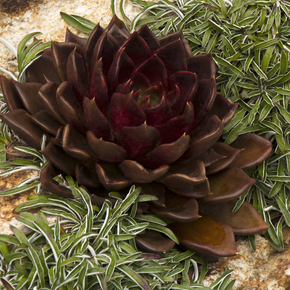
- Striking apple-green rosette with vivid fiery-red leaf tips and margins that intensify in bright sunlight, earning its bold "Lipstick" name
- Exceptionally low-maintenance and drought-tolerant — ideal for beginners, busy gardeners, rock gardens, containers, and sunny windowsills alike
- Non-toxic to cats, dogs, and humans, making it a worry-free choice for pet-friendly homes and family gardens
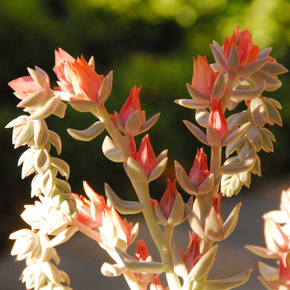
- Produces charming coral-red to yellow bell-shaped flower stalks in spring and summer, adding seasonal color beyond its already dramatic foliage
Echeveria agavoides 'Lipstick' is one of the most visually captivating succulents available, prized for its tight, symmetrical rosette of thick, firm, apple-green leaves edged in brilliant crimson-red that deepens and intensifies with sun exposure — a natural stress coloration that gives this plant its unforgettable name. Native to the rocky, arid highlands of central Mexico, this compact gem grows slowly to about 6 inches tall and up to 12 inches wide, forming a dense, architectural rosette that brings bold texture and color to any setting. Unlike many soft-leafed echeverias, the foliage of 'Lipstick' has a glossy, firm surface without the powdery farina coating of some relatives, giving it a clean, sculptural quality that looks equally stunning in a terracotta pot on a patio, tucked into a sunny rock garden, or displayed on a bright indoor windowsill. In spring and summer, mature plants send up slender stalks adorned with coral-red to yellow, lantern-shaped blooms that echo the fiery tones of the leaf margins, attracting pollinators while adding another layer of seasonal interest. Hardy in USDA Zones 9a through 11b, this pet-safe, drought-tolerant beauty thrives in Southern Oregon and Northern California gardens and patios with minimal fuss, rewarding gardeners with year-round architectural interest and a dramatic seasonal color show.
Plant Description
Echeveria agavoides 'Lipstick' is a compact, slow-growing rosette succulent in the family Crassulaceae, native to the rocky, arid highlands of central Mexico. It is a naturally occurring mutant form of Echeveria agavoides, a species whose name — agavoides — means "resembling an agave," a reference to the plant's thick, stiffly pointed, triangular leaves that recall the form of a small agave rosette. The leaves are firm, smooth, and glossy, ranging from bright apple-green to lime-green at the center, with bold crimson to fiery-red edges and sharp tips that appear almost outlined in lipstick — hence the cultivar name. Unlike many echeverias, 'Lipstick' lacks the powdery farina coating common to softer-leaved species, giving it a clean, polished surface and a more architectural presence. The degree of red coloration is strongly influenced by light intensity; plants grown in abundant direct sun develop the most vivid red margins, while those in shadier conditions may show only a faint pink blush along the leaf edges. Over time, the rosette may rise on a short stem and occasionally produce small offset rosettes at the base. In spring and summer, mature plants produce slender, arching flower stalks bearing clusters of small, pendant, coral-red to yellow bell-shaped blooms — a cheerful seasonal bonus that complements the plant's bold foliar palette.
Mature Size
| Dimension | Typical Range |
|---|---|
| Height | Up to 6 inches |
| Spread (rosette diameter) | 6 to 12 inches at maturity |
| Growth rate | Slow |
| Growth habit | Compact, dense rosette; may slowly develop a short stem with age |
Hardiness Zones and Temperature
Echeveria agavoides 'Lipstick' is hardy in USDA Hardiness Zones 9a through 11b, making it an excellent year-round outdoor plant throughout most of Southern Oregon's warmer valleys and the majority of Northern California. It thrives in warm to hot temperatures, ideally between 65°F and 85°F (18°C to 29°C) during active growth. Plants can tolerate brief temperature dips but should be protected from sustained cold below 25°F (-4°C), as frost and freezing wet soil can cause significant damage to the foliage and roots. In areas subject to occasional hard freezes, growing 'Lipstick' in containers that can be moved indoors or to a sheltered spot during the coldest nights is recommended. High heat above 90°F is generally tolerated as long as adequate air circulation is maintained and the soil is allowed to dry properly between waterings. This succulent also enters a semi-dormant state during extreme summer heat or cold winter temperatures, during which watering should be reduced significantly.
Sunlight Requirements
Lipstick Echeveria performs best with at least 6 hours of bright light daily. The intensity and duration of sun exposure directly controls how vivid the plant's signature red leaf margins become — more sun equals deeper, more dramatic crimson coloration. Outdoors, a south- or west-facing exposure with full to partial sun is ideal. In Southern Oregon and Northern California, it can handle direct morning and early afternoon sun beautifully, though some protection from the most intense midday summer rays is appreciated to prevent leaf scorch and bleaching. Indoors, place the plant in the brightest available window — a south-facing windowsill is optimal. Note that unlike many echeverias, 'Lipstick' lacks the protective powdery farina coating on its leaves, making it slightly more susceptible to sunburn when abruptly moved from a low-light environment into intense direct sun. Always acclimate plants gradually when transitioning from indoors to outdoors or from shade to full sun. In low-light conditions, the rosette will stretch and open up (etiolation), losing its tight, compact form and much of its red coloration. Supplemental full-spectrum LED grow lighting for 12 to 14 hours per day can sustain the plant through dark winter months indoors.
Soil and pH Preferences
Well-draining, gritty soil is absolutely essential for Lipstick Echeveria — it is the single most critical factor in keeping the plant healthy and preventing root rot. In its native Mexican habitat, this succulent grows in rocky, sandy, mineral-rich soils that drain rapidly and dry out quickly between rain events. In the garden or in containers, replicate these conditions by using a high-quality cactus and succulent potting mix amended with additional coarse perlite, pumice, or coarse horticultural sand at roughly a 2:1 ratio (mix to amendment). Avoid any soil that is rich in organic matter or designed to retain moisture, as persistently damp roots quickly lead to rot. Soil pH should be slightly acidic to neutral, in the range of 6.0 to 7.0. Always use containers with at least one drainage hole. Porous containers made from terracotta, ceramic, or concrete are especially beneficial because they allow excess moisture to evaporate through the walls, further reducing the risk of overwatering. Avoid oversized pots, as excess soil volume holds water for too long around the relatively small root system.
Watering Guide
The cardinal rule for watering Lipstick Echeveria is to use the "soak and dry" method — water thoroughly until water flows freely out of the drainage holes, then allow the soil to dry out completely before watering again. This typically means watering every 10 to 14 days indoors during spring and summer, and every 7 to 10 days for outdoor plants in hot, dry conditions. In fall and winter, or whenever the plant is semi-dormant, reduce watering to once every 2 to 4 weeks, checking that the soil is fully dry before each watering. Never allow water to pool in a saucer beneath the pot. When watering, direct water at the soil level and avoid getting water into the center of the rosette or wetting the leaves, as trapped moisture can encourage fungal infections. Use room-temperature water when possible. Signs of underwatering include slightly wrinkled or curling leaves that remain firm; signs of overwatering include soft, translucent, or mushy leaves and a soggy or foul-smelling soil. Erring on the side of slightly too dry is always safer for this plant than too wet.
Fertilizing
Lipstick Echeveria is not a heavy feeder and thrives with minimal fertilization. During the active growing season — spring and summer — a light feeding once every 4 to 6 weeks with a balanced, water-soluble fertilizer (such as a 10-10-10 or a formulation specifically designed for cacti and succulents) is sufficient to support healthy growth and flowering. Always dilute fertilizer to half the recommended strength to avoid burning the sensitive roots. Organic options such as diluted worm castings or compost tea can also be used at this same reduced frequency. Do not fertilize in fall or winter when the plant is semi-dormant, as excess nutrients during this period can cause soft, leggy growth and increase susceptibility to pests and disease. Over-fertilizing is a far more common and damaging mistake than under-fertilizing with this succulent — when in doubt, apply less rather than more.
Planting Instructions
- Choose a location with at least 6 hours of bright, direct or indirect sunlight per day. Outdoors, a south- or west-facing bed or raised planter with excellent drainage works well in Zones 9a-11b.
- Prepare the planting site or container with a well-draining cactus and succulent mix amended with perlite or coarse sand. Ensure outdoor soil is not clay-heavy; amend generously with grit or gravel if needed.
- Select a container with drainage holes and sized appropriately — only 1 to 2 inches wider than the root ball to prevent excess moisture retention in surrounding soil.
- Remove the plant gently from its nursery pot, shake away excess soil from the roots, and inspect for any signs of rot or damage. Trim any dark, mushy roots with clean scissors before planting.
- Plant at the same depth it was growing previously, with the base of the rosette sitting just at or slightly above the soil surface to promote good air circulation and prevent crown rot.
- Backfill with the amended soil mix, pressing gently around the roots to eliminate air pockets. A top dressing of coarse gravel or small pebbles around the base of the rosette helps prevent soil splash and improves drainage at the crown.
- Wait 3 to 5 days before first watering to allow any disturbed roots to settle and minor damage to callous over. Then water lightly to begin establishing the plant.
- If transitioning from indoors to outdoors, acclimate gradually over 1 to 2 weeks by starting in a shaded or partially shaded spot and slowly increasing sun exposure to prevent sunburn.
Pruning and Maintenance
Lipstick Echeveria requires very little pruning and is one of the most low-maintenance succulents available. Routine maintenance primarily involves removing dead or dried lower leaves by gently pulling them away from the stem with clean fingers or snipping them at the base with clean, sharp scissors. Removing dead foliage promptly keeps the plant looking tidy and reduces hiding places for pests such as mealybugs. If the rosette becomes leggy or stretched from insufficient light, the top portion of the stem can be cut with a clean, sharp knife, allowed to callous for several days, and then repotted — the trimmed-back original stem will often produce new offsets. Spent flower stalks can be removed at the base after blooming is complete to keep the plant looking neat. Repotting is needed only every 2 to 3 years, ideally in spring or early summer. When repotting, choose a container only one size larger, inspect and trim any rotted roots, and allow the plant to rest without water for 1 to 2 weeks after repotting so roots can adjust to the new environment.
Seasonal Interest
Lipstick Echeveria delivers year-round visual interest with its sculptural, jewel-like rosette, but it puts on its most dramatic show during the warmer months. In spring and summer, the plant sends up slender, arching flower stalks bearing pendant, bell-shaped blooms in coral-red to warm yellow tones, adding a delicate, colorful accent above the bold rosette. The red coloration of the leaf margins tends to be most vivid during periods of intense sunlight and mild temperature stress — late summer through fall often brings out the deepest crimson edging as temperatures begin to cool and light levels shift. During the cooler winter months, growth slows and the plant enters a semi-dormant phase, though the rosette remains attractive and retains its color. Even in the off-season, the clean architectural form of the tightly packed, pointed leaves maintains its ornamental appeal in containers or garden beds.
Landscape Uses
The compact size and bold coloration of Lipstick Echeveria make it an exceptionally versatile plant in the landscape and in containers. Its tight rosette and architectural form provide year-round structure in xeriscape and drought-tolerant garden designs, and it pairs beautifully with other succulents, ornamental grasses, and low-growing Mediterranean plants in low-water beds. Consider these popular uses:
- Rock gardens and gravel beds, where excellent drainage naturally suits this plant's needs
- Decorative containers, window boxes, and patio pots — especially striking in terracotta or stone vessels
- Succulent dish gardens and mixed arrangements with other compact rosette-forming succulents
- Edging and border plantings in warm, sunny garden beds
- Tabletop centerpieces and indoor succulent displays on bright windowsills
- Low-water slope plantings and terraced garden beds where drainage is naturally superior
- Fairy gardens and miniature garden designs thanks to its slow growth and compact size
Companion Plants
Lipstick Echeveria's bold red-edged rosette pairs beautifully with a wide range of drought-tolerant and succulent companions that share its preference for well-drained soil, bright sun, and low water. Excellent companions include:
- Other Echeveria species and hybrids (such as Echeveria elegans or Echeveria 'Perle von Nurnberg') for contrasting rosette shapes and colors
- Sedum and Graptosedum varieties for textural contrast and complementary low-water needs
- Graptopetalum paraguayense (Ghost Plant) for its silvery-lavender tones that highlight the red margins of 'Lipstick'
- Aloe and Haworthia species in mixed succulent containers or shaded border edges
- Sempervivum (Hen and Chicks) for cold-hardier mixed garden beds in borderline zones
- Festuca and other ornamental grasses for a naturalistic, low-water planting combination
- Small ornamental cacti for a dramatic, xeriscape-inspired rock garden pairing
- Lavender and rosemary in sunny, drought-tolerant mixed borders where their mounding forms contrast the flat rosette
Pests and Diseases
Lipstick Echeveria is generally quite resistant to pests and disease when grown in the proper conditions, but a few problems can arise. Regular inspection is the best prevention.
| Problem | Symptoms | Treatment |
|---|---|---|
| Mealybugs | White, cottony clusters in leaf axils and at the base of the rosette | Dab with a cotton swab soaked in rubbing alcohol; treat with neem oil or insecticidal soap for larger infestations |
| Aphids | Sticky residue on leaves; small soft-bodied insects on new growth | Blast off with a strong stream of water; apply neem oil or insecticidal soap |
| Spider Mites | Fine webbing, stippled or yellowing leaves | Increase air circulation; apply insecticidal soap or neem oil |
| Scale | Small, hard, shell-like bumps on stems and leaves | Remove manually with a soft brush or tweezers; treat with neem oil or horticultural oil |
| Root Rot | Mushy, blackened roots; soft, translucent, or collapsing lower leaves; foul soil odor | Remove from pot, trim all rotten roots with clean scissors, allow to dry for several days, repot in fresh well-draining mix |
| Fungal Leaf Spot | Circular brown or black spots on leaf surfaces | Improve air circulation; avoid wetting foliage; apply a diluted neem oil solution |
| Sunburn | Bleached, brown, or dry papery patches on leaf surfaces | Move to a slightly less intense light exposure; acclimate plants gradually when transitioning to outdoor sun |
Container Growing
Lipstick Echeveria is an outstanding container plant and is arguably at its most impressive when grown in a decorative pot that showcases the rosette's symmetry and bold coloration up close. When growing in containers, keep these key guidelines in mind:
- Always use a container with at least one drainage hole — this is non-negotiable for preventing root rot
- Terracotta, ceramic, and concrete pots are preferred over plastic, as their porous walls allow excess moisture to escape more readily
- Choose a pot only 1 to 2 inches larger in diameter than the current root ball — oversized containers hold too much moist soil for too long
- Fill with a cactus and succulent mix amended with additional perlite or pumice for fast drainage
- A decorative top dressing of fine gravel or pebbles improves drainage at the crown level and enhances the container's appearance
- Place containers in the brightest available location — a sunny south- or west-facing patio or windowsill is ideal
- Container plants may need slightly more frequent watering than in-ground plants in hot summer weather, but the soil must still dry out completely between waterings
- Repot every 2 to 3 years in spring, moving up only one pot size, to refresh the soil and allow for continued healthy root growth
Propagation
Lipstick Echeveria can be propagated by three methods: leaf cuttings, stem cuttings, and offsets. The best time to propagate is during the active growing season in spring or summer.
- Leaf Propagation: Gently twist a healthy, plump leaf from the main stem with a clean, twisting motion, ensuring the entire leaf base separates cleanly — a leaf with a torn or partial base will not root. Lay the leaf on a dry surface in a shaded spot for 3 to 5 days until the wound end forms a callous. Place the calloused leaf on top of (not buried in) a tray of well-draining succulent mix and mist lightly every few days. Roots and a tiny new rosette will emerge over several weeks. Once the new rosette has developed its own small root system, it can be potted individually. Success rates with leaf propagation are variable — expect roughly 50% of leaves to root successfully.
- Stem Cuttings: Use a clean, sharp knife or scissors to cut a rosette from the stem, leaving at least an inch of stem attached. Allow the cut end to callous for 3 to 5 days before planting the cutting in well-draining succulent mix. Water sparingly until roots develop. This method tends to root faster than leaf propagation.
- Offsets (Pups): Mature plants occasionally produce small offset rosettes at the base. Gently twist or cut these away, allow the base to callous for 1 to 2 days, and plant in their own pots with fresh succulent mix. This is the easiest and most reliable propagation method, though offsets are not always produced frequently.
Wildlife Value
While Lipstick Echeveria is not a primary wildlife plant in most North American landscapes, its spring and summer blooms do attract pollinators, particularly hummingbirds and native bees, which are drawn to the pendant, tubular coral-red to yellow flowers. The plant is non-toxic to cats, dogs, and humans, making it a safe choice for households and gardens where pets and children are present. Because the plant's thick, water-storing leaves are not palatable to most browsing wildlife, deer and rabbits generally leave it alone — an added practical benefit in many Southern Oregon and Northern California gardens where deer pressure can be significant.
- Striking apple-green rosette with vivid fiery-red leaf tips and margins that intensify in bright sunlight, earning its bold "Lipstick" name
- Exceptionally low-maintenance and drought-tolerant — ideal for beginners, busy gardeners, rock gardens, containers, and sunny windowsills alike
- Non-toxic to cats, dogs, and humans, making it a worry-free choice for pet-friendly homes and family gardens
- Produces charming coral-red to yellow bell-shaped flower stalks in spring and summer, adding seasonal color beyond its already dramatic foliage
Echeveria agavoides 'Lipstick' is one of the most visually captivating succulents available, prized for its tight, symmetrical rosette of thick, firm, apple-green leaves edged in brilliant crimson-red that deepens and intensifies with sun exposure — a natural stress coloration that gives this plant its unforgettable name. Native to the rocky, arid highlands of central Mexico, this compact gem grows slowly to about 6 inches tall and up to 12 inches wide, forming a dense, architectural rosette that brings bold texture and color to any setting. Unlike many soft-leafed echeverias, the foliage of 'Lipstick' has a glossy, firm surface without the powdery farina coating of some relatives, giving it a clean, sculptural quality that looks equally stunning in a terracotta pot on a patio, tucked into a sunny rock garden, or displayed on a bright indoor windowsill. In spring and summer, mature plants send up slender stalks adorned with coral-red to yellow, lantern-shaped blooms that echo the fiery tones of the leaf margins, attracting pollinators while adding another layer of seasonal interest. Hardy in USDA Zones 9a through 11b, this pet-safe, drought-tolerant beauty thrives in Southern Oregon and Northern California gardens and patios with minimal fuss, rewarding gardeners with year-round architectural interest and a dramatic seasonal color show.
Plant Description
Echeveria agavoides 'Lipstick' is a compact, slow-growing rosette succulent in the family Crassulaceae, native to the rocky, arid highlands of central Mexico. It is a naturally occurring mutant form of Echeveria agavoides, a species whose name — agavoides — means "resembling an agave," a reference to the plant's thick, stiffly pointed, triangular leaves that recall the form of a small agave rosette. The leaves are firm, smooth, and glossy, ranging from bright apple-green to lime-green at the center, with bold crimson to fiery-red edges and sharp tips that appear almost outlined in lipstick — hence the cultivar name. Unlike many echeverias, 'Lipstick' lacks the powdery farina coating common to softer-leaved species, giving it a clean, polished surface and a more architectural presence. The degree of red coloration is strongly influenced by light intensity; plants grown in abundant direct sun develop the most vivid red margins, while those in shadier conditions may show only a faint pink blush along the leaf edges. Over time, the rosette may rise on a short stem and occasionally produce small offset rosettes at the base. In spring and summer, mature plants produce slender, arching flower stalks bearing clusters of small, pendant, coral-red to yellow bell-shaped blooms — a cheerful seasonal bonus that complements the plant's bold foliar palette.
Mature Size
| Dimension | Typical Range |
|---|---|
| Height | Up to 6 inches |
| Spread (rosette diameter) | 6 to 12 inches at maturity |
| Growth rate | Slow |
| Growth habit | Compact, dense rosette; may slowly develop a short stem with age |
Hardiness Zones and Temperature
Echeveria agavoides 'Lipstick' is hardy in USDA Hardiness Zones 9a through 11b, making it an excellent year-round outdoor plant throughout most of Southern Oregon's warmer valleys and the majority of Northern California. It thrives in warm to hot temperatures, ideally between 65°F and 85°F (18°C to 29°C) during active growth. Plants can tolerate brief temperature dips but should be protected from sustained cold below 25°F (-4°C), as frost and freezing wet soil can cause significant damage to the foliage and roots. In areas subject to occasional hard freezes, growing 'Lipstick' in containers that can be moved indoors or to a sheltered spot during the coldest nights is recommended. High heat above 90°F is generally tolerated as long as adequate air circulation is maintained and the soil is allowed to dry properly between waterings. This succulent also enters a semi-dormant state during extreme summer heat or cold winter temperatures, during which watering should be reduced significantly.
Sunlight Requirements
Lipstick Echeveria performs best with at least 6 hours of bright light daily. The intensity and duration of sun exposure directly controls how vivid the plant's signature red leaf margins become — more sun equals deeper, more dramatic crimson coloration. Outdoors, a south- or west-facing exposure with full to partial sun is ideal. In Southern Oregon and Northern California, it can handle direct morning and early afternoon sun beautifully, though some protection from the most intense midday summer rays is appreciated to prevent leaf scorch and bleaching. Indoors, place the plant in the brightest available window — a south-facing windowsill is optimal. Note that unlike many echeverias, 'Lipstick' lacks the protective powdery farina coating on its leaves, making it slightly more susceptible to sunburn when abruptly moved from a low-light environment into intense direct sun. Always acclimate plants gradually when transitioning from indoors to outdoors or from shade to full sun. In low-light conditions, the rosette will stretch and open up (etiolation), losing its tight, compact form and much of its red coloration. Supplemental full-spectrum LED grow lighting for 12 to 14 hours per day can sustain the plant through dark winter months indoors.
Soil and pH Preferences
Well-draining, gritty soil is absolutely essential for Lipstick Echeveria — it is the single most critical factor in keeping the plant healthy and preventing root rot. In its native Mexican habitat, this succulent grows in rocky, sandy, mineral-rich soils that drain rapidly and dry out quickly between rain events. In the garden or in containers, replicate these conditions by using a high-quality cactus and succulent potting mix amended with additional coarse perlite, pumice, or coarse horticultural sand at roughly a 2:1 ratio (mix to amendment). Avoid any soil that is rich in organic matter or designed to retain moisture, as persistently damp roots quickly lead to rot. Soil pH should be slightly acidic to neutral, in the range of 6.0 to 7.0. Always use containers with at least one drainage hole. Porous containers made from terracotta, ceramic, or concrete are especially beneficial because they allow excess moisture to evaporate through the walls, further reducing the risk of overwatering. Avoid oversized pots, as excess soil volume holds water for too long around the relatively small root system.
Watering Guide
The cardinal rule for watering Lipstick Echeveria is to use the "soak and dry" method — water thoroughly until water flows freely out of the drainage holes, then allow the soil to dry out completely before watering again. This typically means watering every 10 to 14 days indoors during spring and summer, and every 7 to 10 days for outdoor plants in hot, dry conditions. In fall and winter, or whenever the plant is semi-dormant, reduce watering to once every 2 to 4 weeks, checking that the soil is fully dry before each watering. Never allow water to pool in a saucer beneath the pot. When watering, direct water at the soil level and avoid getting water into the center of the rosette or wetting the leaves, as trapped moisture can encourage fungal infections. Use room-temperature water when possible. Signs of underwatering include slightly wrinkled or curling leaves that remain firm; signs of overwatering include soft, translucent, or mushy leaves and a soggy or foul-smelling soil. Erring on the side of slightly too dry is always safer for this plant than too wet.
Fertilizing
Lipstick Echeveria is not a heavy feeder and thrives with minimal fertilization. During the active growing season — spring and summer — a light feeding once every 4 to 6 weeks with a balanced, water-soluble fertilizer (such as a 10-10-10 or a formulation specifically designed for cacti and succulents) is sufficient to support healthy growth and flowering. Always dilute fertilizer to half the recommended strength to avoid burning the sensitive roots. Organic options such as diluted worm castings or compost tea can also be used at this same reduced frequency. Do not fertilize in fall or winter when the plant is semi-dormant, as excess nutrients during this period can cause soft, leggy growth and increase susceptibility to pests and disease. Over-fertilizing is a far more common and damaging mistake than under-fertilizing with this succulent — when in doubt, apply less rather than more.
Planting Instructions
- Choose a location with at least 6 hours of bright, direct or indirect sunlight per day. Outdoors, a south- or west-facing bed or raised planter with excellent drainage works well in Zones 9a-11b.
- Prepare the planting site or container with a well-draining cactus and succulent mix amended with perlite or coarse sand. Ensure outdoor soil is not clay-heavy; amend generously with grit or gravel if needed.
- Select a container with drainage holes and sized appropriately — only 1 to 2 inches wider than the root ball to prevent excess moisture retention in surrounding soil.
- Remove the plant gently from its nursery pot, shake away excess soil from the roots, and inspect for any signs of rot or damage. Trim any dark, mushy roots with clean scissors before planting.
- Plant at the same depth it was growing previously, with the base of the rosette sitting just at or slightly above the soil surface to promote good air circulation and prevent crown rot.
- Backfill with the amended soil mix, pressing gently around the roots to eliminate air pockets. A top dressing of coarse gravel or small pebbles around the base of the rosette helps prevent soil splash and improves drainage at the crown.
- Wait 3 to 5 days before first watering to allow any disturbed roots to settle and minor damage to callous over. Then water lightly to begin establishing the plant.
- If transitioning from indoors to outdoors, acclimate gradually over 1 to 2 weeks by starting in a shaded or partially shaded spot and slowly increasing sun exposure to prevent sunburn.
Pruning and Maintenance
Lipstick Echeveria requires very little pruning and is one of the most low-maintenance succulents available. Routine maintenance primarily involves removing dead or dried lower leaves by gently pulling them away from the stem with clean fingers or snipping them at the base with clean, sharp scissors. Removing dead foliage promptly keeps the plant looking tidy and reduces hiding places for pests such as mealybugs. If the rosette becomes leggy or stretched from insufficient light, the top portion of the stem can be cut with a clean, sharp knife, allowed to callous for several days, and then repotted — the trimmed-back original stem will often produce new offsets. Spent flower stalks can be removed at the base after blooming is complete to keep the plant looking neat. Repotting is needed only every 2 to 3 years, ideally in spring or early summer. When repotting, choose a container only one size larger, inspect and trim any rotted roots, and allow the plant to rest without water for 1 to 2 weeks after repotting so roots can adjust to the new environment.
Seasonal Interest
Lipstick Echeveria delivers year-round visual interest with its sculptural, jewel-like rosette, but it puts on its most dramatic show during the warmer months. In spring and summer, the plant sends up slender, arching flower stalks bearing pendant, bell-shaped blooms in coral-red to warm yellow tones, adding a delicate, colorful accent above the bold rosette. The red coloration of the leaf margins tends to be most vivid during periods of intense sunlight and mild temperature stress — late summer through fall often brings out the deepest crimson edging as temperatures begin to cool and light levels shift. During the cooler winter months, growth slows and the plant enters a semi-dormant phase, though the rosette remains attractive and retains its color. Even in the off-season, the clean architectural form of the tightly packed, pointed leaves maintains its ornamental appeal in containers or garden beds.
Landscape Uses
The compact size and bold coloration of Lipstick Echeveria make it an exceptionally versatile plant in the landscape and in containers. Its tight rosette and architectural form provide year-round structure in xeriscape and drought-tolerant garden designs, and it pairs beautifully with other succulents, ornamental grasses, and low-growing Mediterranean plants in low-water beds. Consider these popular uses:
- Rock gardens and gravel beds, where excellent drainage naturally suits this plant's needs
- Decorative containers, window boxes, and patio pots — especially striking in terracotta or stone vessels
- Succulent dish gardens and mixed arrangements with other compact rosette-forming succulents
- Edging and border plantings in warm, sunny garden beds
- Tabletop centerpieces and indoor succulent displays on bright windowsills
- Low-water slope plantings and terraced garden beds where drainage is naturally superior
- Fairy gardens and miniature garden designs thanks to its slow growth and compact size
Companion Plants
Lipstick Echeveria's bold red-edged rosette pairs beautifully with a wide range of drought-tolerant and succulent companions that share its preference for well-drained soil, bright sun, and low water. Excellent companions include:
- Other Echeveria species and hybrids (such as Echeveria elegans or Echeveria 'Perle von Nurnberg') for contrasting rosette shapes and colors
- Sedum and Graptosedum varieties for textural contrast and complementary low-water needs
- Graptopetalum paraguayense (Ghost Plant) for its silvery-lavender tones that highlight the red margins of 'Lipstick'
- Aloe and Haworthia species in mixed succulent containers or shaded border edges
- Sempervivum (Hen and Chicks) for cold-hardier mixed garden beds in borderline zones
- Festuca and other ornamental grasses for a naturalistic, low-water planting combination
- Small ornamental cacti for a dramatic, xeriscape-inspired rock garden pairing
- Lavender and rosemary in sunny, drought-tolerant mixed borders where their mounding forms contrast the flat rosette
Pests and Diseases
Lipstick Echeveria is generally quite resistant to pests and disease when grown in the proper conditions, but a few problems can arise. Regular inspection is the best prevention.
| Problem | Symptoms | Treatment |
|---|---|---|
| Mealybugs | White, cottony clusters in leaf axils and at the base of the rosette | Dab with a cotton swab soaked in rubbing alcohol; treat with neem oil or insecticidal soap for larger infestations |
| Aphids | Sticky residue on leaves; small soft-bodied insects on new growth | Blast off with a strong stream of water; apply neem oil or insecticidal soap |
| Spider Mites | Fine webbing, stippled or yellowing leaves | Increase air circulation; apply insecticidal soap or neem oil |
| Scale | Small, hard, shell-like bumps on stems and leaves | Remove manually with a soft brush or tweezers; treat with neem oil or horticultural oil |
| Root Rot | Mushy, blackened roots; soft, translucent, or collapsing lower leaves; foul soil odor | Remove from pot, trim all rotten roots with clean scissors, allow to dry for several days, repot in fresh well-draining mix |
| Fungal Leaf Spot | Circular brown or black spots on leaf surfaces | Improve air circulation; avoid wetting foliage; apply a diluted neem oil solution |
| Sunburn | Bleached, brown, or dry papery patches on leaf surfaces | Move to a slightly less intense light exposure; acclimate plants gradually when transitioning to outdoor sun |
Container Growing
Lipstick Echeveria is an outstanding container plant and is arguably at its most impressive when grown in a decorative pot that showcases the rosette's symmetry and bold coloration up close. When growing in containers, keep these key guidelines in mind:
- Always use a container with at least one drainage hole — this is non-negotiable for preventing root rot
- Terracotta, ceramic, and concrete pots are preferred over plastic, as their porous walls allow excess moisture to escape more readily
- Choose a pot only 1 to 2 inches larger in diameter than the current root ball — oversized containers hold too much moist soil for too long
- Fill with a cactus and succulent mix amended with additional perlite or pumice for fast drainage
- A decorative top dressing of fine gravel or pebbles improves drainage at the crown level and enhances the container's appearance
- Place containers in the brightest available location — a sunny south- or west-facing patio or windowsill is ideal
- Container plants may need slightly more frequent watering than in-ground plants in hot summer weather, but the soil must still dry out completely between waterings
- Repot every 2 to 3 years in spring, moving up only one pot size, to refresh the soil and allow for continued healthy root growth
Propagation
Lipstick Echeveria can be propagated by three methods: leaf cuttings, stem cuttings, and offsets. The best time to propagate is during the active growing season in spring or summer.
- Leaf Propagation: Gently twist a healthy, plump leaf from the main stem with a clean, twisting motion, ensuring the entire leaf base separates cleanly — a leaf with a torn or partial base will not root. Lay the leaf on a dry surface in a shaded spot for 3 to 5 days until the wound end forms a callous. Place the calloused leaf on top of (not buried in) a tray of well-draining succulent mix and mist lightly every few days. Roots and a tiny new rosette will emerge over several weeks. Once the new rosette has developed its own small root system, it can be potted individually. Success rates with leaf propagation are variable — expect roughly 50% of leaves to root successfully.
- Stem Cuttings: Use a clean, sharp knife or scissors to cut a rosette from the stem, leaving at least an inch of stem attached. Allow the cut end to callous for 3 to 5 days before planting the cutting in well-draining succulent mix. Water sparingly until roots develop. This method tends to root faster than leaf propagation.
- Offsets (Pups): Mature plants occasionally produce small offset rosettes at the base. Gently twist or cut these away, allow the base to callous for 1 to 2 days, and plant in their own pots with fresh succulent mix. This is the easiest and most reliable propagation method, though offsets are not always produced frequently.
Wildlife Value
While Lipstick Echeveria is not a primary wildlife plant in most North American landscapes, its spring and summer blooms do attract pollinators, particularly hummingbirds and native bees, which are drawn to the pendant, tubular coral-red to yellow flowers. The plant is non-toxic to cats, dogs, and humans, making it a safe choice for households and gardens where pets and children are present. Because the plant's thick, water-storing leaves are not palatable to most browsing wildlife, deer and rabbits generally leave it alone — an added practical benefit in many Southern Oregon and Northern California gardens where deer pressure can be significant.